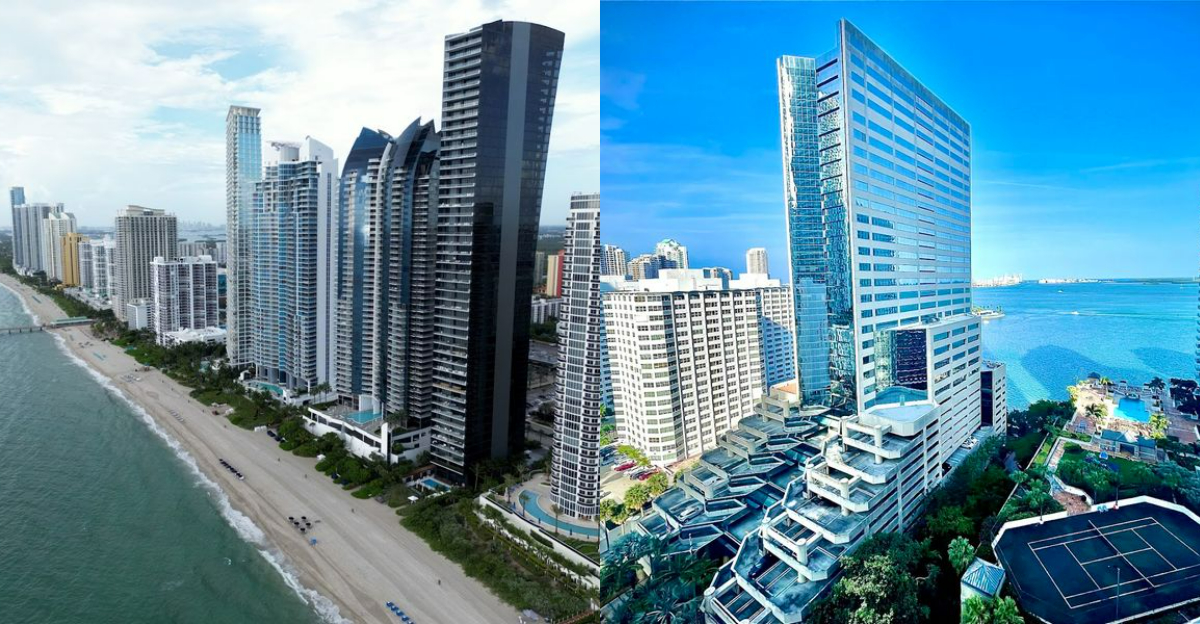
Florida’s coastline is not just about beaches and palms anymore – it is becoming a stage for some wildly ambitious towers. From stacked glass cubes to a tulip-inspired high-rise, these buildings turn the state’s skyline into something you want to stare at twice.
Some are polished icons, others are still climbing skyward, but each one adds a dramatic note to the view. If you love architecture with a little swagger, this lineup is hard to resist.
Waldorf Astoria Hotel & Residences Miami
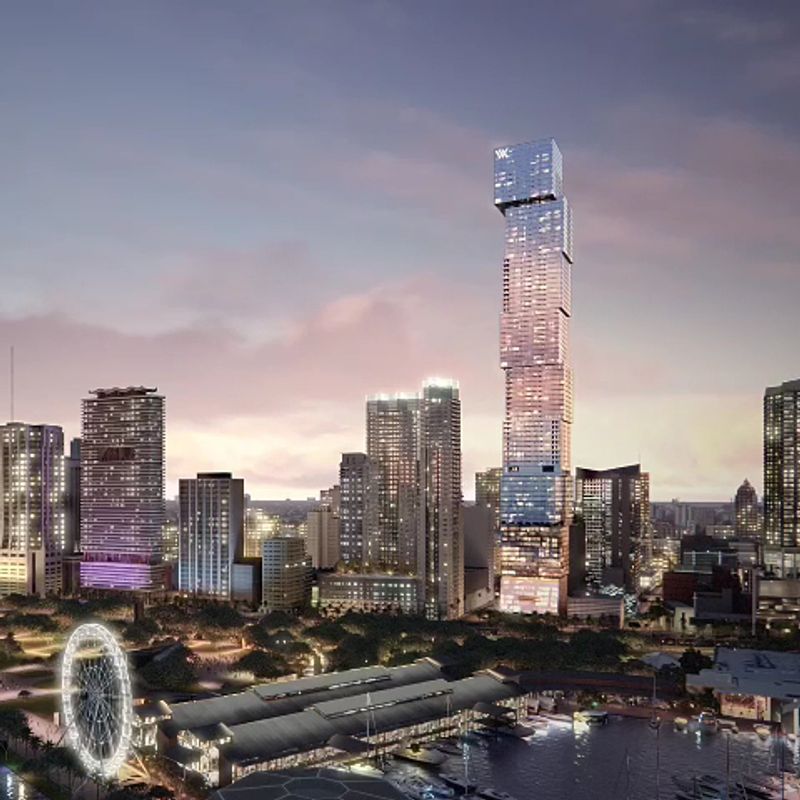
Waldorf Astoria Hotel & Residences Miami feels like a skyscraper that decided a normal silhouette was far too boring for the waterfront. Its nine stacked glass cubes create a playful, almost gravity-defying shape that instantly stands out in Downtown Miami.
When you see renderings, it looks less like a standard tower and more like a vertical sculpture balancing over Biscayne Bay.
At 1,049 feet and 100 stories, it is expected to become Florida’s first supertall skyscraper when completed, with an anticipated finish in 2028. That height alone would make it a headline, but the design is what gives it personality.
It has the kind of presence that makes nearby buildings look like they are politely stepping aside.
I think what makes this tower memorable is how boldly it embraces spectacle without losing luxury appeal. You can imagine it glowing at dusk like a stack of lanterns above the coast.
For skyline watchers, this is the tower that could redefine Miami in one dramatic move.
Panorama Tower
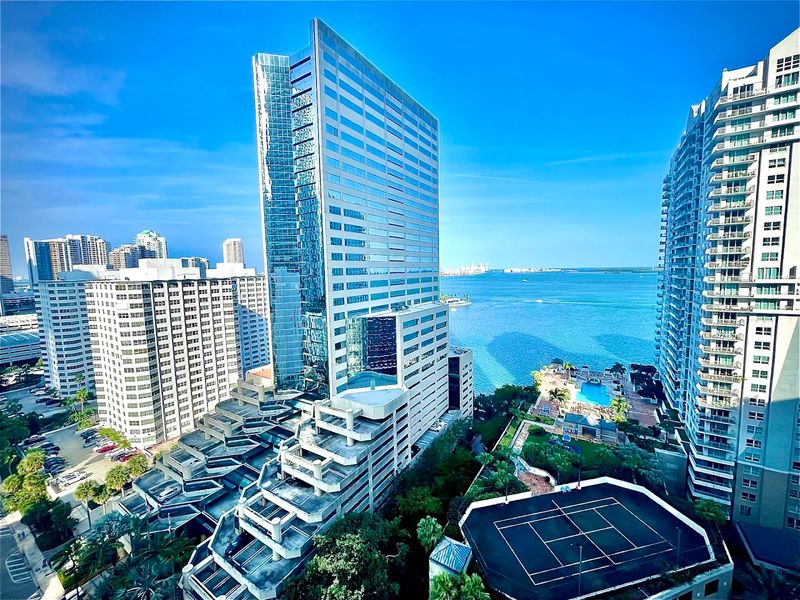
Panorama Tower has the kind of name that promises a view, and honestly, it delivers even before you step inside. Rising above Brickell at 868 feet, this completed giant currently holds the title of Florida’s tallest finished building.
It does not rely on gimmicks either – just a confident, sleek profile that dominates the neighborhood with ease.
Completed in 2018, the tower mixes apartments, hotel space, offices, and retail, which gives it the feeling of a vertical city block. That blend makes it more than a skyline trophy.
You are looking at a building designed to stay busy from morning coffee runs to late-night city lights.
What I like most is how Panorama Tower represents Miami’s newer identity: polished, ambitious, and almost cinematic from a distance. In Brickell, where towers compete hard for attention, this one still feels like the clear lead actor.
If Florida skyscrapers were ranked by pure command of the skyline, Panorama would absolutely be near the top.
Four Seasons Hotel Miami
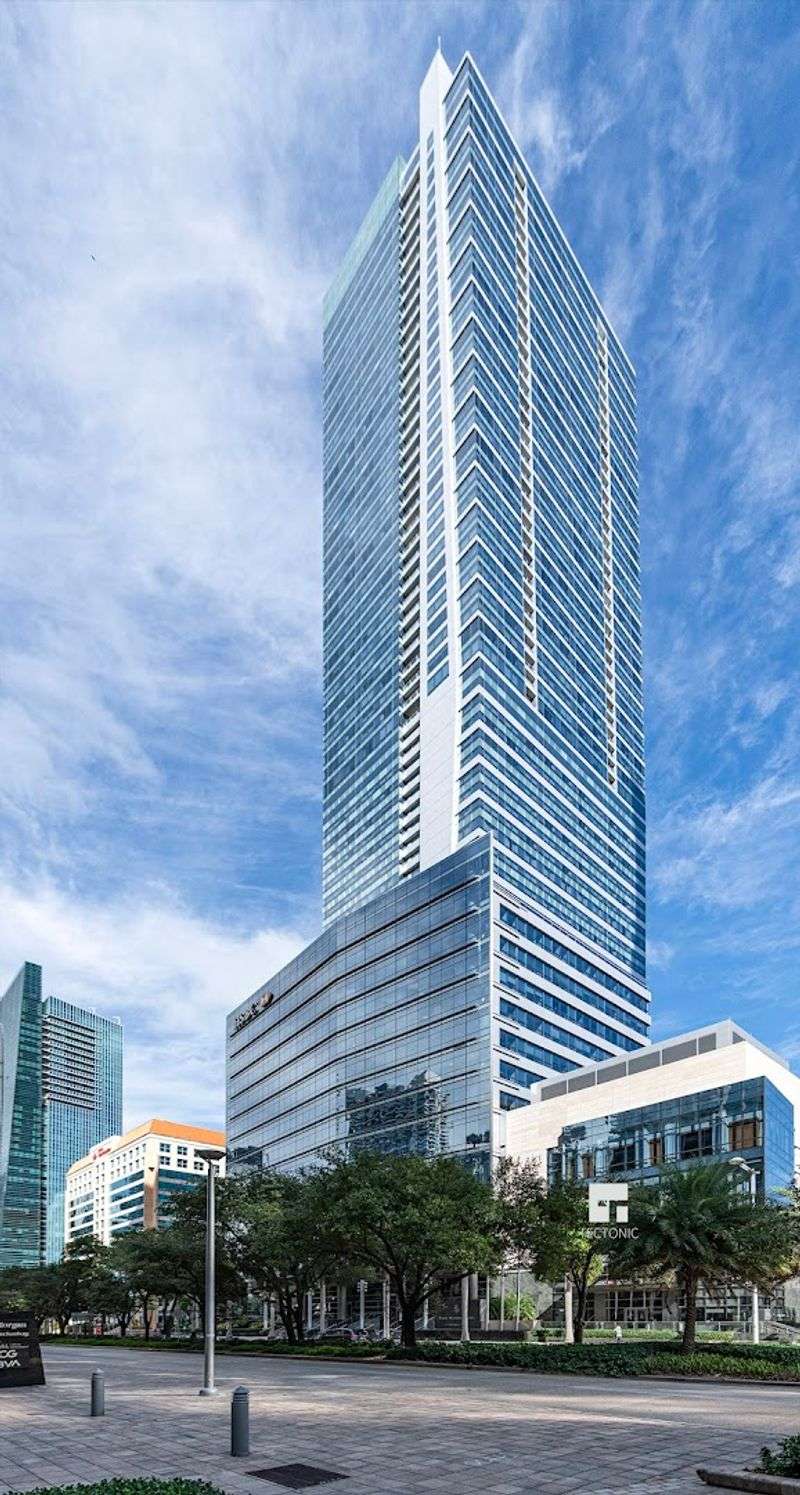
Four Seasons Hotel Miami carries itself like a former champion that still knows it looks good in the spotlight. At 789 feet and 64 stories, it ruled as Florida’s tallest building from 2003 until 2017, and that long reign gave it serious skyline credibility.
Even now, it feels less outdated than quietly distinguished.
Set in Miami, this mixed-use tower combines hotel luxury, residences, and office space in a way that feels both practical and polished. It does not scream for attention with strange geometry or flashy curves.
Instead, it wins you over with proportion, confidence, and the kind of elegance that ages better than trends do.
I always think of this tower as the tailored suit in a room full of sequins. You notice it because it looks composed while everything around it tries harder.
For anyone tracing the evolution of Florida’s vertical ambitions, Four Seasons Hotel Miami remains a key chapter – refined, significant, and still very much part of the conversation.
One Thousand Museum
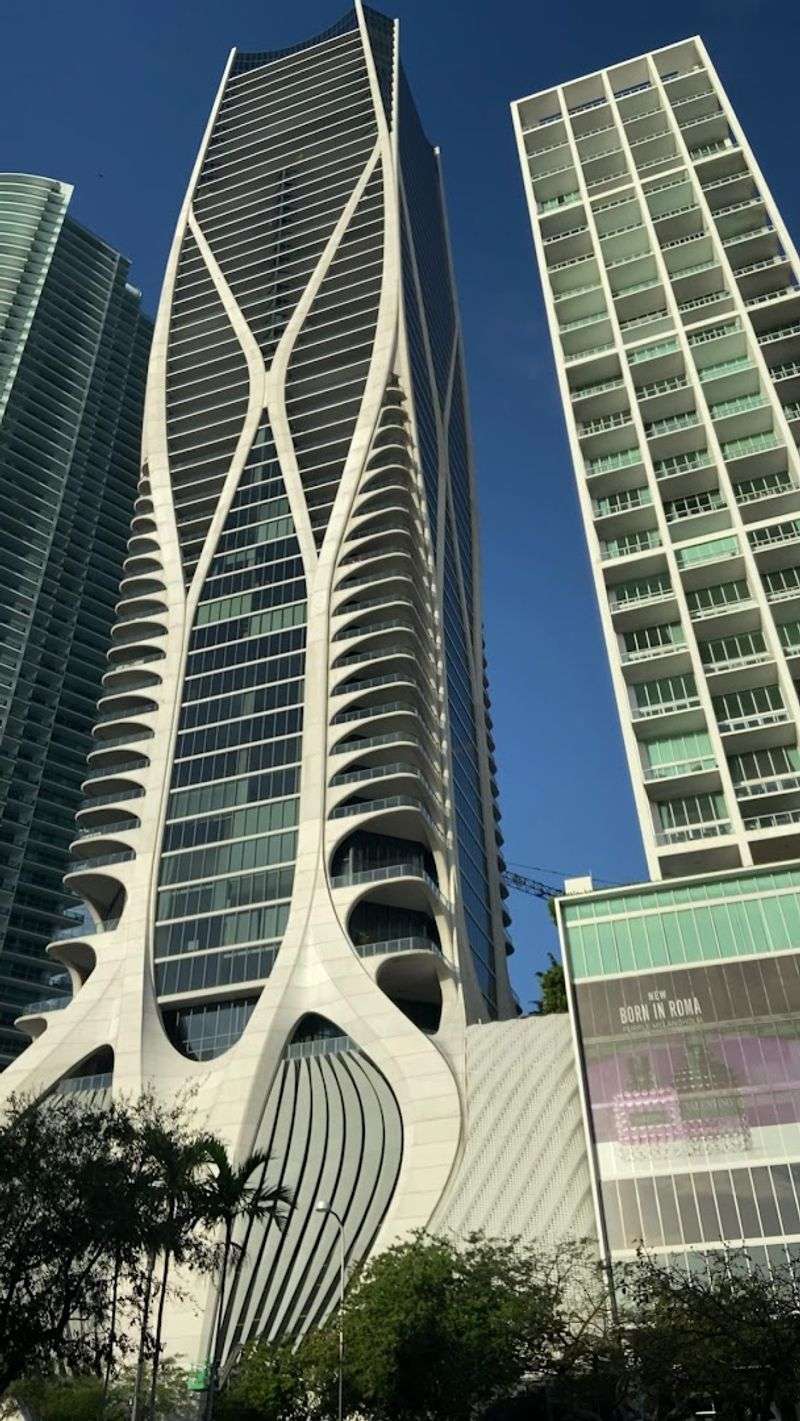
One Thousand Museum is the skyscraper you show someone when they claim towers all look the same. Designed by Zaha Hadid, this 707-foot residential building in Downtown Miami wraps itself in a dramatic exoskeleton that feels part science fiction, part high fashion.
It is instantly recognizable, which is more than most towers can say.
Completed in 2019, the 62-story structure uses thousands of pieces of glass-fiber-reinforced concrete to form its curving outer frame. That shell is not only beautiful but also structural and hurricane resistant, which is especially meaningful on Florida’s coast.
There is even a private rooftop helipad, because subtlety was clearly never the goal here.
What makes this building fascinating is how it turns engineering into visual theater. You are not just looking up at height – you are looking at movement frozen into a vertical form.
In a state packed with shiny glass towers, One Thousand Museum still feels like the one that wandered in from the future and decided to stay.
Wells Fargo Center
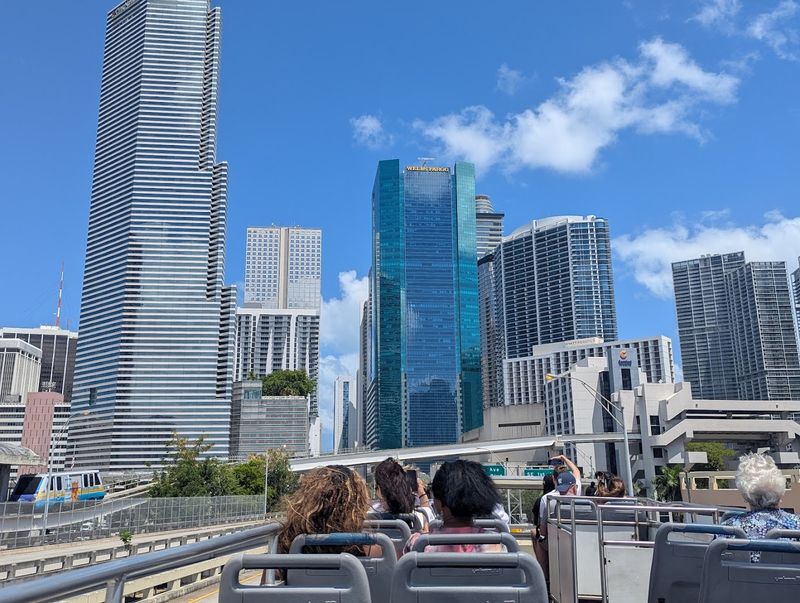
Wells Fargo Center may not chase the flashiest design award, but it absolutely knows how to anchor a skyline. Rising 647 feet over downtown Miami, this office tower brings a sharp, corporate confidence to the city’s more theatrical collection of high-rises.
Sometimes that clean, disciplined presence is exactly what a skyline needs.
Completed in 2010 as part of the Metropolitan Miami complex, it serves as a major Class A office tower in the financial district. Its role is less about spectacle and more about dominance through scale and placement.
When the light hits the glass just right, it looks like a polished ledger standing upright over the city.
I find this tower interesting because it proves that a building can feel important without trying to be eccentric. You look at it and understand immediately that business gets done here.
In a list full of curving shells and luxury branding, Wells Fargo Center is the firm handshake – straightforward, towering, and impossible to ignore in the downtown mix.
Muse Residences
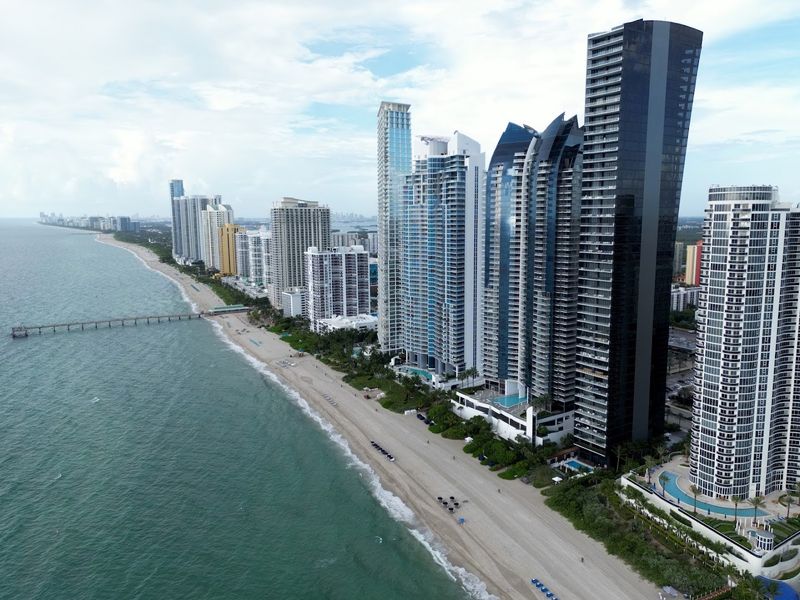
Muse Residences sounds like a building that should come with a soundtrack, and in Sunny Isles Beach it nearly does. This oceanfront tower rises about 649 feet and pairs luxury living with a design identity that feels more curated than generic.
Against the Atlantic, it looks sleek, expensive, and just a little theatrical.
Completed in 2018, the roughly 50-story tower contains only 68 residences, which gives it a boutique scale despite its impressive height. Conceptually designed by Carlos Ott and executed by Sieger Suarez Architectural Partnership, it leans into an artful personality rather than plain coastal modernism.
That smaller number of homes also adds to its exclusive, almost gallery-like reputation.
What grabs me here is the contrast between intimacy and vertical ambition. You get a tall building that still feels selective instead of sprawling.
If some skyscrapers are loud public statements, Muse Residences feels more like a private poem written in glass beside the beach – elegant, measured, and fully aware of its setting.
Aston Martin Residences
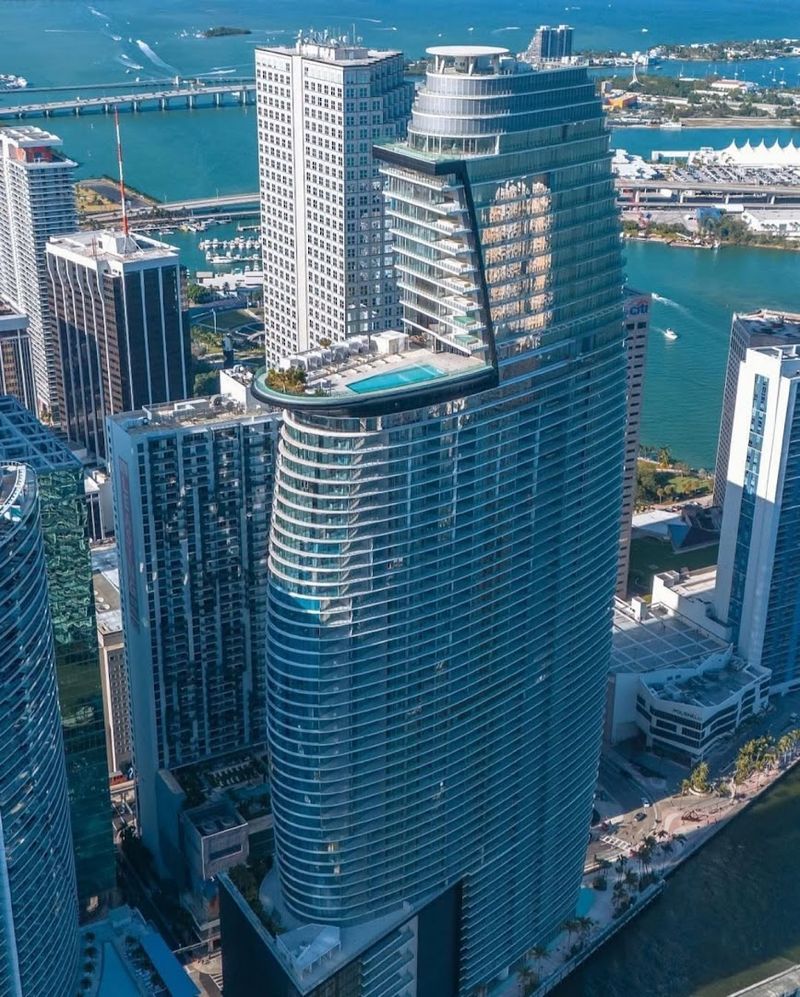
Aston Martin Residences brings a luxury car brand’s sense of drama straight into the Miami skyline. This sail-shaped glass tower rises 817 feet in Downtown Miami, and it looks exactly like the kind of place that would arrive fast, gleam loudly, and leave an impression.
Even among waterfront high-rises, its profile feels especially cinematic.
Completed in 2023 after topping out in late 2021, the 66-story building is recognized as the tallest all-residential tower south of New York City. That is a serious bragging point, but the shape does plenty of talking on its own.
The curved form catches light beautifully and gives the tower a sense of motion, like it is leaning into the bay breeze.
I like how unapologetically branded this building feels without turning into a gimmick. You expect a supercar name to come with style, and this tower actually delivers.
If Miami’s skyline were a lineup of luxury objects, Aston Martin Residences would be the one posed near the water, polished to perfection, and definitely aware of every eye on it.
Okan Tower
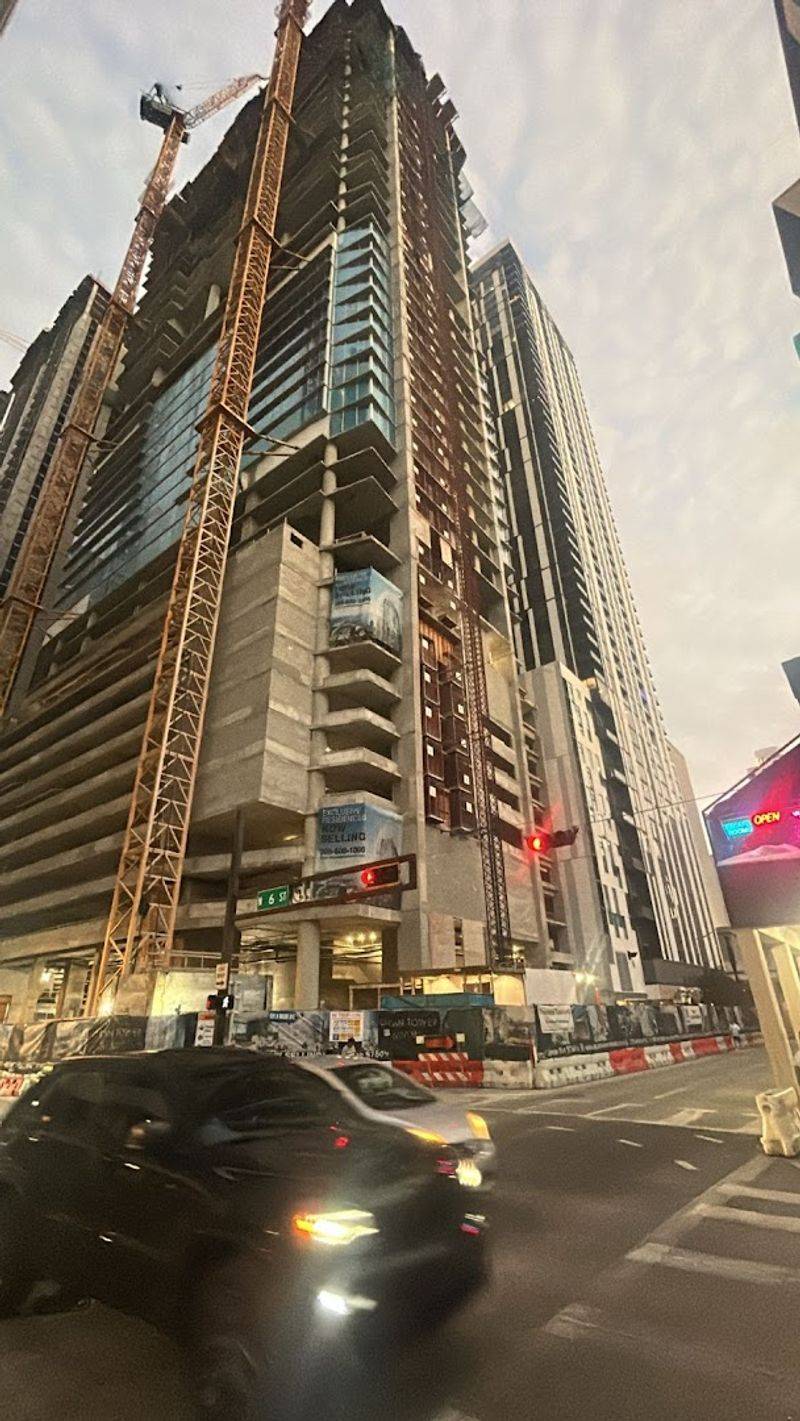
Okan Tower looks like someone took a tulip, stretched it toward the clouds, and dropped it into Downtown Miami. That floral inspiration could have turned gimmicky fast, but here it feels surprisingly elegant.
As it climbs toward a planned 902 feet, the building is becoming one of the city’s most distinctive works in progress.
Designed by Behar Font and Partners, this mixed-use tower is expected to open in 2027 and rise roughly 70 to 72 stories. Construction had reached the 50th floor by April 2026, so the vision is no longer just a rendering fantasy.
You can already sense how strongly it will alter the skyline once the full tulip-shaped crown is in place.
What makes Okan Tower exciting is that it dares to be whimsical while still aiming for serious scale. So many tall buildings chase elegance through restraint, but this one takes the opposite route and stays memorable because of it.
If you enjoy architecture with a little personality, Okan feels like a bloom of ambition planted right in the middle of Miami.
Residences at 400 Central
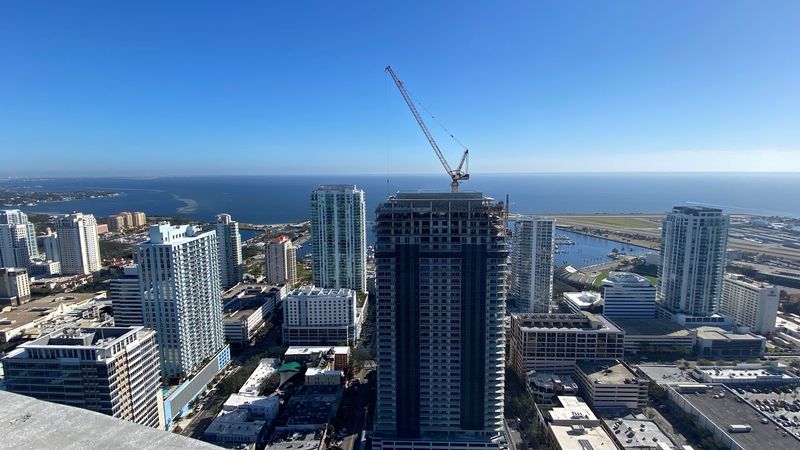
Residences at 400 Central gives St. Petersburg a vertical statement that feels both overdue and surprisingly graceful. Rising 515 feet and 46 stories, it is the tallest residential building on Florida’s Gulf Coast, which instantly makes it a regional landmark.
In a city better known for sunshine and waterfront ease, this tower adds a sharper urban note.
The project reached full height by fall 2024, with phased occupancy beginning in late 2025. That timeline gives it a fresh, just-arrived energy compared with older skyline staples.
It also signals how Gulf Coast cities are joining the race for taller, more ambitious residential architecture rather than leaving that conversation entirely to Miami.
I find this building compelling because it changes expectations more than it changes geography. You look at St. Petersburg differently once a tower like this enters the picture.
It is not the tallest on this list, and that almost helps its charm – it feels like a local breakthrough, a sign that Florida’s dramatic skyline story is spreading well beyond the usual coastal hotspots.
Bank of America Tower (Jacksonville)
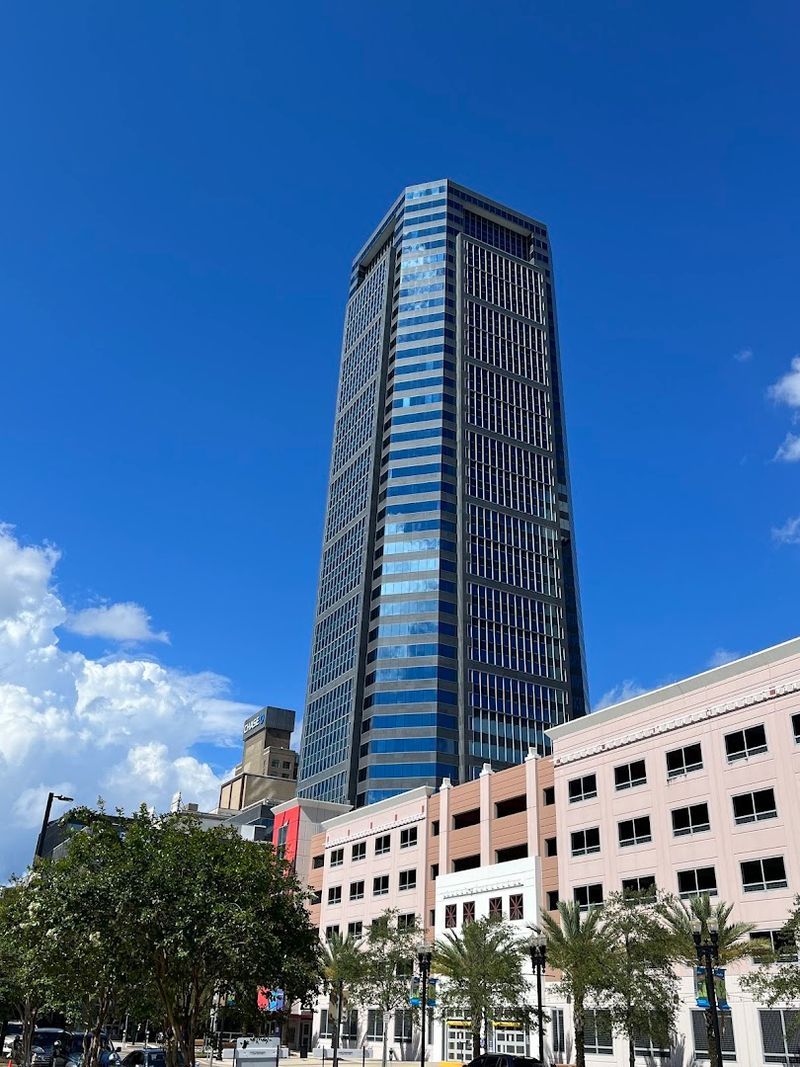
Bank of America Tower in Jacksonville proves that Florida’s skyscraper story is not only a South Florida phenomenon. Standing 617 feet tall with 42 stories, it remains the tallest building in Jacksonville and on the state’s Atlantic coast north of Miami.
That staying power gives it a kind of quiet authority that newer towers still have to earn.
Completed in 1990, the building has outlasted decades of development without losing its status as the city’s vertical reference point. In a skyline that feels more measured than Miami’s, this tower acts like a clear exclamation mark.
Its prominence is not about flashy curves or luxury branding – it is about civic presence and long-term visibility.
What I appreciate here is the regional contrast it brings to this list. Jacksonville’s atmosphere is different, and this tower reflects that mood with confidence instead of excess.
If some Florida skyscrapers feel like party invitations, Bank of America Tower feels like a landmark handshake – formal, enduring, and still defining the city’s silhouette after all these years.
One Tampa City Center
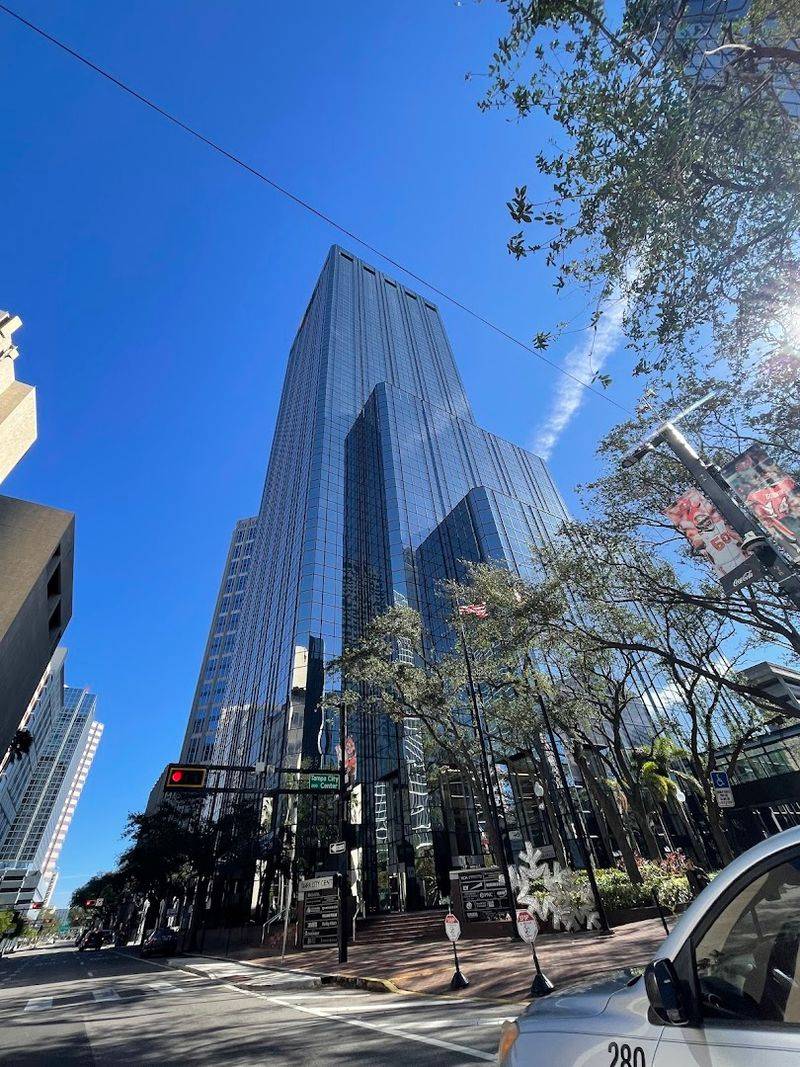
One Tampa City Center is a useful reminder that not every notable skyscraper needs to be brand new to matter. Standing 537 feet tall with 39 stories, this office tower has been part of downtown Tampa since 1981 and still holds its own in the city’s evolving skyline.
Its strength comes from endurance rather than novelty.
It was the tallest building in Tampa from 1981 to 1986, and while newer ambitions have circled the city, this tower remains a recognizable vertical anchor. The name can confuse people because it sounds like a current mega-project, but this is an existing building with real local history.
That history gives it a different kind of intrigue from towers still wrapped in construction netting.
I like including it because skyline stories are not only about the next big thing. Sometimes the most revealing buildings are the ones that stayed visible long after their headline moment passed.
One Tampa City Center feels like a seasoned character actor in Florida’s high-rise cast – less flashy, definitely important, and still helping define the Gulf Coast city around it.