Michigan’s skyline tells a bigger story than most people expect. In Detroit, Grand Rapids, and Ann Arbor, towers rise like time capsules, each one carrying a different mood, material palette, and ambition.
Some glow with Jazz Age excess, while others lean into glassy corporate confidence or stark modern presence. If you love architecture that feels dramatic, surprising, and deeply tied to place, these skyscrapers are worth your full attention.
The Guardian Building (Detroit)
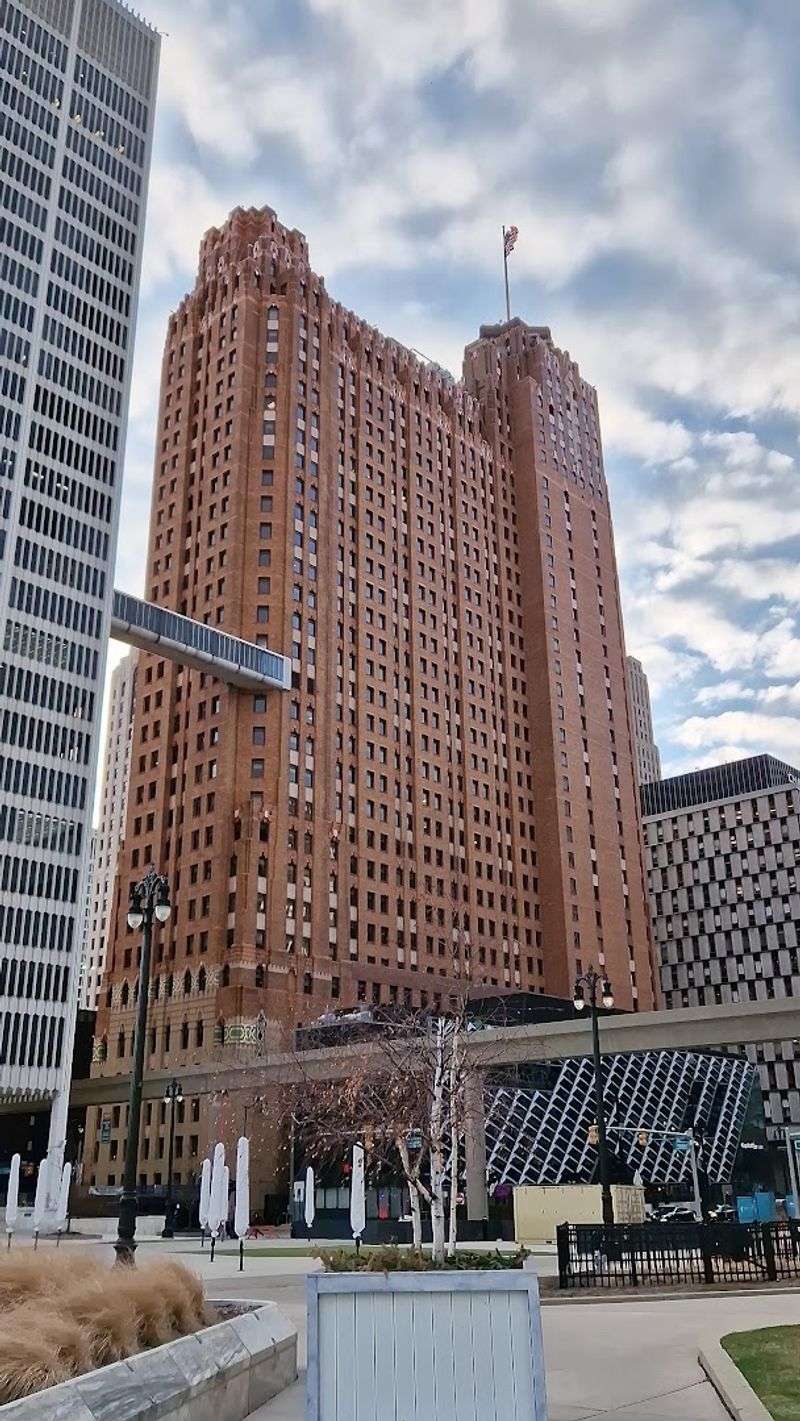
The Guardian Building feels like Detroit decided a bank should look like a festival of color instead of a gray box. Completed in 1929 and designed by Wirt C.
Rowland, this Art Deco landmark earns its Cathedral of Finance nickname the second you step near its blazing orange brick and geometric detail. I love how the building turns masonry into theater, using Native American-inspired patterns, Pewabic pottery, and Rookwood tile with almost fearless confidence.
Inside, the lobby keeps raising the stakes with an Ezra Winter mosaic, sculptural work by Corrado Parducci, and metal finishes that still feel futuristic. It was once the tallest masonry structure in the world, which makes its decorative boldness even more impressive because nothing about it feels timid or purely practical.
If you want one Michigan skyscraper that proves architecture can be spiritual, corporate, and wildly artistic all at once, this is the tower I would send you to first.
The Fisher Building (Detroit)
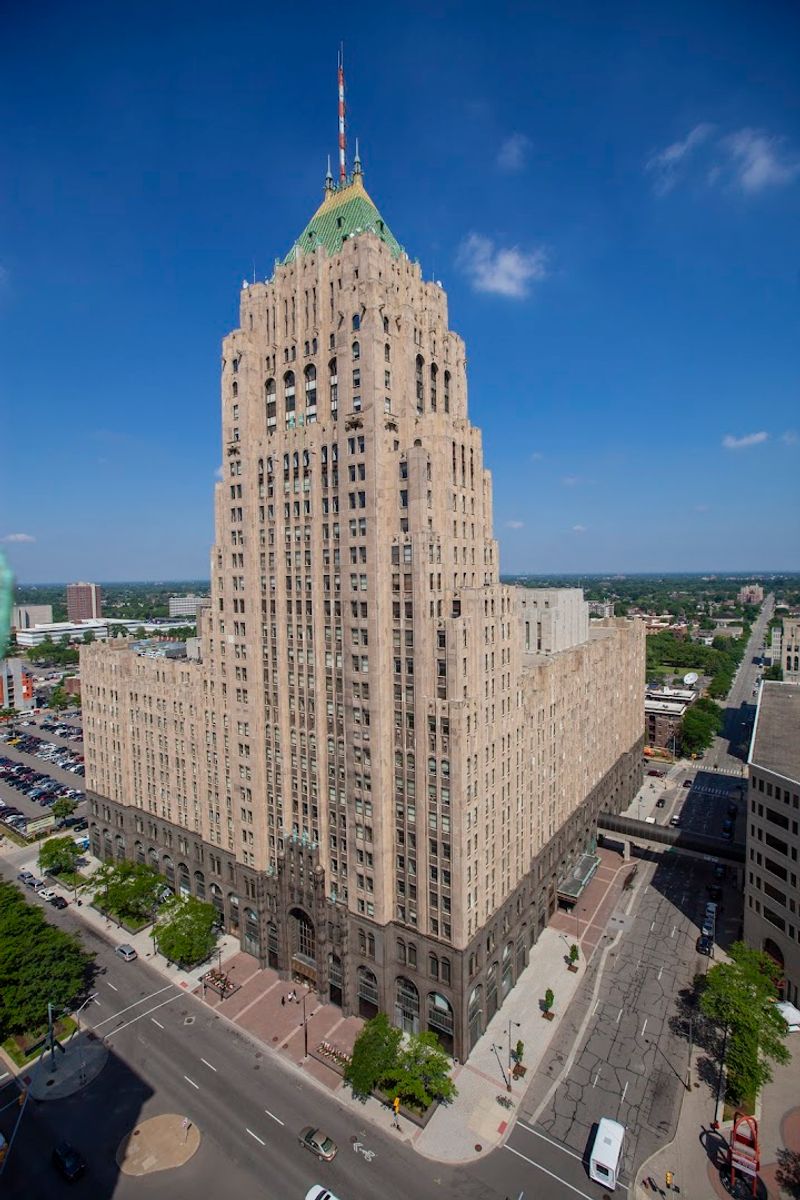
The Fisher Building is the kind of skyscraper that makes you slow down before you even reach the door. Designed by Albert Kahn and completed in 1928, this 30-story Detroit icon balances a commanding exterior with a lobby so ornate it almost feels staged for a royal entrance.
You get limestone, granite, marble, and a silhouette that still holds its own in a city packed with architectural heavyweights.
Then the interior takes over with a three-story barrel-vaulted lobby, hand-painted ceilings, brass and bronze detailing, and an astonishing range of marble that turns every surface into part of the spectacle. I think what makes it special is that it never feels flashy just for the sake of it, because every flourish seems carefully composed and deeply confident.
If Detroit has buildings that behave like civic jewelry, this one is the gemstone, polished by craftsmanship and still glowing long after its Jazz Age moment should have faded.
Book Tower (Detroit)
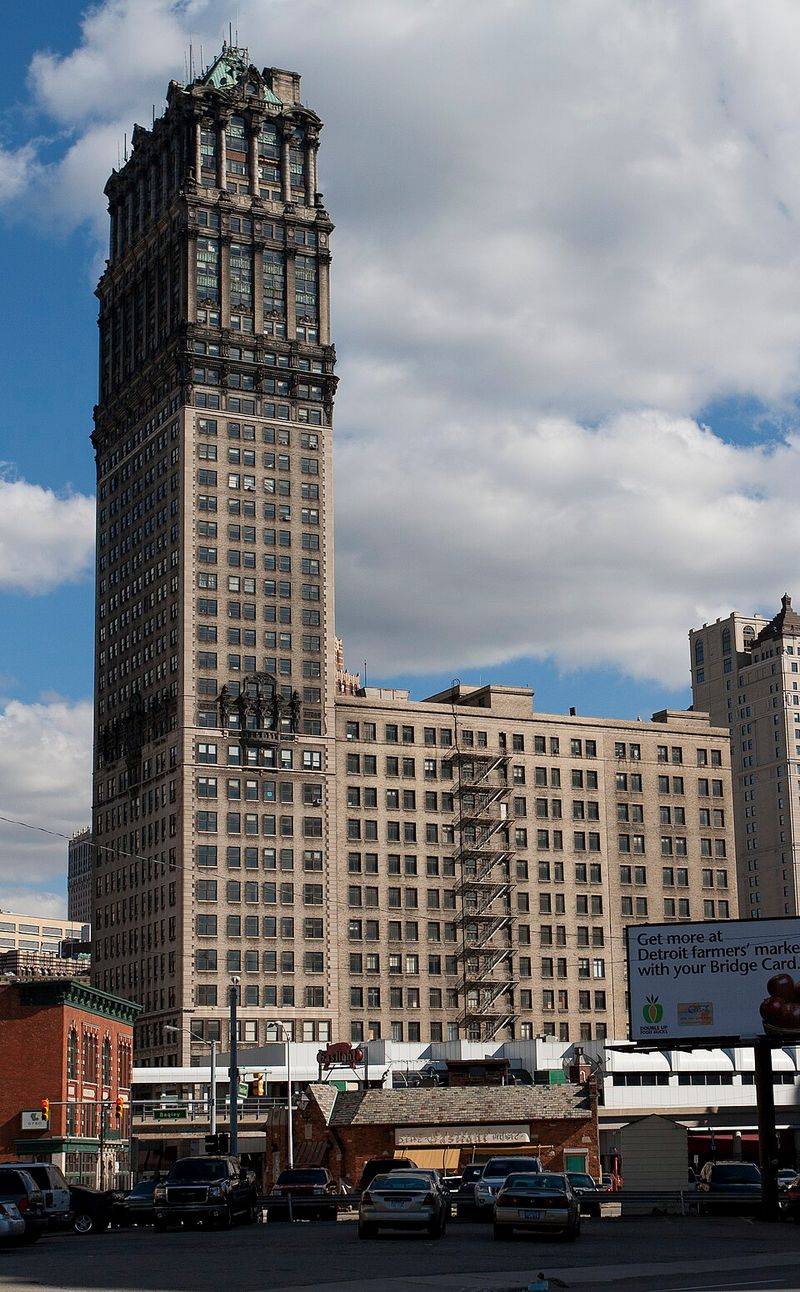
Image Credit: Albert duce.
Book Tower has the dramatic energy of a grand old novel that somebody finally restored page by page. Rising 38 stories above Washington Boulevard, this 1926 landmark by Louis Kamper wraps Italian Renaissance style around skyscraper ambition, complete with a green copper roof and an exterior rich with carved classical detail.
I find it especially satisfying because its beauty is not just historic trivia anymore, it is visible again in ways you can actually feel.
The recent restoration brought back the multi-story arched atrium and art glass skylight, and those revived interior spaces make the building feel generous rather than merely preserved. It was briefly Detroit’s tallest building, but what matters more now is how gracefully it bridges old luxury and new urban energy.
If you like architecture that looks romantic from the sidewalk and cinematic once you enter, Book Tower gives you that rare combination of skyline presence and intimate interior magic.
Penobscot Building (Detroit)
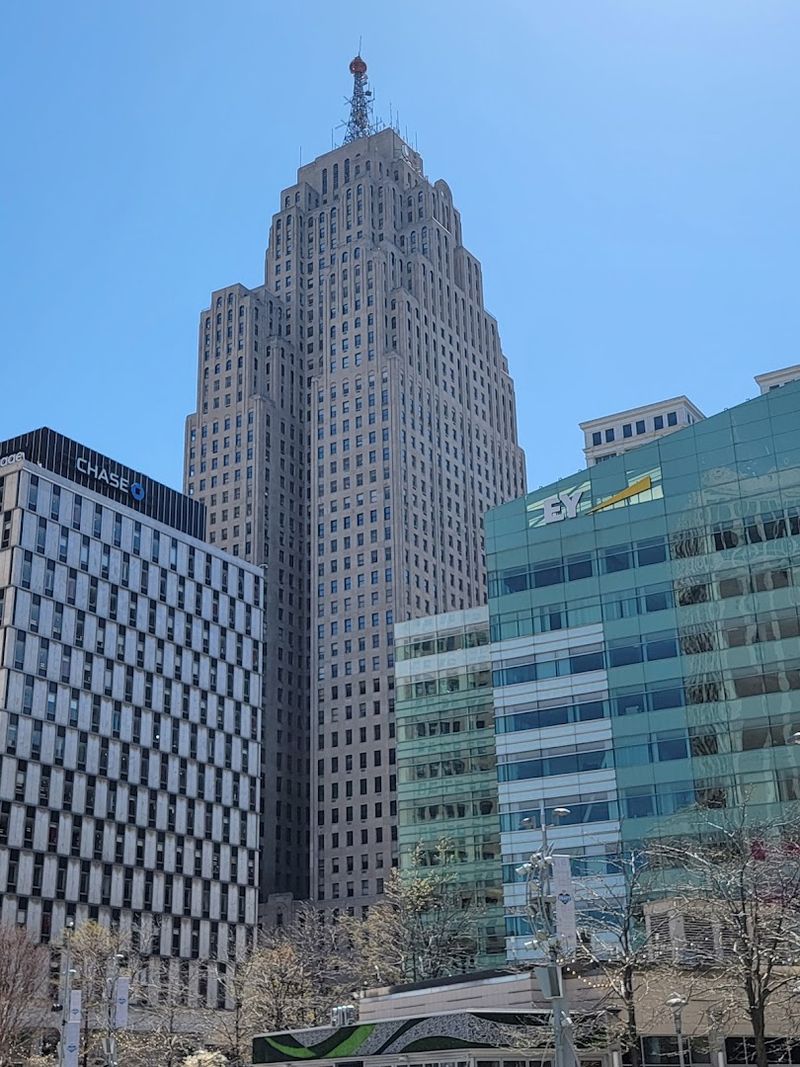
The Penobscot Building does not politely join Detroit’s skyline, it takes command of it. Completed in 1928 and designed by Wirt C.
Rowland, this 47-story Art Deco giant dominated the city for decades with red-brick massing, sharp setbacks, and a profile that seems to climb in deliberate stages toward its famous mast. I like that it looks muscular without losing the sculptural elegance that makes great skyscrapers feel more like monuments than office blocks.
Its upper floors seem to erode upward in terraces, which gives the tower motion even when you are standing still on the street below. The illuminated beacon at the top adds a little myth to the whole composition, as if the building still wants to announce itself across the city after dark.
If you are drawn to architecture that projects confidence, industry, and a distinctly Detroit version of grandeur, the Penobscot is one of those buildings that instantly explains the city’s vertical ambition.
David Stott Building (Detroit)
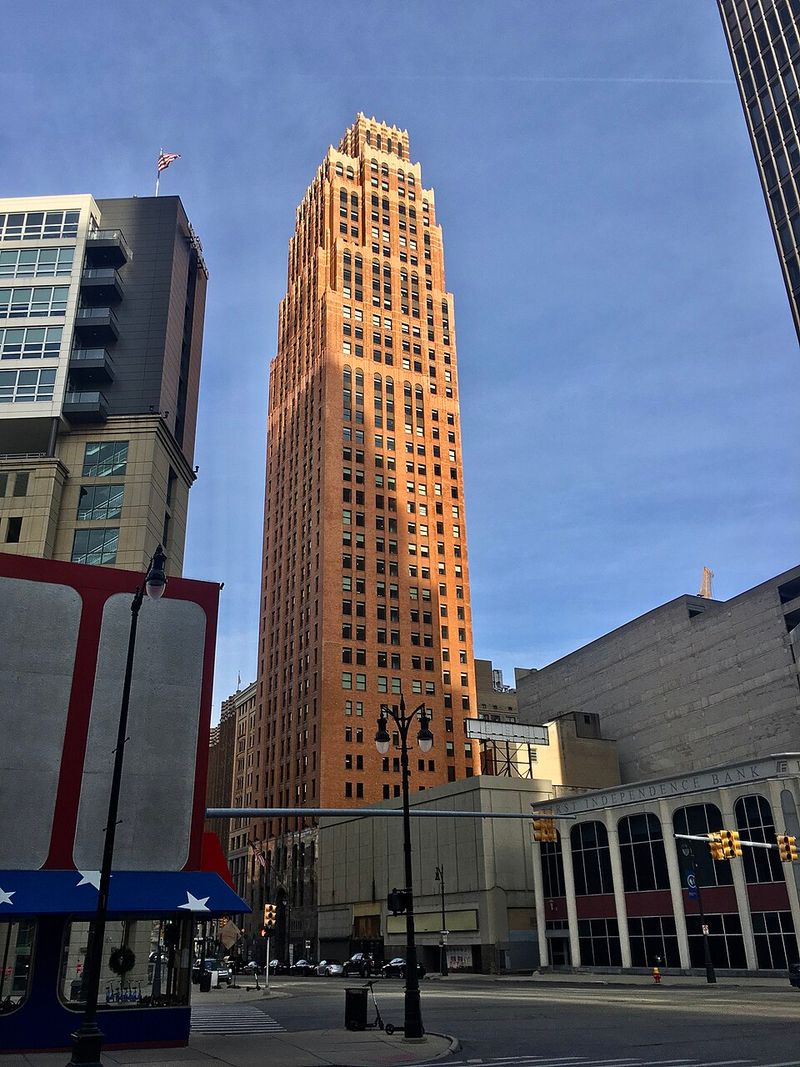
Image Credit: Andre Carrotflower.
The David Stott Building brings a warmer, moodier palette to Detroit’s skyscraper conversation, and that is exactly why it stands out. Completed in 1929 and designed by John M.
Donaldson, the 38-story Art Deco tower uses reddish-orange brick, limestone accents, and geometric setbacks to create a silhouette that feels both refined and energetic. I always think of it as a skyscraper that glows rather than merely rises.
At street level, the pink-veined marble and decorative detailing give the base a sense of ceremony, while the vertical composition pulls your eye upward in a steady architectural rhythm. Renovated common areas and restored brass elements help reveal how luxurious the building was meant to feel, even within a commercial setting.
If some towers impress you with sheer size, this one works differently by using color, texture, and proportion to leave a memorable impression, proving that Detroit’s best high-rises are not just tall, they are deeply expressive pieces of design.
Renaissance Center (Detroit)
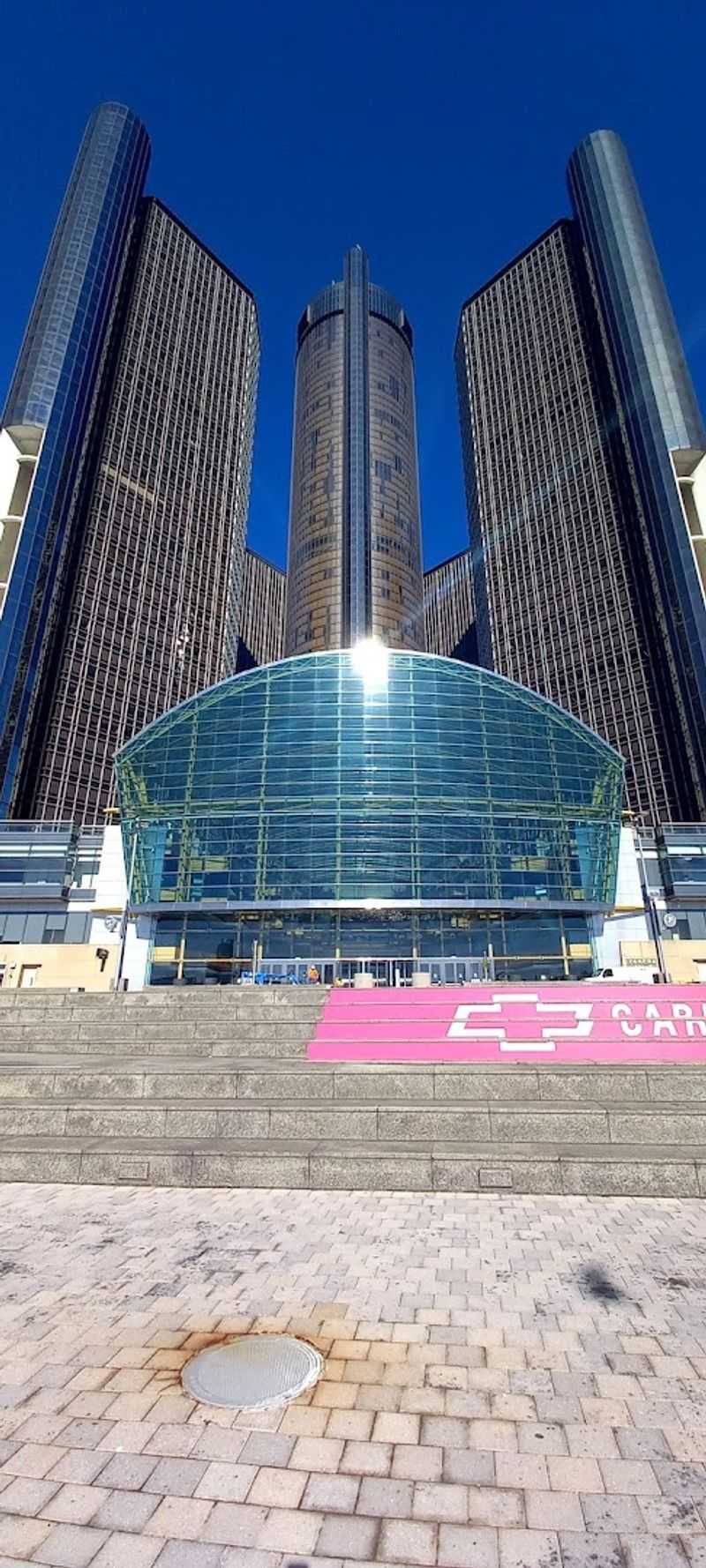
The Renaissance Center feels like Detroit imagining the future at full scale and then building it right on the water. Opened in 1977 and designed by John Portman, the seven-tower complex centers on a 73-story cylindrical skyscraper that remains the tallest building in Michigan.
You can debate whether it is friendlier than the city’s older towers, but you cannot deny the drama of its reflective glass forms dominating the riverfront skyline.
What fascinates me is how different its architectural language is from Detroit’s ornate Art Deco classics, because this complex trades carved symbolism for repetition, sweep, and corporate spectacle. Its geometry makes the skyline look more international, almost as if a futuristic city was dropped beside the Detroit River and told to start a conversation with Canada.
If you want to see how Michigan architecture stretches beyond historic ornament into bold late modern ambition, the Renaissance Center is the clearest and tallest statement.
Buhl Building (Detroit)
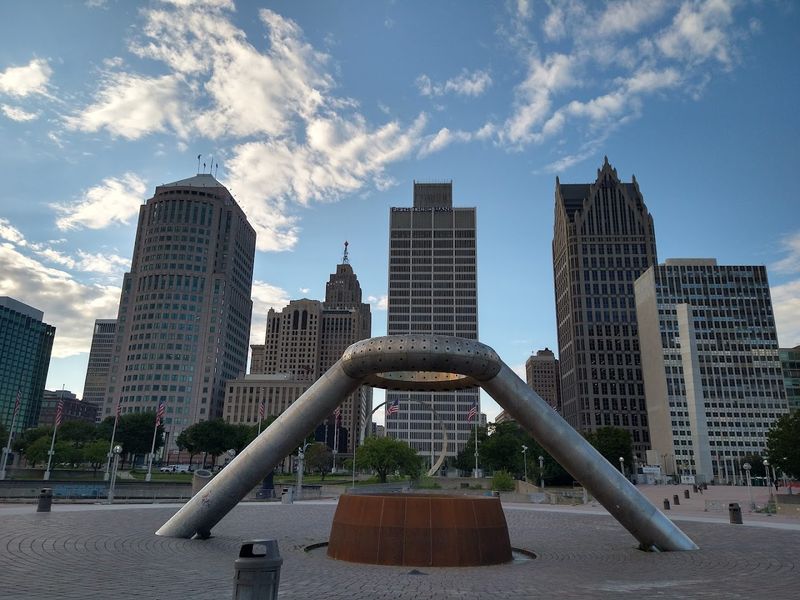
The Buhl Building is what happens when gothic fantasy learns how to operate as a modern office tower. Designed by Wirt C.
Rowland and completed in 1925, this Detroit landmark pairs a Neo-Gothic sensibility with a highly practical cruciform floor plan that once helped flood offices with light and air. I love that combination because it shows architecture does not have to choose between romance and intelligence.
The cream-colored terra cotta, granite base, and carefully placed ornament give the exterior a finely carved look, while gargoyles and sculptural details keep the whole composition from ever feeling routine. Its engineering logic is just as compelling as its decoration, since the plan created corner offices and outside windows in an era when those things mattered enormously to daily work life.
If you are drawn to buildings that reward both close inspection and skyline viewing, the Buhl is a perfect reminder that practical innovation can still arrive dressed in theatrical historic costume.
Cadillac Place (Detroit)
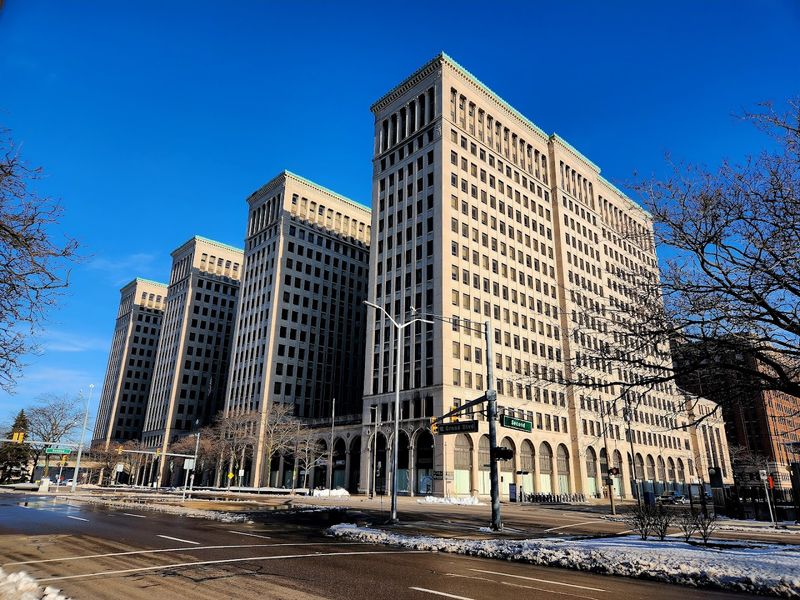
Cadillac Place feels like Detroit proving an office building can carry itself with the confidence of a civic monument. Completed in 1922 for General Motors and designed by Albert Kahn, it stretches across New Center with a limestone exterior that looks formal, balanced, and unmistakably grand.
You can see Beaux-Arts discipline in every cornice, column, and carefully measured window line.
What I love most is how the scale never turns cold or remote. Even at fifteen stories, the building reads as elegant instead of overpowering, giving the neighborhood a sense of permanence that newer towers rarely match.
It is the kind of skyscraper that makes ambition look polished.
David Broderick Tower (Detroit)
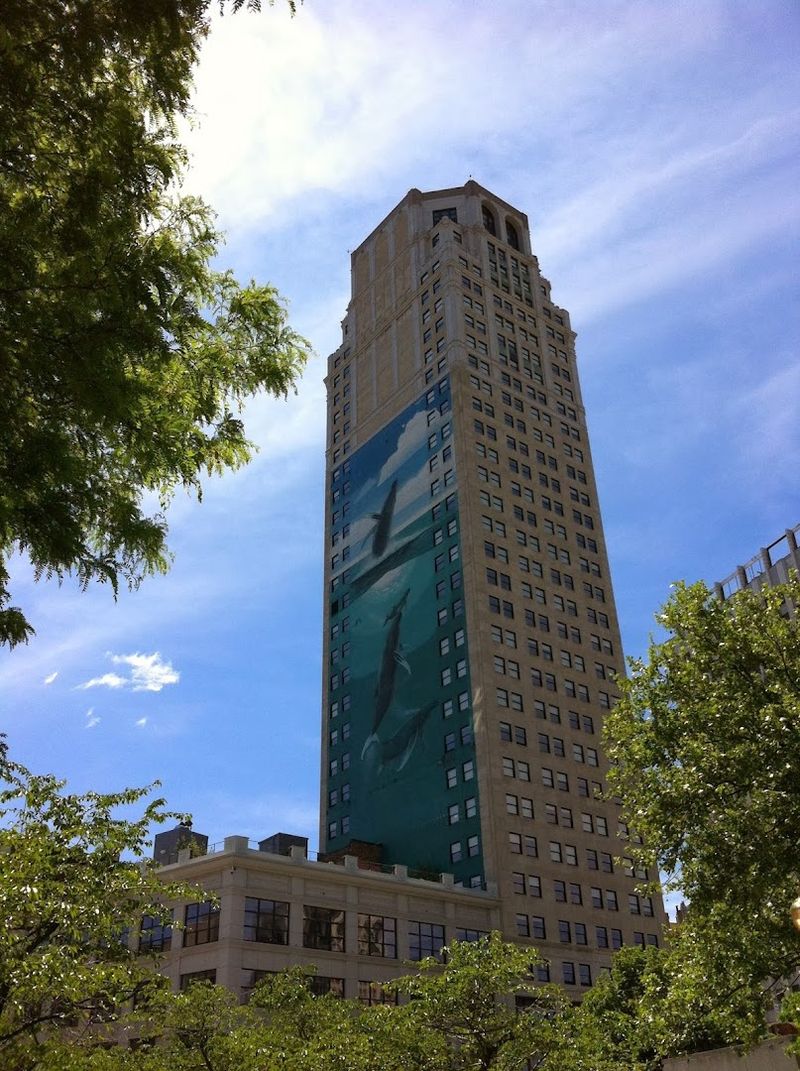
David Broderick Tower has the kind of upper silhouette that makes you immediately look twice. Finished in 1928 and designed by Louis Kamper, this 34-story French Renaissance skyscraper mixes vertical urban intensity with ornate copper detailing and temple-like roof pavilions that feel almost ceremonial against the sky.
I like how it manages to be sophisticated without blending into the background of downtown Detroit.
The building’s historic character comes through strongest near the top, where its classical references and roofline details create a memorable crown rather than a flat ending. Even from a distance, you can sense that it belongs to an era when finishing touches mattered and rooftops were part of the composition, not an afterthought.
If you are interested in skyscrapers that use old-world influence to create a more dramatic city profile, this tower is one of Michigan’s most convincing examples of elegance stacked vertically.
River House Condominiums (Grand Rapids)
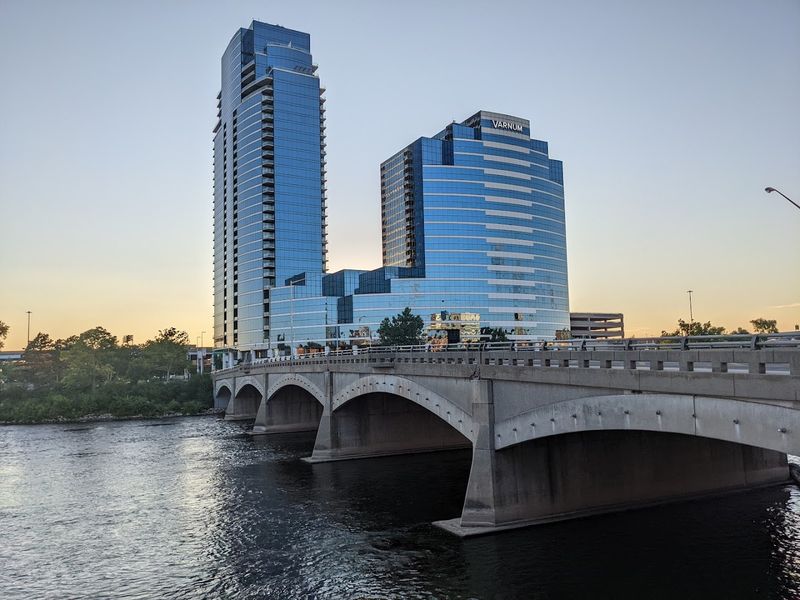
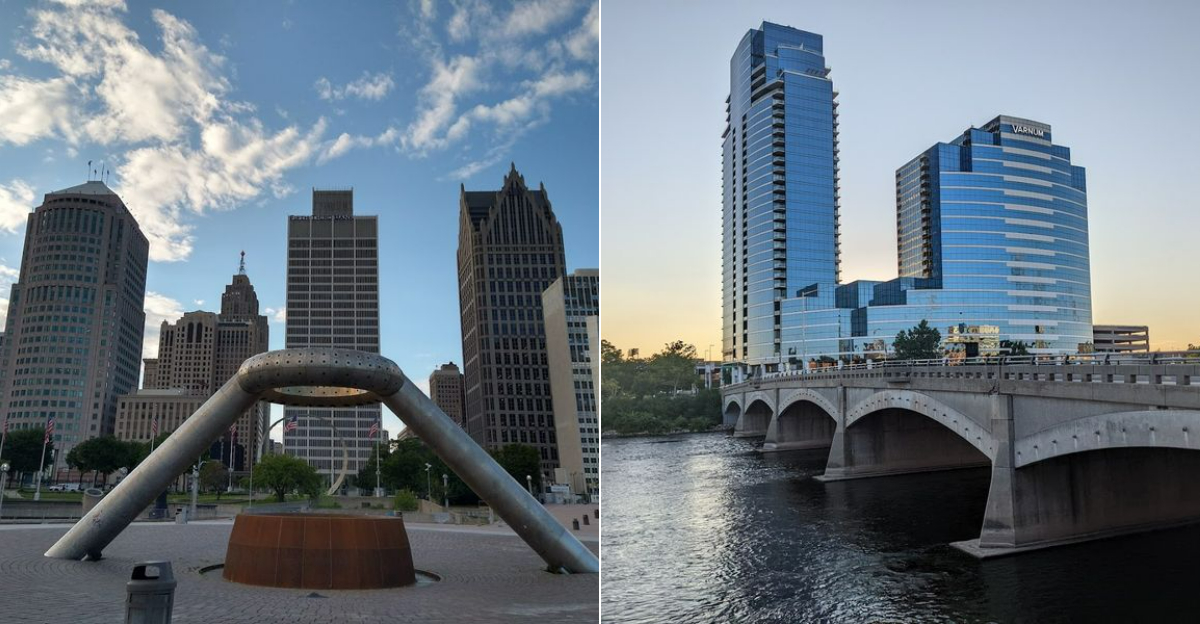
River House Condominiums feels like Grand Rapids deciding its skyline could finally stretch with a little swagger. Completed in 2008, this 34-story tower brought a sleek wall of glass and concrete to the banks of the Grand River, and it still reads as a confident modern marker from almost every angle downtown.
You notice how clean and vertical it looks right away.
What makes it stand out is the contrast. Among landmarks, River House adds a cooler note without feeling out of place, especially when light catches its facade at sunset.
It is less ornate than Detroit’s Deco giants, but that restraint gives it punch.
Tower Plaza (Ann Arbor)
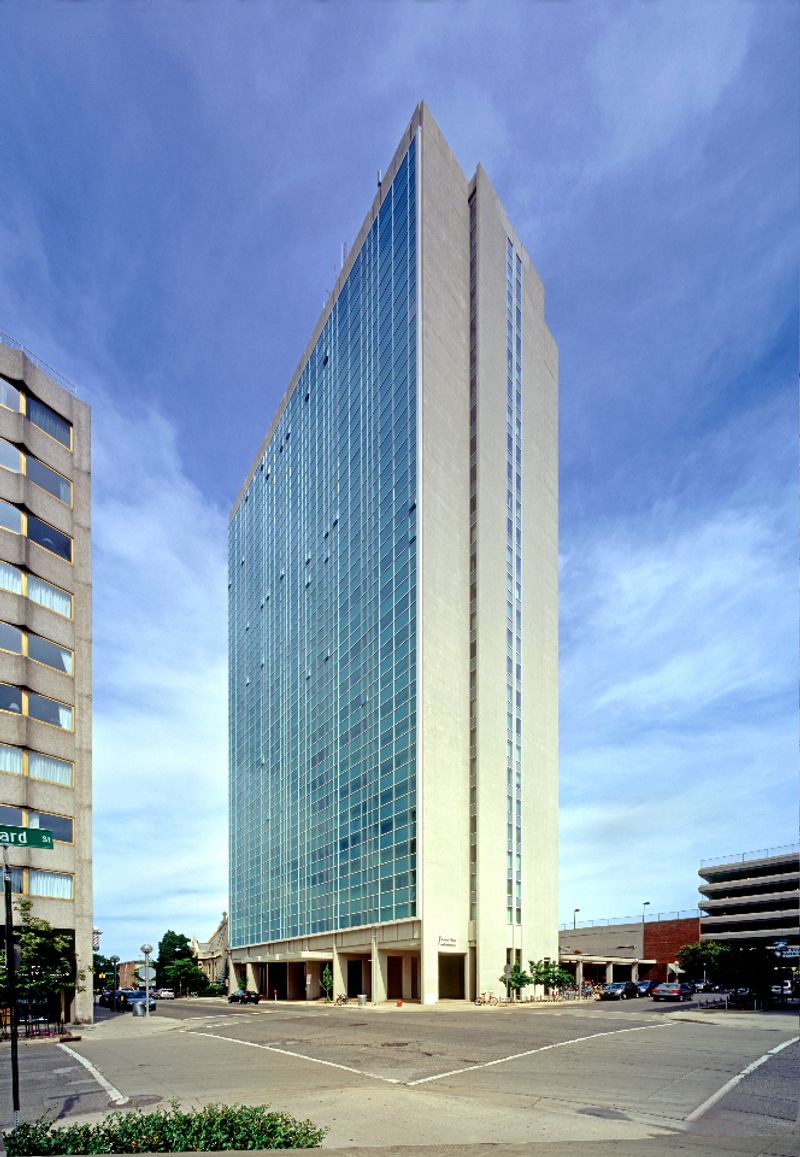
Tower Plaza stands apart from Michigan’s decorated classics, and that contrast is exactly what makes it memorable. Completed in 1969, this 26-story Ann Arbor high-rise uses concrete, glass, and an International Style framework with a slightly brutalist edge to create a presence that feels direct, urban, and unapologetically vertical.
I like how it interrupts the university town scale with a skyline gesture that says serious city life happens here too.
It is the tallest building in Ann Arbor, and that prominence gives it a role far bigger than its footprint might suggest. Unlike Detroit’s Jazz Age towers, Tower Plaza does not try to charm you with carved ornament or historic romance, instead relying on mass, repetition, and visibility to make its point.
If you appreciate architecture that reveals changing tastes as clearly as changing engineering, this building is worth your attention because it marks a shift from decorative exuberance to modern urban assertion in a very readable form.