Pennsylvania is full of surprises that defy the limitations of a smartphone camera lens, offering a physical depth and sensory richness that simply cannot be flattened into a two-dimensional grid.
Actual environment at these hidden, high-impact spaces holds a power that completely outshines its digital representations.
When you stand in the presence of these Keystone State icons, the true magic lies in the sudden drop in temperature, the physical scale that makes you feel delightfully small, and the deep, resonant sounds of nature or history.
If you have ever wondered whether a famous view is actually worth it, these 11 experiences make a very convincing case.
It is time leave the digital filters behind, and experience the raw, unfiltered majesty of a state built for real-world exploration.
1. Fallingwater, Mill Run
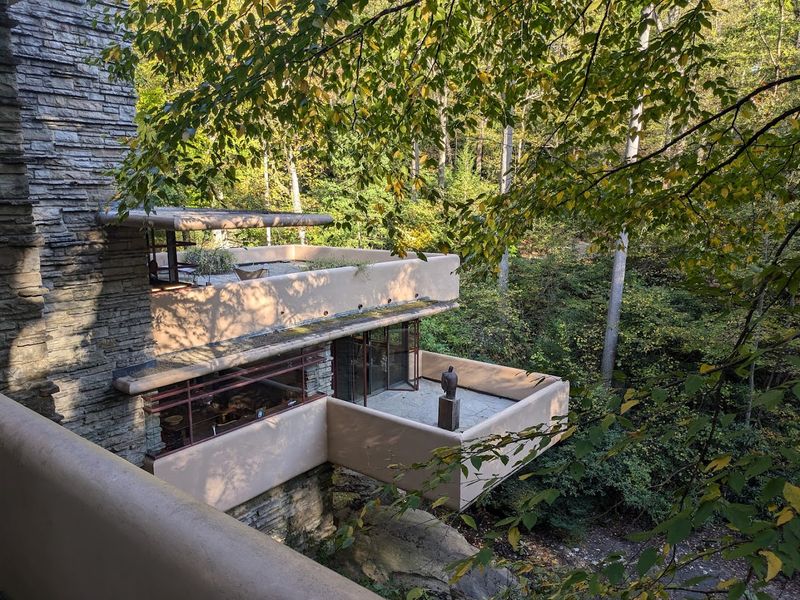
Seeing Fallingwater in Mill Run feels like walking straight into an architectural argument that nature somehow won.
Photos show the famous terraces, but they flatten the drama of the house hovering above Bear Run.
In person, you hear the water first, then notice how the structure seems to grow from the rock instead of simply sitting on it.
The approach matters more than any picture can explain.
Trees frame the reveal, the stream keeps moving under your attention, and every balcony shifts your sense of balance a little.
Frank Lloyd Wright designed it in the 1930s for the Kaufmann family, and the result still feels bold, intimate, and slightly impossible.
Inside, the scale surprises you. Rooms are lower and cozier than many expect, which makes the outdoor spaces feel even more expansive.
Built-in furnishings, stone floors, and bands of windows keep pulling your eye back to the woods.
That tension is why the place lands so hard. It is not just a pretty building in Fayette County, about 90 minutes from Pittsburgh.
It is a full sensory experience, where sound, moisture, light, and movement make the famous image feel almost incomplete.
2. Pine Creek Gorge, Wellsboro
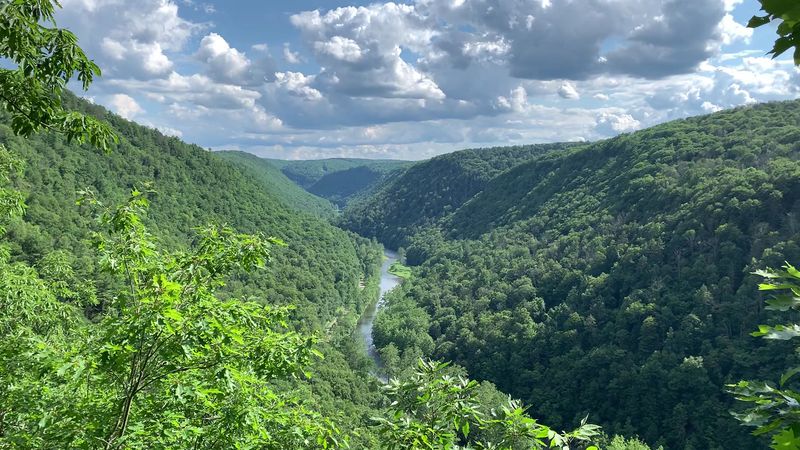
Often celebrated as the Grand Canyon of Pennsylvania, this colossal glacial scar stretching through the Tioga State Forest routinely humbles visitors who think they know what to expect from online images.
As you step out onto the elevated overlooks at Leonard Harrison or Colton Point State Parks, the sudden, dramatic drop of nearly 1,000 feet catches your breath in a way an online video never could.
The sheer, continuous scale of the 47-mile chasm expands past your peripheral vision, forcing you to turn your head to absorb the endless layers of oak, maple, and hemlock that blanket the steep canyon walls.
Down below, Pine Creek appears as a slender, glinting ribbon of silver.
Its distant rushing currents send a faint, rhythmic murmur up to the rim that grounds you in the absolute stillness of the northern wilds.
You will feel a crisp, cool mountain breeze barrel up the gorge, instantly lowering the temperature and reminding you of the raw, untamed power of the Appalachian plateau.
Sunrise, especially, turns a beautiful view into something that feels almost cinematic.
3. Kinzua Sky Walk, Mt. Jewett
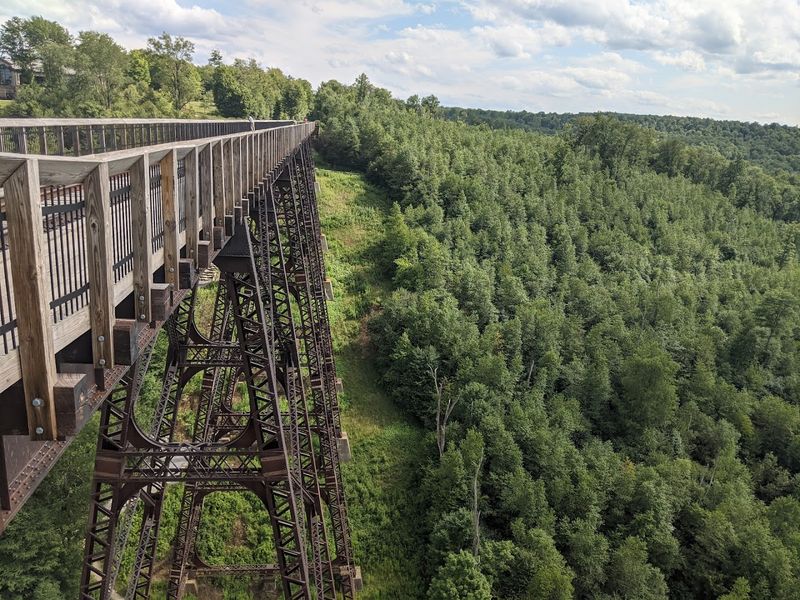
The Kinzua Sky Walk in Mt. Jewett is one of those places where your stomach reacts before your brain catches up.
Pictures show a walkway and a view, but they cannot recreate the moment you step onto the glass floor at the end.
Suddenly the valley drops away beneath you, and the old bridge story becomes very personal.
The site began as the Kinzua Viaduct, once among the world’s tallest railroad bridges when it opened in 1882.
A tornado tore through in 2003, toppling much of the structure, and the remaining section became this striking skywalk in Kinzua Bridge State Park.
That history gives the experience more weight than a simple scenic platform.
In person, the steel feels massive. You notice the twisted wreckage below, the surviving towers around you, and the huge sweep of McKean County forest in every direction.
It is beautiful, but there is also something humbling and slightly eerie about it, and that mix makes it memorable.
You get engineering, weather, history, and a knockout overlook all at once.
If you arrive near sunset or during peak fall color, the whole place glows, and the photos you take still will not explain the thrill of being there.
4. Ricketts Glen State Park – Benton
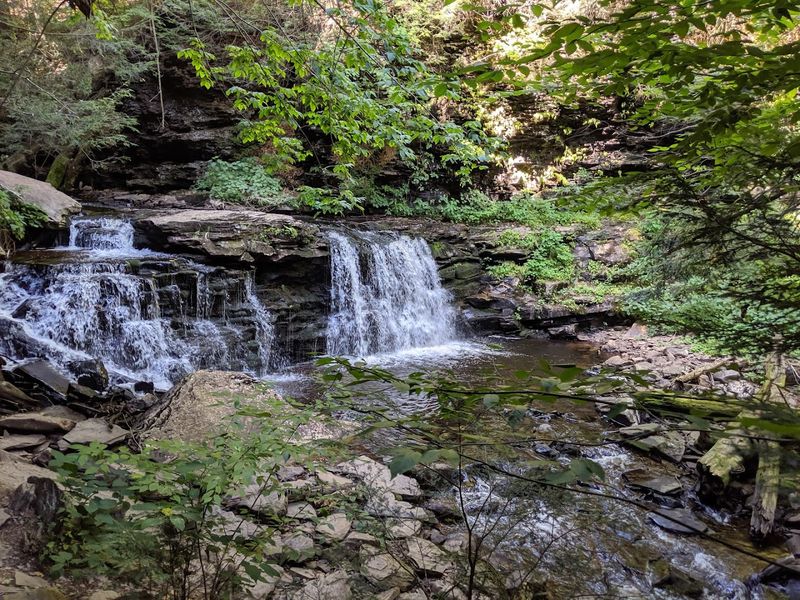
Photographs of waterfalls are a dime a dozen online, but the Glens Natural Area in Benton offers an immersive, wet-stone adventure that completely defies digital flattening.
As you navigate the steep, slippery rock steps of the famous 7.2-mile Ganoga Glen and Glen Leigh loop, you are surrounded by a roaring, multi-tiered amphitheater of 22 distinct wild cascades that tumble through an ancient, old-growth forest.
The air inside the deep shale chasm is continuously heavy with a cool, refreshing mist that coats your skin. The thunderous, overlapping echoes of falling water create a powerful, natural soundtrack that shuts out the rest of the world.
You will find yourself staring up at the 94-foot drop of Ganoga Falls, feeling the actual concussive force of the stream as it slams into the plunge pool below.
That is visceral sensation that no smartphone screen can replicate.
It is a intense, physical environment where the moss-covered logs, dripping ferns, and ancient hemlocks create a prehistoric world that rewards those willing to lace up their hiking boots and get a little damp.
5. Cherry Springs State Park, Coudersport
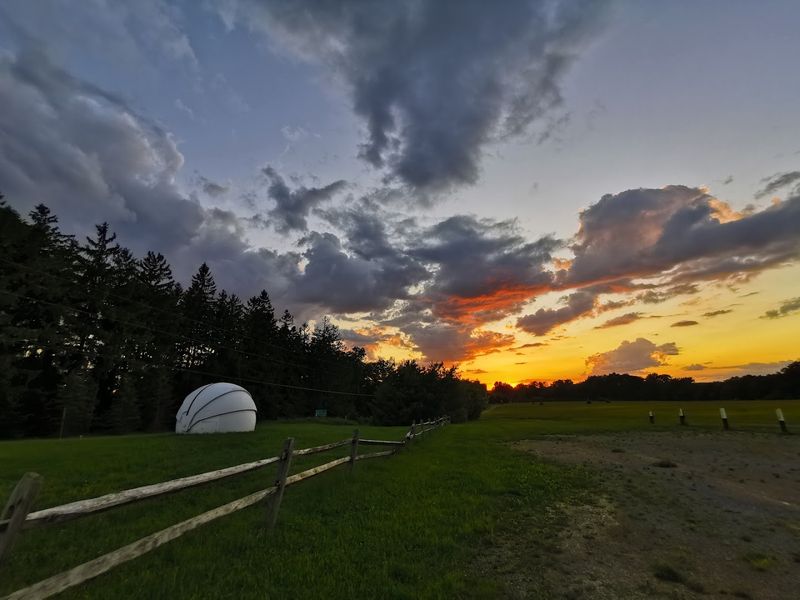
Cherry Springs State Park near Coudersport is the place that makes you understand how much the modern world usually hides.
Night sky photos from here are stunning, but in person the darkness feels deeper and the stars feel shockingly numerous.
You do not just see a sky. You feel surrounded by it.
Located in Potter County, the park is internationally known for exceptionally low light pollution and high elevation.
On a clear moonless night, the Milky Way can appear bright enough to stop conversations cold.
The astronomy field and public viewing area give both beginners and serious skywatchers room to settle in.
What images miss is the slow reveal. At first you notice a few bright stars, then clusters, then shapes, then a full river of light spreading overhead.
Your eyes adjust, your sense of scale changes, and suddenly the horizon seems less important than the vault above it.
There is also a real communal magic here. People whisper, share telescope views, and point out satellites or meteor streaks like kids discovering secrets.
Bring warm layers, patience, and realistic expectations about weather.
When conditions line up, Cherry Springs makes ordinary nighttime feel like a very small idea.
6. Ephrata Cloister, Ephrata
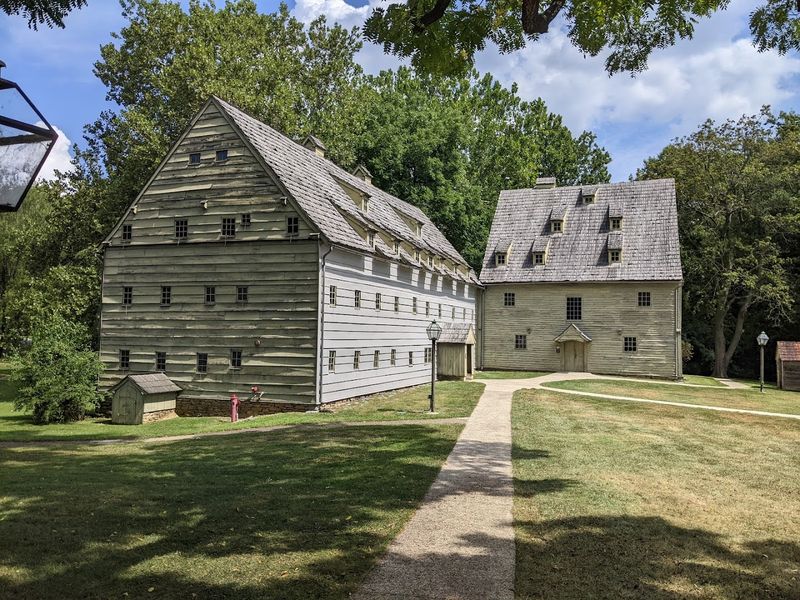
Stepping across the threshold of the historic German religious community in Ephrata instantly transports you into a quiet world that feels completely isolated from modern life.
The 18th-century timber-framed buildings, with their steeply pitched roofs and narrow, low-ceilinged hallways, were deliberately designed to foster humility and contemplation among the celibate Solitary order that lived here.
A photograph cannot convey the heavy, historical silence that hangs within the stark, whitewashed walls of the Saron.
Or the K Saal, where the only sound is the gentle groan of original oak floorboards beneath your feet
The distinctive smell of aged cedar, beeswax candles, and old flax paper engulfs you in a sensory mix that triggers an immediate feeling of reverence for the rigorous lifestyle of these early settlers.
The small windows let in precise, dramatic shafts of sunlight that illuminate the hand-lettered Fraktur calligraphy on the walls, creating a visual texture that demands a slow, deliberate look.
It is a beautifully preserved sanctuary that requires a quiet walk through its doorways to truly absorb its peaceful, spiritual gravity.
7. The Cathedral of Learning, Pittsburgh
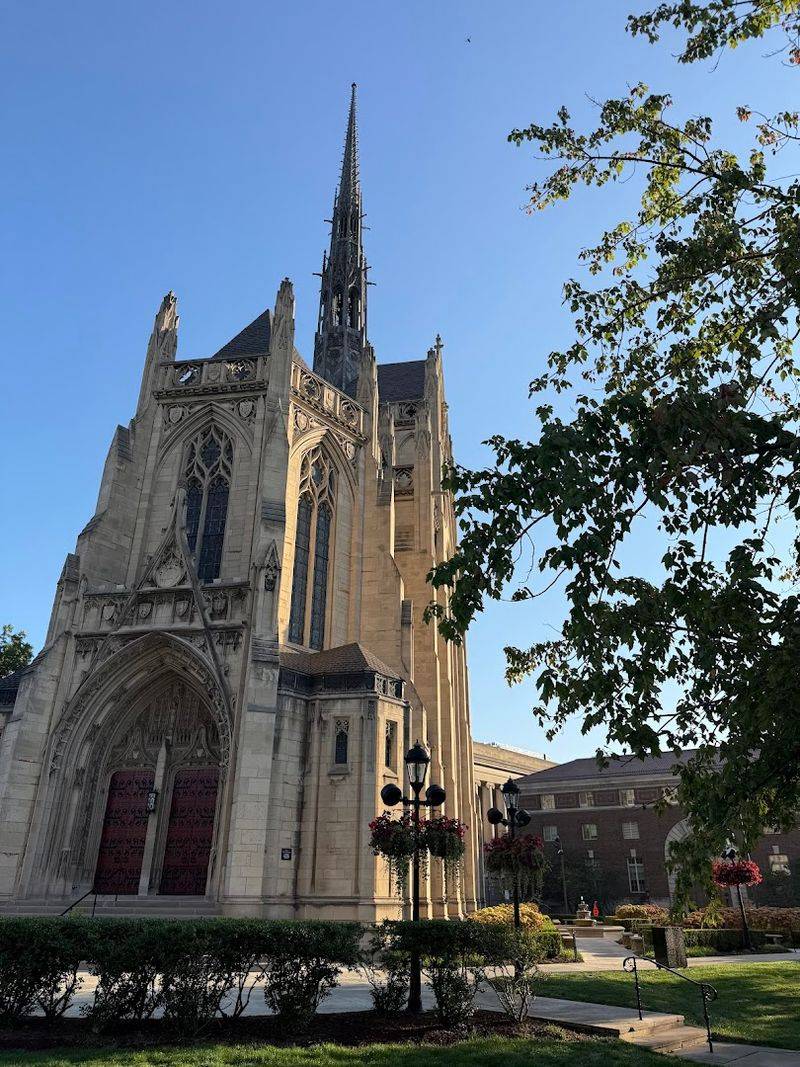
The Cathedral of Learning in Pittsburgh is famous in pictures, but nothing prepares you for how tall it feels when you stand below it.
Rising from the University of Pittsburgh campus in Oakland, the Gothic Revival tower dominates the skyline with a kind of academic confidence.
Then you step inside, and the experience changes from impressive to theatrical.
The Commons Room is the real surprise. Its vaulted arches, stone details, and enormous vertical space make it feel part library, part chapel, part movie set.
Students studying beneath chandeliers give the place an everyday energy that keeps it from becoming too solemn.
The Nationality Rooms add another layer that images rarely capture fully.
Each classroom reflects a different cultural tradition, and seeing their craftsmanship up close reveals texture, symbolism, and handwork that photos simplify.
You move from room to room and feel the building expand beyond a single style or story.
This National Historic Landmark is not frozen behind ropes. It is used, loved, and folded into real campus life every day.
In a photo, it is a beautiful tower. In person, it feels like a city within a building.
8. Presque Isle State Park, Erie
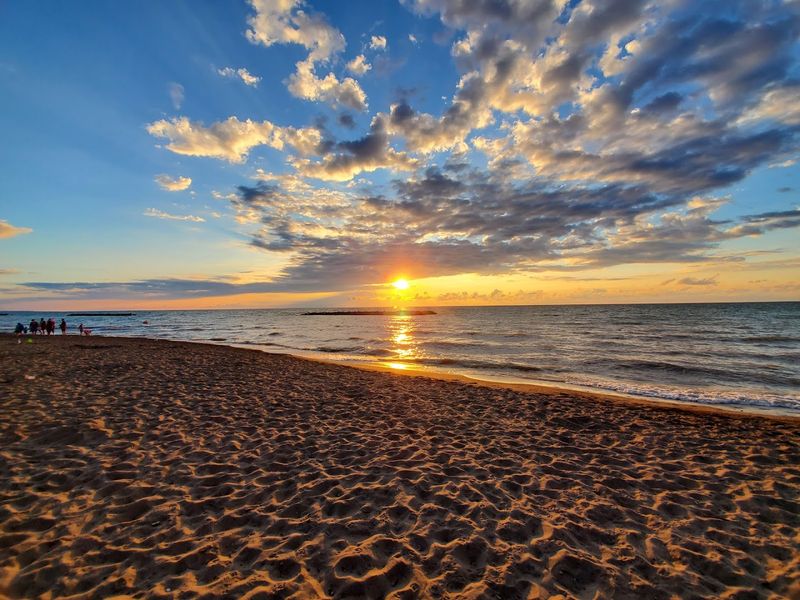
Online travel galleries often mistake photos of Presque Isle State Park in Erie for a tropical ocean getaway.
But the physical reality of Pennsylvania’s only surf beach offers a distinct, freshwater magic that is entirely its own.
When you stand on the shoreline of Beach 11, the horizon stretches out infinitely into Lake Erie, creating the illusion of an ocean expanse but without the heavy scent of salt water or the bite of sea tides.
The unique environment features a dynamic mix of shifting sand dunes, tranquil lagoons, and ecological shorelines that serve as a highway for thousands of migrating monarch butterflies and rare shorebirds.
You will feel the cool, steady lake breeze ripple across the grass as you watch the sun dip directly below the freshwater horizon, painting the sky in soft shades of violet and gold that digital cameras frequently distort.
It is a massive, shifting ecosystem where you can transition from a sun-drenched beach walk to a quiet kayak paddle through a canopy of lily pads in a matter of minutes.
You walk away with a fresh appreciation for the diverse landscapes of the Great Lakes.
9. Eastern State Penitentiary, Philadelphia
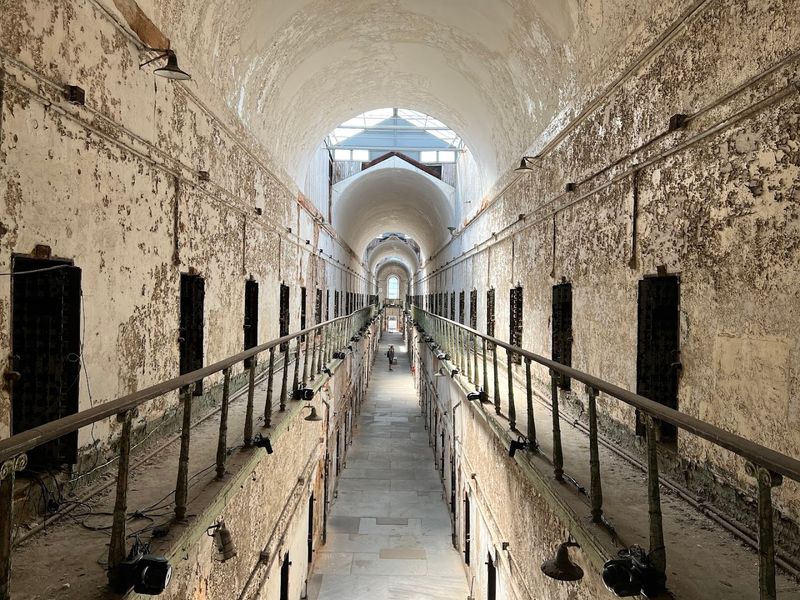
Eastern State Penitentiary in Philadelphia photographs beautifully, but the camera cannot carry the chill of the real place.
The long corridors, peeling walls, and quiet cells feel heavier when you walk them yourself.
What looks atmospheric in images becomes unsettling, fascinating, and deeply human in person.
Opened in 1829, this massive prison introduced a radical system of solitary confinement meant to inspire penitence, which is how the penitentiary got its name.
Its wagon-wheel design influenced prison architecture around the world, and later it held famous inmates including Al Capone.
That history gives every crumbling surface more meaning.
The sensory details are what make the visit land. Light drops through skylights into narrow cells, voices echo strangely, and audio tours fill empty spaces with stories that are hard to shake.
You are not just looking at ruins. You are moving through an experiment in punishment.
It is also more emotionally layered than many expect. Preservation, reform, architecture, and ethics all collide inside one landmark in the Fairmount neighborhood.
Seasonal events draw crowds, but even on busier days the building keeps its haunted gravity.
Photos can suggest mystery. Standing inside those cellblocks makes the questions feel much larger, and much less comfortable.
10. Longwood Gardens Conservatory, Kennett Square
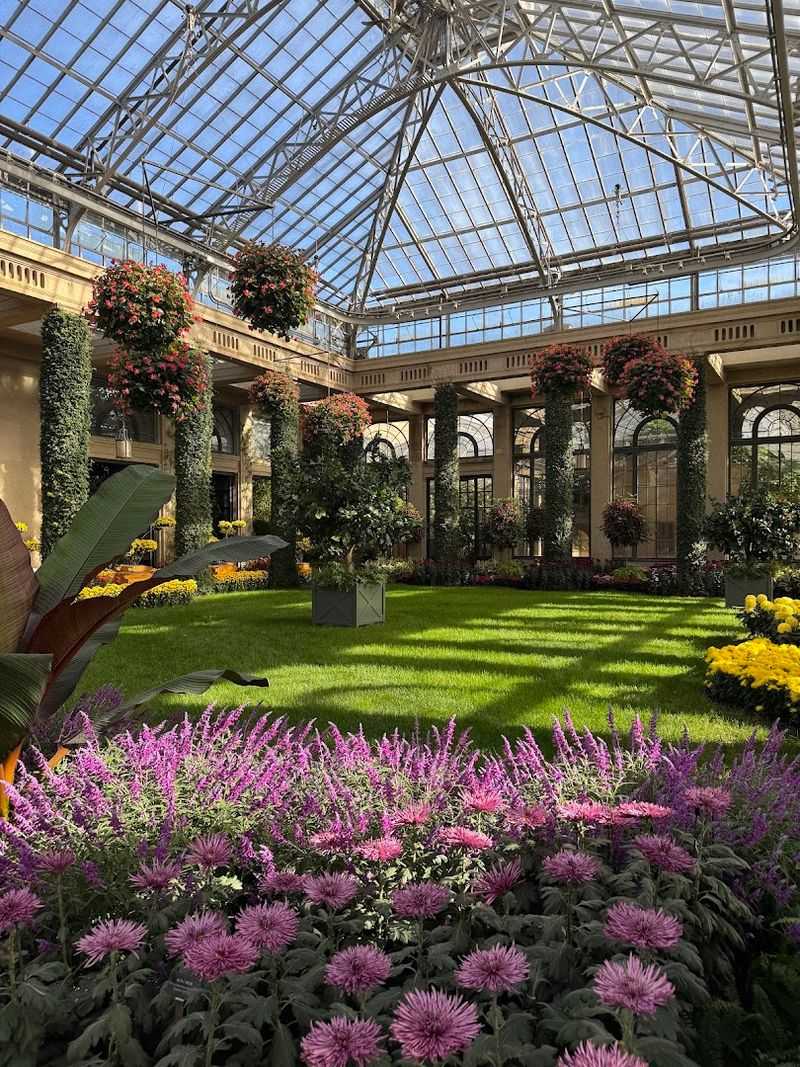
While a photograph can easily capture the colorful bloom of a rare orchid, the staggering sensory overload of the Longwood Gardens Conservatory requires a physical walkthrough to be truly appreciated.
This four-acre indoor glasshouse is located in Kennett Square.
The moment you step through the grand glass doors, a warm, humid wave of air that carries the intoxicating, sweet fragrance of thousands of exotic plants hits you.
The immaculate, symmetrical design features reflecting pools, indoor waterfalls, and towering green walls.
This creates a living palace of horticulture that shifts beautifully with the natural light pouring through the roof.
You can stroll through the warm, tropical rooms where giant Amazon water platters float on the water, or explore the stark, architectural beauty of the silver garden filled with desert cacti.
The space is a masterclass in detail, from the pristine maintenance of every single leaf to the soft, classical music that often echoes through the grand exhibition halls.
It is a luxurious, living art installation that rewards a slow, deep-breathing exploration, leaving you feeling thoroughly rejuvenated by the sheer abundance of life.
11. Ohiopyle State Park, Ohiopyle
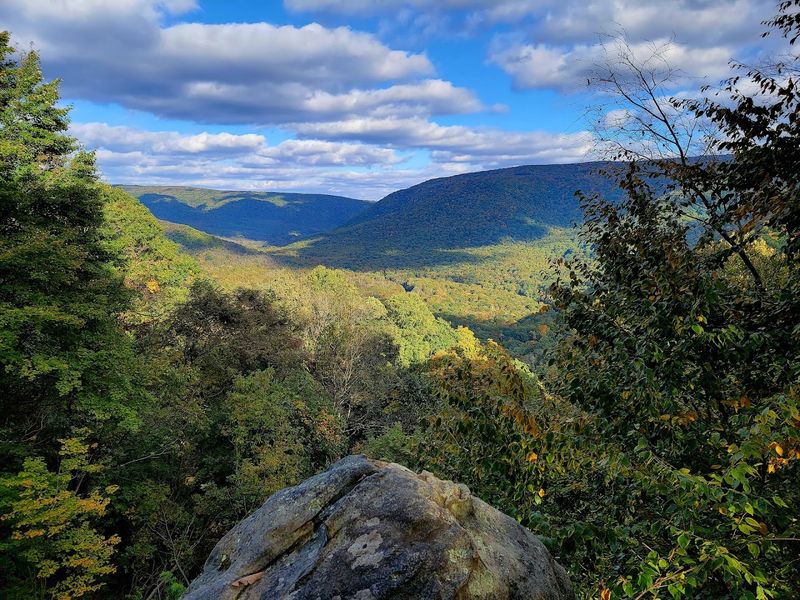
Ohiopyle State Park in the town of Ohiopyle has a restless energy that pictures rarely catch.
You can photograph Ohiopyle Falls, the Youghiogheny River, and the forested trails, but the place really announces itself through motion and sound.
Water rushes, bikes pass, hikers head out, and the whole park feels happily in gear.
Set in the Laurel Highlands of Fayette County, the park is one of Pennsylvania’s best outdoor adventure hubs.
Whitewater rafting on the Youghiogheny draws serious attention, but you also get natural waterslides at Meadow Run, scenic overlooks like Baughman Rock, and access to the Great Allegheny Passage.
That range keeps the visit from feeling one-note.
What makes it stronger in person is the texture of the landscape.
The river is louder than expected, the rocks are more sculptural, and the woods feel cooler and deeper once you leave the parking areas behind.
Even a short walk changes the atmosphere quickly.
It is also a place that rewards whatever pace you bring. You can chase adrenaline, picnic near the falls, or just watch kayakers thread through rapids.
That flexibility gives Ohiopyle a lived-in charm beyond its beauty.
In photos it looks like a destination, but on the ground, it feels like a full day that keeps finding new ways to entertain you.