
Sometimes the best reset isn’t a big vacation — it’s a two-day drive to a small Ohio town where the streets are quiet, the coffee is hot, and nobody is in a rush. April is a genuinely underrated month for this kind of trip: the weather is warming up, the trees are starting to bloom, and the tourist crowds haven’t arrived yet.
Ohio has a surprising number of small towns that reward slow wandering, and these twelve are worth every mile of the drive.
Yellow Springs: The Town That Refuses to Be Ordinary
Walk into Yellow Springs on any April morning and you’ll immediately notice something: people here actually talk to each other. The coffee shop has a philosophy section.
The bookstore hosts live music. None of it feels forced or put on for visitors — it’s just how the town operates.
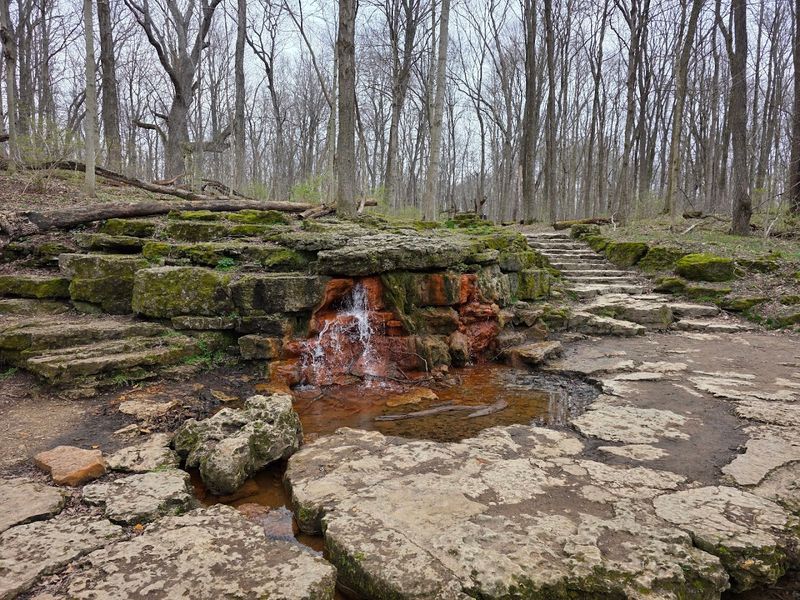
Glen Helen Nature Preserve sits right at the edge of town and is at its most alive in April. Wildflowers line the trails, the yellow spring itself runs clear and cold, and the trees are just beginning to close back in overhead, creating that tunnel-of-green effect that feels almost magical.
Plan to spend a full morning in the preserve and an afternoon wandering Xenia Avenue, where independent shops and galleries fill nearly every storefront. Yellow Springs is the rare town that has a genuine identity — quirky, creative, and completely its own — and April is probably the best time to experience it without the summer crowds.
Granville: Quiet Streets and a Village Green That Earns It
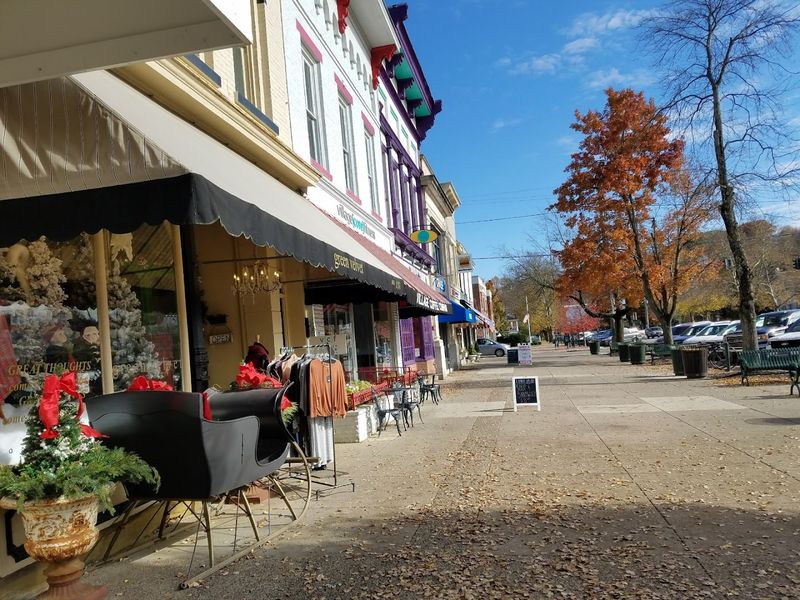
Granville looks like someone carefully transplanted a Connecticut village into the Ohio countryside and then left it alone for two centuries to settle in — which is more or less what happened. Founded in 1805 by settlers from Granville, Massachusetts, the town has held onto its New England bones in a way that feels earned rather than staged.
Broadway Avenue in April is genuinely worth a slow walk. The trees are in full flower, the historic markers are everywhere, and the pace of life is unhurried enough that you’ll actually stop to read them.
Denison University sits on the hill above town and adds a quiet academic energy without overwhelming the village itself.
Good coffee, a few excellent restaurants, and independently owned shops make it easy to fill a weekend without any real agenda. Granville rewards the kind of travel where you don’t have a schedule — just a direction and a willingness to wander slowly down well-kept sidewalks.
Zoar: A Communal Village Frozen in the Best Possible Way
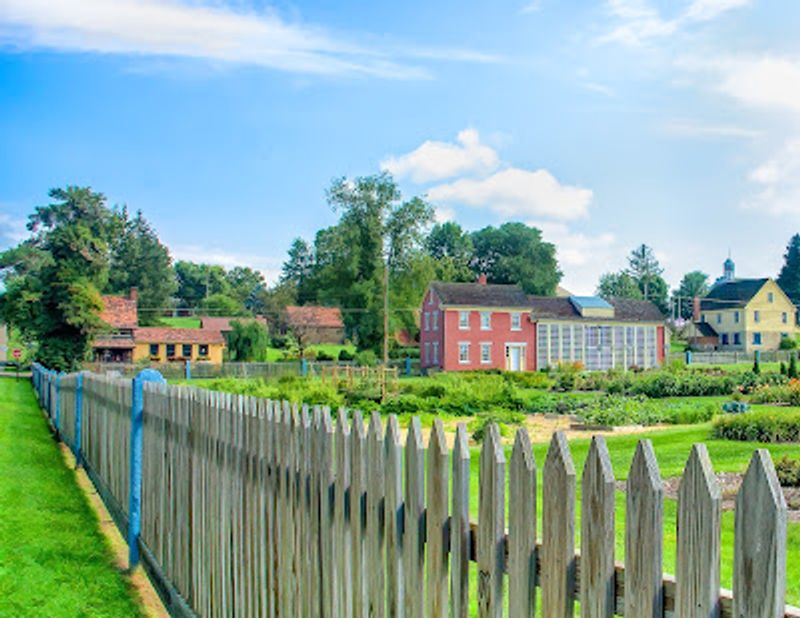
Zoar was founded in 1817 by a group of German separatists looking to build something entirely their own — a self-sufficient communal community with shared gardens, shared labor, and a shared vision. What they left behind is one of the most intact early 19th-century villages in the entire Midwest.
April is the right month to visit because the restored gardens are just beginning to come back to life after winter, and the grounds are quiet enough on a Saturday morning to feel genuinely atmospheric. The numbered buildings, the geometric garden layout, and the small museum tell a story that’s both unusual and surprisingly moving.
Zoar sits in Tuscarawas County, close enough to the Cuyahoga Valley area to combine with a longer trip but rewarding enough to justify a visit on its own. There’s a good inn in town if you want to stay overnight — waking up in Zoar in April, with mist still on the fields, is a hard experience to top.
Millersburg: The Heart of Holmes County and a Slower Gear
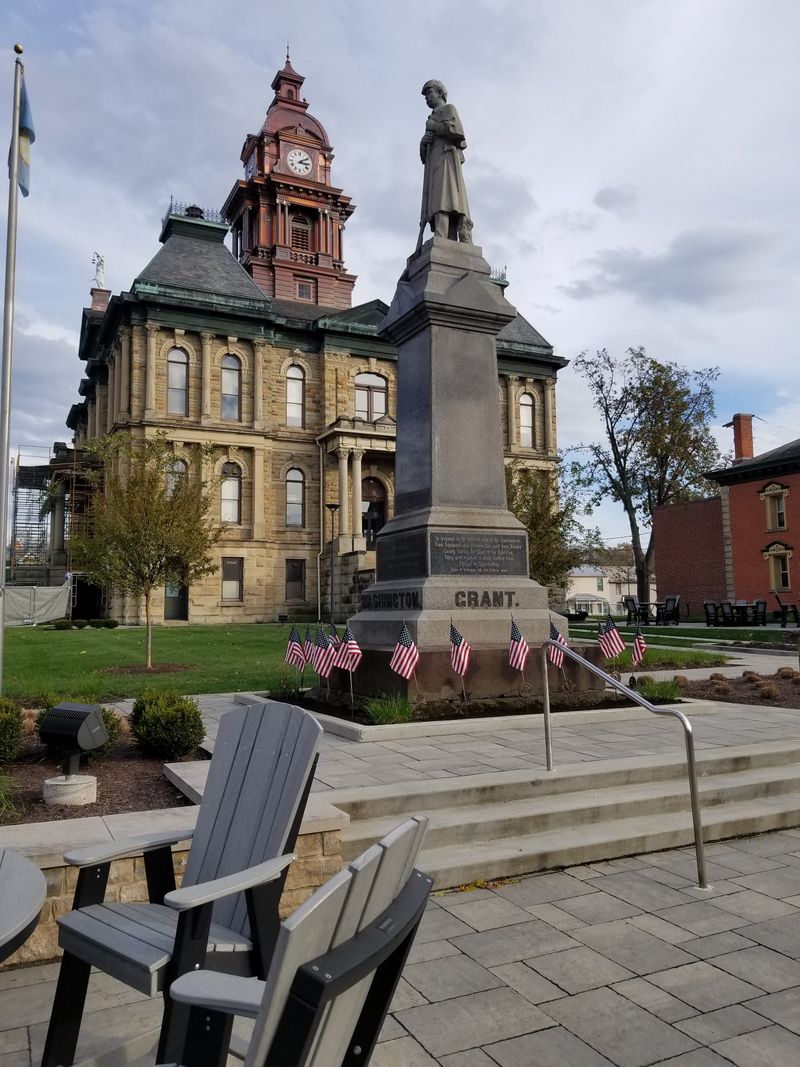
Holmes County is home to the largest Amish population in the world, and Millersburg — the county seat — reflects that in ways both visible and subtle. Horse-drawn buggies share the road with cars.
Hardware stores and bakeries operate on a schedule that doesn’t bend for convenience. The pace here isn’t slow because the town is behind — it’s slow because that’s a conscious choice.
April is ideal for visiting because the summer tourist rush hasn’t arrived yet. The farmers markets are running, the bakeries are stocked, and you can walk into shops and actually have a conversation with the person behind the counter without a line forming behind you.
The Victorian-era courthouse at the center of town is worth a stop, and the surrounding county roads — especially by bike or slow drive — open up into rolling farmland that in April is green in a way that feels almost unreasonably beautiful. Come before the crowds do and you’ll understand why people keep coming back.
Nelsonville: A Square, a Theater, and a Rail Trail Worth Walking
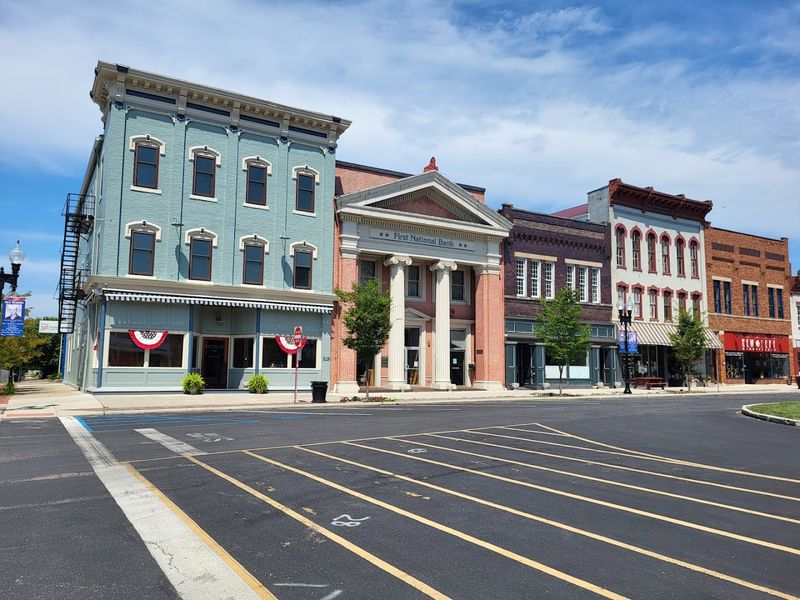
Stuart’s Opera House has been the anchor of Nelsonville’s public square since 1879. It closed for decades, fell into disrepair, and then — through a genuinely community-driven restoration effort — came fully back to life and now hosts live performances on a regular schedule.
That story says a lot about the town itself.
The square has the worn, real-world quality of a place that has been through some things and is still standing. It doesn’t feel curated or polished, and that’s exactly what makes it interesting.
April is when the Monday Creek area just outside town connects to trails that are green, slightly muddy, and perfect for a long walk with no particular destination in mind.
Nelsonville is in Hocking County, close to the Hocking Hills region, which makes it a smart first or last stop on a longer southeastern Ohio trip. But it’s worth visiting for its own sake — the opera house alone, on a live-performance weekend, makes the drive completely worth it.
Gambier: A College Town Quiet Enough to Actually Think
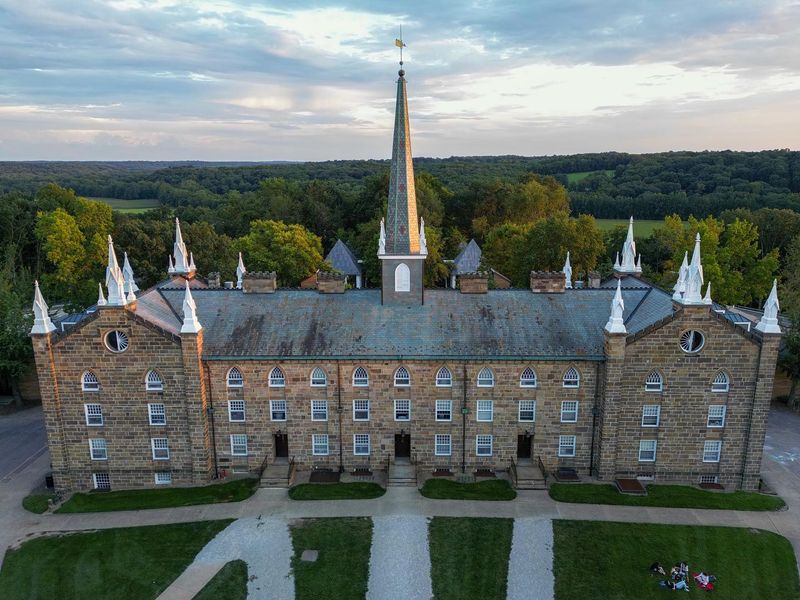
Fewer than 2,500 people live in Gambier, and most of what passes for a downtown is one road with a cafe, a used bookstore, and a post office. That’s not a criticism — it’s actually the entire point.
Gambier exists almost entirely around Kenyon College, and the campus in April is the kind of beautiful that sneaks up on you.
The Gothic stone buildings, the long tree-lined paths, and the grounds that are just starting to go green after a long Ohio winter create an atmosphere that’s genuinely hard to describe without sounding like a brochure. Just walk it.
After an academic winter, the campus opens up in April in an unmanicured, grown-in way that feels earned.
The cafe on Middle Path is good. The bookstore has surprising depth for a town this size.
And there’s almost no reason to look at your phone the entire time you’re there — which, depending on your week, might be the most valuable thing Gambier has to offer.
Marietta: Ohio’s First Settlement, Still Worth the Drive
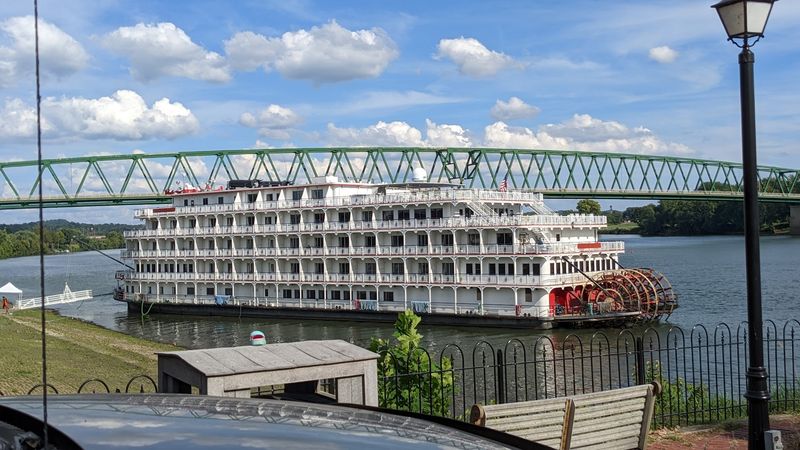
Established in 1788, Marietta holds the distinction of being Ohio’s first permanent American settlement — and it carries that history without making it feel like a museum. The historical markers are everywhere, yes, but so are genuinely good restaurants, walkable streets, and locally owned shops that make the downtown feel alive rather than preserved in amber.
April brings the Ohio and Muskingum rivers up full and fast, and the Harmar Bridge walk becomes one of the more satisfying short walks in all of southeastern Ohio. The river views from the bridge, with the town behind you and the water moving wide and purposeful below, are the kind that stop your feet without any conscious decision to stop.
The Ohio River Museum is worth an hour, and the Lafayette Hotel — which has been operating since 1918 — is a genuinely atmospheric place to spend a night. Marietta rewards visitors who take their time, and April, before the summer crowds arrive, is the best time to do exactly that.
Vermilion: A Lake Erie Fishing Town That Blooms Late and Beautifully
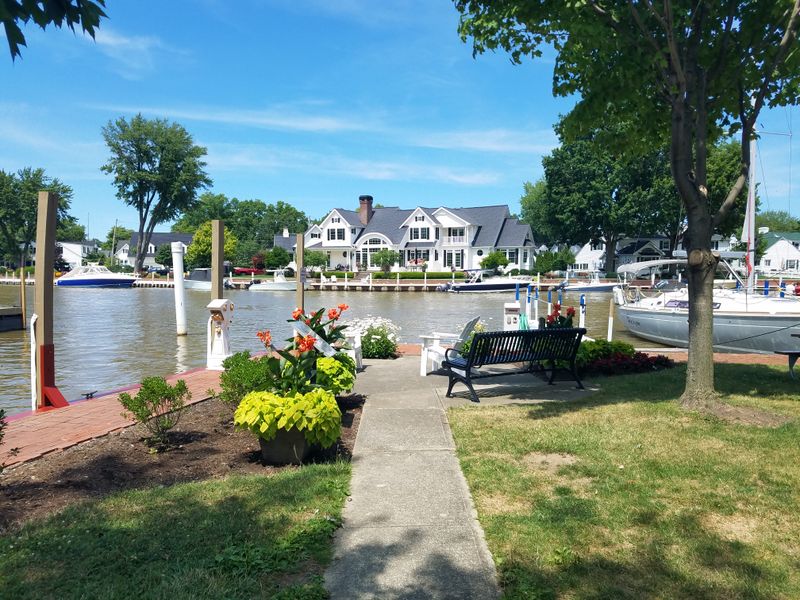
Vermilion has the feel of a New England fishing village that ended up in northern Ohio and eventually decided it was fine with that. Victorian houses line streets that slope toward the lake.
A harbor full of boats sits mostly quiet in April, waiting for the season to fully wake up. The whole town has a slightly sleepy, off-season quality that is genuinely appealing.
April is shoulder season here, which is actually the best reason to visit. The restaurants aren’t packed.
The waterfront isn’t crowded. You can walk the harbor at your own pace and stop to watch the boats without anyone rushing past you.
The Inland Seas Maritime Museum, which covers Great Lakes history, is open and rarely crowded this time of year.
Main Street has independent shops and a few good places to eat, and the residential streets behind the harbor are beautiful in a quiet, understated way. Vermilion is the kind of place you tell people about after visiting, knowing they probably won’t believe it’s as good as you say until they go themselves.
Chagrin Falls: A Waterfall Literally in the Middle of Town
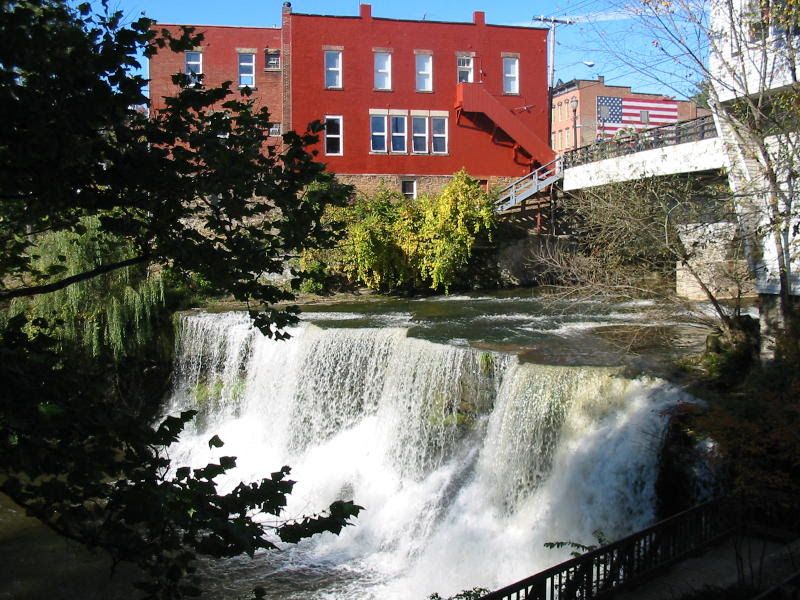
Most towns would consider a 20-foot waterfall in the middle of their downtown an unusual feature. Chagrin Falls has simply built its entire identity around it, and the result is one of the more charming small-town environments in the state.
People eat lunch beside the falls. They sit on the bridge and watch the water like it’s the most natural thing in the world — because here, it is.
April is when the surrounding village really starts to come alive. The tree-lined residential streets, which in full spring leaf are genuinely beautiful, make you walk slower without any conscious decision to do so.
The independent shops along Main Street are the kind that actually have things worth buying rather than just things worth photographing.
There’s a good mix of restaurants and cafes within easy walking distance of the falls, and the whole downtown is compact enough to cover comfortably in an afternoon. Chagrin Falls is the rare place where the main attraction is both free and completely impossible to get tired of.
Clifton: Tiny Town, Enormous Gorge, One Perfect Mill
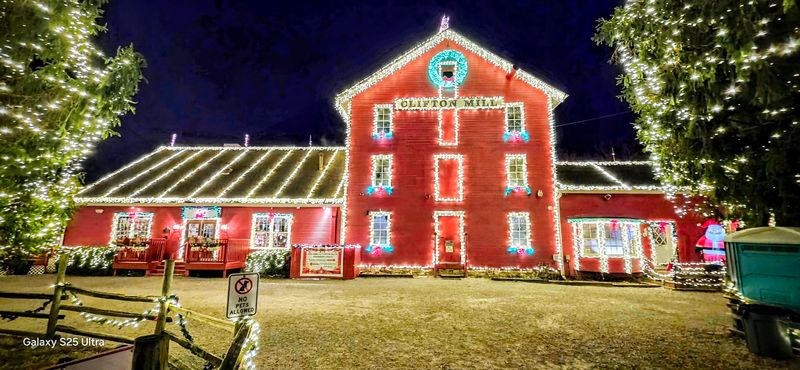
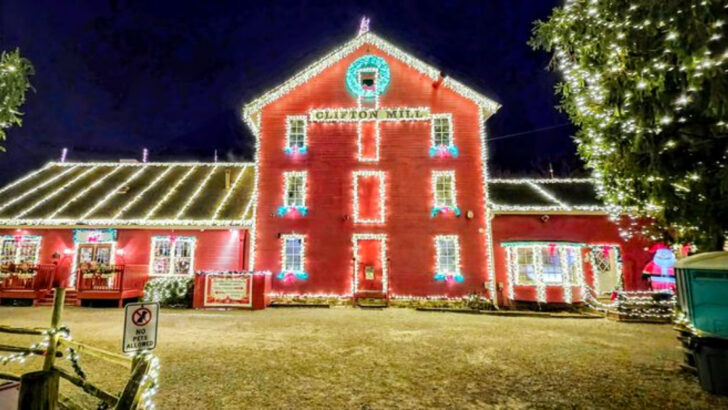
Clifton is barely a town by any conventional measure — a handful of streets, a post office, and Clifton Mill sitting over the gorge of the Little Miami River like it has been there since the beginning of time. Which, for practical purposes, it nearly has: the mill has been operating since 1802, making it one of the largest remaining grist mills in the United States.
The gorge in April is something else entirely. The river is running hard and loud from spring snowmelt, and it cuts through the limestone walls with a force that makes the short trail beside it feel genuinely dramatic.
This isn’t a gentle Sunday stroll — the water is serious and the gorge is deep and the whole scene has an energy that’s hard to shake after you leave.
The mill itself serves breakfast and lunch, and sitting beside the gorge with a meal while the river runs below is a simple pleasure that outperforms its simplicity considerably. Clifton proves that a town doesn’t need to be large to leave a lasting impression.
Pomeroy: A River Town on a Single Street That Packs a Lot In
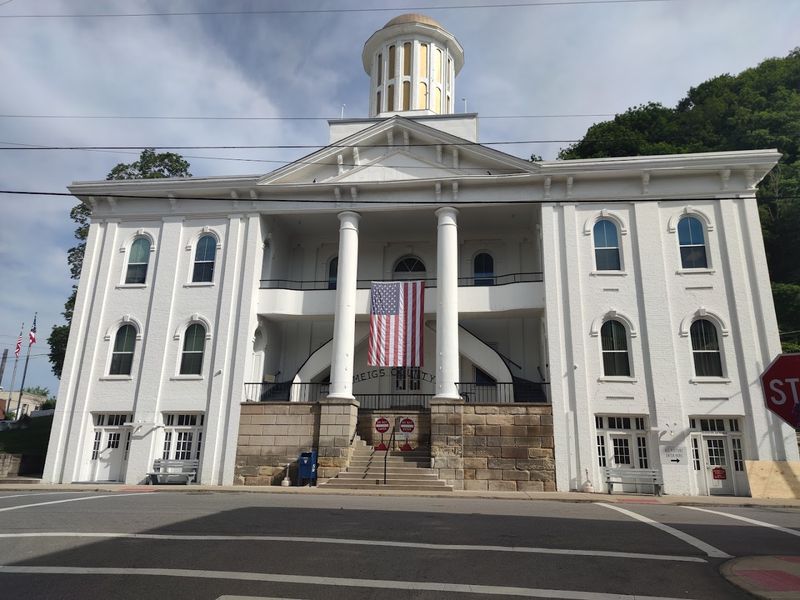
Geography shaped Pomeroy in an almost absurd way. The town is built on such a narrow strip of land between the Ohio River and the bluffs rising sharply behind it that the entire community is essentially one long street.
There’s nowhere else to put anything. That compressed layout gives Pomeroy a character unlike any other town in the state — slightly surreal, completely genuine, and oddly compelling.
April is when the Ohio River is wide and moving fast from spring rains, and the riverfront views from that single main street are the kind that make you stop mid-sentence and just look. The water is close.
It’s loud. It has a presence that reminds you the river was here long before the town and will be here long after.
Pomeroy is the county seat of Meigs County and has the small-town infrastructure — a diner, a courthouse, a hardware store — that makes it feel like a real place rather than a destination. That realness is the whole point of going.
Oberlin: Progressive History, Great Coffee, and a Conservatory Worth Wandering Into

Oberlin has been one of the more interesting small towns in Ohio since the 1830s, when it became one of the first colleges in the country to admit both Black students and women — a fact that shaped the town’s culture in ways still visible today. The community that grew up around the college reflects that history in its bookstores, its coffee shops, and the conversations you overhear walking down the street.
April is when the Conservatory of Music opens up its student recital and performance schedule, and many of those performances are free or very low cost. Wandering into a student recital on a Saturday afternoon — with no agenda and no ticket purchased in advance — turns an ordinary visit into something genuinely memorable and unexpected.
The downtown is walkable and full of good food, independent shops, and the kind of engaged, curious energy that college towns at their best tend to generate. Oberlin is small enough to cover in a weekend but layered enough that you’ll leave wishing you had one more day to explore it properly.