
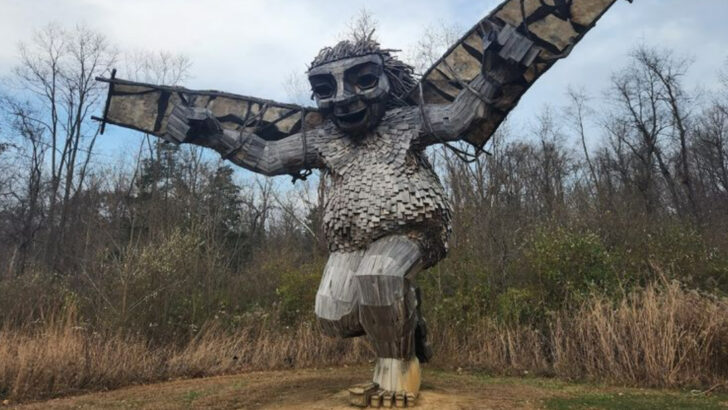
Ohio keeps secrets well. Most people drive through it, sleep through it on a road trip, or dismiss it as the flat stretch between somewhere else.
That’s a mistake and honestly, a gift for those of us who actually stop.
This state has ghost towns that still have their old storefronts standing, gorges that look borrowed from Appalachia, lakeside towns that feel frozen in 1987 (in the best way), and roadside oddities so specific they could only exist here. None of them are on the billboard coming off the interstate.
Most aren’t even on the first page of a Google search.
That’s exactly the point. These 15 places won’t show up on most Ohio travel lists.
Some are small. Some are quiet.
Some are just strange enough to make you pull over and stare. All of them are worth the detour and most of them will surprise you, even if you’ve lived in Ohio your whole life.
Hocking Hills State Park’s Lesser-Known Trails
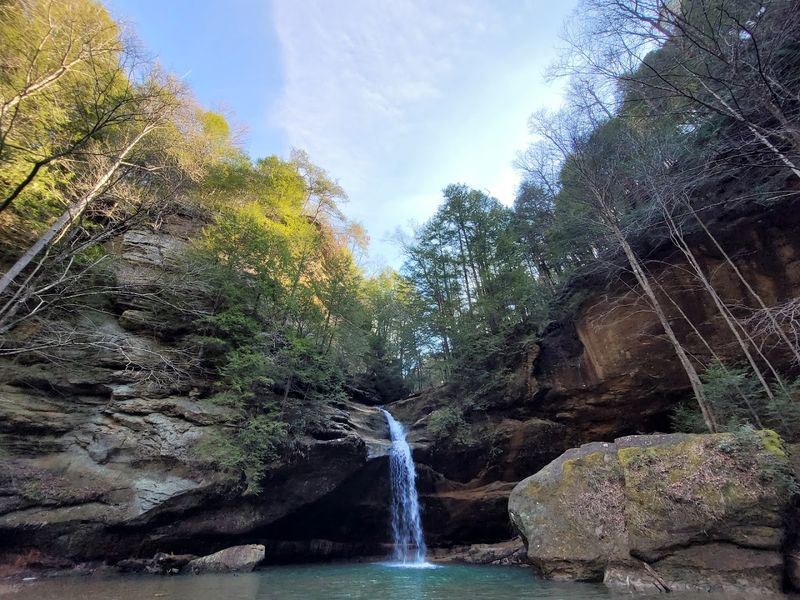
Old Man’s Cave gets all the postcards, but the real reward at Hocking Hills is slipping past the crowd and heading somewhere quieter. Trails around Conkle’s Hollow and Rock House are often nearly empty on the same weekend the main area is completely packed with visitors.
Rock House is something genuinely different — it’s an actual cave carved horizontally into a cliff face, and you walk through it rather than around it. The first time you step inside and realize the ceiling is solid rock above you and open air is visible through arched windows cut into the stone, it catches you completely off guard.
Conkle’s Hollow offers a gorge trail lined with towering rock walls that block out most of the sky. If you can visit on a weekday, you might share the entire trail with just a handful of other hikers.
Hocking Hills rewards the curious traveler who keeps walking.
Kelley’s Island: Lake Erie’s Quietest Escape
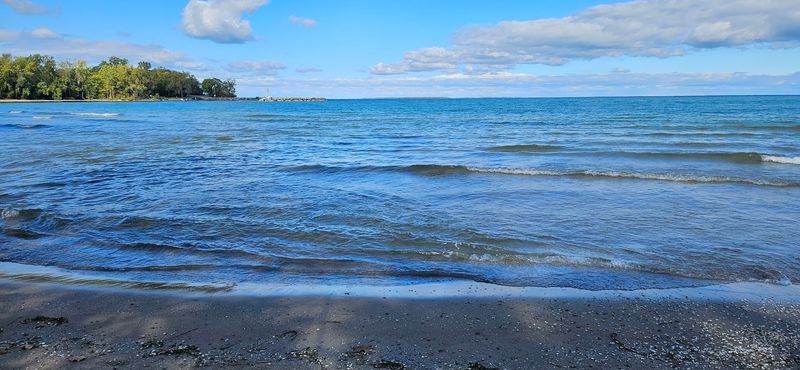
Four miles off the coast of Sandusky, Kelley’s Island sits in Lake Erie like a secret that not enough people are in on. Small enough to cover by bicycle in a single afternoon, it moves at a pace that makes the rest of Ohio feel very far away.
The main attraction is Glacial Grooves State Memorial, and no photograph really prepares you for standing next to it. A glacier roughly 18,000 years ago carved deep parallel grooves directly into the limestone bedrock, and they are still crisp and readable today — like the earth kept a record of something enormous passing through.
Beyond the grooves, the island has sandy beaches, a small downtown with local restaurants, and a genuinely relaxed atmosphere that feels nothing like a tourist destination. The ferry ride from Marblehead or Sandusky takes about 20 minutes and is worth every minute of it.
Pack a lunch and stay longer than you planned.
Zoar Village: A Forgotten Utopian Community
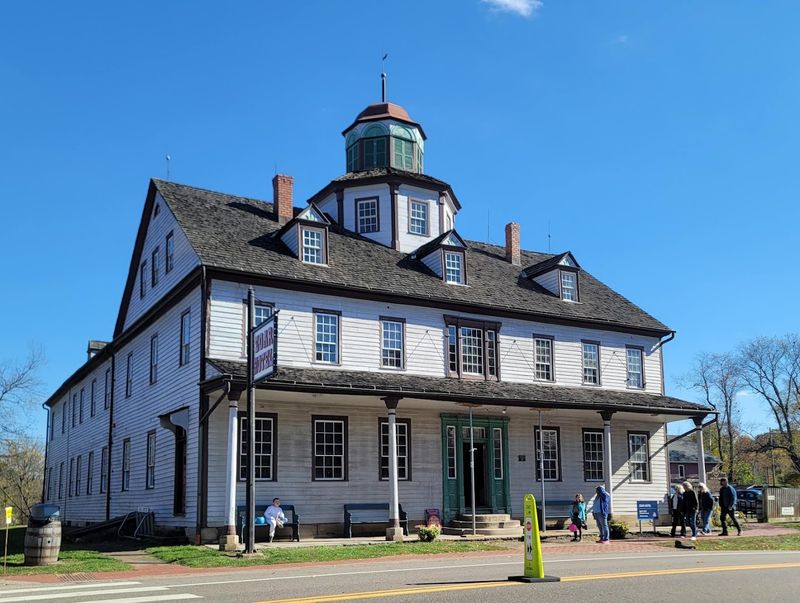
Back in 1817, a group of German separatists arrived in Tuscarawas County and built an entire community from scratch — sharing land, labor, and resources communally for nearly 80 years. They called it Zoar, and somehow, most of it is still standing.
Walking through the village today feels less like visiting a museum and more like stumbling into a town that history simply forgot to update. The original buildings are intact, the communal garden has been restored to its 19th-century layout with geometric flower beds and a central fountain, and the whole place carries a quiet, slightly eerie atmosphere that is hard to shake.
Guided tours are available through the Ohio History Connection, and interpreters bring the story of the Zoarites to life in a way that feels genuinely personal rather than rehearsed. It’s a small detour off I-77 that ends up being one of those stops people talk about for years afterward.
Bring comfortable shoes and plenty of curiosity.
The Wilds: An Open-Range Conservation Center
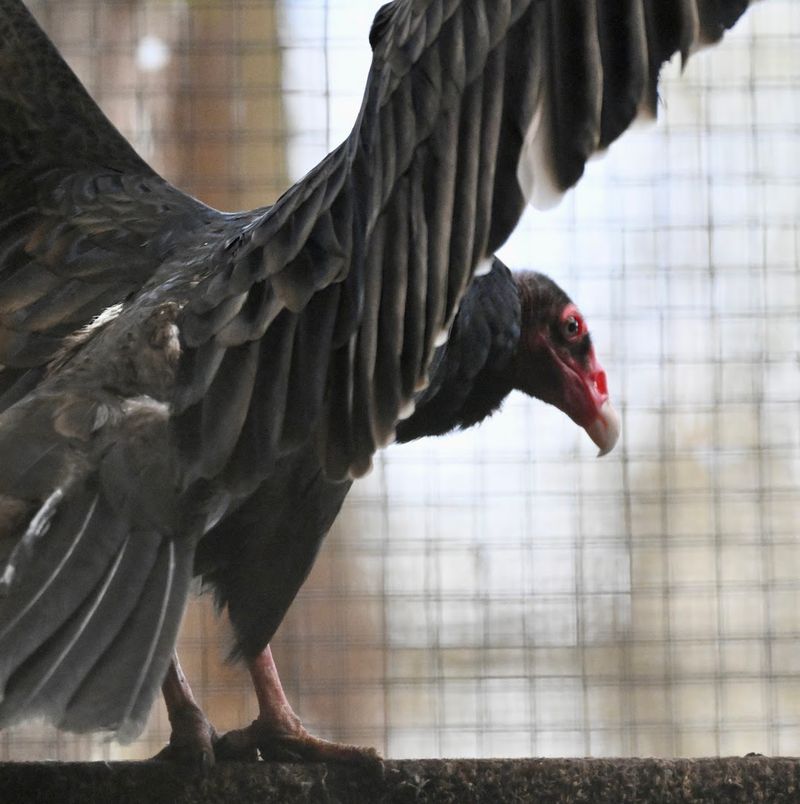
Nobody expects to go on a safari in southeastern Ohio, which is exactly what makes The Wilds so genuinely disorienting in the best possible way. Spread across 10,000 acres of reclaimed strip-mine land in Muskingum County, this wildlife conservation center is home to giraffes, rhinos, cheetahs, and African wild dogs — animals that have no business being this close to Columbus.
Visitors board open-air vehicles and ride through the landscape while animals roam freely around them. The guides are knowledgeable and enthusiastic, and the experience of watching a white rhino lumber past your vehicle in Ohio is something your brain genuinely struggles to process in the moment.
The Wilds operates as a serious conservation organization, not just an attraction, which adds real weight to the visit. Zip-line tours and behind-the-scenes encounters are also available for those who want to go deeper.
Book ahead, because spots fill up faster than most people expect for a place this off the radar.
Yellow Springs: One Street, A Lot of Personality
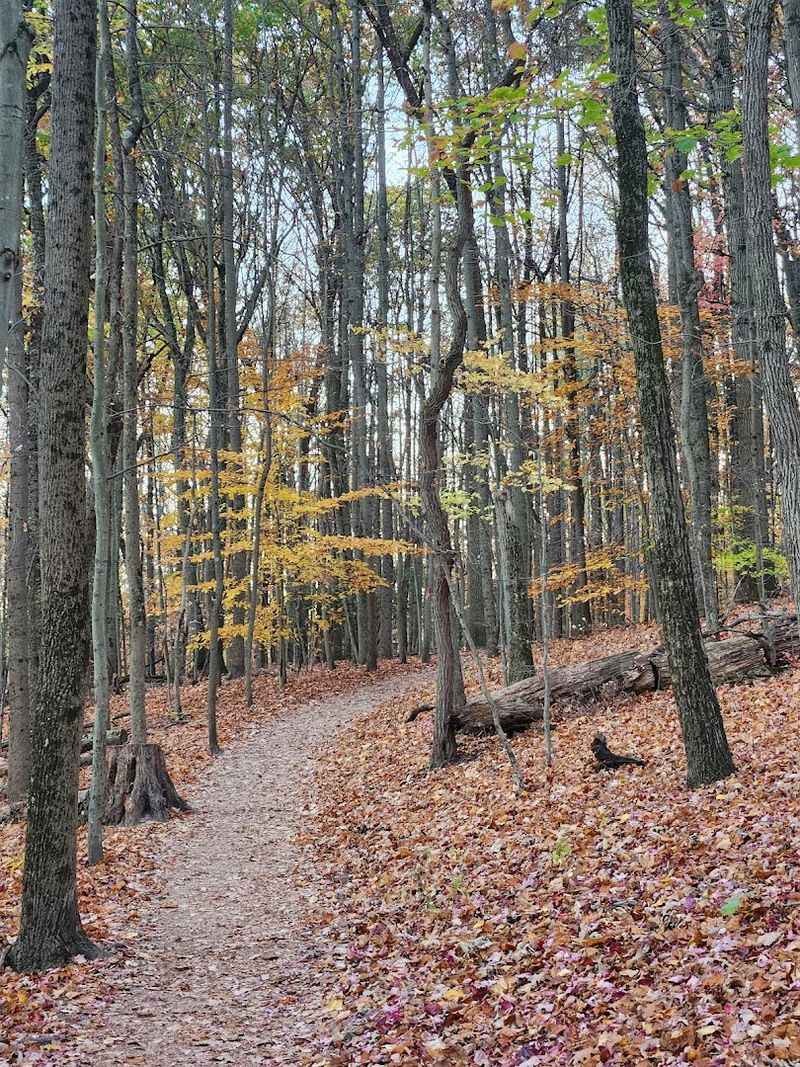
Yellow Springs punches well above its weight for a town of roughly 3,500 people. One main street — Xenia Avenue — holds independent bookshops, a decades-old natural foods co-op, local art galleries, and restaurants that have been feeding the community since the counterculture days of the 1960s.
The energy is relaxed and a little eccentric in all the right ways.
Right next door is Glen Helen Nature Preserve, where a yellow spring actually does bubble up from the ground and stain the surrounding rocks a bright, almost unnatural orange. The preserve covers over 1,000 acres of woodland trails, waterfalls, and quiet creek paths that connect to the John Bryan State Park trail system.
Dave Chappelle famously retreated to Yellow Springs and still lives there, which tells you something about what kind of place it is. It doesn’t try to be anything other than itself, and that honesty is refreshing.
Plan for at least half a day, because the town has a way of slowing you down pleasantly.
Serpent Mound: One of the Most Unusual Ancient Sites in North America
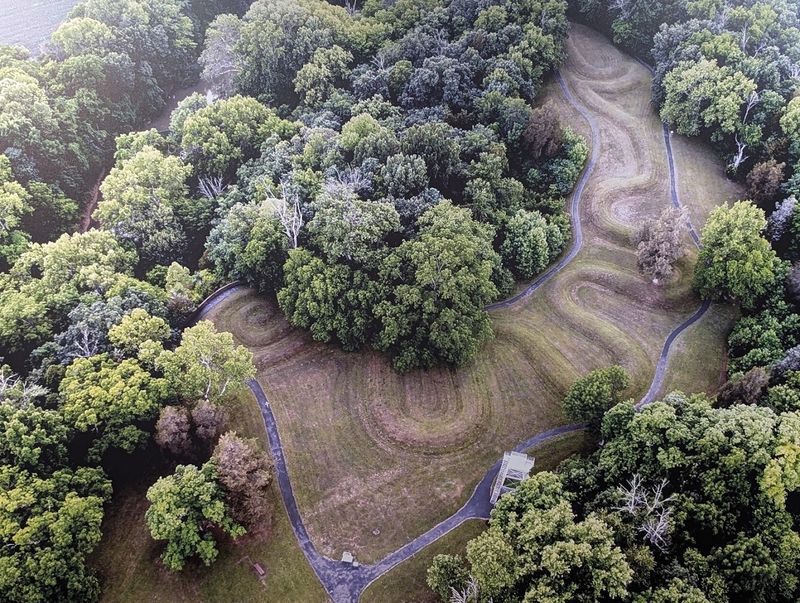
Stretching 1,348 feet across the hills of Adams County, Serpent Mound is one of the largest surviving effigy mounds in the entire world — and it’s shaped like an uncoiling snake with an oval form at its head. Constructed by Indigenous peoples sometime between 300 BCE and 1100 CE, it was built with enough precision that its curves align with the summer solstice sunset.
Standing at the overlook platform and tracing the shape with your eyes across the landscape is one of those moments that photography genuinely cannot capture. The scale only registers in person, and the silence of the surrounding hills adds something to the experience that is difficult to describe but easy to feel.
A small museum on-site provides context about the site’s history and the ongoing research into exactly who built it and when. Admission is modest, the grounds are well maintained, and the site deserves far more visitors than it typically receives.
It’s one of Ohio’s most important places, full stop.
Marblehead Lighthouse: The Oldest Continuously Operating Lighthouse on the Great Lakes
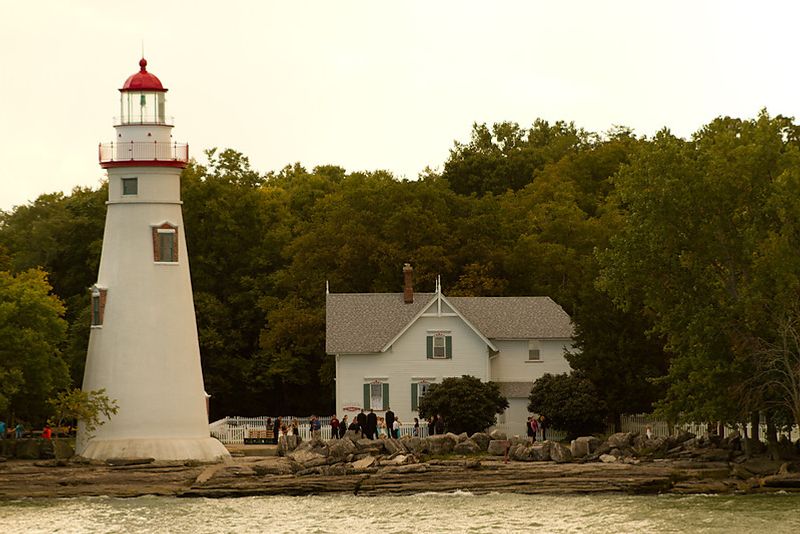
Since 1822, the Marblehead Lighthouse has been standing on the tip of the Marblehead Peninsula, guiding ships through the western end of Lake Erie without a single break in service. That makes it the oldest continuously operating lighthouse on any of the Great Lakes — a record that spans more than two centuries of storms, ice, and changing technology.
The setting does a lot of the work here. Rocky limestone shoreline drops into the lake in every direction, and the wind off the water is almost always doing something dramatic.
On clear days, you can see the Lake Erie islands from the base of the tower, and the light itself is still functional.
The lighthouse grounds are part of Marblehead Lighthouse State Park, and the tower is open for climbing on select days during the warmer months. It’s a short drive from Sandusky and pairs naturally with a trip to Kelley’s Island or Cedar Point.
Arrive early on weekends to avoid the parking scramble.
Clifton Mill: A Working 1800s Gristmill You Can Eat Breakfast In
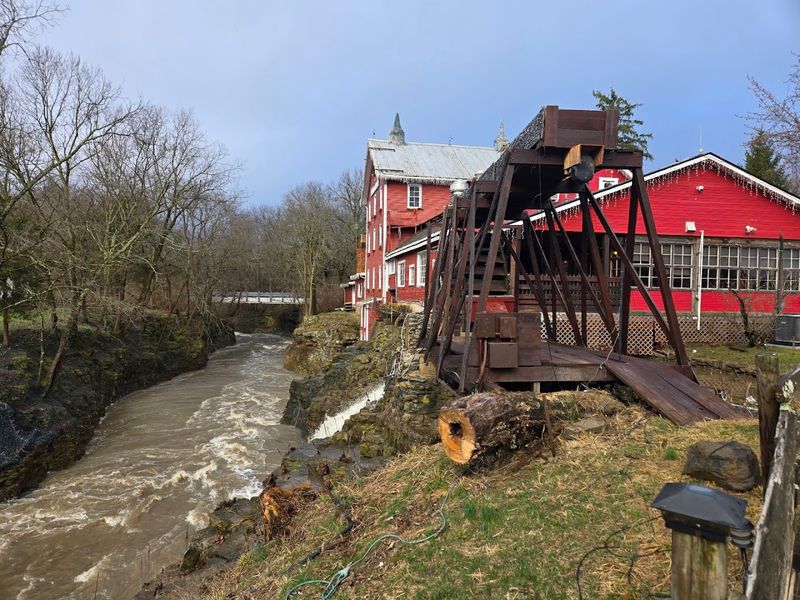
Built in 1802, Clifton Mill has been grinding grain along the Little Miami River for well over two centuries — and somewhere along the way, someone had the inspired idea to also start serving pancakes. The stone-ground cornmeal and flour are milled right on-site, which means the food genuinely tastes different from anything you’ll get at a chain restaurant.
The building itself hangs out over the gorge below, and sitting by the windows while the river runs underneath you is a breakfast experience with no real equivalent in Ohio. The waterwheel is still operational, the millstones are still turning, and the whole setup has a working authenticity that most historic sites struggle to maintain.
At Christmas, the owners transform the property with more than three million lights strung across the gorge, the mill, and the surrounding landscape — a display that people genuinely plan trips around each year. But the non-holiday version is just as worth visiting.
It opens early, which makes it perfect for a morning stop before heading into the gorge trails nearby.
Ash Cave at Hocking Hills: The One That Actually Stops You Cold
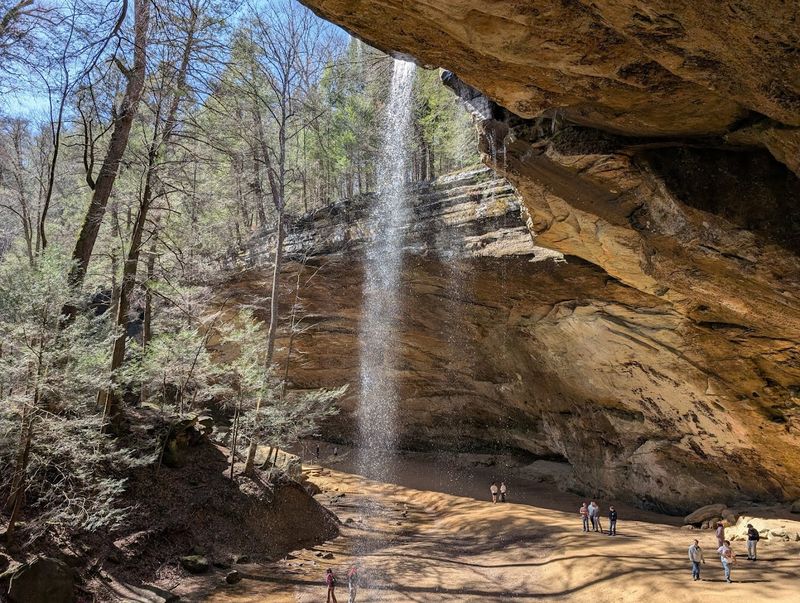
The trail to Ash Cave is flat, wide, and barely a quarter mile long — which gives absolutely no warning for what waits at the end. Then the trees open up and a 700-foot semicircular sandstone wall curves around you, and the scale of it stops most people mid-step.
Ash Cave is the largest recess cave in Ohio, and the waterfall that drops from the rim into the pool below adds sound to the visual drama in a way that makes the space feel almost theatrical. Early settlers used the cave as shelter, and the name comes from the enormous pile of ash found inside when they arrived — believed to have been left by Indigenous peoples over centuries of use.
Visit after a rain if you can manage it, because the waterfall runs full and the mist that rises from the pool drifts through the cave in slow, photogenic waves. It’s technically part of the same Hocking Hills park as Old Man’s Cave but feels like an entirely separate world.
Absolutely do not skip it.
Granville, Ohio: A New England Town That Took a Wrong Turn and Ended Up in the Midwest
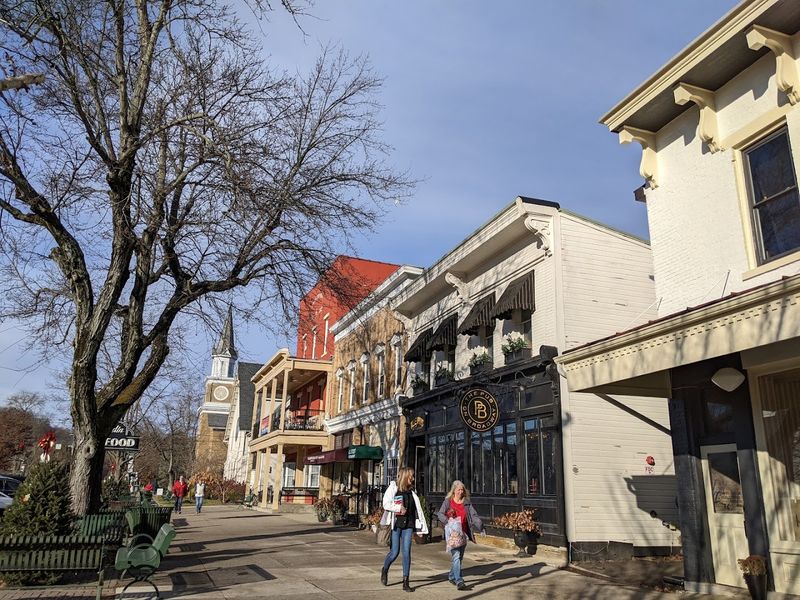
Granville was founded in 1805 by settlers from Granville, Massachusetts, and they were apparently not willing to leave their architecture behind. The result is a village green, white clapboard houses, and elm-lined streets that look considerably more like Connecticut than central Ohio — and the effect is charming in a way that feels genuinely accidental rather than manufactured.
Denison University sits on the hill above town and gives Granville the unhurried, slightly bookish energy of a college town that has been comfortable with itself for a very long time. The main street has independent shops, a good local bakery, and restaurants that draw visitors from Columbus on weekend afternoons.
The surrounding Granville area also has hiking trails, a historic inn that dates back to the 1800s, and enough quiet corners to make an afternoon stretch naturally into an evening. It’s only about 30 miles east of Columbus, which makes it an easy day trip that consistently surprises people who expected something much more ordinary.
It rewards slow wandering.
Caesar Creek State Park’s Fossil Beds
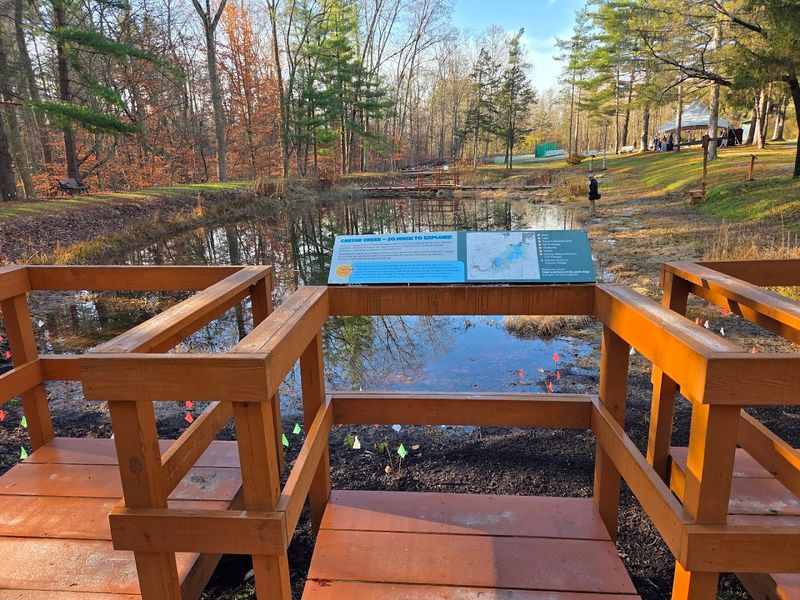
Most fossil hunting requires a permit, a guide, or at minimum a long drive to somewhere remote. At Caesar Creek State Park near Waynesville, you just walk down to the spillway area and start looking.
Ohio law actually allows visitors to collect fossils from this specific site and take them home — no special equipment, no fee, no forms to fill out.
The fossils here are mostly marine invertebrates from the Ordovician period, roughly 450 million years old, preserved in the exposed limestone that lines the spillway. Brachiopods, horn corals, and bryozoans turn up regularly, and they are often in remarkably good condition considering their age.
Kids tend to completely lose it when they realize they are pulling actual ancient ocean creatures out of the ground in a landlocked Ohio park. Adults tend to have the same reaction, just with slightly more composure.
Bring a small trowel, a bag for specimens, and plan to spend more time than you originally intended. The spillway trail is short and easy, and the lake behind the dam is beautiful.
Loveland Castle: A Medieval Castle Built by One Man Over 50 Years
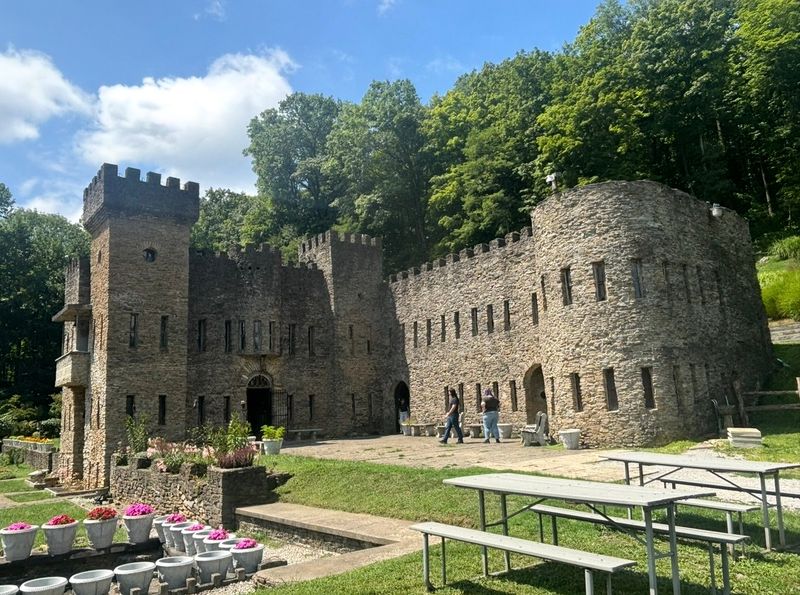
Harry Andrews started building his medieval castle by hand in the 1920s on a small piece of land along the Little Miami River in Loveland, Ohio. He hauled rocks from the riverbed, mixed his own mortar, and spent the better part of five decades constructing towers, walls, and a great hall — largely on his own, on weekends and evenings, because he had a day job.
Chateau LaRoche, as he officially named it, is open to visitors today and managed by a group Andrews founded called the Knights of the Golden Trail. It’s genuinely strange in the most admirable way — a full stone castle, complete with a dungeon, sitting in a quiet suburban stretch of southwestern Ohio.
Andrews passed away in 1981, but the castle has outlasted him by decades and shows no sign of going anywhere. Tours are self-guided, admission is cheap, and the whole experience has a quirky, homemade quality that no professionally designed attraction could replicate.
It’s a monument to stubbornness, vision, and a very long timeline. Completely worth the visit.
Charleston Falls Preserve: Tipp City’s Miniature Niagara
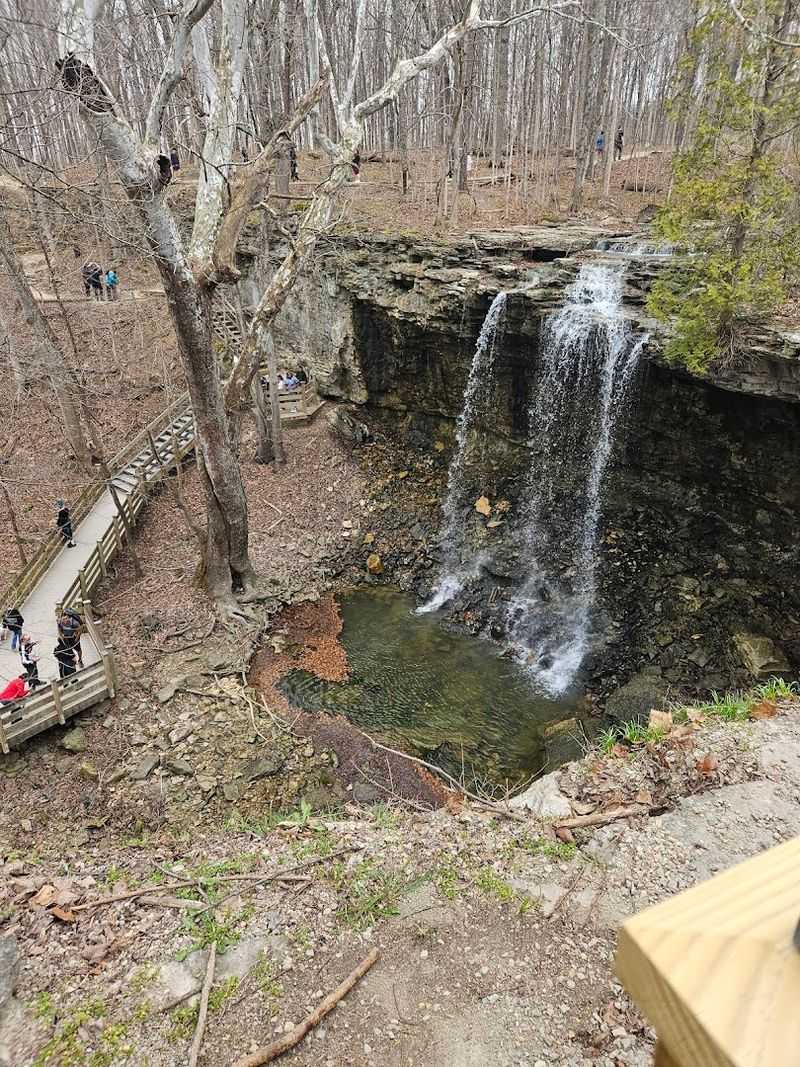
Just north of Dayton near Tipp City, Charleston Falls Preserve hides one of the most photogenic waterfalls in western Ohio — a 37-foot drop over a dolomite limestone ledge that locals have been calling a miniature Niagara for generations. The nickname is a little generous, but standing at the base looking up, you understand the impulse.
What makes the preserve genuinely special beyond the waterfall is the rare plant life that clings to the damp limestone cliffs surrounding the falls. Several species grow here that are uncommon in Ohio, drawn by the unique microclimate created by the constant mist and cool stone surfaces.
The trail system is short and manageable for most fitness levels, and the whole preserve covers around 216 acres of woodland, meadow, and wetland habitat. Birdwatchers find it particularly rewarding in spring migration season.
Admission is free, parking is easy, and the falls are accessible year-round — though winter visits, when ice formations build up on the surrounding rock faces, offer something the warmer months simply cannot match.
Aullwood Garden MetroPark: Dayton’s Overlooked Natural Retreat
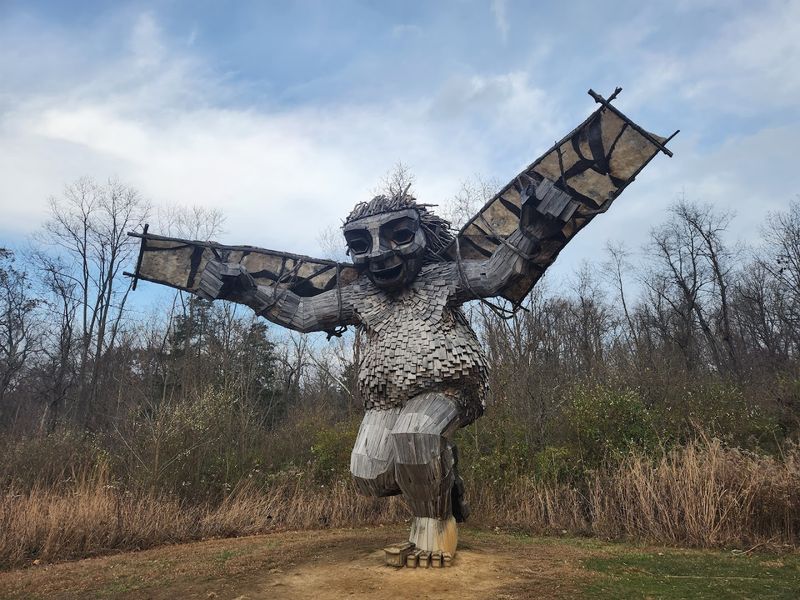
On the northwestern edge of Dayton, Aullwood Garden MetroPark sits quietly while most visitors head to the more famous Five Rivers MetroParks destinations. Marie Aull donated the land in 1967 with the specific intention of creating a sanctuary for native Ohio plants, and the garden has been growing into that vision ever since.
The trails wind through a mature tree canopy with wildflowers blooming in seasonal waves — trout lilies and trilliums in spring, coneflowers and black-eyed Susans through summer, and brilliant foliage color in fall. Birdwatching here is genuinely excellent, with a variety of warblers, woodpeckers, and migratory species passing through during the right seasons.
Connected to Aullwood Audubon Center and Farm, the broader property gives families the option to pair a nature walk with a visit to working farm animals and environmental education programs. The garden itself is free and open year-round.
It’s exactly the kind of place that locals have quietly loved for decades while out-of-town visitors drive straight past it without knowing it exists.
Wahkeena Nature Preserve: A Quiet Forest Sanctuary Most Ohioans Have Never Heard Of
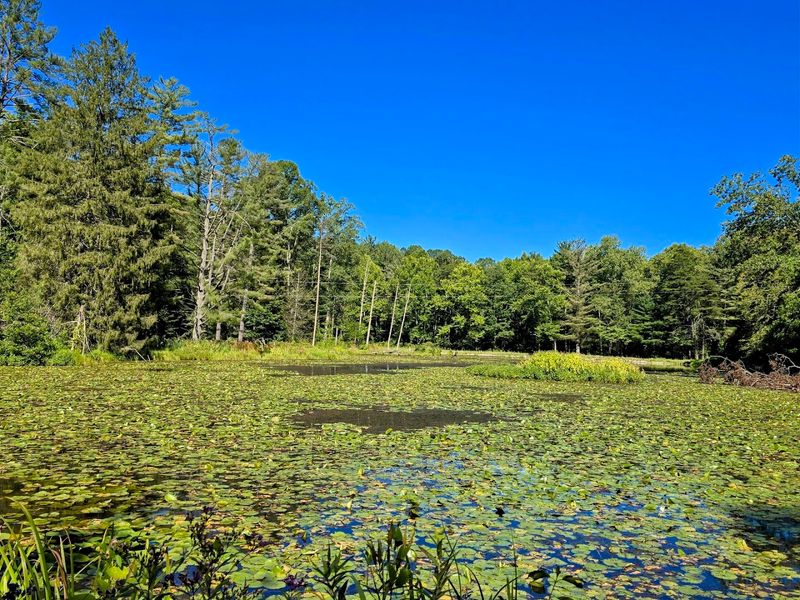
Tucked into the rolling terrain of Fairfield County, Wahkeena Nature Preserve feels like a secret the rest of Ohio agreed to keep. Operated by the Ohio History Connection, this 70-acre sanctuary offers trails through dense forest, past spring-fed ponds, and alongside wildflower meadows that peak in late April and May.
Most weekends, you might share the trail with just a handful of other visitors. The preserve has a small nature center that opens seasonally, staffed by people who genuinely love talking about the local ecosystem.
It rewards slow walkers more than fast ones, so bring patience and leave the earbuds behind.