Think Oregon means rain, moss, and misty evergreens.
Think again.
Smith Rock State Park flips the script with sun baked cliffs, desert air, and a skyline that looks more like the Southwest than the Pacific Northwest.
If you want Oregon to surprise you, this is where the state does it best.
A High Desert Landscape, Not Lush Forests
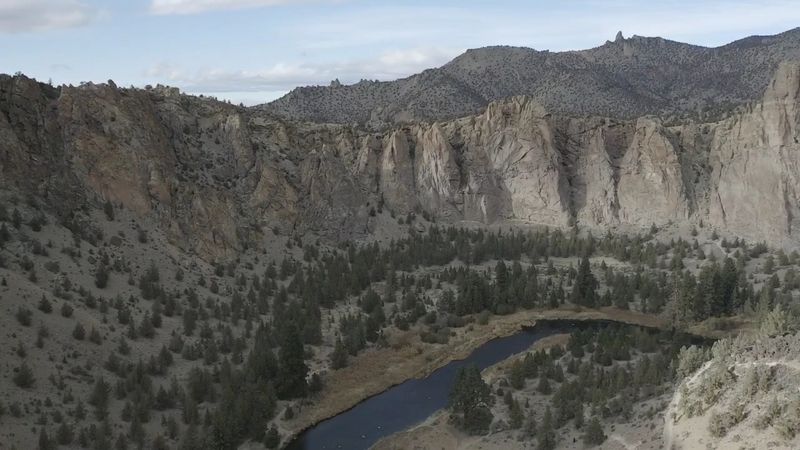
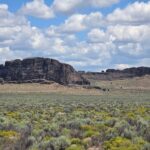
Step out of the car and the air feels different right away. It is dry, crisp, and scented with sage, not damp and mossy like the coast. The ground crunches with volcanic pebbles, and juniper trees twist above bunchgrass that glows gold in late light.
Instead of ferns and dripping cedars, you get open country and huge skies. The horizon stretches far, with hardly a hint of the deep shade that defines so much of western Oregon. Your eyes adjust to a palette of tawny earth, steel blue shadows, and faded greens that shout high desert.
Trails wind through scrub and sun, and the sense of space is immediate. You can hear your footsteps and the chirp of crickets, carried cleanly on the breeze. Even the silence feels bigger out here, almost like the land itself is catching its breath.
When you move, dust lifts in little puffs and settles on boots like powdered clay. The smell of warm stone mixes with sagebrush resin, a simple reminder you are not in a rainforest. You start drinking water earlier because the air wicks moisture fast.
Look up and you will notice birds riding thermals, tracing lazy circles above the cliffs. Shadows slide across the slopes as clouds drift by, turning the whole basin into a slow moving light show. It is minimal and dramatic at the same time.
What makes this setting so different is not just the dryness. It is the way openness reorders your internal map of Oregon. You stop expecting shade and start craving horizon.
By the time the sun tilts, the high desert glows like a kiln. The park feels timeless, stripped down to rock, sky, and air. That simplicity is the hook that keeps you walking.
Towering Volcanic Spires and Sheer Cliffs
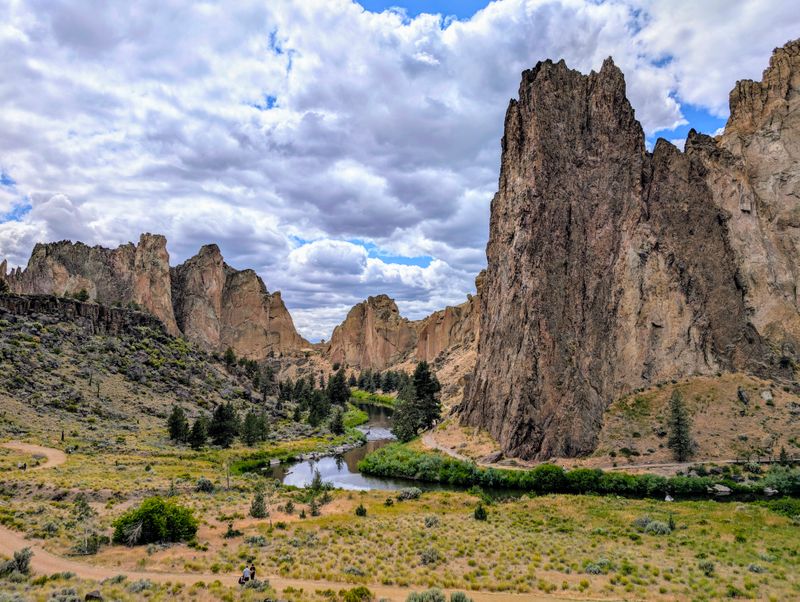
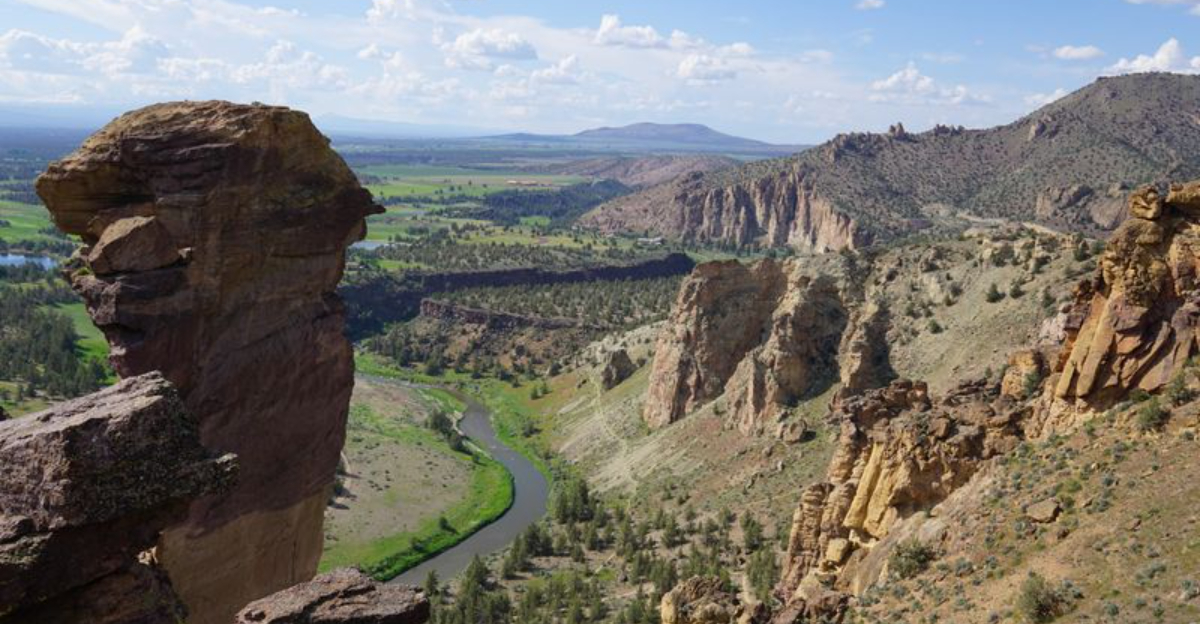
The cliffs here do not just rise. They erupt, all teeth and fins of volcanic rock slicing into the sky. Rhyolite and basalt layers tell a fiery story you can read with your eyes from the river to the rim.
Light changes everything. At sunrise, the spires blush like embers waking up, and by midday they sharpen into hard gold. Sunset turns the whole amphitheater into molten copper, with shadows carving deeper relief.
Stand under a wall and feel the scale tug at your stomach. Cracks, pockets, and edges stack in chaotic patterns that somehow feel precise. You may catch tiny silhouettes of climbers inching up, proof of human grit against geologic time.
These formations do not match Oregon’s stereotype. They look closer to New Mexico mesas or Utah fins, except the Crooked River loops at their feet. The contrast of water and stone makes each angle feel cinematic.
Textures steal the show. The rock can be glass smooth in places, then pocked like lunar skin a few feet away. Weathering has chiseled faces into the cliffs that seem to watch as you pass.
Bring a camera, but do not get lost in the viewfinder. The sound of wind against the walls and the occasional cry of a raptor complete the experience. You feel small in the best possible way.
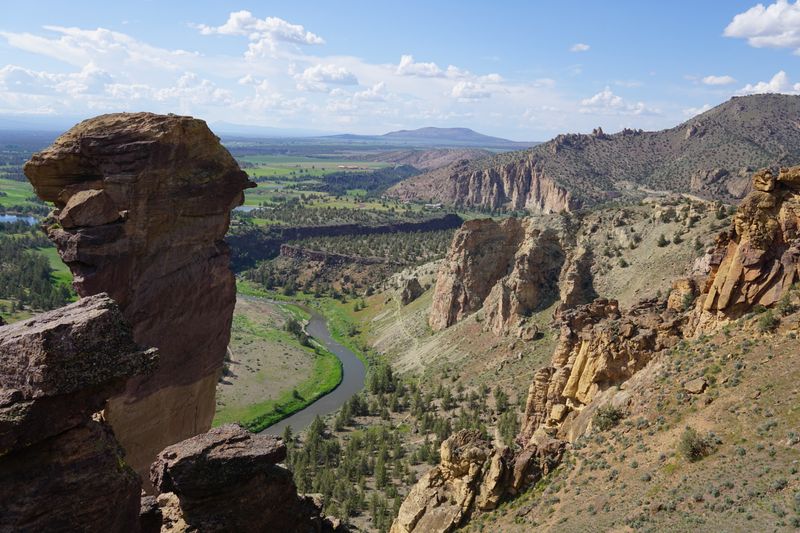
Hike higher and the geometry reveals itself. Spires align, corridors appear, and the river snakes silver below. Every switchback redraws the skyline into a new composition.
By the time you circle back, you will swear you walked a museum of stone. Only this gallery rearranges itself with every shift of light. That is the spell these cliffs cast.
Oregon’s Rock Climbing Capital
If climbing is your thing, Smith Rock is pilgrimage territory. This is where modern American sport climbing flexed its new muscles, with bolted routes that shook up tradition. The names of classic lines still echo in campfire stories and guidebooks.
Even if you do not climb, the energy is contagious. You hear the clink of quickdraws, see chalk puffs blooming on holds, and watch graceful problem solving play out in real time. It feels like a shared language written on stone.
There are grades for every level. Beginners shuffle up friendly slabs while experts test themselves on steep, technical faces. You can spend a whole day watching tiny decisions add up to big sends.
The community vibe is strong. Partners call beta from the ground, trade gear tips, and swap advice about shade and sun. It is supportive without being precious, a culture built on trust and grit.
History lives on the walls. Routes like To Bolt or Not To Be turned heads and set new standards, drawing climbers from around the world. The legacy is part daring, part craft, and fully rooted in this place.
Safety matters, and you feel it. Helmets click on, anchors get double checked, and voices carry crisp commands. Even spectators learn to keep clear zones clean.
You start to notice how the rock dictates style. Thin edges reward quiet feet, while pockets demand balance and patience. Every move is a conversation with texture.
By sunset, the cliffs hum with tired satisfaction. Chalk streaks fade as the light softens, and you pack away a day that felt both athletic and artistic. That blend is why this park owns the climbing crown in Oregon.
A Climate That Feels More Like the Southwest
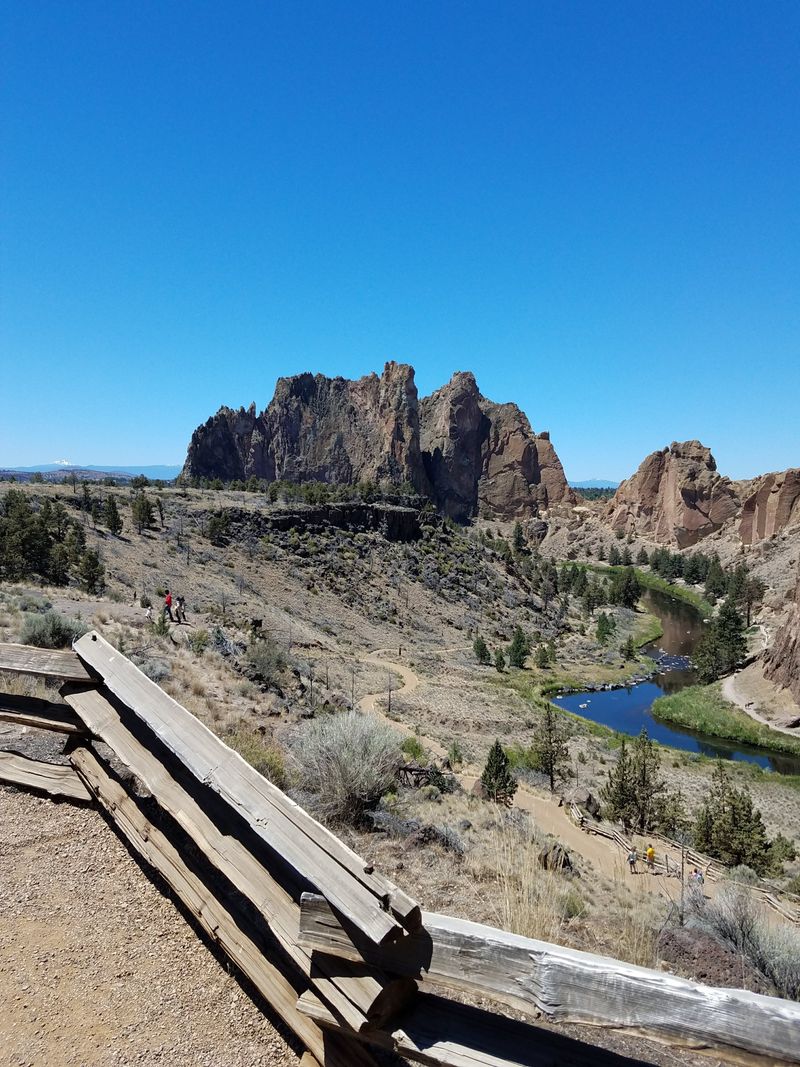
The weather at Smith Rock plays by different rules. Summers get hot and dry, with the sun painting the cliffs a relentless gold. Winters can be cold yet bright, delivering crisp days that beg for movement.
Rain is scarce compared to western Oregon. When storms do hit, they often sweep through fast, leaving scrub glistening under sudden blue skies. You plan around sun and wind more than drizzle.
Shade becomes currency on warm days. Trails exposed to full light feel longer, and water disappears quicker than you expect. Hats, sunscreen, and early starts become second nature.
Cold snaps do not always mean gloom. You might hike under cobalt skies with snow frosting the rim, your breath hanging clean in the air. The rock reads like a relief map in that angled winter light.
Shoulder seasons are sweet spots. Spring brings wildflowers threaded through sage, and fall serves up cool mornings with warm afternoons. Each window opens different opportunities, from long hikes to relaxed river loops.
Wind can shift plans in minutes. It funnels through the canyon, stinging eyes and cooling sweat. You learn to read gusts the way sailors read water.
Because the climate is drier, smells travel differently. Dust, juniper, and warm stone carry on thermals like faint music. Even silence feels thin and airy instead of heavy.
This is not the Oregon of constant drizzle and soft moss. It is sharp light, quick shadows, and weather that rewards preparation. Get the rhythm right, and the park gives you perfect days.
The Crooked River Carving a Desert Canyon
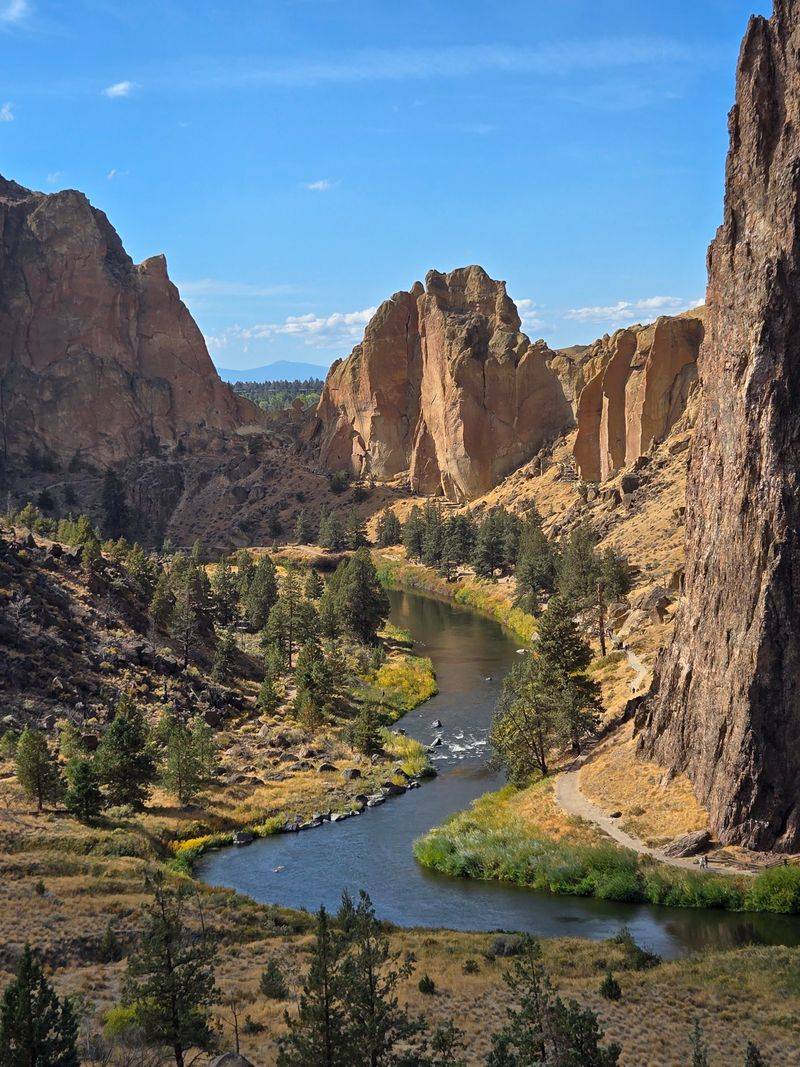
The Crooked River cuts a green ribbon through the stone. It slips around bends with a calm surface that hides slow power. Standing above it, you feel how water has written every curve on this canyon.
Follow the bank and the temperature drops a notch. Willows and cottonwoods crowd close, their leaves whispering over the current. Dragonflies stitch zigzags in the air while trout rise in quiet rings.
The contrast is stunning. Dry slopes climb to scorched cliffs, then the river cools everything with a shine of silver. It looks like someone painted a watercolor wash along the desert floor.
Trails hug the water before tilting toward the walls. Each switchback offers a new angle on the serpentine channel. Photos never quite capture the slow elegance of those meanders.
Listen and you can hear the soft hiss of flow on gravel bars. It is a steady hush that calms the mind and keeps pace with your footsteps. The river sets the metronome for the whole park.
Wildlife congregates here. Tracks mark muddy edges at dawn, and raptors use the corridor as a highway. Even on hot days, this shaded ribbon feels alive and generous.
Reflections double the height of the cliffs in evening light. You can frame spires in ripples that look painted by hand. The scene holds you longer than you planned.
By the time you climb back to the rim, the river is a thin line again. But you know it is down there, carving patience into stone. That quiet persistence shapes everything you see at Smith Rock.
Wildlife and Vegetation You Do Not Expect in Oregon

Look up and you might spot a golden eagle riding a thermal. Prairie falcons slice the air too, fast and focused. Their shadows glide over stone like secret signatures.
Closer to your boots, life gets thorny and tough. Juniper trees twist muscular trunks, and their berries scent the breeze. Bunchgrass clumps hold the soil, catching dew like tiny fountains.
This is not a fern filled understory. The palette leans silver green and straw gold, spiked with occasional wildflowers. Everything here survives by holding tight to water and light.
Respect the locals, especially the rattlesnakes. They are shy but present, sunning themselves on warm rock shelves. Give space, stay alert, and your paths will cross peacefully.
You may see mule deer at dawn, picking careful steps along the river. Lizards flick across the trail with miniature swagger. Ravens make commentary from the cliffs, amused and opinionated.
Each encounter feels like a reminder that this park beats to a different rhythm. Instead of dripping moss, you get resin and dust. Instead of elk trails, you follow faint lines through scrub.
With patience, the desert reveals more. Tiny blooms tuck into cracks, and ants run organized highways. Even the bark of juniper peels in patterns worth studying.
By the end of a day, your senses tune to the place. You start hearing wingbeats and spotting movement in the periphery. That shift is how Smith Rock gets under your skin.
Sweeping, Open Vistas Instead of Enclosed Trails
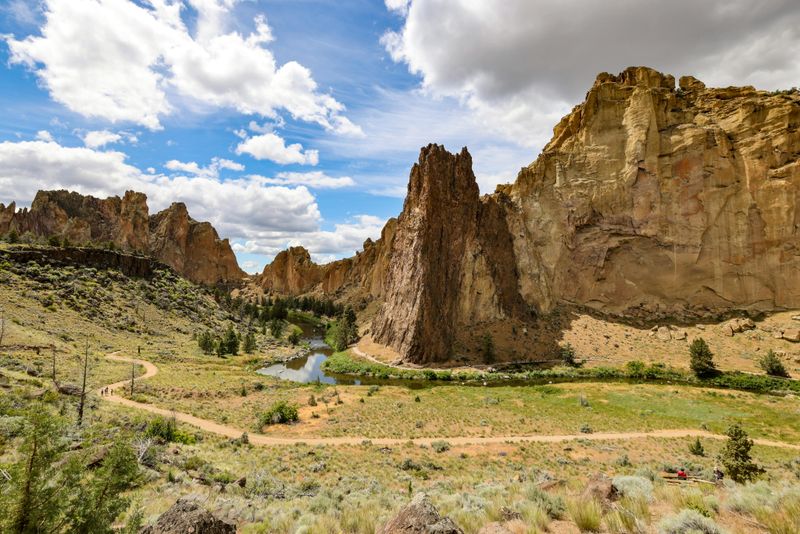
Most Oregon hikes wrap you in forest. Smith Rock does the opposite by pulling the curtain wide open. Every step seems to add more sky than trail.
From the rim, the land folds away in waves of rock and sage. You can trace miles of path just by looking. The sense of exposure is thrilling and a little humbling.
Switchbacks climb bare slopes where your shadow keeps steady company. There is nowhere for the eye to hide, and that honesty feels refreshing. You measure progress by the sweep of the valley below.
Views evolve with altitude. The river becomes a ribbon, the cliffs sharpen into silhouettes, and distant peaks stitch the horizon. It is like climbing into a bigger version of yourself.
On windy days, the air itself seems to move the landscape. Clouds scud fast, tossing light across walls in quick strokes. Photographers call it a gift, and they are right.
Rest stops turn into lookout points. A flat rock becomes your living room with a view, complete with hawks for neighbors. Ten minutes can stretch into an hour without trying.
Because the trails are so open, navigation feels intuitive. Landmarks are obvious, and your brain builds a map just by glancing around. Still, the exposure means sun protection matters more than ever.
As you drop back to the river, the amphitheater closes a bit. But the memory of all that space lingers. It is the defining texture of a day at Smith Rock.
A Sense of Isolation Despite Easy Access
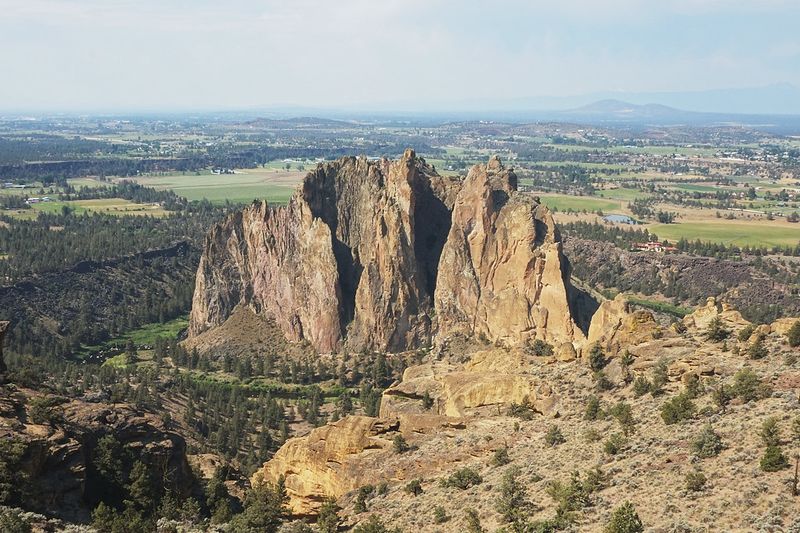
Here is the strange magic. You are minutes from Redmond and a short hop from Bend, yet the canyon can feel worlds away. Early morning or weekday afternoons, you might walk long stretches with only wind for company.
The terrain helps. Stark walls and austere ridges strip out distraction, leaving you alone with footsteps and breath. Even voices seem to fall flat against the rock.
Find a bend along the river and the park goes whisper quiet. You hear the soft thread of water and the occasional wingbeat. Time slows until you forget the parking lot exists.
That sense of solitude is not fragile. It holds up even when the main areas get busy. A few turns on lesser used trails can reset the day completely.
It is also a mindset. When you accept the openness, you settle into a calmer pace. The landscape invites reflection without ceremony.
Sunrise and sunset amplify the feeling. The light feels private, like the cliffs saved it just for you. Shadows lengthen, and the canyon breathes deeper.
Because access is easy, you can time visits to chase quiet. Off season, cold clear days might be your favorite. The reward is space not just around you, but inside.
Walk back under stars and the path gleams pale in starlight. Town lights wait nearby, but you carry the hush with you. That contrast is exactly why Smith Rock feels so different.