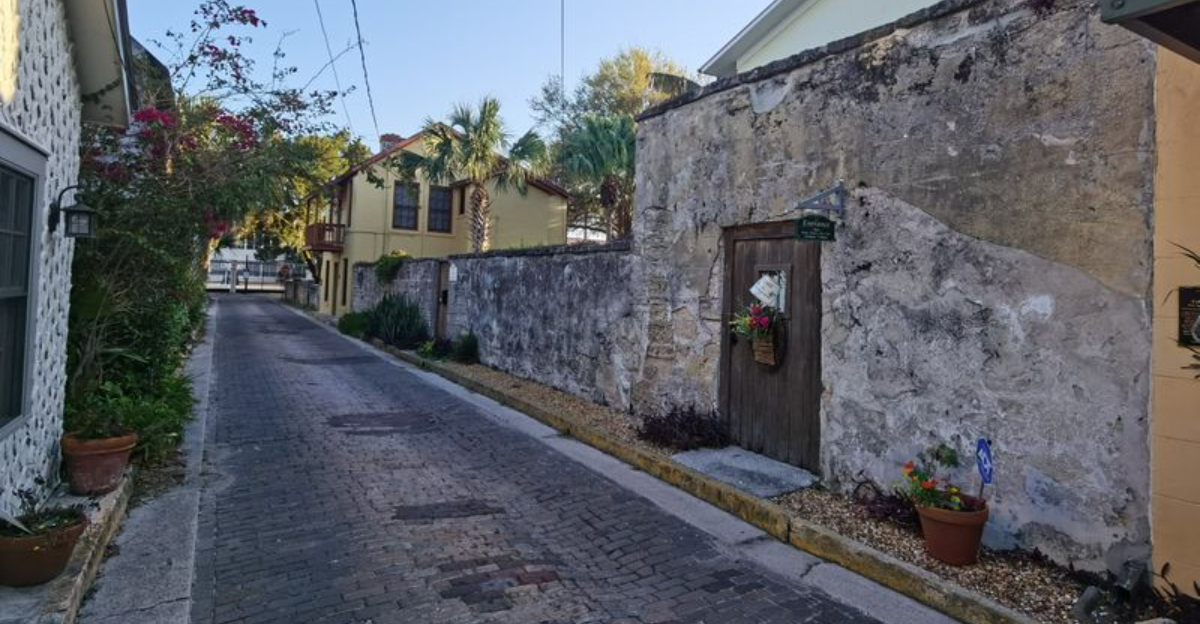
Tucked inside St. Augustine, Aviles Street feels like a quiet lane lifted straight from the Old World.
You hear footsteps on stone, smell sea air, and notice balconies leaning close enough to trade whispers.
This is the oldest continuously used street in the United States, and it wears its centuries like a well loved cloak.
If you have ever wanted Europe without crossing the Atlantic, start your walk here.
A European Street in America’s Oldest City
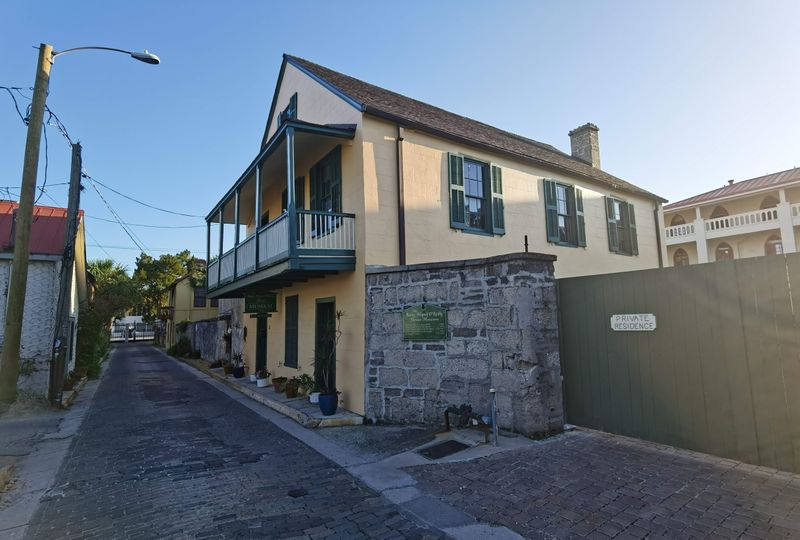
Aviles Street is the surprise you do not expect in Florida. You step off a busy corner and suddenly the world narrows to stone, stucco, and sunlight bouncing between closely set buildings. It feels older than the nation because it is, and the textures prove it with every worn threshold and hand built wall.
Here, the pace slows until it matches the shuffle of travelers who stop to peer into galleries and courtyards. You notice the street is intimate in width, and that intimacy is the magic. Doors open directly onto the lane, balconies project above your head, and a soft hush collects beneath terracotta tiles.
St. Augustine calls itself America’s oldest city for good reason, and Aviles Street becomes its most convincing argument. The street’s human scale and layered facades create a European mood that no theme park could ever imitate. You feel anchored to time, yet invited to keep moving forward as if turning a page in a living book.
With each step, you can sense the Spanish origins beneath later flourishes. The light is different here, filtered through palms and plaster whitewash, and the salt breeze adds a coastal note that suits the Mediterranean tone. If you want a first taste of the city’s soul, this is where you start and linger.
What makes it special is not just age but continuity. Shops, small museums, and inns operate within walls that remember garrisons, merchants, and families. You are walking a functioning street, not a frozen exhibit, and that everyday life is exactly what gives it authenticity.
St. Augustine: America’s Oldest Continuously Occupied European Settlement
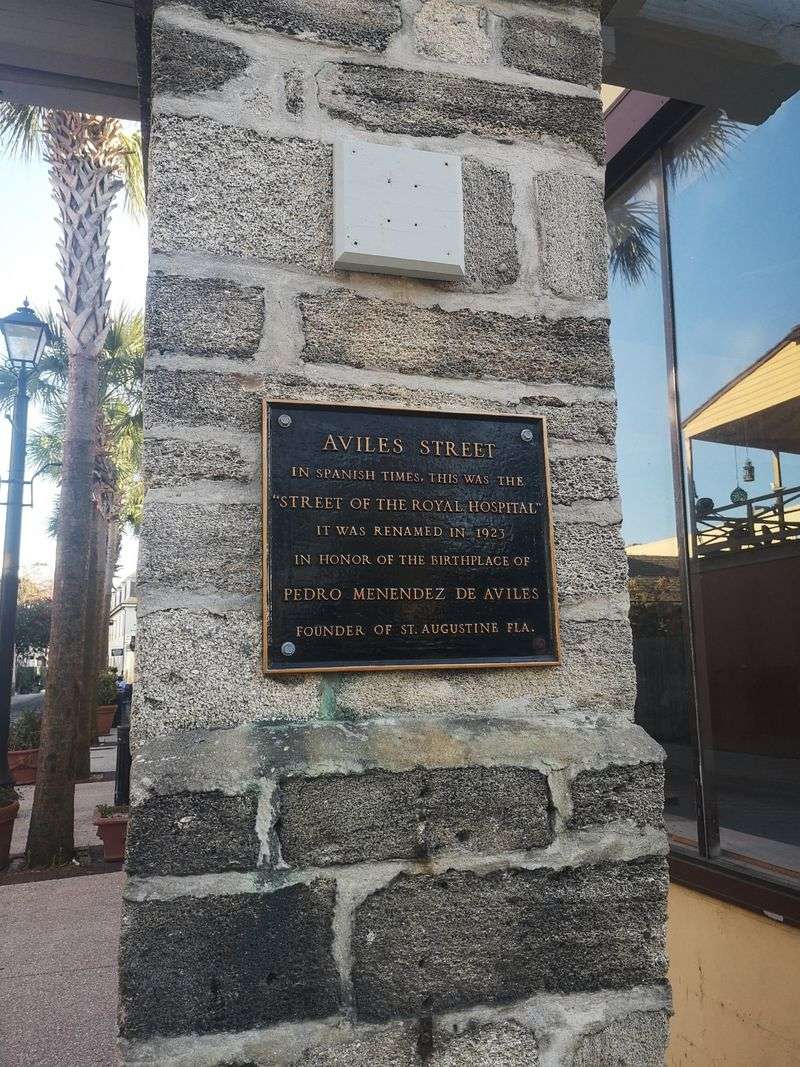
St. Augustine was founded in 1565 by the Spanish, and that single date reframes American history. Before Jamestown and long before Plymouth, a European city took root on Florida’s coast and never stopped living. You feel that continuity in the street grid, in the fort’s watchful silhouette, and in the daily rhythms that make the past feel present.
Why does the title belong here rather than in Virginia or Massachusetts. Because occupation never lapsed, and the settlement grew, adapted, and survived storms, sieges, and political handoffs. The result is a city where traditions overlap, and where Spanish, British, and American chapters read like one long narrative.
Walk toward the waterfront and you sense the strategic logic that brought Spain to this shore. The harbor is generous, the currents familiar, and the nearby inlet is a doorway to the Caribbean world. Soldiers, friars, artisans, and families gave the city its shape with faith, trade, and defense woven together.
That legacy radiates down Aviles Street. When you cross from plaza to lane, you are stepping through 16th century intentions still visible in the modern fabric. The buildings are not relics set apart from life, but addresses with mail, neighbors, and open doors.
St. Augustine teaches that age is not a museum label. It is continuity, weathered yet resilient. If you want to understand how European colonization left enduring urban footprints in the United States, look here first, then let Aviles Street guide you into the details.
The Origins of Aviles Street
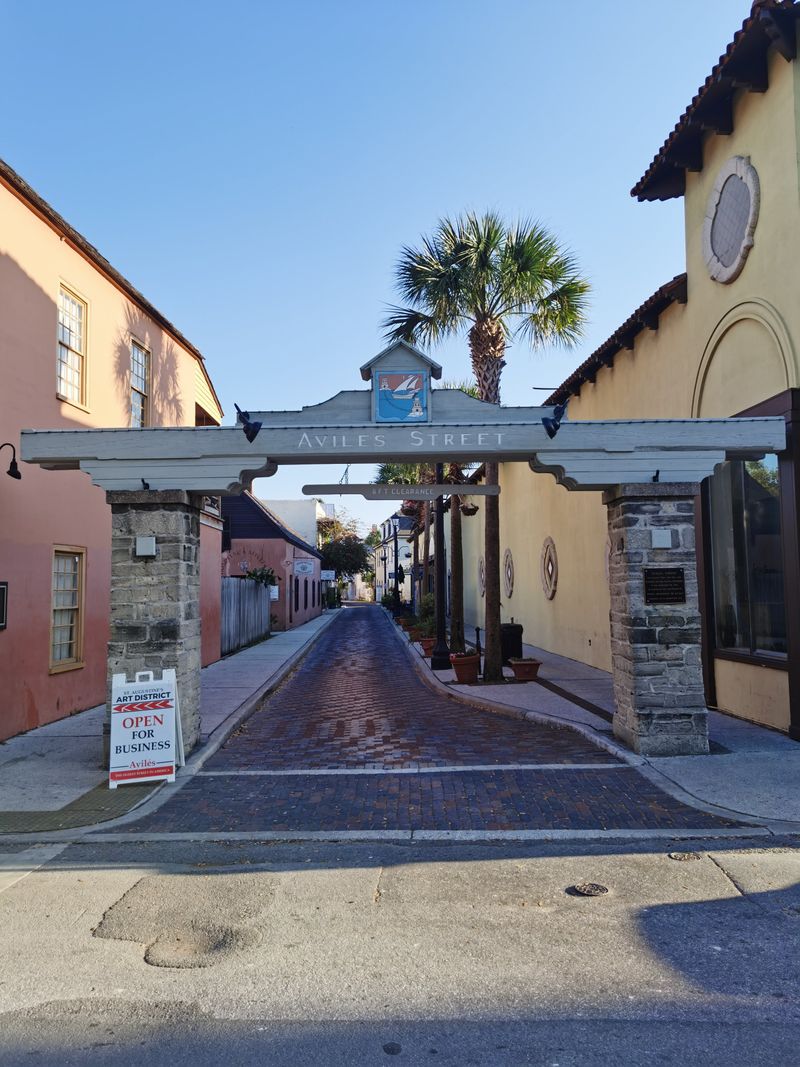
Aviles Street emerged in the late 1500s as part of the original Spanish town plan. It formed a practical corridor inside the early defenses, tying residences, workshops, and military functions to the central plaza and harbor. You can still trace that logic in its alignment and in the way doorways sit close to the lane.
Back then, the city needed compact, defensible streets where movement was quick and corners were watchful. Aviles answered with narrow width and buildings pulled tight, creating shade and a sense of enclosure. Soldiers, artisans, and families shared the same short distances between work, worship, and home.
The street’s fabric likely started modest, with timber and local coquina stone shaping walls and thresholds. Over time, reconstruction after fires and storms brought sturdier masonry and more refined details. The result is a palimpsest where each layer adds character without erasing the first intentions.
Because the street never fell out of use, it gathered changes gradually rather than by grand redesign. You notice irregularities in lot lines, roof heights that step, and parapets that tell their own history. What looks picturesque today was once a practical response to climate, materials, and defense.
Standing in the middle of Aviles, you can imagine carts, hoofbeats, and the clink of armor. Yet you also hear laughter from a cafe and the quiet music of an open gallery. That continuum is the heart of its origin story, where necessity evolved into beauty and daily life never broke stride.
Spanish Colonial Urban Design and European Influence
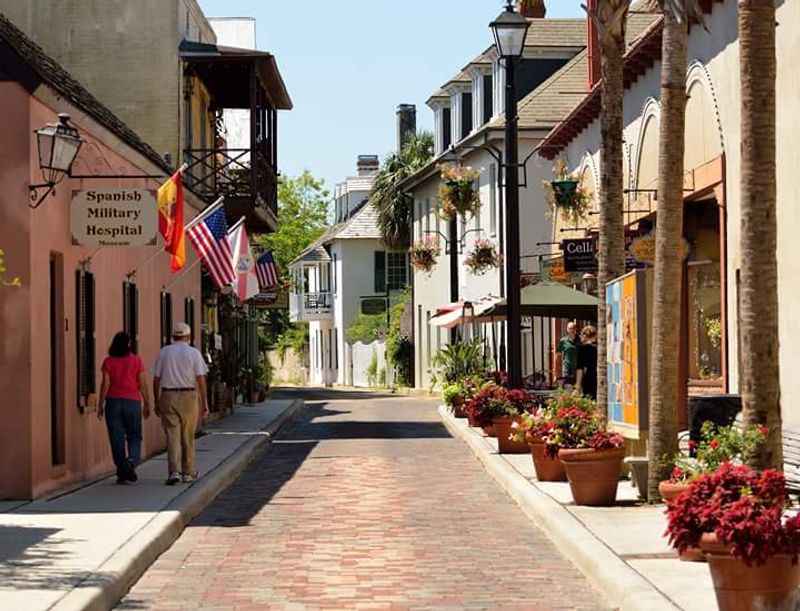
Spanish colonial planning shaped Aviles Street with the same instincts seen across the empire. Streets were narrow for shade and defense, lots were deep, and buildings hugged the right of way. You feel European medieval DNA in the tight grain and in how architecture defines public space.
Instead of a grid built for wagons and later cars, the pattern favors people on foot. Corners are close, vistas are short, and discoveries are constant at walking speed. The plaza anchors the whole system, and Aviles acts like a tributary, channeling life toward and away from the civic heart.
Climate mattered, so overhangs, courtyards, and thick walls moderated heat and captured breezes. You notice how window openings are modest on the street yet open inward to light filled patios. It is a European idea recalibrated for Florida sun and Atlantic humidity, and it still works.
Materials tell the same story. Coquina, lime plaster, and wood weather into a soft palette that makes even repairs look timeworn. Modern additions that respect scale and rhythm nestle in without shouting, proving the urban design is resilient.
Walking here, you sense how design creates behavior. People slow down, greet each other, and step aside at doorways. Aviles Street teaches that a city can be intimate, shaded, and social, borrowing from Europe while answering to its own coast.
Architectural Character: A Blend of Centuries
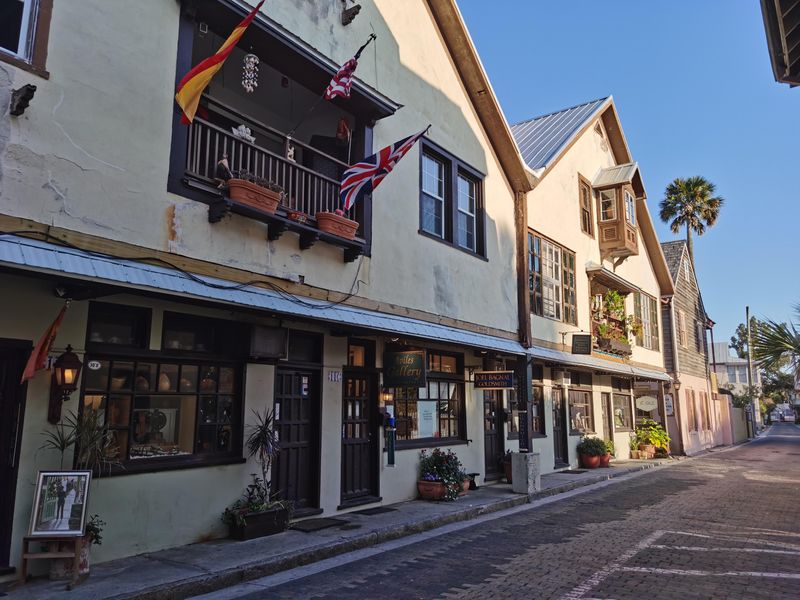
Along Aviles Street, façades read like a timeline. Spanish Colonial forms introduce thick walls, small street windows, and interior patios. British era details add sash windows, shutters, and neater trim, while later American and Mediterranean Revival touches soften edges with arches and tiles.
You can stand in one spot and count centuries by materials. Coquina blocks transition to stucco skins, timber balconies hold wrought iron, and terracotta caps the composition. It is never a theme park mashup because proportions remain consistent, giving harmony to variety.
Look for doorways set low and deep, their thresholds polished by generations of footsteps. Notice how balconies do not just decorate but offer shade and social perches above the lane. Even small asymmetries speak to incremental repairs rather than demolition and rebuild.
Mediterranean Revival arrived in the early 20th century and found a natural home. Architects borrowed from Spain and Italy yet respected local precedent, so new buildings nodded to old ones in scale and color. The result feels inevitable, like growth rings on a tree.
As you stroll, you are reading a built conversation among powers and periods. Every cornice and lintel is a sentence, every courtyard a paragraph. Aviles Street keeps the chapters close together so you can turn pages with your feet.
Life on Aviles Street Through the Centuries
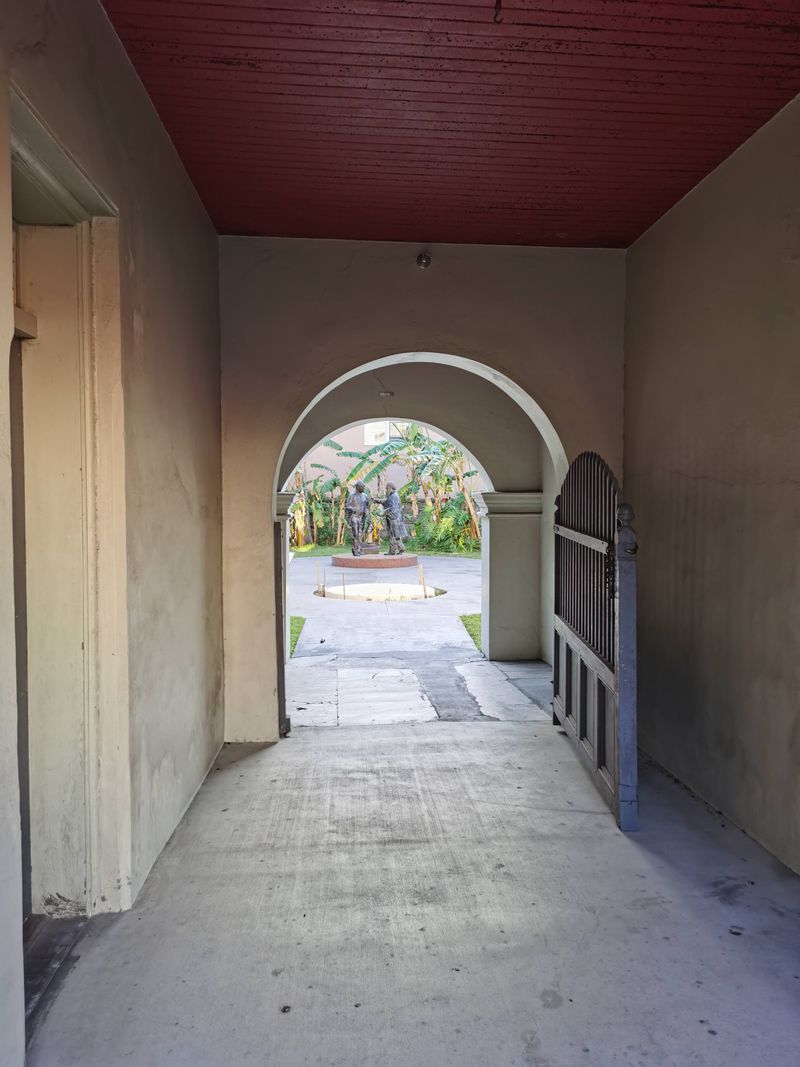
In the beginning, Aviles Street supported daily routines of soldiers, craftsmen, and families. The lane carried water, wood, and gossip, and it funneled people to the plaza for worship and markets. Even during tense years, life pressed on with cooking smells, mending, and evening talks at doorways.
As centuries turned, the street adapted without losing stride. British occupation brought different tastes and regulations, then Spanish rule returned, and eventually the United States added its own cadence. Through it all, the address stayed active, occupied, and necessary.
By the late 19th and early 20th centuries, tourism found the city and Aviles adjusted again. Inns appeared, small shops opened, and homeowners discovered the value of historic charm. You can still sense that entrepreneurial spark in hand lettered signs and welcoming stoops.
Today, it is a cultural corridor where locals and visitors cross paths. Morning deliveries rattle over stone, afternoon galleries buzz softly, and evenings glow with string lights in pocket courtyards. It is not a museum behind velvet ropes but a neighborhood that works.
When you walk here, you join a long parade of ordinary days. The street’s endurance comes from usefulness as much as beauty. That practicality keeps history alive in the most convincing way possible.
Cultural and Artistic Identity Today
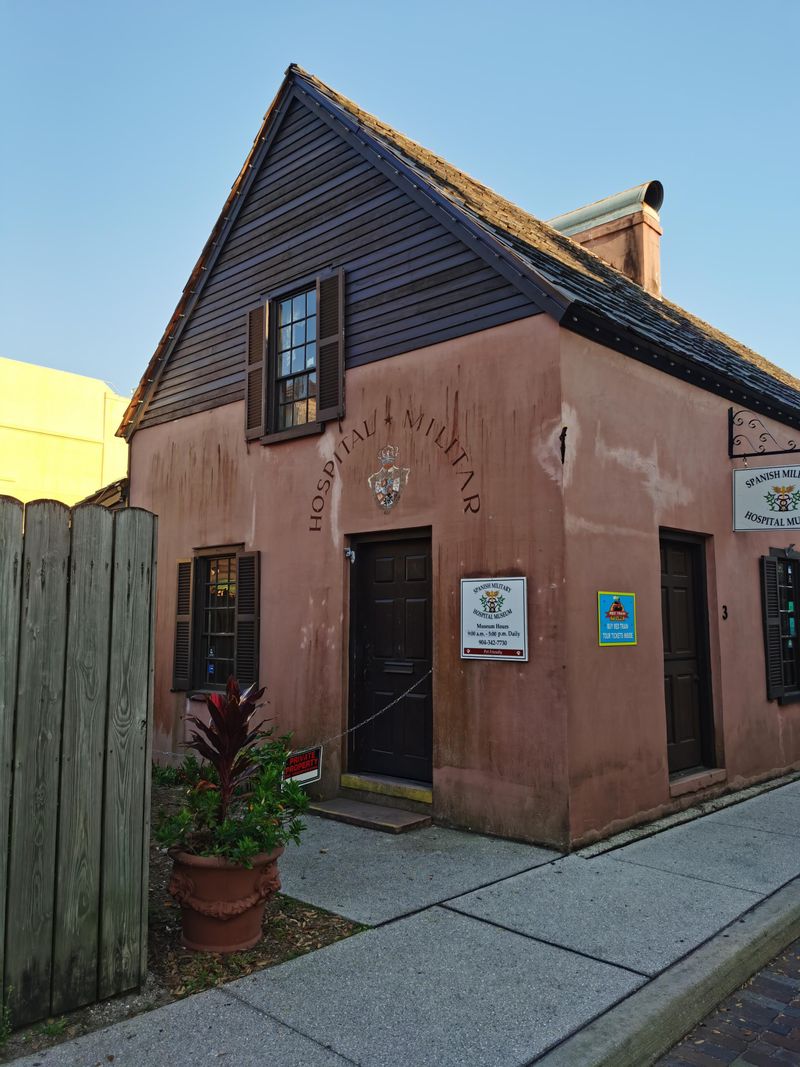
Aviles Street is St. Augustine’s arts heartbeat, a compact district where galleries hang fresh work in rooms older than the nation. You step through a thick doorway and find color, texture, and stories from local painters and sculptors. The setting makes the art feel rooted, as if the walls are collaborators.
Small museums dot the lane, and historic inns tuck into courtyards fragrant with jasmine. Cafe tables spill onto the street, and conversation moves as slowly as the sunlight. You can wander without a plan and still stumble into a performance or an opening night.
The charm is intimate, not flashy. Window displays are measured and warm, the kind you pause to study rather than photograph in a hurry. It is a European habit, lingering at the threshold, and Aviles encourages it with its human scale.
Artists love the street because it attracts people who value craft and story. Visitors feel welcome because the distance between passerby and proprietor is a single hello. You end up buying a print or a small ceramic not out of impulse but connection.
By sunset, the galleries glow like lanterns, and the street becomes a quiet promenade. You leave with more than souvenirs. You carry the sense of a place where creativity and history share the same address.
Preservation and Historical Recognition
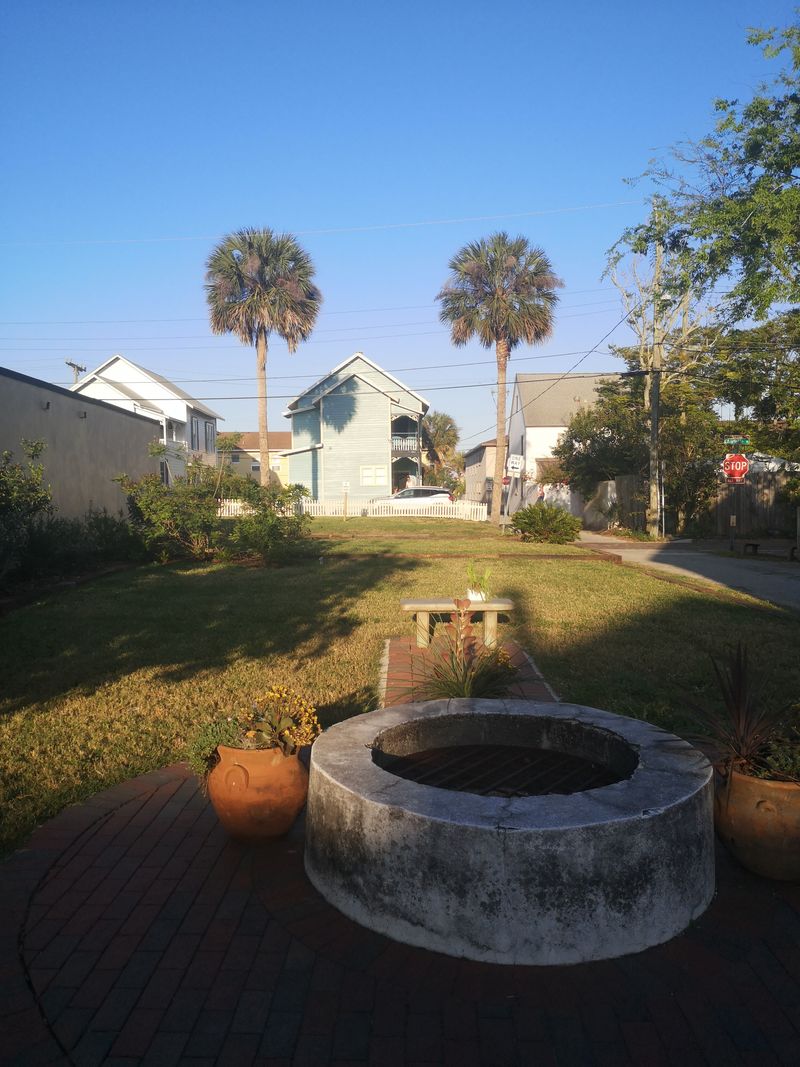
Aviles Street survives with grace because people fought for its details. Local advocates, city planners, and historians set design guidelines that protect scale, materials, and sightlines. You notice the difference immediately, because nothing feels overwrought or out of place.
Historic districts and landmark designations provide guardrails without turning life into a diorama. Owners repair stucco rather than replace walls, and new work respects the cadence of windows and doors. It is preservation as stewardship, not freeze framing.
Documentation and archaeology play quiet roles underfoot. Before big changes happen, teams often study foundations, layers of plaster, and buried artifacts. Findings inform decisions so the street keeps its voice while accommodating modern needs.
Signage is discreet and helpful. You can read a plaque, then look up and see exactly what the text describes. That alignment between words and walls builds trust and curiosity.
The payoff is authenticity. When you walk Aviles, you are not squinting to imagine a vanished past. You are reading a careful, ongoing conversation between history and the present.
Why Aviles Street Feels More European Than American
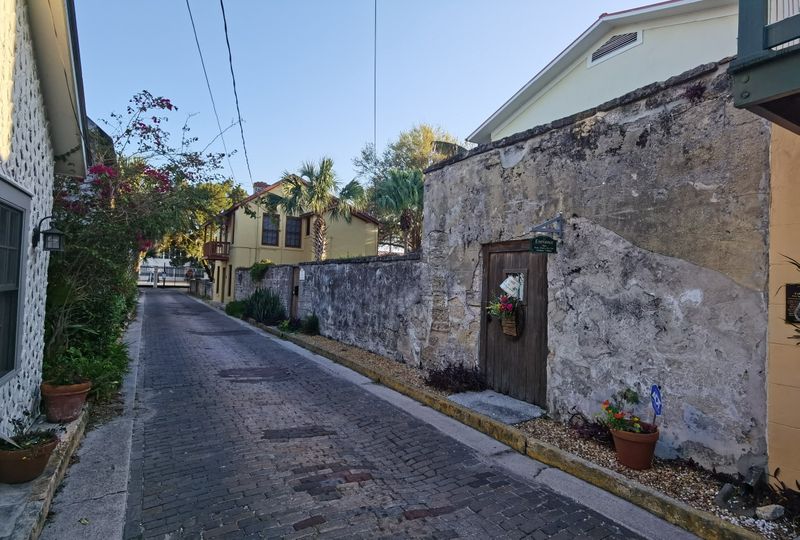
The sensation begins with scale. Buildings press close, the street narrows, and your attention sharpens to doorways, balconies, and steps. Cars fall into the background, and walking takes over as the natural rhythm.
Materials deepen the impression. Coquina walls, limewash, and terracotta roofs create a Mediterranean palette that glows in coastal light. Wrought iron curls around balconies and lanterns, adding a handmade texture you can almost feel.
Then come the courtyards. Many open inward, invisible from the street until a door swings wide to reveal shade, plants, and murmuring fountains. That inside outside life is classic Spain and southern France, translated to Florida’s climate.
Sound completes the scene. You hear footsteps, conversation, and the hush that comes when wind slips between close facades. Even a distant guitar seems plausible here, as if the lane were tuned to it.
By the time you reach the end, you forget you are in the United States at all. The place has done its work, inviting you to slow down, look closely, and savor the details that make cities lovable.
Conclusion: Walking Through Living History
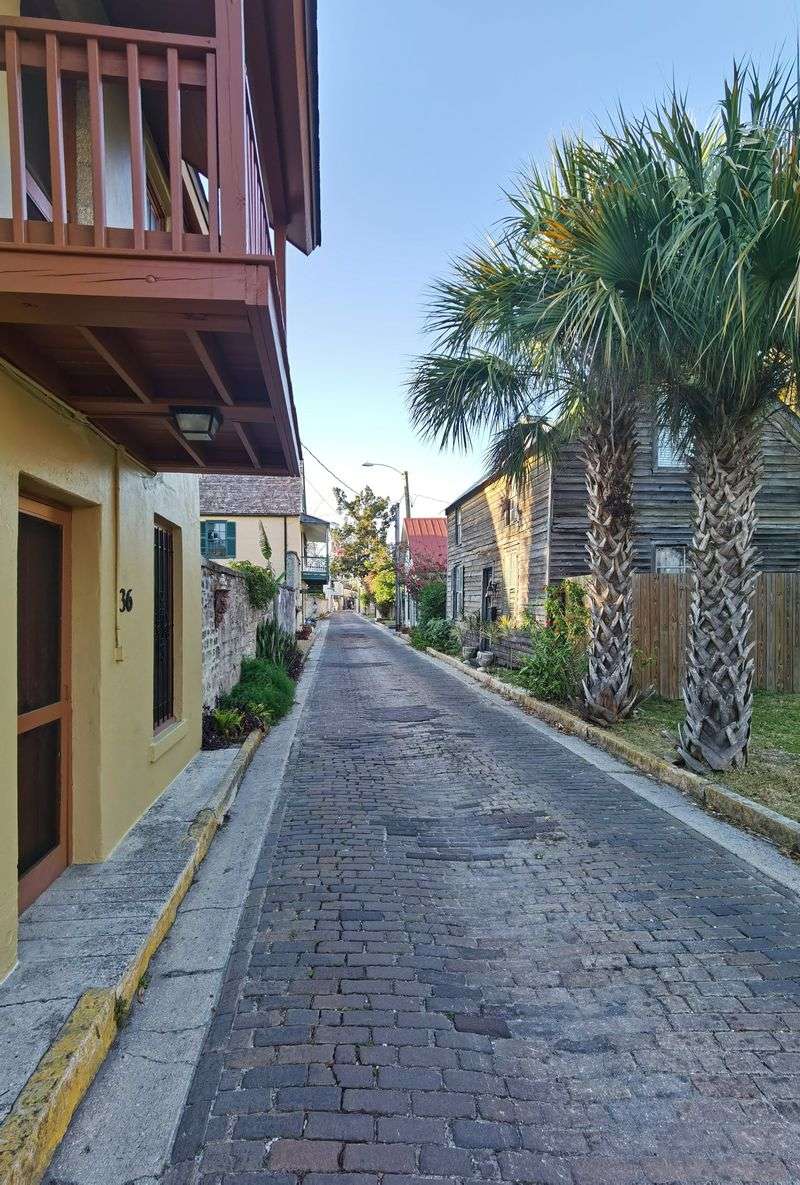
Aviles Street gives you a rare experience in America. You walk a lane that predates the country and still serves coffee, shelter, and conversation daily. It is proof that history is strongest where life never stopped using it.
What begins as curiosity turns into appreciation for careful design and long memory. The street’s European roots show in every proportion, and Florida’s climate finishes the composition with light and breeze. Together they produce a place that feels both intimate and inevitable.
If you go, let your pace match the architecture. Pause at thresholds, glance upward, and listen for the soft echo of centuries working quietly behind today’s voices. You will leave with the sweet certainty that some streets know exactly who they are.
Aviles does not perform history. It lives it, day after day, with galleries, inns, and neighbors tending the legacy. That is why it is worth the walk, and why you will remember it long after the sea air fades.