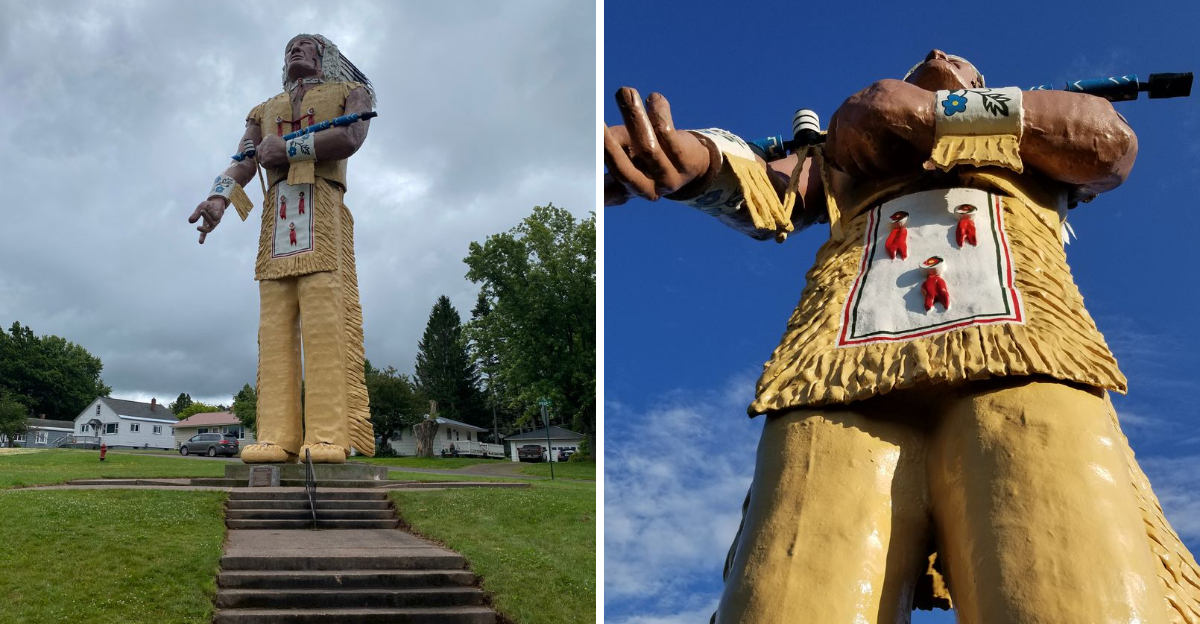
Tucked among Ironwood’s pine covered hills, a towering figure quietly keeps watch over Michigan’s western Upper Peninsula. Hiawatha, the world’s largest Native American statue, rises above the treetops and draws curious road trippers with its sheer scale and story.
Whether you are mapping a Great Lakes loop or chasing small town landmarks, this cultural icon rewards a stop with history, photo ops, and quick access from downtown. Here is a focused guide to make your visit smooth, meaningful, and worth the detour.
Quick facts and why it matters
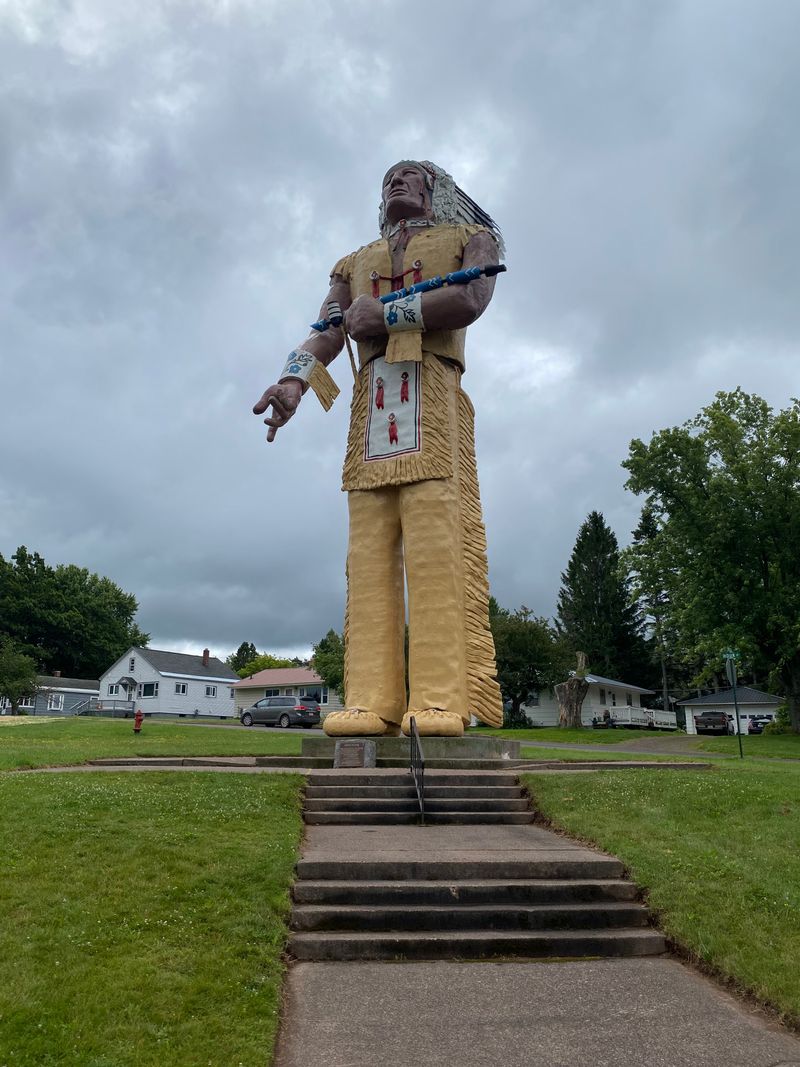
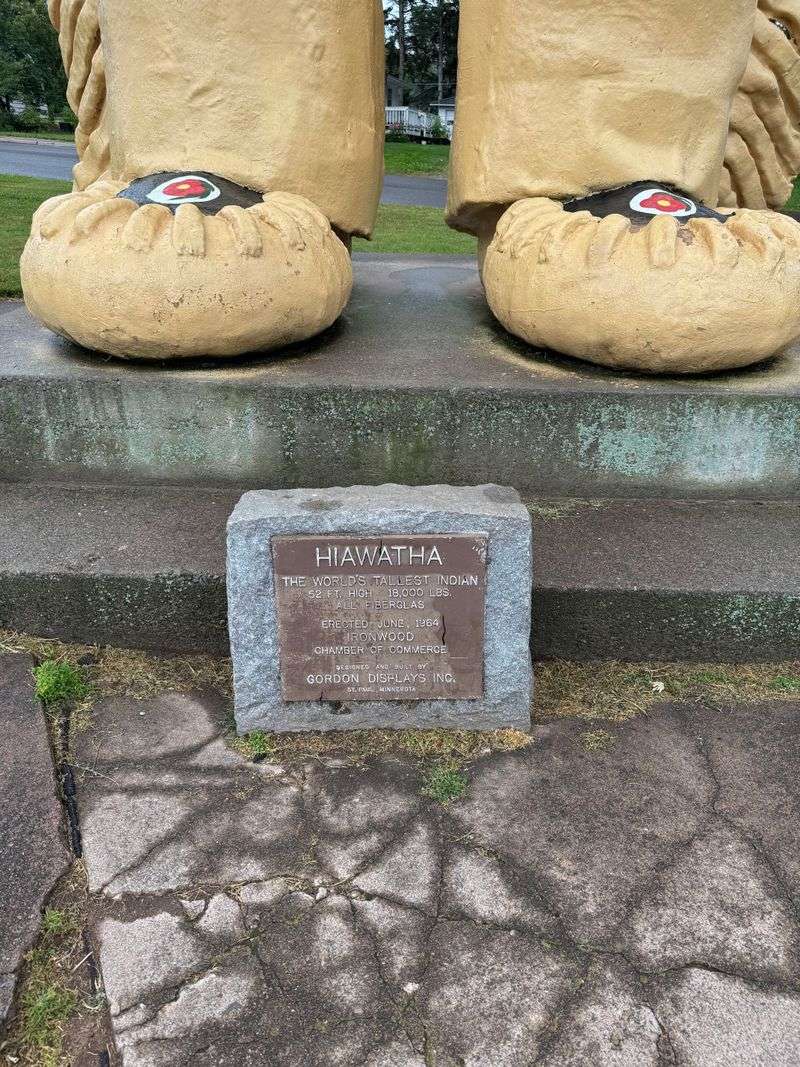
Understanding Hiawatha starts with the basics. Standing more than 50 feet tall on Burma Road, the statue anchors Ironwood’s identity as a cultural landmark and road trip magnet. It reflects mid century roadside Americana while pointing to deeper regional stories about the Ojibwe and the interplay between tourism and heritage.
The listed location is 46.4497321, -90.1621241, with posted hours typically 7 AM to 2 PM on weekdays, and closed Saturday and Sunday. The site is open air, so you can see the statue from the road, but plan to arrive during posted times for on site access or nearby facilities. A 4.6 star rating across hundreds of reviews suggests most visitors find it worth the stop.
Expect a quick visit of 15 to 30 minutes for photos and a short walk. Bring a camera, a windbreaker, and respectful curiosity. You are standing at a rare intersection of roadside novelty and community symbol.
Hiawatha’s scale makes you feel small while framing Ironwood’s skyline. The statue’s presence invites reflection on representation, preservation, and how landmarks become shared memory. Arrive ready to look closely and leave thoughtfully.
Getting there and parking on Burma Road
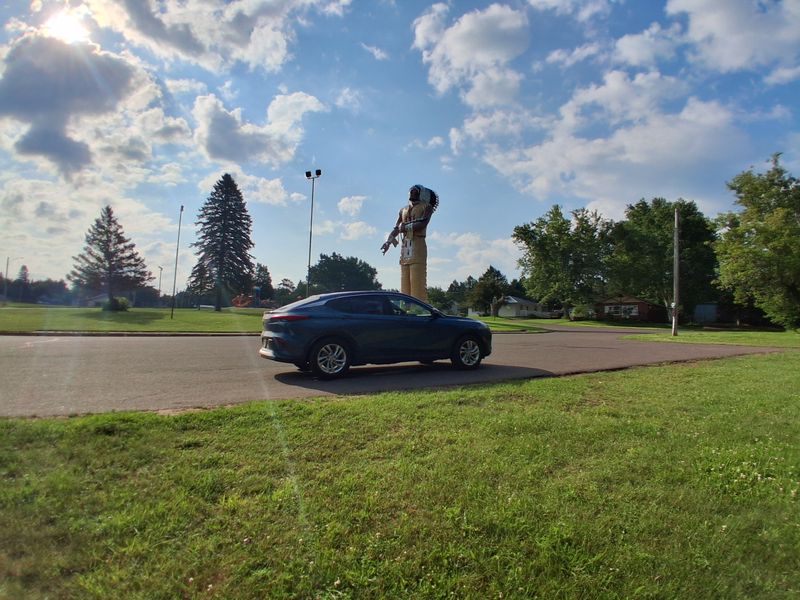
Navigation is easy. Enter “Hiawatha, World’s Largest Native American Statue, Burma Rd, Ironwood, MI 49938” in your map app. The short approach winds through residential streets before opening to a small pull off near the base, making it a low stress stop even during peak leaf season.
Parking is first come, with space for a handful of cars. Turn around space is tight for long trailers, so detach or park downtown if needed. Shoulders can be soft after rain, so keep tires on stable gravel and avoid blocking access roads or neighboring driveways.
Because the site is outdoors, winter snow can limit maneuvering. Plows usually clear main routes, but bring boots if you plan to step out. Cell coverage is generally reliable, and you can re route to US 2 quickly once finished.
If you want a smoother arrival, aim for mornings between 7 and 10. You will beat midday traffic and have cleaner angles for photos. Watch for wildlife near tree lines at dusk, and always leave space for others to pull in safely.
Best times to visit and operating hours
Hours are posted as open 7 AM to 2 PM Monday to Friday, closed Saturday and Sunday. Because the statue sits outdoors, you can still view it from nearby roads, but plan your on site stop to align with the listed window. Morning light flatters the figure and reduces shadows on facial features and regalia.
Summer delivers lush greens and steady visibility, while fall colors create a dramatic backdrop. Winter visits are possible, but wind chill from Lake Superior’s influence can be brutal. Spring can be muddy, so waterproof shoes help you cross soft ground without slipping.
Mondays and Fridays tend to be quieter than midweek lunch hours. Aim for the first hour after opening for fewer visitors and easier parking. If you are chasing golden hour, try late morning in winter and earlier in summer due to tree lines.
Always verify current hours on the Ironwood Chamber website before driving. Weather or maintenance can shift access. When in doubt, call locally, respect posted signs, and keep noise low for nearby residents who share this landmark’s backyard.
Photography tips and angles that work
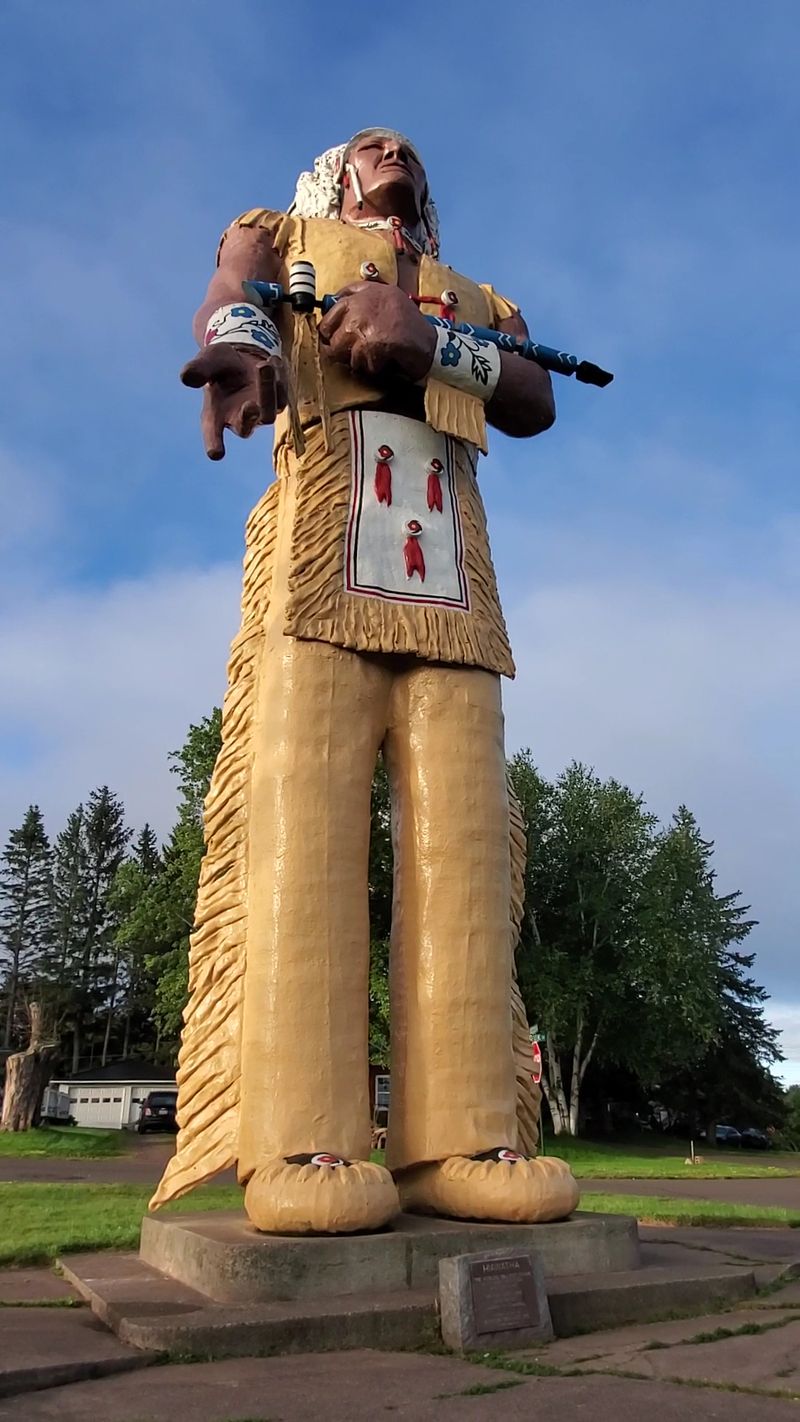
For scale, compose from the base parking area and tilt slightly upward to include treetops. A 24 to 35mm lens captures the full figure without heavy distortion. If using a phone, step back along Burma Road and tap to expose for the face to avoid blown skies.
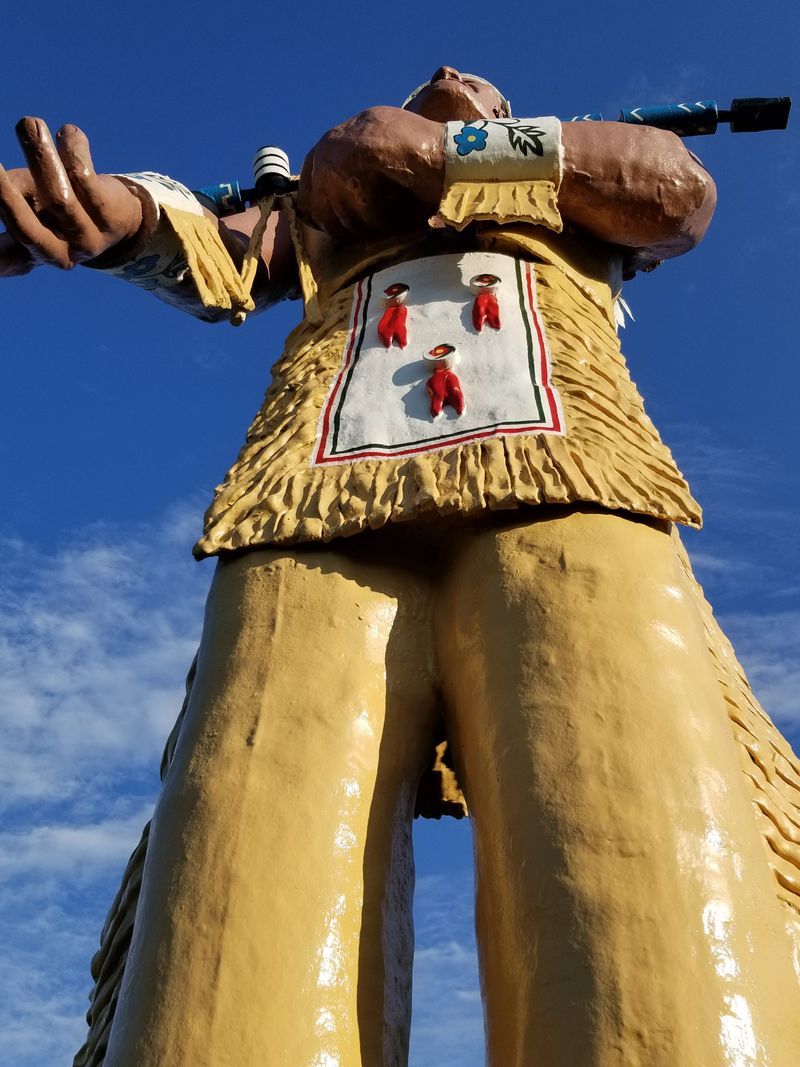
For detail, move closer to highlight beadwork lines and folds in the cloak. Cloudy days act like a softbox and smooth paint textures for more even results. On bright days, use your body as shade and shoot in RAW to recover highlights.
Portraits work great with friends standing a few yards forward of the statue to shrink it in frame. Try a low crouch to give your subject a heroic look. Keep safety first and never stand in the roadway while composing.
Golden hour warms the statue’s tones, while blue hour adds a moody silhouette against the pines. Bring a microfiber cloth for lens fog in shoulder seasons. Leave time for both wide establishing shots and tight details to tell the full story.
Cultural context and respectful visiting
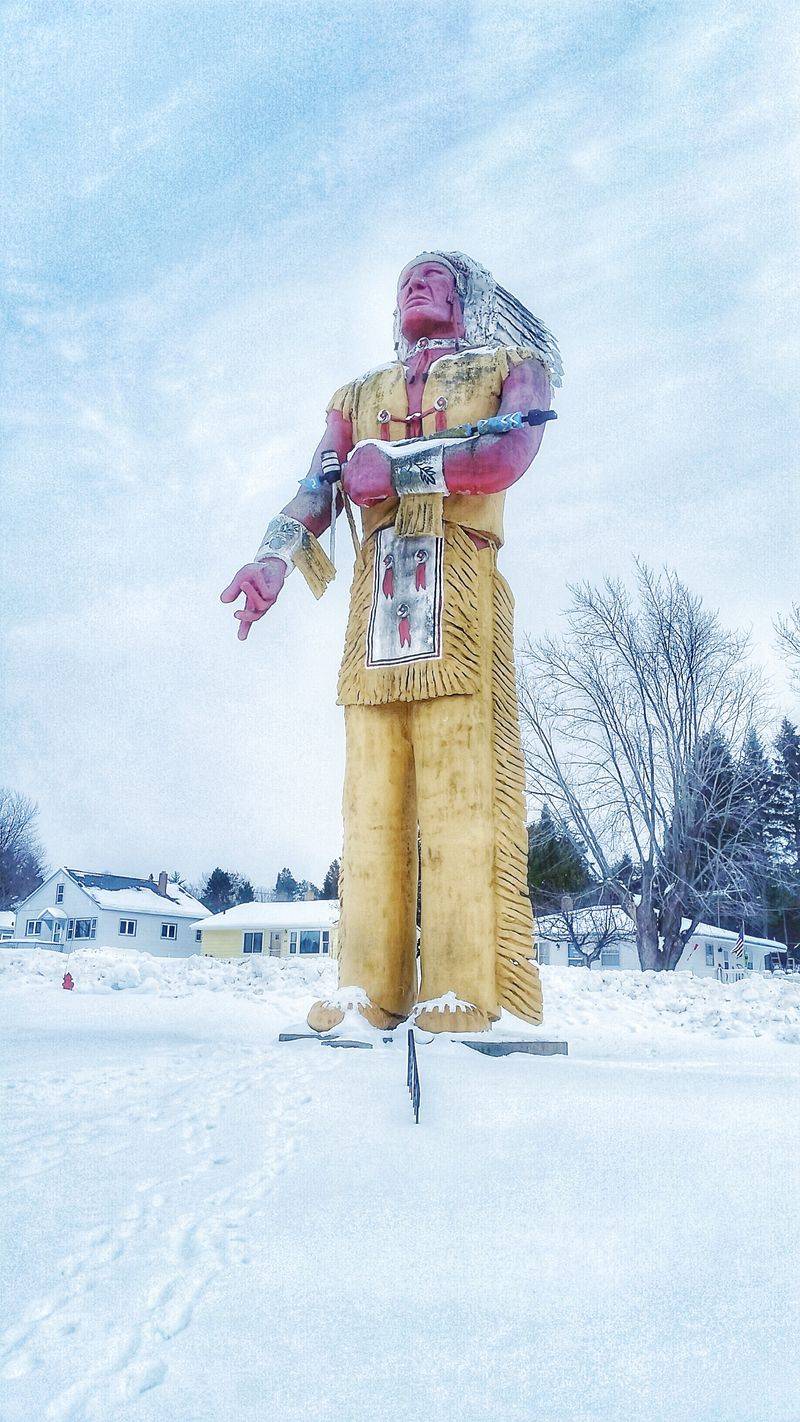
Hiawatha’s imagery intersects with Ojibwe homelands and broader Native representation, so arrive with respect. Read the on site signage, speak quietly, and avoid climbing or touching surfaces. This is a cultural landmark that asks you to listen before snapping a dozen photos.
Representation is complicated. Some visitors appreciate the tribute’s intent, while others see roadside monumentalism as oversimplification. You can honor Indigenous communities by supporting Native led art, museums, and educational resources alongside your stop here.
Stay on paths to protect vegetation and keep the area clean for residents and future guests. If children join, frame the visit as a chance to learn about local history and living cultures rather than costume. Share space, be patient, and thank volunteers who help maintain access.
When you leave, consider reading more through regional institutions and official sources. Let the statue be a starting point, not the final word. Thoughtful travel turns a quick photo into a more grounded understanding of place.
What to expect on site
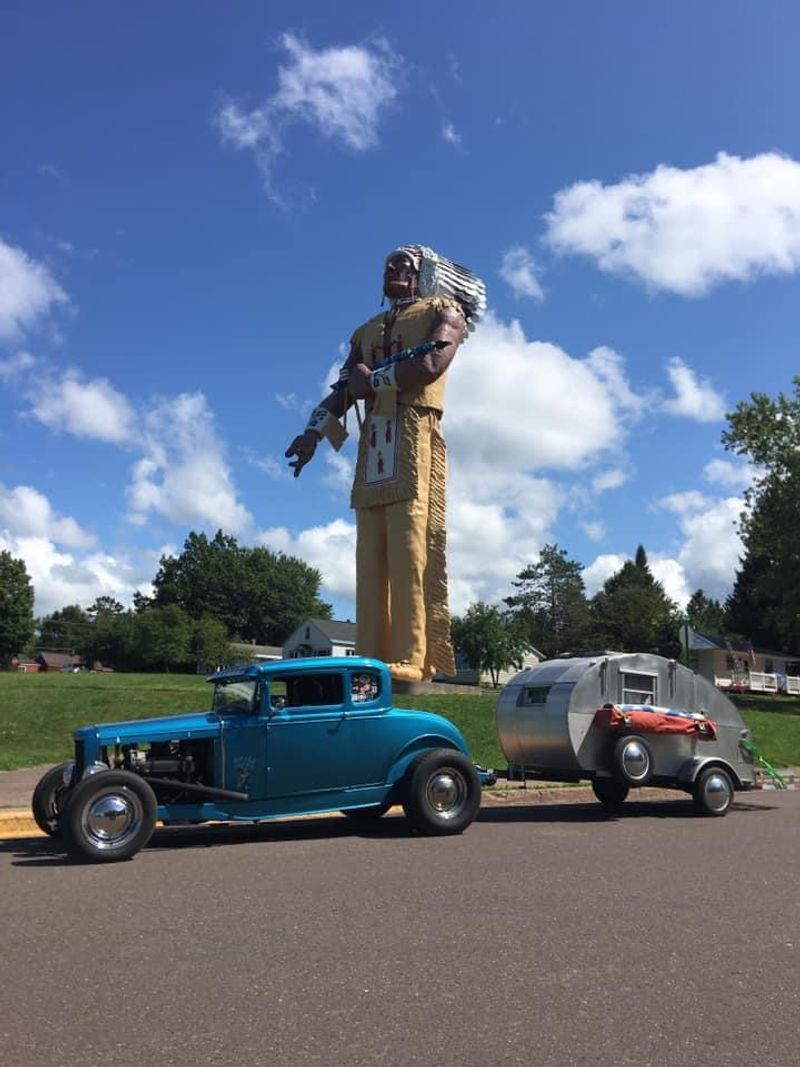
Expect a compact turnout, a short approach on foot, and immediate sightlines to the statue. The ground is often level but can be uneven near the base, so sturdy shoes help. There are no big ticket exhibits here, just open air viewing and the presence of a towering figure among trees.
Wind can funnel through the corridor, especially in late fall and winter. Dress in layers and keep tripods weighted if gusts pick up. You may hear birds and the distant hum of US 2, adding to the roadside Americana soundtrack.
Facilities are limited, so plan restrooms and snacks in downtown Ironwood. Bring water and pack out trash. Dogs on leash are typically fine, provided you keep them controlled and away from landscaping.
The visit is short but memorable. You will likely chat with another traveler, swap camera angles, and leave with a sense of having touched a small yet iconic chapter of Michigan road lore. Keep expectations modest and attention open.
Nearby pairings to round out your stop
Pair the statue with a stroll through downtown Ironwood for coffee and murals. The region’s mining heritage shows up in architecture and local exhibits, adding context to the people who shaped this border community. US 2 makes a clean corridor for continuing east or west afterward.
Trails and parks nearby offer quick leg stretches if you need a nature reset. If you are chasing Lake Superior, plan a half day loop north, then swing back through Ironwood before closing time. Seasonal events add personality, so scan community calendars.
Because Hiawatha is a concise stop, it plays nicely with a multi stop itinerary. You can photograph the statue early, then spend the late morning sampling local bakeries. That cadence keeps energy up and daylight optimized for driving.
Check the Ironwood Chamber website for updates and visitor info. Use it to confirm hours, directions, and seasonal notes. The statue is the hook, but the town is the story that keeps you around a little longer.
Safety, weather, and accessibility notes
Upper Peninsula weather shifts fast. Check radar before you go and bring a wind resistant layer even in summer. In winter, ice can make short walks slick, so traction cleats and gloves help.
The turnout is simple, so be alert when pulling in or backing out. Keep kids close, watch for vehicles, and never stand in the lane while framing shots. If lightning rolls in, retreat to your vehicle and postpone photos.
Accessibility varies with season. The immediate viewing area is relatively flat, but snow berms and soft soil can complicate mobility devices. If access is essential, call locally for current conditions before committing.
Finally, follow Leave No Trace principles. Pack out everything, respect neighbors, and keep noise low. Small courtesies preserve goodwill and keep this landmark welcoming for everyone who comes after you.