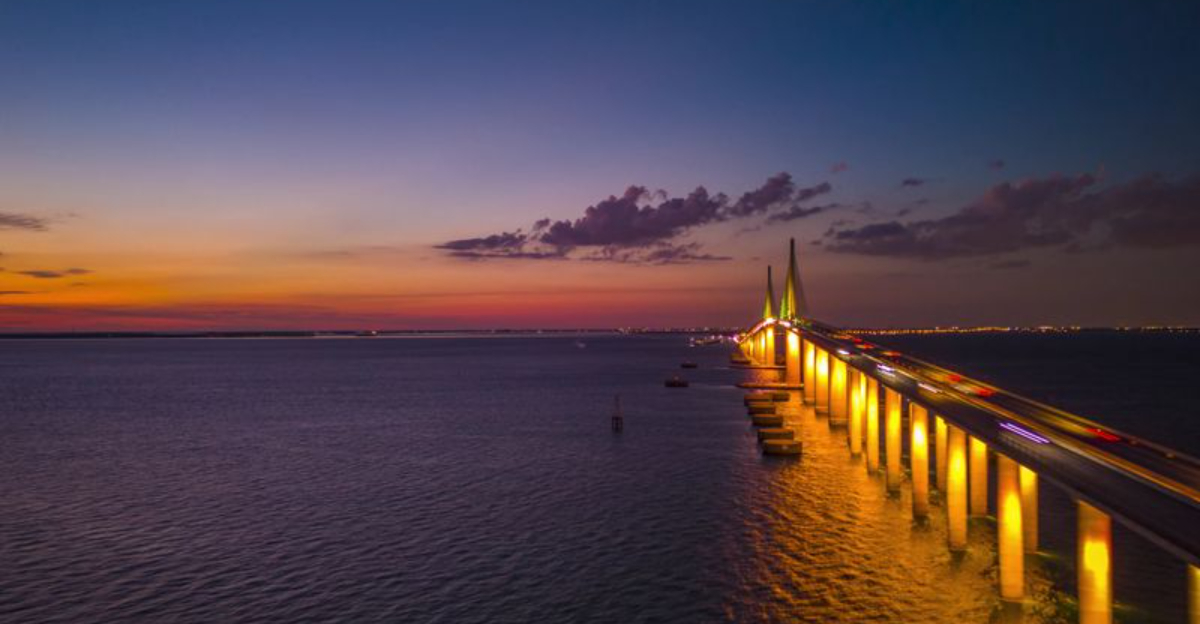
Heights, wind, and water converge on Florida’s Sunshine Skyway to create a crossing you never forget. One glance at those soaring yellow cables and your palms start to sweat, even before the incline begins. Yet there is a magnetic beauty to the span, especially at sunrise when Tampa Bay turns gold.
If you have ever wondered why this bridge feels so intense, you are in the right place.
Why the Sunshine Skyway feels terrifying at first glance
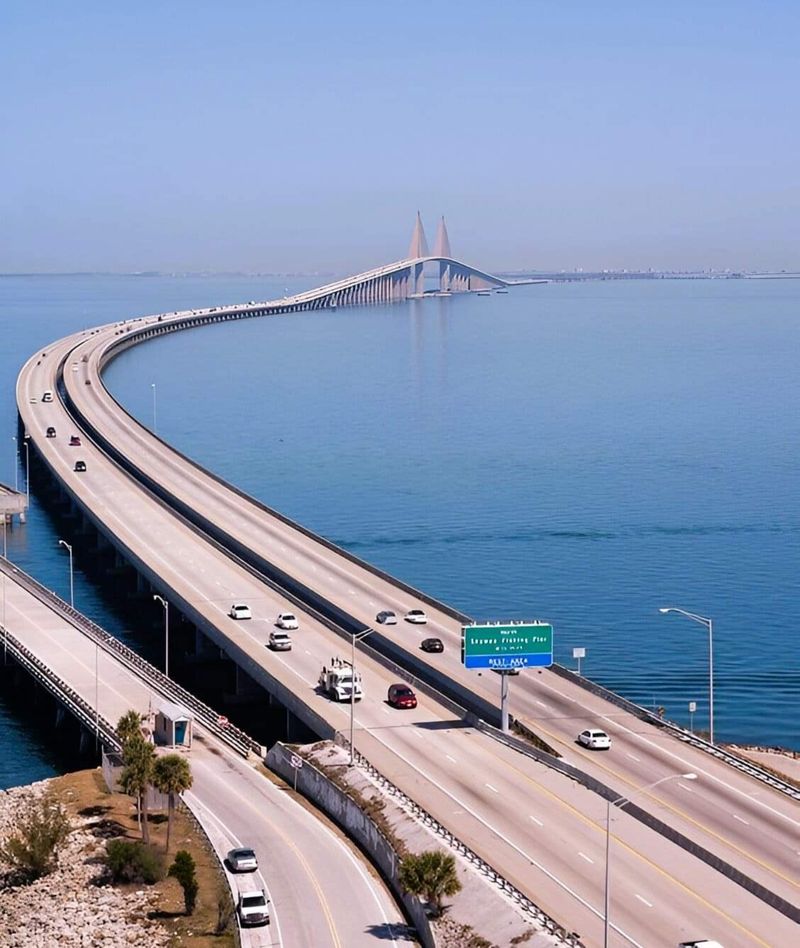
The Sunshine Skyway stretches boldly across open water, and that exposure is what you notice first. There is minimal visual shelter from rails or nearby land, so your eyes lock on the horizon and the drop. That sensation triggers instinctive caution because you are high and moving fast above waves.
The approach climbs quickly, creating a drawn out incline that keeps you suspended in anticipation. You are watching the road rise while wind nudges the car, and the bay seems to widen beneath you. Even confident drivers can feel a flutter as the waterline shrinks.
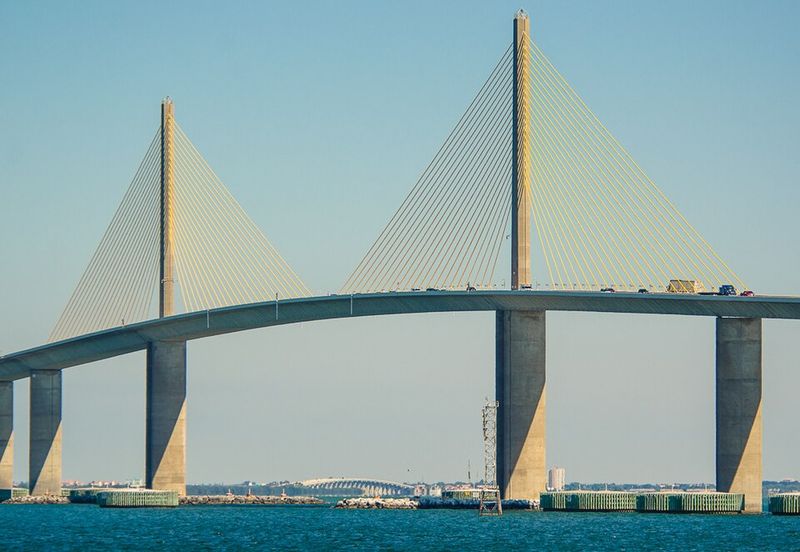
Color and design amplify the drama. The bright yellow cables catch strong sun, throwing harsh shadows that emphasize height. Long, clean lines lead your gaze outward, and there is nowhere to rest your eyes except sky and sea.
Add Florida’s signature storms, and the scene grows more intense. Rain sweeps sideways, spray shimmers, and wind hums through the stays. The result is a sensory overload that highlights vulnerability yet also underscores the bridge’s bold beauty.
A brief history and the 1980 disaster
The current Sunshine Skyway exists because tragedy forced reinvention. In May 1980, the freighter MV Summit Venture slammed into a support of the old cantilever span during a sudden squall. A section collapsed, and vehicles plunged into Tampa Bay.
That event reshaped Florida’s engineering priorities. Investigations led to redesigned protections, new navigation rules, and a commitment to safer channel alignments. The replacement bridge intentionally separates structure from ship lanes and adds robust fendering systems.
Construction of the present cable stayed bridge began later in the decade. Engineers focused on redundancy, clearance, and stability in extreme weather. The design raised the deck, improved visibility, and considered both maritime and motorist risks.
Remembering the disaster adds emotional weight when you drive it today. The water feels deeper when you know the story beneath the surface. Still, the new span stands as proof that lessons learned can inspire safer, smarter infrastructure for everyone crossing the bay.
Engineering design that keeps you safe
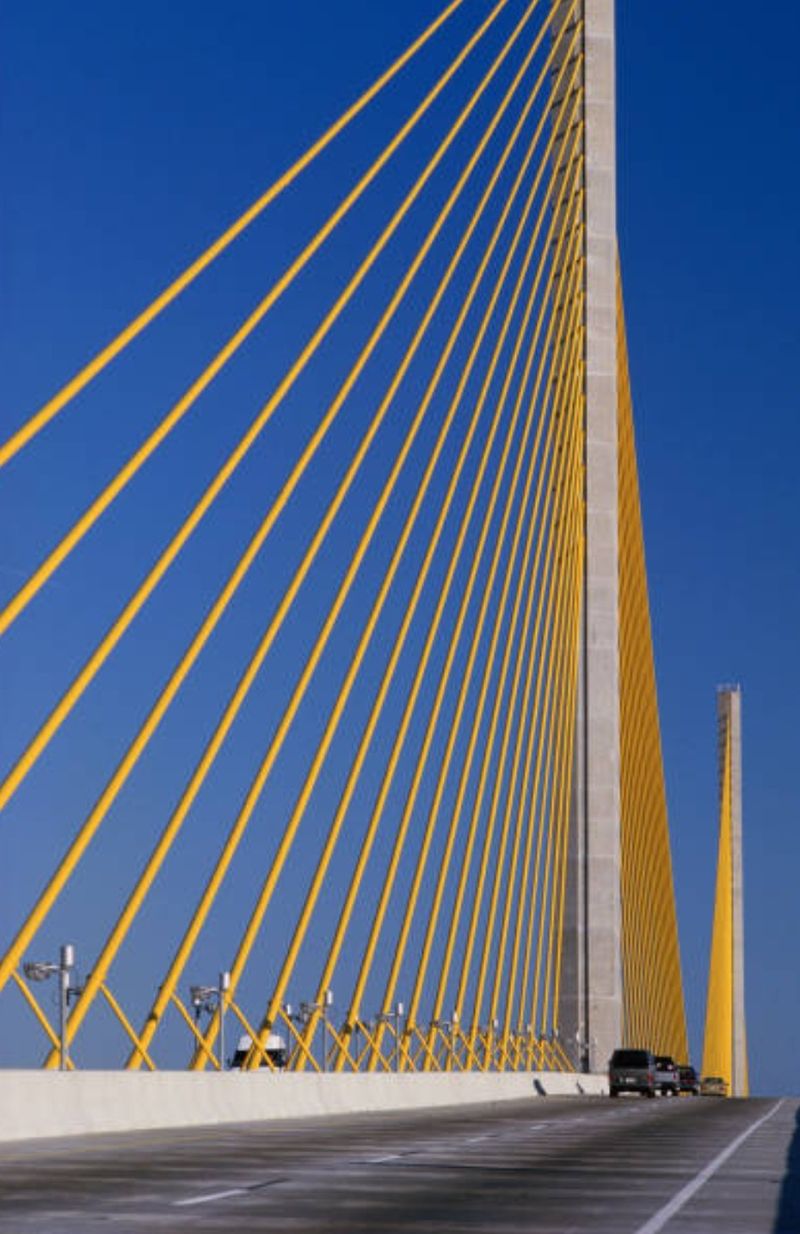
Despite the fear factor, the Sunshine Skyway’s engineering emphasizes safety at every level. Tall piers keep the main span well above ship traffic, while heavy duty fenders protect critical supports. The cable stayed system distributes loads efficiently and provides redundancy if single elements are stressed.
Engineers designed for hurricane winds with robust aerodynamic profiles. The deck shape reduces uplift, and the cables are tested to resist gusts well beyond typical storms. Expansion joints and bearings allow movement without structural damage.
Drainage systems shed water quickly during downpours. Lighting improves visibility at night and in fog, helping drivers read lanes and spacing. Guardrails and barriers meet modern crash standards to keep vehicles contained.
Monitoring technology tracks conditions in real time. Inspections, maintenance cycles, and weather protocols help agencies respond before problems grow. You may feel vulnerable up there, but the structure beneath you is doing quiet work every second.
Wind, weather, and why conditions feel intense
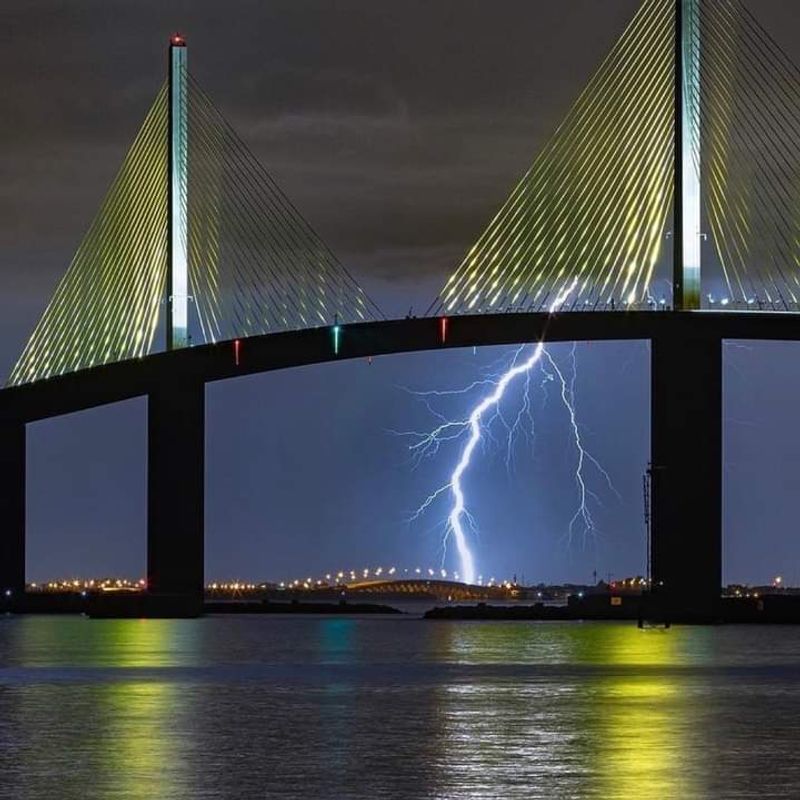
Open water creates a clean fetch, so wind arrives with few obstacles. That means gusts can rock your vehicle more than on inland highways. The sensation is especially noticeable for tall vans, SUVs, and vehicles with roof racks.
Summer storms form quickly over Tampa Bay. Rain bands can reduce visibility in minutes, turning the long span into a gray tunnel. Between sheets of rain and dashboard glare, judging distance gets tricky if you are already anxious.
Temperature shifts bring fog in cooler months. Moist air gliding over the bay can cloud the deck and obscure the cables. When that happens, headlights and lane reflectors become your best guides.
Before crossing, check live conditions and be flexible with timing. Slowing down, increasing following distance, and turning off cruise control help regain control. Respect the weather, and the bridge will feel more manageable.
Traffic patterns, tolls, and best times to cross
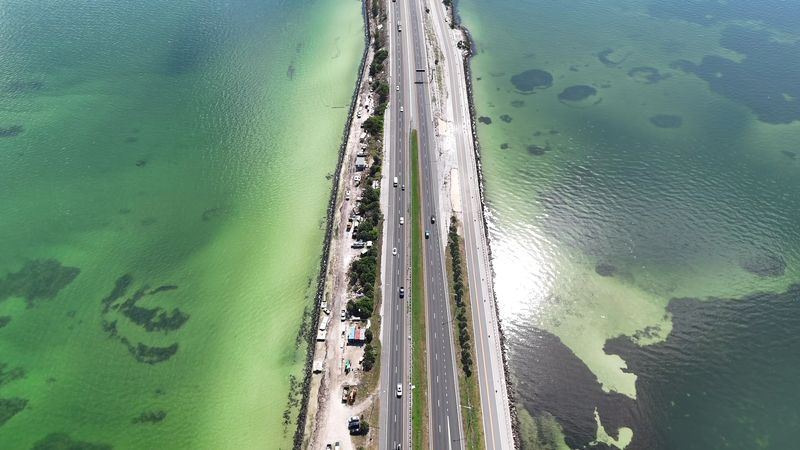
Timing reduces stress on the Skyway. Weekday rush hours funnel commuters between St. Petersburg and Manatee County, creating dense packs of vehicles. If you are nervous, avoid peak windows and plan a midday or late evening crossing.
Electronic tolling keeps traffic flowing, but unfamiliar lanes can add last second decisions. Check your route beforehand so you know which approach you will use. Having payment set removes a small but meaningful worry.
Tourist seasons add RVs, trailers, and rental cars to the mix. Those drivers may brake unexpectedly or drift when wind hits. Give them space and expect occasional lane changes.
Real time maps show incidents, lane closures, and weather slowdowns. If patterns look rough, consider the Howard Frankland or Gandy as alternatives. A calm window and an open lane can transform the entire experience.
How to manage fear of heights while driving
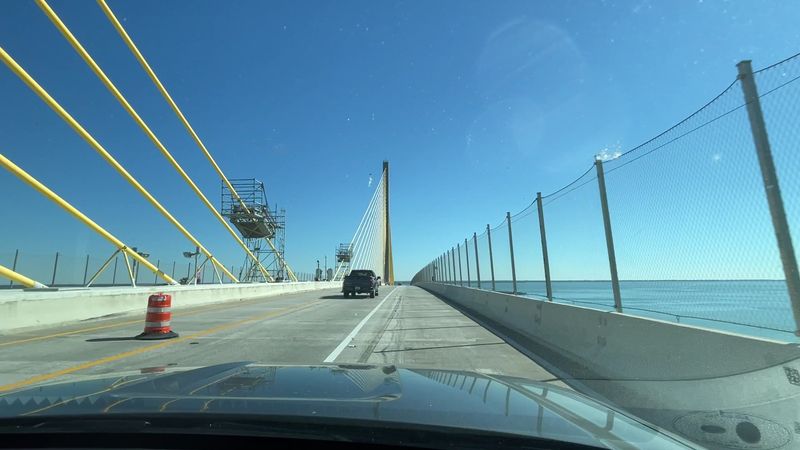
Anxiety on bridges often stems from visual cues. Looking far ahead instead of down helps anchor attention. Set your eyes on the lane center, breathe steadily, and keep your hands light on the wheel.
Break the crossing into small segments. Tell yourself to reach the next cable set, then the next. This chunking trick shrinks a long span into manageable bites.
If possible, ride as a passenger the first time. Let someone experienced drive while you acclimate to the view and height. Noise canceling music or a calming podcast can soften sensory edges.
Finally, prepare the car and yourself. Adjust mirrors, reduce speed, and avoid caffeine spikes right before the climb. Confidence grows with repetition, and each successful pass rewires your fear response.
Scenic rewards that make the crossing worth it
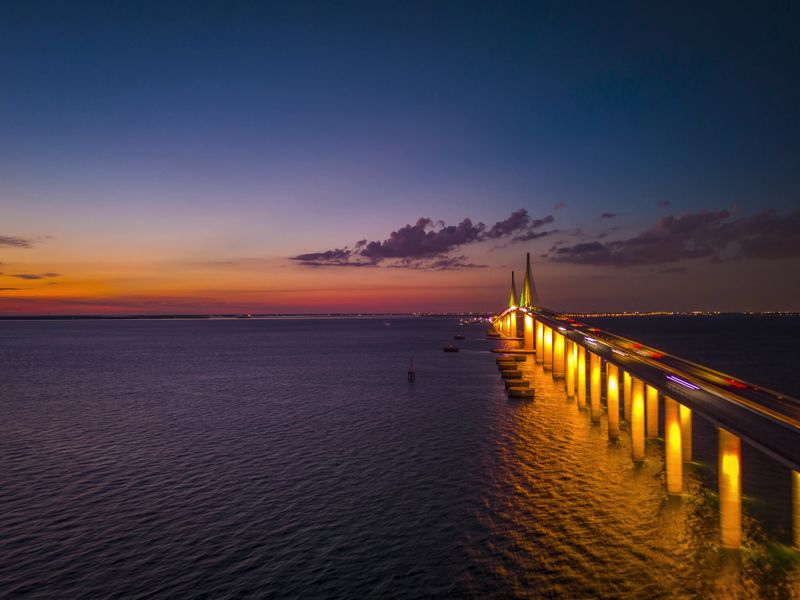
For all its nerves, the Skyway offers unforgettable views. At sunrise, pink light spills across the bay, and dolphins sometimes surface near the pylons. Pelicans skim the water like gliders, and the downtown skyline appears etched against the sky.
Sunset paints the cables orange and purple, creating a silhouette that feels cinematic. On extremely clear days, the horizon looks razor sharp and infinite. If you time it around storms, the cloud drama can be spectacular.
Pull offs and parks near each end give you safer vantage points. From the fishing piers and rest areas, the bridge looks like a sail unfurled. Photographers love the symmetry and giant negative space.
Let the scenery be part of your reward for pushing past fear. Capture a quick photo after the drive or simply take a minute to breathe. Beauty and bravery can meet in the same place.
Photography and filming etiquette on the span
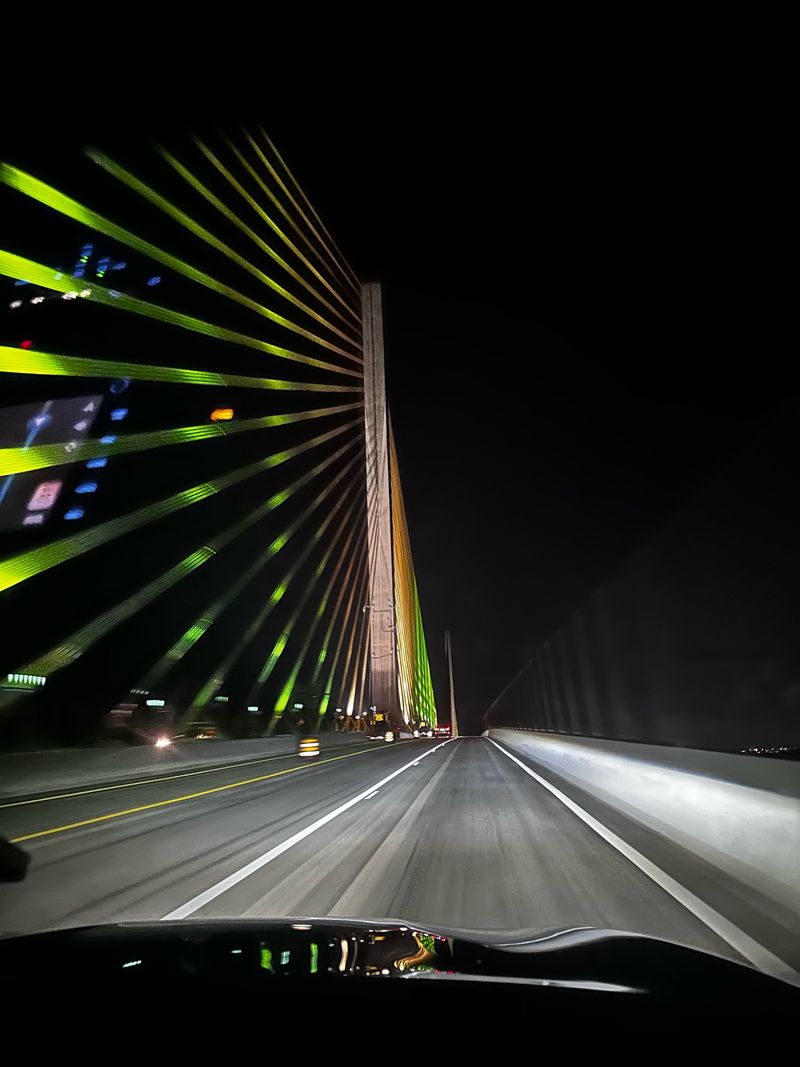
The Skyway begs for photos, but safety comes first. Do not stop on the deck to grab a shot or fly a drone from the roadway. Instead, use parks, fishing piers, or designated overlooks on either side.
Golden and blue hours offer the best light on cables and water. A polarizing filter cuts glare and deepens the bay’s color. Long exposures from shore turn traffic into elegant streams of light.
Respect other visitors by keeping tripods clear of paths and railings. Avoid blinding drivers with flashes from nearby viewpoints. If you bring pets, secure them so they do not bolt at gusts.
Share images with context about safety and history. Your post can inspire others to appreciate the bridge responsibly. Beautiful shots are even better when everyone gets home safe.
Local parks, fishing piers, and nearby stops
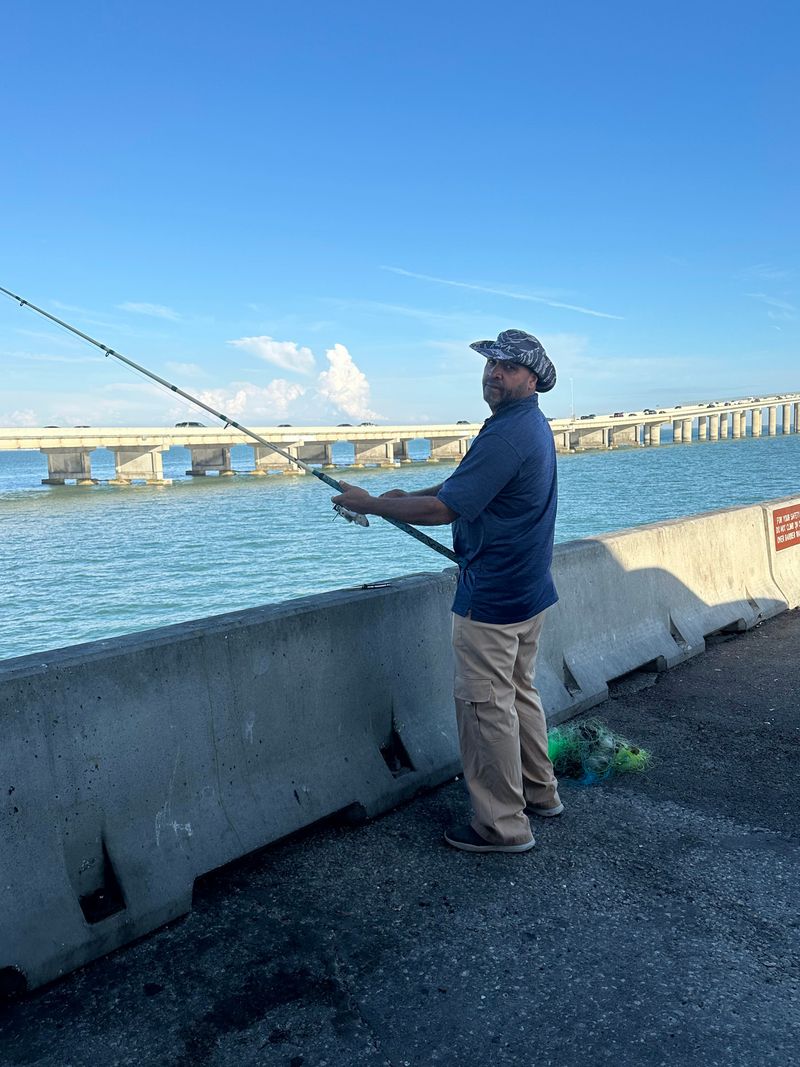
Both approaches offer easy places to pause before or after the crossing. The Skyway Fishing Pier State Park gives panoramic views from the old bridge remnants. It is a relaxed way to admire the span without the driving stress.
On the St. Pete side, Fort De Soto Park adds beaches, trails, and a historic fort. On the Manatee side, rest areas provide clean facilities, shaded tables, and bay overlooks. Pack water, sunscreen, and patience in peak months.
Local bait shops rent gear if you want to try fishing for sheepshead or snapper. Birders will spot ospreys, herons, and occasional frigatebirds riding thermals. Early mornings feel quieter and cooler.
Make it a mini day trip, not just a white knuckle sprint. A picnic, a walk, and a few photos can transform the memory. You will associate the bridge with a full experience, not only the scary minutes.