Some trails feel like a portal out of your routine, and the Moro Rock Trail is exactly that kind of quick escape.
In just about a mile, you climb a granite spine into the sky and watch the Sierra roll out like an endless ocean.
The air feels thinner, the noise fades, and every step reveals another jaw dropping view.
If you have an hour, you can gift yourself a memory that lingers for years.
Essential overview and how to get there
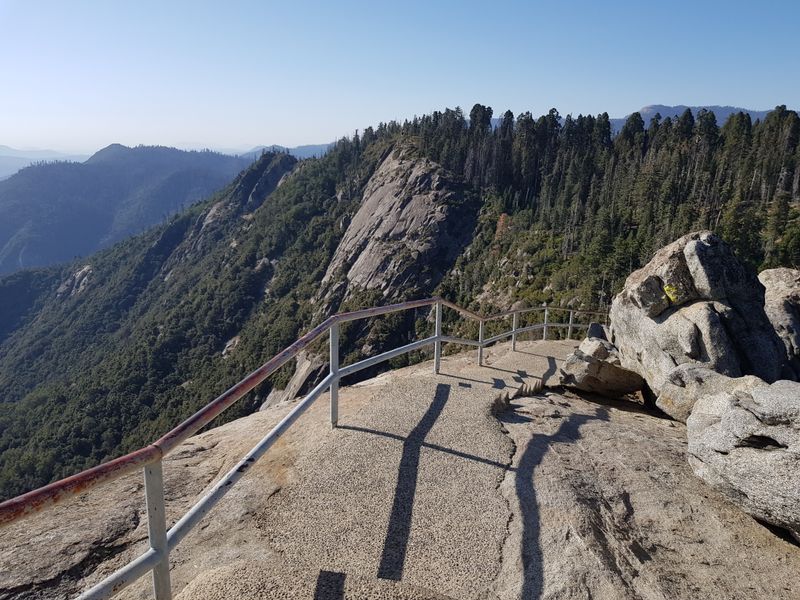
Moro Rock Trail is a compact punch of California grandeur, a stone staircase etched into a granite dome that rises above Sequoia National Park. You gain roughly 300 to 350 steps in about half a mile round trip, but it feels like you climb into the sky.
The trailhead sits near the Giant Forest Museum, with signs pointing you to the short approach and the first steps on the dome.
Getting there is part of the thrill. The access road narrows with cliffside exposure in places, so drive slow, yield, and be patient with traffic.
During peak season, parking fills fast, and you may end up on roadside dirt pullouts, so arrive early or use the park shuttle when available.
From Fresno, the park entrance leads you through winding mountain roads before you reach the Giant Forest area. Cell signal can be unreliable, so download maps and the park brochure ahead of time.
The official NPS page lists hours and seasonal closures, which matter for winter conditions.
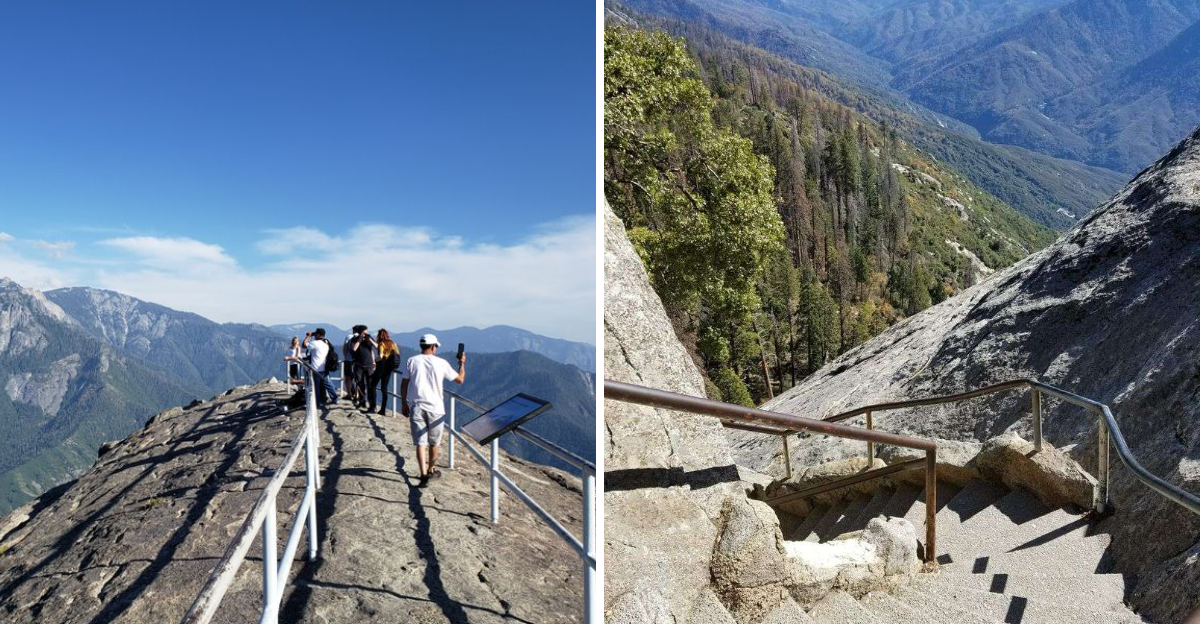
Once on the stairs, you pass railings and rock borders that guide you along switchbacks carved straight into the dome. The grade is steady, the air crisp, and views open almost immediately, which makes frequent pauses feel justified.
You are never far from a safe handhold, but some sections are narrow and airy.
At the summit, a railing encircles a rounded platform with full 360 degree views that sweep over the Great Western Divide and deep forested valleys. On clear days, layers of ridgelines glow in blues and grays, while sunset washes everything in gold.
Sunrise is even quieter, when the light crawls over the eastern rim.
Plan for temperature swings, bring water, and wear grippy shoes for the polished stone. The restroom near the lot is utilitarian at best, so plan ahead.
When you descend, take your time and let others pass, because courtesy is part of the Moro Rock rhythm.
What the climb actually feels like
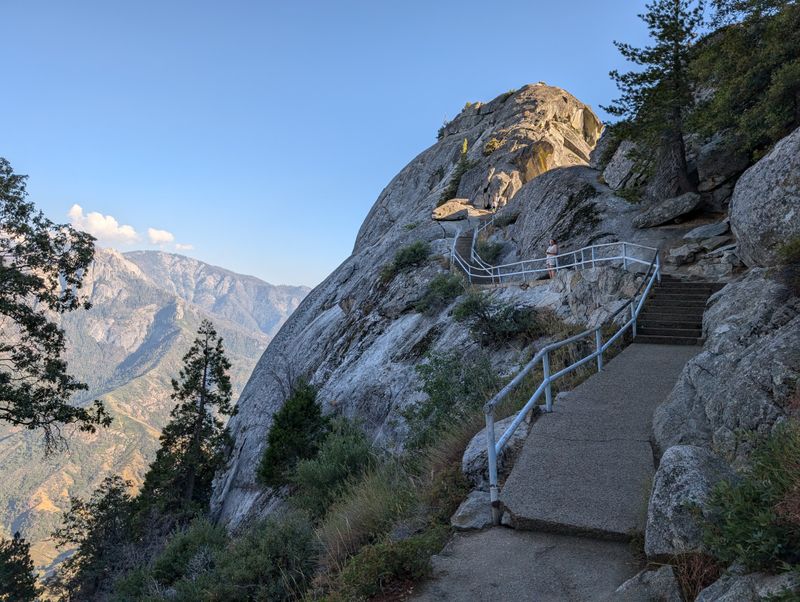
The first steps feel easy, almost gentle, as trees thin and granite takes over. Then the trail pitches up, the staircase narrowing, and you start to notice the breeze curling around the dome.
Your breath quickens more from altitude than effort, and you glance sideways at the deep drop, calmed by the sturdy railings.
Traffic moves in a polite dance, people stepping aside at bulges in the rock to let others pass. You look down and realize the stair tread is worn smooth, proof of countless footsteps before yours.
The views open in layers, and each bend reveals a broader sweep of the Sierra, like a curtain lifting again and again.
Vertigo can tap you on the shoulder in a couple of tight turns. If heights make your knees hum, you can hug the inside and grip the handrail, then breathe into the rhythm of step, pause, look.
Those pauses are a gift, because the horizon feels endless and the valley breathes beneath you.
As you push higher, the granite warms in the sun, and the wind carries the scent of pine from the Giant Forest below. Conversations drop to whispers, replaced by soft footfalls on stone and the occasional camera shutter.
You may line up briefly near the top as people share the summit space.
Finally, you step onto the crown and the world goes wide open. Snow flecks distant peaks in shoulder seasons, and summer haze paints soft pastels over ridges.
At sunset, the rock glows and shadows pool in the canyons like ink.
Coming down can feel steeper, so take small, deliberate steps and let faster hikers pass. You will reach the trees again, heart steadying, head full of sky.
It is a short climb that lingers long after your shoes hit the dirt.
Best time to go and crowd tips
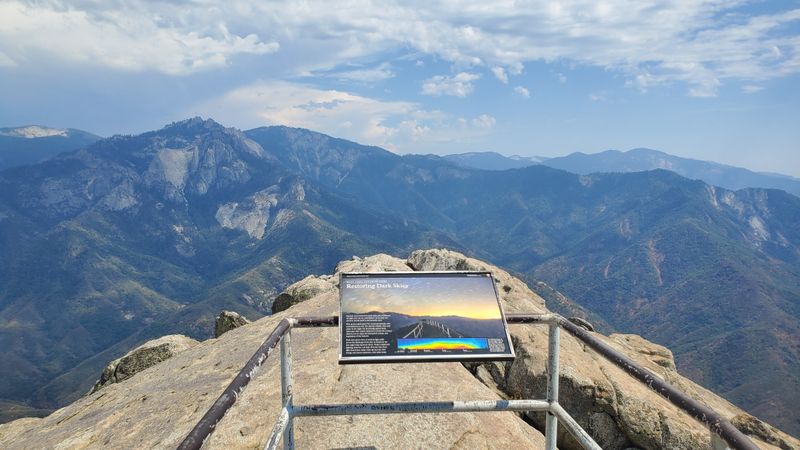
Timing dictates whether your experience feels serene or shoulder to shoulder. Sunrise is the golden ticket, with cool air, soft light, and fewer people sharing the stairs.
Sunset delivers drama, but parking and summit space can feel packed, especially on weekends and holidays.
If you aim for midday, expect steady two way traffic and lots of pausing at pinch points. Lines sometimes form at the summit rail for photos, so take a quick snap and rotate to keep the flow kind.
Cloudy afternoons can be surprisingly beautiful, with moody light over the divide.
Weekdays generally beat weekends, and shoulder seasons can be sweet when weather cooperates. In summer, heat builds on the rock, so start early to beat both temperatures and crowds.
In winter, snow and ice transform the stairs from playground to no go without traction and closures.
Arrive before the lot fills by targeting the first hour after opening or just after sunrise if allowed. When parking is scarce, use shuttle options if running, or be prepared to walk from roadside pullouts legally and safely.
Always keep the road clear for buses and emergency vehicles.
At the summit, share the space and be aware of those with vertigo who need the inside lane. Speak up kindly when organizing one way flows on narrow spots, and thank people who pause for you.
Small courtesies make a big difference on such a compact route.
If a dense crowd builds, consider a slow lap through the Giant Forest Museum nearby before trying again. The light only improves toward late day, and patience often rewards you with calmer minutes on the crown.
When in doubt, choose sunrise for peace and unbeatable Sierra color.
Safety and accessibility on the stairs
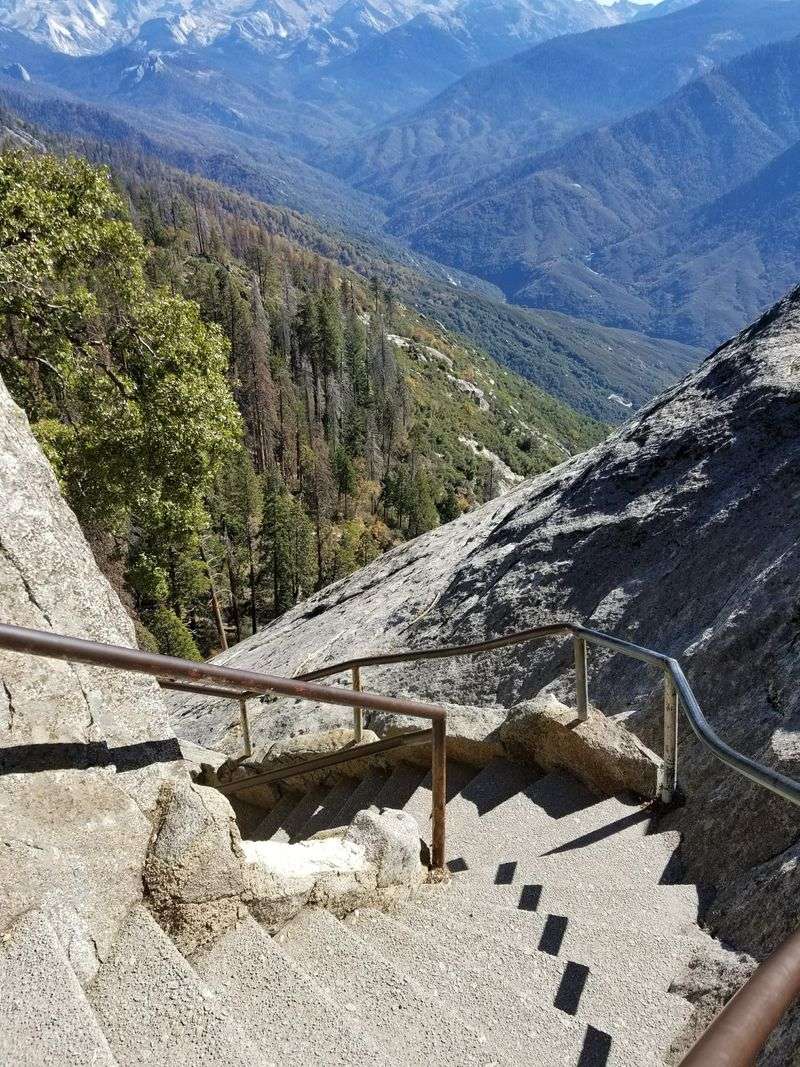
Moro Rock’s path is straightforward, but exposure is real, so treat the stairs with focus and respect. Railings or rock borders line most edges, though some are lower than you might expect.
Keep one hand free for the railing and store phones or cameras when moving through tight turns.
The altitude can sneak up on your lungs, so pace yourself and take breaks. Those with knee pain might feel the descent more than the climb, making poles with rubber tips helpful on the lower approach.
Avoid leaning or sitting on railings, and give children careful supervision at all times.
The granite can be slick from morning dew, rain, or winter ice. In colder months, closures or advisories may be posted, and traction devices can become essential.
Good rubber soled shoes are non negotiable here, especially when crowds compress your footwork.
Claustrophobic moments may happen when traffic jams form at narrow bends. Communicate clearly, step aside at wider landings, and let uphill hikers pass when practical.
If heights unsettle you, keep your eyes on the steps, breathe slow, and use the inside lane.
There are no water sources on the rock, and the sun can be intense, so carry a small bottle and a hat. Weather changes quickly in the mountains, with wind gusts stronger at the top than at the trailhead.
Layers help you stay comfortable while you wait for a photo window or a clearing in the crowd.
Bathrooms near the lot can be rough, so plan ahead and pack out any trash. Rangers and signs provide current guidance on conditions and etiquette, including closures and seasonal schedule shifts.
With common sense and a steady pace, the short climb stays safe and deeply rewarding.
What you will see from the top
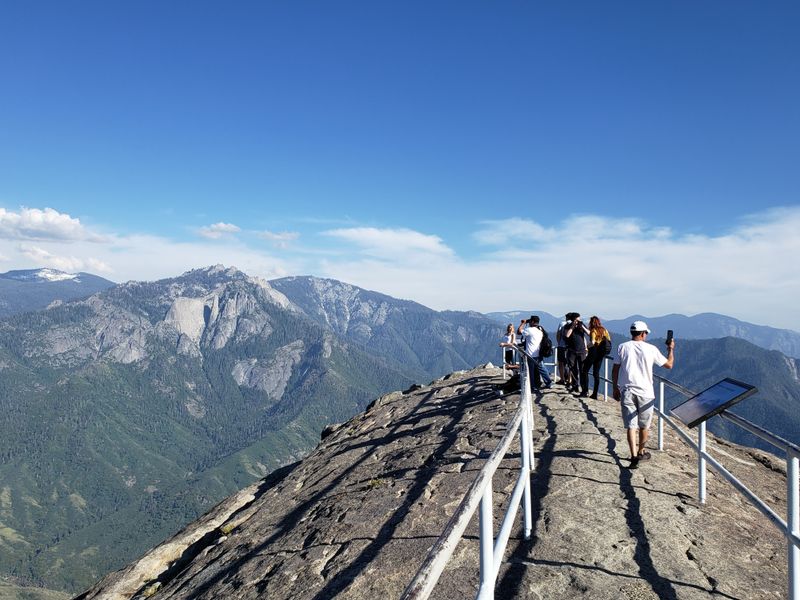
From the summit, the Great Western Divide rises like a serrated wall, snow kissed in spring and etched with shadow in late afternoon. The Kaweah peaks anchor the skyline, and the deep green canopy of the Giant Forest spreads below like a living carpet.
On crystal days after storms, the clarity is startling, with ridgelines stacked in perfect tiers.
Turn slowly and you get a full 360 degree panorama. Eastward, glaciated basins and sawtooth spires march into the high country.
Westward, the foothills ripple toward the Central Valley, a gradient from pine to golden grass that glows at sunset.
In summer, haze softens the horizon, painting the Sierra in watercolor pastels. At sunrise, the first light slips over the eastern ridge about half an hour after the listed rise time, igniting peaks and cooling the valleys in blue.
Sunset drenches the granite in honey tones and throws long shadows that sculpt every contour.
Look down and you can trace the staircase back along the dome’s spine. Small figures move like ants between railings, giving a sense of scale to the granite sweep.
When wind rises, the sound becomes a low, constant hum that makes the moment feel larger than life.
In shoulder seasons, scattered snow patches add contrast to the warm granite. Clouds drape and lift, sending light beams through gaps that spotlight ridges.
The view feels immersive, as if you could step across valleys from spine to spine.
It is easy to linger, but share the space and rotate so others can take in the full circle. Take one deep breath to seal the memory and note the scent of sun warmed stone and pine.
The descent keeps gifting views, so do not rush the last looks.
Seasonal conditions and weather strategy
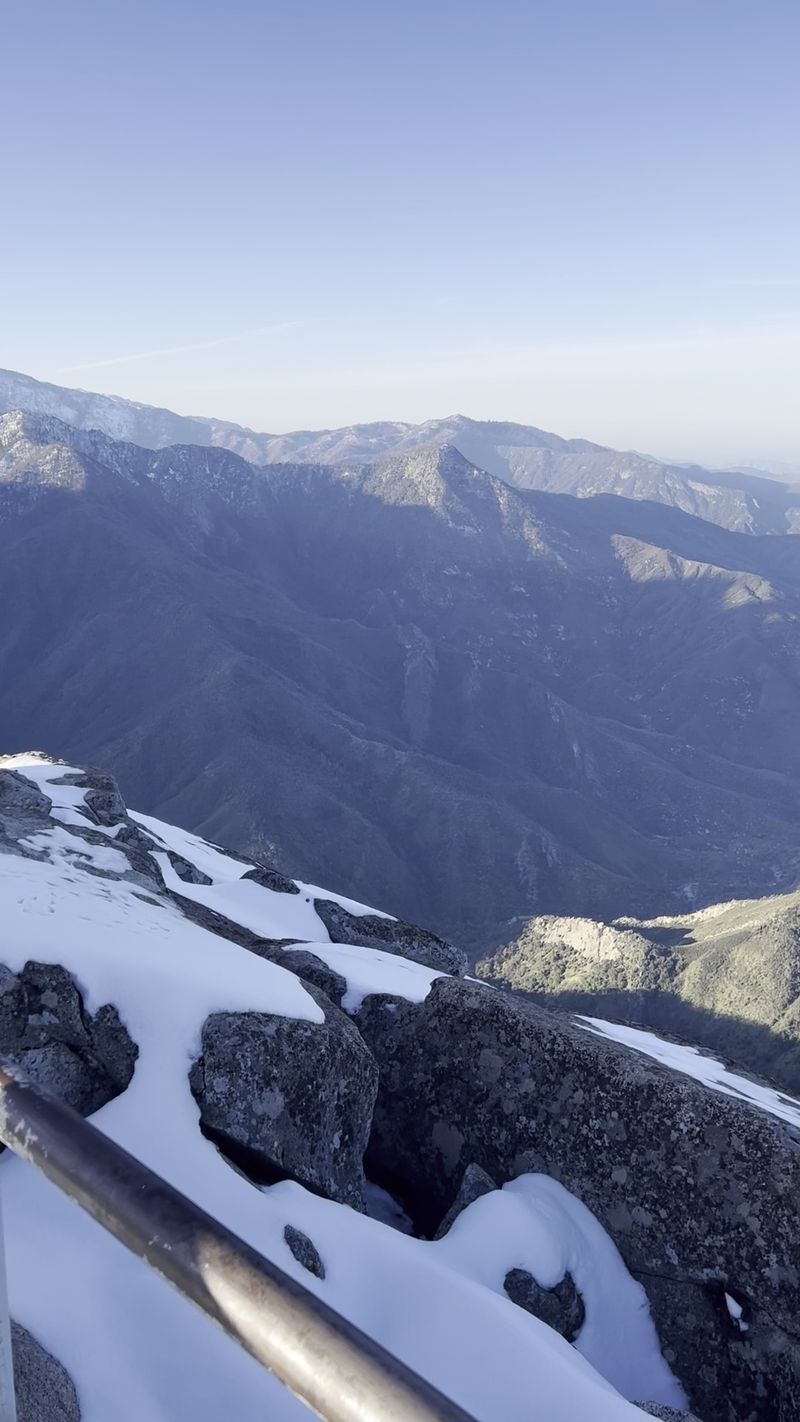
Seasons shape the personality of Moro Rock. Spring often brings the clearest air, when post storm days carve sharp ridgelines and snow brightens the divide.
Wild weather can still roll in, so check forecasts and the park page for closures or icy stairs.
Summer is the busiest stretch, with warm granite and thicker haze in the afternoons. Beat both with a dawn start or a late day ascent that ends in gold light.
Temperatures can swing, and the sun reflects off the rock, so sunscreen and a brimmed hat help.
Autumn feels balanced, with crisp mornings, calmer crowds, and long, slanted light that pops textures on the dome. Storms begin flirting with the range, delivering dramatic clouds that make photos sing.
You still want to arrive early for parking, especially on weekends.
Winter changes the rules. Snow and ice turn the stairway into a technical hazard that sometimes closes for safety.
If open, carry traction and move deliberately, or simply choose a lower elevation walk and save the summit for clear conditions.
Wind is the wildcard across all seasons. Gusts intensify near the top, making wide brim hats fly and loose items risky.
Keep layers accessible, secure your phone, and pause at sheltered corners to reset your balance.
Weather in the Sierra can shift in an hour, so build flexibility into your day. A moody sky can produce the most breathtaking light right before clearing.
If conditions do not cooperate, explore the Giant Forest and return when the rock reveals itself again.
Gear and preparation for a short but steep climb
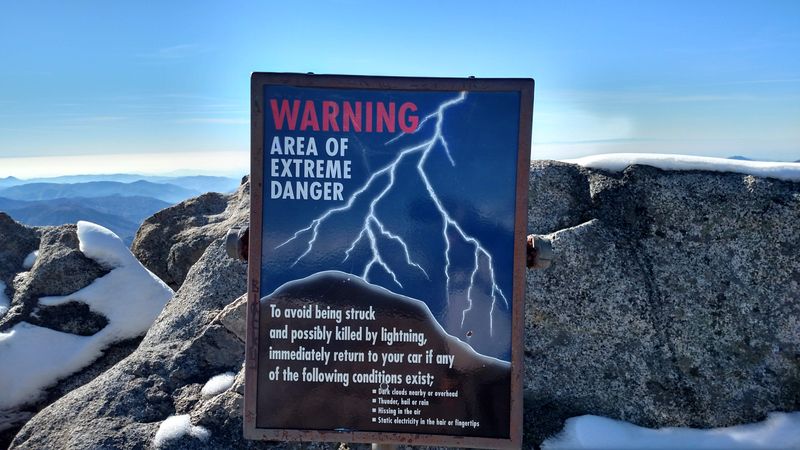
Because the climb is short, it is tempting to show up empty handed. You will be happier with a few smart essentials that keep you steady and comfortable on polished stone.
Start with good shoes that grip granite and a small bottle of water for the quick ascent.
Sun protection matters more than you expect. The rock reflects light, and there is little shade once you leave the trees, so a brimmed hat and sunscreen earn their space.
Sunglasses help when bright glare bounces off pale granite in midday.
Pack layers, even in summer. Wind at the summit can cut through a sweaty shirt, and you will appreciate a light jacket while waiting for a photo turn.
In cooler months, add gloves for the metal handrails and consider microspikes if ice lingers.
Keep your hands free while moving. A small waist pack or slim daypack lets you stow phones and cameras during the narrow bits, then pull them out on landings.
Trekking poles are overkill on the stairs, but can help knees on the approach if needed.
A tiny first aid kit and a headlamp live in my pack year round, just in case the day runs long. Bring a snack only if you can pack out every crumb, because chipmunks do not need human food.
A printed or downloaded map is handy when cell service drops.
Finally, carry patience and trail courtesy. Let faster climbers pass, offer a steadying hand if someone hesitates at a ledge, and keep music off so the mountain can speak.
With a light, thoughtful kit, the short climb turns into a smooth, unforgettable hour.
Photo tips and memorable moments
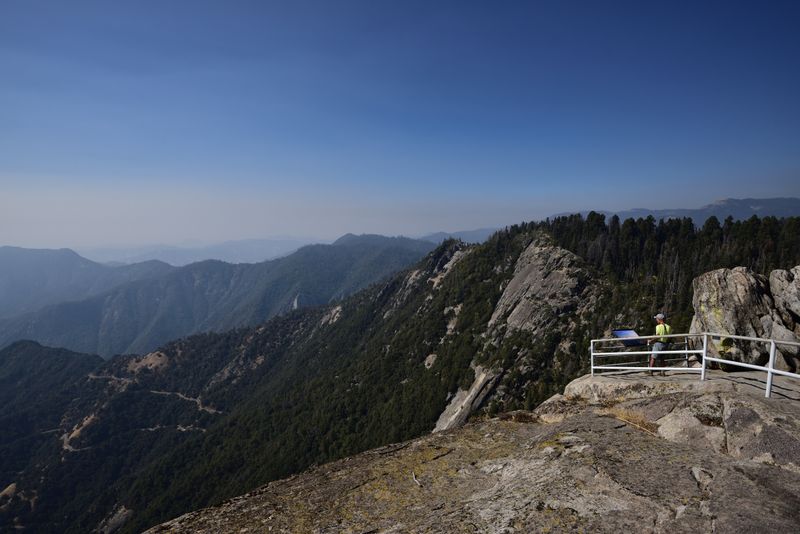
Great photos at Moro Rock start with timing. Sunrise gifts calm platforms and soft, directional light that sculpts the granite and reveals texture without harsh glare.
Sunset adds drama, with warm color and long shadows, but you will need patience and quick framing in a crowd.
Travel light and keep gear simple. A wide angle lens captures the sweep of the divide, while a phone in panorama mode works beautifully from the rail.
Stow cameras while moving and shoot from landings and the summit for safety and stability.
Compose with layers by anchoring the foreground rail or a curve of the stairway, then letting ridgelines recede into haze. Look for silhouettes of hikers to tell the scale story and guide the eye.
After storms, the sky clears to a piercing blue that makes every line crisp.
If there is a line for the prime corner, grab two frames and rotate to share the view. Golden hour fades fast on the rock, so plan your climb to arrive 20 to 30 minutes before peak light.
At sunrise, remember the sun often peeks over the ridge later than the listed time.
Bring a microfiber cloth to wipe granite dust and wind blown mist off lenses. Keep straps secure and avoid extending tripods into the flow of traffic.
A compact mini tripod can work at the summit if you stay tucked into the edge.
Most of all, do not let the camera swallow the experience. Take a minute to breathe, imprint the silence, and look away from the screen.
The memory you carry is the best shot of all.
Nearby context and making it a fuller day
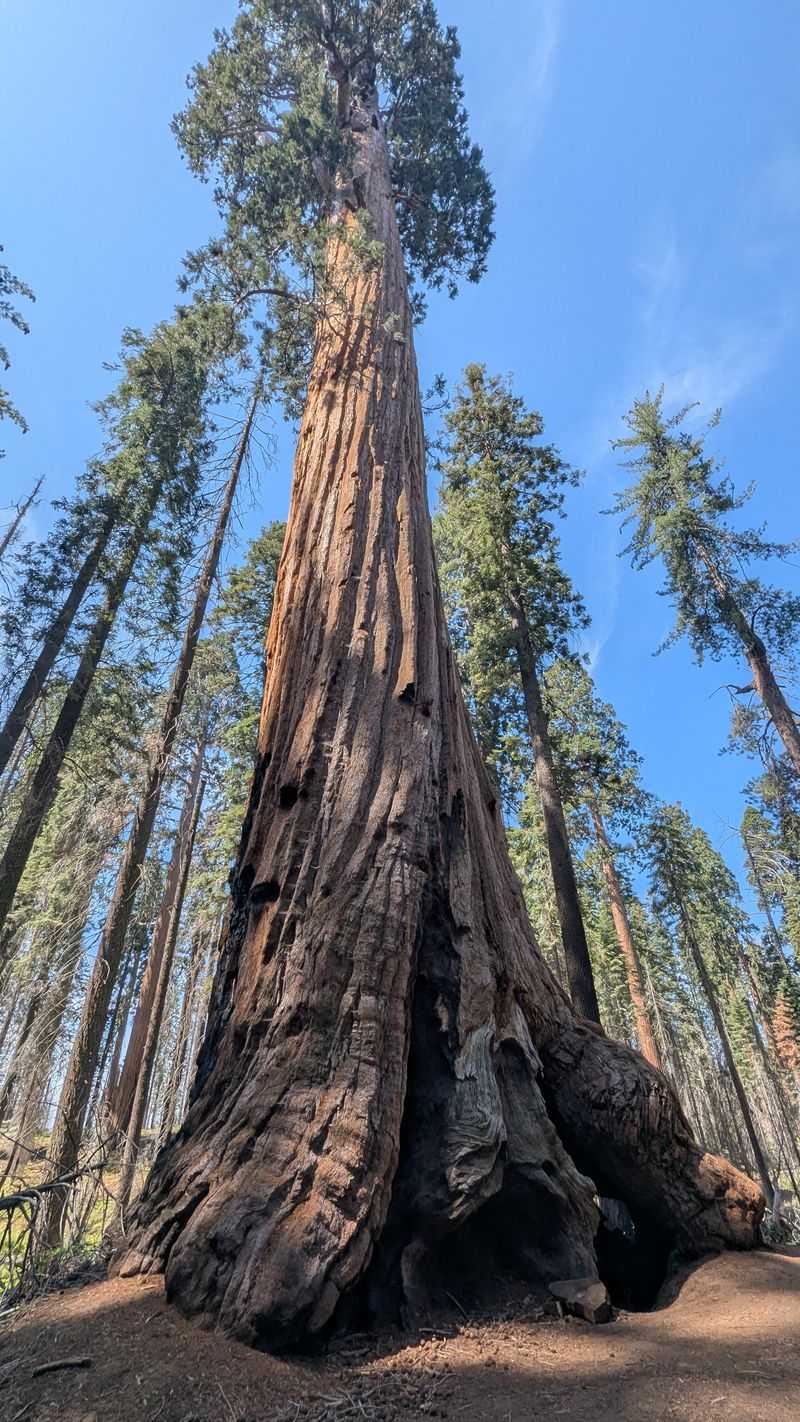
Moro Rock pairs perfectly with a day among giants. The nearby Giant Forest Museum offers context on sequoias and the human history of the area, and it is a convenient stop before or after the climb.
Trails like the Big Trees Trail and Congress Trail deliver soft forest immersion to balance the granite adrenaline.
Parking rhythm matters if you want a smoother day. Hit Moro Rock at sunrise or early morning, then transition to the shaded sequoia loops as the heat rises and crowds shift.
If the lot is slammed, explore the museum exhibits and return later for a calmer window.
Food options are limited inside the park, so pack a picnic and extra water. Picnic tables and pullouts make scenic dining rooms if you practice strict leave no trace.
Down in Three Rivers, a post hike pizza or coffee feels like a reward after the high exposure steps.
Families can mix in short ranger led programs when available near the museum. The pause helps everyone reset before tackling the stairs or the drive.
If you travel in an RV, use designated parking areas and give yourself time for the winding road.
For golden hour chasers, consider filling the midday with shaded forest walks or a quiet rest, then return for sunset color from the rock. Just know you will share that glow with many others who had the same idea.
The payoff is worth the patience most evenings.
When it is time to leave, drive slowly on the narrow access road and yield to oncoming cars at tight points. You will carry a head full of granite light and sequoia scent as you roll downhill.
It is a compact itinerary that feels like a full escape.