This trail doesn’t feel real—it feels imagined.
One step onto the Drury-Chaney Trail in Scotia and the ordinary world slips away. Light filters through towering redwoods like a spell in progress.
Footsteps soften. Time loosens its grip.
This is not a hike for rushing. This is a quiet walk through giants that have watched centuries pass.
Roots twist like ancient runes. The air smells cool, green, and old—older than memory.
Every turn brings a moment that begs for a pause. A fallen log becomes a bridge from a storybook.
Moss climbs bark like velvet armor. You half-expect a hidden doorway to open in a tree trunk.
The Drury-Chaney Trail doesn’t ask for effort. It asks for attention.
And once you give it, leaving feels like waking from a dream you weren’t ready to end.
Quick facts and why this trail feels otherworldly
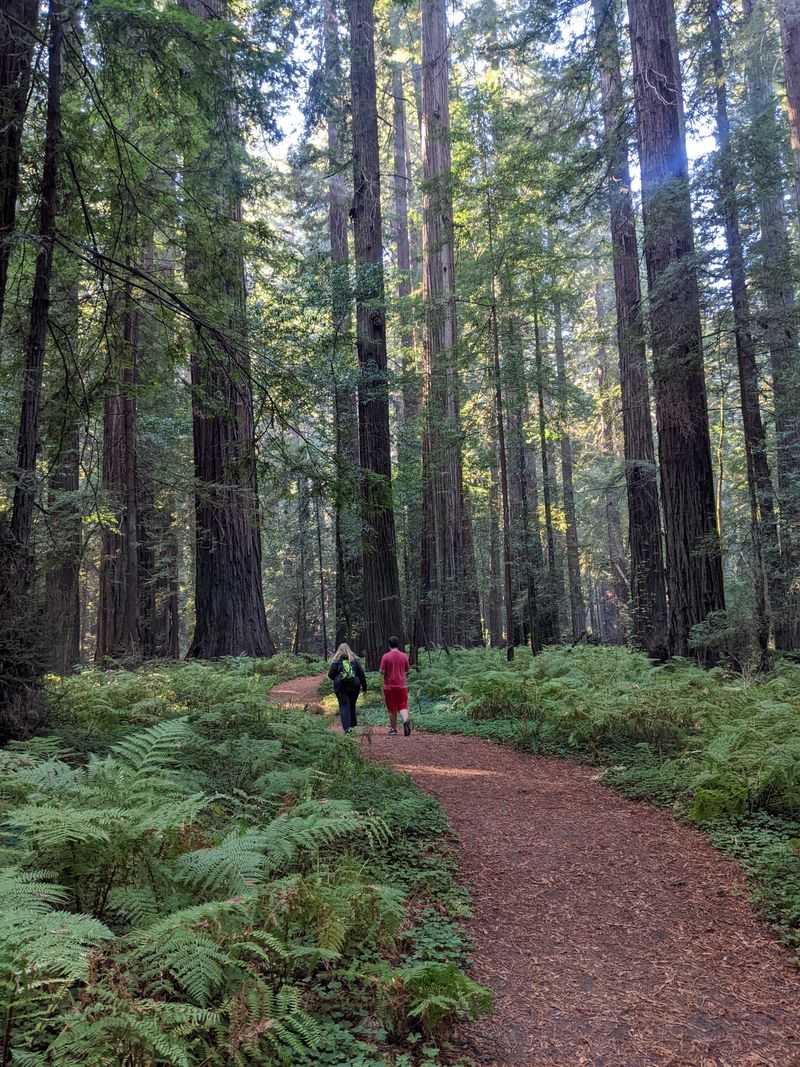
Start with the basics because they set the tone for the magic. Drury-Chaney Trail sits off Avenue of the Giants near Scotia, a gentle 2.4 to 2.8 mile lollipop that rarely climbs and always soothes.
Under old growth redwoods, the air turns cool and damp, and your footsteps hush into the soft duff.
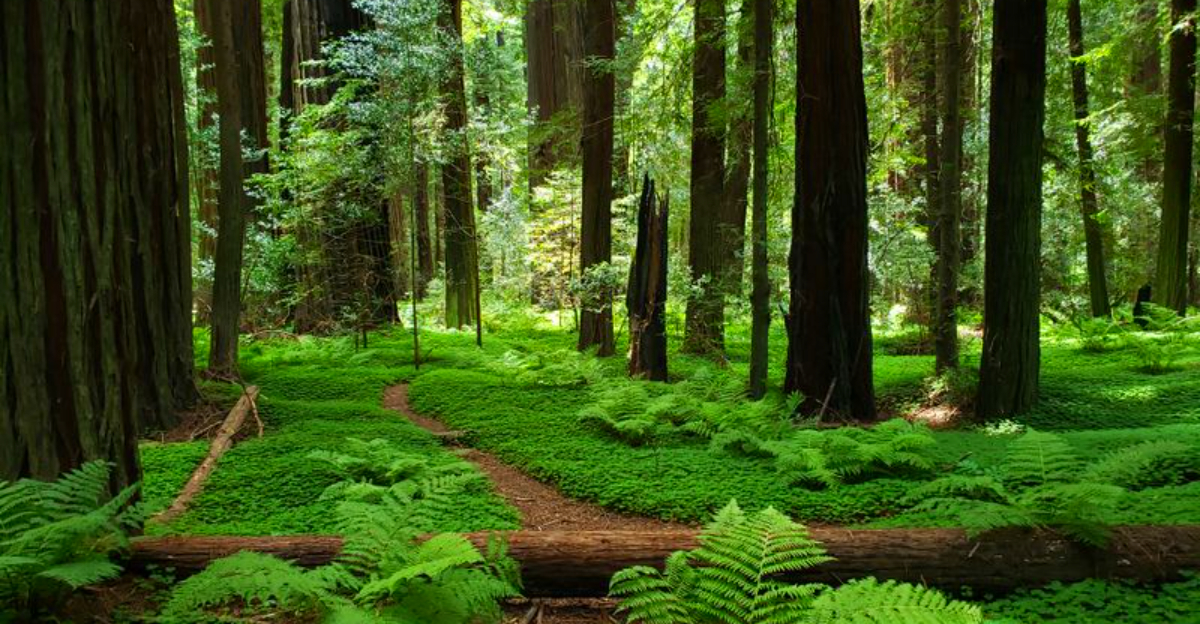
What makes it feel unreal is the layering of textures. Sorrel spreads like green velvet, ferns feather the edges, and nurse logs host tiny forests that look like miniature kingdoms.
You look up and the trunks seem endless, stitched by shafts of light that change minute by minute.
Timing helps. Early mornings add mist and solitude, a perfect pairing for slow breathing and easy photography.
Even when the highway hum sneaks close near the loop, the forest answers with birdsong and wind.
This is a place where you can wander without hurry. You can bring kids, jog a bit, or simply walk and watch the light move.
If you love redwoods but want them intimate and approachable, this trail quietly wins. Expect to be calmer at the finish than when you started.
How to get there and where to park
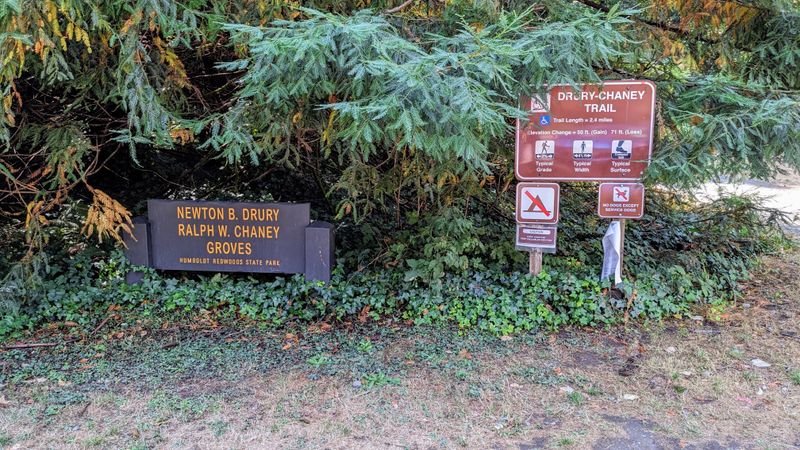
Getting here is part of the charm because the Avenue of the Giants feels like a scenic prelude. Plug in 30780 Avenue of the Giants, Scotia, and watch the canopy grow taller as you approach.
The trailhead sits at a modest pullout with abundant parking most mornings.
Look for the wooden sign and the well packed path disappearing under the trees. There are no restrooms at the trailhead, so plan a pit stop in nearby towns along Highway 101.
Cell service can be spotty, so download maps before you roll in.
The drive itself adds anticipation. Sunlight flickers through the big trees and the forest scent seeps into your car.
If you are coming from the north or south, the turnoffs are clearly marked, but keep speeds calm and eyes open.
Once parked, you are steps from solitude. The first hundred yards already feel cooler, quieter, gentler.
Lace up, zip up, and carry water because there are no services once you are under the canopy. The logistics are simple, and that simplicity leaves space for awe.
Trail layout and the lollipop loop explained
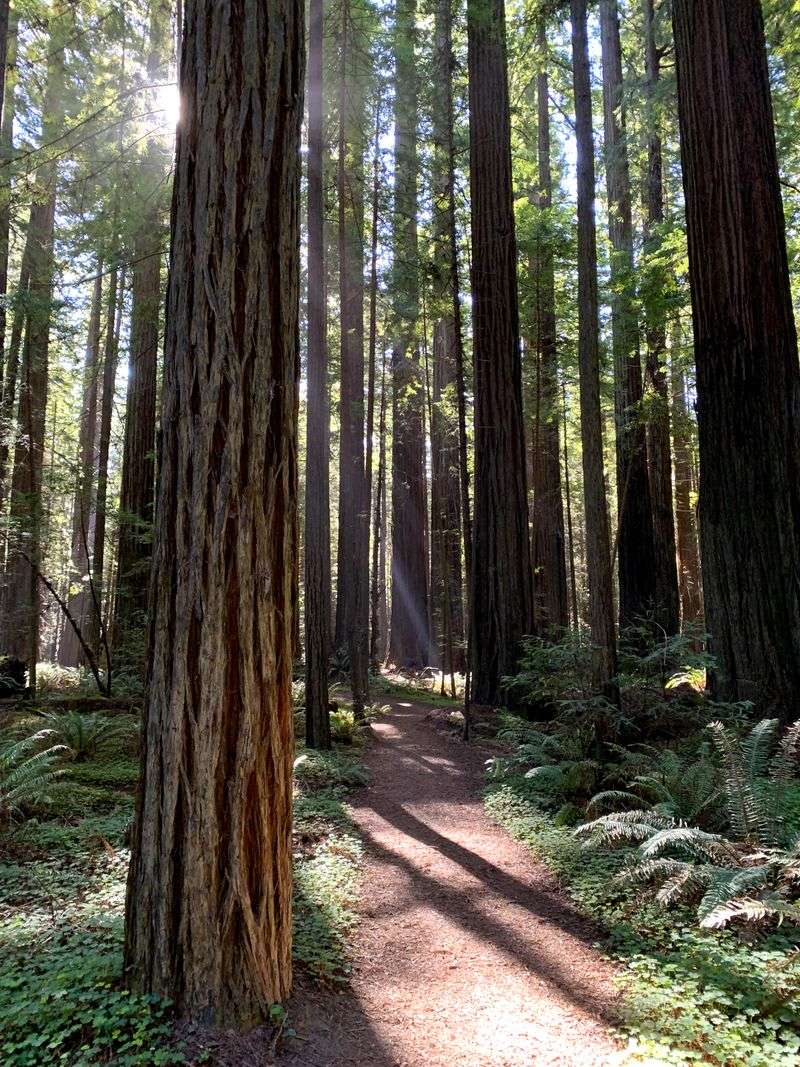
Picture a stick leading to a circle and you have the trail layout. You walk a mostly straight approach for about a mile before reaching the loop, then choose clockwise or counterclockwise and close the circle.
Finally, you return on the same stem, completing the lollipop.
This design is friendly for pacing. If you are short on time, you can do part of the stem and turn back.
If you want the full experience, the loop adds variety and slightly changes the soundscape as it nears Highway 101.
The path is wide and well maintained, with compact dirt and light gravel in places. Fallen giants occasionally border the route like natural benches.
Side nooks and small social trails tempt photos, but stay on the main tread to protect the understory.
Wayfinding is intuitive, so you can relax and look up. Watch for small interpretive moments: nurse logs, burn scars, delicate fungi.
The lollipop shape lets you savor the approach twice, catching different light each direction. It is simple navigation with rich, unfolding detail.
Best times to go and light for photos
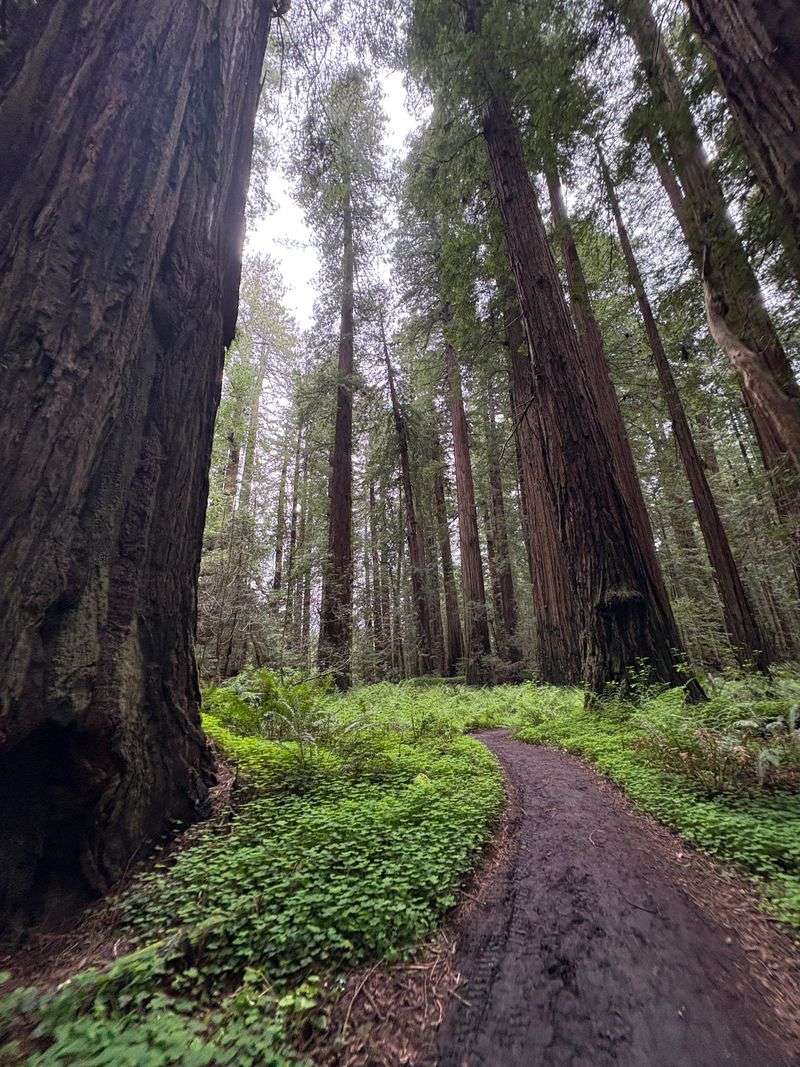
Early morning is the forest’s love language. Step out just after sunrise and watch narrow beams thread through the canopy, dusting the sorrel with glittery highlights.
You may share the path with only a few people, and your photos will glow without harsh contrast.
Afternoons can be beautiful too, especially on overcast days that turn the grove into a giant softbox. Cloud cover smooths shadows and gives the red bark a warm, even tone.
In summer, mid to late afternoon can feel busiest, but the trail still absorbs people well.
After rain, the colors pop. Ferns look lacquered, bark deepens, and mist sometimes lingers in low pockets.
Bring a lens cloth because droplets love glass, and keep an eye on slippery roots.
Winter and shoulder seasons reward patience with moody scenes and fewer crowds. If wind picks up, falling debris is possible, so avoid standing under limbs for long.
Whatever the season, the light here is kinder than most places, and your camera will thank you. Just move slowly, watch the rays tilt, and let the forest compose the frame.
What you will see along the way
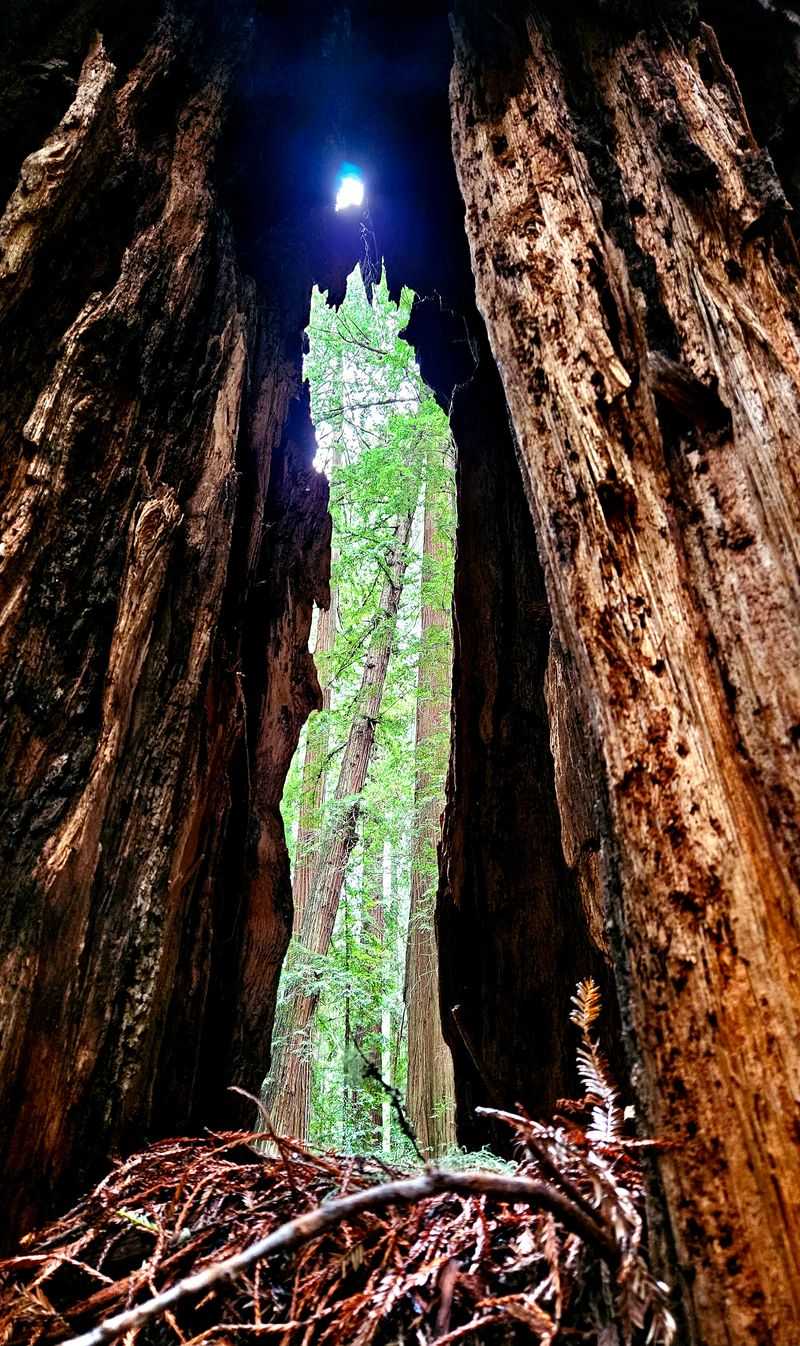
Prepare for a masterclass in green. The ground is carpeted with wood sorrel and punctuated by ferns that sway at the slightest breeze.
Towering redwoods rise like pillars while fallen giants stretch across the forest floor, turning into nurseries for new life.
Nurse logs are storybooks. You will spot seedlings marching along decaying trunks, roots curling over bark like tiny bridges.
Burn scars hint at fire history, blackened yet healing, and the scent of wet wood hangs in the air.
Look closer and small worlds appear. Mushrooms frill from shaded corners, spider webs bead with dew, and banana slugs glow mustard bright against the duff.
Birds flit unseen, but you will hear their commentary.
Light does choreography here. Shafts drift, fade, and shift the mood with every bend.
Even the quiet sounds tactile: your steps on the soft path, a faint creek after rain, the breeze whispering at canopy height. You will leave with a camera roll of textures and a head full of calm.
Pace, difficulty, and family friendliness
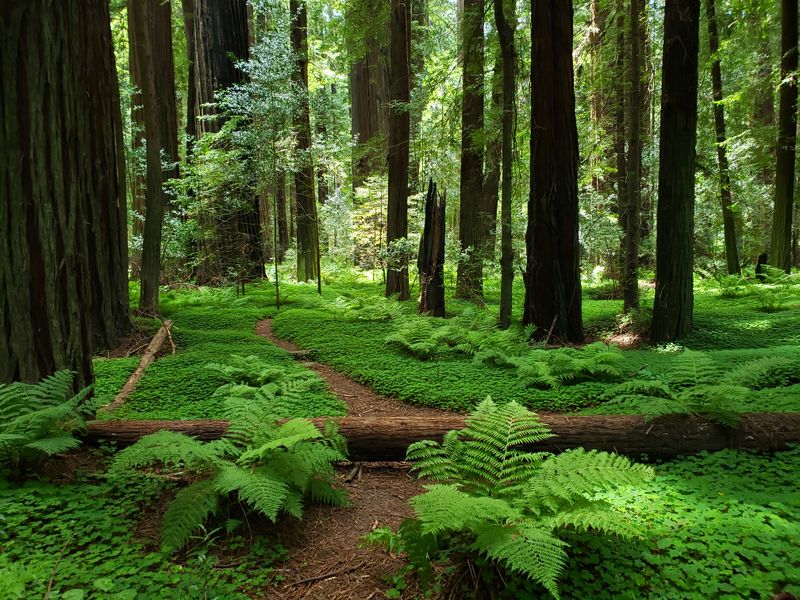
This trail is the definition of approachable. It is mostly flat with hard packed earth and a few small roots to step over.
Most people complete the full loop in about an hour at a casual pace, though you could linger three times longer and not regret it.
Families do well here. Kids love balancing on downed logs and peeking into hollow trunks.
Strollers with chunky wheels can handle much of the approach, but the loop is friendlier to foot traffic.
If you want a gentle jog, this route allows it. The tread is even, visibility is good, and the lollipop shape makes it easy to gauge distance.
On wet days, mud appears in low spots, so slow down and choose shoes you do not mind dirtying.
Even seasoned hikers appreciate a softer day, and this is perfect for recovery or forest bathing. There is enough variety to stay engaged without feeling rushed.
You will leave energized but not exhausted, which is ideal when you still have the Avenue of the Giants to explore.
Soundscapes and the reality of highway noise
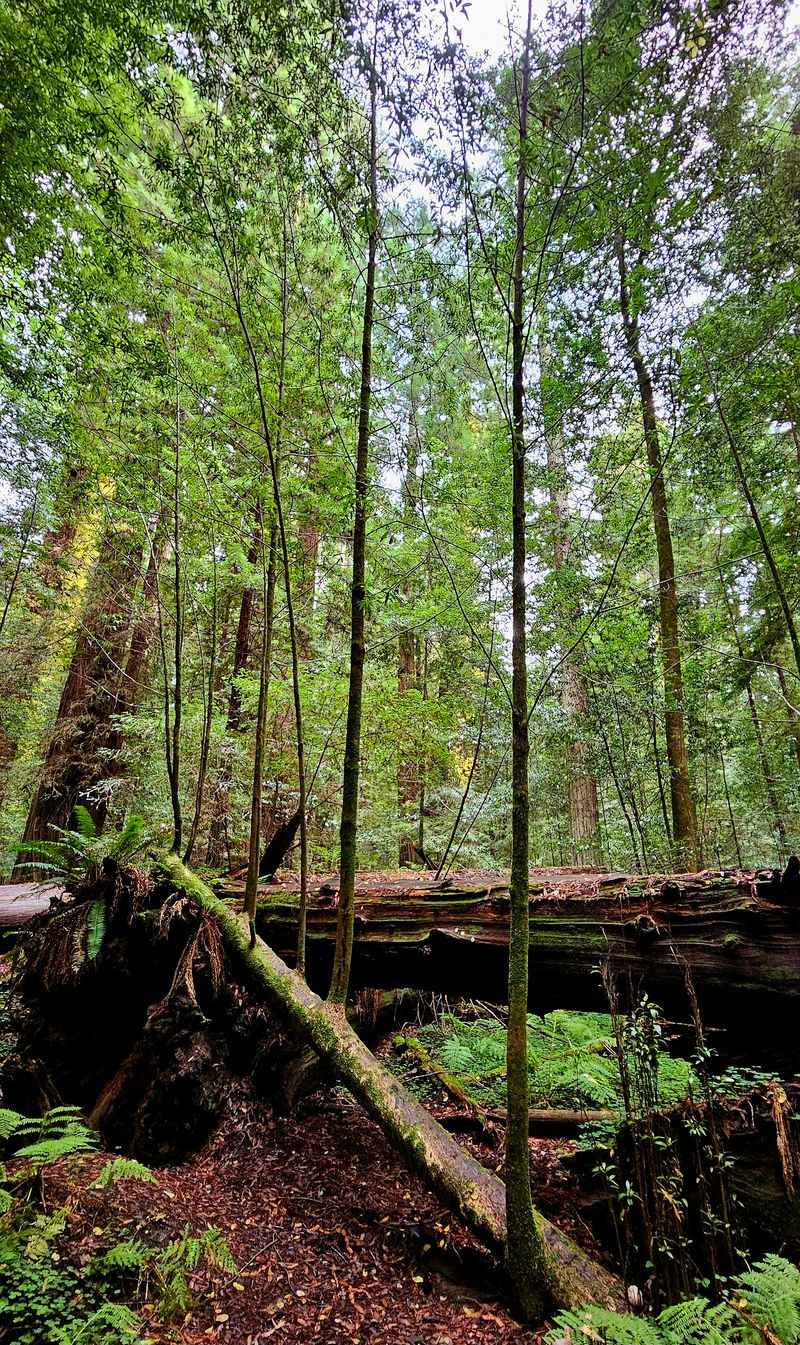
Honesty helps you plan your expectations. Much of the approach sinks you into deep quiet, with birds and wind taking center stage.
Near parts of the loop, Highway 101 hums faintly, a reminder that the modern world is never far.
The forest still wins. Old growth trunks dampen noise better than younger groves, and the sound often blends into a low background.
On weekdays with construction nearby, keep walking and the woods usually reclaim the soundtrack.
If you are sound sensitive, go early or aim for overcast days that seem to settle the air. Pause when the wind rises because it carries the forest’s own music: creaks, sighs, and the whisper of needles.
That is when the place feels cinematic again.
You can also practice intentional listening. Stop, close your eyes, and pick out layers: footsteps, birds, wind, distant road.
Strangely, this contrast can heighten appreciation. The trail reminds you that serenity is often found by choosing where to place your attention.
Weather, seasons, and what to wear
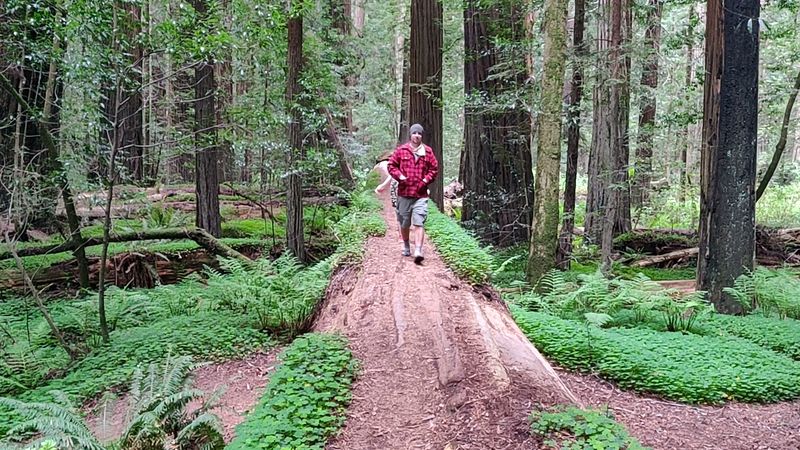
Expect cool, damp air most of the year, even on warm days elsewhere. Morning mist is common and the canopy keeps temperatures mellow.
In rainy season, mud shows up in pockets, and everything smells wonderfully earthy.
Layering is your friend. A light jacket, breathable base, and a beanie keep you comfortable without overheating.
Waterproof shoes or trail runners with grippy soles make puddles a non issue.
Summer brings longer light and softer evenings, while winter gifts solitude and glossy greens. After a storm, the forest shines like it was polished by rain.
Watch for slick roots and avoid standing under big limbs during wind events.
Pack simple. Water, a snack, a small towel for damp benches, and a lens cloth if you shoot photos.
Bug pressure is usually mild, but carry repellent just in case. If you dress for cool shade and surprise drizzle, you will be ready for anything this grove throws your way.
Leave no trace and trail etiquette
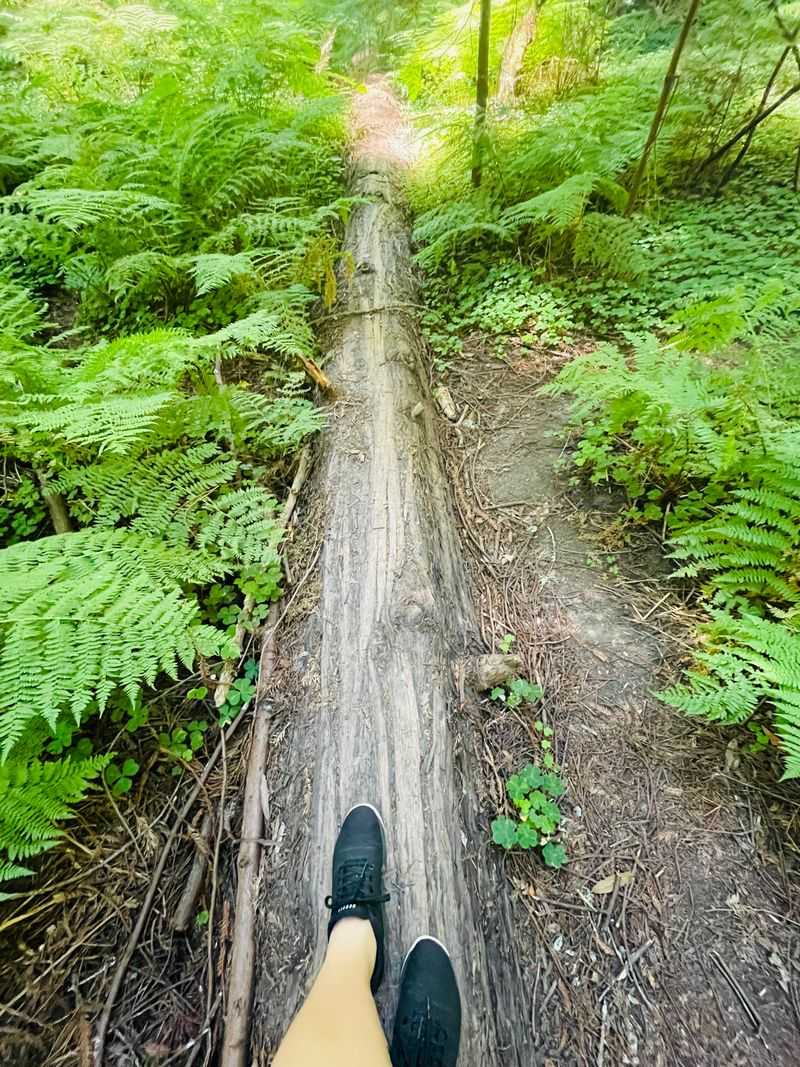
The sorrel carpets and fern beds look tough but bruise easily. Staying on the main tread protects those living textures and keeps the grove healthy for everyone.
Pack out everything, including fruit peels, which decompose slowly and attract wildlife.
Step lightly around roots and keep voices low to let the soundscape breathe. If you stop for photos, move to the side so others can pass without trampling the edges.
Dogs are best left at home in many redwood preserves, so always check current rules.
Leave what you find. Cones, bark, and fungi are part of the system that feeds the next generation.
Nurse logs especially deserve respect, so admire from the path and keep boots off the delicate growth.
Kindness travels fast on quiet trails. A simple hello, yielding appropriately, and giving space helps the mood stay serene.
You will feel like a guest inside a cathedral of trees, and treating it that way turns a pretty hike into something lasting.
Nearby stops to round out your day
After the loop, keep the mood going with a slow cruise along the Avenue of the Giants. Pull into signed groves for quick leg stretches and shaded picnics.
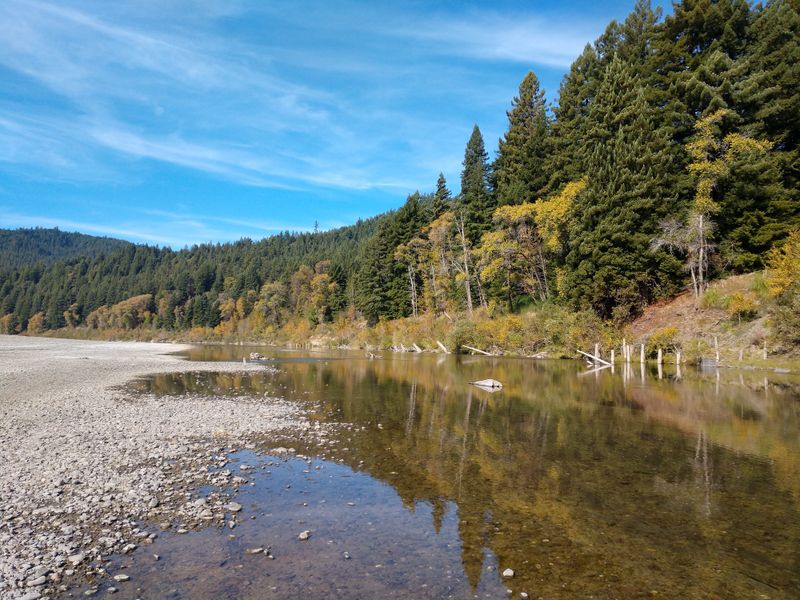
On warm days, peek at Eel River access points near Pepperwood for a restful riverside pause.
Small towns dot the route with coffee and snacks, perfect for warming up after a misty morning. Interpretive stops explain redwood ecology and history, giving context to what you just walked through.
You will appreciate the grove even more after meeting its neighbors.
If time allows, connect this stop with other Humboldt redwood parks for a mini tour. Mix short loops and scenic overlooks so everyone in your group gets a favorite moment.
Keep an eye on daylight because the forest turns dusky earlier than the forecast suggests.
End with one last stroll back at the trailhead meadow if energy remains. The light often softens in late afternoon, mellow and golden.
It is an easy, satisfying way to bookend a day that already feels like fantasy made real.