This is the kind of place that makes you forget how small a map can be.
Sleeping Bear Dunes stretches across 71,000 acres of wild Michigan beauty, where massive dunes drop toward Lake Michigan and the horizon never seems to end. Forest trails twist through quiet shade, then spill out onto open sand that feels bold and untamed.
Two islands sit just offshore, adding mystery and bragging rights for explorers willing to cross the water. Inland lakes hide behind ridges, boardwalks skim fragile dunes, and long beaches invite slow walks that turn into hours without notice.
With 35 miles of Lake Michigan shoreline, this park delivers space to breathe and room to wander. One moment feels peaceful and still, the next feels powerful and raw.
Sleeping Bear Dunes doesn’t rush you—it dares you to stay longer.
Sleeping Bear Heritage Trail Overview
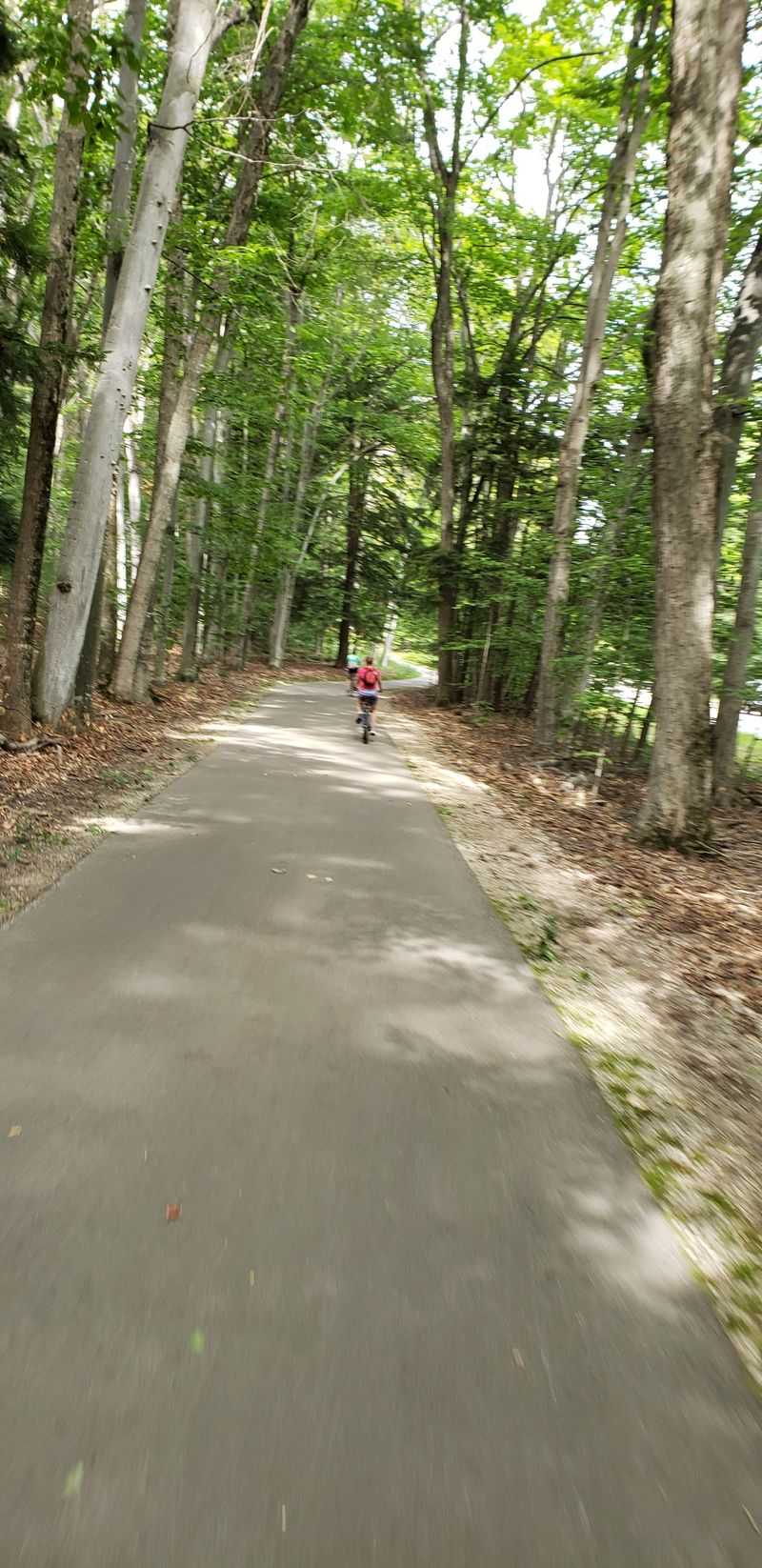
The Sleeping Bear Heritage Trail is your all-access ribbon through the lakeshore, linking scenic overlooks, historic sites, and quiet forests. You will glide past cedar swales, dune rises, and peeks of blue water while the grade stays family friendly.
In summer, the scent of warm pine follows you, and in fall the canopy burns red and gold.
This paved route stretches roughly 20 miles with ongoing extensions, so you can tailor a ride to your energy and time. Park at Glen Haven, the Dune Climb, or Empire for easy entry points.
If crowds swell, start early or push into evening light for calmer pedaling and softer shadows.
Bring a bell for blind curves and be mindful of sand patches after windy days. Water fills and restrooms appear at key hubs, but you will appreciate carrying extras.
E-bikes are welcome within speed rules, making hills and headwinds easier.
The trail doubles as a storytelling corridor, connecting you to logging history, lifesaving stations, and dune ecology. You will finish feeling oriented and inspired, with a highlight reel of vistas baked into your memory.
It is the best first step to understand the park’s scale.
Dune Climb Essentials

The Dune Climb looks playful from the parking lot, but it is a leg-burner you will feel in your calves instantly. Soft sugar sand swallows each step, and the wind can sweep grains like glitter.
Start early to avoid heat, bring water, and consider lightweight gaiters to keep sand out of shoes.
Once atop the first ridge, views open toward Glen Lake’s turquoise bowl and distant forests. Many hikers are tempted to continue toward Lake Michigan, but that out-and-back can take longer than expected.
Turn around sooner if daylight or energy fades, and remember that coming back means climbing again.
There are picnic tables and restrooms at the base, making this a family-friendly stop. Sandboards are not rented on site, so bring your own if you want to slide.
On windy days, sunglasses help protect eyes, and a buff shields your face.
Photography pops during golden hour when ripples cast long shadows. You will get minimal shade, so sunscreen and hats matter.
Embrace the slow pace, pause often, and celebrate the summit with a deep breath. The Dune Climb delivers pure, elemental fun that defines Sleeping Bear’s personality.
Pierce Stocking Scenic Drive Highlights
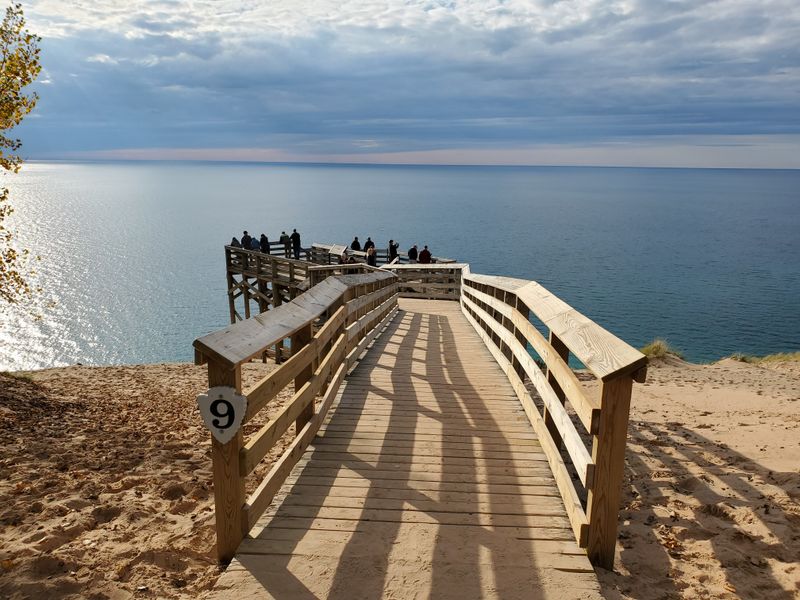
Pierce Stocking Scenic Drive is your shortcut to the park’s greatest hits, bundled into a 7.4-mile loop. You will roll between sugar-maple tunnels and sandy clearings that explode into sky and water.
Pullouts are numbered and well-signed, inviting you to hop out and wander.
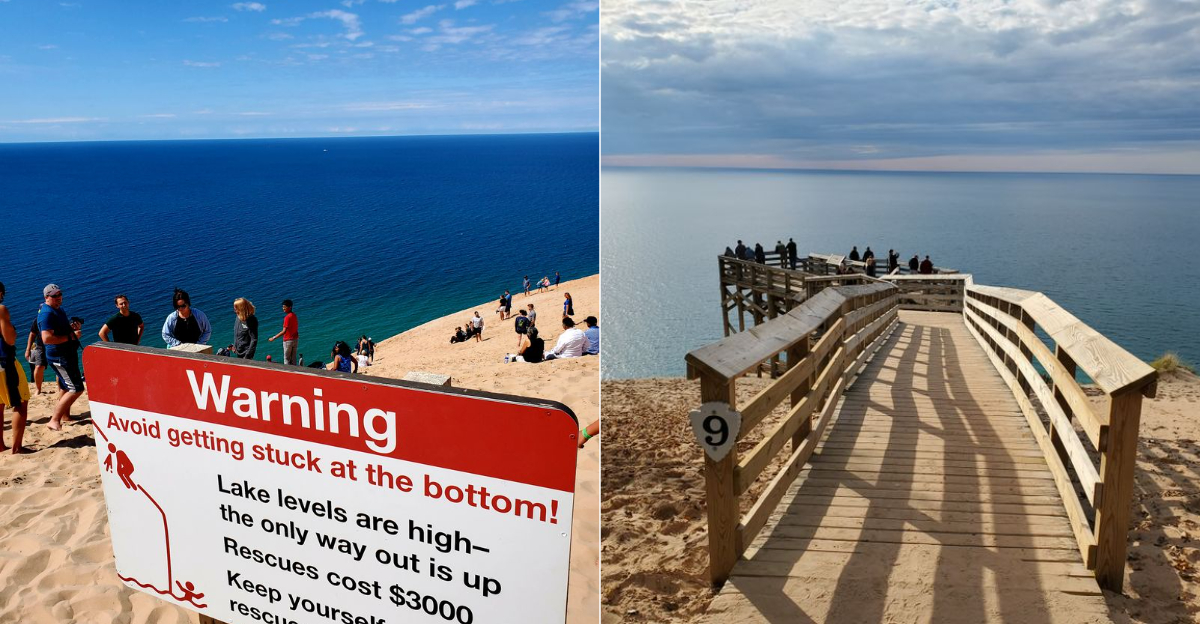
The Lake Michigan Overlook is the showstopper, with a towering bluff and endless blue horizon. Step carefully, as the slope is steep and rescues are costly.
The Cottonwood Trail nearby adds a gentle loop through dune forest where wind-sculpted trees frame shifting sand.
Arrive early or late to dodge midday traffic and snag parking. Picnics at shaded tables extend the experience, and interpretive panels deepen your understanding of dune geology.
You will want layers, because breezes at the bluffs feel cooler than the forested sections.
Photographers should plan for golden hour, when the water glows teal and the grass heads sparkle. Kids love the boardwalks and short paths that keep things moving.
With minimal effort, you will gather sweeping photos, quiet moments, and a mental map of the lakeshore. It is the road that turns first-time visitors into lifelong fans.
Empire Bluff Trail Guide
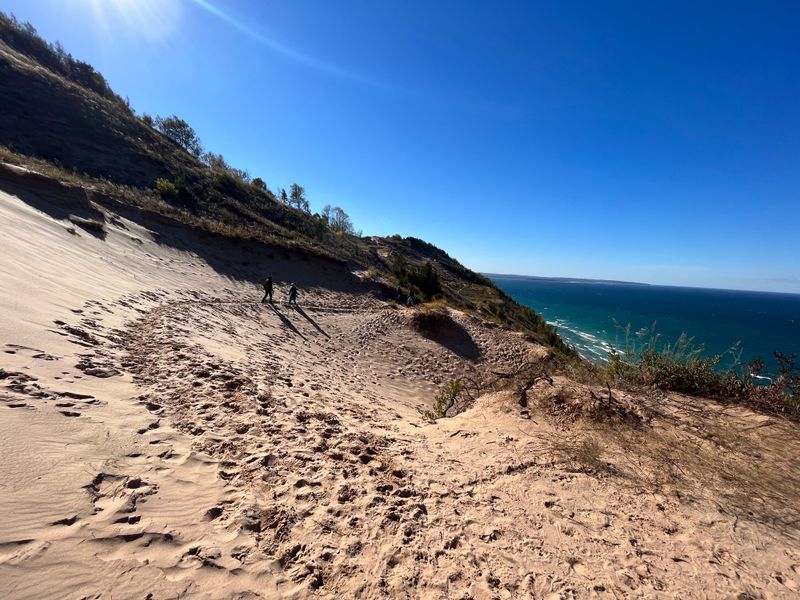
The Empire Bluff Trail blends gentle effort with knockout scenery. In just over a mile round trip, you will pass through hardwoods, then emerge onto sandy bluffs that float above Lake Michigan.
Boardwalks protect fragile dunes while framing showpiece views toward South Manitou Island.
Start an hour before sunset to watch the water flip from jade to deep cobalt. The viewing platform offers safe vantage points, and railings are ideal for tripods.
Families love the short distance, but keep kids close near drop-offs and stay on the pathway.
Parking is limited, so arrive early on weekends. In spring, listen for songbirds and look for trillium tucked beneath maples.
Winter brings hardpack snow and glittering ice along the shore, and traction devices help on slick boardwalks.
Pack a wind shell even on warm days. You will want to linger as freighters drift along the horizon and dune grass whispers.
The trail captures what people mean by Up North magic. It is a quick, soul-filling hike that fits before dinner or after a beach afternoon.
Glen Haven Historic Village

Glen Haven sits like a time capsule on the shore, where wooden buildings tell stories of storms, freight, and resilience. You will step into the Cannery Boathouse to study restored vessels and maritime tools.
The U.S. Life-Saving Service museum demonstrates breeches buoy drills on scheduled days.
Walk the short path between the general store, blacksmith shop, and beach, imagining steamships calling at the dock. Interpretive panels make it easy to guide yourself, and volunteers add color with anecdotes.
Kids love the hands-on elements that transform history into play.
Beach stones here are smooth and photogenic, perfect for a meditative stroll. Pack a light sweater because wind whips across the bay.
Restrooms and picnic nooks make Glen Haven an effortless stop between hikes.
Stick around for sunset when the red roofs and white trim glow warmly. You will leave with fresh respect for the mariners who braved these waters.
The village threads human stories through a landscape dominated by dunes. It is where the park’s past meets your present adventure, beautifully and accessibly.
South Manitou Island Day Trip
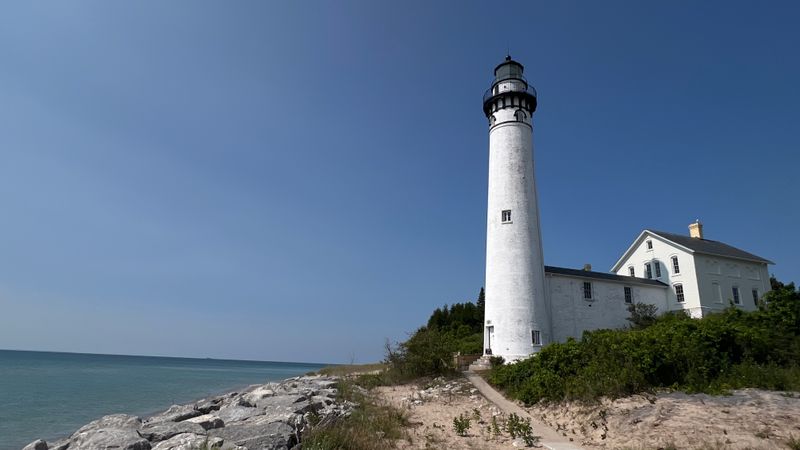
South Manitou Island feels remote yet welcoming, reachable by seasonal ferry from Leland. You will land beside a historic lighthouse, wind through cedar forests, and reach towering perched dunes that face the open lake.
The shipwreck of the Francisco Morazan lurks offshore, sometimes visible in clear water.
Choose between ranger-led walks and DIY loops, planning around the ferry schedule. Pack a full day kit with layers, snacks, and a liter or two of water.
Campsites are available if you want to stretch the rhythm into a starlit overnight.
The Valley of the Giants showcases massive old-growth white cedars. Lighthouse tours climb narrow stairs to commanding views and salt-free sea breezes.
If the surf is up, beaches thunder with sound that feels oceanic despite the freshwater setting.
Respect island Leave No Trace rules and watch for poison ivy along trails. You will return feeling transported, like you visited a northern archipelago.
The island wraps history, geology, and solitude into one elegant package. It is a bucket-list component of the lakeshore that rewards thoughtful planning.
Best Beaches and Swim Spots
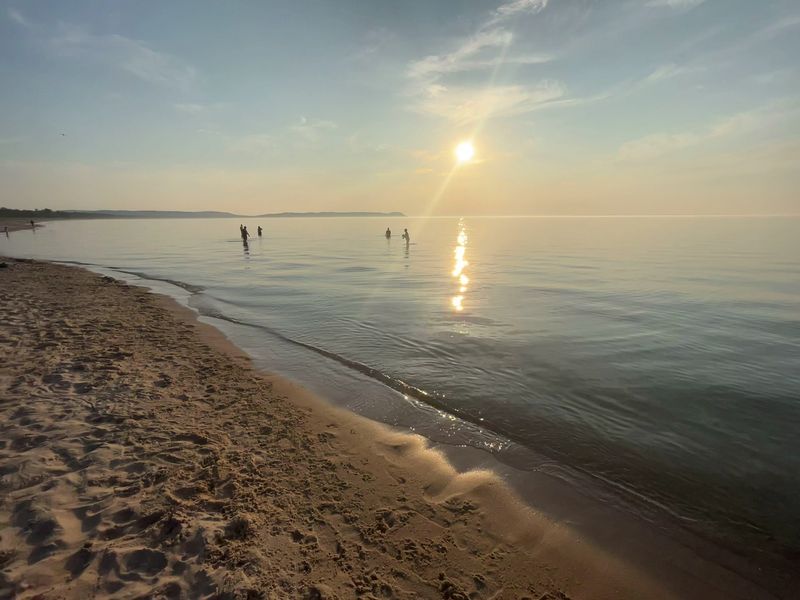
Sleeping Bear’s beaches are broad, bright, and blissfully unsalty. You will find soft sand at North Bar Lake, Esch Road Beach, and Good Harbor Bay, each with distinct personalities.
North Bar often warms faster thanks to its lagoon-like setup, perfect for kids.
Esch Road Beach feels wild, with the Otter Creek mouth drawing birdlife. Good Harbor stretches for miles, inviting long walks and sunset swims.
Always check rip current forecasts and expect chilly water early in the season, even on hot days.
Rock-hunters should scan for Petoskey stones and beach glass after storms. Pack water shoes if you prefer a buffer against cobbles.
Restrooms and parking vary by site, so arrive early on peak weekends and bring a shade umbrella.
Evening picnics are magical as waves hush the shoreline and colors melt across the sky. You will leave feeling rinsed clean by freshwater and wind.
Choose one beach for lounging and another for exploring to balance your day. The shore is the park’s heartbeat, steady and restorative.
Kayaking and Paddling Routes
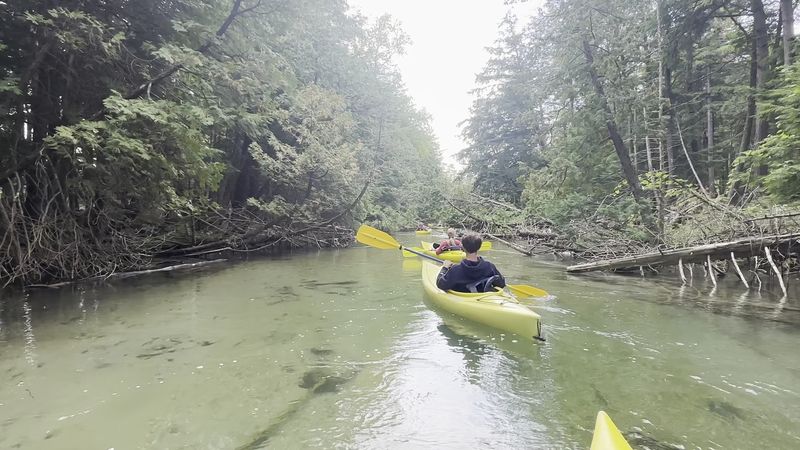
Kayaking here puts you eye level with the lake’s shifting colors and the dunes’ sheer faces. You will launch from Glen Arbor, Esch Road, or Good Harbor depending on wind and swell.
On calm mornings, water turns to glass and reveals sand ripples below.
Always dress for immersion because Lake Michigan stays cool. A PFD is nonnegotiable, and a spray skirt helps if waves build.
Check marine forecasts and avoid offshore winds that can push you into deeper water quickly.
For gentler options, paddle North Bar Lake or the Crystal River near the park boundary. Rentals and guided trips make logistics easier for newcomers.
Dry bags keep phones and keys safe while leaving deck space tidy.
Wildlife sightings include mergansers, eagles, and occasional otters. You will gain a different perspective on the bluffs that tower above.
Plan your takeouts, communicate with your group, and set conservative turn-around times. The lake rewards humility and preparation with unforgettable blue-room moments.
Wildflower and Wildlife Watching
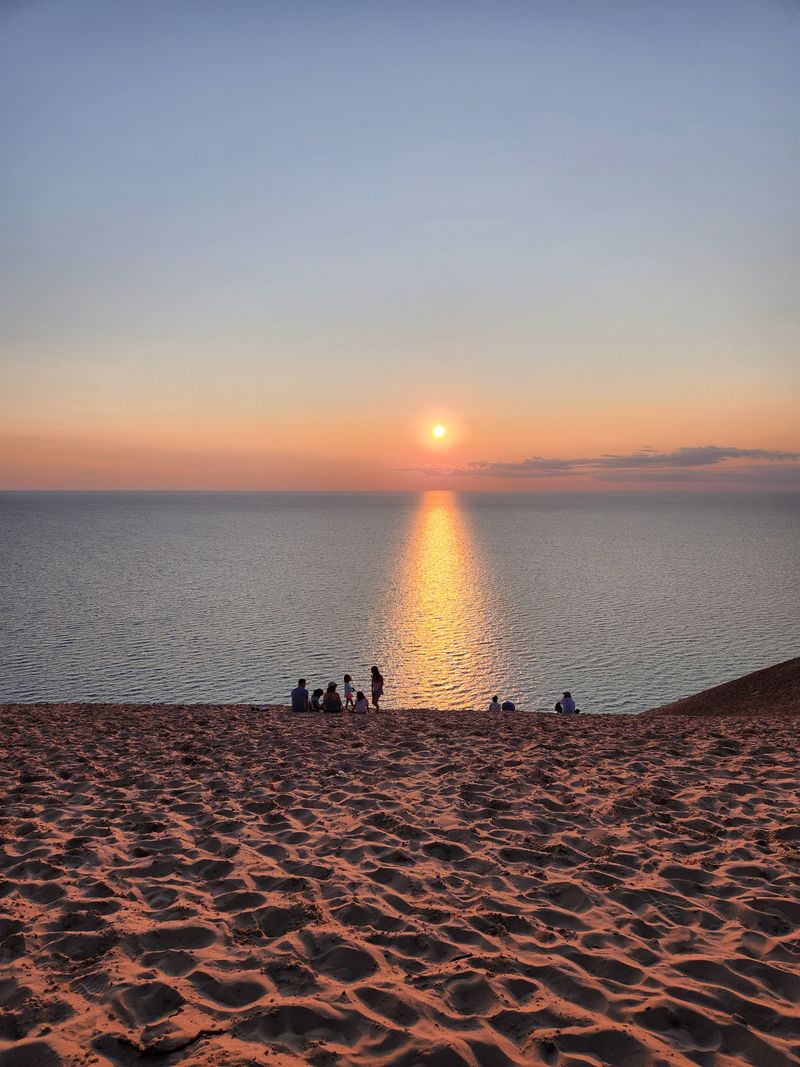
Spring and early summer light up the dunes with blooms and birdsong. You will spot trillium under sugar maples, lupine in sandy openings, and dune goldenrod later in the season.
Monarchs drift through on warm afternoons, hovering over purple spikes.
Bring binoculars for warblers moving through hardwoods and along the lakeshore. Bald eagles patrol thermals above bluffs, and sandhill cranes trumpet from wetlands.
Dawn and dusk amplify activity, while midday heat quiets the scene.
Stay on trails to protect fragile plants and keep your distance from nests. A pocket field guide or app quickly turns sightings into satisfying IDs.
Kids become eager naturalists when you make it a scavenger hunt for colors and calls.
Patience pays off as you tune into the rhythms of the protected landscape. You will leave with a camera roll full of textures and tiny victories.
Even short walks reveal intimate dramas between wind, sand, and bloom. The lakeshore is a living classroom that rewards curiosity every season.
Camping and Lodging Basics
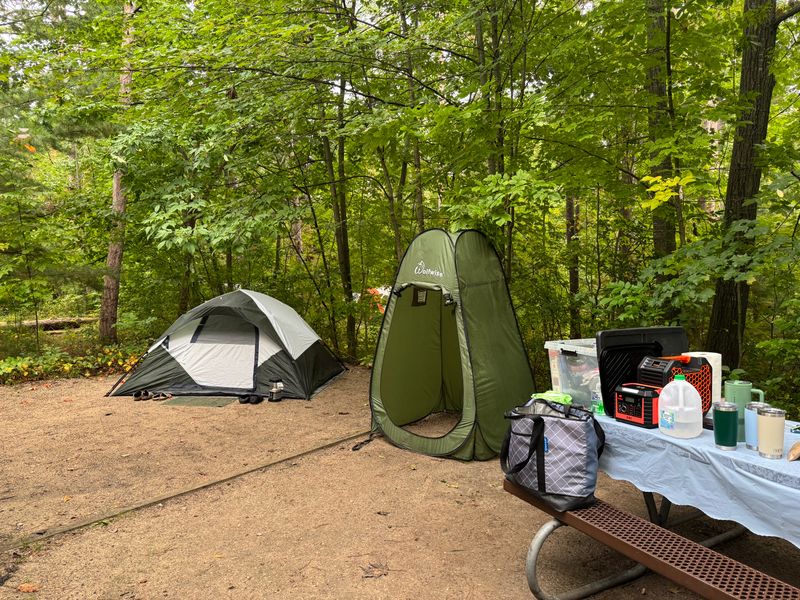
Camping connects your days into one long lakeshore story. You will find national lakeshore campgrounds like Platte River and D.H.
Day, each with character. D.H.
Day offers rustic charm near Glen Haven, while Platte River provides more amenities and river access.
Book early for summer weekends and consider shoulder seasons for quieter loops. Firewood rules protect forests, so buy local.
Bear boxes are not typical here, but food storage and clean camps keep wildlife wild.
For comfort, nearby Glen Arbor and Empire offer inns and rentals that pair well with sunset missions. Pack layers because nights can dip even in July.
A small lantern, warm hat, and camp chairs make evenings linger-friendly.
Respect quiet hours and dark skies to hear loons and see constellations. You will wake to birdsong and the scent of pine, ready to chase new views.
Camping simplifies choices and centers you in the landscape. It is the most rewarding way to absorb Sleeping Bear’s rhythms.
Practical Planning and Permits
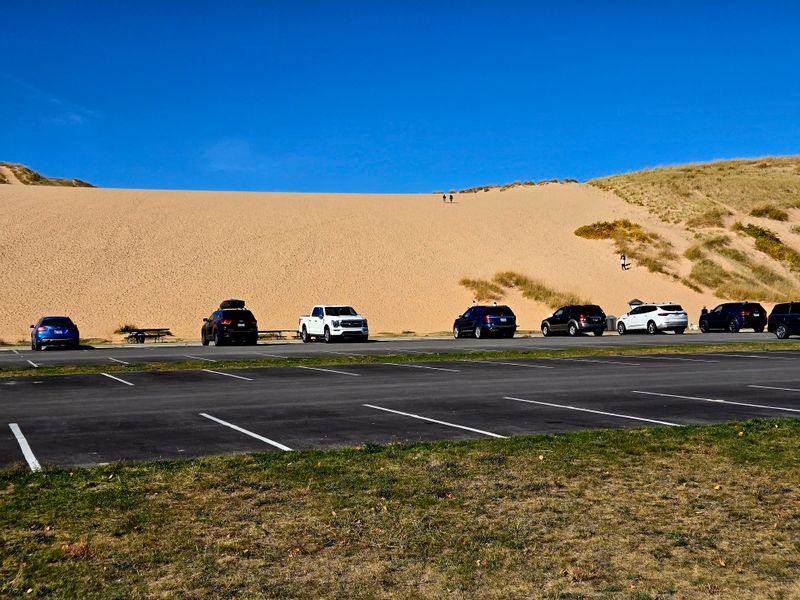
Good planning turns a beautiful place into your best trip of the year. You will start at nps.gov/slbe for maps, closures, and safety advisories.
Purchase a park pass at entrance stations or online and display it clearly.
Ferry tickets to the Manitou islands sell out in peak season, so reserve early. Campsites at D.H.
Day and Platte River go quickly, and backcountry permits apply on North Manitou. Cell coverage is spotty, making downloaded maps and offline info essential.
Pack the ten essentials, plus extra water and a wind layer. Weather flips fast near the big lake, and fog can erase views in minutes.
Share your plans with someone and set meetup points for groups exploring separately.
Leave No Trace is the ethic that protects dunes and wildlife. You will feel better knowing your footprints fade while memories last.
With permits dialed and logistics smoothed, the lakeshore opens effortlessly. Your attention shifts from problem-solving to pure wonder.