Some legends refuse to die—and Bonnie & Clyde are proof.
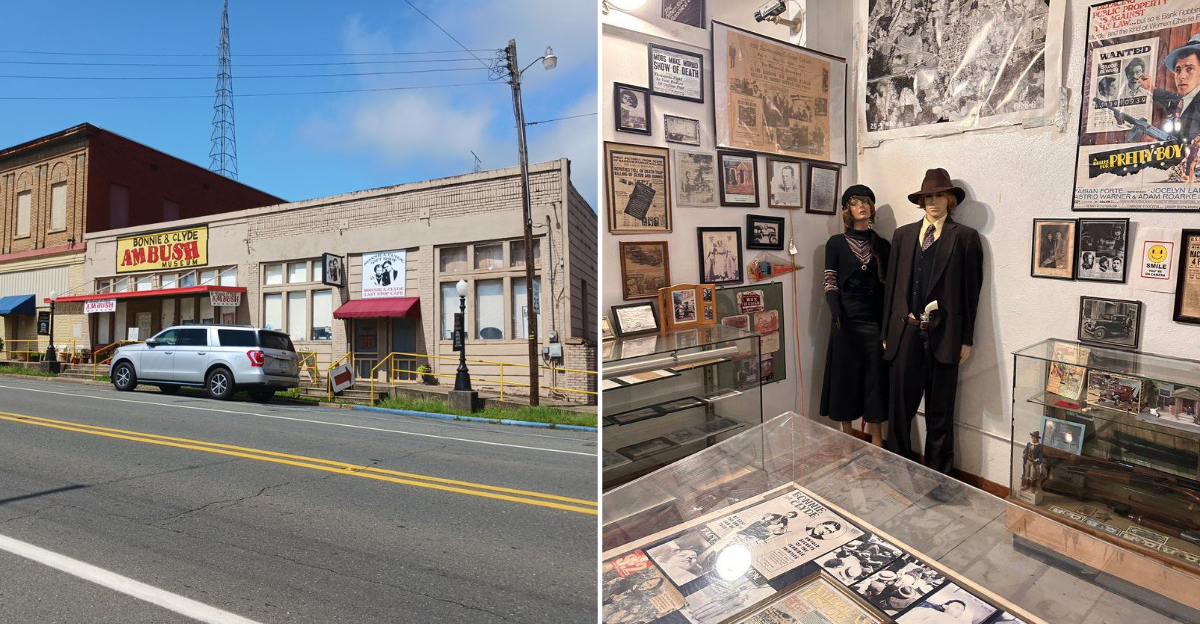
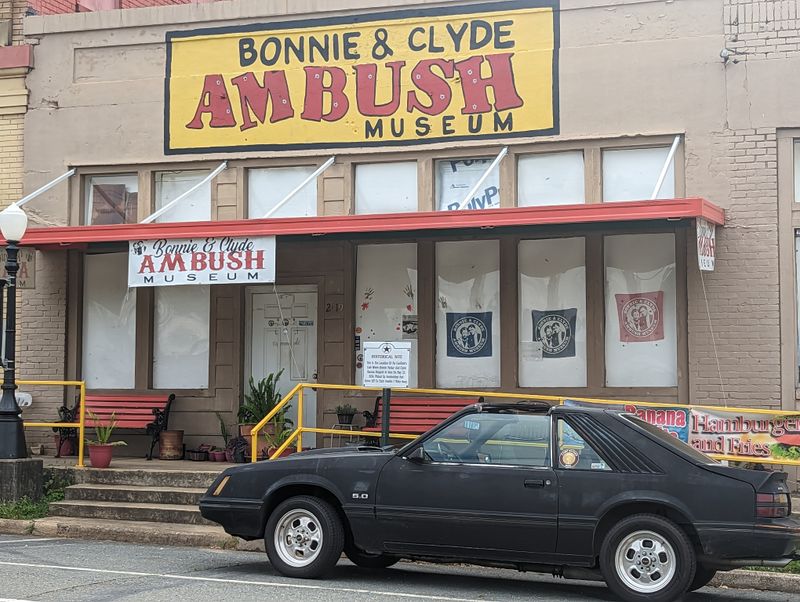
Tucked away in Lester, Louisiana, the Bonnie & Clyde Ambush Museum brings one of America’s most infamous outlaw stories to life. It’s small, unassuming, and easy to miss—but inside, history hits hard.
Photographs, weapons, and original artifacts tell the tale of the final moments that ended a criminal duo’s reign.
Walking through the museum feels like stepping back to 1934. You can almost hear the tension in the air, the sirens in the distance, the whispers of fear and fascination that followed Bonnie and Clyde across the country.
Each display sparks curiosity, invites questions, and rewards anyone with a taste for real, raw history.
This isn’t just a museum—it’s a story frozen in time. A visit leaves you shaken, intrigued, and strangely connected to the wild, short-lived lives of two of Louisiana’s most notorious figures.
Planning Your Visit: Hours, Tickets, and What to Expect
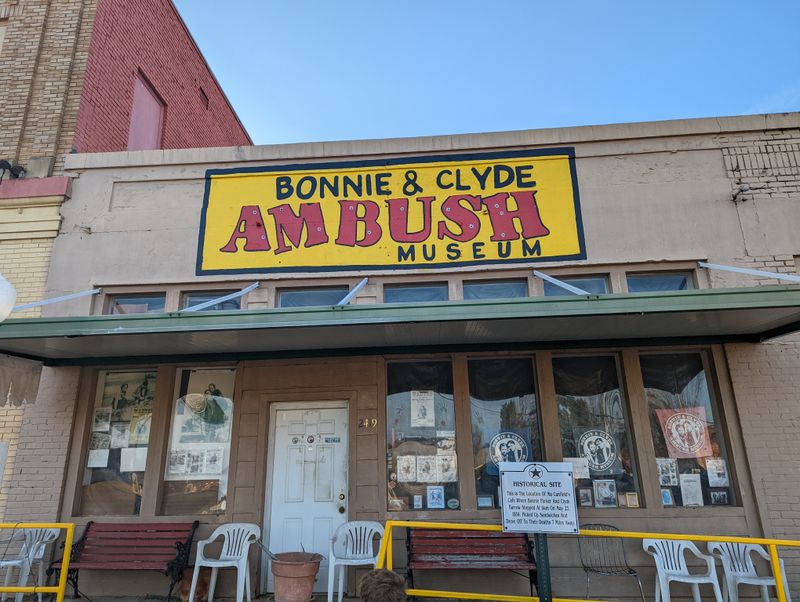
Set your GPS for 2419 Main St in Gibsland and look for the modest storefront that houses the Bonnie & Clyde Ambush Museum. It keeps straightforward hours, opening daily 9 AM to 5 PM, which makes planning simple whether you are road tripping or detouring from Shreveport.
Admission is affordable, and the experience is self-guided, so you can read at your own pace.
Expect a tightly packed space full of newspaper clippings, photographs, and replicas that walk you through the pursuit and the final moments. You will find staff and locals ready to chat, adding color you will not get from placards alone.
Some visitors mention a musty, old-building vibe, so plan accordingly if you are sensitive to smells or warm air.
Bring cash or card for tickets and the gift shop, where you can pick up books or souvenirs tied to the legend. You will want comfortable shoes because you will spend time reading and scanning details on the walls.
If you need to refuel, the attached cafe is handy for burgers, shakes, or a root beer float between exhibits.
Give yourself at least an hour, though history lovers can easily linger longer. The museum is compact, but the story density is high.
Arrive curious and unhurried.
Inside the Exhibits: Clippings, Artifacts, and a Replica Car
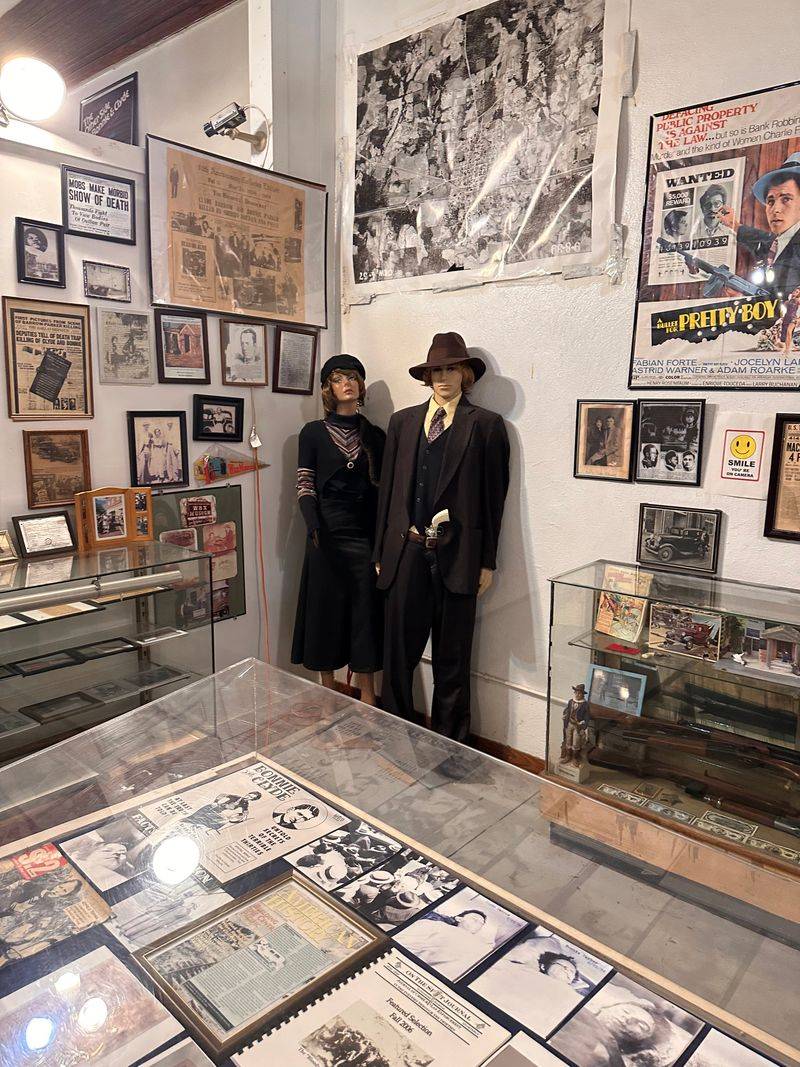
Once inside, the storyline unfolds through walls of clippings that trace the manhunt, the tip-offs, and the ambush. You will see arrest records, weathered headlines, and personal snapshots that make Bonnie and Clyde feel less like myths and more like people in hard times.
Some clothing, correspondence copies, and era items build that human scale.
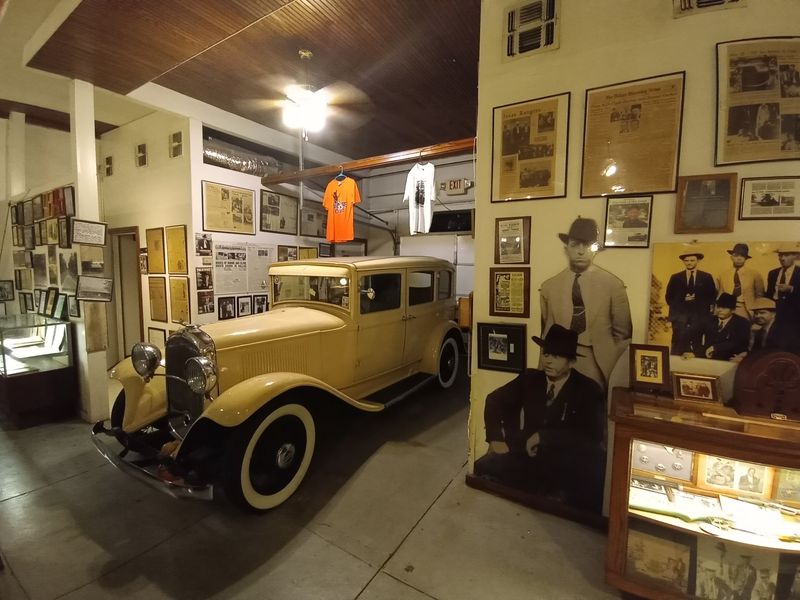
There is a replica of the bullet-riddled Ford that helps visualize the violence of the final shootout. It is dramatic, but the power of the collection lies in the paper trail and context.
You will catch different versions of the same photo, which can feel repetitive, yet it reinforces how the story spread across America.
Plan to read, backtrack, and compare captions. The museum leans heavy on the ambush narrative rather than their whole biography, so you get a crisp view of the ending.
That singular focus can be refreshing if you want the who, where, when, and how of May 1934.
Displays can feel chaotic, but that messiness underscores the era’s frenzy. Ask questions if labels leave you hanging.
The staff’s lived knowledge smooths those gaps and brings threads together in a way static panels rarely do.
Walking the Story: From Main Street to the Ambush Site
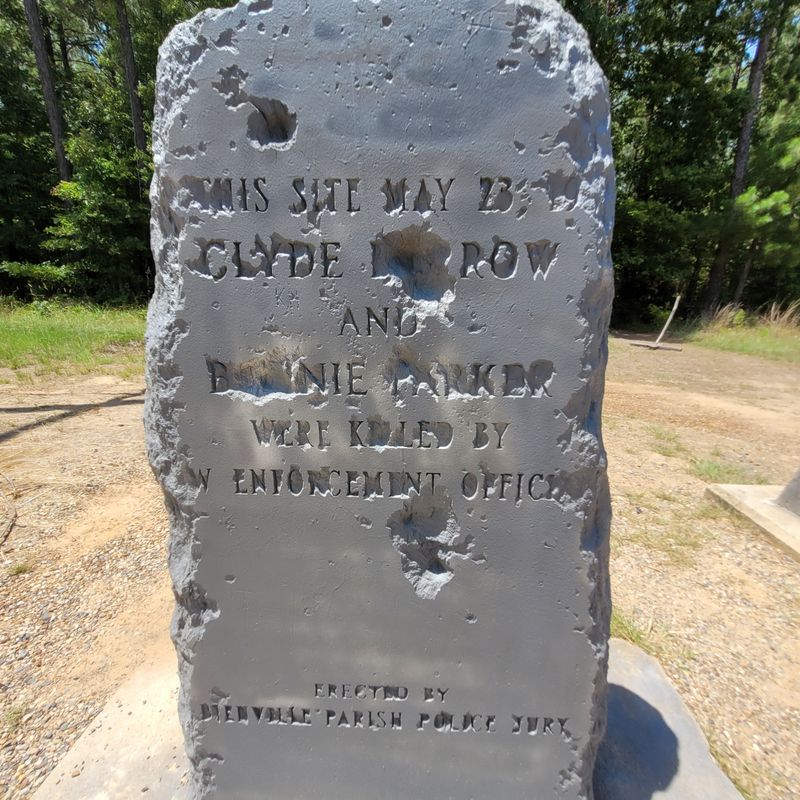
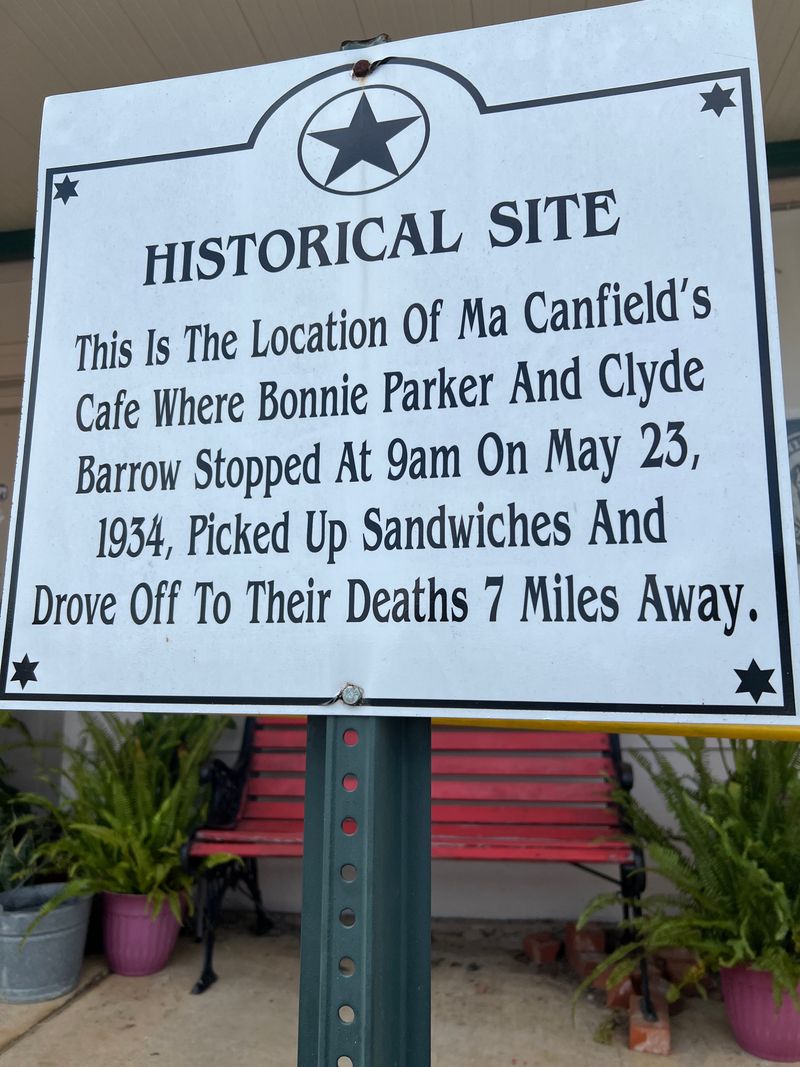
Part of the museum’s appeal is how close you are to the real geography. A block from the museum sits the spot where a call reportedly confirmed the outlaws were dead, and about seven miles down the road the ambush site marks their final moments.
You can drive there in minutes and stand by the roadside monument.
Bring water, sun protection, and a camera. The site is simple, solemn, and profoundly ordinary, which makes the history feel startlingly immediate.
You will find plaques and markers that help you picture the officers’ positions and the road approach.
Start at the museum to anchor the facts, then head out for the drive. The transition from reading clippings to reading landscape is powerful.
You will likely replay timelines in your head as the piney scenery slips by.
Please be respectful of traffic, private property, and the site’s memorial character. There is no elaborate infrastructure, so your visit is brief and contemplative.
When you return to Main Street, the exhibits take on new weight because the distances, turns, and vantage points are now yours.
Local Voices: Perry’s Stories, Reviews, and What Stands Out
Ask for Perry if you want context that does not fit on the walls. Visitors praise his encyclopedic recall and evenhanded storytelling, which helps balance myth with what documents actually say.
In a room brimming with clippings, a voice like his can anchor the narrative.
Reviews repeatedly call the place a hidden gem, though many note sensory quirks and cluttered displays. You will also see mentions of a resident cat, a friendly greeting, and hours of reading if you let yourself sink in.
The throughline is simple: curiosity pays off here.
People leave appreciating Bonnie and Clyde as human beings rather than caricatures. You will hear recommendations to pair the museum with the ambush site for a complete arc.
Expect repetition in images, but also unexpected details like personal letters and period ephemera.
Feedback also flags limited climate control and a lived-in atmosphere. That may not be for everyone, so plan your timing and comfort.
If you go in with the right mindset, you get a rare, local voice guiding you through an outsized American legend.
Food, Souvenirs, and Practical Tips for a Smooth Stop
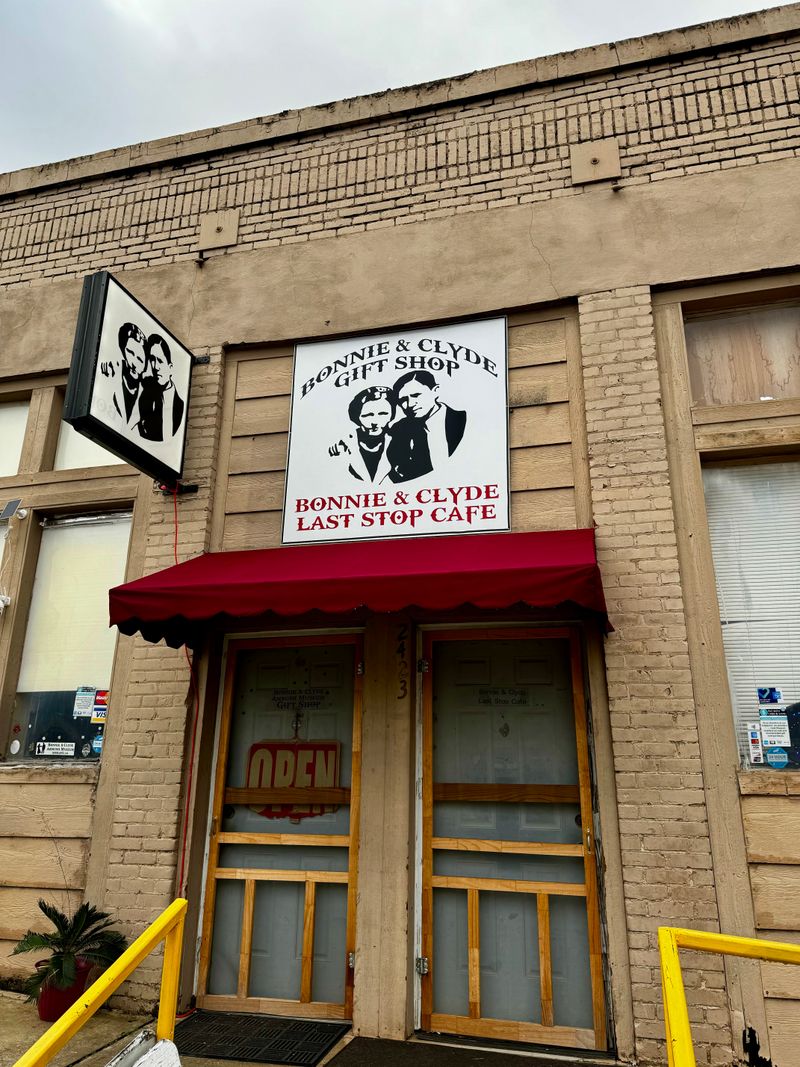
Part of the charm is that you can tour, then grab a burger and a float without moving your car. The attached cafe serves classic fare and makes a convenient lunch stop between reading marathons.
It is also a nod to the lore of a last meal, which adds a cinematic shiver to an otherwise friendly counter.
Pick up souvenirs like books, patches, and stickers to keep the story alive back home. If you love primary sources, a paperback collection of articles or a concise history guide is the most useful buy.
Bring a tote for paper goods so they do not crease in the car.
Parking is straightforward along Main Street, and the museum’s hours are consistent. Call ahead at +1 318-843-1934 if you are timing a group visit or arriving late in the day.
Cell service is typically fine, but download directions to the ambush site just in case.
Dress for warm rooms and uneven pacing. You will alternate between standing and leaning to read, so comfortable shoes are key.
Leave extra time to browse the gift shop and chat with staff because those conversations often deliver the best details.
Tracing the Manhunt: Maps, Timelines, and Lawman Strategy
Start by following the manhunt boards, where dog eared maps show loops through Texas backroads and red pencil lines crossing into Louisiana. You can see where tips failed, where rumors sparked, and how patience finally mattered more than speed.
It lays out strategy without glamor, just the plodding persistence of deputies and federal agents.
Timeline panels thread crimes to responses, so you track dates like stepping stones. Arrests, escapes, sightings, and stakeouts unfold with a rhythm that feels methodical rather than cinematic.
You will notice how miscommunications slowed the chase and how local knowledge finally tilted the odds.
Typed bulletins reveal clipped language that carries tension. Names and mile markers punch through the paper, turning the countryside into a grid of possibilities and mistakes.
You begin to appreciate how fragile coordination was before radios standardized procedures.
Stand a moment with the posed lawman portraits, their expressions stubborn and tired. Imagine long nights, engines ticking hot, and whispered plans exchanged under dim porch bulbs.
The manhunt becomes a network of ordinary efforts overlapping until a trap holds.
Myth vs. Reality: Media Spin, Headlines, and Hollywood Echoes
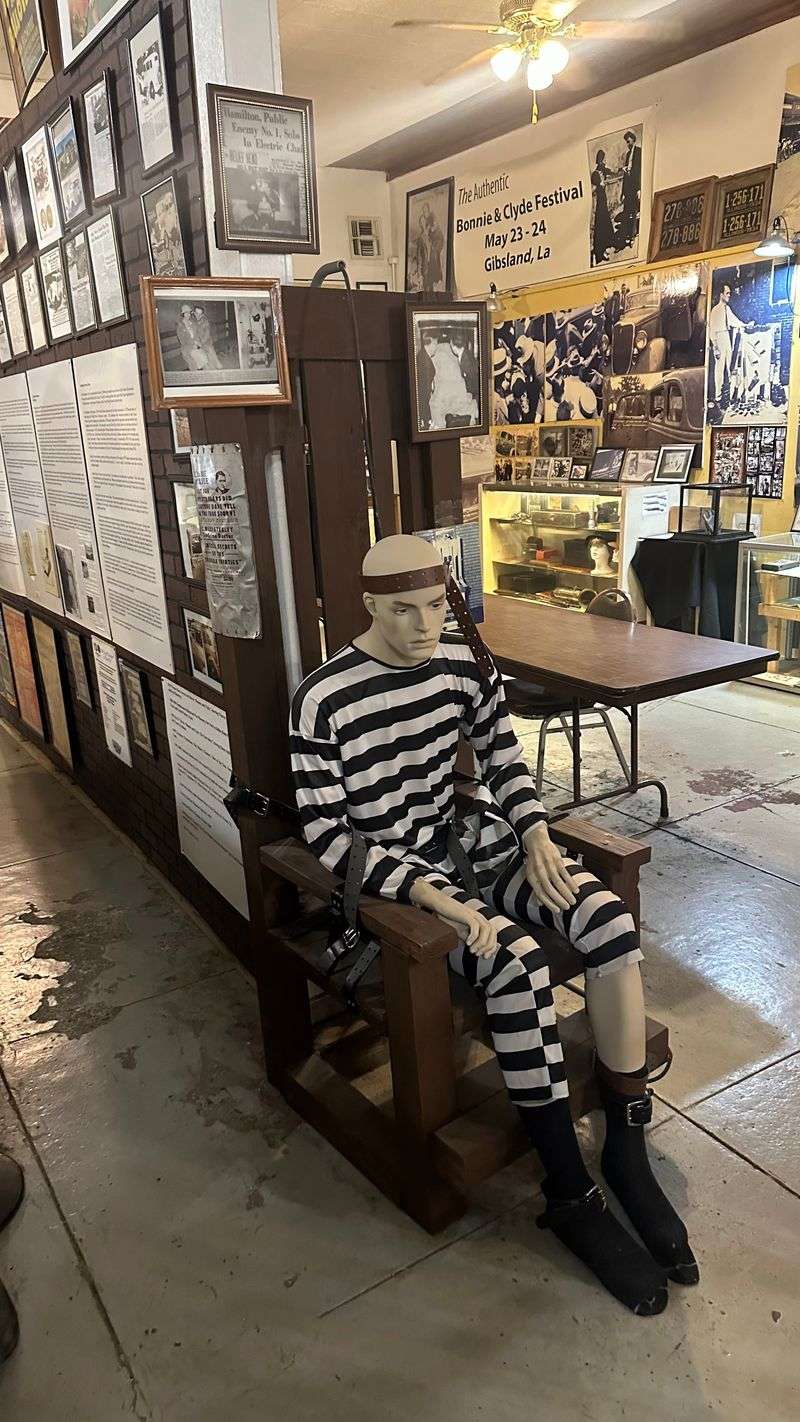
Here the museum leans into the myths and then neatly peels them back. Bold headlines shout romance and rebellion, while quieter captions note casualties, grief, and fear.
You realize the media sometimes needed a story as much as readers wanted one.
Film posters and stills hang nearby as a timeline of Hollywood fascination. They sparkle, but a case of letters and affidavits dulls the shine with sobering specifics.
You will feel the distance between choreography and circumstance.
Side by side comparisons invite you to test what you think you know. Were they stylish folk heroes or desperate fugitives navigating dead ends.
The exhibit refuses easy answers and that is the point.
Audio clips of recollections add cadence and pause. Voices from towns along the route describe threats, not legends, and long shadows over simple routines.
By the end, the narrative shrinks to human scale and gains weight.
Beyond Gibsland: Day Trips, Scenic Detours, and Nearby History
Use the museum as a hub for a low stress day of exploring north Louisiana. The byways roll past pine stands and farm ponds, where small towns keep uneven sidewalks and generous smiles.
You can stretch your legs, sip sweet tea, and let the pace reset.
Historic markers dot the routes, linking rail lines, rural schools, and Depression era projects. These stops widen the story beyond a single ambush.
You will notice how geography shapes decisions and how communities carry memory.
Plan fuel and snacks in advance because distances hide behind pretty scenery. Cell coverage thins in pockets, another nudge toward old fashioned prep.
Jot down addresses before you drive.
If time allows, swing through Minden or Arcadia for courthouse squares and photo worthy brick facades. Antique shops and small museums round out the context with local flavor.
The result is a loop that pairs true crime curiosity with grounded regional history.
Accessibility and Comfort: Parking, Restrooms, and Pacing Your Stop
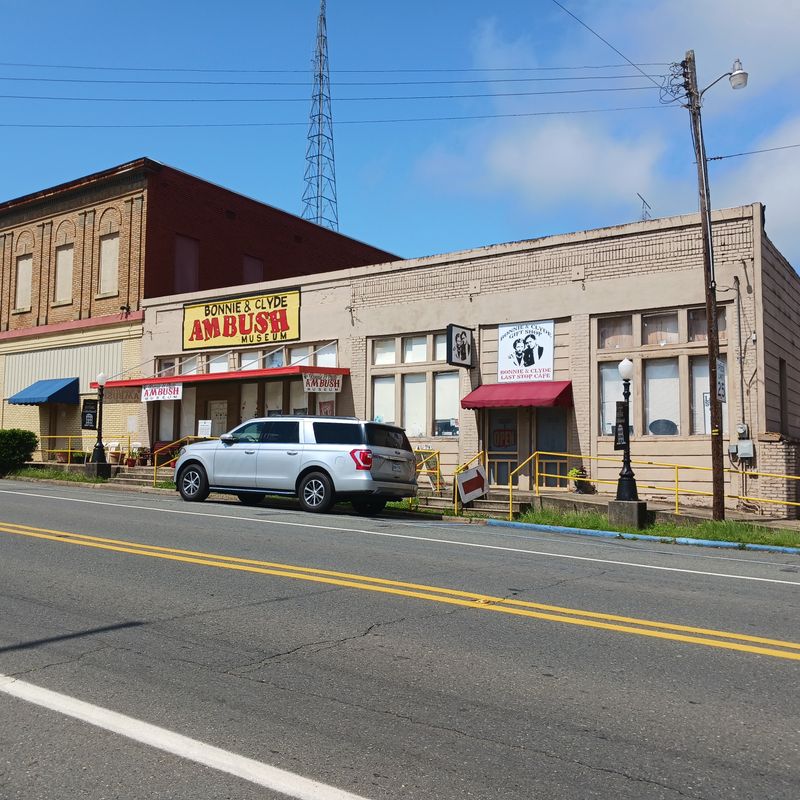
Parking is straightforward along Main Street, with spots typically available within a short walk. If mobility is a concern, arrive earlier in the day for easier curb access.
The entrance is close to street level, and staff are helpful about opening doors and guiding you through tighter corners.
Inside, pacing matters. Exhibits are compact but dense with text and artifacts, so give yourself breathing room.
Benches are limited, yet you can step outside for a quick break and jump back in where you left off.
Restrooms are basic, clean, and clearly marked near the front. Bring water, especially in warmer months.
Plan 45 minutes to an hour for a comfortable visit, more if you like to read every panel. If you are road tripping, pair the stop with a nearby lunch, and you will leave refreshed and ready for the next stretch.
Kids and Curious Teens: Keeping Younger Travelers Engaged Without the Gore
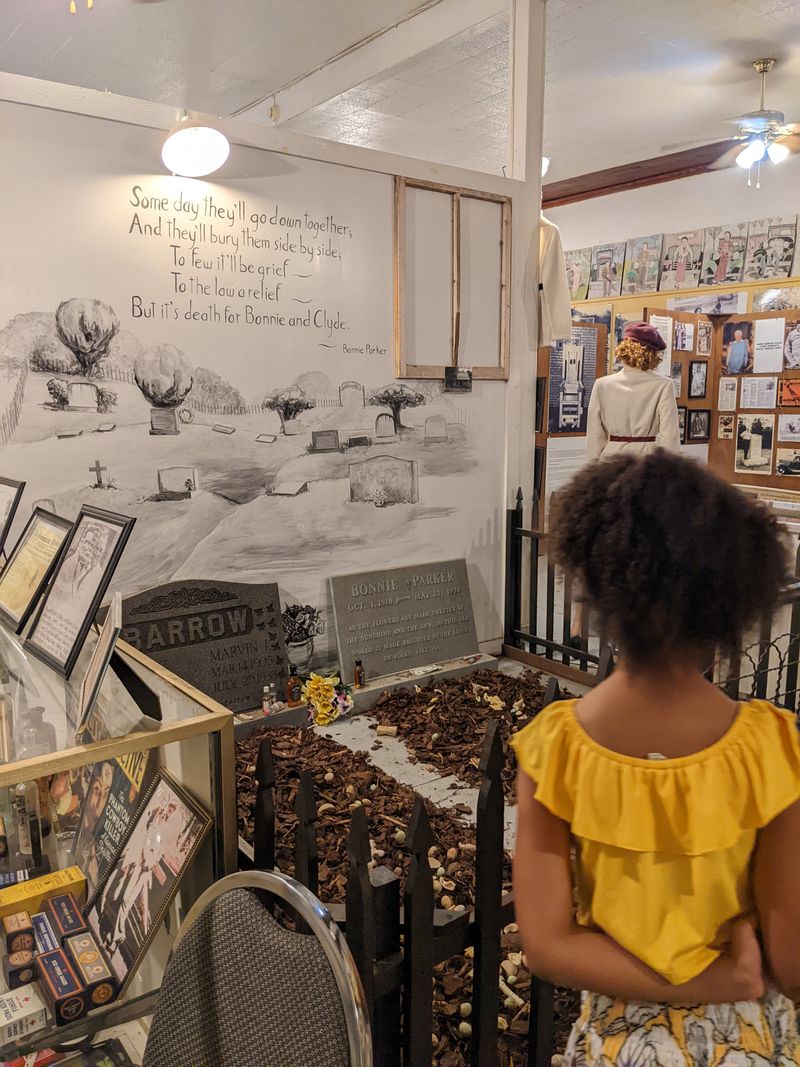
This museum leans text heavy, so set expectations with kids before you walk in. Focus on maps, old photos of the towns, and the era’s cars to spark curiosity.
Skip any graphic details and reframe the story as decisions, consequences, and the way communities remember hard events.
Give each child a simple scavenger list: find the map of Louisiana, a headline, and the license plate on the replica car. Teens enjoy tracing the timeline and comparing newspaper angles.
Keep discussions grounded in empathy and choices. Ask what they notice about 1930s technology.
Breaks help. Step outside for a few minutes, grab a snack nearby, then return to finish thoughtfully.
You will leave with meaningful conversation starters rather than nightmares.