Florida hides a hike that drops straight into the Earth—and it’s not subtle about it.
Devil’s Millhopper Geological State Park flips expectations the moment you arrive. One minute you’re standing in a quiet Gainesville neighborhood, the next you’re staring into a massive sinkhole that feels ripped from another world.
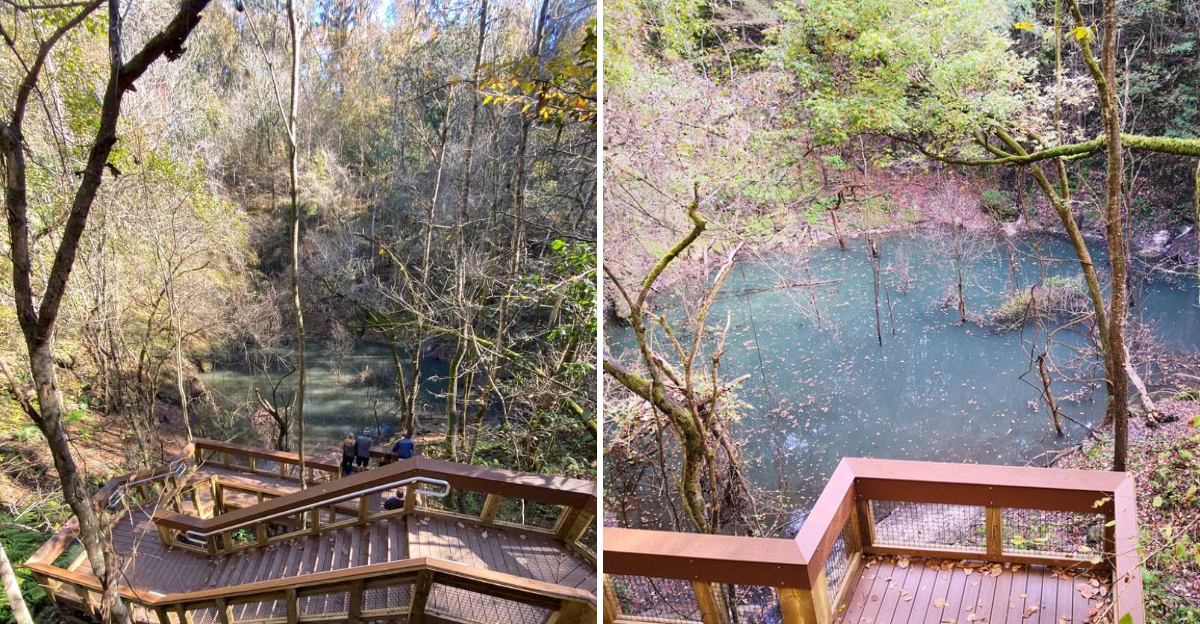
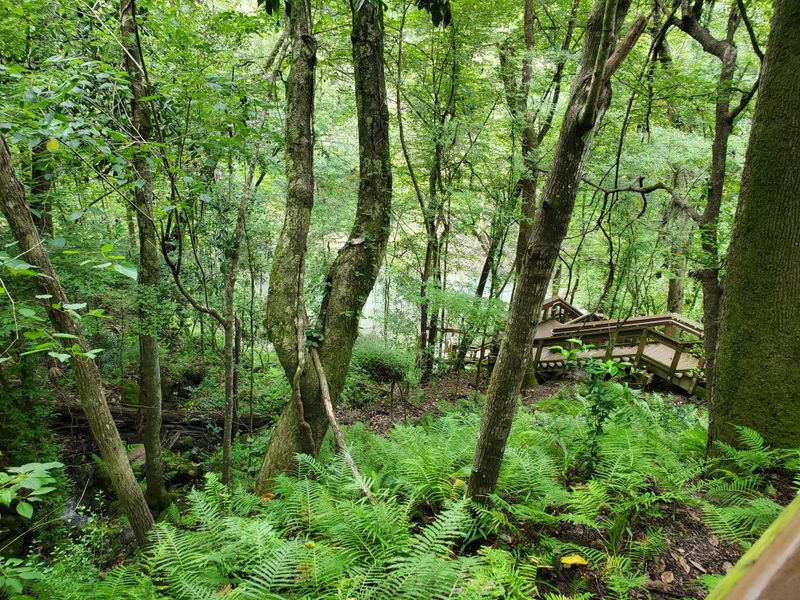
A wooden staircase pulls you downward, step by step, into cool air, dripping stone, and towering walls wrapped in green.
The descent feels dramatic in the best way. Ferns cling to steep limestone.
Vines stretch overhead. The sound of traffic fades, replaced by birds and the hush of shade.
It’s short, intense, and wildly different from Florida’s flat trails and sandy paths.
At the bottom, the park feels almost secret. Moist soil, filtered light, and a sense of scale make the climb back up feel earned.
This isn’t a long hike, yet it sticks with you. Devil’s Millhopper proves Florida’s weird side knows how to impress.
Orientation: What makes the sinkhole special
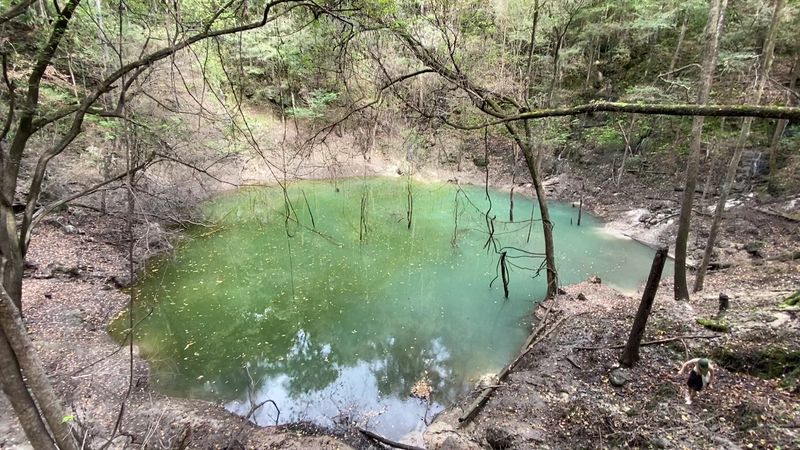
Devil’s Millhopper is a rare window into Florida’s underground story. The sinkhole exposes layered limestone and ancient marine fossils, reminding you that this sandy peninsula was once sea floor.
As you descend, you literally feel the temperature drop and humidity rise, like stepping into a pocket rainforest hidden inside the city.
The park is compact, but every step introduces new textures: draping ferns, dripping rock, rivulets threading into the basin. Short trails circle the rim, while the staircase transports you from upland pines into a shaded bowl.
Interpretive signs explain how rain, erosion, and underground voids created the 120 foot cavity over millennia.
It is not about mileage here. It is about immersion, sound, and touch.
Waterfalls are often small, but after rain they sing louder, and the contrast with Florida’s flatness feels dramatic.
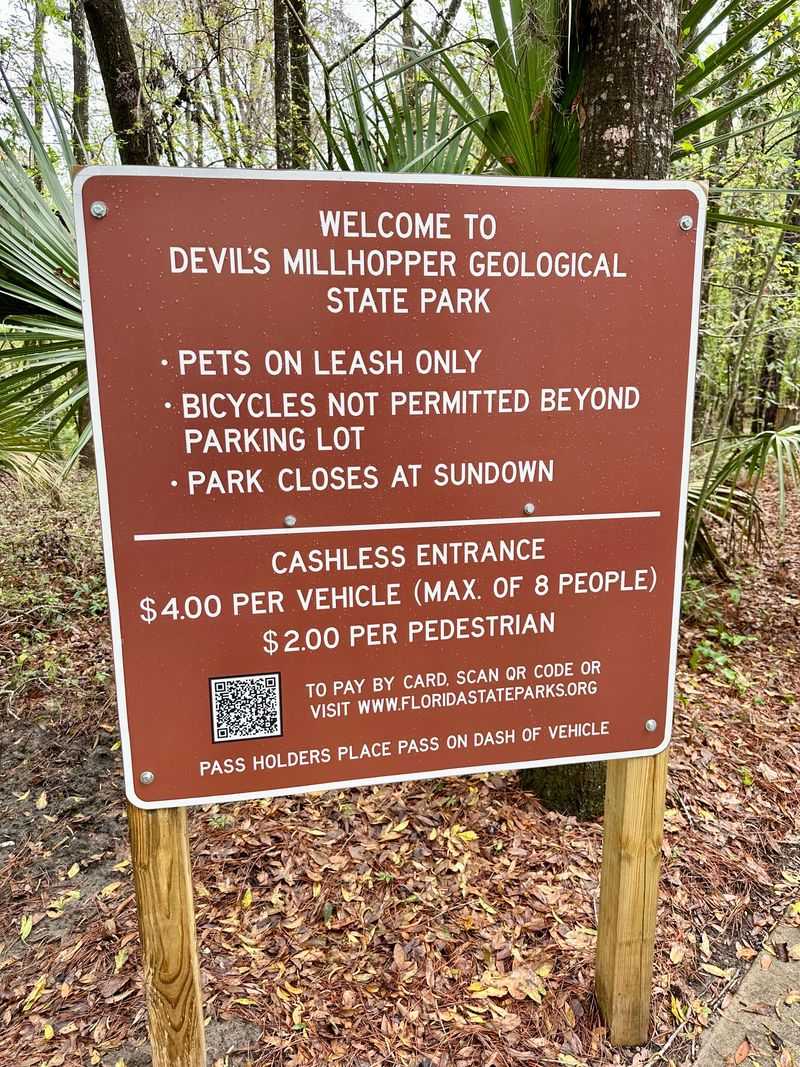
Expect a quick visit that still feels complete, especially if you time it for morning calm or post rain sparkle. You can pay online by QR code at the entrance, then wander at your own pace.
Bring water, respect the railings, and let the geology guide your curiosity. Simple, affordable, and quietly astonishing.
The staircase descent: 264 steps of mini rainforest
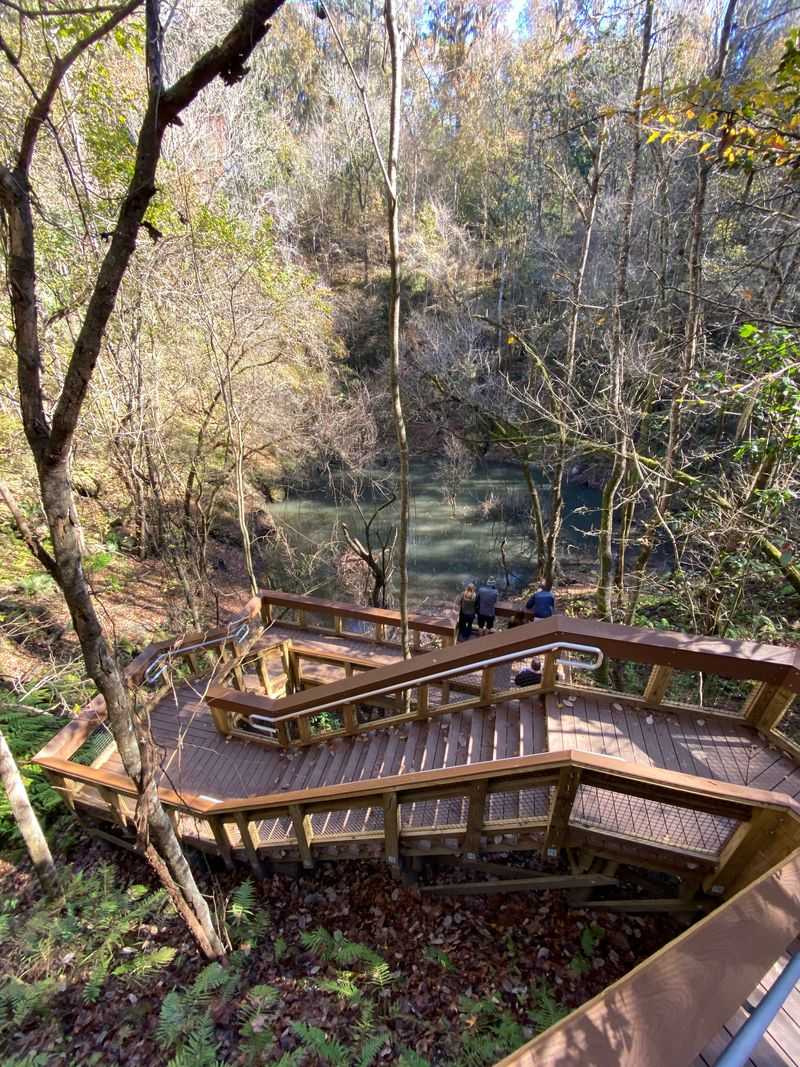
The park’s hallmark is its staircase, a sturdy wooden spine that drops you into cooler air and a chorus of dripping water. Reviews mention 264 steps round trip, broken by frequent landings that make the climb approachable.
You will pass interpretive signs that frame what you are seeing, from karst features to plant communities shifting with each level.
Take your time on the way down, savoring the fern curtains and moss streaks where water seeps through rock. After rain, tiny waterfalls appear, flickering over the limestone and perfuming the air.
On dry days, the trickle softens, but the amphitheater of walls still feels cinematic and hushed.
The climb back up is your workout. Bench like landings let you catch your breath without pressure, and shade helps even in summer.
Kids count steps, photographers chase shadows, and everyone gets a small triumph at the top.
Wear shoes with grip because moisture lingers on wood. Keep right, let faster hikers pass, and pause at the observation deck near the bottom for a thoughtful look into the basin.
The staircase is both trail and exhibit, safely delivering intimacy without trampling this fragile bowl.
Waterfalls, creeks, and the basin
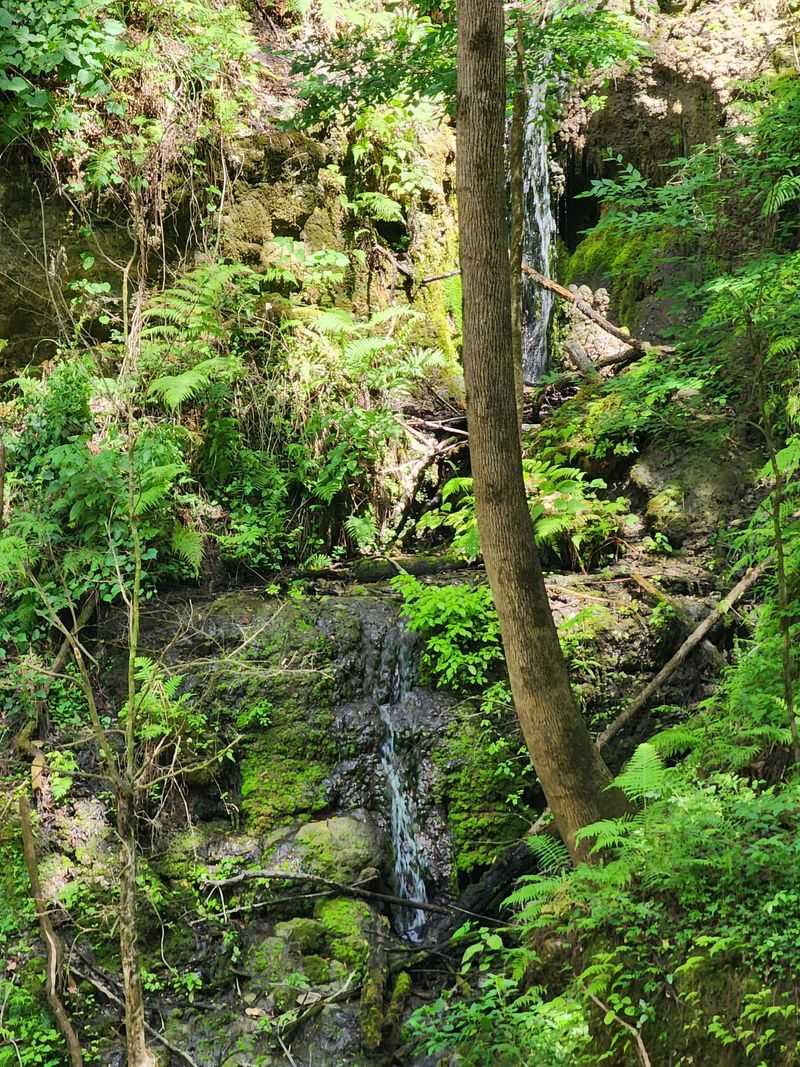
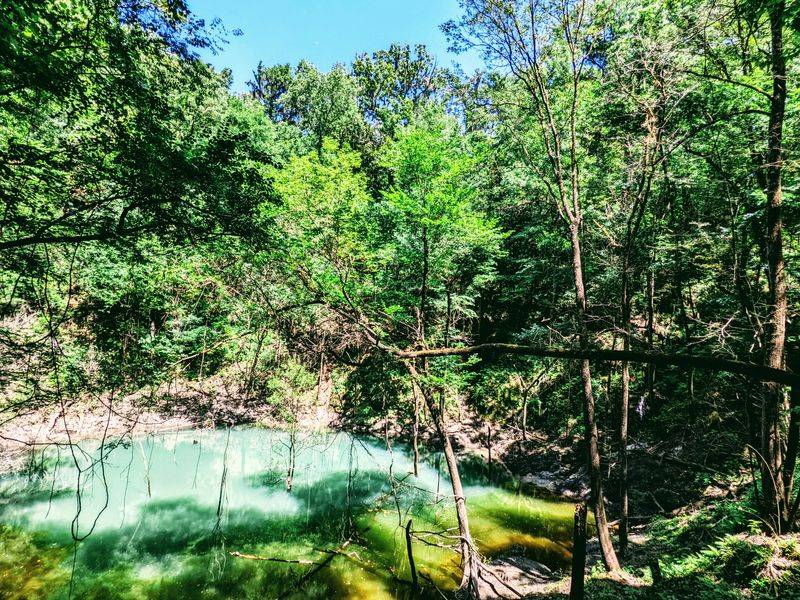
Water defines the mood here. After rainfall, small waterfalls lace the limestone, and the basin sometimes shifts from bluish tones in early light to tea brown as tannins mix during the day.
Do not expect big cataracts; expect delicate threads, a hush of droplets, and mirrored pools that reveal subtle currents.
Two or three creeks typically feed the sinkhole, depending on season. You will spot their channels along the rim and from the stairs, where bridges and overlooks align with the flow.
At the observation deck, you see how these trickles gather into a quiet, restricted basin that protects fragile sediments.
Access to the water is limited by design. Railings keep boots off sensitive slopes, preventing erosion and keeping water clarity from collapsing under foot traffic.
It is a lesson in restraint that still gives you cinematic views.
Visit after a rainy day for livelier falls and soft mist. On drier weeks, lean into textures: water stains, fern fronds, and limestone grooves etched by centuries.
The soundscape alone is worth it, especially when city noise fades and the basin becomes a gentle metronome.
Visitor center, amenities, and logistics
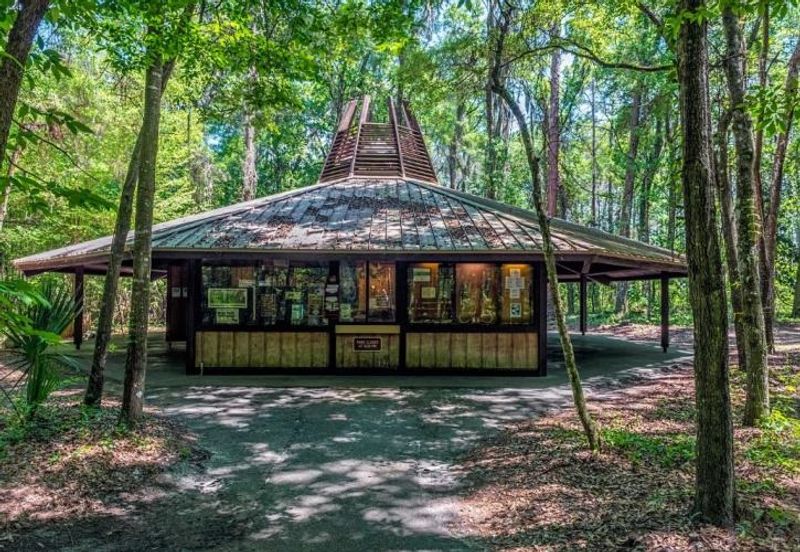
Devil’s Millhopper is simple to navigate, with a small visitor center that punches above its weight in clear, engaging displays. Expect clean, large restrooms, shaded picnic tables, grills, and ample parking even on weekends.
Entry is budget friendly, and you can pay online via QR code posted at the gate if the booth is unstaffed.
Park hours generally run from morning to sunset, but check the Florida State Parks website for updates or temporary closures. Rangers are friendly and knowledgeable, often sharing tips on conditions after rain and recent wildlife sightings.
Saturday morning guided walks are offered at times, though self guiding is easy.
Leashed pets are welcome on trails, which is great for locals getting quick exercise with their dogs. Bring water, sunscreen, and a small snack if you plan to linger at the picnic area.
Trash cans and rules are clearly posted, making Leave No Trace simple.
Because the park is compact, you might spend 40 to 90 minutes if you do both the stairs and rim loop. Combine with nearby Gainesville eats for a half day outing.
The phone number and website make planning painless, and the lot rarely feels chaotic.
Natural history and geology in plain language
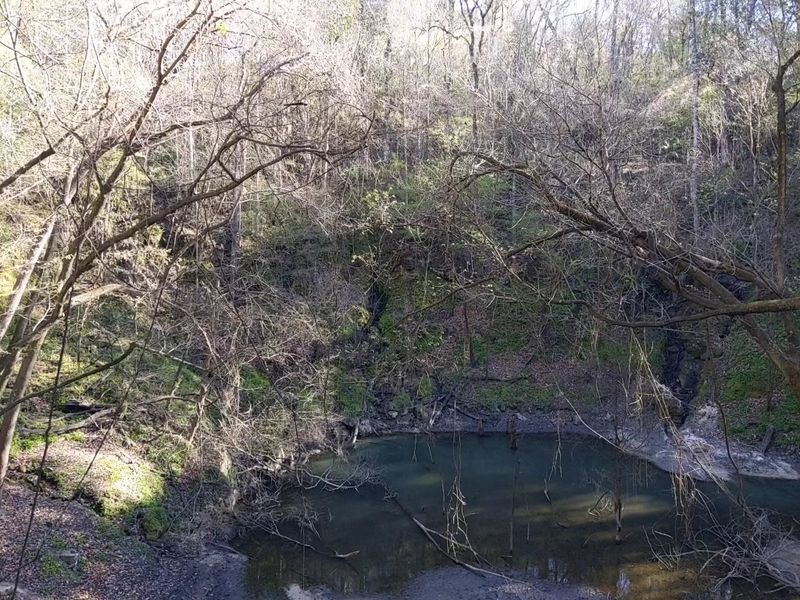
This is karst country, where slightly acidic rainwater dissolves limestone bedrock over time. Cavities form, roofs weaken, and eventually the surface collapses, creating a steep sided sinkhole.
Devil’s Millhopper exposes that process like a cutaway model, with visible layers, solution channels, and seep lines that feed the micro rainforest below.
Look closely at rock along the stairs for fossil hints: shells and marine fragments from when Florida sat beneath shallow seas. The varying plant communities from rim to basin reflect moisture and light gradients more than elevation alone.
Think of the hole as a natural humidity trap, channeling breezes and condensing shade.
The name nods to local lore about a mill where the devil supposedly ground souls, but the real magic is hydrogeology. Rain falls, percolates through sand, carbonic acid nibbles at limestone, and gravity does the rest.
It is slow motion architecture shaped by water and time.
The park’s interpretive signs translate all this without jargon. You will walk away understanding why fences matter and why staying on boardwalks protects a sensitive system.
Simple science, well told, paired with a staircase that lets you feel it in your lungs.
When to go and how to photograph it
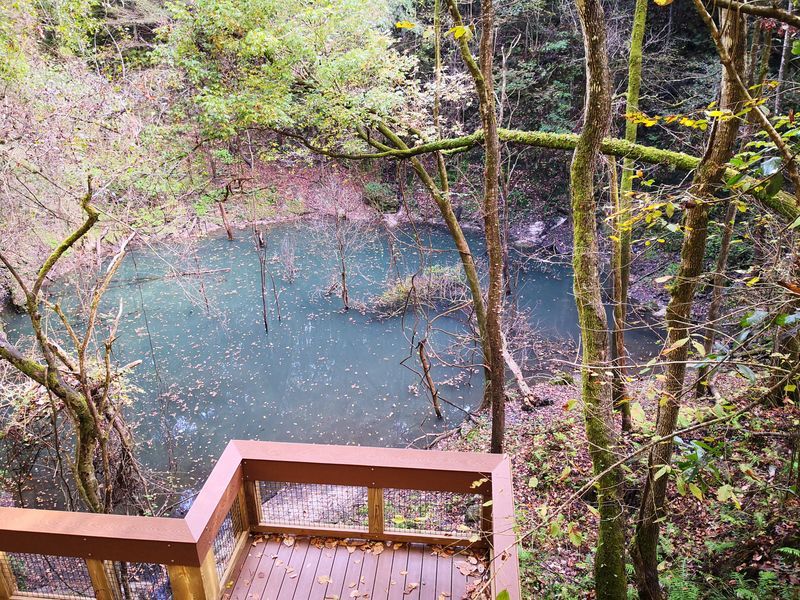
Go early for cool air, empty landings, and diffused light through the canopy. After rain, mini waterfalls awaken and the basin reflects greens like a polished stone.
On dry, bright afternoons, contrast spikes and shadows get harsh, so aim for mornings or overcast days for evenly lit textures.
Photography tips are simple. Bring a fast lens or a small tripod to handle dim light beneath the canopy.
Shoot from landings to keep railings straight, and use slower shutter speeds to soften trickles without blocking traffic.
Rim shots tell the story of scale, but the best drama lives midway down the stairs. Compose with leading lines from the railing and include people for scale.
Polarizers help tame glare on wet limestone and deepen leaf color.
Respect rules and never step beyond barriers for a better angle. Mist will cling to gear, so pack a cloth.
If you time it after a storm, you will leave with rich greens, silky water, and that rare feeling of rainforest mood in the middle of Gainesville.
Accessibility, safety, and realistic expectations
This park is beautiful and brief, which is part of its charm. Expect an experience measured in steps and sensations, not long miles.
If you cannot do stairs, the rim loop offers views and easy movement, while the stair landings give rest spots for those tackling the descent.
Handrails run the full route, and surfaces are maintained, though wood can be damp. Wear treaded shoes, move carefully, and let faster visitors pass at landings.
In summer, pack water and savor the shade; in winter, enjoy crisp air and thinner crowds.
Leashed pets are allowed, and families will find clean restrooms and picnic tables near the visitor center. Pay the modest fee at the kiosk or via QR code, then plan 40 to 60 minutes for a full loop and descent.
Rangers and signage keep expectations realistic.
It is not a sprawling wilderness, and that is okay. You are here to witness geology up close, listen to water, and leave footprints only on wood and packed trail.
Treat the basin like a museum you can breathe in, and the park will stay remarkable for the next visitor.
Local lore and the park’s layered stories
Stories cling to this sinkhole like moss to limestone. Early residents swapped tales of cattle vanishing, mysterious chills, and a whirlpool that “fed the devil.” The name millhopper comes from the conical shape, like a grist mill hopper that funnels grain.
You will hear echoes of science and legend trading places, each explaining the hole in its own voice.
Archaeologists have found fossil shark teeth and marine shells, quietly proving that Florida’s past was wetter and wilder. Later, curious visitors dropped objects to “measure” depth, a practice now discouraged for good reason.
Today, interpretive signs gently untangle myth from geology, inviting you to imagine timelines stacked like pancakes.
Stand at an overlook and feel how stories change the view. The trick is noticing details: a fossiliferous pebble, a drip line, a fern frond sparkling after rain.
When you read the lore first, the rock looks haunted. When you read the science, it looks patient.
Either way, the sinkhole keeps its center. You leave with a fuller picture, a respect for both careful observation and campfire talk.
Bring questions, not offerings. The mill keeps grinding, and the hopper keeps catching what time lets fall.
Flora and fauna: what thrives in the cool pocket
The moment humidity wraps your skin, pay attention. This microclimate shelters plants you might miss up top.
Look for southern magnolia leaves above, then descend into a gallery of ferns below: sword ferns, maidenhair ferns, and delicate spleenworts tucked into limestone seams. Moss paints the rock like velvet, turning rivulets into green ribbons.
Animal life favors the edges. You may spot anoles flashing dewlaps, skinks darts of bronze, or a raccoon track stamped in damp silt.
After summer rains, listen for chorus frogs. In quiet moments, a barred owl might call from the rim, and black vulture silhouettes drift over the canopy.
Season shifts matter. After dry spells, the basin hushes and plants tighten their belts.
With steady rain, everything exhales. Fern fronds unfurl, and tiny invertebrates bustle across leaf litter.
Watch for zebra longwing butterflies looping along the trail, sipping from nearby blooms.
Please tread lightly. Stay on boardwalks so roots and fragile limestone stay intact.
Leave logs where you find them, since salamanders need damp shelter. If you carry binoculars, pause at the landings and scan both canopy and rock face.
Life here stacks in layers, just like the rock.
Nearby pairings: make it a Gainesville day
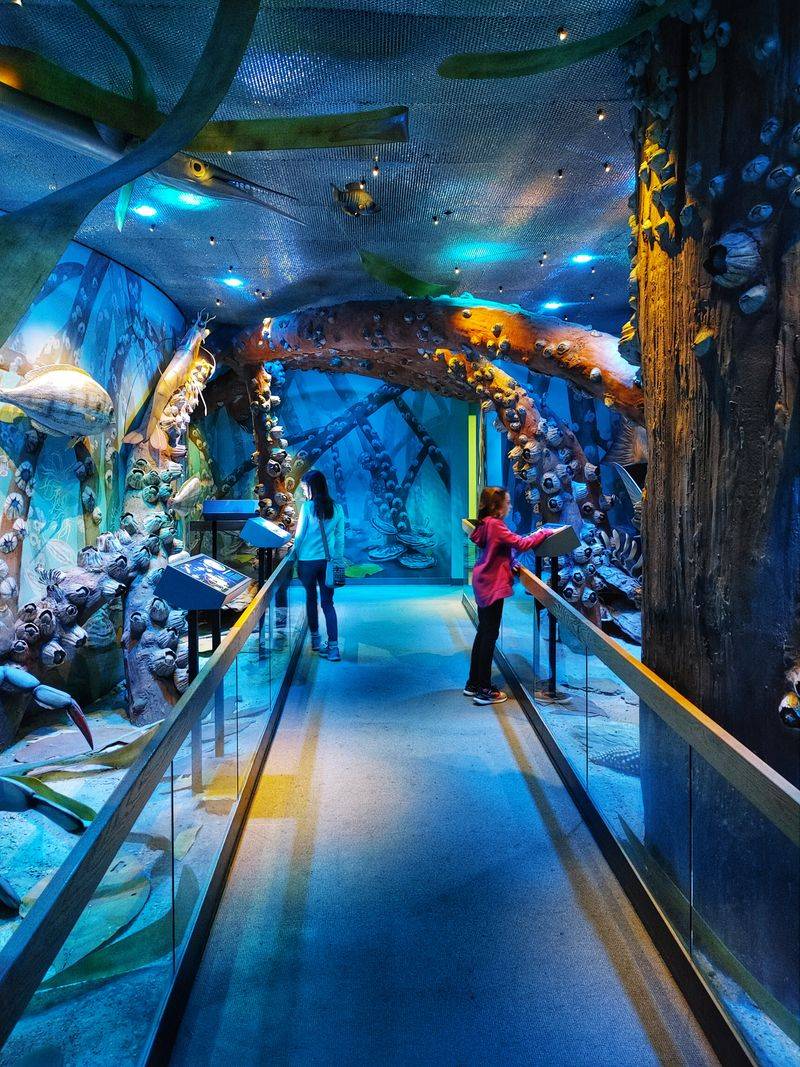
Once you climb back to street level, you still have daylight to spend. Pair the sinkhole with the Florida Museum of Natural History and its Butterfly Rainforest, just a short drive away.
The fossil halls connect beautifully with the geology you just walked through. Butterflies drifting around tropical plants feel like a cheerful echo of the basin’s humidity.
If you want more green, Kanapaha Botanical Gardens offers lakeside loops and giant Asian water lilies in season. For birdy pine flatwoods, try San Felasco Hammock’s trailheads.
Prefer urban strolls? Duck into downtown Gainesville for murals, coffee, and a quick bite near Bo Diddley Plaza.
Time it right and you can do a sunrise rim walk, a midmorning museum visit, and a golden hour return for softer light on the steps. Summer storms add drama, but plan around lightning and closures.
In cooler months, crowds thin and parking gets easier.
Think of Devil’s Millhopper as the anchor for a themed day: geology, biodiversity, and a taste of campus culture. Bring a change of shoes if rain is likely.
Keep your curiosity packed on top. Gainesville rewards those who linger between forest shade and museum glass.