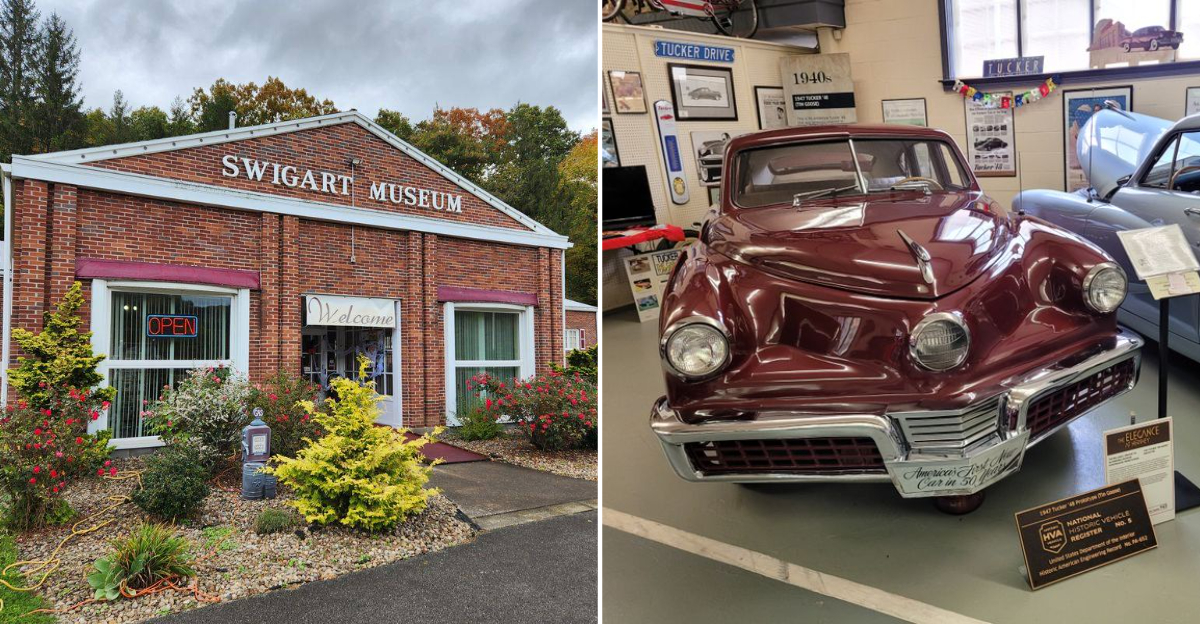
Before highways took over, the future of driving was still up for debate.
The Swigart Antique Auto Museum in Pennsylvania feels like stepping into a moment when steam, gasoline, and electricity were all racing toward tomorrow. Quiet galleries hold vehicles that once promised progress, each one polished, curious, and full of unanswered questions from another century.
Walk slowly and the details pull you in. Brass lamps glow softly, wooden wheels stand tall, and leather straps hint at a time when driving demanded patience and skill.
These cars don’t rush for attention—they reward anyone willing to look closer and linger.
What makes Swigart special is its calm, untouched feel. There are no flashing screens or loud displays, just machines that shaped how people moved through the world.
It’s thoughtful, surprising, and deeply human—a place where history doesn’t shout, it waits.
A brief history and why it matters

The Swigart Antique Auto Museum opened in 1957, but its roots go back to 1920 when W. Emmert Swigart began collecting.
That long arc matters because you are not just seeing cars, you are seeing a personal timeline of American mobility curated with care. The museum’s modest footprint hides serious depth, and the collection rotates to keep visits fresh.
Small means intimate. You move slowly, noticing hand painted scripts on coachwork, early badges, and the way headlights evolved from acetylene to electric.
Docents greet you like neighbors, dropping fascinating asides about coachbuilders, insurance rules, and Pennsylvania road culture.
Because it is the oldest antique auto museum in the country, continuity is the exhibit. You feel how tastes shifted, how engineering solved everyday problems, and how advertising shaped desire.
Local charm softens the scholarship, making complex history approachable.
Affordability matters too. The entrance fee is friendly, events like Cars and Coffee welcome families, and kids find toys to engage their curiosity.
If you want bragging rights without the crowds, this is the museum that rewards attention. You leave with stories worth retelling and a new respect for mechanical art.
Must see cars: Tucker, Herbie, and a DeLorean
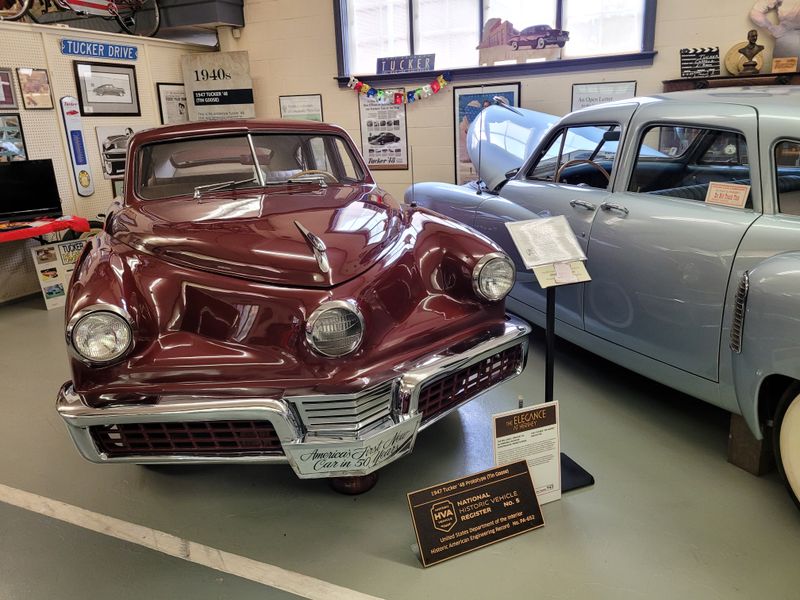
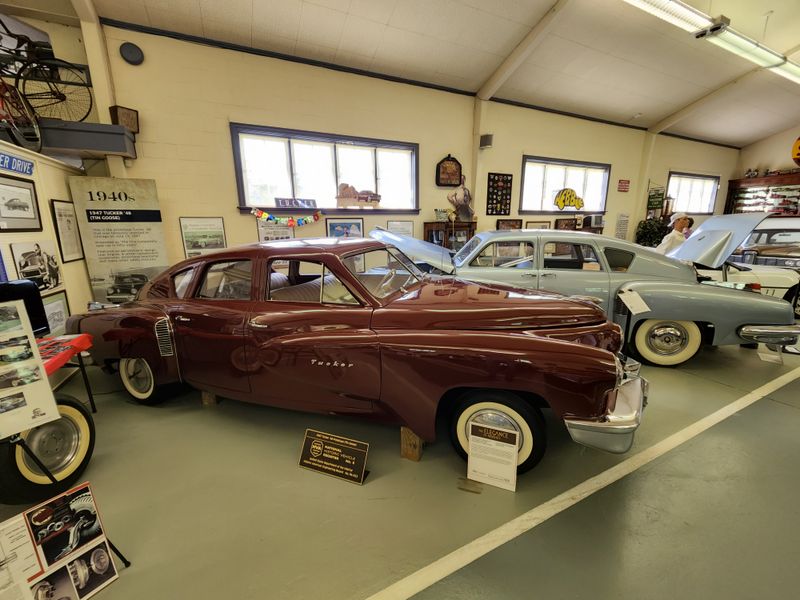
Three headliners pull you across the floor like magnets. The Tucker prototype sits with quiet authority, a rare glimpse into unfulfilled promise and bold innovation.
Across the room, Herbie the Love Bug wears its movie stripes, and the stainless DeLorean gleams like a prop from tomorrow trapped in yesterday.
Each car tells a different chapter of American imagination. Tucker’s center headlamp and safety ideas whisper about what might have been.
Herbie brings levity and shared memory, perfect for kids who recognize the number even if they have not seen the films.
The DeLorean draws time travel jokes, sure, but it also invites real talk about supply chains, stainless panels, and design choices that defined an era. You can study panel gaps, peek inside, and hear docents share behind the scenes details.
What makes these cars special here is proximity. They are not barricaded behind glass, so you appreciate form and scale without a sterile vibe.
You will likely learn a trick fact or two, like the Tucker’s heating routing or Herbie’s film provenance. Together they anchor a lineup that surprises, delights, and deepens your respect for storytelling on wheels.
Early innovations: steam, electric, and brass era elegance
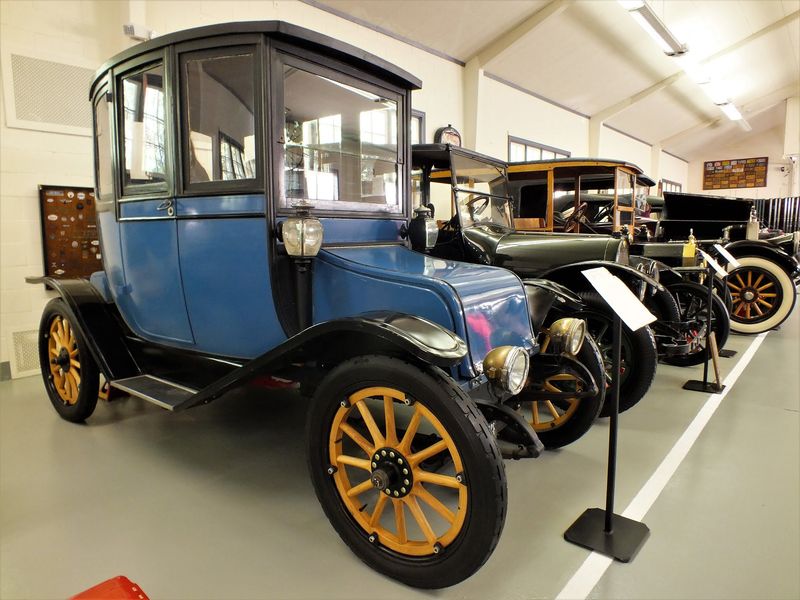
Before muscle cars roared, steam hissed and batteries quietly hummed. At Swigart, early electrics and a Stanley Steamer show how drivers once debated range, refueling, and reliability.
You stand inches from brass lamps, leather belts, wooden wheels, and tiller steering that redefine the word car.
Look for thoughtful placards explaining charging routines from the 1900s and why steam owners carried tools like watchmakers. These machines reward a lingering eye, with polished fittings and coach built craftsmanship that feels almost nautical.
It is a master class in problem solving before standards existed.
The beauty here is not just novelty. You see how innovations traveled forward, from safety glass to lighting and tire technology.
Kids love the horns and quirky controls, while adults connect dots to modern EVs and hybrid thinking.
Docents often share stories about first owners and Pennsylvania roads when mud was a season. That human layer makes the engineering stick.
Photograph the badges and compare fonts, then imagine rolling into town puffing steam or arriving silently under battery power. A decade later, conventions hardened, but this room captures invention while it still felt playful, risky, and profoundly hopeful.
Memorabilia, badges, and the language of style
Swigart’s galleries spill beyond cars into the artifacts that taught America how to want them. A shimmering wall of badges and hood ornaments turns typography and sculpture into a road side gallery.
License plates organized by year tell a practical story about regulation and identity.
Take time with the ornaments. They are tiny manifestos, from art deco speed to mid century optimism.
Each one carries a visual promise that helped sell durability, velocity, or status long before social media existed.
There are toy displays and advertising pieces too, which hook younger visitors and transport older ones. You will catch yourself reading slogans aloud, laughing at prices, and admiring print craft that still feels fresh.
The staff encourages questions, and their answers often connect objects to specific Pennsylvania histories.
This is where design lovers linger. Close up photos reveal casting seams, enamel textures, and the patina of genuine mileage.
The mix feels curated but personal, like a scrapbook turned museum. By the time you step back to the cars, those mascots and plates color how you see every grille and fender.
Style was not decoration, it was the story engine.
Family friendly visits: toys, kids, and gentle pacing
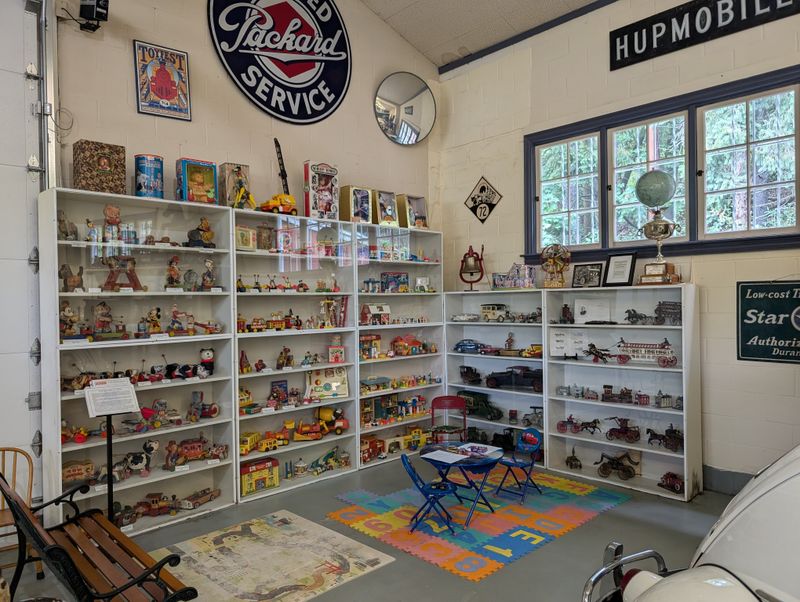
If you are planning a family outing, this museum is a rare win for mixed ages. It is compact enough to avoid museum fatigue, yet packed with variety.
Kids find a wall of collector toys, bicycles, and that photogenic fire engine outside for memorable pictures.
Docents are patient and upbeat, folding kids’ questions into real history without talking down. They keep the look only rule friendly and clear.
You can wander at your own pace, choosing quick hits or deeper dives depending on attention spans.
Parents will appreciate the price point and the way exhibits stay close together. Strollers navigate easily, and there are plenty of spots to pause and regroup.
The atmosphere feels community built, which lowers the pressure that larger museums sometimes create.
Pro tip: visit during a summer event or Saturday Cars and Coffee to add outdoor action. The mix of live engines and indoor artifacts makes the day feel complete.
Snap photos by Herbie, play spot the badge, and ask for the Tucker story. You will leave with kids buzzing about favorites and adults quietly satisfied that learning felt like play.
Events, tours, and making the most of your visit
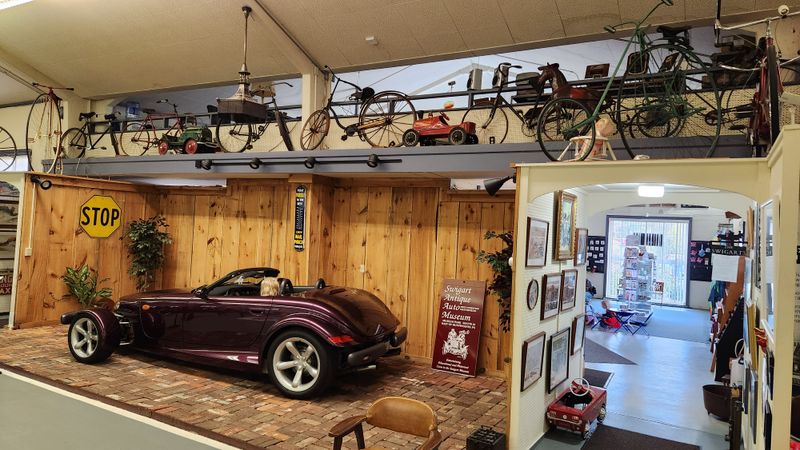
Swigart shines when the parking lot wakes up. Cars and Coffee mornings and seasonal shows bring local enthusiasts alongside the museum’s rarities.
You get conversations that textbooks cannot offer, plus photo ops that feel casual and real.
Inside, guided tours elevate the experience. Knowledgeable docents weave history, humor, and technical tidbits into smooth storytelling.
Ask about Jay Leno connections, provenance details, and the rotating schedule that keeps returning visits worthwhile.
Plan like a pro. Check the website for hours, special events, and any closures.
Arrive early for easier parking and time to linger over placards without crowd pressure.
Bring curiosity and a few questions about your favorite era. Staff love specifics and will point you to hidden gems, like early electrics or obscure coachbuilders.
With a modest fee, you get high value per minute, plus a friendly vibe that invites return trips. Combine with Raystown Lake or downtown Huntingdon for a full day.
The result is a getaway that feels personal, affordable, and deeply memorable.
Practical guide: location, hours, and tips
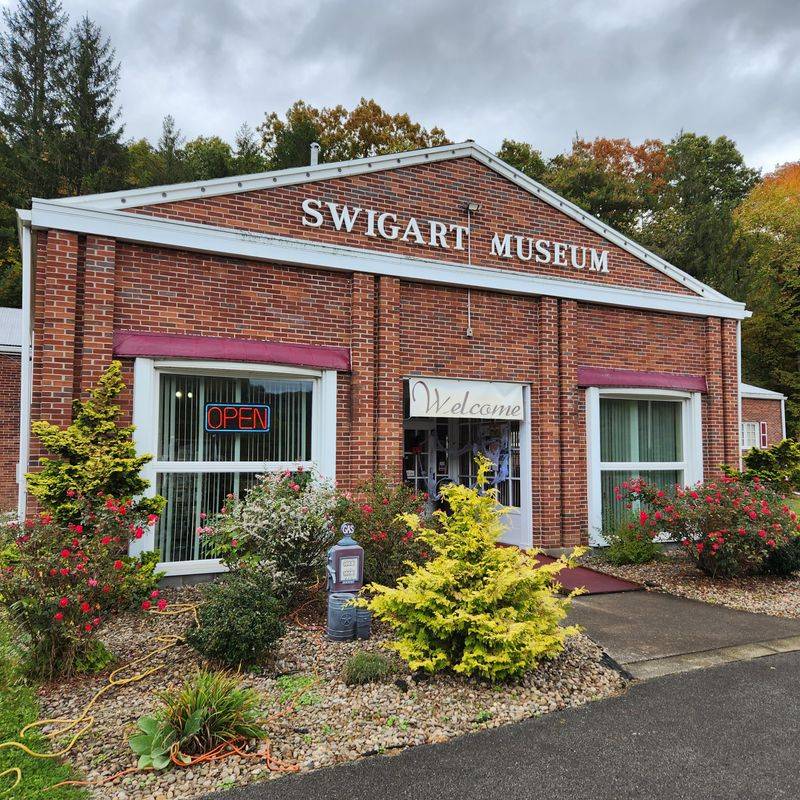
You will find the Swigart Antique Auto Museum at 12031 William Penn Hwy, Huntingdon, PA, coordinates 40.4442718, -77.946157. It is an easy detour off US routes when heading toward Raystown Lake.
Call +1 814-643-0885 or check swigartmuseum.com for current hours and seasonal events.
The collection rotates, so do not stress if a favorite era seems light. What is there is thoughtfully presented, with clear placards and staff ready to fill gaps.
Expect a small footprint and a friendly entrance fee that makes spontaneous visits painless.
Photography is welcome, respect is mandatory. Displays can feel tight, so step carefully and watch little elbows near fenders.
Plan 60 to 90 minutes for a relaxed loop, more if a tour or event is happening.
Pair your visit with coffee in Huntingdon or a lakeside picnic. Bring questions about early electrics, Tuckers, or Pennsylvania car heritage to spark great conversations.
If you like quiet museums that reward curiosity, this is your place. Leave time for the gift shop, then promise yourself a return trip next season to see what rotates in.
Why this hidden gem endures
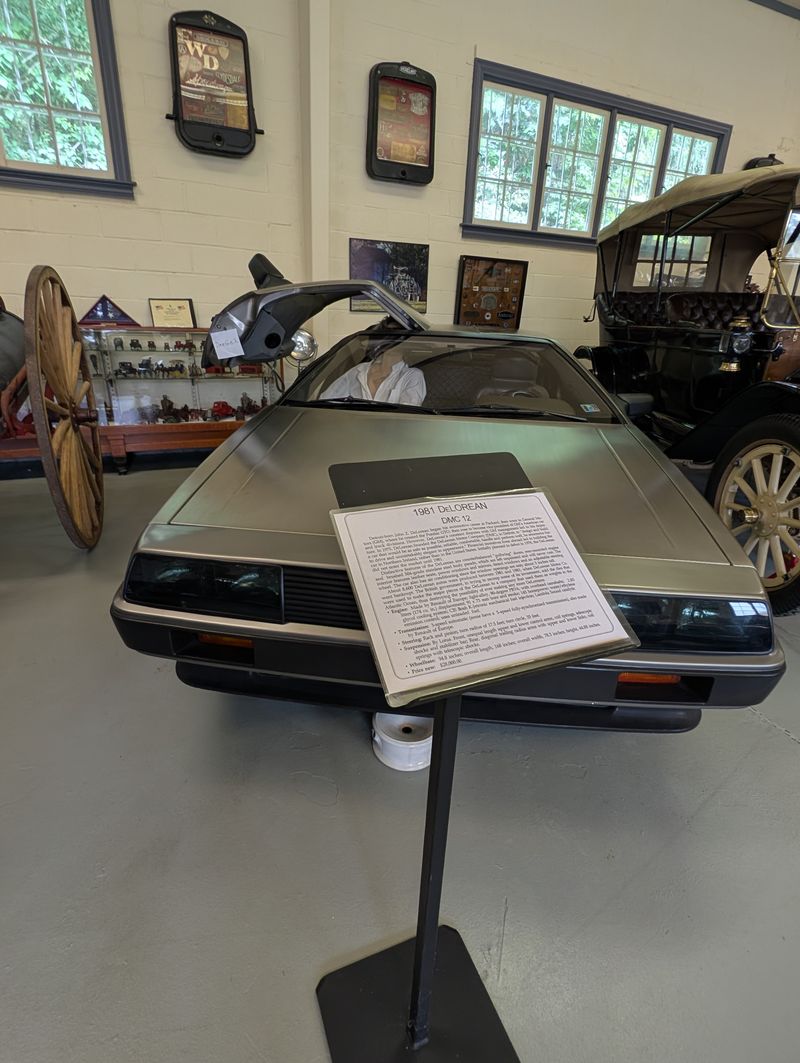
The Swigart Antique Auto Museum endures because it feels personal and lived in. You sense a collector’s hand shaping a story that spans steam, electric, and dream cars that barely made production.
That intimacy creates trust, which makes every fact and anecdote land with warmth.
It is not massive, and that is the point. You can see everything without rushing, then circle back to favorites like the Tucker or Herbie for a second look.
The result is a museum that feels preserved from another era yet still curious about the future.
Reviews praise the staff for kindness and depth of knowledge. That human touch turns a good collection into a great visit.
Events outside and a rotating mix inside keep the experience dynamic without losing soul.
If you are exhausted by overproduced attractions, this place is a palate cleanser. Affordable, welcoming, and quietly world class in spots, it rewards anyone who loves craft and story.
Bring a friend who has never met a brass lamp up close and watch their face change. You will drive away feeling lighter, carrying a pocketful of new trivia and genuine wonder.
Preservation philosophy: originality, patina, and careful restraint
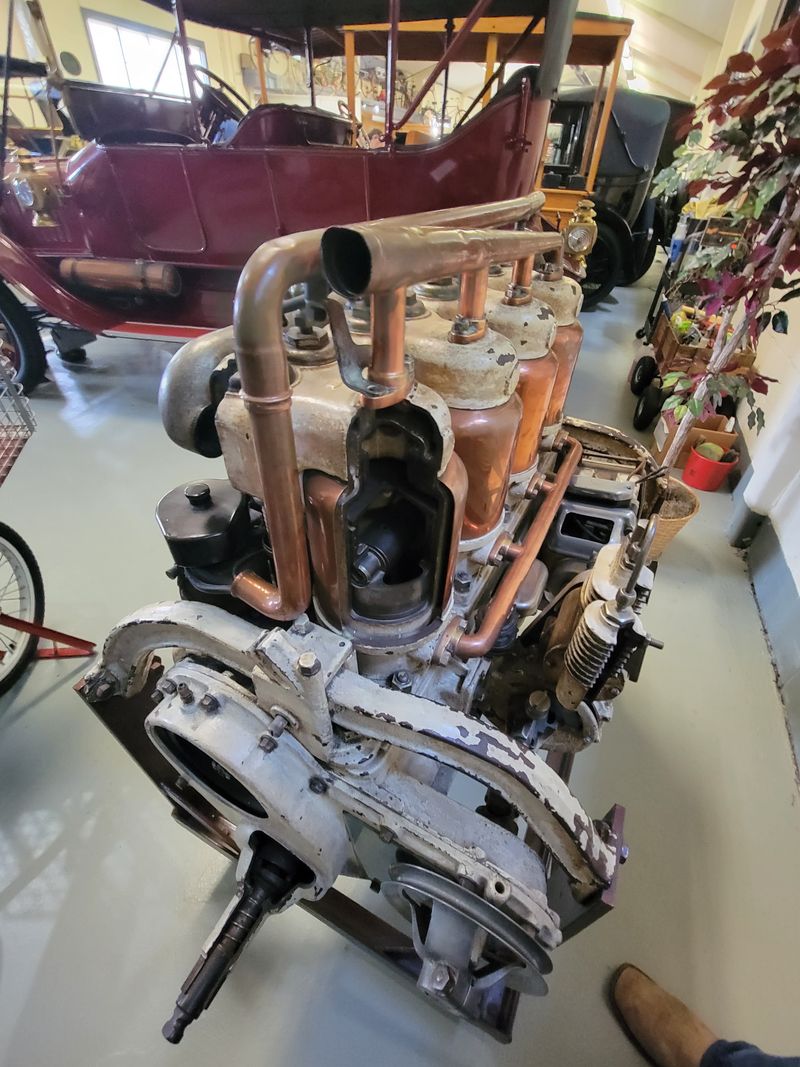
Swigart’s preservation choices feel intentional rather than trendy, and you notice it in the quiet surfaces. Not every vehicle is over-polished.
Some wear their decades gently, allowing brass to mellow and paint to whisper instead of shout. That restraint matters, because originality tells truer stories than perfection can.
You learn to read patina like handwriting.
It also respects scarce materials and period-correct fixes. When a car retains its factory upholstery, that fabric carries voices of previous trips and owners.
You are not just seeing specifications. You are meeting the artifact on its own terms.
The museum’s team leans toward conservation, not cosmetic reinvention.
That approach encourages slower looking. You start catching seat stitching, tool marks, and supplier tags tucked in shadowed corners.
It rewards curiosity with small, profound reveals. Even the lighting feels purposeful, soft enough to protect, bright enough to explain.
Nothing screams for attention, yet everything invites it.
By the time you reach the exit, your definition of beauty has shifted. You admire honest wear like a good book’s creased spine.
The museum models a patient ethic: fix only what time breaks, and let history do the rest. That trust builds authenticity and affection.
Design details you should not miss: dashboards, badges, and trim
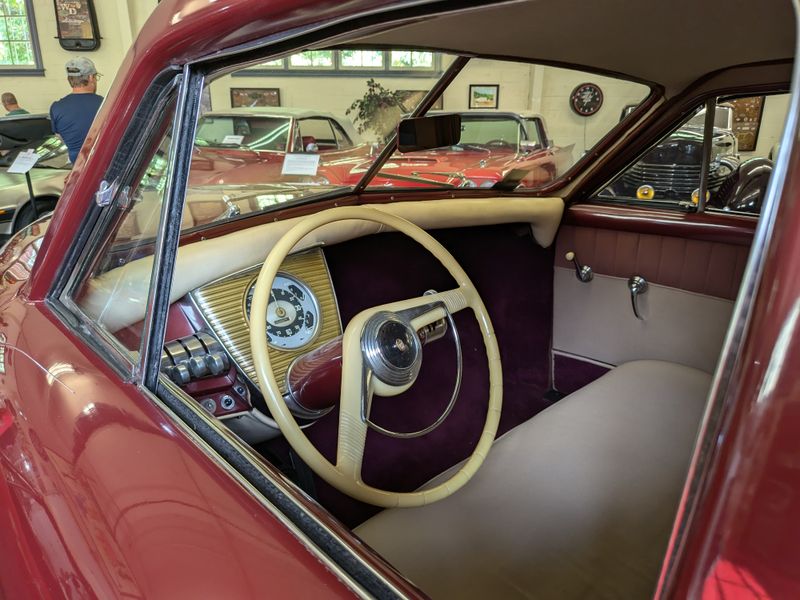
Slow down at the dashboards. The typography on gauges, the sweep of a needle, and the warmth of bakelite knobs can tell you what engineers prioritized.
Some clusters read like scientific instruments, others like jewelry. You begin reading identity through touch points.
Even switch feel communicates intent and era.
Badges deserve that same attention. Look at enamel layers, rivet styles, and painterly flourishes in tiny spaces.
Logos evolve like regional dialects, shifting with suppliers and trends. You start recognizing families of shapes.
Trim lines echo architecture from their decades, from streamlined optimism to squared pragmatism.
Materials matter. Wood veneers age into soft rivers of sheen, while chrome gathers tiny constellations of light.
Upholstery stitching patterns quietly telegraph price points and brand confidence. You will find thoughtful compromises in less costly models.
That humility can be charming and instructive.
Photograph details, not just whole cars. Those fragments carry the museum’s true rhythm home.
When you remember a steering wheel texture or a speedometer font, you remember people designing for hands and eyes. The Swigart collection rewards that intimacy, reminding you that design lives where attention lingers longest.