Step inside, and suddenly the keys feel smaller, the sun warmer, and the stories louder.
The Ernest Hemingway Home and Museum in Key West isn’t just a house. It’s a pulse of history, a place where typewriters clicked, cats prowled, and words were born that still echo today.
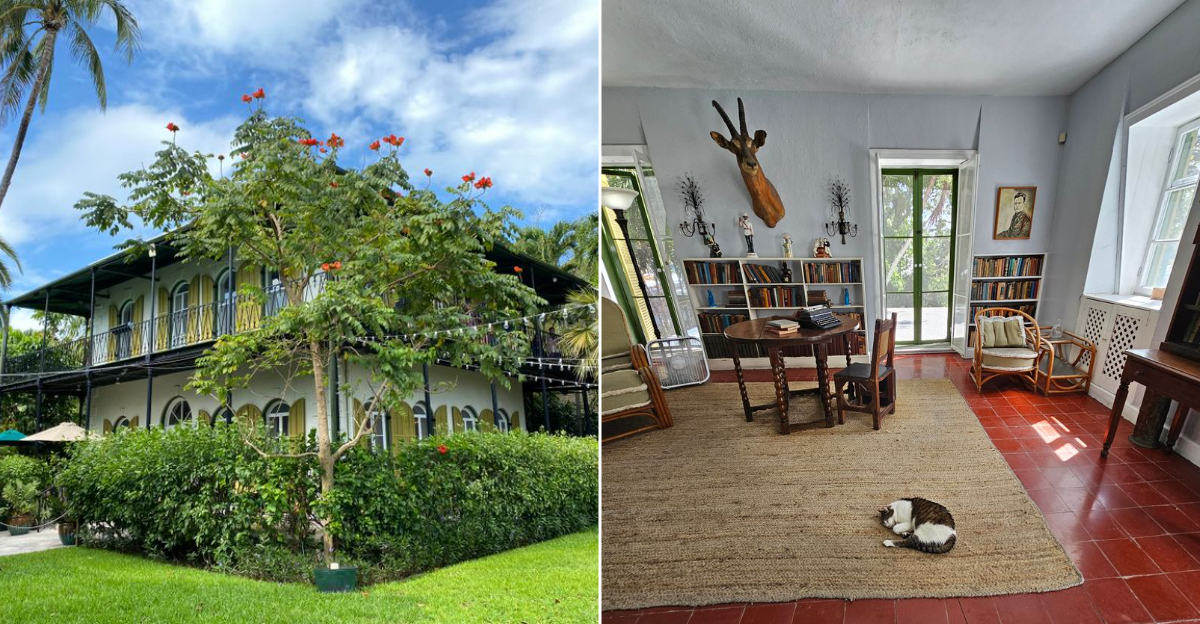
Every room holds a whisper of adventure, a shadow of Hemingway himself, and the sense that you’ve stumbled into something almost sacred.
Gardens bloom with tropical color, and six-toed cats roam freely, guardians of a legacy that blends the wild with the domestic. From the sunlit study to the brick courtyards, every corner invites curiosity, photos, and the occasional quiet sigh of wonder.
Ten must-see highlights guide you through life, work, and legend. You’ll feel the ocean breeze, imagine a rum in hand, and walk away thinking a bit differently about stories, life, and the man who wrote them in a house that still breathes his world.
Arrival At 907 Whitehead Street: First Impressions And Practical Tips
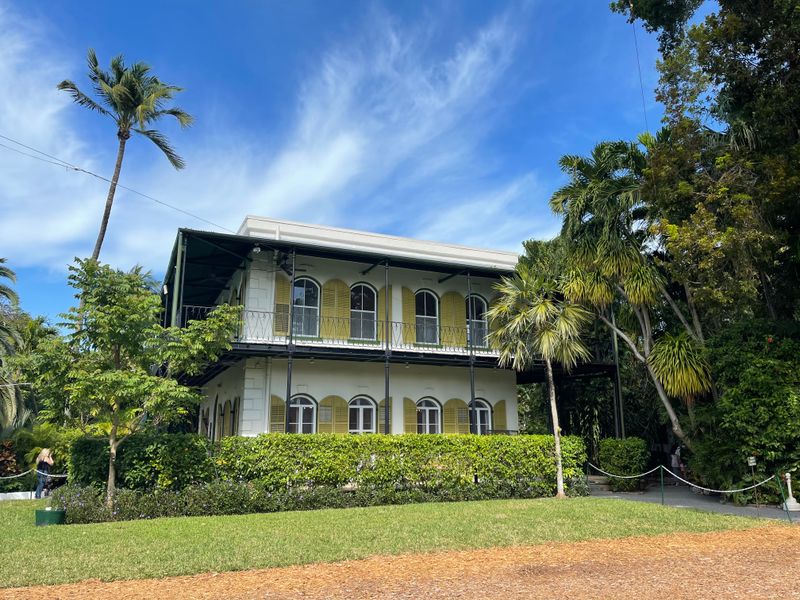
Step off Whitehead Street and the island noise drops to a hush. Palms frame a sunlit facade, shutters the color of sea glass, and the gate swings you into a slower tempo.
The smell of warm limestone and damp garden soil says you are in Old Town, where mornings still feel like promise. Grab your ticket, skim the posted tour times, and breathe before the house tells its stories.
Come early and you beat the cruise rush and midday heat. The museum runs 9 AM to 5 PM daily, so a 9 AM arrival gets forgiving light and space to linger.
Street parking is scarce, so walk, bike, or rideshare if you can. Admission is worth it, especially since a guided tour is included and brings the rooms into focus.
Respect the rules: no flash indoors, no picking up cats, and mind roped-off spaces. You will be standing outside at times, so water and a hat help.
The grounds are compact yet layered, with signs that reward unhurried reading. Expect to spend 60 to 90 minutes without feeling rushed.
From the garden edge, the house looks confident rather than grand. It is a working home, not a shrine.
That simplicity cues everything you are about to notice.
Guided Tour Or Self-Guided: How To See More Than Rooms
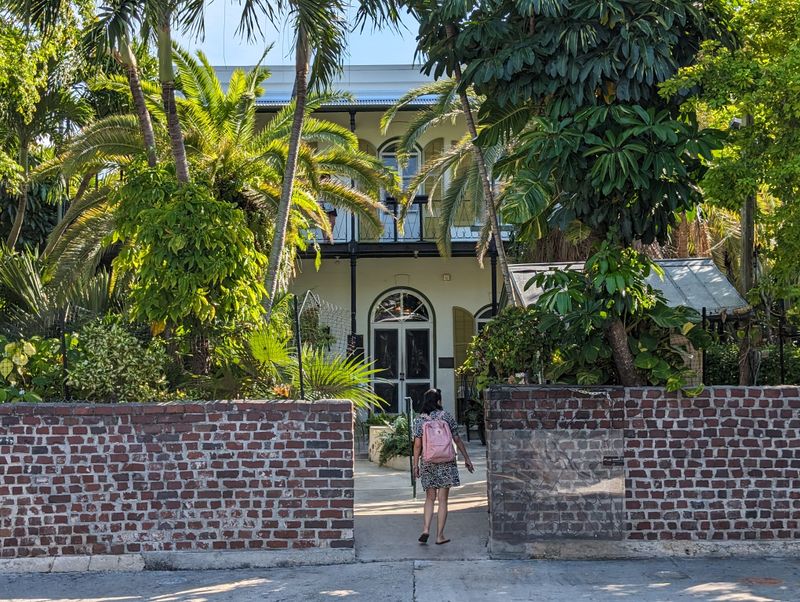
The best way to unlock this house is to let a guide set the tempo. Tours cycle frequently and cost nothing beyond admission, so step in when a group gathers under the porch.
A good guide separates myth from habit and gives the rooms their mornings back. You will hear about routine, revisions, and how a place can teach a writer restraint.
Prefer roaming solo. The signage is clear, quotations concise, and corridors easy to navigate.
You can linger at the photographs, count the extra toes in the shade, and loop back to a detail you missed. Moving at your pace is a luxury, especially if you want to time your photos to the slant of light.
Both approaches complement each other. Join a tour first, then do a slow lap alone afterward.
Context sharpens your eye, and wandering lets your questions settle. That combination turns a pretty house into a working map of a life.
Either way, ask staff about current preservation work or special talks. They know the bones and the gossip.
When a guide laughs about the penny in the pool deck, listen closely. In that laugh is the edge between legend and ledger.
The Writing Studio: A Morning Ritual In Wood And Light
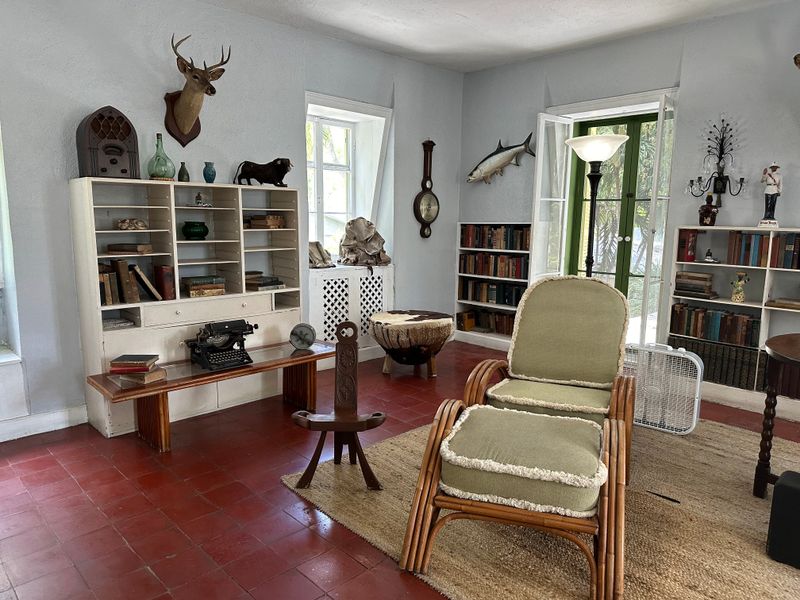
Up a short set of steps above the former carriage house, the studio waits with its own clean light. A typewriter anchors the desk like a small anvil.
Posters, books, and a few measured objects steady the room. You can almost hear the early clack of keys before the island called him out into heat and chatter.
Guides will explain where drafts became sentences. They point to routines that sound simple and feel demanding.
Show up early, work hard, stop while there is still something to say. The studio makes discipline visible without bragging about it.
Take a quiet look at the chair, the paper, the way the window frames the leaves. Writers love relics, but tools are only tools until a habit uses them.
That is the lesson here, and it lands softly. The room’s distance from the main house kept mornings honest.
Photography is allowed, but step gently. Others are listening for their own click of recognition.
When you leave, keep the cadence for a block or two. If you feel ready to start something later, that is the studio working on you.
The Six-Toed Cats: Polydactyl Heirs With Island Attitude
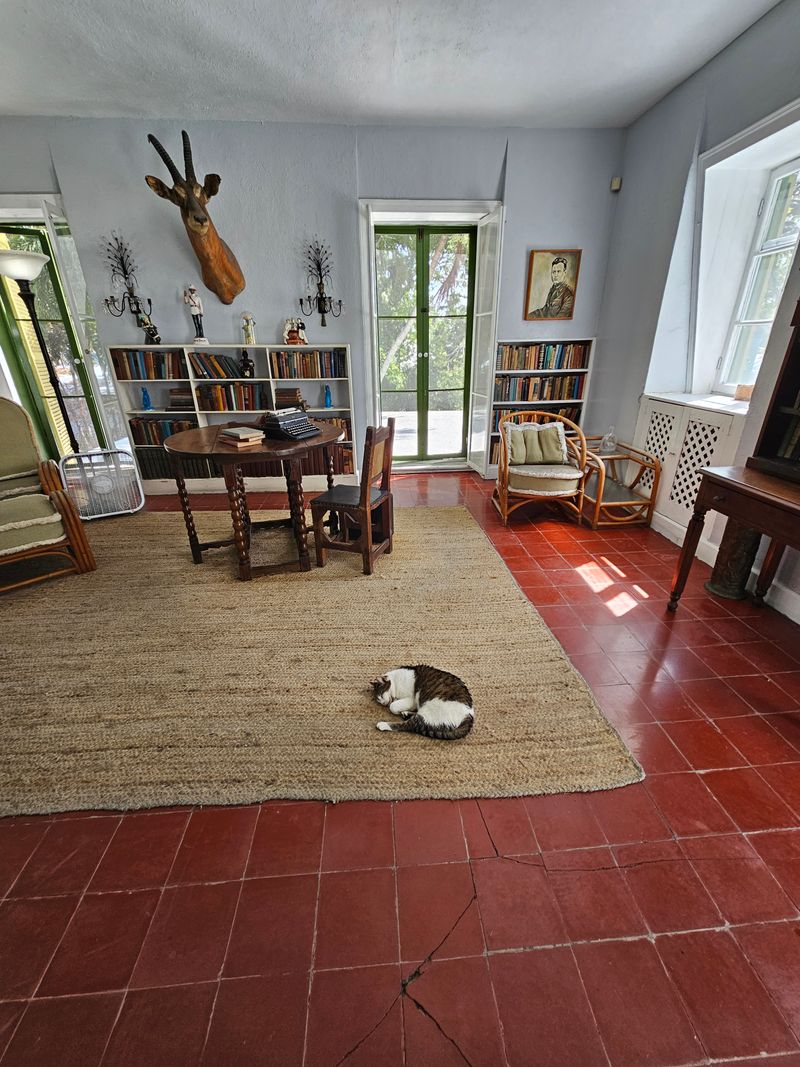
They appear first as shadows under hibiscus, then as small sovereigns crossing coral paths. The polydactyl cats are not an attraction pasted onto history.
They are the house’s current residents, confident and gently indifferent. Some will blink approval; others will keep their council on a porch rail.
Staff will tell you their names and lineages, and you will believe them. The cats carry paperwork and personalities.
Please do not pick them up. A friendly hand offered near the shoulder usually earns a slow lean, and that is enough.
You may catch the faint snap of ammonia in warm corners. It is a real place with real animals and careful caretakers who clean constantly.
If you have allergies, plan medication, step into breezier spots, and you will likely be fine. The cats move where they please and remind everyone to adapt.
Photograph the paws if you want proof of extra toes. Then pocket the camera and watch their routes between shade and tile.
They stitch the house to the garden, the past to the present. Leave them a clear path, and they will leave you a better story.
Architecture And Interiors: A House Built For Clarity
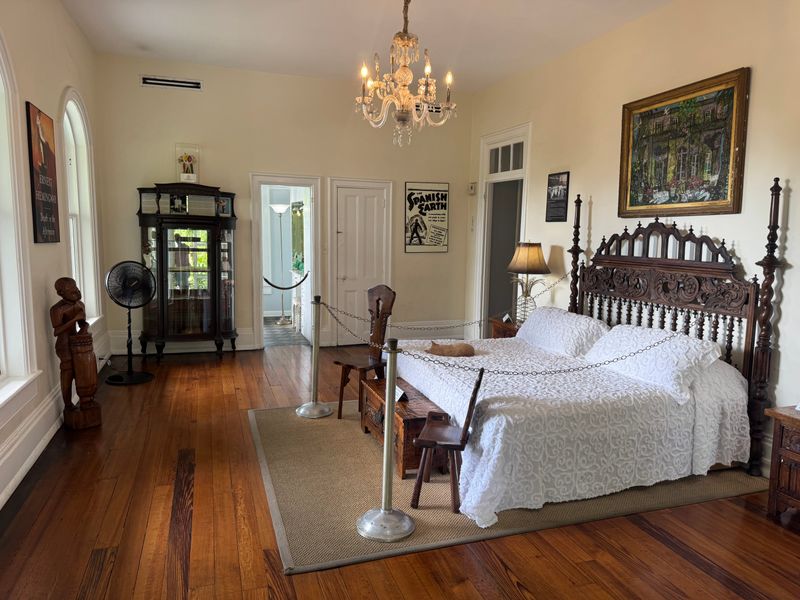
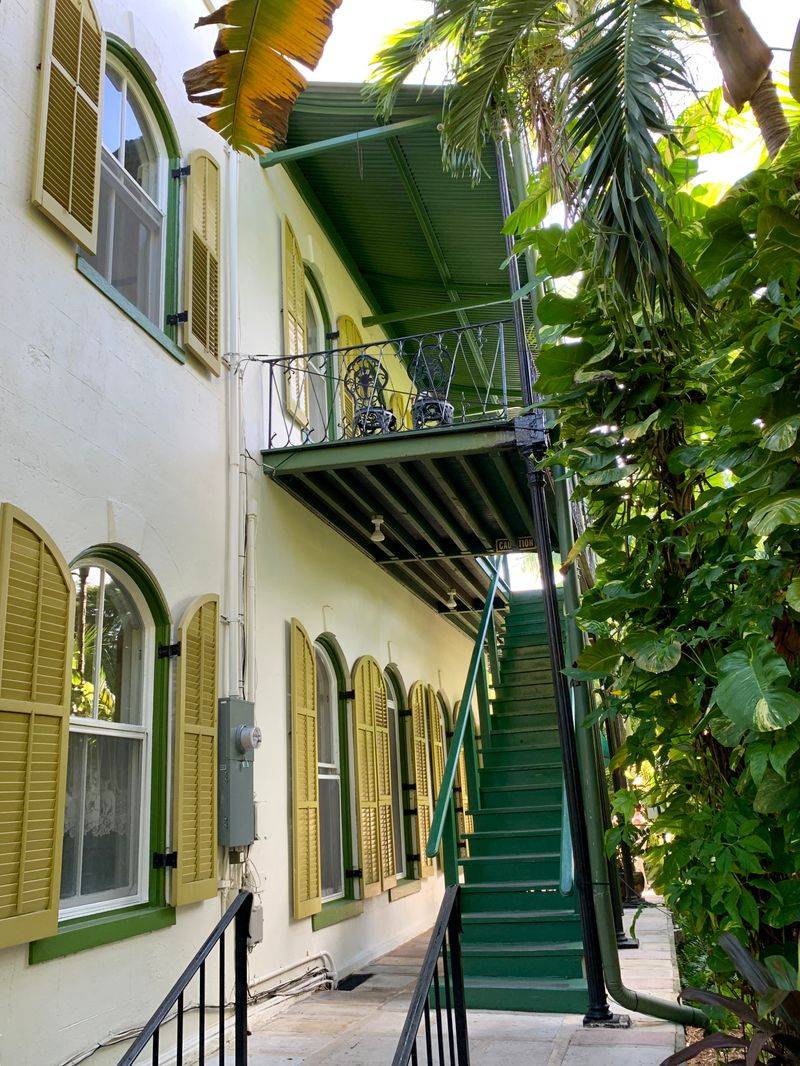
The rooms are spare and sure of themselves. Hardwood floors, tall windows, shutters trimmed in Key West green.
Nothing crowds you, and nothing performs. This is a Caribbean-influenced house tuned to airflow and morning work, built slightly above coral rock to keep dry.
Guides point out original furnishings, photographs, and small stubborn objects that survived storms and decades. You may notice how each room holds its center without fuss.
Tables feel placed for use, not display. The effect is quietly persuasive: form following function until function becomes grace.
Stand by a window and notice the cross breeze. You understand why early hours mattered.
Light arrives clean and moves across the boards like a metronome. The architecture sets the pace, not the other way around.
Take your time with the stairway, the ironwork, and the rhythm of doorways into garden air. Interiors here are not a museum tableau.
They are a working grammar that shaped days. When you leave a room, you carry its sentence structure with you.
The Legendary Pool And The Penny Story
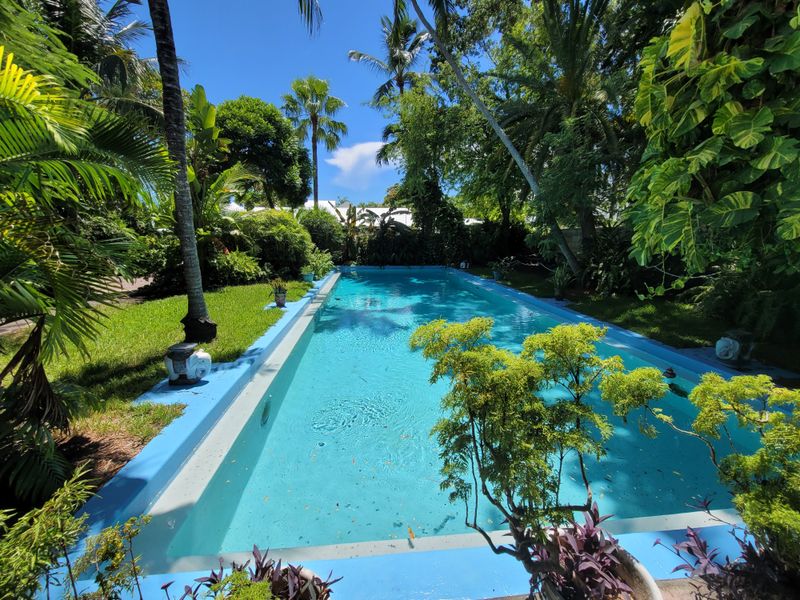
Round the corner and the pool reveals itself like a punchline with perfect timing. In the 1930s it was extravagant for Key West, carved into coral and wrapped in bright stone.
The water throws back the sky, and the garden leans in as if to listen. This is where legend and ledger met, and tempers probably flared.
You will hear the tale of the upside-down penny pressed into the deck. His last cent, he joked, sunk into the project.
It is funny, petty, and honest all at once. Money, love, and infrastructure rarely balance neatly.
Stand at the edge and frame the shot without stepping on the copper witness. The scale surprises people used to small island yards.
It is not ostentatious; it is decisive. A pool like this insists on afternoons and on friends.
Let your guide fill in the era: the work, the boxing matches, the messy pride of building something permanent. Then notice the cats patrolling the perimeter like lifeguards on their own break.
The penny glints, reminding you that art and life draw from the same heavy pocket. Spend carefully, but spend.
Gardens And Grounds: Tropical Quiet Between Sentences
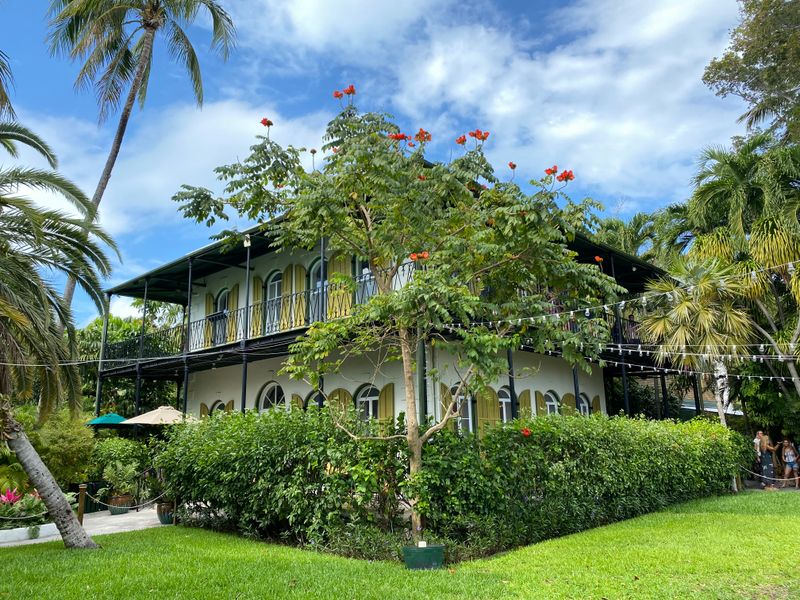
The gardens feel composed like paragraphs. Pathways of coral stone lead you from shade to sun to water, then back again.
Koi slide under lily pads while cats claim benches like chapter markers. The air is warm with leaf breath and a hint of salt drifting over the island.
Look for the quiet corners where you can eavesdrop on the house. From there, shutters click softly and you hear tour laughter from a respectful distance.
The grounds fold sound rather than echo it. That softness lets stories settle into the soil.
Plantings are tropical and forgiving: palms, bougainvillea, hibiscus, bananas. Everything leans toward abundance without clutter.
It is a curated wildness that suits Key West and suits a writer who liked edges clean and stakes high. Even the walkways edit your route with gentle purpose.
Take a slow loop after your tour and you will notice details that felt invisible before. A cat prints the path ahead like punctuation.
The garden is not a backdrop. It is the connective tissue between morning work and afternoon release.
Artifacts, Photographs, And The Texture Of A Life
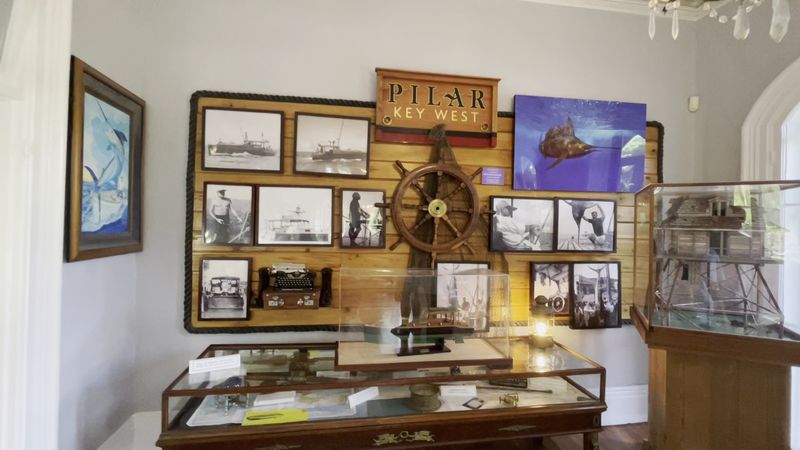
Inside the rooms and cases are the crumbs that lead you back to lived days. Photographs with a touch of salt in their paper, letters that still carry the urgency of errands and drafts.
A pair of glasses, a jacket, a stubborn ashtray that refused to vanish. None of it screams importance, which is why it matters.
Guides know what to point out and what to let you find. You learn to read the margins: a note in the corner, a date scribbled faster than the hand could think.
The objects settle into a chorus rather than a solo. They let you imagine the hours without pretending to be the hours.
Pause longer than you think you should. The longer you look, the more the room stops performing and starts helping.
This is the difference between memorabilia and memory: one is displayed, the other is activated by your attention.
Photograph sparingly and then step back to see the arrangement as a whole. The texture is the story here.
Grain of wood, gloss of paper, burn of brass. If the house feels close, it is because the details refuse distance.
Logistics: Hours, Tickets, Accessibility, And Etiquette
The museum is open daily from 9 AM to 5 PM, with the last tickets typically sold near closing. Expect crowds midday, especially when ships are in port.
Admission includes optional guided tours, which are worth waiting a cycle for. Buy at the gate, then drift the garden paths until your group is called.
Street parking is limited, so plan to walk or bike from Old Town. Strollers fit outside easily but mind tight indoor corners.
The stairs are a bit steep, railings firm, and indoor airflow good with shutters breathing. Wear light clothing, sunscreen, and shoes that like coral paths.
Etiquette is simple: no flash inside, do not pick up cats, and respect cordoned spaces. Photography is welcome if you keep traffic moving.
Give the staff your questions; they have the timelines memorized. A quick thanks at the end goes a long way.
Budget 60 to 90 minutes for a balanced visit. Morning is best for light and quiet.
If a room feels busy, step into the garden and circle back. The house rewards patience more than hustle.
After The Visit: Reading, Walking, And Keeping The Rhythm
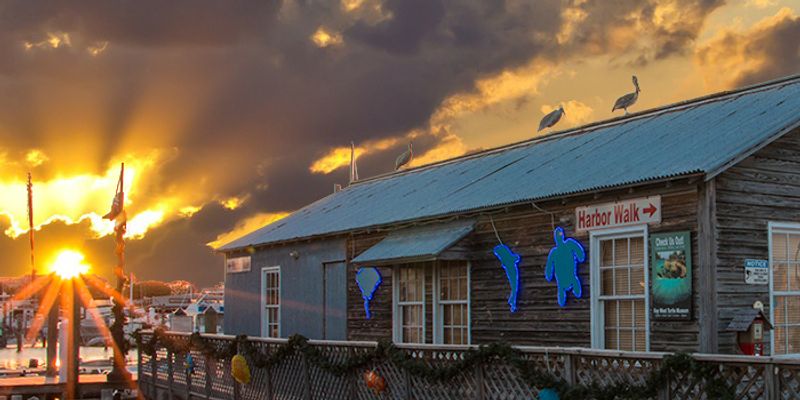
When you step back onto Whitehead Street, the day feels newly arranged. The house has taught you a tempo: work first, then the island.
Keep it. Walk toward Duval, find lunch, and let the light finish what the studio started.
If you want homework, choose one book and read it slowly this week. Let the clean sentences echo the clean rooms.
Then notice how your own mornings begin to sharpen. A museum that changes the way you start a day is doing its job.
Back in Old Town, wander past the lighthouse, cut down a side street, watch the water throw back sun. Key West shrinks problems into the size of a pocket notebook.
Carry one and use it. Boldness grows from small hourly promises.
Tell someone about the penny, the shutters, or the cat that ignored you with dignity. Those details hold better than dates alone.
When you return someday, the house will still be working. Precision like that does not fade.