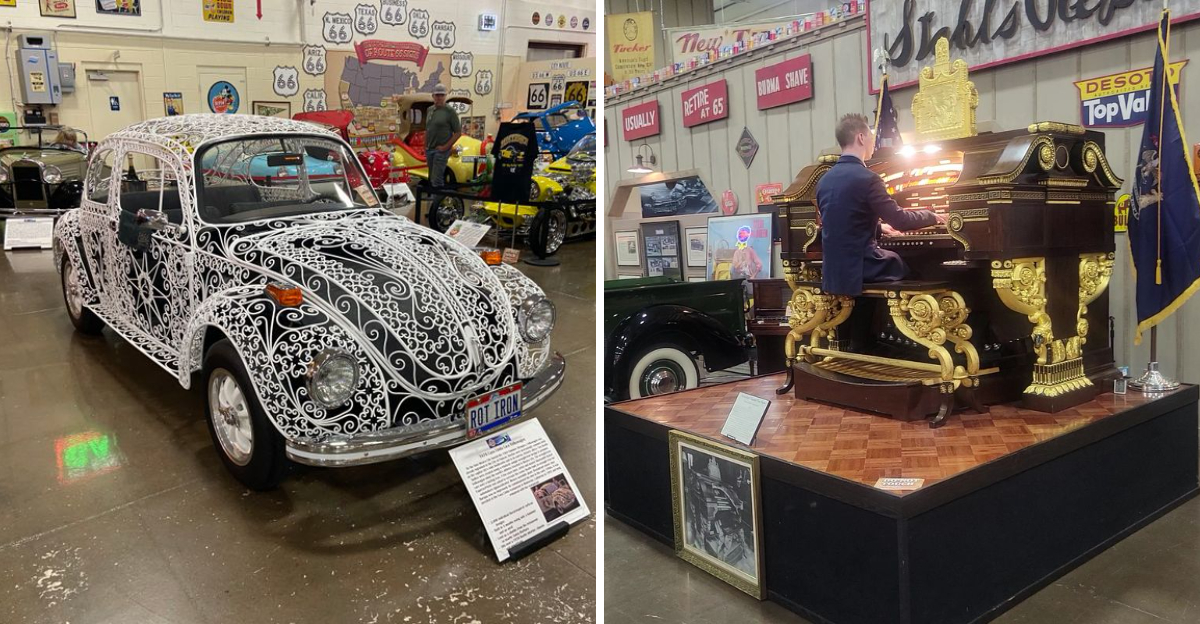
This place doesn’t whisper history — it revs it, lights it up, and lets it sing.
In New Baltimore, Michigan, a 45,000-square-foot warehouse hides one of the Midwest’s boldest tributes to the car culture that shaped America. Stahls Motors and Music Experience packs decades of horsepower, chrome, and pop sound into a single, unforgettable stop.
Classic cars line the floor like celebrities, from muscle-era icons to rare European machines. Around them: glowing neon signs, vintage jukeboxes, and music gear that once ruled dance halls and drive-ins.
What makes it hit harder? The collection rotates constantly, admission is free, and every visit feels slightly different.
One roof. A lot of stories. Zero boredom.
The Grand Entry: Mechanical Music Comes Alive
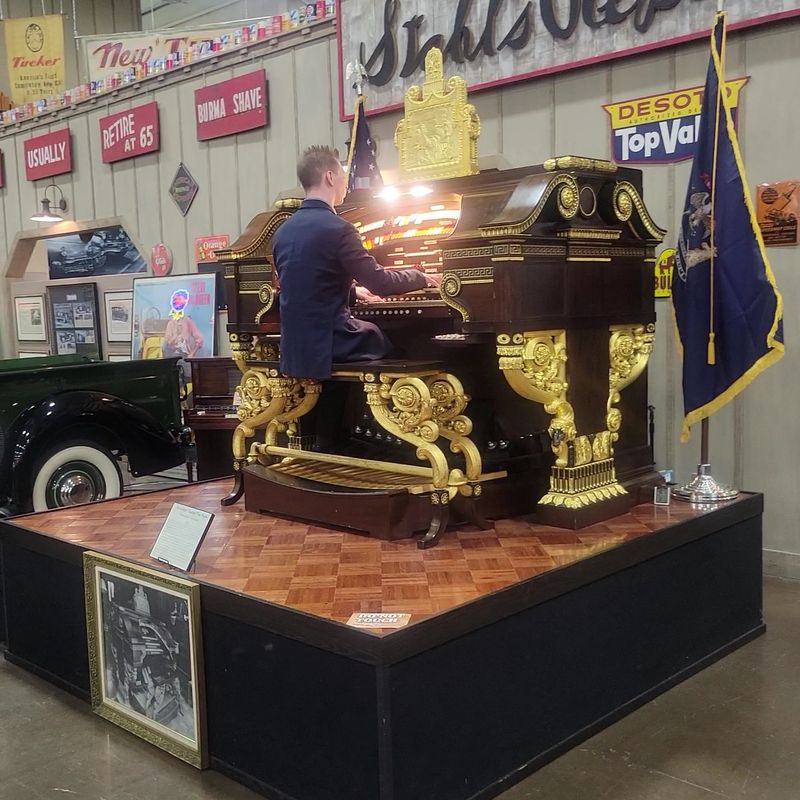
Walk through the doors and you are greeted by music first, not engines. Towering orchestrions, calliopes, and player pianos wake the space with lively tunes, setting the tone for everything that follows.
Volunteers cue the machines and explain how reels, bellows, and gears create spine-tingling harmonies.
This is where you realize the museum is as much about feeling as it is about seeing. The woodwork gleams, brass fittings catch the light, and the room vibrates with mechanical rhythm.
You do not just watch history here, you hear it breathe.
Docents happily field questions and often spark impromptu demonstrations, so hang back a minute to catch a favorite melody. Kids lean in close to spot hidden drums and violins tucked inside cabinets.
Start your visit here and you will understand the magic that connects cars and music.
Early Motoring Icons: Brass Era to Roaring Twenties
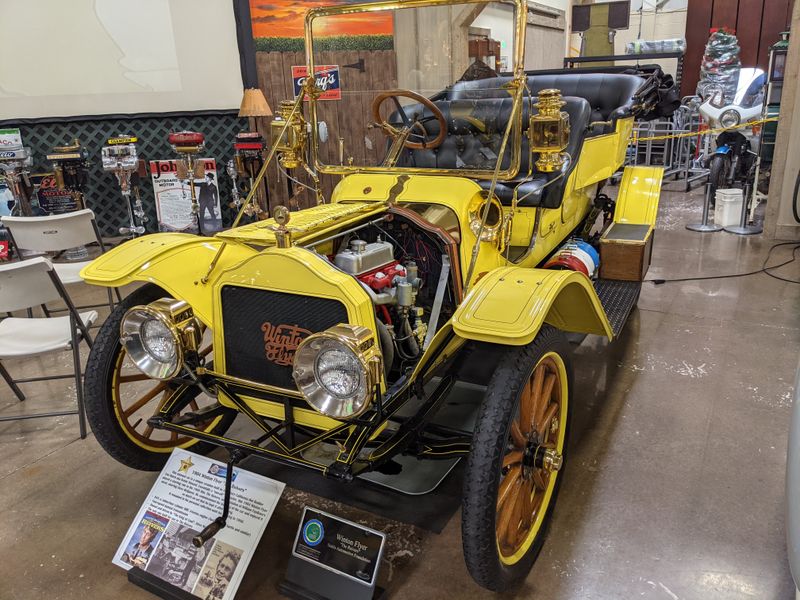
Just beyond the music room, a sweep of Brass Era beauties tells the story of the automobile’s earliest ambitions. Lanterns, leather straps, and hand-crank starters are not props here, they are the real deal.
You can compare delicate tiller steering with early steering wheels and feel how quickly technology leapt forward.
Interpretive placards add crisp context while volunteers color in the narrative with human stories. They will point to clever carburetors, friction-drive experiments, and coachwork that rivaled fine furniture.
The gleam is mesmerizing, but it is the ingenuity that sticks.
As you move into the 1920s, bodies drop lower, fenders smooth out, and the cars start to look familiar. You will notice how design becomes bolder as roads improve and confidence grows.
This lineup makes you appreciate that every modern daily driver began with brave, brass-bolted steps.
Star Power: The 1948 Tucker Torpedo
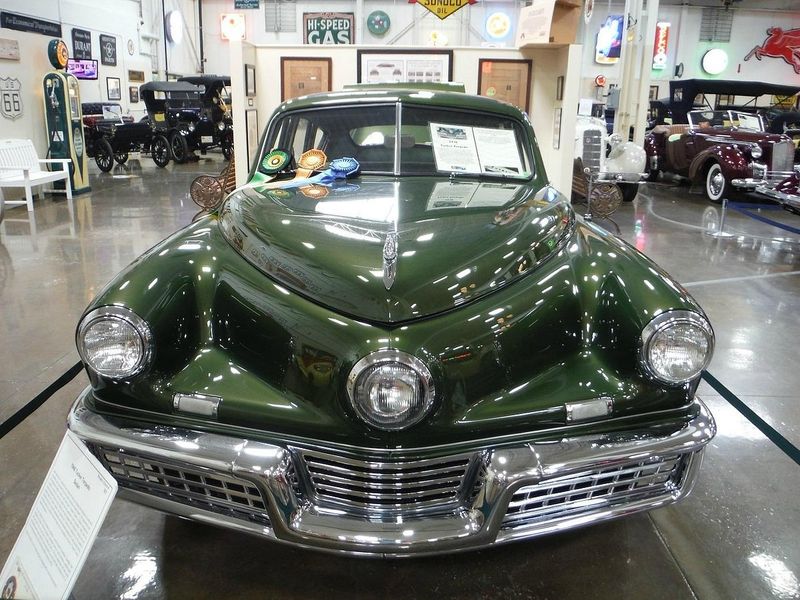
When the Tucker Torpedo comes into view, expect a little hush. That cyclops headlight swivels with the steering, a wild innovation that still feels fresh.
Stand at the quarter angle and the fastback shape whispers about a future America nearly had.
Docents love sharing the Tucker story, from safety-first ideas to production drama. You will hear about seatbelts proposed long before they were standard and a rear-mounted engine that dared to be different.
The car looks ready to rocket, and it almost did, if only the stars had aligned.
Photographers gravitate to the details, like the crisp badging and that confident stance. Take your time circling it, because the beauty lives in the subtleties of its proportions.
You leave with a deeper respect for dreamers who push past what the market says is possible.
Mechanical Music Marvels: Orchestrions and Player Pianos
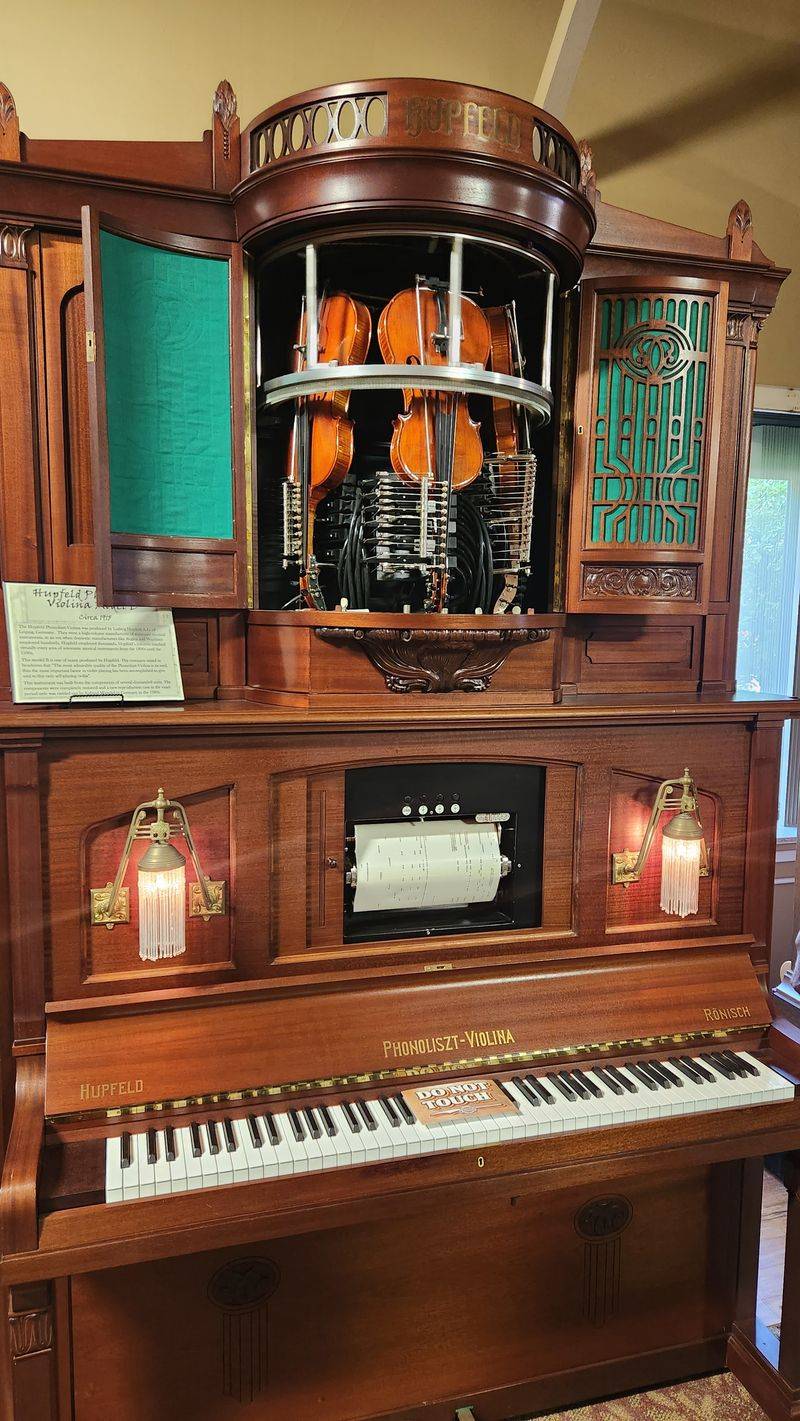
If you think these cabinets merely decorate, wait until they thunder to life. Massive orchestrions pack drums, pipes, cymbals, and sometimes violins into a single wooden giant.
Your chest hums as gears, bellows, and pinned rolls spin up a full-room performance.
Volunteers explain how these machines traveled from dance halls to grand homes, playing everything from waltzes to ragtime. You will catch modern tunes too, which makes the room grin and phones come out.
It is technology, theater, and craftsmanship fused into a single heartbeat.
Peer through the glass and you will spot clever linkages and felted hammers timing each note. The precision rivals watchmaking, only on a heroic scale.
By the time the last chord fades, you will look at every jukebox and stereo differently.
American Originals: Short-lived Makers and Rare Marques
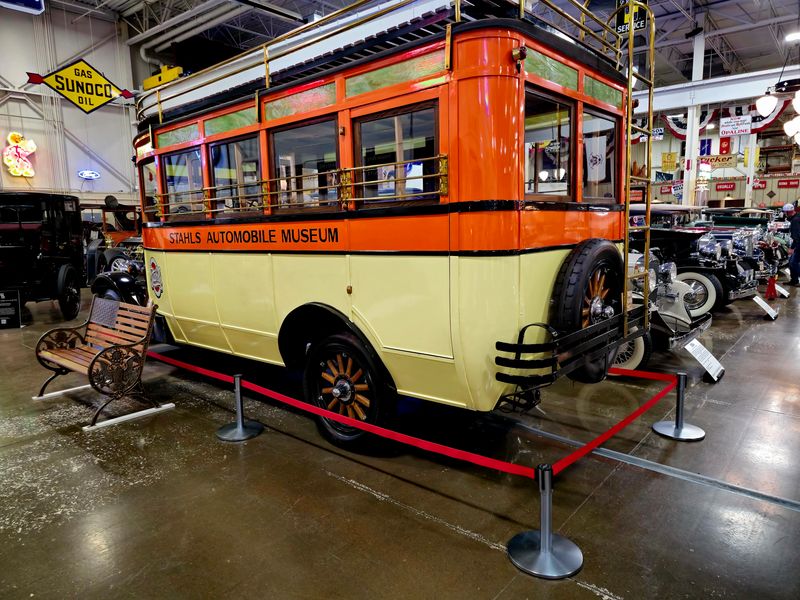
Stahls shines when it spotlights brands that blinked across history yet left lasting ripples. You will see badges from short-lived firms with ideas that arrived a bit early or a bit sideways.
The cars are beautifully restored, so the conversation shifts from what they lacked to what they dared.
Docents connect dots to regional factories, supply chains, and design schools that shaped America’s industrial rise. Expect stories about experimental transmissions, aluminum coachwork, and marketing gambits that almost worked.
Each emblem becomes a portal to an inventor’s gamble.
Stopping at the REO Speedwagon offers a smile and a music tie-in, but the engineering stands on its own. Run your eyes along the body lines and you will feel how craft met courage.
This corner of the floor makes forgotten names feel like family again.
Docent-led Storytelling: Volunteers Who Make It Click
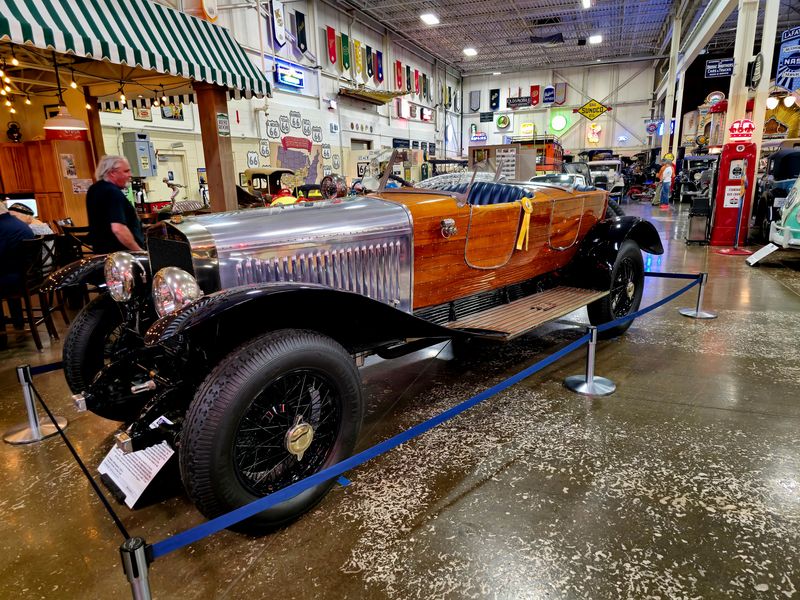
What makes an afternoon here unforgettable is the people who share it with you. Volunteers are encyclopedias with smiles, ready to translate engineering into everyday language.
They spark demonstrations, field kid questions, and weave human stories into the machinery.
Hang near a crowd and you will catch tips, like where to stand for the best organ rumble or which car hides a clever safety trick. You will hear first-hand memories, factory lore, and quips that make you laugh.
It feels less like a museum and more like a clubhouse for curiosity.
Because hours are limited, the energy concentrates into a lively few hours. That means you will always find someone eager to guide your route.
Do not be shy about asking what they recommend next, because surprises often sit just around the corner.
Planning Your Visit: Hours, Location, and Tips
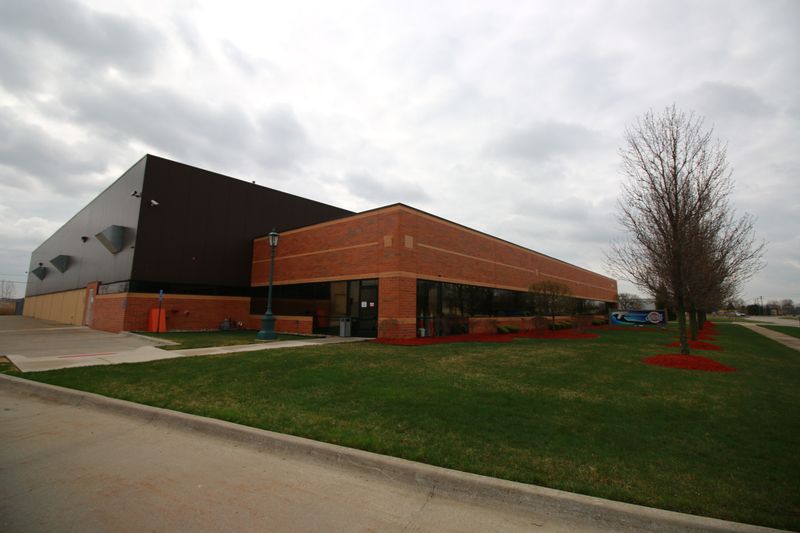
Set your calendar for Tuesday between 1 and 4 PM, because that is when the doors reliably open. Check the website for special events like Veterans Day, seasonal themes, and organ concerts.
Admission is free, donations are welcomed, and the gratitude is genuine.
The museum sits at 56516 N Bay Dr in New Baltimore, a quick hop from dining options for a post-visit bite. Parking is easy, the layout is accessible, and volunteers are great with first-timers.
Plan at least two hours, more if you love reading placards and catching music demos.
Arrive a little early to beat the first rush and start in the music room. Comfortable shoes help, because you will make happy laps discovering new angles.
If something catches your ear, linger, because the best moments often begin with an unexpected song.
Why It Matters: Michigan’s Story in Metal and Melody
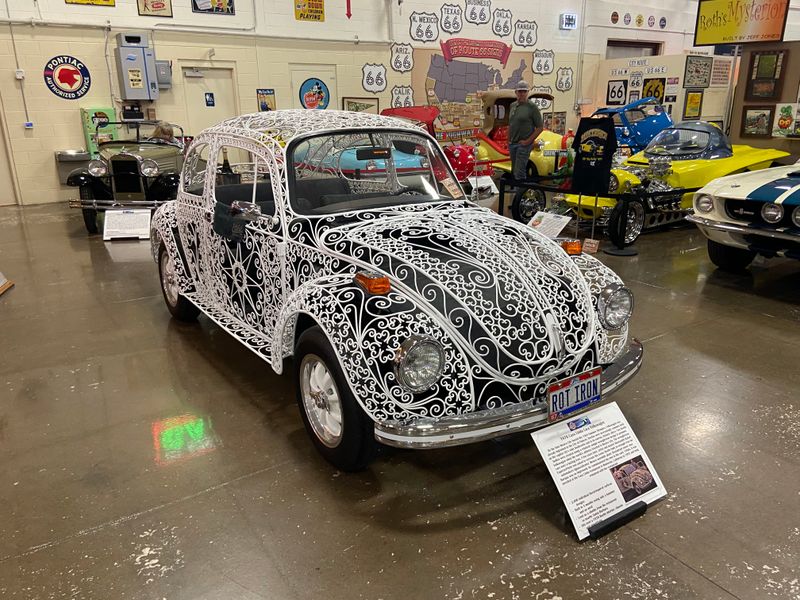
Michigan’s industrial heartbeat echoes through every gallery here. You feel the grit of factory floors and the optimism of design studios where tomorrow took shape.
The pairing of cars and music turns technology into culture you can sense with your whole body.
As engines evolved, so did the soundtrack of American life, and this museum lets you experience both at once. Volunteers keep the machines running and the stories alive, proving preservation is an act of everyday care.
It is a reminder that progress is human, not just mechanical.
Walk out into the parking lot and modern cars look different, connected to a lineage you can now trace. That is the gift you carry home, along with a few favorite melodies stuck in your head.
You will want to return, because history here never sits still.