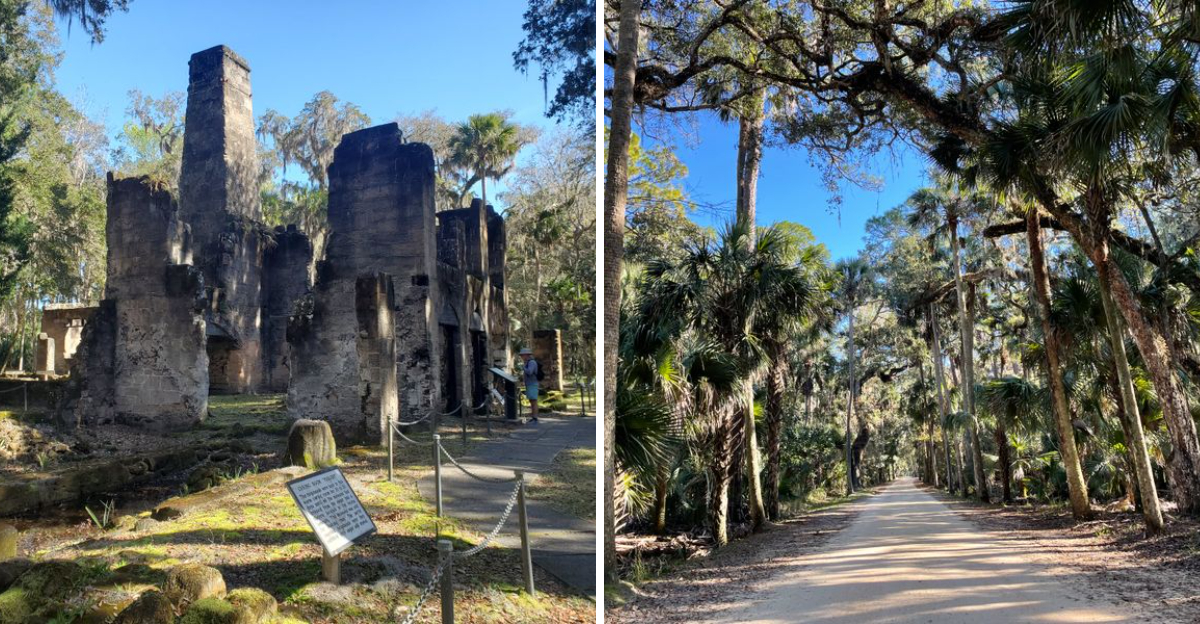
This forest keeps secrets… and it doesn’t whisper them gently. Follow the shaded trail at Bulow Plantation Ruins Historic State Park and you walk straight into a story frozen mid-breath.
Towering oaks drip with Spanish moss while crushed shells crunch underfoot. Then the trees part, and suddenly brick walls rise from the earth like ghosts that never left.
Built in the early 1800s, this sugar plantation once roared with labor, heat, and industry. Fire and war silenced it in 1836, leaving only broken structures and heavy stillness behind.
It feels peaceful. It feels eerie.
Nature is reclaiming everything… but the past refuses to disappear.
Bulow Creek Trailhead Arrival
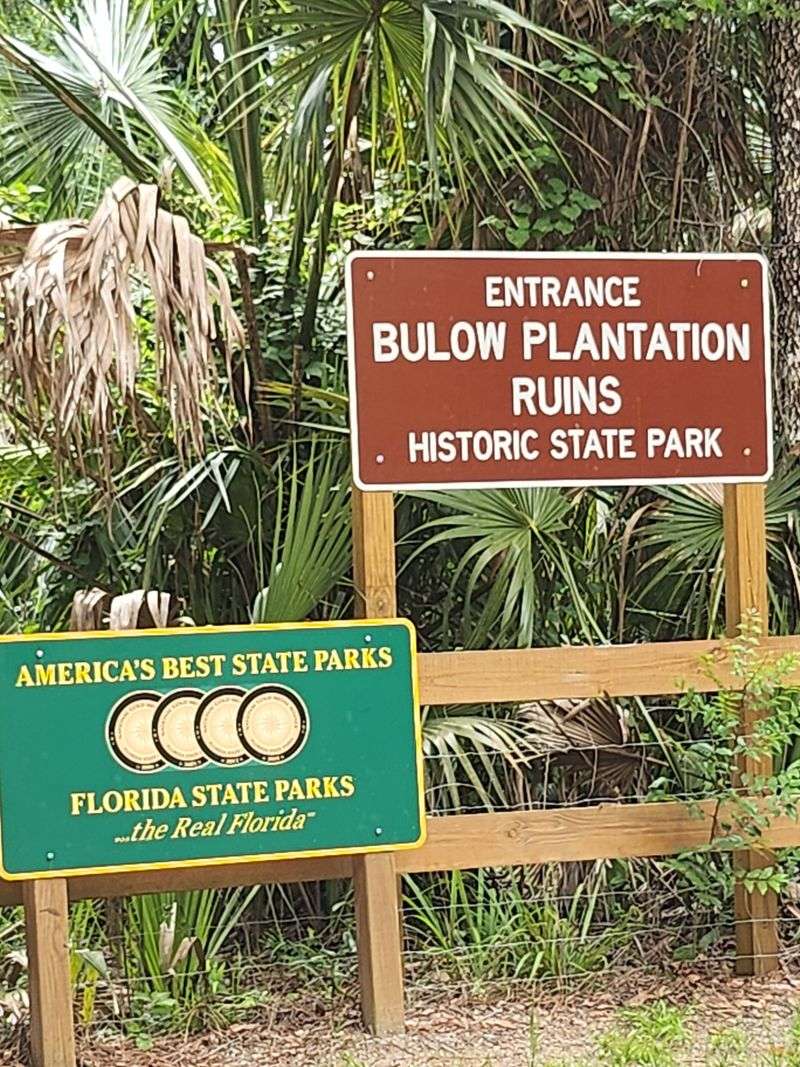
You step from your car and the air already smells like brine and pine, a hint of river hiding just beyond the trees. The trail underfoot is pale sand, stitched with raccoon prints and the faint rake of armadillo claws.
Spanish moss drapes the live oaks like old lace, and it feels right to lower your voice, as if you have entered a woodland chapel.
A modest sign points the way, and a hush settles in that is not silence at all. Cicadas tick.
A woodpecker drills, then pauses, as if listening for your answer. You follow the curve of path and notice palmetto fans glinting with dew, each blade catching light like a knife.
There is a rhythm here that asks for patience. Your steps find it quickly, and a breeze cools the back of your neck.
Already, you sense the story waiting at trail’s end, a story not gentle, not easy, but necessary. Keep going.
The forest will walk beside you.
Whispers of the Bulow Plantation Past
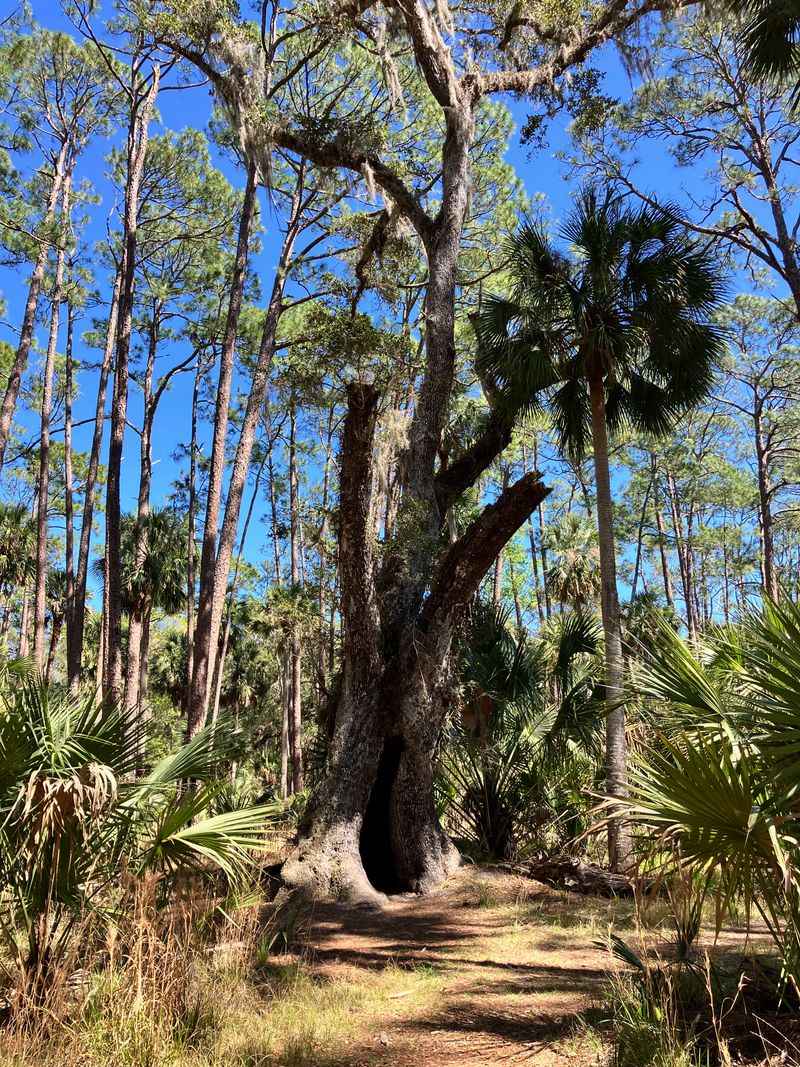
An interpretive sign appears, and suddenly the woods open into context. A diagram of the vanished plantation house sets the scene, only foundations left like a mouth missing teeth.
Reading the panel, you feel the gap between what stands and what was forced to stand here.
It is impossible to ignore the labor that shaped this place. Enslaved people cut, hauled, burned, boiled, and endured, their skill and pain pressed into every stone.
The sign does not tell everything, but it points your eyes toward evidence you might have missed.
There is a gravity in the air, like heat before rain. You stand a little longer than planned, not out of duty, but respect.
The story here refuses to be background. It insists you carry it forward, step by thoughtful step, as the trail bends toward the ruins.
Approach to the Coquina Sugar Mill
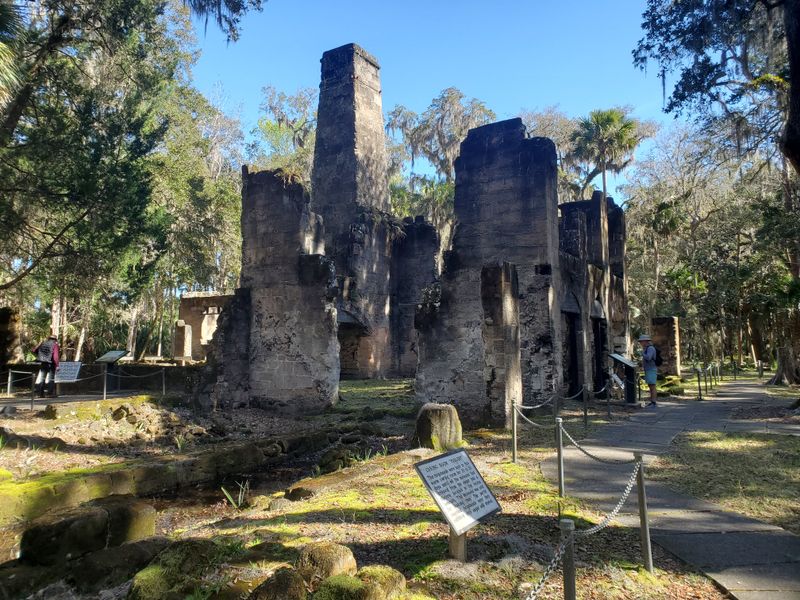
The first stones rise from palmetto like a shipwreck surfacing. Coquina blocks stacked in weathered tiers show seashells frozen in lime, a million tiny lives pressed into one stubborn wall.
Light pools through empty windows, and the wind answers with a low, hollow tone.
You slow without deciding to, tracing the chisel marks and mortar scars. Ferns have taken hold in the seams, tender green against the pale rubble.
This place looks permanent, but every edge is softening, memory returning to sand one grain at a time.
A swallow arcs through the doorway and vanishes into blue. For a heartbeat, you hear the echo of fires, gears, shovels, commands.
Then the present rushes back, and you step into the cool shade, ready to meet the mill face to face, ready to listen more closely than before.
Inside the Mill: Fire, Steam, and Stone
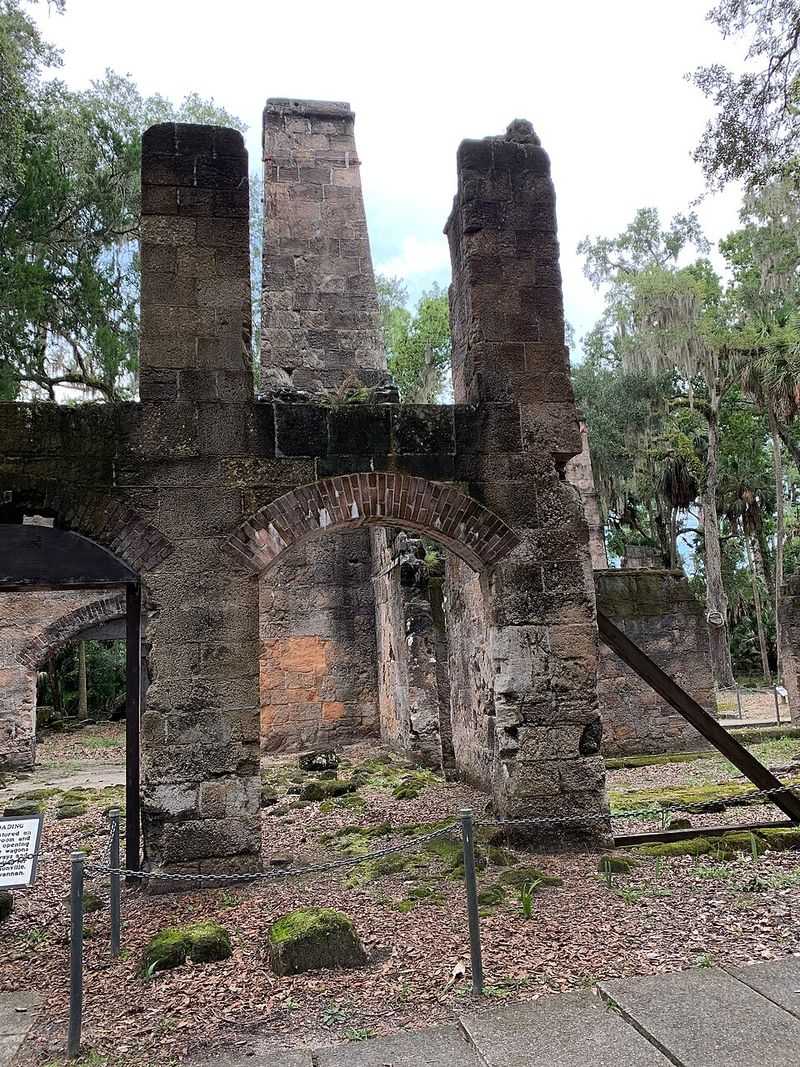
Inside the mill, arches frame the sky like ribs. You can almost map the process from firebox to kettle to clarifier, a choreography of heat and hands.
Interpretive panels name the steps, but the walls speak louder, stained and pitted where flame once gnawed.
Close your eyes and the room fills with steam and the thud of wooden paddles. The labor was relentless, the margins razor-thin, the cost paid by people who never shared the profits.
Standing here, you feel the wrongness and the ingenuity braided together, difficult and undeniable.
When you open your eyes, sun flickers across suspended dust. A vulture wheels high above the open roof line, indifferent but strangely solemn.
You read every plaque, then read the stones again, because both are necessary. The mill is ruin and record, warning and witness, and it asks you not to look away.
Tabby Foundations and Slave Cabin Remnants
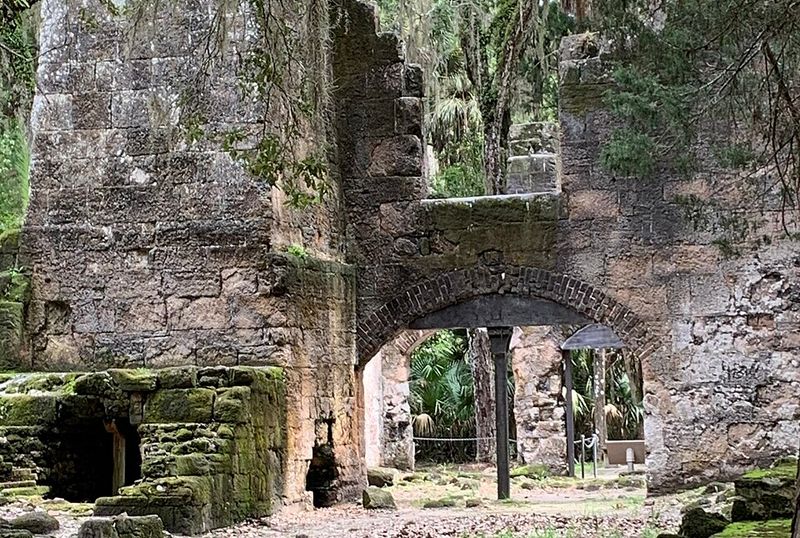
Down a quieter spur trail, low walls of tabby emerge, gray and salt-bitten. Oyster shell glints in the mix, a material born of coast and labor.
The cabins are gone, but the footprints remain, squared shadows pressed into earth that still remembers.
Here, the silence feels heavier. You read the sign and try to picture families carving small joys from long days, gardens scraped from poor soil, songs rising after dark.
It hurts to imagine, and it is right that it hurts, because this is where lives unfolded under control not their own.
Standing at the edge of a rectangle of history, you let the wind carry your thoughts. Respect becomes action when it changes how you move forward.
You promise to tell someone about this place, to say the words tabby and labor and dignity out loud. Then you keep walking, slower now.
Bulow Creek: Kayaks, Reflections, and Quiet
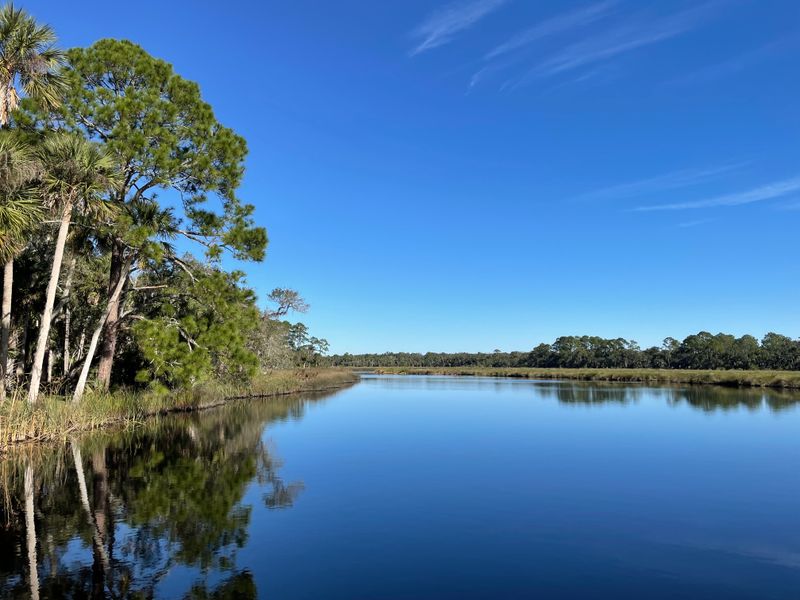
Beyond the ruins, the creek waits like polished glass. The boat ramp dips into tannin-dark water that doubles the trees, every moss thread mirrored to the last detail.
You can launch a kayak here and let the current decide the pace.
The banks slip by at hush-speed, oaks leaning over your shoulders, herons pinning the moment with stillness. A mullet jumps, shattering the reflection, and ripples stitch the scene back together.
Even from shore, just watching slows your breathing and narrows the world to water and leaf.
This place is recreation and remembrance sharing one shoreline. You feel the privilege of floating where others toiled, and it changes how the sun feels on your skin.
When you step back onto land, you carry a quieter voice and a longer gaze. The trail calls you onward again.
Practical Tips: Hours, Fees, and Weather
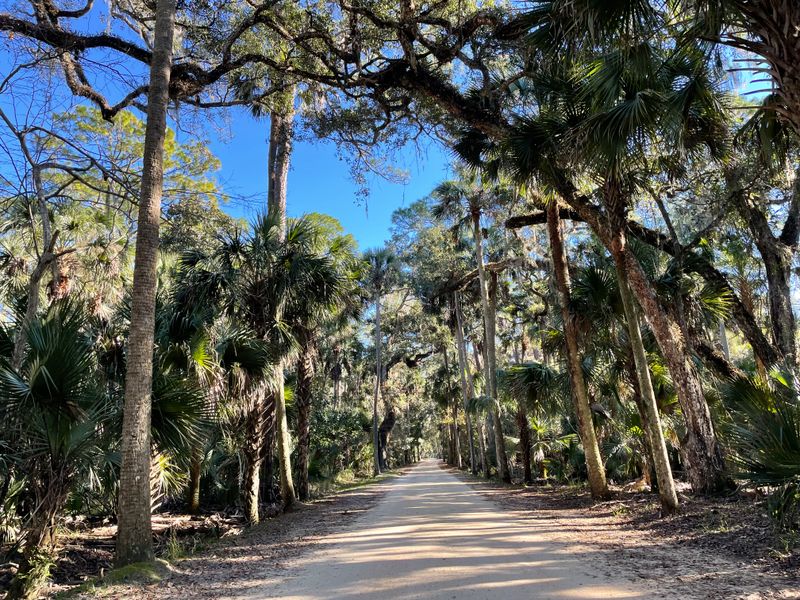
Before you lose signal under the oaks, know the basics. The park typically opens 9 a.m. to 5 p.m., Thursday through Monday, and closes Tuesday and Wednesday.
Bring four dollars in exact cash for the honor box, or be ready to scan the posted QR code when available.
Wear breathable layers, bug spray, and shoes that forgive sand. Summer heat stacks up fast, and storms can pop like flashbulbs, so check the radar and pack water.
Dogs are welcome on leash, and the short path to the mill makes this stop easy between Flagler Beach and The Loop.
Parking is straightforward, restrooms are available, and signs are clear without cluttering the experience. If a gate section or long trail is closed after storms, do not force it.
The ruins are still reachable by the main route. Respect the site, tread lightly, and the woods will share more.
Sunset Exit Through the Oaks
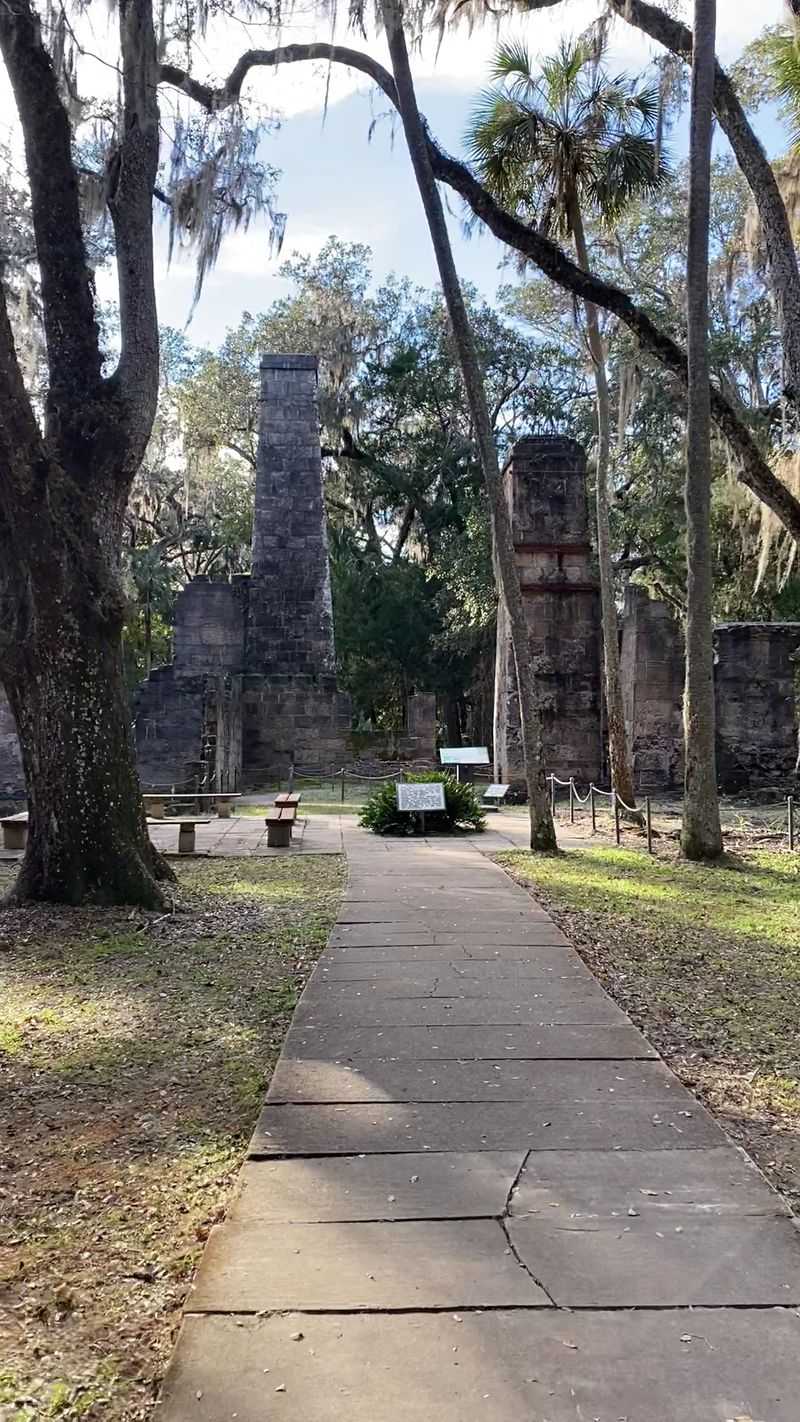
On the walk back, light goes honey-thick and the moss glows as if lit from within. The same footprints you made earlier already look older.
Palmetto fans rustle like a departing audience, and the forest feels grateful for your quiet.
You look over your shoulder, one more time, toward the coquina silhouette now folded into shadow. Memory is strongest at the edges of day, and the story learned here presses forward, steady as tide.
Carry it with care, and share it with kindness.
At the trailhead, a breeze tugs your sleeve as if to say not goodbye, but until next time. You slide into the driver’s seat calmer, wiser, and a little changed.
The road unwinds toward the coast, and the oaks release you gently, sending you on with fading birdsong.