Some places feel like they were made to be discovered slowly, and Verde Canyon Railroad is one of them.
Tucked into red rock country near Clarkdale, this four-hour ride glides past cliffs, ruins, and wildlife you simply cannot reach by car.
You settle into your seat as the canyon opens like a secret, with open-air cars inviting you to breathe deeper and look longer.
If you crave quiet wonder with a side of vintage rail charm, this journey belongs on your list.
Boarding at Clarkdale Depot: The Journey Begins
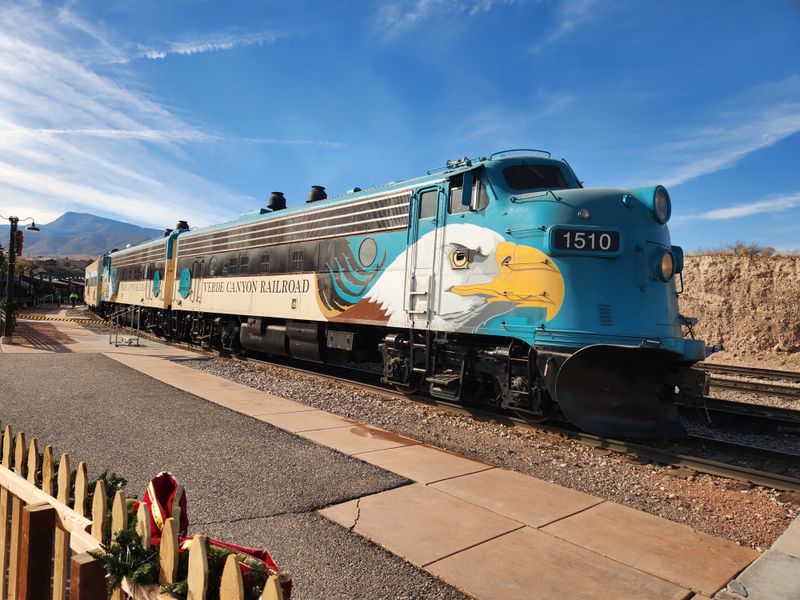
Stepping onto the platform at 300 N Broadway, you immediately feel time slow down. The Clarkdale depot hums with anticipation as the vintage diesel engines idle, a low, comforting purr against the red rock horizon.
You collect your ticket, glance toward the open-air cars, and sense you are leaving roads behind for something quieter and far more intimate.
Inside, the coaches feel welcoming without fuss, with wide windows framing cliffs already glowing in early light. A guide offers quick tips, promising stories about geology, rail lore, and wildlife you might spot along the way.
You settle into a cushioned seat, sip something cold, and feel the gentle nudge as the train eases forward, unspooling a route unreachable by car.
As Clarkdale falls away, the line curves toward the Verde River, that thin green ribbon guiding the rails through high desert drama. The depot recedes, replaced by rust colored buttes and whispering cottonwoods crowding the water.
You exhale, as if the canyon has granted permission to relax.
There is just enough ceremony to mark the moment. A bell, a wave from the crew, a final glance at the depot’s mission style lines.
Then the first canyon walls gather close, and your attention shifts outward and inward at once, already grateful you chose to ride, not drive, into this quiet world.
Open Air Viewing Cars: Feel the Canyon Breathe
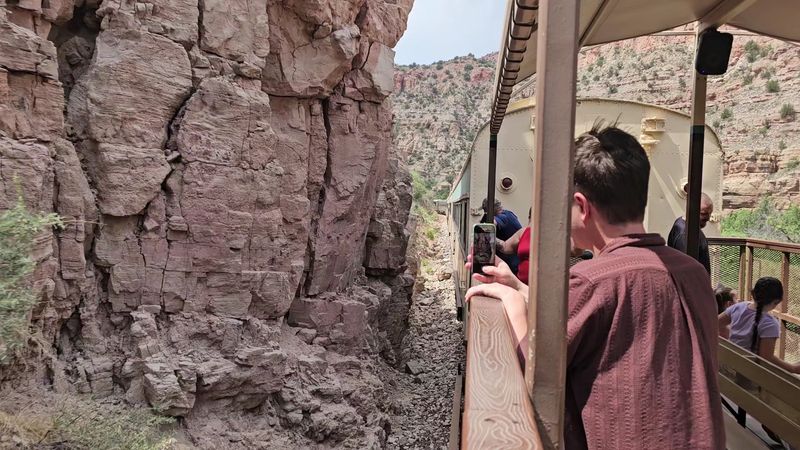
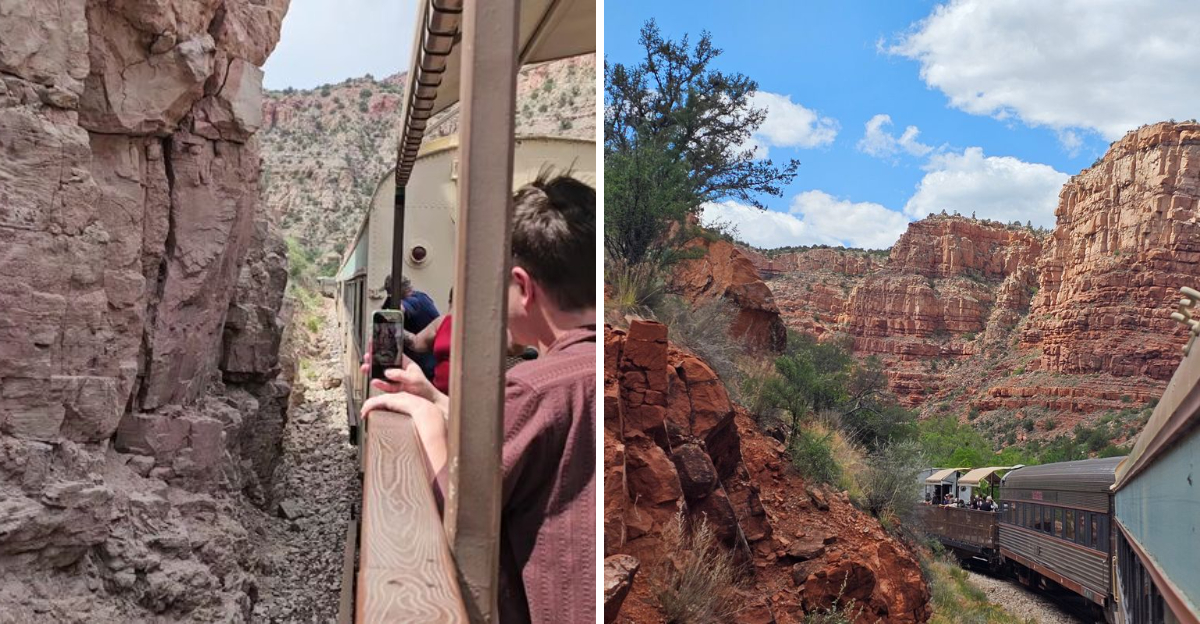
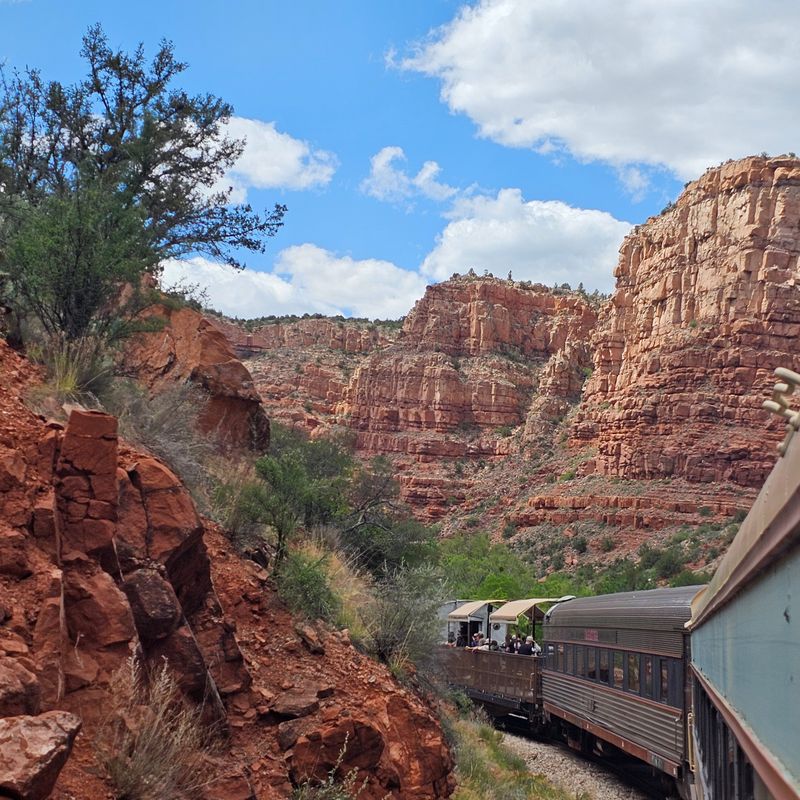
Stepping into the open air car, the canyon greets you with warm wind and the resin sweet scent of desert shrubs. Rails sing softly beneath your shoes as cliffs slide by, their layers reading like an ancient diary.
You lean on the rail and realize the best seat is not a seat at all.
Here, every sense clicks on. You hear the Verde River riffle against rounded stones, spot lizards skittering over sunlit ledges, and catch the cool drift of shade when the train threads a narrow bend.
Guides call out sights with just enough detail to anchor wonder without crowding it.
In the distance, a red wall breaks to reveal a hanging garden where seep springs keep moss impossibly green. Swallows stitch the sky over the trestle, and your camera cannot decide where to land.
It is easy to let minutes stack into miles, like smooth stones in your pocket.
When you return to your coach, hair tousled, cheeks warm, the cabin feels like a private theater. You carry the scent of juniper and the hush of wind inside with you.
Whatever you came hoping to feel, the open car delivers it simple and true.
Red Rock Geology: A Canyon Sculpted in Color
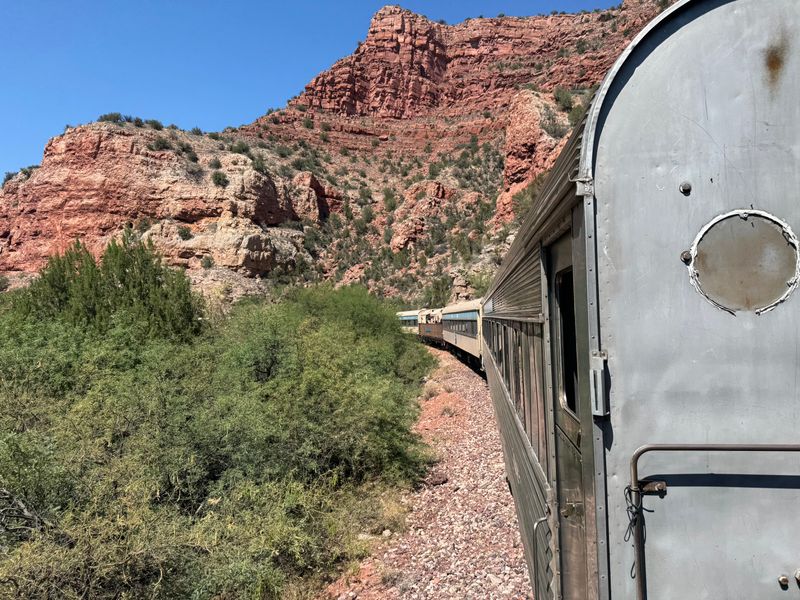
The canyon’s palette begins with iron rich reds and expands into creams, olives, and smoky purples that shift as the sun angles. Each passing cut reveals a new chapter in stone, from cross bedded sandstone to siltstone ruffles shaped by vanished streams.
You watch light polish the cliffs until they seem lit from within.
Guides point to volcanic intrusions and ancient seabed layers, reminding you that Arizona was not always arid. Fossil hints and mineral staining become clues in a story that stretches well beyond the rails.
The Verde River’s steady patience carved these terraces, leaving benches where cottonwoods clutch the bank.
As the train curves, shadow rushes up cliff faces and then spills away like ink erased by sunlight. Fracture lines ladder upward, offering improbable perches to shrubs that refuse to quit.
You learn to read color as time: rust for oxidation, pale bands for quieter epochs, dark caps where lava cooled.
By the second hour, you stop reaching for facts and let the geology work on you the way music does. The canyon’s architecture becomes a mood, wide and grounding.
Even if you forget the names of formations later, the feeling of standing within something vast stays put.
Wildlife Watching: Raptors, River, and Quiet Surprises
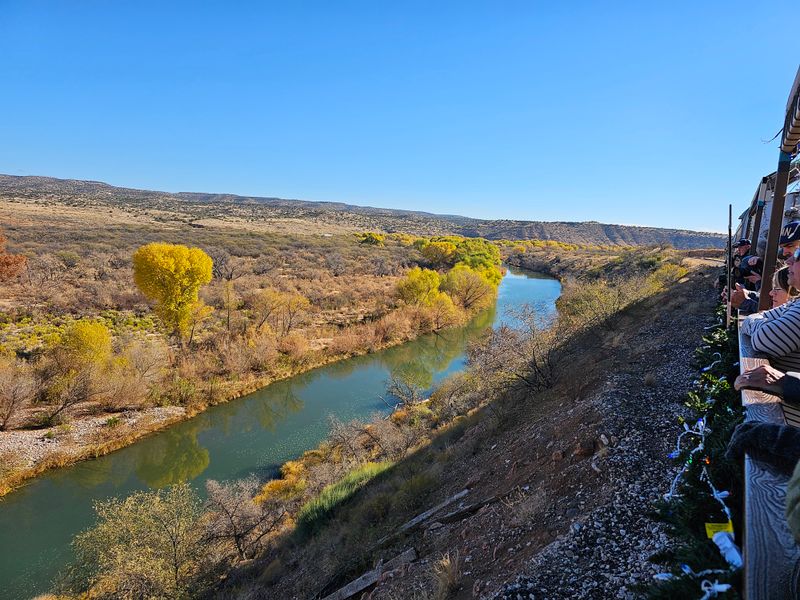
If you love scanning horizons, this ride rewards patient eyes. Bald eagles drift on thermals above the river, their white heads bright against rust red walls.
Great blue herons lift like folded umbrellas from sandbars, while mule deer vanish between cottonwood shadows.
Guides carry binoculars and share quick directions so you can spot movement before it disappears. Nest platforms and high snags become landmarks for recurring sightings.
In winter, the raptor count climbs, and you learn to trace a flight path the way anglers read current.
Closer to the cars, rock wrens buzz from ledges and turkey vultures tilt lazy circles in warm air. Sometimes the river itself steals the show, flashing trout at a turn or sending a muskrat paddling across green water.
Each glimpse feels earned because there is no road to shortcut the search.
What stays with you is the rhythm: watch, wait, whisper, point, grin. The train keeps rolling, but your attention slows into the canyon’s pace.
By the time an eagle finally banks close, you are ready, breath held, grateful for a view you could not drive to claim.
Historic Tunnels and Trestles: Railroading’s Quiet Drama
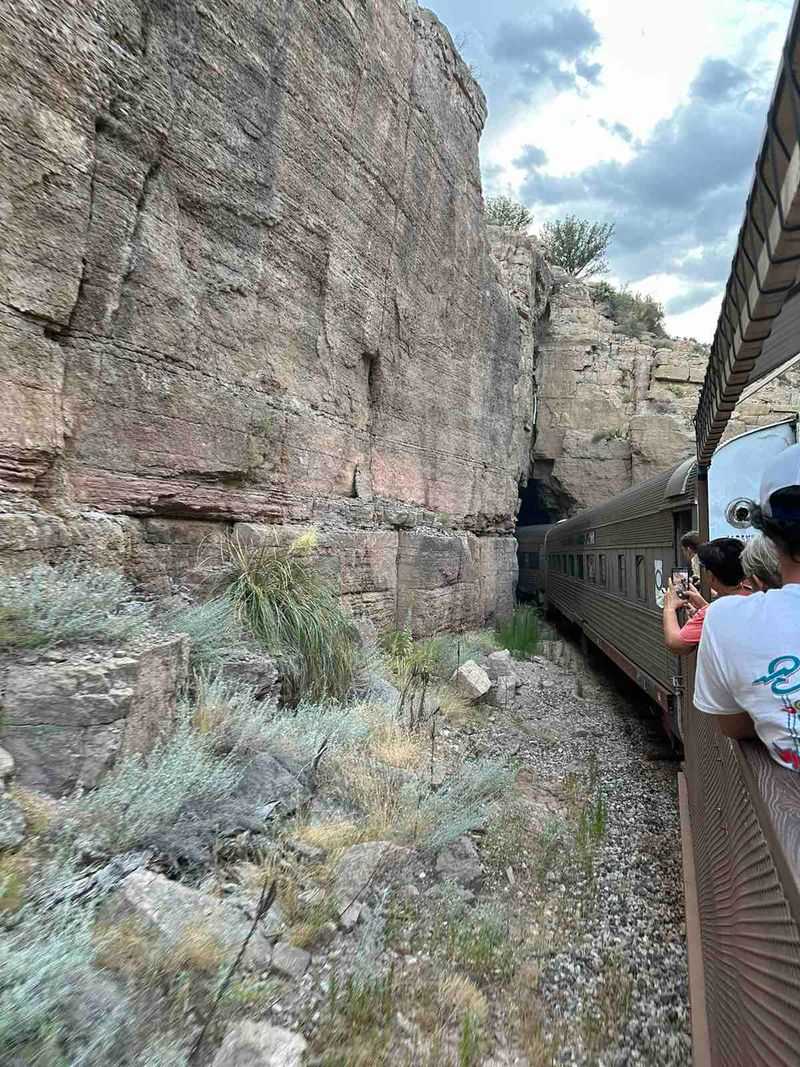
There is a hush when the engine noses toward the tunnel, a small ceremony of shadow before the bright return. Stone swallows the sound and then hands it back in echoes that feel like another train answering.
You can almost hear crews from a century ago measuring rock, setting timbers, wagering on daylight.
The trestles appear slender from afar, then resolve into deliberate steel, cross braced and sure footed over water. As you pass, the Verde River glints beneath, and a breeze rises clean between ties.
It is movement made visible, a sketch of problem solving etched in metal.
Rail history here is not museum quiet. It breathes with each grade and curve that still does its job, carrying people instead of ore.
Guides share vignettes: hard seasons, clever alignments, the stubborn optimism of rails driven into wild ground.
When the train bursts from the far side of the tunnel, colors feel louder, like someone nudged the world’s saturation. You realize the best parts of railroading are humble feats that keep you rolling safely forward.
That mix of grit and grace becomes part of what you came for.
Comfort Onboard: Seats, Snacks, and Small Luxuries
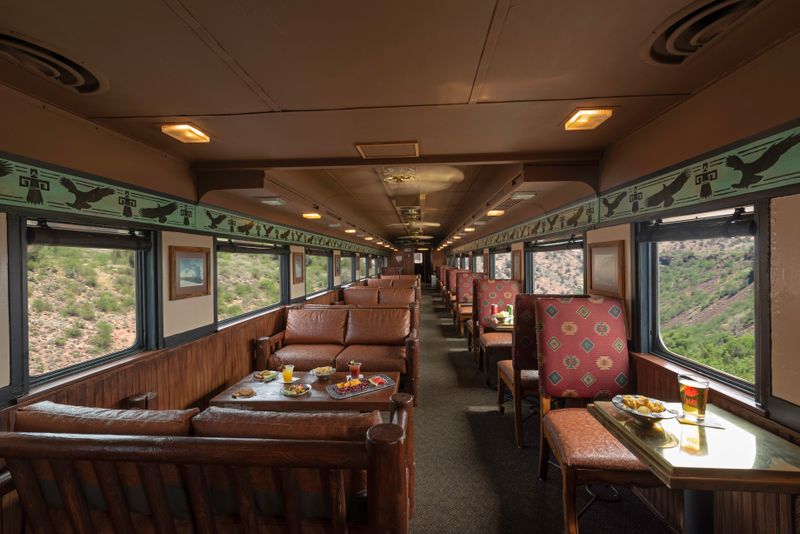
Comfort sneaks up on you here. Wide windows, cushioned seats, and easy access to open air cars create a rhythm that feels indulgent without being fussy.
You sip a local cocktail, nibble on something savory, and let the landscape be the entertainment.
Attendants move through the aisles with friendly timing, answering questions and pointing out upcoming views. The snack bar keeps the mood casual: charcuterie, soft pretzels, sweets, plus nonalcoholic options for a simple treat.
It is the kind of service that stays in the background but is always right there when you think of it.
Restrooms are clean, the ride is steady, and the temperature stays pleasant even as the sun swings. If you need a stretch, you are steps from fresh air and a better angle on the cliffs.
The balance between cozy cabin time and breezy viewing car feels just right.
By mid journey, the car settles into a quiet murmur of conversation and contented sighs. You float between seat and rail, snack and camera, story and stare.
The small luxuries add up to something generous: time reclaimed from hurry.
Seasons of the Canyon: Light, Color, and Timing
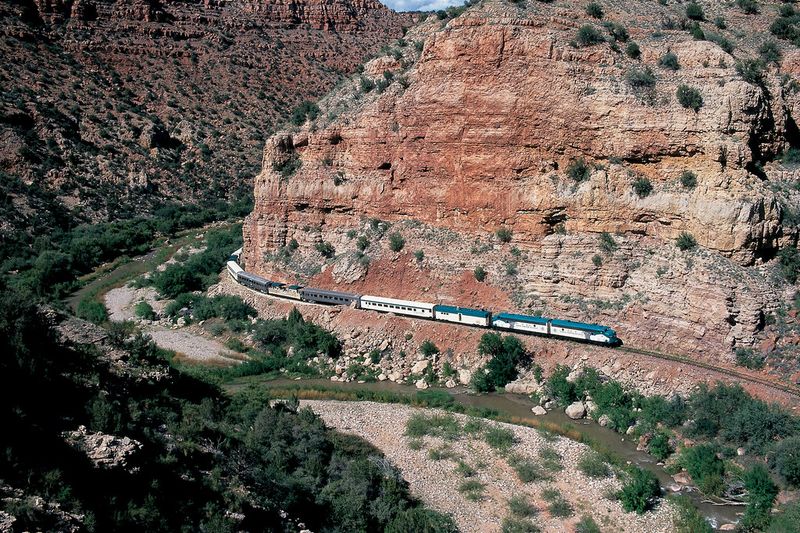
Spring washes the river corridor in fresh greens, cottonwoods leafing out like confetti against red stone. Water runs livelier, and wildflowers find impossible footholds along talus slopes.
You feel the canyon wake up, bright and generous in its welcome.
Summer brings long light and heat that turns cliffs to embers near dusk. Open air cars feel like verandas, with warm wind, big skies, and thunderheads building over distant mesas.
Late departures catch the canyon glowing, a slow burn you will think about later.
Autumn steals the show with gold leaves and a river that mirrors them like a secret applause. Shadows lengthen, carving drama into every bend while temperatures mellow.
It is a photographer’s season, equal parts color and calm.
Winter is spare and crisp, the palette dialed to clarity. Raptors are plentiful, crowds thinner, and the sun tracks low, making textures pop.
Whatever your timing, the railroad’s daily rhythm means you can meet the canyon in its best light.
Stories Along the Line: Ruins, Rivers, and Rail Lore
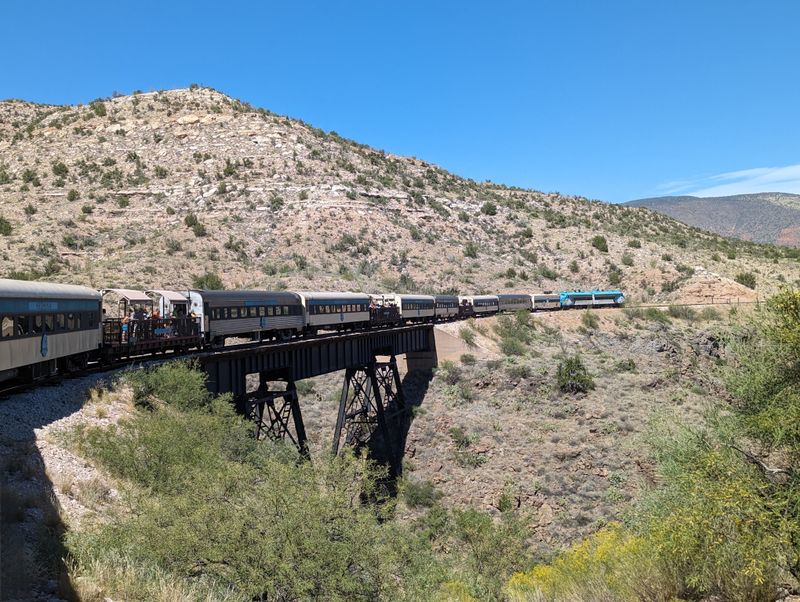
As the train threads deeper, stories gather along the rails like mileposts. You glimpse remnants of cliff dwellings tucked into alcoves, testament to people who read this terrain long before timetables.
The Verde River ties eras together, steady as a heartbeat beneath changing footsteps.
Guides fold history into the scenery with welcome restraint. A ranch here, a mining camp there, a siding that once counted carloads instead of passengers.
You start to see not just rocks and water, but choices and chances layered into the landscape.
Rail lore bubbles up in small, sticky details: nicknames for curves, the logic behind a siding, the way an engineer reads wind. It is practical poetry, the kind that turns a map into muscle memory.
Your imagination builds scenes where lanterns swung and telegraph keys chattered.
By the return run, the canyon feels lived in rather than simply looked at. The ruins become neighbors, the river an old friend, the track a through line between them.
You step off later carrying more than photos, including a few good stories to pass along.
Planning Your Visit: Hours, Tips, and Little Extras
Verde Canyon Railroad operates daily with an 8 AM to 5 PM schedule at the Clarkdale depot, though trains depart at set times, so book ahead. Arrive early for easy parking, ticket pickup, and a relaxed stroll through the depot.
Comfortable layers, sun protection, and a small camera bag make the day smoother.
Choose seats knowing you can move to the open air car any time. Snacks and cocktails are available onboard, so you can travel light and still feel pampered.
If quiet is your goal, weekday rides often feel a touch calmer than weekends.
Bring binoculars for eagles and a sense of patience for the canyon’s unhurried gifts. Staff are happy to answer questions, and signage points you toward highlights without overscripting your view.
Remember there is no road into these stretches, which is precisely the point.
After the four hour journey, Clarkdale’s historic core and nearby Cottonwood make easy add ons for lunch or a stroll. Check the railroad’s website for seasonal events and special runs.
With a little planning, the day unfolds like the rails themselves: smooth, scenic, and wonderfully simple.