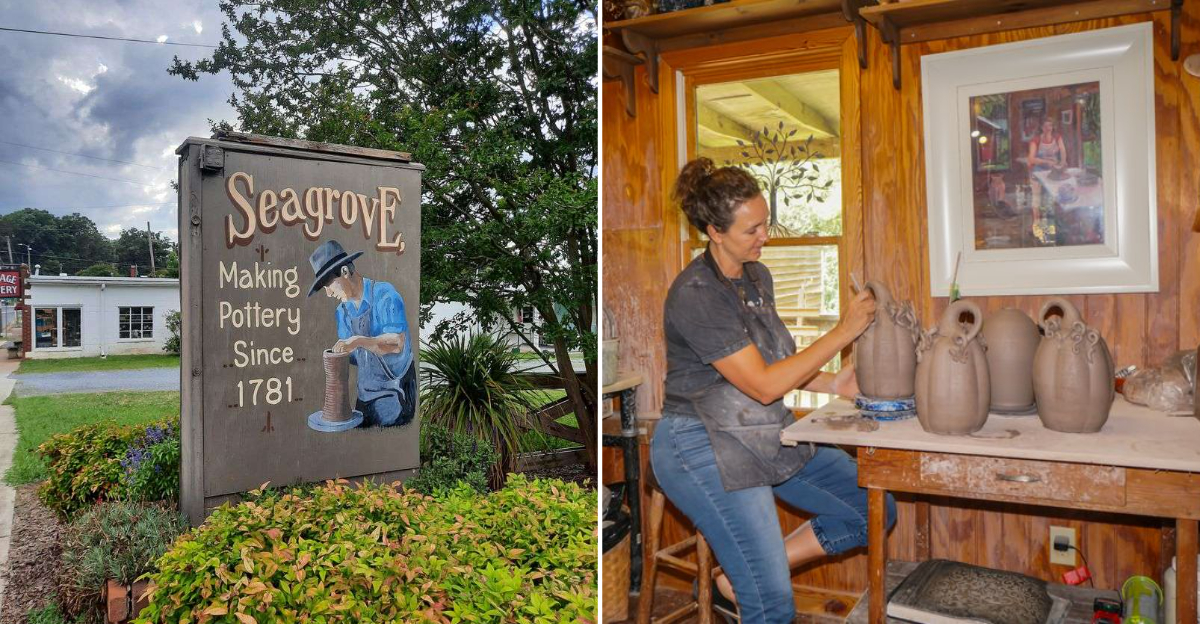
Step into Seagrove, North Carolina, and it’s like stepping into a time machine set to the 1970s.
Clay-streaked aprons, sun-warmed kilns, and shelves stacked with hand-thrown pottery stretch down streets lined with galleries that seem untouched by modern trends. Each studio hums with creativity, and every turn feels like a quiet celebration of artistry.
Here, the world moves at the pace of the potter’s wheel. Visitors watch hands shape clay into mugs, bowls, and vases while the scent of wet earth and wood fires fills the air.
Locals greet you like an old friend, eager to share stories of generations who’ve kept this craft alive.
Seagrove isn’t just a town—it’s a living gallery, a frozen bubble of color, texture, and imagination. Every corner invites curiosity, and every piece of pottery tells a tale that refuses to be rushed or forgotten.
Historic Seagrove Pottery Legacy

Seagrove’s pottery legacy reaches back centuries, yet what grabs you is how the 1970s spirit still guides the scene. Studios feel personal, prices are scribbled on paper tags, and you can chat with makers while the kiln cycles.
That intimacy becomes the throughline, connecting old Seagrove families with newcomers who fell in love with red clay.
Driving the winding backroads, you spot salt glaze, ash glaze, and wood-fired work resting on rustic shelves. Many shops are family run, and you sense the rhythm of craft dictating the day.
Bottles, jars, and jugs nod to utilitarian roots, while sculptural pieces wink at modern tastes.
What makes it special is the handshake culture. You step inside, hear a potter’s wheel sing, and immediately slow down.
There is no rush, just conversation and a shared fascination with form and fire.
Ask questions about clay bodies and firing temperatures, and someone usually answers with a story. Kiln openings still feel like neighborhood gatherings.
If your heart leans toward handmade, Seagrove becomes less a destination and more a relationship you keep revisiting.
The North Carolina Pottery Center
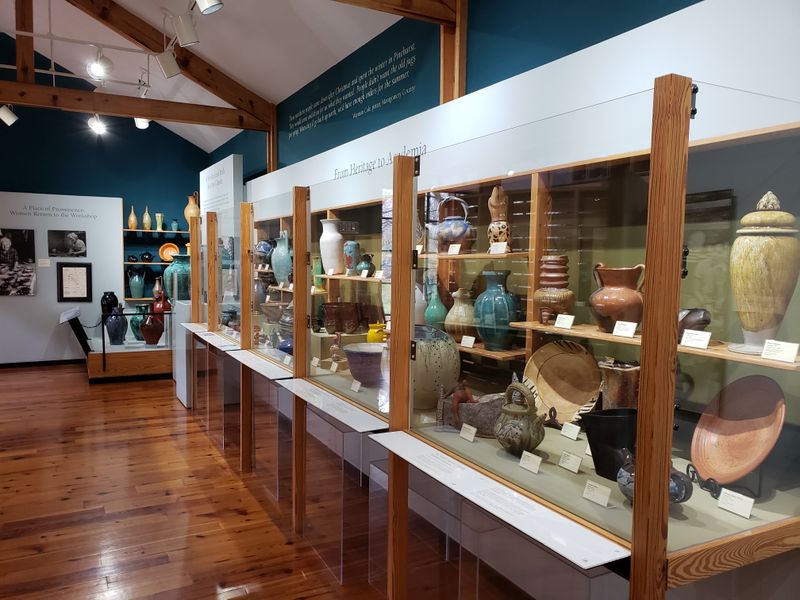
The North Carolina Pottery Center gives you context before you studio hop. Inside, rotating exhibits trace native traditions, utilitarian jugs, and modern studio innovations.
It is part gallery, part classroom, and part memory keeper for the region’s clay lineage.
You can study glaze tests, kiln cross sections, and the slow evolution from farm craft to fine art. Labels are approachable, so newcomers never feel locked out.
If you are curious about wood firing or salt glazing, the displays make technical details feel friendly.
Staff and volunteers tend to be potters or collectors, which means your questions get real answers. They will likely suggest a route through surrounding studios that fits your taste.
Think of it as your compass for a long afternoon.
Events, talks, and kids programs add to the momentum. Even a short visit sharpens your eye before you browse.
When you leave, shapes and surfaces around Seagrove read like a living syllabus, and you feel ready to choose pieces you will keep for decades.
Studio-Hopping Along NC 705 (Pottery Highway)
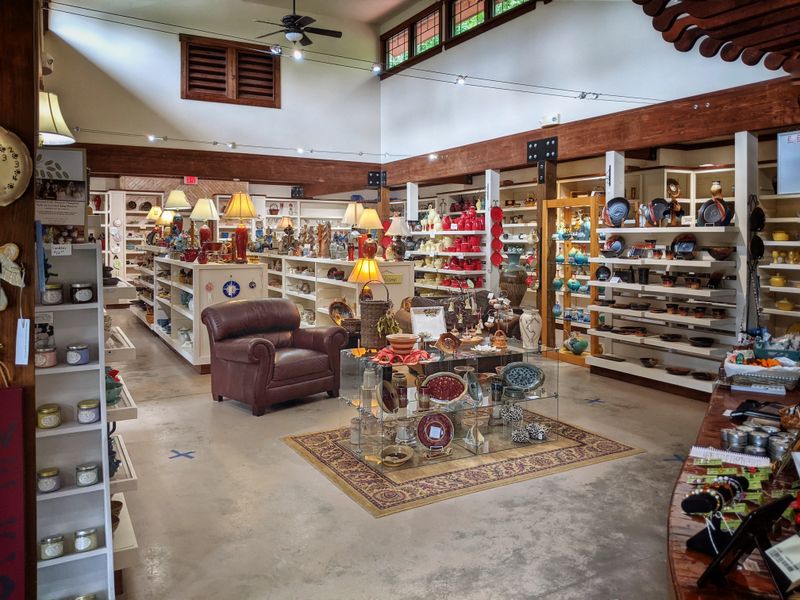
Locals call NC 705 the Pottery Highway, and it truly is a ribbon connecting dozens of studios. Pull-offs appear every mile or so, often with simple hand-lettered signs.
You pick a driveway, step inside, and meet the person who made the work on the shelf.
Because shops are small, the selection feels curated by the day’s firing. There might be a run of teabowls, a few ambitious vases, or an experimental glaze still cooling.
You learn to buy what you love when you see it.
Cell service can be spotty, so download maps or grab a paper brochure from the Pottery Center. Most studios accept cards, but cash can speed things up.
Keep your trunk clear and bring towels or boxes for safe transport.
Along the way, you catch snippets of kiln lore and family history. Somebody will point you toward a wood firing or a hidden gem down a gravel lane.
By sunset, the highway has stitched you to the place, and the day’s finds clink softly like souvenirs of conversation.
Wood-Fired Kilns and Kiln Openings
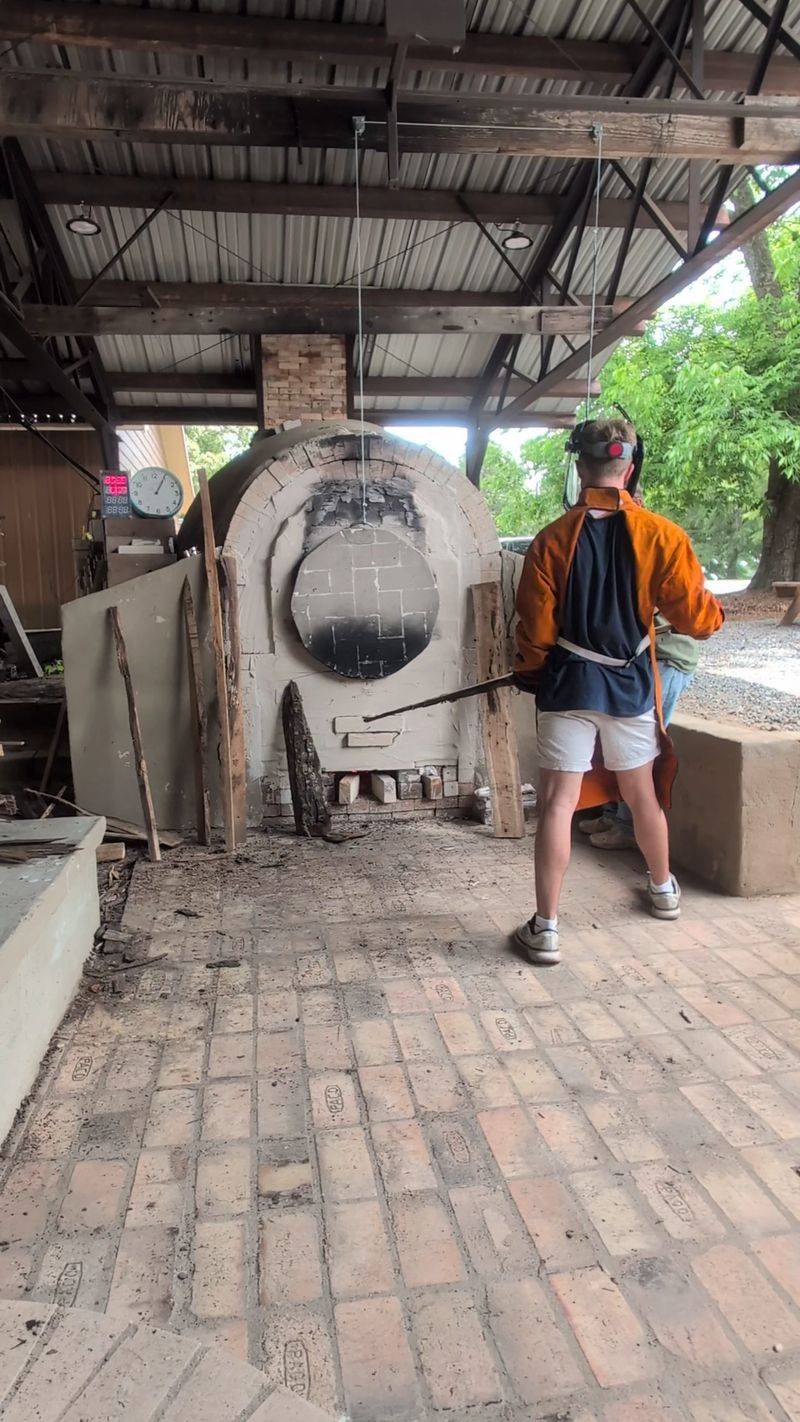
Wood firing in Seagrove feels elemental, like a community campfire with serious results. Kiln openings become mini festivals where neighbors, collectors, and curious travelers gather.
You wait, swap stories, and finally see what the flame decided.
These firings can last days, with shifts managing stokes and temperature curves. Ash floats and settles, painting the ware with flashes and drips you cannot predict.
When the door comes down, everyone leans in together.
If you time your trip around a kiln opening, arrive early and bring patience. Pieces can sell fast, especially the once-in-a-firing stars.
Dress for weather and be ready to carry boxes over gravel.
The magic here is unpredictability and the shared reveal. You witness collaboration between clay, fire, and hands.
Leaving with a wood-fired cup feels like pocketing a small adventure, still warm with the memory of sparks.
Signature Glazes and Local Clay
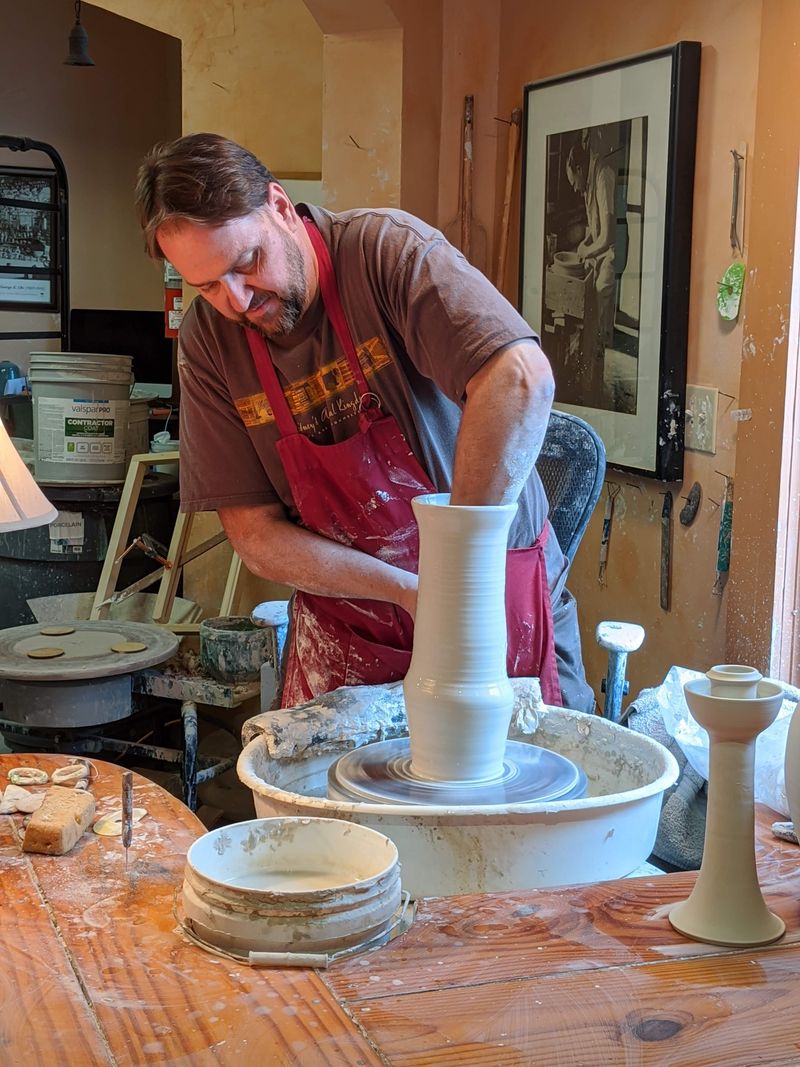
Spend an hour in Seagrove and you start recognizing makers by their glazes. Some favor celadon pools that collect in carved lines.
Others chase alkaline drips, shino freckles, or the orange peel of salt glaze.
Local clay bodies add warmth and grit, holding fingerprints like quiet maps. You will notice rims and feet finished a certain way, or handles that feel tuned to your fingers.
The more you handle, the more you see.
Ask about test tiles and glaze notebooks. Potters often share stories about a recipe tweaked after a lucky firing or a stubborn flaw.
You learn that each surface is a record of choices and risks.
When you bring a piece home, live with it. Pour tea, wash it, set it in sunlight, and watch the color turn.
Over time, that glaze will read like a friend’s handwriting, unmistakable and reassuring.
Meeting Multi-Generation Potter Families
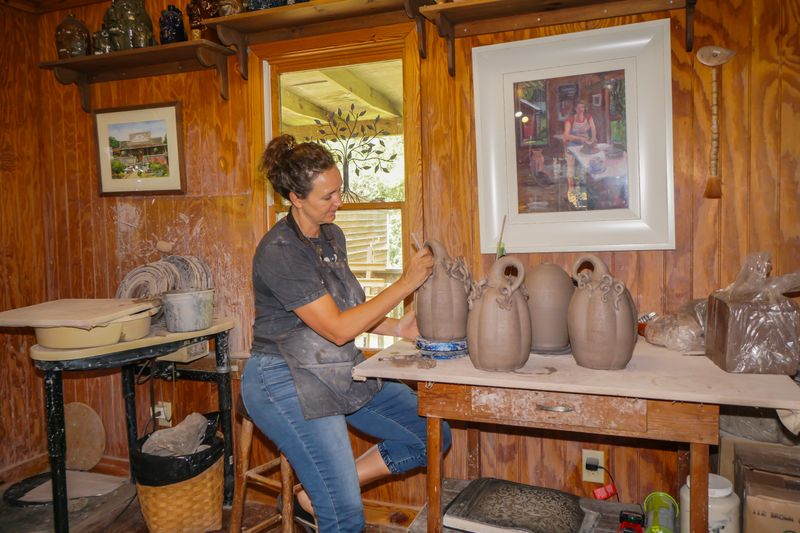
Family studios are the heartbeat of Seagrove. You step in and see grandparents, parents, and kids all shaping clay in their own way.
The continuity feels calm, like time braided rather than marched.
Stories of apprenticeships and hand-me-down kiln wisdom float around the wheel. A certain jar form might trace to a great grandparent, while the glaze comes from a new experiment.
Tradition and curiosity share the same bench.
These families often keep scrapbooks of early booths and newspaper clippings. Ask and someone might pull a binder that maps decades of fairs and firings.
You understand how Seagrove stayed steady when trends swung hard elsewhere.
Buying here feels less like shopping and more like joining a lineage. You leave with a vessel and a little family history stamped inside it.
Next trip, they will remember your taste and set aside something perfect.
Finding Everyday Functional Ware
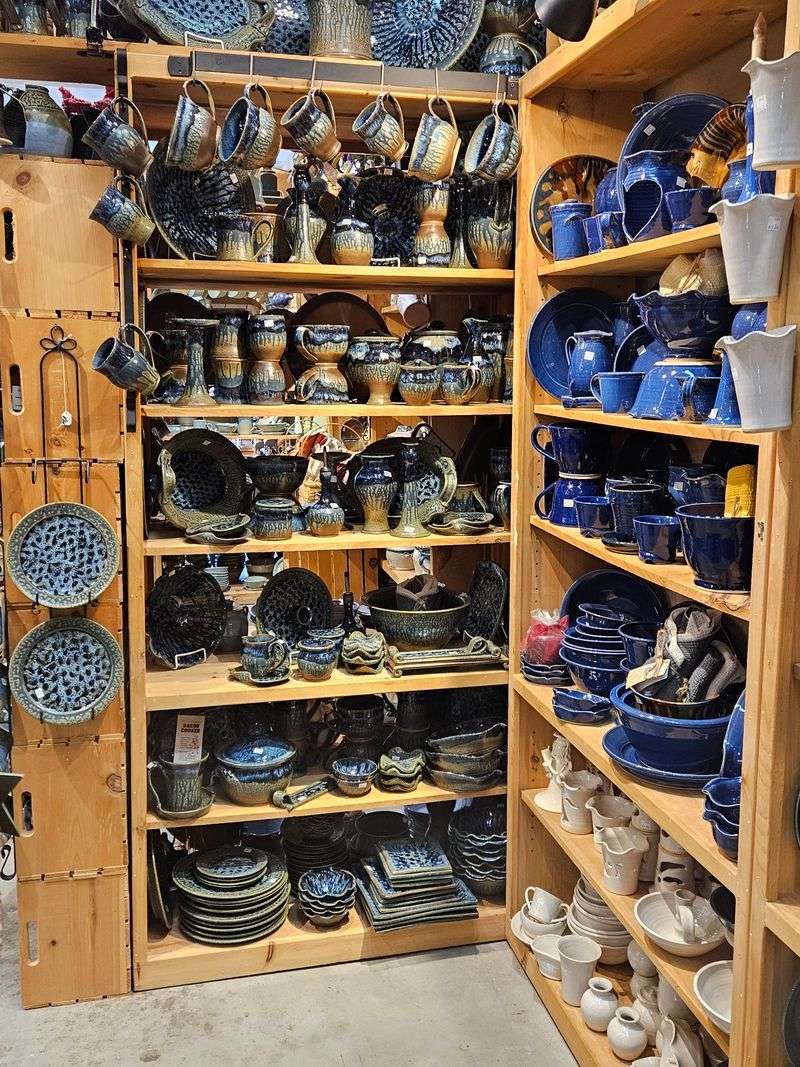
Not every piece in Seagrove is a showstopper, and that is a gift. The shelves are full of daily drivers: pasta bowls, breakfast mugs, berry colanders, and pie plates.
They turn routines into tiny ceremonies.
Pick things you will reach for each morning. Check balance, rim comfort, and how the handle fits your grip.
If it sings in your hand, it will sing in your sink and cupboard too.
Potters often test durability with their own kitchens, so ask what they use at home. Many wares are dishwasher and microwave safe, but confirm the specifics.
Function and beauty can live in the same drawer.
Later, when coffee meets a handmade mug, you will remember the studio dog and the dust motes. That connection keeps Seagrove close even across miles.
Your cabinets become a quiet gallery that actually gets used.
Etiquette for Visiting Small Studios
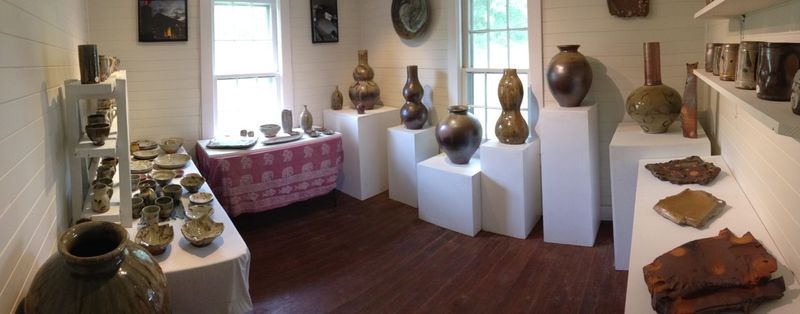
Small studios invite trust, so a little etiquette goes a long way. Ask before touching, and use two hands when you do.
If a sign says closed, believe it and come back later.
Photos are usually fine, but always request permission. Makers balance concentration with hospitality, and a quick check shows respect.
Your patience earns better stories and sometimes better prices.
Keep drinks and bags away from narrow shelves. Offer to set pieces on a counter rather than juggling them.
If you break something, say so immediately and make it right.
Most importantly, be curious. Ask about the clay, the firing, and what they are excited to try next.
That conversation is the souvenir you cannot pack, and it will guide what you bring home.
Where to Pause: Small-Town Eats and Breaks

Between studios, you will want a breather. Seagrove itself is tiny, so nearby cafes and diners become part of the ritual.
Think sweet tea, biscuits, and a plate that arrives without fuss.
Lunch gives you time to rank glazes and circle favorites on your map. Jot notes about handles you loved or a kiln opening you want to catch.
Hydration helps when the day gets long.
Afterward, stretch your legs under pines or pull into a shady lot to re-pack fragile finds. Keep bubble wrap, towels, and painter’s tape in the car.
Careful packing now saves heartbreak later.
Then head back out with a second wind. The afternoon light makes pots glow in studio windows.
You return ready to choose the piece that quietly chose you hours earlier.