Pennsylvania isn’t all rolling hills and farmland—somewhere beneath the trees, the earth has shown off.
Giant boulders balance like they were placed by giants. Sandstone cliffs rise above rushing creeks.
Hidden gorges carve secret trails through forests. Each rock formation tells a story millions of years in the making, waiting for someone to pause, stare, and feel small in the best way.
From glacial potholes to spires that scrape the sky, these natural wonders aren’t just stops on a map—they’re adventures. You can hike through mossy canyons, scramble over sun-warmed stones, or simply sit in quiet awe while the wind whispers around ancient rock.
Visiting these formations is like touching history with your hands. You’ll hear the echoes of glaciers, storms, and time itself.
Pennsylvania’s natural stone sculptures invite curiosity, adventure, and a little wonder—perfect for anyone who remembers how thrilling it feels to discover something truly wild.
Bilger’s Rocks
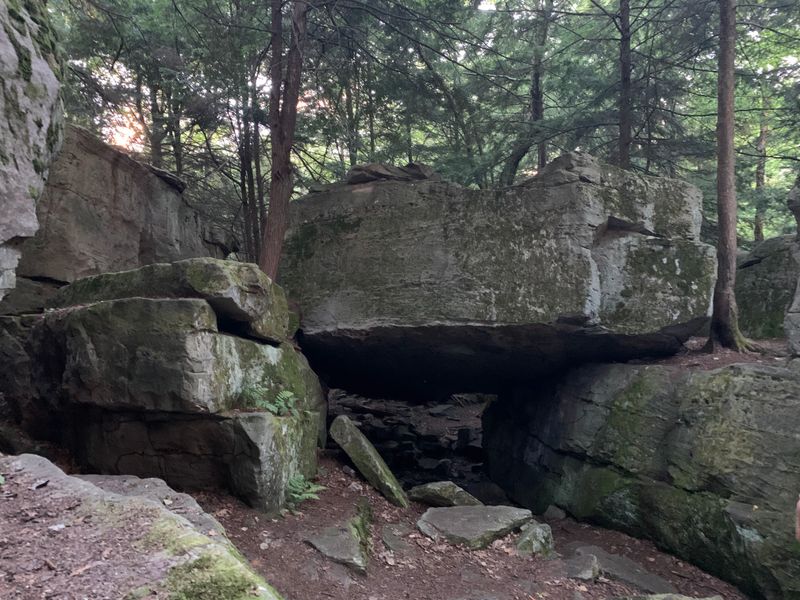
Bilger’s Rocks feels like stepping into a sandstone city sculpted by wind, frost, and time. The maze of corridors squeezes you through keyholes, then opens into amphitheaters where light pools on moss.
You will brush past ferns, duck through slotted crevices, and tap cool rock that once sat in an ancient shoreline.
Sound softens here, replaced by dripping water and the rasp of your boots. Look up to see ledges stacked like books, each layer a chapter in Pennsylvania’s deep history.
Kids love the hide and seek vibe, while photographers chase textures in golden hour shade.
Exploration rewards patience. Some passages narrow, so move slowly and mind wet patches after rain.
Winter brings ice curtains and glittering rime, but traction helps.
You can pair the rocks with a picnic near the trailhead, then loop back to chase another alley you missed. Wear grippy shoes, bring a small headlamp, and leave no trace in this delicate corridor ecosystem.
Bilger’s is not just a site to see, it is a place to feel the squeeze and release of stone guiding your pace.
Boulder Field at Hickory Run State Park
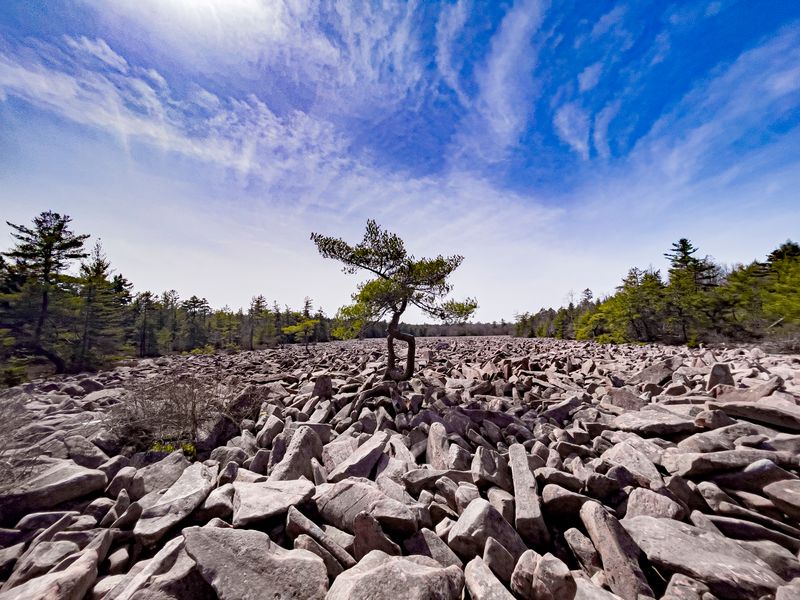
The Boulder Field at Hickory Run stops you cold the moment forest gives way to stone. It looks like a frozen gray sea, a mile wide bed of boulders tossed by Ice Age forces and left perfectly in place.
Step carefully and you will hear the clink of rock to rock, a subtle music of contact.
This National Natural Landmark invites slow, deliberate hopping. Start near the edge, test each stone, and find a rhythm that flows.
In summer, heat radiates from the blocks, while autumn paints the surrounding trees with fiery contrast.
Geologically, it is a periglacial marvel. Freeze-thaw cycles shattered bedrock and slid debris downslope, pooling in a basin that never filled with soil.
There is no marked trail across, just your own line and patience.
Bring sturdy shoes and avoid ankles twisting between gaps. If rain threatens, retreat early because lichen slicks like soap.
Stand still in the center, breathe, and imagine the ice winds, then look up as clouds roll like ancient glaciers overhead. You will leave with a new respect for time’s quiet persistence.
Pulpit Rocks
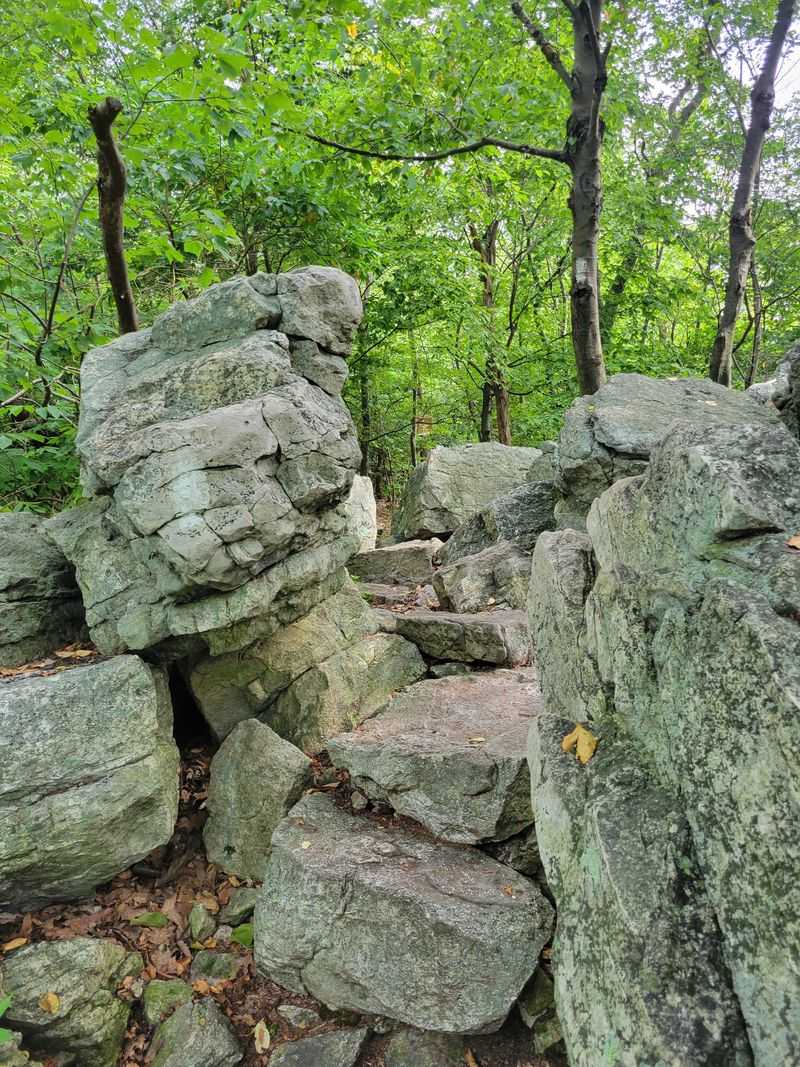
Pulpit Rocks stand like a row of weathered sermons, tall Oriskany sandstone pillars etched by centuries of rain and frost. They line the slope above Old US 22, a roadside classroom where Appalachian geology announced itself to early scholars.
You can park, walk a short distance, and see cross bedding and ledges in crisp relief.
These towers tell stories of ancient seas turned to stone, then tilted and sculpted as mountains rose. Each groove and notch channels runoff, carving sharper edges every storm.
Local lore adds curiosity, but the rock speaks loudly enough.
Photos work best in soft light that tucks shadows into vertical joints. Please stay mindful of traffic and private property near the access points.
Binoculars help you pick out fossils and bedding planes from a safe perch.
Bring a field notebook to sketch forms and label layers. If you are traveling with kids, turn it into a scavenger hunt for ripple marks and quartz pebbles.
A short stop becomes a memorable geology detour, proof that remarkable formations sometimes hide in plain sight beside an ordinary road.
Ringing Rocks Park
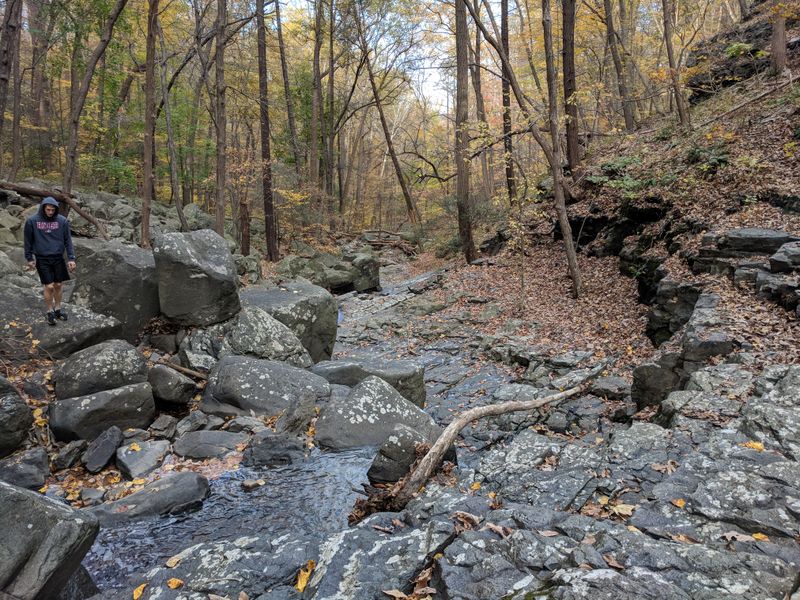
At Ringing Rocks Park, the stones do not just sit, they sing. Tap a hammer or another rock and some boulders chime with bell like tones, while others stay mute.
The field is a jumble of hard diabase blocks, cooled from magma and packed tight enough to carry resonance.
You will want to experiment, listening for clear notes and dull thuds. Different sizes and internal stress patterns tune each rock.
Please bring a small hammer and strike lightly, avoiding chips and respecting posted guidance.
Wear solid footwear because voids open between blocks. On damp days, lichen turns the surface slick, and ankles appreciate careful placements.
The surrounding forest softens wind, framing the soundscape with birdsong.
There is wonder in discovering that seemingly identical stones hold secrets in their cores. Pause, tap, and build a simple scale for fun.
Add a picnic near the lot, explore short trails, and leave the rocks as you found them so future visitors can hear the music of geology.
Archbald Pothole
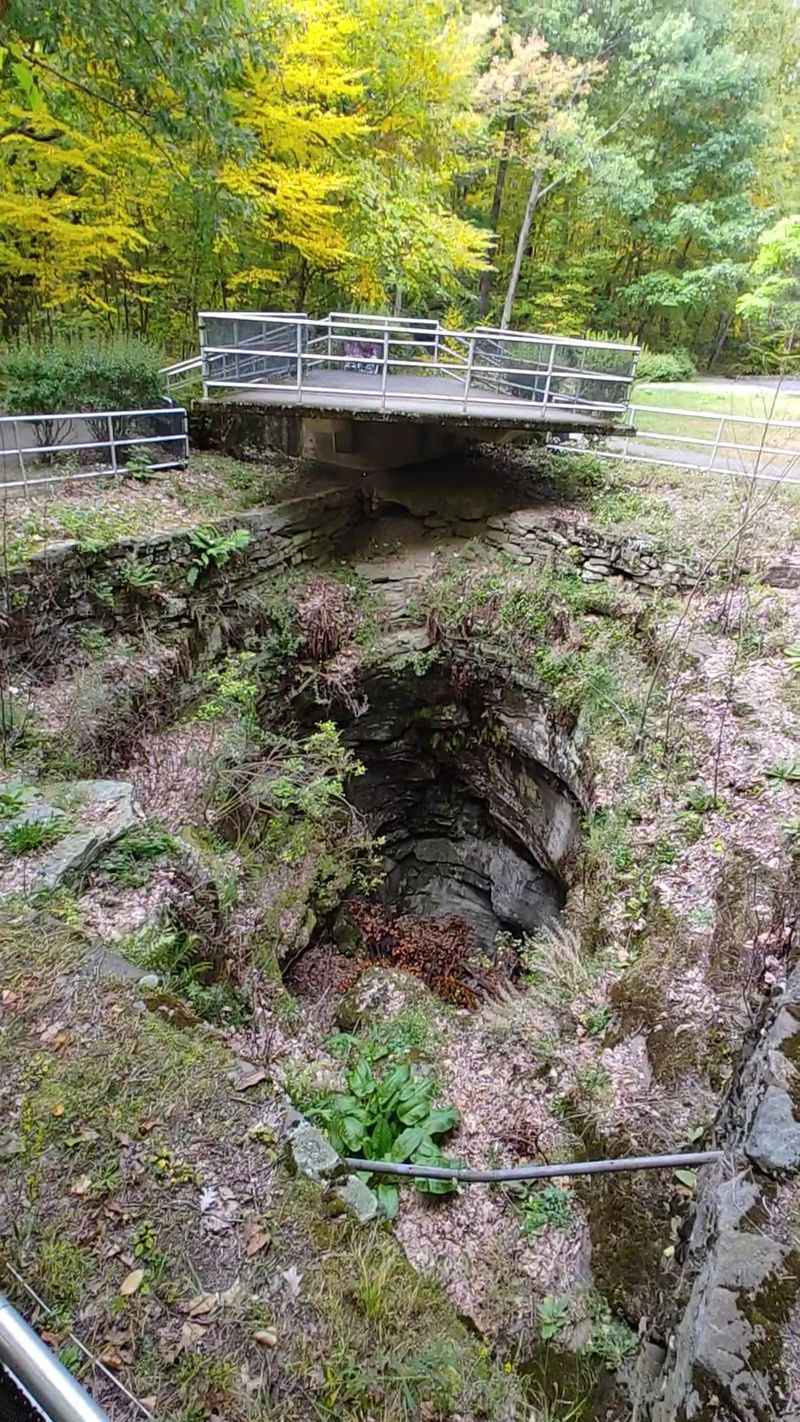
Archbald Pothole looks like a giant drill bit bored into bedrock, but it was carved by Ice Age torrents spiraling stones in a violent whirlpool. The cavity plunges deep and narrow, with polished walls that gleam after rain.
An overlook lets you peer safely into the earth’s smooth sided funnel.
It is a quick stop with outsized impact. Read the nearby signage to imagine boulders grinding in suspension, scraping circles within circles.
The scale surprises, especially considering it formed naturally without a single human tool.
Timing helps. Midday light reaches deeper into the shaft, revealing striations and embedded pebbles like stars.
In cooler months, clearer air sharpens views, but watch for ice near the rim.
Pair this visit with nearby trails for a full afternoon. Teach kids how water sculpts rock using nothing more than persistence and motion.
Stand quietly and trace the path of ancient meltwater, feeling the tug of past rivers that once roared right under your feet.
Balanced Rock (Trough Creek State Park)
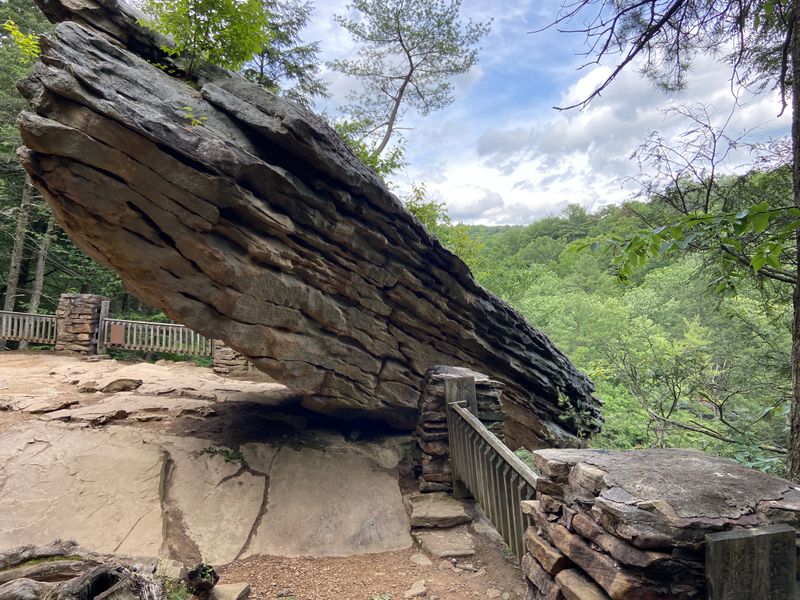
Balanced Rock hangs at the lip of a gorge like a paused heartbeat, a sandstone boulder poised on a narrow base. You can stand close enough to feel the void tug at your stomach.
Generations have wondered how it stays, but differential erosion and lucky angles do the quiet work.
The approach trail crosses a charming footbridge and climbs stone steps that feel carved by giants. In summer, shade cools the ravine and frames the boulder in deep greens.
Autumn throws a festival of color against its rusty skin.
It is a place to practice respect for edges and loose gravel. Good boots and cautious footing matter, especially after rain.
You will find natural photo frames from ledges and tree gaps nearby.
Listen to the creek, breathe pine, and consider how many storms the rock has shrugged off. The thrill is real, but the scene is peaceful if you move with care.
Leave only footprints and a whispered promise to return in another season.
Seven Tubs Natural Area
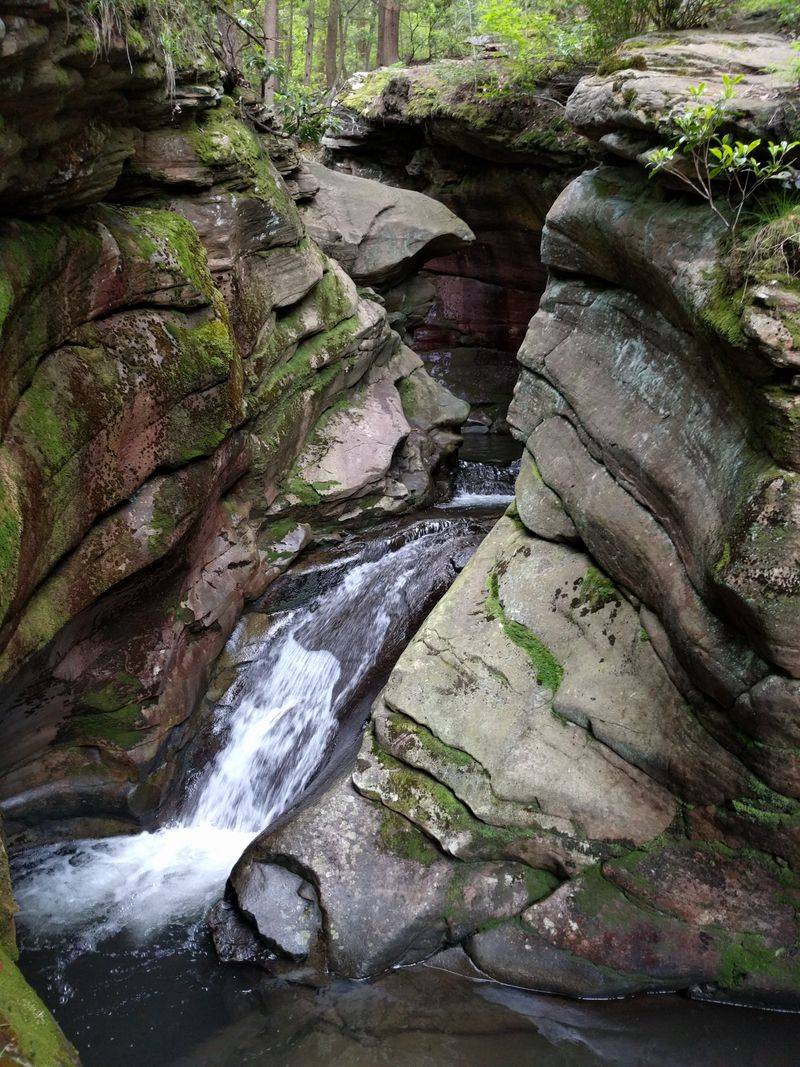
Seven Tubs strings a necklace of potholes and chutes along Wheelbarrow Run, where frothy water polishes sandstone into silky curves. Bridges and short trails let you browse each tub, listening to gurgles and watching eddies paint spirals.
You can feel the rock’s smoothness under a tentative palm.
After rain, the flow ramps up and the tubs perform. In summer, the canopy cools the gorge, while spring delivers bright moss and ferns.
The area is compact, perfect for an unhurried hour.
These forms are born from vortex action, pebbles grinding circular chambers that link into flumes. Look for striations and quartz streaks catching stray sunbeams.
Stay on rock where allowed and heed slick warnings.
Photographers love long exposures here, but keep tripods out of traffic. Bring sturdy shoes, skip the flip flops, and leave glass at home.
You will walk away calmer, as if the creek filed rough edges off your thoughts the same way it shaped the stone.
Panther Rocks
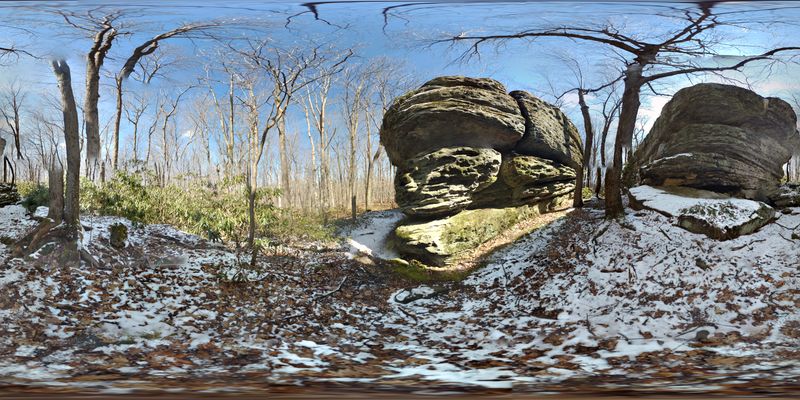
Panther Rocks hides a cathedral of sandstone blocks tucked in Moshannon State Forest. The boulders tower with alleyways between them, cool and moss scented even on hot days.
You will find pockets perfect for quiet lunches and playful squeezes through cracks.
The approach is straightforward on forest roads and short paths. Birdsong echoes softly, and the light filters green.
In winter, rime outlines every ledge, turning the rock city into a monochrome puzzle.
These remnants come from ancient deposits lifted and weathered, with joints guiding the breakage into blocky forms. Lichens and mosses colonize patiently, painting silver, sage, and charcoal.
Please tread lightly on fragile growth.
Bring a small headlamp to peek into tight passageways and gloves for cooler seasons. Watch footing where leaves hide gaps in autumn.
Let curiosity lead and you will leave with a secret place feeling, the kind that sticks for years.
Umbrella Rocks
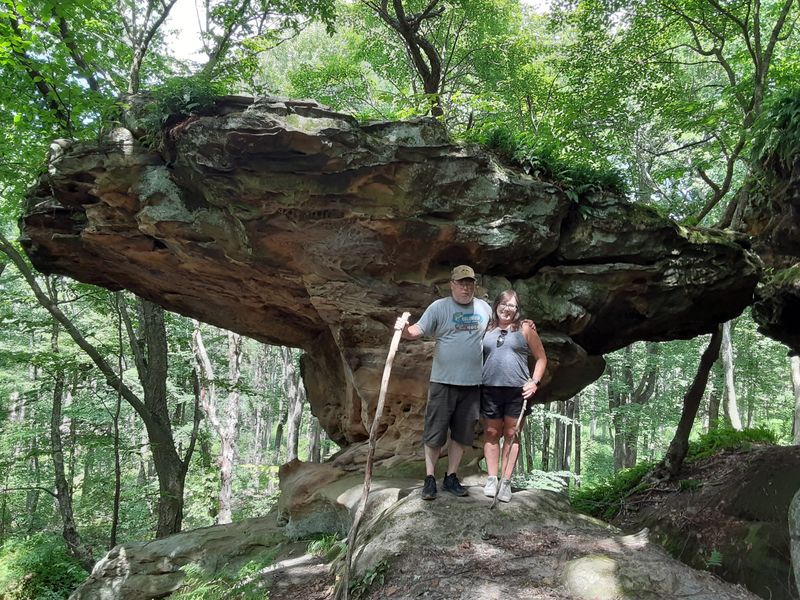
Umbrella Rocks look improbable, big capstones perched on narrow pedestals like stone mushrooms. Wind, water, and frost did the sculpting, peeling softer layers from beneath while the harder caps resisted.
In the quiet of Elk County forest, the shapes feel playful and ancient at once.
Finding them requires patience and local directions, which adds to the treasure hunt vibe. When you arrive, you will circle each form, amazed by the balance.
Moss drapes the bases in emerald, making the caps seem to float.
These are master classes in differential erosion. Joints and bedding planes define the lines, while runoff undercuts delicately over centuries.
Please avoid climbing the narrow stems to protect fragile edges.
Bring GPS coordinates if you can, along with sturdy boots and a respect for game land rules. Visit in early morning for soft light that sculpts the curves.
You will leave smiling at geology’s sense of humor, grateful you made the extra effort.
Beartown Rocks
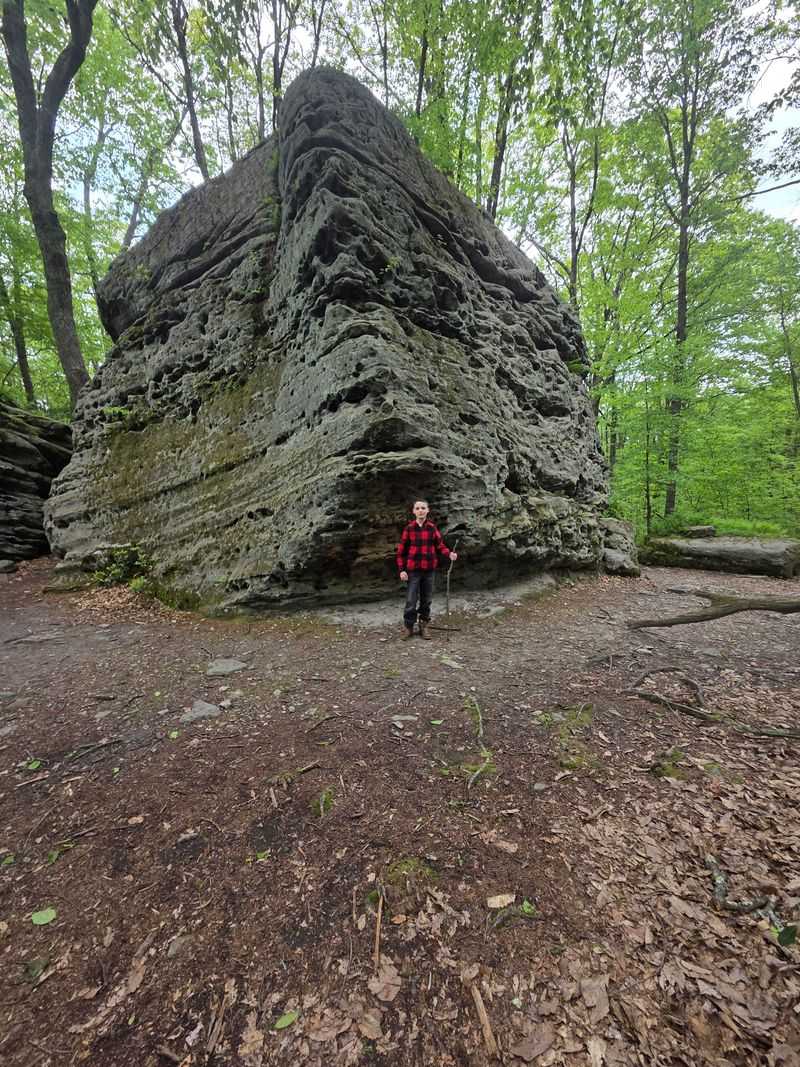
Beartown Rocks spreads out like a natural playground, house sized boulders stacked and tilted in the shade. Passages twist between walls, and an overlook opens to rolling forest that hums with wind.
You can wander unhurried, tracing lichened textures with your fingertips.
Access is straightforward, with picnic tables nearby for a slow day. Families love the mild sense of adventure without big exposure.
In autumn, fallen leaves warm the stone with copper tones.
These blocks are remnants of ancient sandstones broken along joints and edges, shifted by frost and gravity. Look for tafoni like honeycombing in softer patches.
Keep to established paths to protect plant communities nesting in pockets.
Good shoes are enough, but traction helps after rain. Bring snacks, a thermos, and an easy patience for exploration.
If quiet time calls, sit between boulders and let the forest fold you into its cool breath.
Fred Woods Trail Rock City
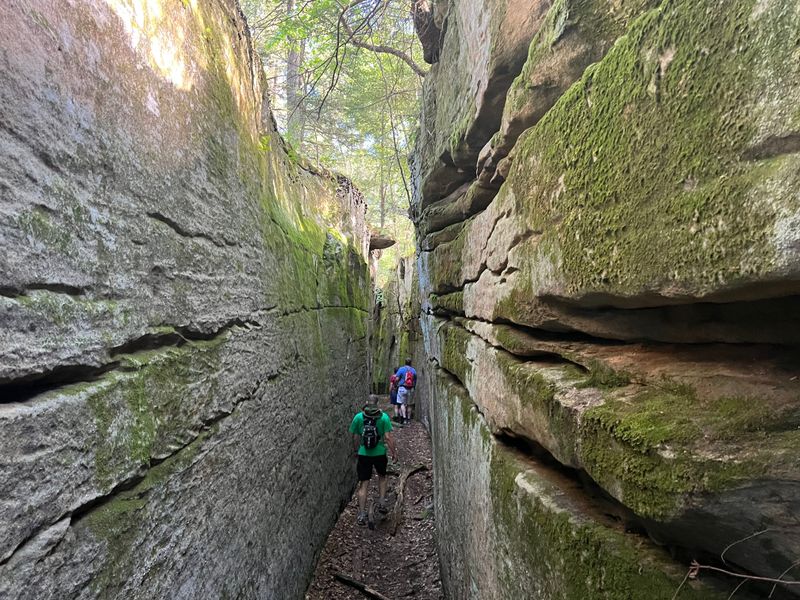
The Fred Woods Trail loops to a surprise rock city where boulders rise into moss lined corridors. It feels secretive, hushed, and satisfyingly remote.
You will squeeze through alleyways, tiptoe across roots, and pause at a rustic overlook sweeping over Elk Country.
The trail’s moderate mileage makes room for lingering. Start early to have the labyrinth mostly to yourself, then listen for thrush songs threading the hemlocks.
After rain, the rocks darken and beams of light carve dramatic planes.
Geology here writes in joints, frost wedging, and gravity’s patient shoves. Ferns farm the cracks, and the air carries a cold stone scent even in July.
Please leave the moss untouched and pack out every crumb.
Bring a paper map in case signal fades, plus layers for shaded hollows. The best photos come low, where lines converge between blocks.
By the car, you will already be planning a return visit, because this little labyrinth works like a spell.
Wolf Rocks
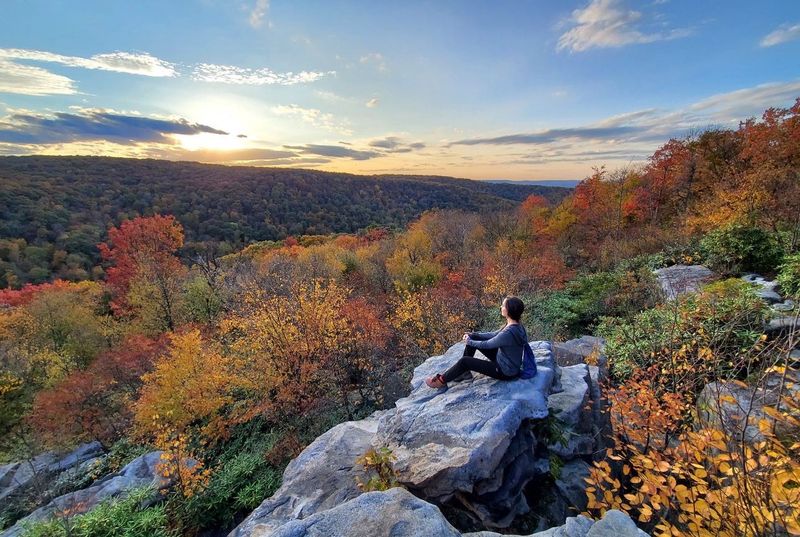
Wolf Rocks throws a stone balcony out over the Laurel Highlands, a sweep of blocky ledges catching constant wind. The hike rolls through spruce and oak before the view opens in a gasp.
You will step carefully across fractured slabs to drink in a 180 degree panorama.
On clear days, ridges stack into blue layers and hawks bank below you. The rock offers positive friction when dry, but after rain it turns slick as soap in spots.
Respect gaps and keep dogs close.
These outcrops are tough sandstones that weather into broad tables and split blocks. Ice pries, roots wedge, and gravity repositions pieces down slope.
Watch for graffiti and do your part to keep the site clean.
Pack a layer for wind and give yourself time to sit with the view. Sunset burns the horizon in warm copper while the forest cools to charcoal.
You will hike out with a lighter mind, as if the ledges loaned you their steadiness.
Scripture Rocks Heritage Park
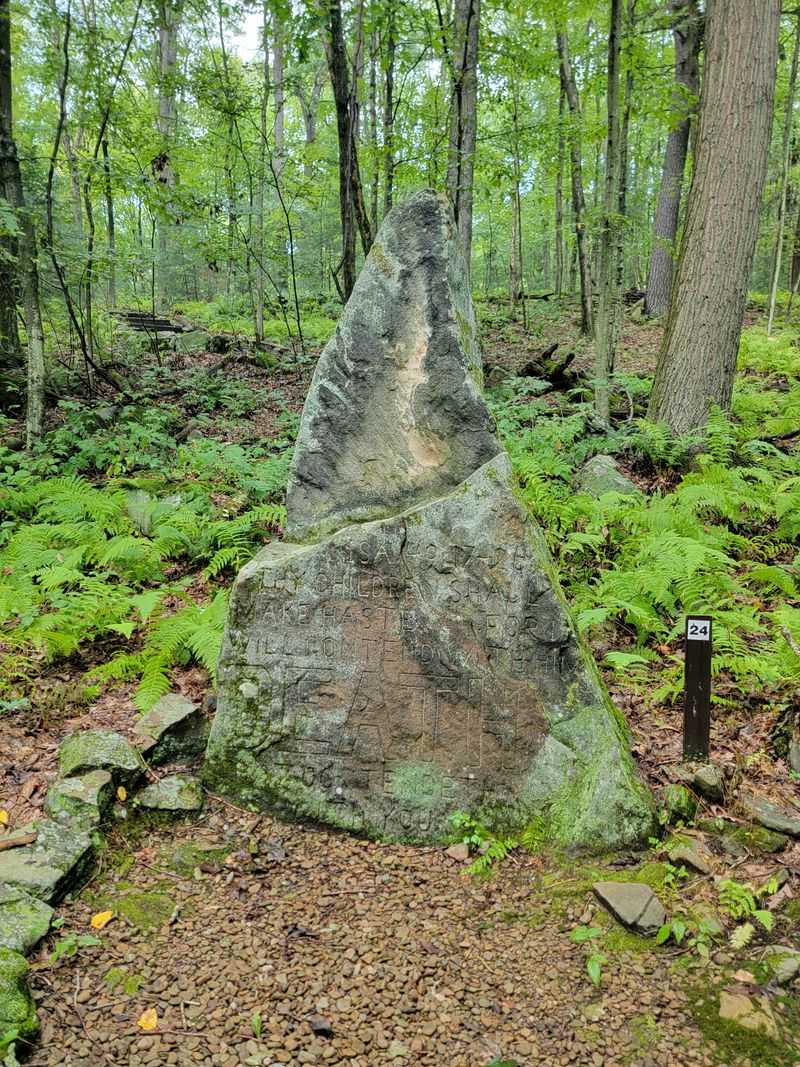
Scripture Rocks Heritage Park weaves human stories into sandstone, where early 1900s carvings etch verses and symbols across boulders. Trails loop through quiet woods, each stop revealing another inscription framed by moss.
You will feel the rhythm of footsteps slowed by curiosity.
Whatever your beliefs, the craftsmanship and persistence impress. Letters chiseled by hand ride the rock’s grain, weathering into soft shadows.
Interpretive signs guide you gently through the history.
These stones are part of the same rugged geology carved across the region, but here they also carry a cultural layer. Please avoid touching fragile carvings and stick to paths that protect roots.
After rain, inscriptions pop with contrast.
Bring respectful attention, a camera, and time to read aloud if you like. The park invites reflection without demanding it.
You will leave hearing the echo of a single person’s steady work resonating through a landscape built by time.
Dinosaur Rock
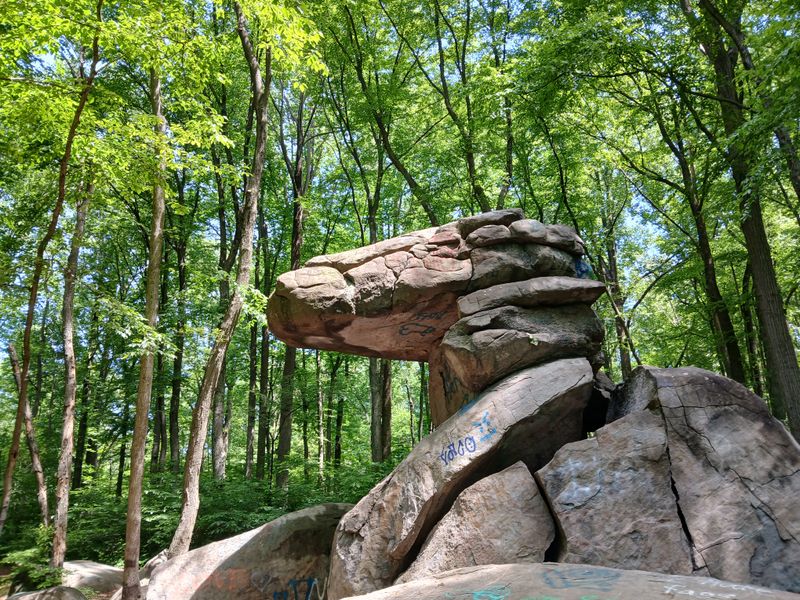
Dinosaur Rock perches on a ridge above Colebrook like a reptile mid-stride, its sandstone blocks piled into a jagged spine. You will scramble short ledges, brush laurel, and find wind-carved pockets that collect pine needles.
From the crest, fields patchwork the valley while traffic sighs faintly below.
The rock’s cross-bedding whispers about ancient rivers pushing sand in shifting bars. Frost wedges have pried seams, leaving cubed steps perfect for photo poses.
Look close for lichen constellations, pale green against rust streaks. Kids love the “dino head,” but the views are the secret star.
Visit at sunrise or late afternoon for soft light and cooler stone. The approach is short yet uneven, so shoes with bite help.
After rain, the sandstone grips surprisingly well, though moss stays slick.
Pack a small picnic and tuck into a wind-sheltered nook. Please skip chalk and keep carving tools at home, since the rock scars easily.
Nearby farm stands make a sweet post-hike stop, and spring peepers soundtrack the walk back.
Meadow Run Natural Waterslides
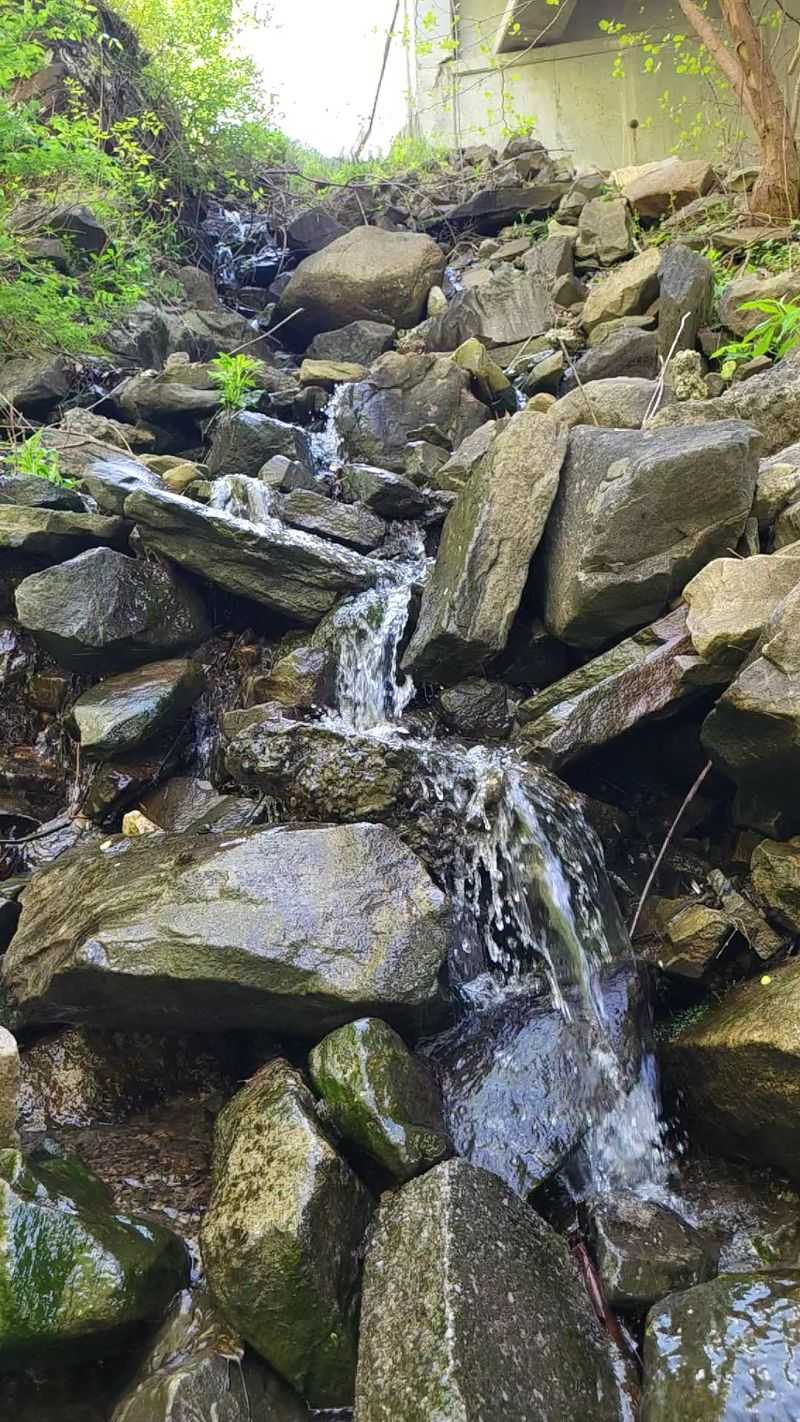
At Ohiopyle, Meadow Run has carved a set of sandstone chutes that look engineered but are purely river work. The waterslides twist through fluted channels, spill into polished bowls, and keep humming even on quiet mornings.
You can trace fingertip grooves where pebbles spun for centuries.
Stand on dry shelves to study ripple marks and cross-bedding frozen mid-flow. Potholes bead with amber foam after storms, then clear to reveal quartz pebbles.
The stone here is Pottsville sandstone, tough yet sculptable under relentless hydraulics.
Summer invites wading, though current and slippery algae demand respect. Photographers catch best textures under cloud cover.
Winter ice etches silver borders and hushes the gorge.
Reach the slides via the Meadow Run loop and linger at overlooks where noise condenses into white hiss. Pack sandals with grip and leave glass at home.
Downstream, stop by Cucumber Falls to complete a sandstone double-feature, then warm up in town with coffee and trail talk.
Chickies Rock
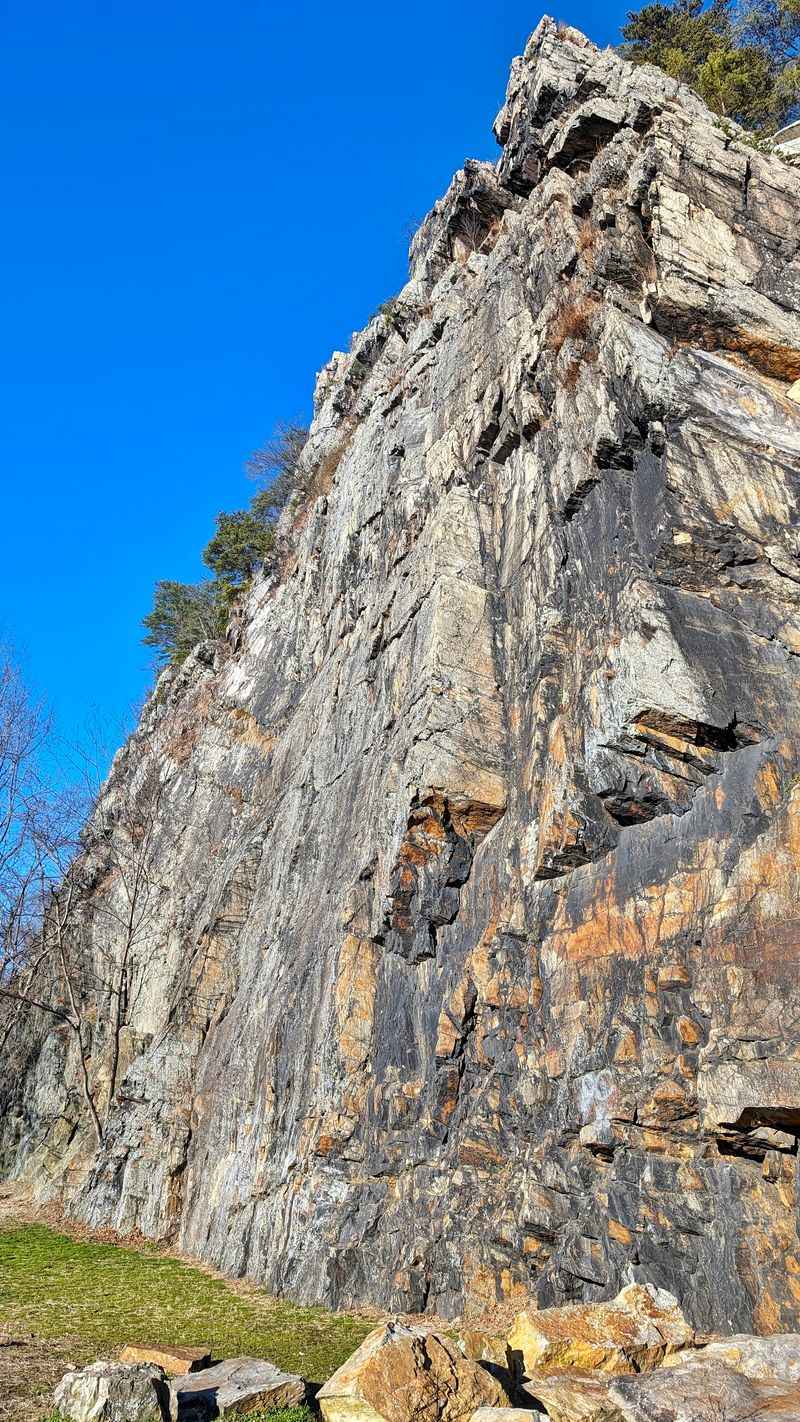
Chickies Rock rises abrupt over the Susquehanna, a quartzite prow where wind presses against your back and trains hum below. The cliff feels like a balcony anchored to deep time, its ledges stacked and iron stained.
Step close to the edge, and the river braids into steel and silver.
You follow a gentle path through oak and mountain laurel, then the forest parts like a curtain. Lichens map the stone in pale greens, and swallows flicker against the face.
If you listen, you can hear the rock shed heat and settle into evening.
Locals come for sunsets that pour copper light across the valley. Photographers chase afterlines and silhouettes of bridges downstream.
You might just stand still, breathing slower, counting ripples between pilings and islands.
Quartzite here began as sandy shores long before Appalachia rose and wrinkled. Pressure fused grains, tilted beds, and lifted this ridge as the river carved around it.
Touch the cliff and you are touching compressed shorelines, river histories, and passing storms.