Fire shoots skyward. The kettle roars. Dinner becomes a spectacle.
In Wisconsin’s Door County, the fish boil isn’t just a meal — it’s theater, history, and community bubbling together over open flames.
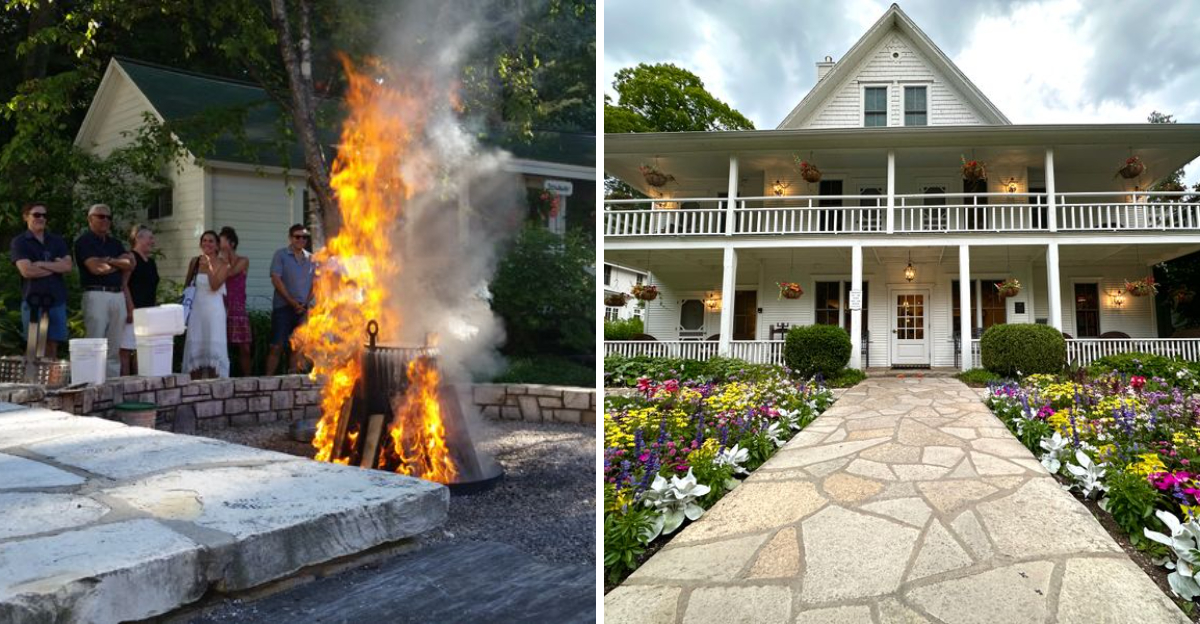
At a cozy 19th-century inn, guests gather outdoors as whitefish and potatoes roll in a massive kettle. Then comes the moment everyone waits for — the legendary boilover, a burst of flame that feels part science, part ritual.
The star of the table is fresh whitefish from Lake Michigan, served simply, generously, and without fuss.
This is dining the old-fashioned way — smoky air, shared tables, and a tradition that refuses to fade.
A Historic Door County Landmark
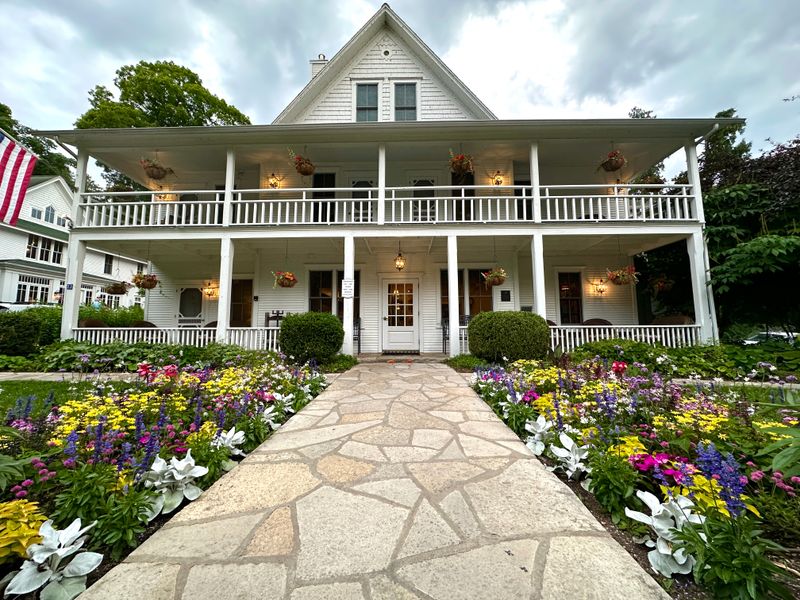
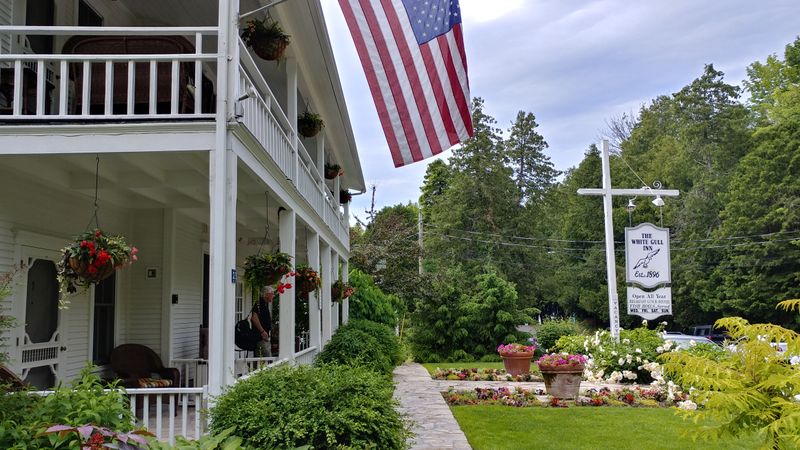
Step onto the porch of the White Gull Inn and the years fall away. The clapboard siding, creaking floors, and soft lamplight make it feel like time slows to a neighborly pace.
You sense stories in the woodwork, and dinner feels connected to generations that gathered here before you.
Opened in the late 1800s, the inn reflects Door County’s enduring spirit. Its rooms are cozy, not fussy, and the dining spaces favor conversation over spectacle.
Tradition is not encased behind glass here, it is lived through recipes, rituals, and the rhythm of the seasons.
That authenticity anchors the fish boil. You settle into a chair, hear the murmur of guests, and watch the fire crew prepare the kettle as if rehearsing a familiar play.
The inn’s age is not a prop, it is a promise that what you are about to taste has stood the test of time.
A Storybook Setting in Coastal Wisconsin
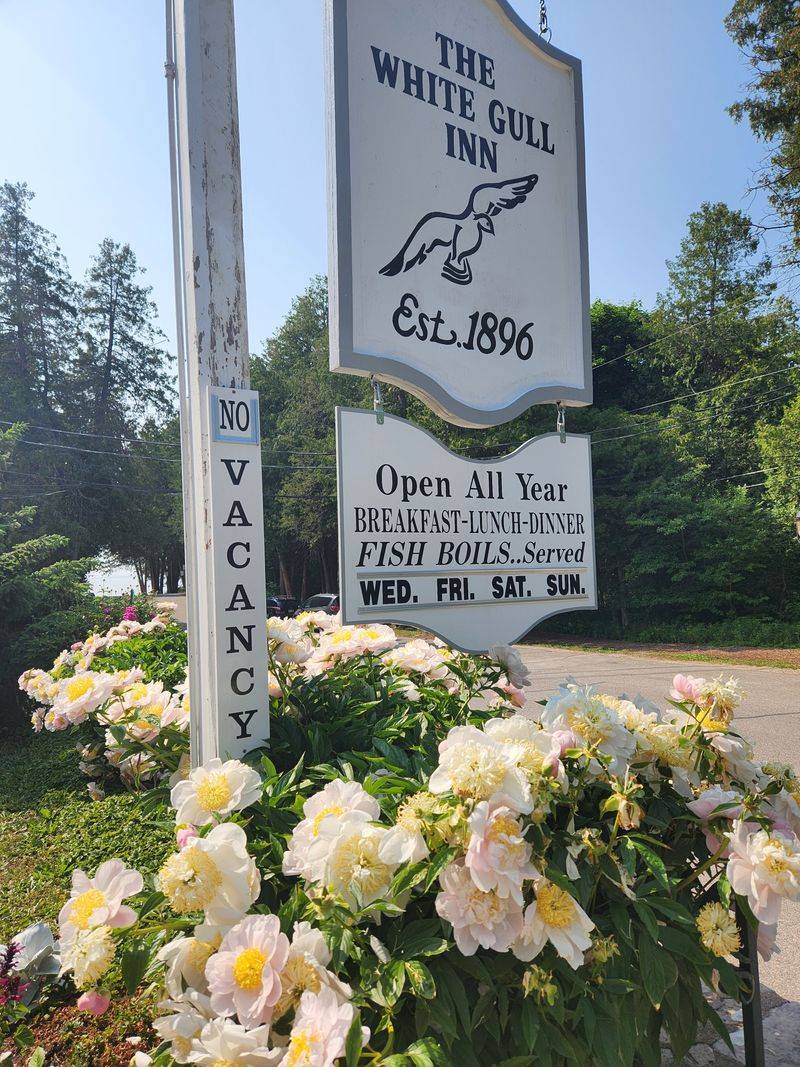
Fish Creek looks like it was sketched from a beloved storybook. There is a quiet harbor, tidy storefronts, and a shoreline that rolls into gentle blues.
As you arrive for the fish boil, the lake breeze carries woodsmoke and laughter, and the streets seem designed for wandering.
The inn sits within easy steps of the water, so it is simple to time your meal with a stroll on the docks. Summer brings sailboats and long light, while fall paints the trees and sharpens the air.
Each season frames the kettle flames differently, but the charm feels steady.
You find yourself slipping into the village’s easy rhythm. Grab a coffee, peek into galleries, then return to the courtyard just as the kettle steams.
The setting does not compete with dinner, it completes it, making the experience feel deeply, comfortably Wisconsin.
The Scandinavian Roots of the Fish Boil
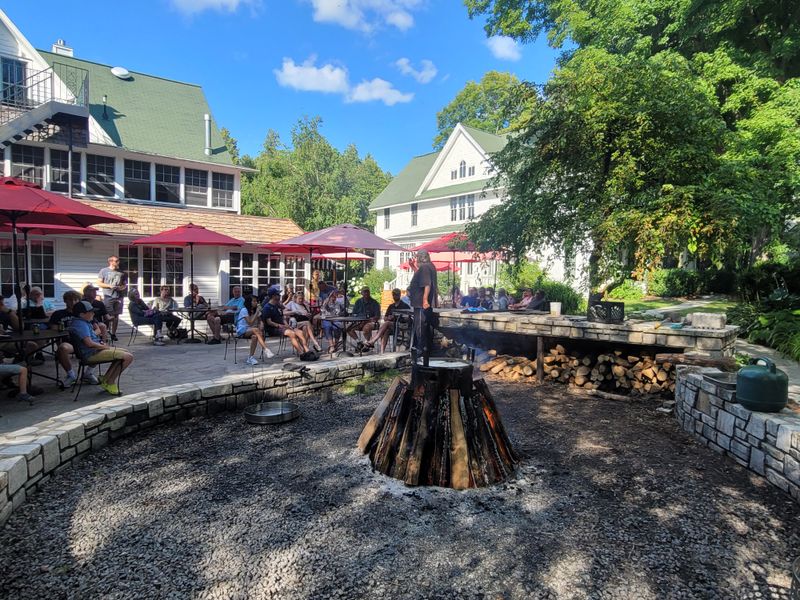
The fish boil began as a practical meal for hardworking Scandinavian immigrants and lumber camp crews. Whitefish, potatoes, and onions went into a big kettle outdoors because it was fast, filling, and easy to serve many people.
That simplicity became a signature, proving that honest ingredients do not need embellishment.
Over time, cooks turned necessity into ritual. Church gatherings and community fundraisers adopted the method, and stories traveled with the steam.
The tradition spread along the peninsula, stitched into local identity like a well worn sweater that never goes out of season.
Today, you stand by the fire and feel that heritage warming your cheeks. The ingredients remain humble, but the meaning runs deep.
Each ladle and log on the blaze nods to ancestors who cooked under open skies, reminding you that comfort can be communal, nourishing both appetite and belonging.
The Dramatic Boilover Tradition
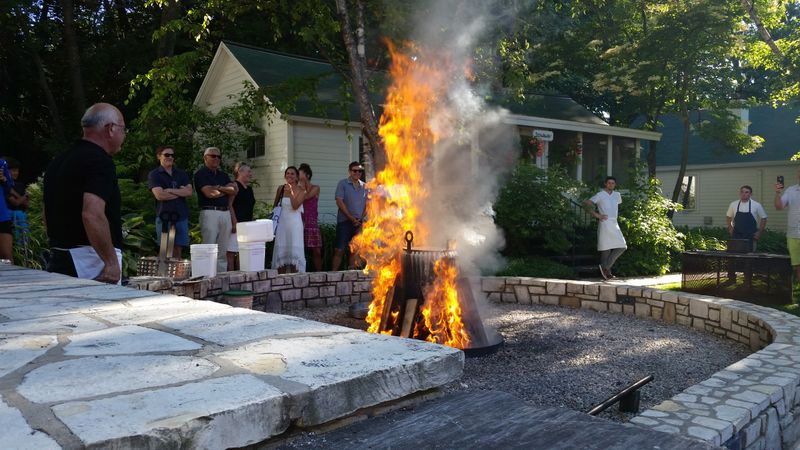
The showstopper is the boilover, when the cook throws a splash of kerosene on the fire and the flames roar. In seconds, the kettle erupts and a clean sheet of liquid spills over the rim, carrying oils with it.
The crowd gasps, you feel the heat, and then everything settles into perfect simmering calm.
This spectacle is not just theater. The step clarifies the broth and signals that the fish is ready, locking in tenderness without greasiness.
Safety is choreographed into every move, from distance markers to practiced timing.
Watching the fire flare is strangely meditative. You hold your breath, then exhale with everyone else as steam rolls skyward.
It is a small shared triumph, proof that dinner here is cooked with precision, respect for tradition, and just enough drama to make memories last.
Fresh Great Lakes Whitefish at the Center
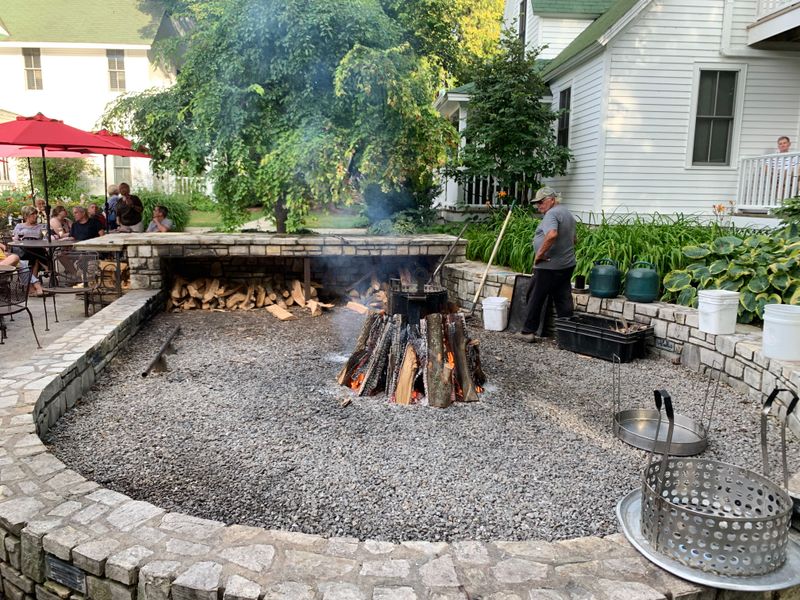
Great Lakes whitefish is the star here, prized for its delicate flavor and gentle, flaky texture. Freshly caught from Lake Michigan, it cooks quickly in the kettle, absorbing just enough salt to bloom without masking its sweetness.
Nothing is heavy, everything is bright and clean.
The plate arrives with boiled potatoes, sweet onions, melted butter, and classic sides like coleslaw and rye bread. A squeeze of lemon lifts each bite, and the butter gloss adds comfort without clutter.
You taste lake, fire, and restraint, not a spice rack.
If you crave complicated sauces, prepare to be surprised by how satisfying simplicity can be. The fish carries the meal, but the harmony of sides makes it complete.
Leave room for cherry pie if offered, because Door County fruit has a way of turning a great dinner into a perfect one.
A Long Standing Culinary Reputation
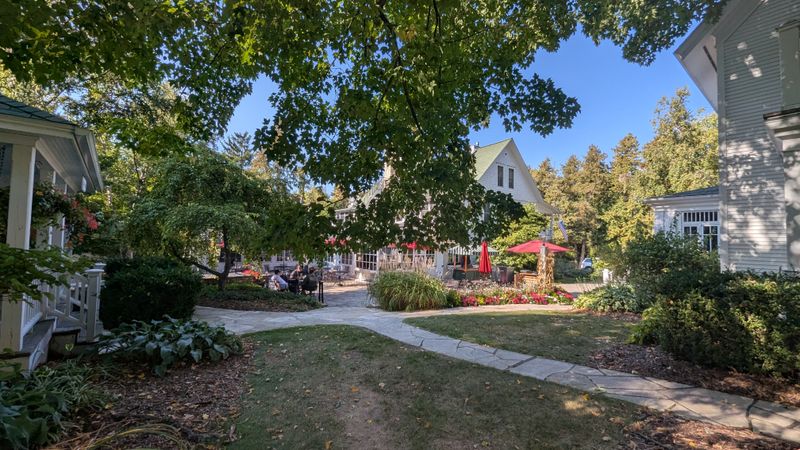
The White Gull Inn has shaped how countless visitors understand a true Door County fish boil. Decades of steady practice have refined each detail, from the pacing of the story to the timing of the boilover.
Consistency builds trust, and you feel it the moment staff greet you like a returning friend.
Reputation here is not hype, it is upheld nightly. Cooks share lineage with mentors, recipes are guarded yet generously served, and feedback shapes small improvements.
The space itself, with historic photos and worn tabletops, reads like a scrapbook of satisfied evenings.
Word spreads because the experience delivers. Travelers come curious and leave convinced, recommending it to anyone chasing authenticity.
When a place endures this long, it is because the welcome is sincere, the food is right, and the promise of a memorable night gets kept again and again.
More Than Dinner — A Shared Community Event
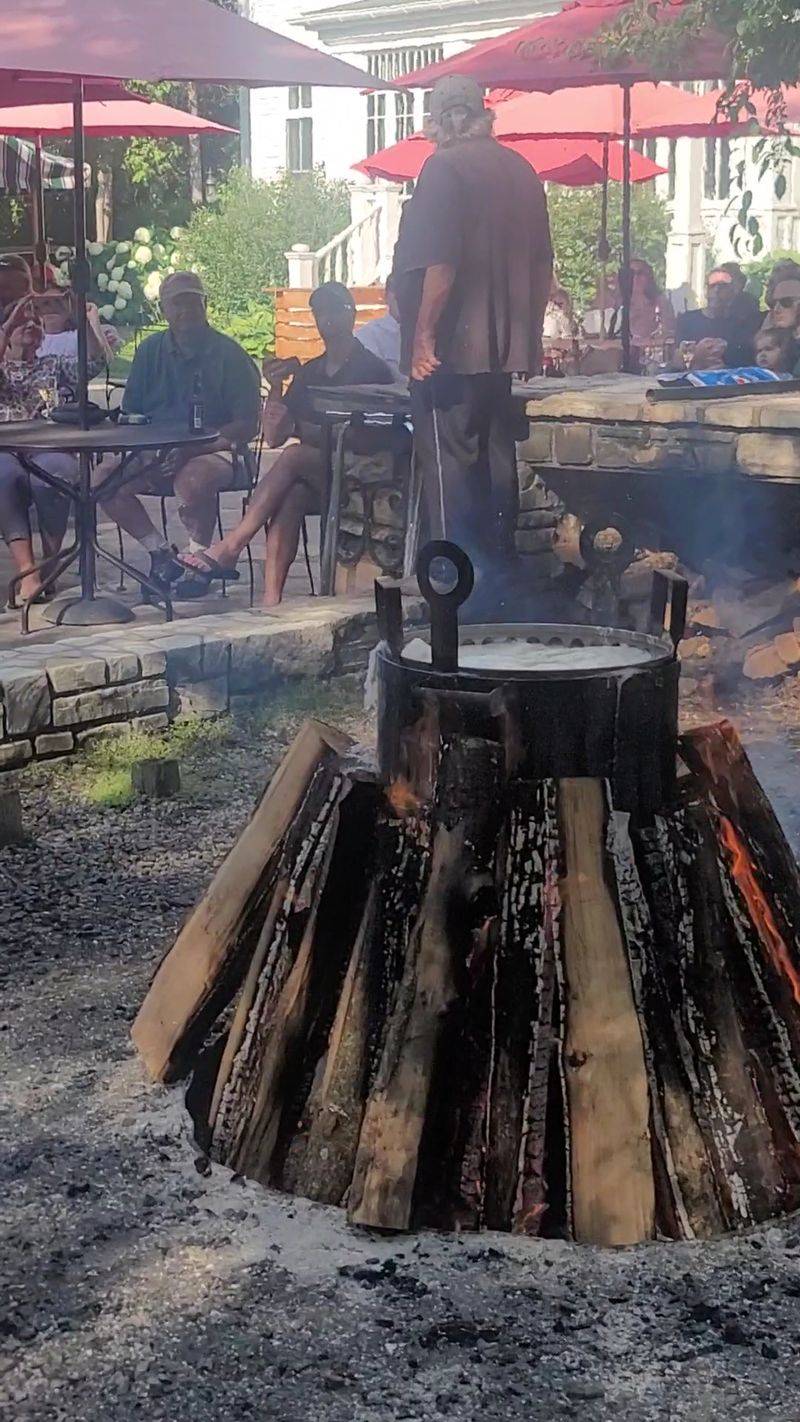
Arrive early and you step into a friendly pre show. Guests circle the kettle, trade travel tips, and listen as the boil master explains every step.
Stories drift over the crackle, and strangers start to feel like seatmates at a favorite neighborhood spot.
Community is the point. This meal grew from church suppers and waterfront gatherings, and you can sense those roots in the easy conversation.
Kids lean forward, grandparents nod knowingly, and everyone counts down to the flare.
By the time plates land, the table already feels shared. You pass butter, swap recommendations for tomorrow’s hikes, and toast to simple pleasures.
It is comfort food made communal, proof that hospitality thrives outdoors, under a Wisconsin sky that turns dinner into a small celebration.
Surrounded by Classic Door County Scenery
Pair the fish boil with time outside and the day feels complete. Peninsula State Park is minutes away, with bluffs, bike paths, and views that stretch your sense of horizon.
Shops and galleries line the village, and shoreline drives reveal coves that look painted by lake light.
Between meals, you can kayak, hike, or simply sit by the harbor and watch gulls trace slow circles. The scenery is classic Door County, equal parts rugged and gentle.
Every turn seems to frame a photo without trying.
That setting wraps back into dinner. You carry the day’s fresh air to the courtyard, and the fire returns its own kind of wilderness.
The meal tastes better because the place is doing its quiet work, reminding you why simple food in the right landscape becomes unforgettable.
Essential Visitor Information
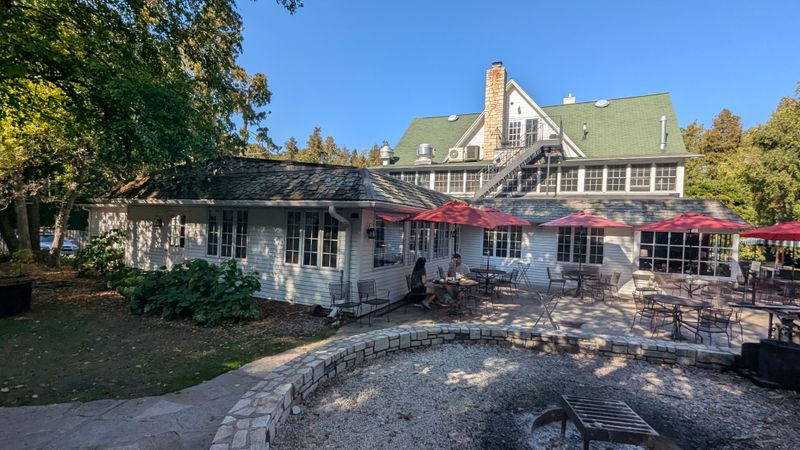
Here is what to know before you go. Location: 4225 Main St, Fish Creek, WI 54212.
Season: typically spring through fall, with summer in highest demand and autumn weekends especially popular for color and crisp evenings.
Reservations are strongly recommended because seating fills quickly. Plan to arrive early to watch the outdoor cooking and the dramatic boilover.
Dining style is communal seating with a traditional whitefish dinner, classic sides, and often a sweet finish like cherry pie.
Dress for the weather since you will spend time outdoors during the show. Bring curiosity, a camera, and an appetite for Wisconsin hospitality.
Best for food lovers, cultural travelers, families, and anyone craving a genuine taste of the peninsula’s past made deliciously present.