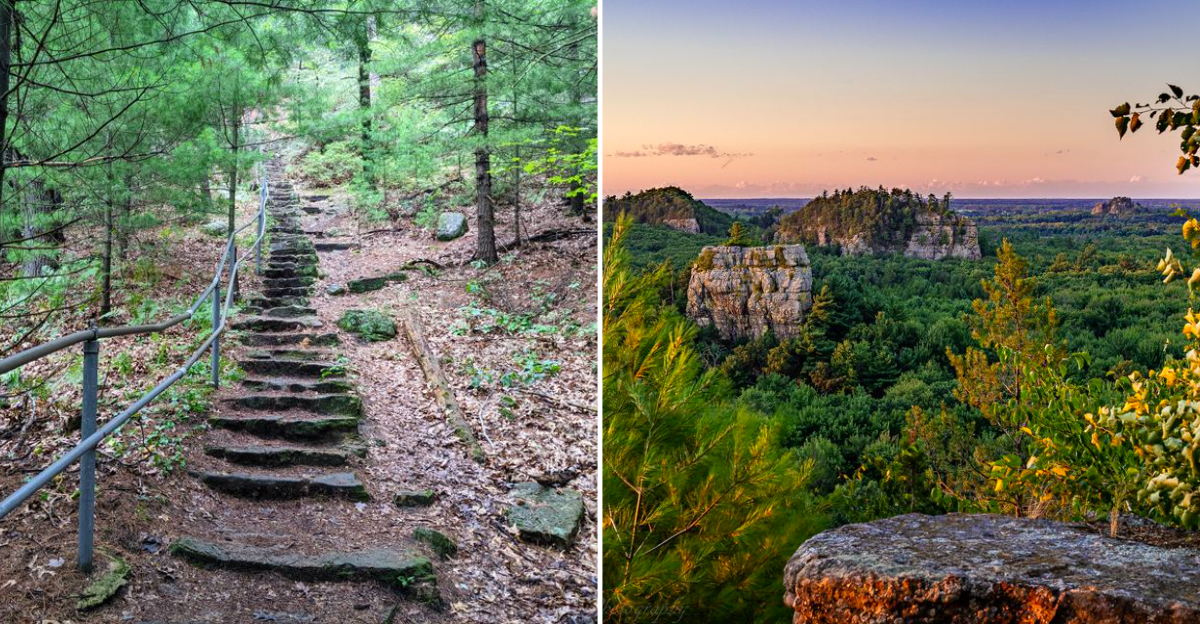
You don’t have to fly to Arizona to feel tiny beneath towering canyon walls.
Right in the heart of Wisconsin, Mill Bluff State Park rises from the fields like a plot twist no one saw coming. Sheer sandstone bluffs punch into the sky.
Shadows stretch across ancient rock. And suddenly, Camp Douglas feels a whole lot wilder.
These cliffs weren’t carved yesterday. They’ve been standing here since glaciers ruled the Midwest, leaving behind dramatic formations that look ripped from a desert postcard.
Climb the steep trails and the view explodes—rolling forests, open farmland, endless sky.
It’s quiet up there. Wind in your ears.
Boots on stone. That little rush in your chest when you realize Wisconsin has been hiding something spectacular all along.
This isn’t just a park. It’s a surprise.
And it’s waiting.
Overview and Geology of the Bluffs
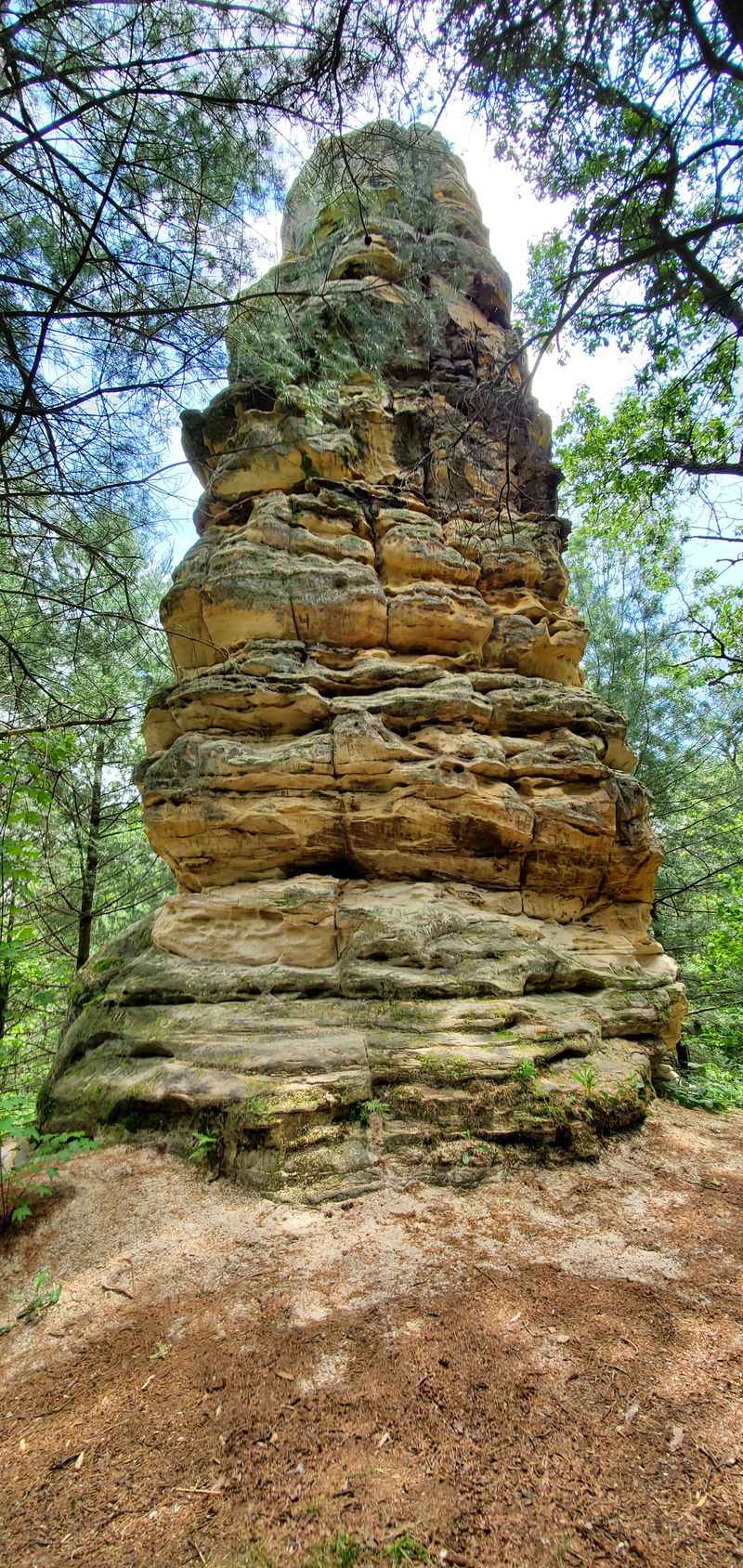
Mill Bluff State Park is famous for its striking sandstone bluffs that erupt from a flat glacial outwash plain like giant islands. These towers are remnants of Cambrian sandstone, sculpted by ancient seas, rivers, and relentless weathering.
When you first see them, they feel out of place, almost cinematic, as if the Grand Canyon sent a few sentinels to Wisconsin.
The bluffs are mesas and buttes, each with sheer cliffs and blocky faces that glow at sunrise. Over time, softer layers crumbled while harder caprock resisted, leaving those vertical walls.
You will notice talus slopes, honeycomb weathering, and bedding lines that read like pages in a geology book.
Glacial meltwater flattened the surrounding landscape, which makes the bluffs look even taller and more dramatic. Because the park is relatively undeveloped, you get raw texture and uninterrupted silhouettes.
Bring a zoom lens to capture cross-bedding and lichens painting the stone.
Expect steep stairways to reach some overlooks, and be ready for occasional highway noise that comes with convenient access. Even so, the bluffs command attention and reshape your sense of scale.
Spend a little time just watching light move across the faces. Those shifting colors are half the magic.
Mill Bluff Trail and Stair Climb
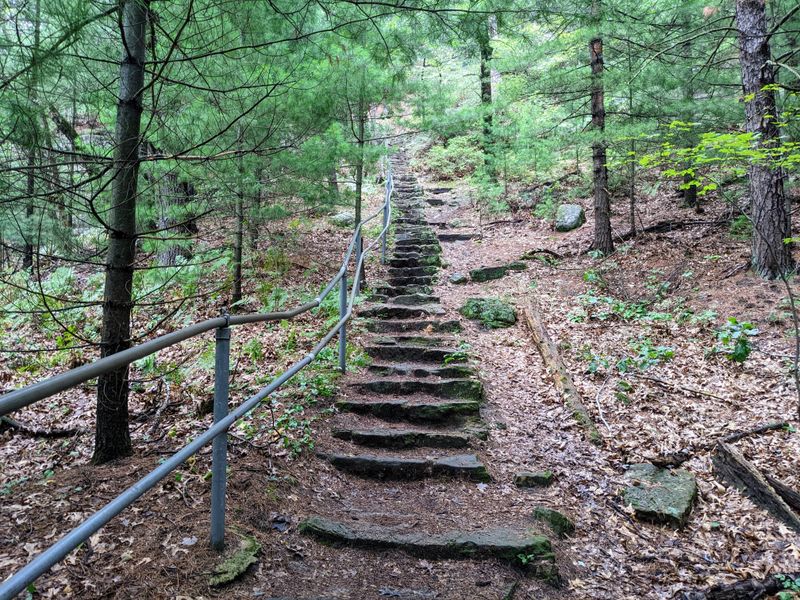
The signature workout here is the stair climb up Mill Bluff, a sequence of steep wooden steps tucked into pine shade. It is short but punchy, and you will feel your calves as you rise above the treetops.
Handrails help, though the grade can be slick after rain, so take it steady and pause for breath.
At the top, two overlook spurs branch out. One faces the highway corridors, where the soundscape can intrude but the geometry is surprisingly photogenic.
The other looks over endless green, though summer foliage can limit distant views.
Bring water, bug spray, and shoes with grippy soles. Early morning or golden hour softens the scene and reduces traffic noise a bit.
If mobility is a concern, consider enjoying the lower loops and viewing areas instead.
The climb rewards you with sandstone closeups, wind-carved edges, and pale lichens that speckle the rock. You will understand why reviewers rave about the raw, untouched character.
Even with the hum below, the bluff’s height gives a tiny island of perspective. Snap your photos, then sit for a few quiet minutes.
Let your breathing slow so the place can settle in.
Camel Bluff and the Lower Loop
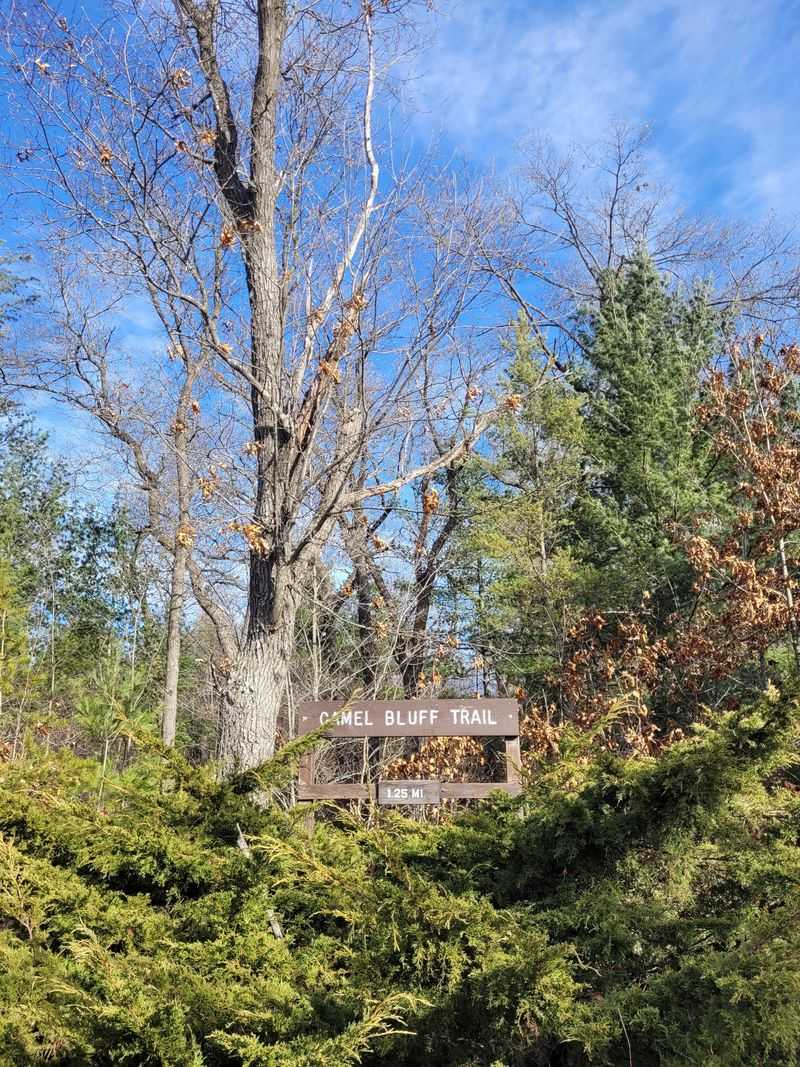
The Camel Bluff area feels tucked away, with a lower loop that winds beneath forest and glimpses of sandstone. The formation itself can be tricky to spot from below, especially when leaves are full and light is flat.
Keep scanning for ochre stone peeking through branches, and you will catch its humped profile.
Trails here are generally easy, though roots and patches of sand require attention. Mosquitoes can be fierce in warm months, so repellent is not optional.
If you want clearer views, visit after leaf drop or on a bluebird winter day.
What you gain on this loop is texture: resin scent from pines, drumming woodpeckers, and that soft crunch underfoot. You walk parallel to time, imagining water and wind carving these ribs and ledges.
Pause where the trail skirts talus to appreciate stone blocks and lichen maps.
Signage is modest, so download a map before you arrive. If solitude appeals, midweek mornings are blissfully quiet.
You will not get sweeping postcards on every turn, but you will feel immersed in the park’s subtler moods. Let the loop be a reset button, more about presence than vistas, and the Camel comes into focus.
Best Overlooks for Sunrise and Sunset
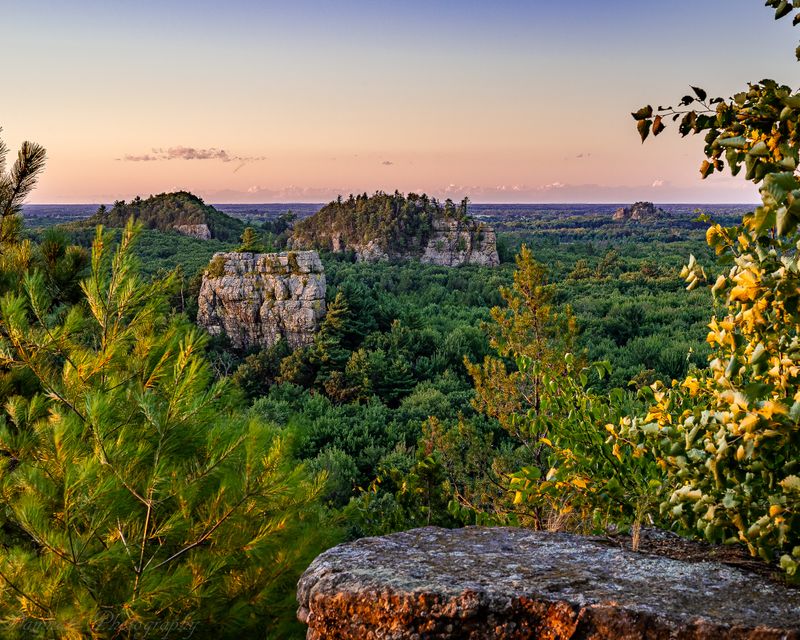
If you chase golden light, plan sunrise on the Mill Bluff overlooks and sunset from roadside pull-offs framing multiple buttes. Morning mist often pools in the lowlands, giving bluffs a floating-island vibe.
At day’s end, sandstone turns copper while the forest deepens to ink-green.
Arrive early to claim space at the top platforms, which are small. Pack a headlamp for those pre-dawn steps and mind the railings, especially after rain.
Tripods fit, but be courteous to other visitors waiting for their shot.
For composition, use a telephoto to stack distant bluffs and compress the landscape. Switch to a wide lens as the sun breaks to include foreground pines.
If traffic noise distracts, try recording a few seconds of ambient birdsong to anchor your memory later.
Clouds are your friend because they bounce color and soften shadows. On blue-sky days, wait until the sun drops just above the horizon for gentler highlights.
You will leave with frames that feel bigger than Wisconsin, and yet completely of this place. Keep layers handy, because temperatures swing quickly before dawn and after dusk, especially near shoulder seasons.
Swimming Pond and Day-Use Area
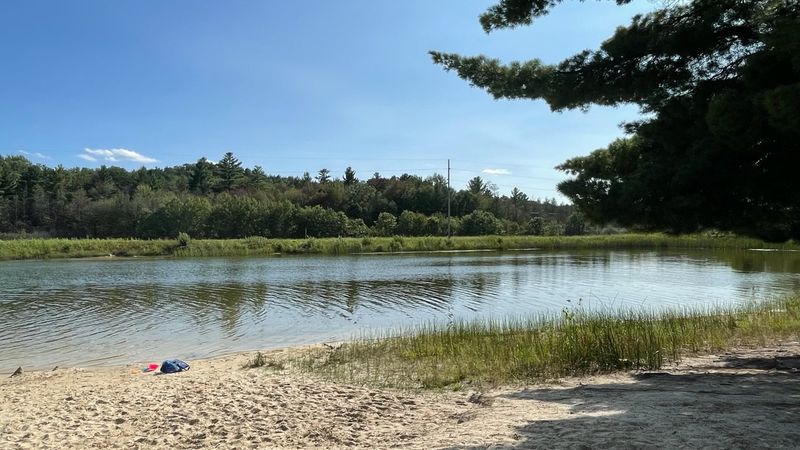
Across from the main bluff area sits a simple swimming pond that feels like a throwback summer scene. The beach is compact, water is calm, and kids make instant friends.
There is no lifeguard, so keep a close eye and swim within comfort zones.
Picnic tables dot the day-use space, making it easy to set up a base camp. Bring snacks, a blanket, and sandals for the sandy shallows.
If you forgot suits, it is still a lovely spot to cool feet and watch reflections of pines ripple.
Expect mosquitoes at dusk and pack spray. Midday can be busier on hot weekends, but mornings are mellow and photogenic.
The pond adds balance to a bluff-heavy itinerary, especially if steep stairs are not in the cards for everyone.
Restrooms and facilities are minimal, which matches the park’s lightly developed character. Dispose of trash responsibly, since wind carries wrappers quickly.
You will leave with sun-warmed shoulders and that sweet lake smell that clings to towels. It is not a sprawling beach, but it nails the simple pleasure of a swim after a hike.
Sometimes that is the memory that sticks.
Wildlife, Plants, and Seasonal Highlights
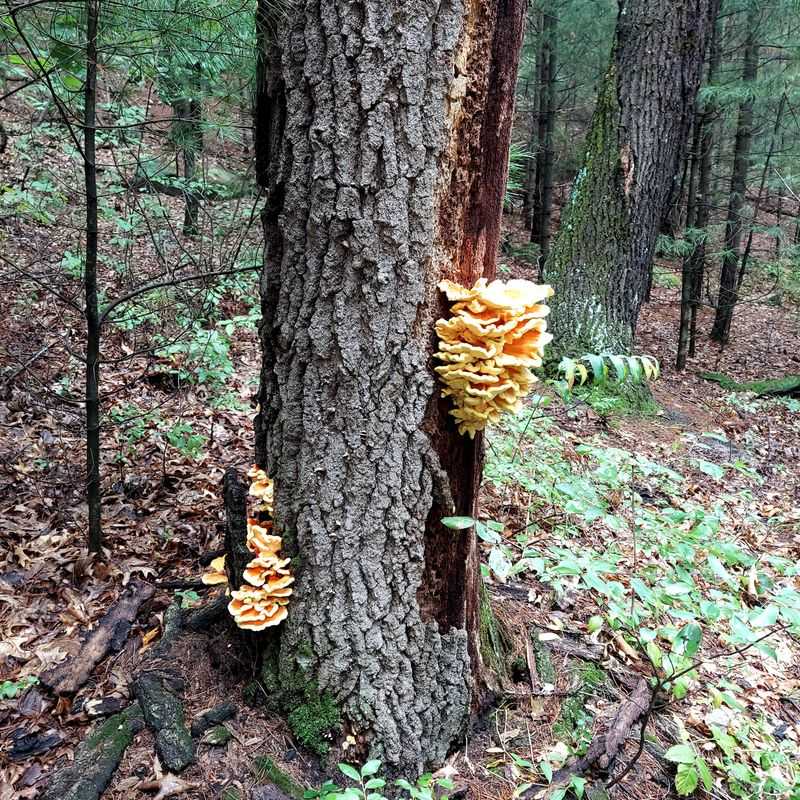
Mill Bluff’s charm extends beyond rock. You will walk past jack pines, oak openings, and patches of prairie plants that hum with pollinators.
Lichens paint the sandstone in mint, rust, and charcoal, offering tiny galaxies at your feet.
Birders can watch for kettle hawks on thermals, flickers feeding along trail edges, and seasonal warbler waves. At dawn, deer ghost between trunks, and red squirrels scold from branches.
In spring, ephemerals pop early on sunny margins, while autumn brings blazing oak color.
Summer means mosquitoes and ticks, so treat clothing and carry repellent. Shoulder seasons, especially late October, combine clearer views with crisp air and fewer bugs.
Winter hikes reveal bluff architecture when leaves are down and snow traces ledges.
Respect wildlife by giving space and packing out food scraps. Quiet steps reward you with sightings others miss.
Take a macro look at moss and lichens on shaded faces, then a long look at sky-riding vultures above. The park’s relatively undisturbed feel makes small discoveries feel big.
You will leave tuned to textures and seasons, not just the headline cliffs. That attention lingers long after the drive home.
Navigating the Park’s Spread-Out Layout
Mill Bluff is spread across separated parcels, so expect short drives between trailheads. The main entrance on Funnel Road offers the signature bluff climb and day-use area.
Another signed section sits apart from the core, worth a detour if you want quieter trails.
Cell signal can be spotty. Download the DNR map before arriving, and pin coordinates for the parking lots.
With minimal signage, a little prep saves time and backtracking.
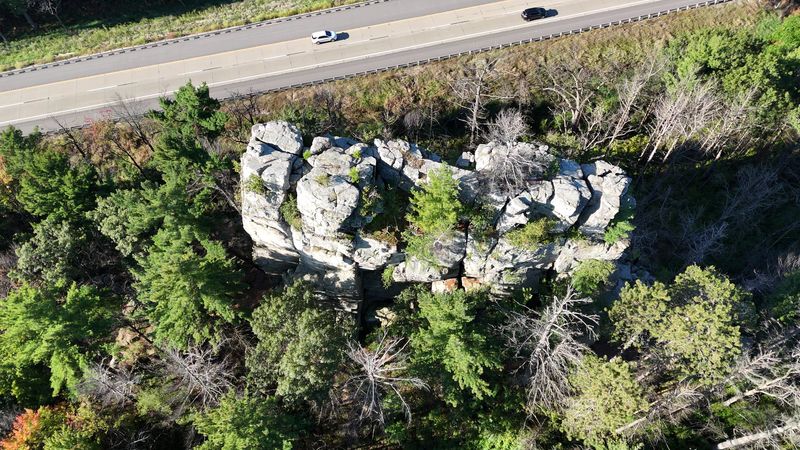
You will cross near highways that make access easy but add a steady hum. If your goal is peace, aim for early mornings, weekdays, or shoulder seasons.
Walk a minute beyond any lot and sound softens as trees close in.
Pack a trunk kit: extra water, bug spray, light layers, and a printed map. Plan a loop that pairs a climb, a calm forest walk, and a pond break.
You will feel like you covered a lot without chasing miles. The layout becomes an asset when you treat each pocket as a mini destination, stitching them into a full day.
Photography Tips and Compositions
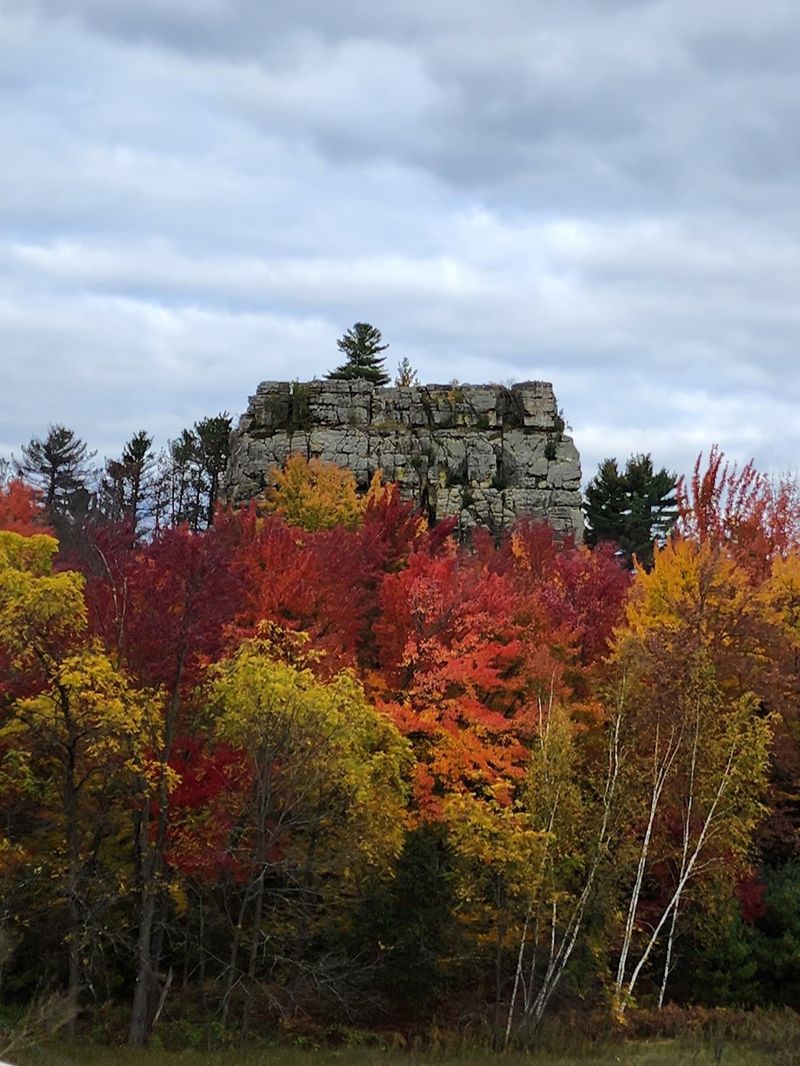
Photographing Mill Bluff rewards patience and lens swaps. Use a telephoto to compress distant stacks and isolate graphic faces.
Then go wide to include pine frames or leading lines of the staircase.
Light rules here. Side light sculpts the sandstone, revealing cross-bedding like fingerprints.
Overcast days are great for details: lichens, fractures, and bark textures without harsh contrast.
Compose from low angles near talus for scale, placing a person or tree for reference. Bracket exposures when the sky is bright and the forest is dim.
A circular polarizer can tame glare on leaves and deepen the bluff’s warm tones.
Mind the platforms’ tight space and share courteously. Wind can shake tripods at the top, so lower legs and weight your pack.
If highway elements enter the frame, embrace them as honest context or crop deliberately. You will come home with a mix of grand silhouettes and intimate textures, which tells a fuller story.
Practical Essentials: Bugs, Noise, and Safety
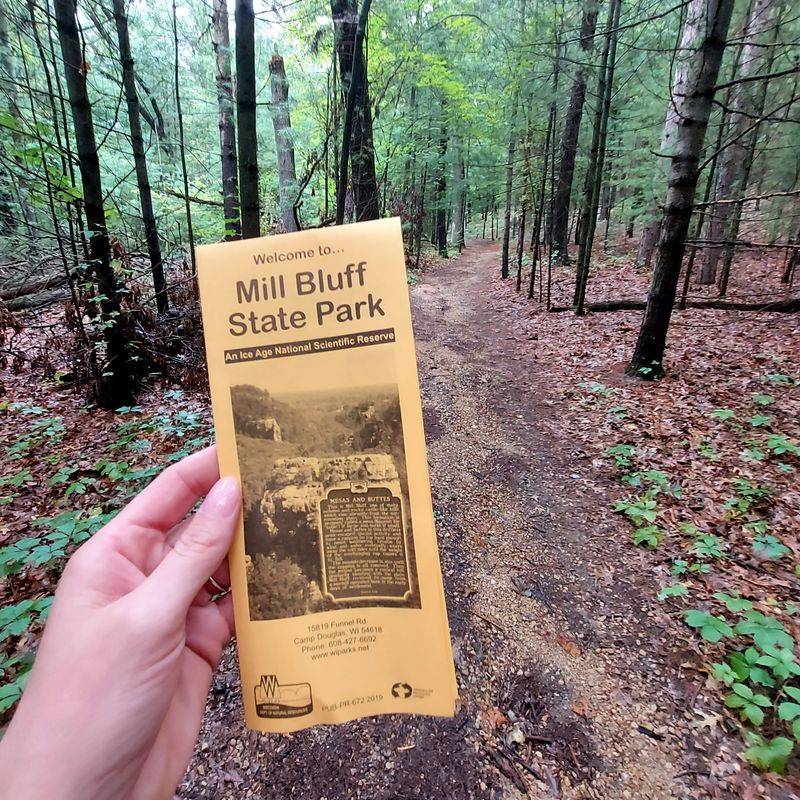
Mill Bluff’s beauty comes with a few tradeoffs that are easy to manage if you plan. Mosquitoes can be fierce in summer, so apply repellent and consider treated clothing.
Ticks are present, so do thorough checks after hiking.
Traffic noise is a real factor near overlooks and some trails. Time your visit early or late to minimize it, and lean into quieter sections for breaks.
Earbuds with nature sounds can help you focus without disconnecting from the environment.
Stairs are steep and can be slippery when wet. Wear grippy footwear, use handrails, and take breaks.
Pack water, since facilities are limited, and carry a small first-aid kit for blisters or scrapes.
Download offline maps, tell someone your plan, and respect posted hours of 6 AM to 11 PM. Keep an eye on kids near drop-offs and do not climb beyond designated areas.
With these basics dialed, you can relax into the experience. The bluffs will still wow you, and you will finish the day exhilarated rather than drained.
When to Go and How Long to Stay
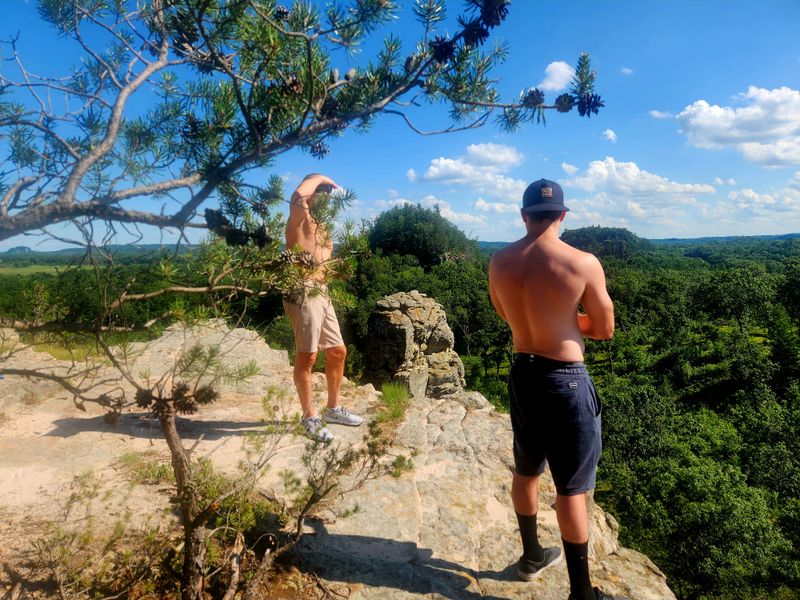
Give Mill Bluff a half day if you move briskly, or a full day if you like to linger. A classic plan is morning climb, late-morning forest loop, long lunch by the pond, then sunset viewpoints.
Because parcels are spread out, short drives help pace the day.
Spring brings fresh greens and fewer bugs, though trails can be damp. Summer delivers swim weather and long golden hours, plus peak mosquitoes.
Fall is photogenic heaven with color-draped oaks and clearer air.
Winter reveals the bluffs in skeletal elegance, but stairs can ice over. If you visit then, pick sunny afternoons and carry traction.
You will have views mostly to yourself, which feels luxurious.
Weekdays beat weekends for quiet, and dawn starts are magic no matter the month. Check the DNR site for updates on hours, conditions, and any closures.
Plan snacks, layers, and flexible timing so you can chase the best light. You will leave satisfied, with energy left for the drive and just enough wonder to plan a return.