Illinois hides a frozen fantasy that feels stolen from Iceland.
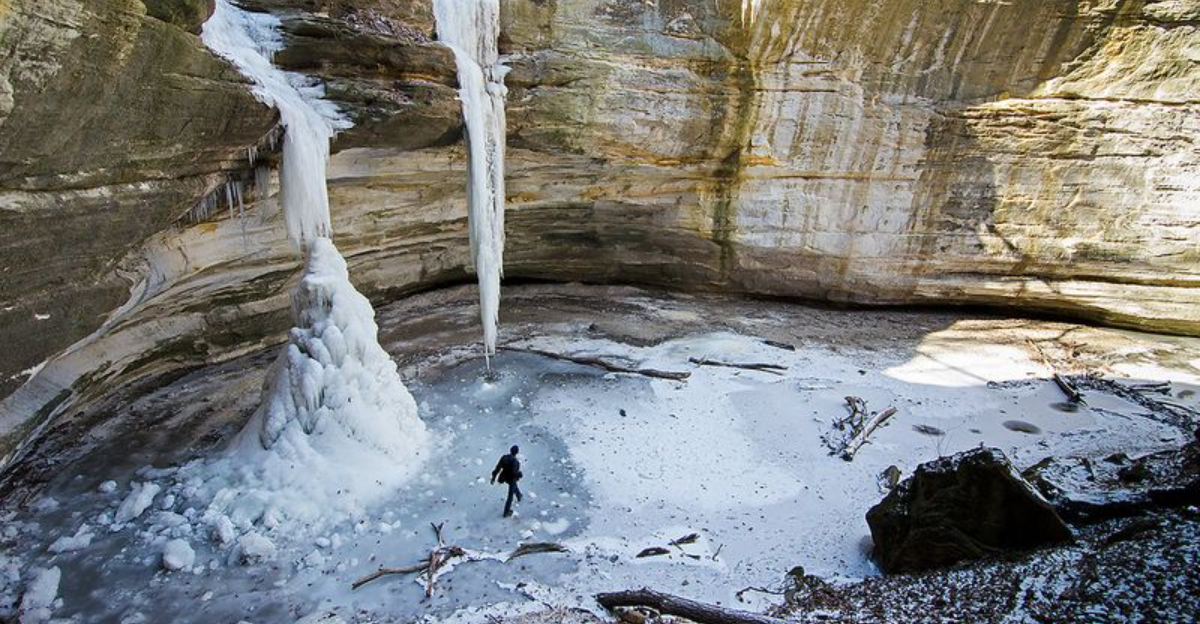
When winter tightens its grip, towering canyon walls trap waterfalls mid-motion, turning rushing water into sculpted curtains of ice. Snow muffles every sound. The air feels sharp enough to sparkle.
Carved by ancient glacial floods, this park’s 18 sandstone canyons become icy chambers of wonder. Some falls freeze into towering blue-white columns. Others spread into delicate glassy fans clinging to rock.
Each step deeper feels unreal — like wandering through a Nordic dream without leaving the Midwest. Here, winter doesn’t just arrive. It puts on a breathtaking show.
Starved Rock State Park Overview
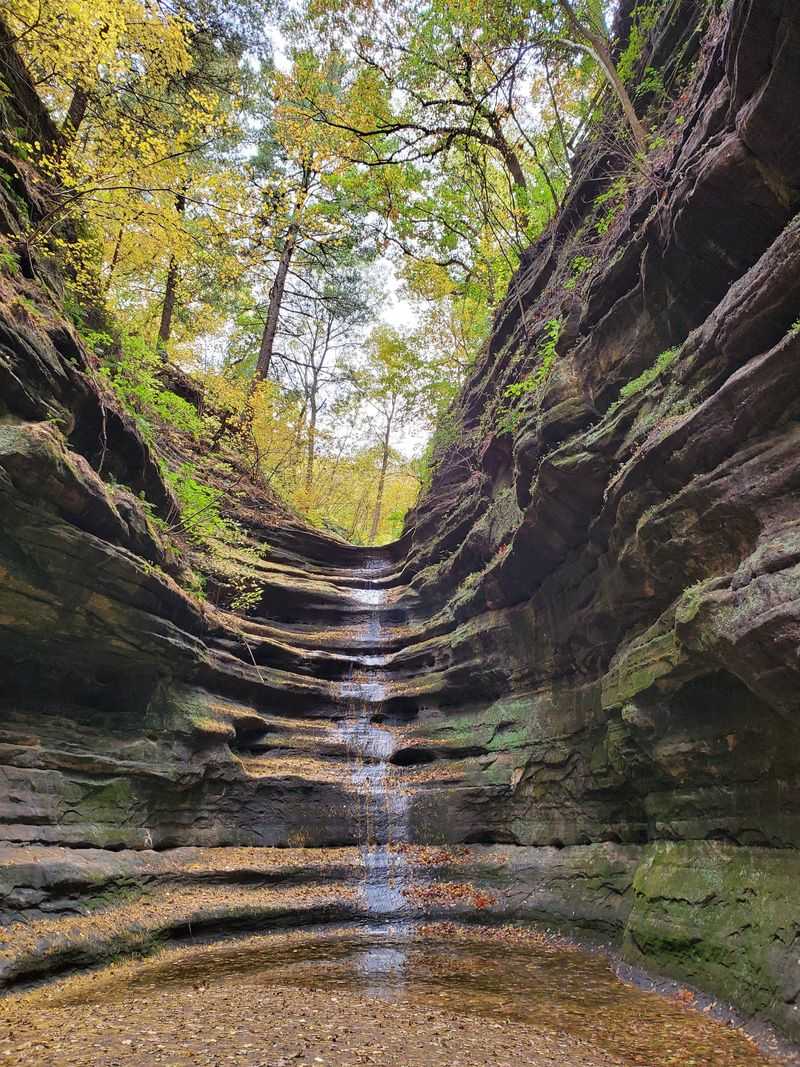
Starved Rock State Park owes its dramatic shape to ancient torrents of glacial meltwater that carved 18 sandstone canyons into the bluffs above the Illinois River. When winter grips the Midwest, those same canyons transform into a hush of ice and echoing stillness.
You wander beneath high walls, where trickles and seeps harden into translucent curtains, and every step crunches with possibility.
The park’s trails weave from overlook to riverbank, linking canyons with different personalities and light. Some are narrow and shaded, building thick blue pillars, while others open wide and accept the sun’s glittering touch.
The result is a rotating gallery of frozen textures that seem to change each hour.
History threads through the landscape too, from Indigenous presence to the CCC era, and you feel it underfoot. Wayfinding is straightforward, yet winter demands respect, so traction and layers matter.
Come after a sustained cold snap and the canyons reveal their most entrancing forms, rivaling scenes you might expect far from Illinois.
Winter’s Magic: How Waterfalls Freeze
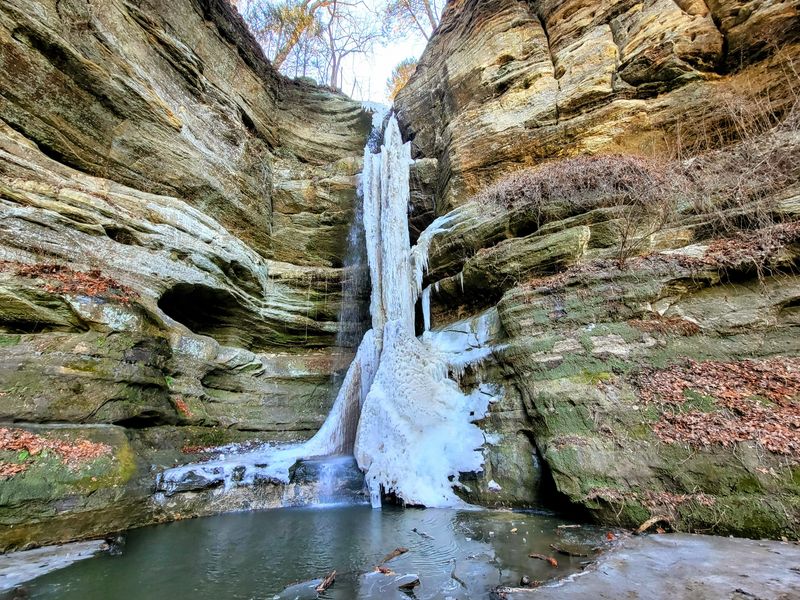
Cold air, short days, and steady subfreezing temps turn rain fed waterfalls into sculpted ice at Starved Rock. Every seep and trickle along the sandstone begins to freeze from the outside in, forming ruffled curtains and hollow domes that thicken with each frigid night.
When a thaw sends water pulsing again, it flows behind the ice, refreezing in rippled layers.
Because most falls here are rain fed, timing is everything. After sustained cold, up to 14 of the park’s 18 waterfalls can lock into place, each with its own character.
Some settle into blue green pillars, others spread into fans or chandeliers that clink softly in the wind.
You can often spot bubbles, leaves, and iron tinged streaks trapped mid motion within the ice. Sunlight shifts the palette from glacier blue to milky white by afternoon.
That is part science, part magic, and entirely mesmerizing when you are standing beneath a canyon rim listening to the distant crackle of forming ice.
LaSalle Canyon Icefall
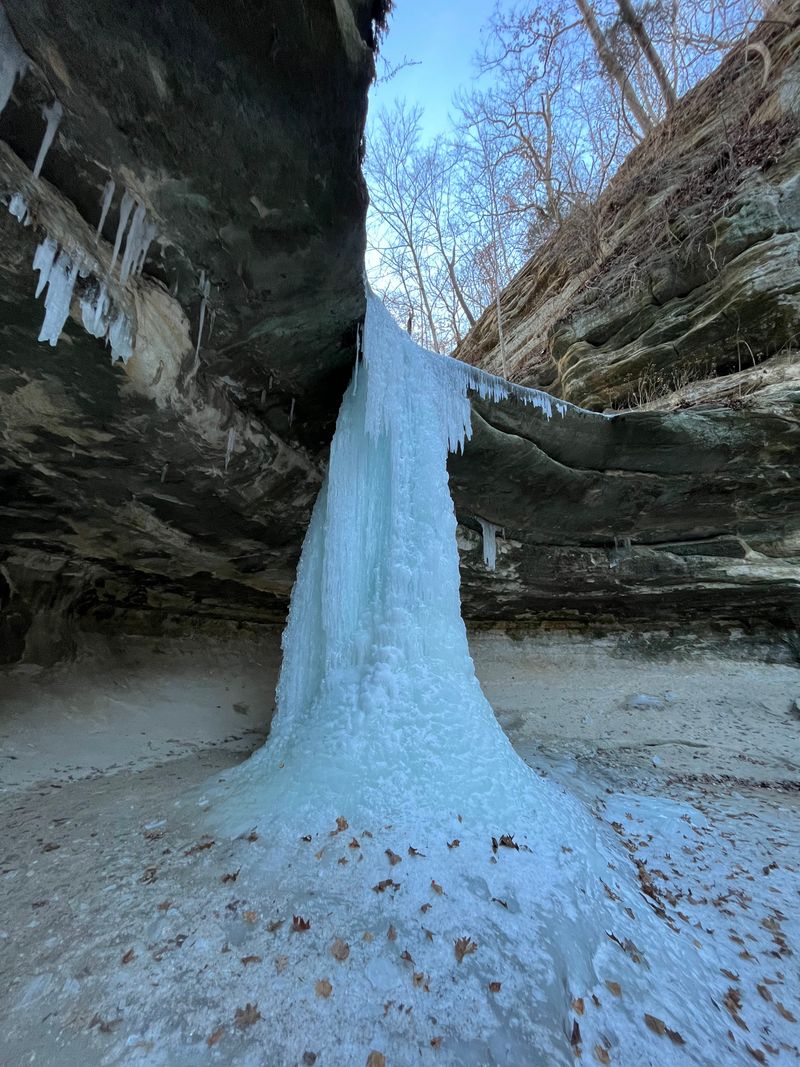
LaSalle Canyon welcomes you with a broad sandstone alcove that cradles one of Starved Rock’s signature winter sights. After consecutive cold days, the waterfall freezes into a graceful curtain that spills from the lip and gathers into rippled folds.
The ice glows sea blue in the shade, turning pearl white when sun finds the canyon.
The approach is a moderate trek, rewarding patience with an amphitheater of acoustics and frost. You can circle beneath the overhang, keeping a respectful distance from drooping icicles that can release without warning.
Photographers love the symmetry here, where footprints curve through snow and the frozen fall centers the scene.
Stand still and you might hear water humming behind the shell, a quiet reminder that the system is alive. On warmer afternoons, delicate melt refreezes by evening, changing textures overnight.
Visit early for solitude, bring traction for slick steps, and savor how LaSalle’s ice drapery suggests a cathedral crafted by winter.
St. Louis Canyon Frozen Falls
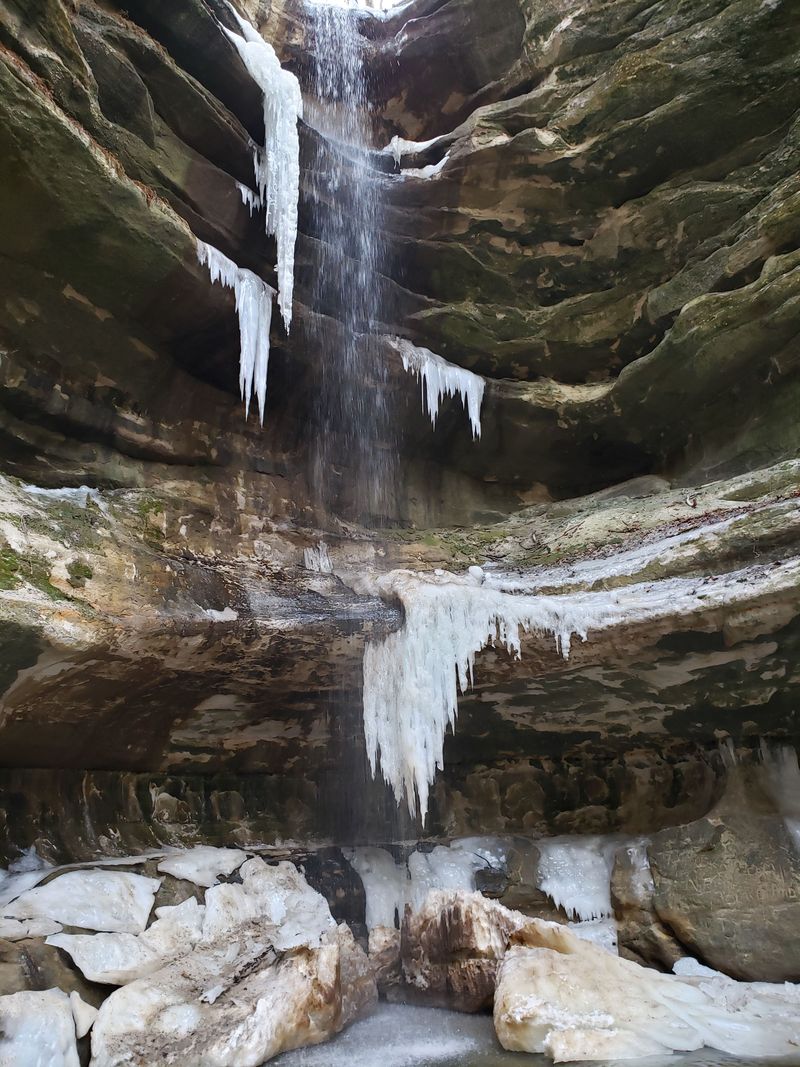
St. Louis Canyon feels intimate, a narrow room of sandstone that focuses attention on its reliable, spring fed waterfall. Even when other falls run dry, this one often persists and then freezes solid during cold spells, forming a thick column that looks carved, not grown.
The canyon walls crowd in, sheltering the ice from sun and wind.
The short approach makes it a favorite when daylight is brief and temperatures bite. You step into a pocket of hush where boots creak on packed snow and every breath fogs the air.
The falls become a luminous centerpiece, layered with opaque whites and transparent blues.
Because the spring feeds steadily, the ice can be stout and multilayered, impressive even late in the season. Take care on the final descent, which can glaze over with foot traffic.
If you enjoy details, study the way iron rich streaks paint the ice in warm tones, adding contrast to the wintry palette.
Wildcat Canyon’s Spectacular Ice Column
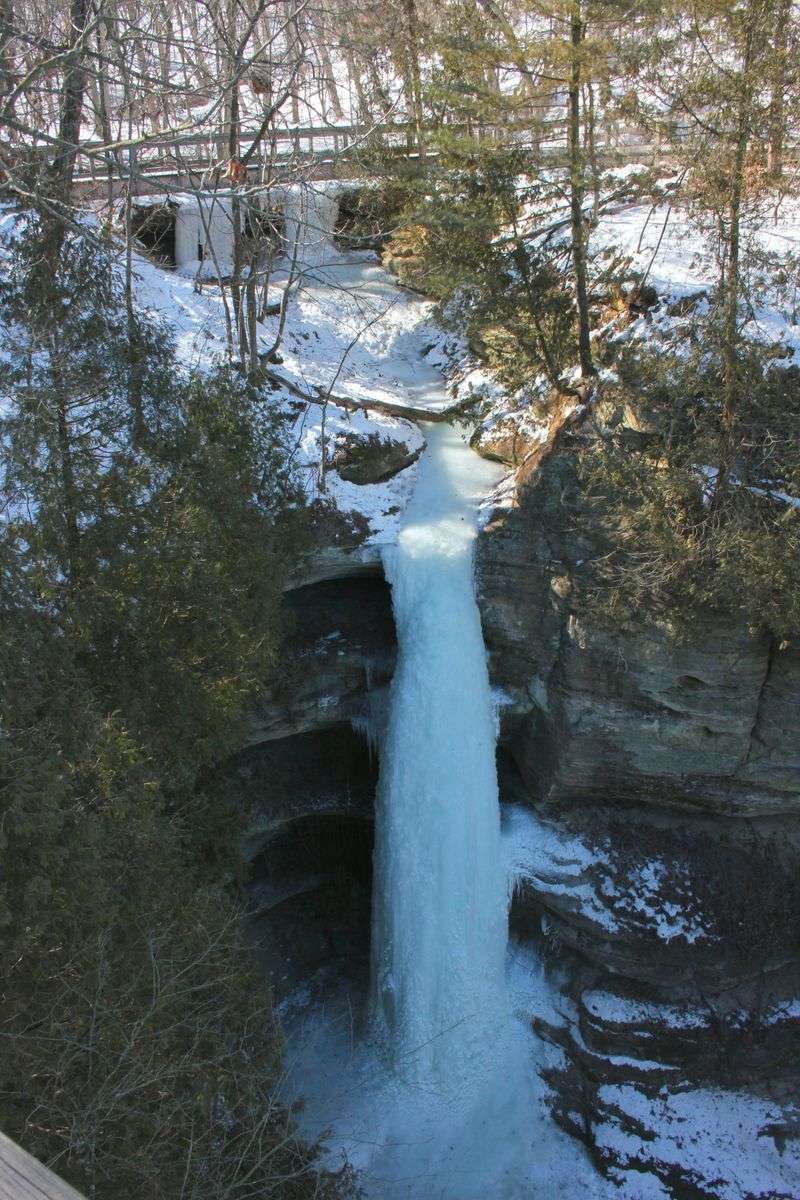
Wildcat Canyon is a showstopper, with one of the tallest waterfalls in the park freezing into a commanding vertical pillar. When conditions align, the ice climbs from floor to rim, striated and imposing.
Photographers line up here for scale shots, framing tiny figures against huge geometry.
The approach dips and rises, so traction is essential, but the payoff is undeniable. You round a bend and the canyon opens like a vaulted nave, the ice column glowing blue at its core.
On very cold days, wind harps along the face, and crystals drift like confetti.
Wildcat is also a magnet for skilled ice climbers when the park gives the green light. Even if you are just spectating, keep distance from fall lines and anchor zones.
Arrive early to catch first light slanting through the opening, igniting ripples and turning the frozen pillar into a lighthouse of winter.
Ottawa Canyon’s Serene Frozen Waterfall
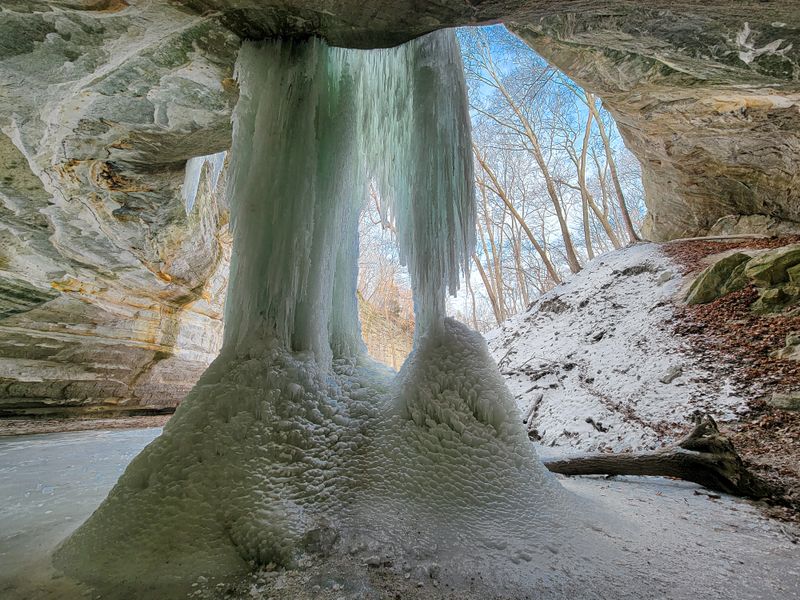
Ottawa Canyon rewards those who wander a bit farther east with a quieter, more contemplative scene. The frozen waterfall here tends to form a graceful fan that blends into the canyon bowl, less thunderous than Wildcat yet deeply photogenic.
Snow rests on ledges, and light filters gently, inviting you to linger.
The approach feels meditative, with long stretches of trail that slow your pace and tune you to small details. Frost ferns on fallen logs, tiny icicles under shelves, and bird tracks speckling the path create a sense of discovery.
Ottawa’s icefall often reflects beautifully in a thin glaze at its base.
Because the area sees fewer crowds, the snow can stay fluffier and the ice more pristine. Stay mindful of footing near the lip and avoid walking beneath fragile curtains.
Bring a warm drink, settle back, and let the canyon’s hush and pale blue ice soothe winter weary senses.
Kaskaskia Canyon in Winter

Kaskaskia Canyon may not boast the tallest fall, but winter gives it a subtle magic all its own. The flow often forms delicate curtains and scalloped shelves that invite close inspection.
Sandstone ledges catch snow like icing, and the ice takes on smoky blues and creams.
You feel tucked away here, sheltered from wind and bustle. That intimacy makes small sounds louder, from pine needles ticking to water murmuring behind frosted veils.
The trail is approachable, though icy spots hide under powder, so traction remains your best friend.
Photographers should pack a macro lens or simply lean in with curious eyes. Bubbles, frozen drips, and hairline cracks create miniature universes across the surface.
Kaskaskia is proof that winter’s quieter canvases can be just as transporting as the park’s marquee spectacles, especially when you crave stillness and texture.
Ice Climbing at Designated Falls
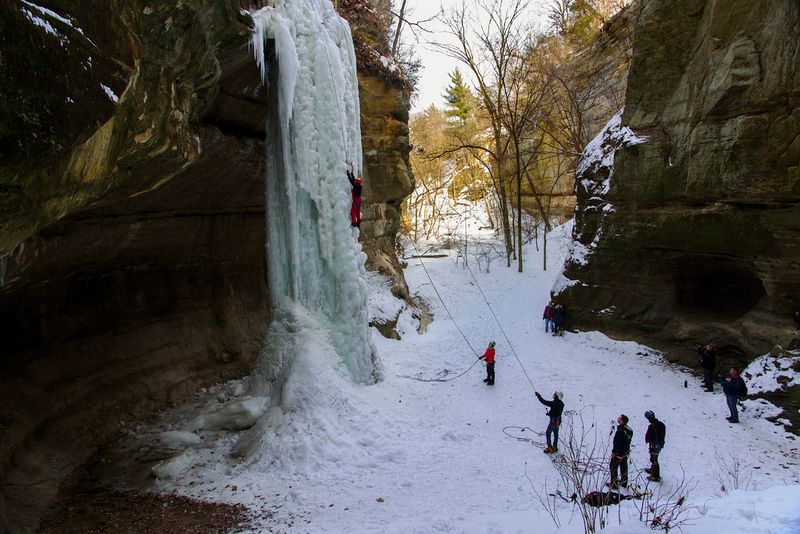
When conditions are right, Starved Rock authorizes ice climbing at specific waterfalls, typically including LaSalle, Ottawa, and Wildcat. Climbers must check in with park staff, follow posted guidelines, and use proper equipment for cold weather systems.
You will see ropes, helmets, harnesses, and belay stations carefully placed away from hiker paths.
Spectators can watch from safe, designated areas while giving climbers a wide berth below fall lines. Ice is dynamic and can shed without warning, so boundaries matter.
Climbers assess thickness, anchor integrity, and temperature swings throughout the day.
If you are considering trying the sport, connect with local clubs and certified guides for instruction and updates. Conditions can change quickly after a thaw, a snowfall, or sudden cold snap.
Whether you climb or simply observe, the spectacle of humans moving up shimmering blue walls adds a thrilling note to the park’s winter symphony.
Winter Hiking Tips & Gear
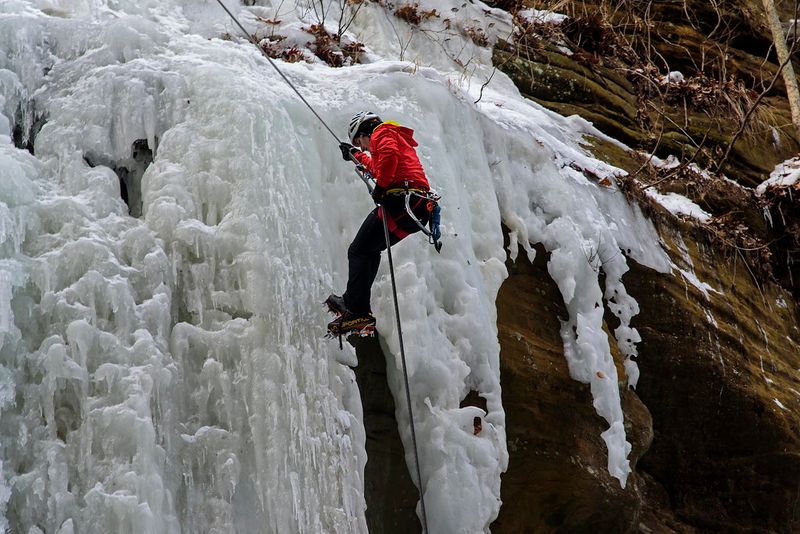
Winter at Starved Rock rewards preparation. Bring traction devices like microspikes, Yaktrax, or light crampons to handle packed snow and hidden ice.
Insulated, waterproof boots keep toes happy, while trekking poles add stability on canyon steps and inclines.
Layer smart with moisture wicking base layers, a warm midlayer, and a wind resistant shell. Pack a thermos, snacks, spare gloves, and a dry hat, since sweat can chill quickly.
Keep your phone warm and carry a paper map as backup, because batteries fade in the cold.
Stick to marked trails and respect closures that protect both you and the fragile canyon environment. Start early to catch morning light on the ice and to beat any parking crunch.
Share the path courteously, watch for falling ice beneath overhangs, and let common sense guide a safe, beautiful winter day.
Comparisons to Icelandic Frozenscapes
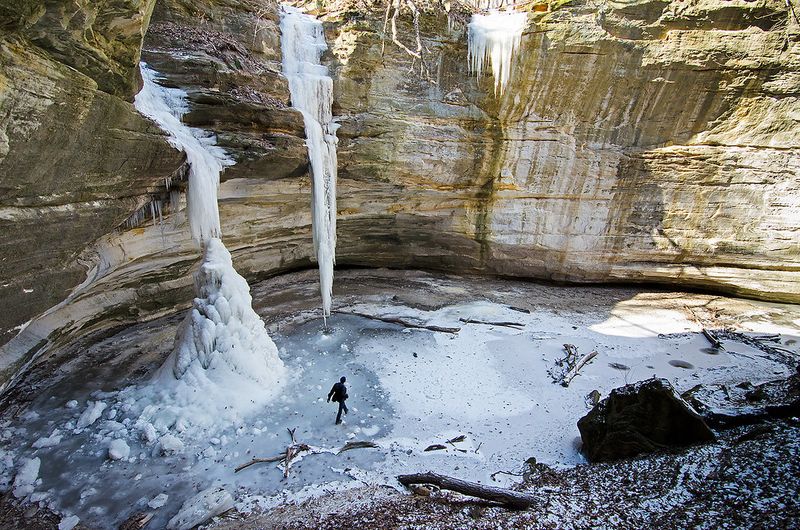
Step into a frozen canyon at Starved Rock and you might forget Illinois for a moment. Blue toned curtains echo the drama of Icelandic falls, while sandstone walls stand in for sea cliffs and basalt.
Light scatters through the ice and turns the canyon floor into a quiet cathedral that feels worlds away.
What surprises you most is scale and intimacy. Instead of distant glaciers, you get walk up access to crystalline formations that shift by the hour.
The hush, the cold sparkle, and the sculptural pillars create a cinematic mood that needs no passport.
On a windless morning, a thin mist freezes into glitter and the scene becomes otherworldly. You photograph, then simply stand there, breathing slow and taking it in.
If Iceland is a saga, Starved Rock is a lyric poem, close to home yet brimming with the same elemental wonder.