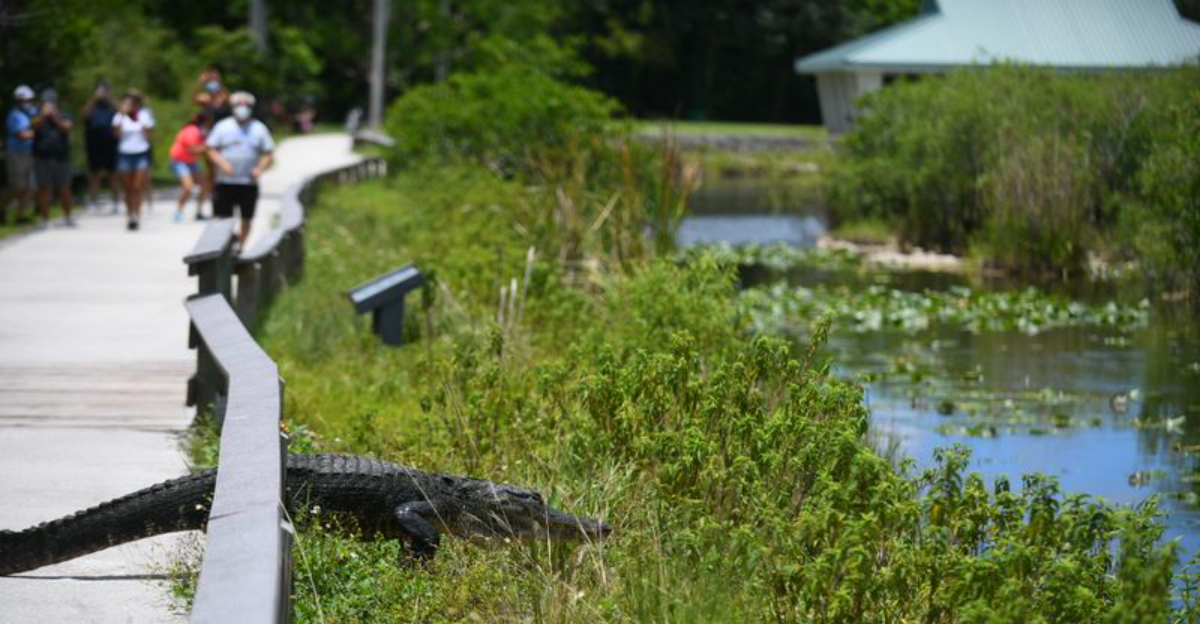
This is the kind of hike where the alligators outnumber the people.
At Anhinga Trail in Florida, the wild isn’t hiding behind thick forest or distant horizons. It’s right there — floating beside the boardwalk, sunbathing in plain sight, slipping silently through the water with prehistoric calm.
The path is short. The views are unreal.
And every step feels like you’ve wandered into a nature documentary.
Great blue herons stalk the shallows. Turtles stack like living sculptures on fallen logs.
Anhingas spread their wings to dry in the heat while alligators drift past with barely a ripple.
It’s flat, easy, and wildly unforgettable — a front-row seat to the Everglades where the swamp shows off and you don’t even have to break a sweat.
Getting to Anhinga Trail: Location and Access
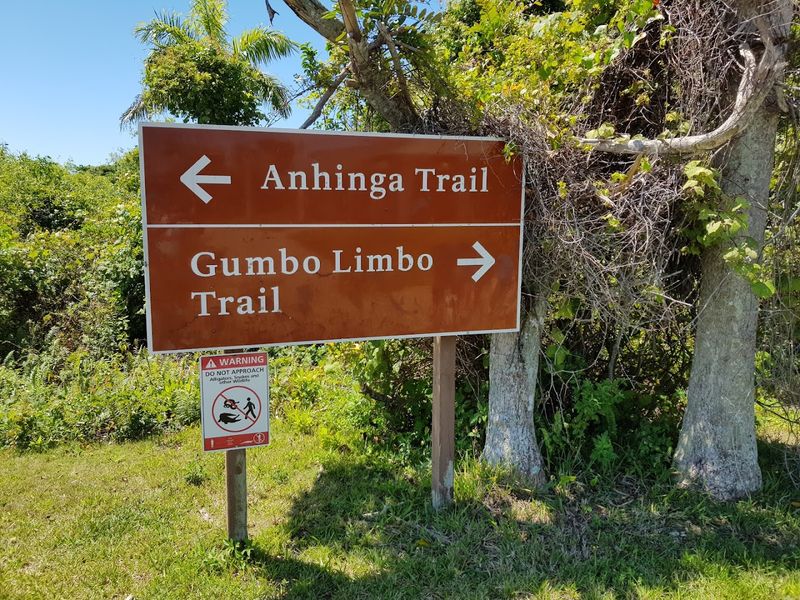
Finding the Anhinga Trail is surprisingly simple, and that’s part of what makes it such a popular stop for both locals and tourists. Located inside Everglades National Park in southern Florida, the trailhead sits near the Royal Palm area, just a short drive from the park’s main entrance off State Road 9336.
GPS coordinates place it at approximately 25.38°N, 80.61°W, making it easy to plug into any navigation app.
From Miami, the drive takes roughly an hour, and from Fort Lauderdale, expect about 90 minutes. The road leading into the park passes through beautiful sawgrass prairies and hardwood hammocks, giving you a taste of the Everglades even before you step onto the trail.
Parking is plentiful at the trailhead lot, which fills up fast on weekends and holidays, so arriving early is a smart move.
The visitor center nearby offers restrooms, water fountains, and a small bookstore where you can grab maps and field guides. Rangers are also stationed there and can answer questions before you head out.
Admission to the national park is required, so check the National Park Service website for current fees and any seasonal alerts before your trip.
The Trail Itself: What to Expect on the Walk
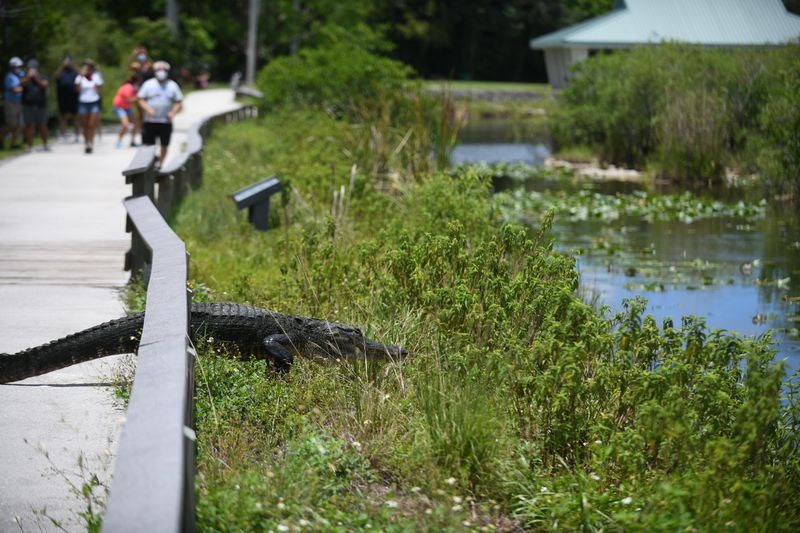
One of the best things about the Anhinga Trail is how manageable it is for just about anyone. The full loop stretches only about 0.8 miles, which most people complete in 20 to 30 minutes at a relaxed pace.
However, plenty of visitors end up spending an hour or more because there is simply so much to stop and look at along the way.
The path is a combination of paved walkway and wooden boardwalk, making it smooth and stable underfoot. There are no steep hills, muddy sections, or tricky terrain to navigate.
Strollers and wheelchairs can handle the trail with ease, and the visitor center even offers wheelchair loans for those who need them. It truly is a trail built for everyone.
Shade is limited since much of the boardwalk crosses open water, so sunscreen, a hat, and plenty of water are must-haves, especially during Florida’s intense summer months. The trail forms a loop, so you’ll naturally return to the starting point without backtracking.
Signs along the way help identify wildlife and explain the ecosystem, turning the walk into a mini outdoor classroom that kids and adults both enjoy.
Alligators Up Close: The Star Attraction
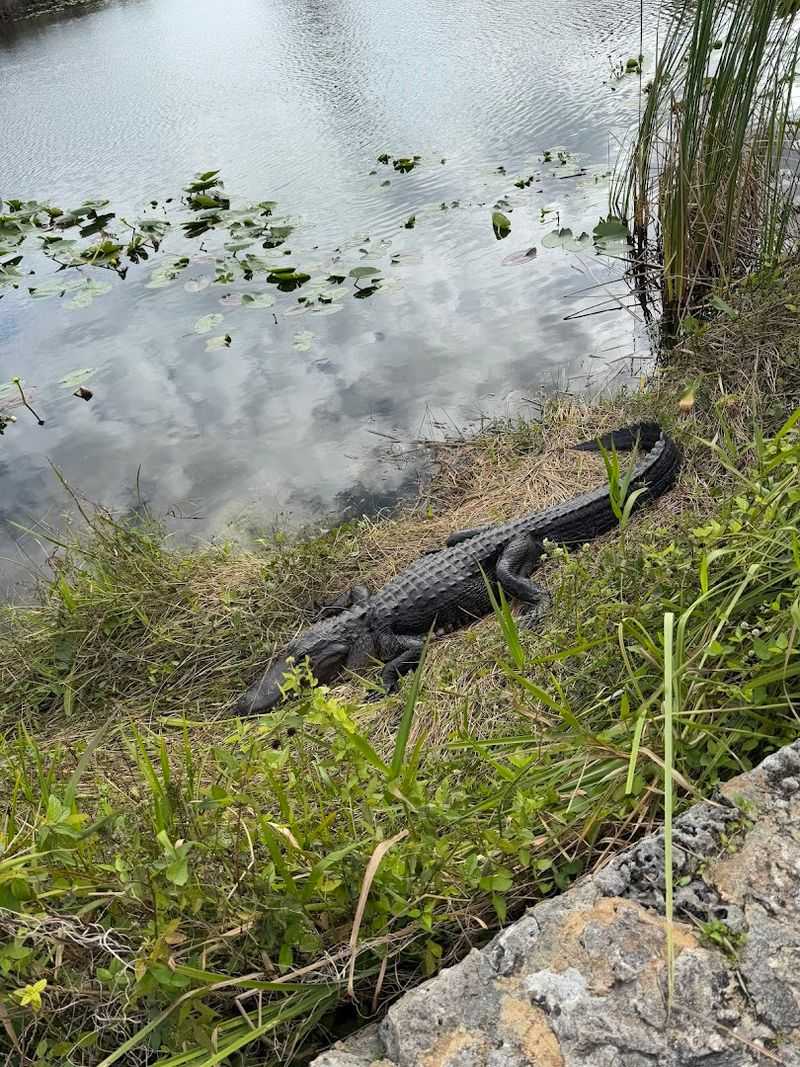
Nothing quite prepares you for seeing a full-grown alligator just a few feet away from where you’re standing. On the Anhinga Trail, this is not an unusual moment — it’s practically guaranteed.
Visitors regularly spot anywhere from five to twenty alligators during a single walk, lounging along the banks, floating in the water, or sometimes parked right on the path itself.
American alligators are native to Florida and thrive in the freshwater marshes of the Everglades. They are cold-blooded reptiles, which means they spend a lot of time basking in the sun to regulate their body temperature.
That habit is exactly why they’re so easy to spot — they just sit there, completely unbothered by the crowd of camera-wielding visitors just a few feet away.
While alligators may look slow and lazy, they can move with surprising speed when startled. Park rules ask visitors to stay on the designated path and never feed or approach wildlife.
Keeping a respectful distance protects both you and the animals. Still, even from the boardwalk, the views are extraordinary.
One popular review described watching a massive gator parade along the trail for 30 minutes before casually taking a nap — pure Florida magic.
The Anhinga Bird: The Trail’s Feathered Namesake
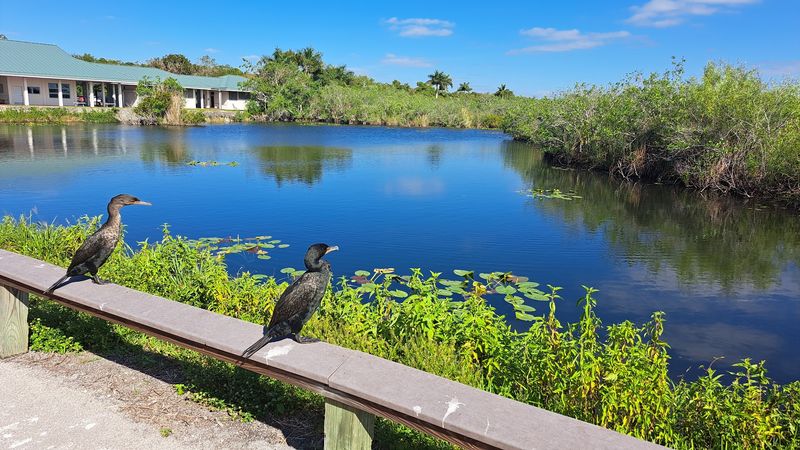
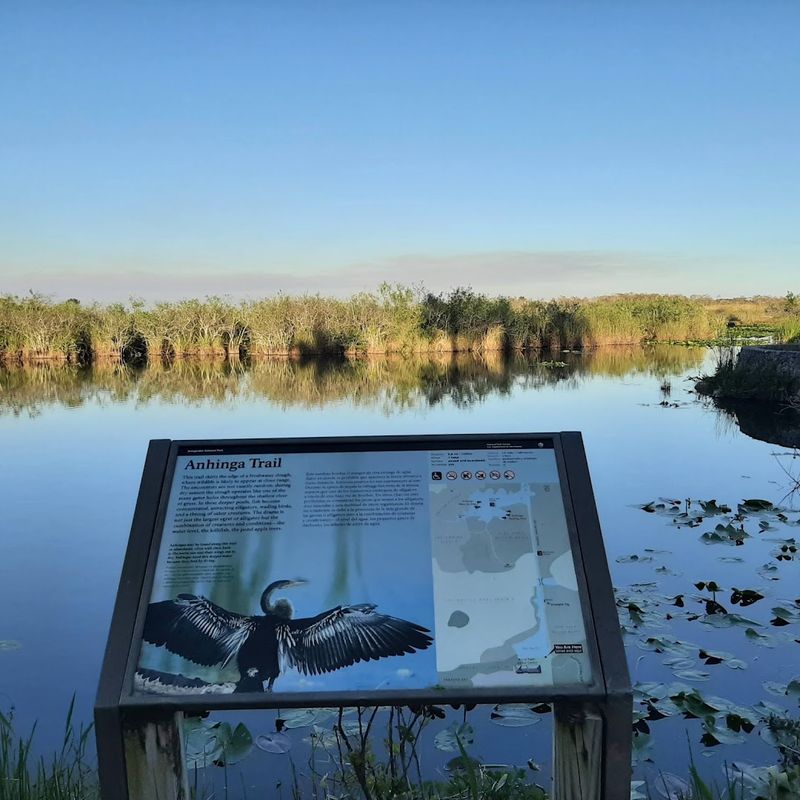
The trail gets its name from one of the most fascinating birds in Florida — the anhinga, sometimes called the snakebird because of the way its long neck slithers above the water while it swims. Unlike most water birds, the anhinga’s feathers are not waterproof, which means it has to spread its wings wide in the sun to dry after diving for fish.
Watching this pose, it looks almost prehistoric.
Anhingas are incredible hunters. They dive underwater and use their sharp, spear-like beaks to stab fish rather than grab them.
After a successful hunt, they toss the fish into the air and swallow it headfirst. It sounds dramatic, but it happens fast and is a genuinely thrilling thing to witness in the wild.
On the trail, anhingas are everywhere. They perch on low branches, fence posts, and even the boardwalk railing with their wings fully stretched, soaking up sunlight without a care in the world.
They are surprisingly unafraid of people, making them easy to photograph. For birdwatchers of all skill levels, spotting an anhinga in full wing-drying mode is one of those unforgettable wildlife moments that keeps people coming back to this trail again and again.
Herons, Gallinules, and Other Birds to Spot
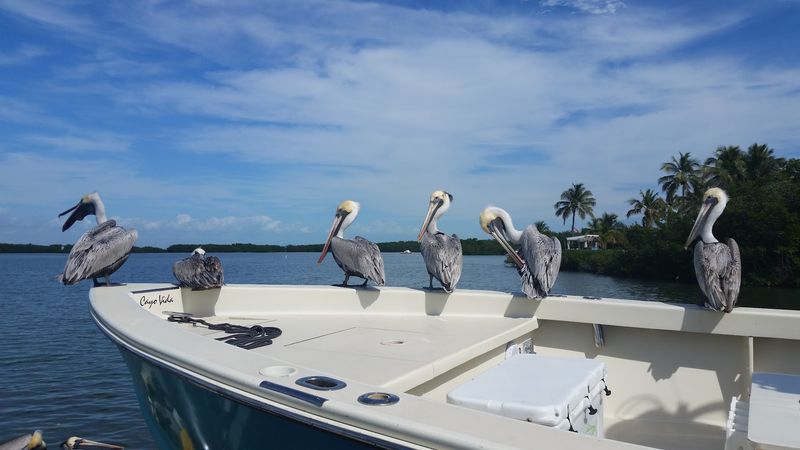
Birdwatchers absolutely love the Anhinga Trail, and it’s easy to understand why. Beyond the trail’s namesake bird, the wetlands are packed with an impressive variety of species that make every step feel like flipping through a field guide.
Great blue herons are among the most striking — tall, slate-gray birds that stand motionless in shallow water, waiting patiently for a fish to swim by before striking with lightning speed.
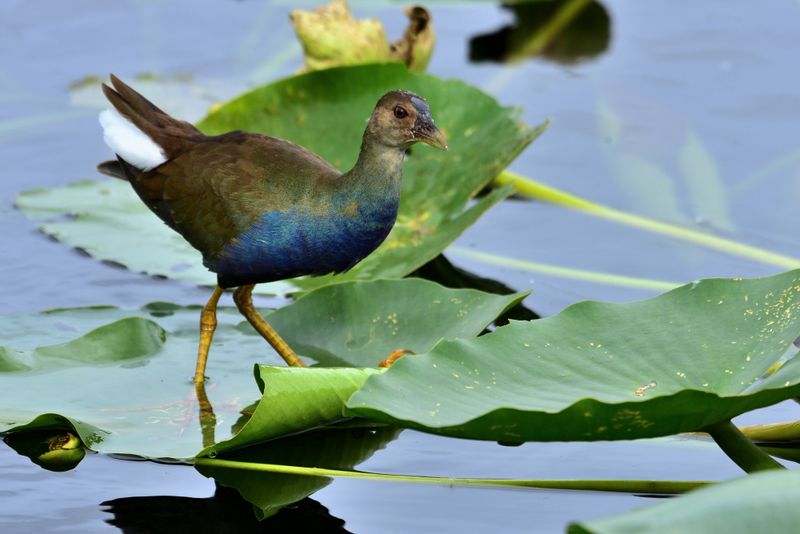
Purple gallinules are another crowd favorite, with their vivid blue-green feathers and bright red-and-yellow beaks. They walk across lily pads with enormous feet, looking like tiny, colorful acrobats.
Tricolored herons, little blue herons, snowy egrets, and roseate spoonbills have all been spotted along the trail at various times of year, making each visit feel a little different from the last.
The dry season, running roughly from November through April, tends to bring the highest concentration of birds to the marsh. As water levels drop, fish become easier to catch in shallower pools, drawing birds from across the region to feed.
A pair of binoculars can make the experience even richer, letting you zoom in on details that are hard to catch with the naked eye. Even casual bird fans come away amazed.
Turtles and Fish: The Underwater World Beneath Your Feet
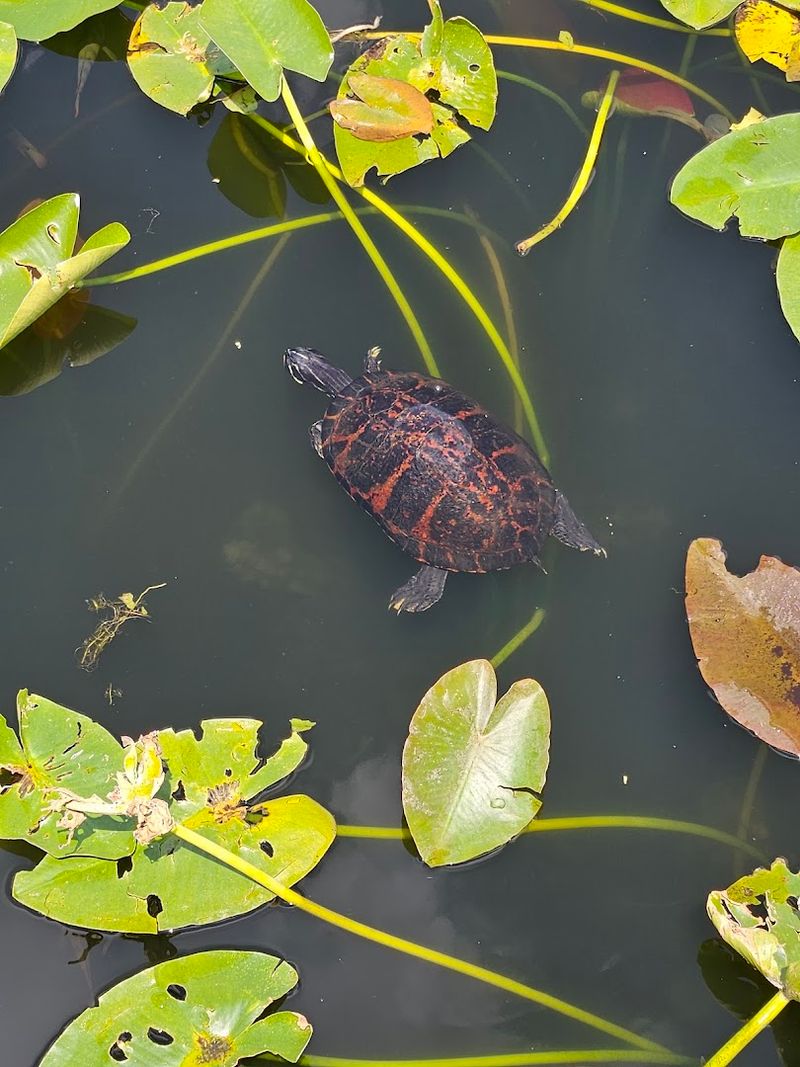
Look down off the edge of the boardwalk and you might be surprised by what’s swimming just below the surface. The marsh water along the Anhinga Trail is remarkably clear in spots, giving visitors a window into a busy underwater world.
Schools of small fish dart through the lily pad roots, and larger bass cruise slowly through the deeper channels, seemingly unbothered by the foot traffic above.
Turtles are another highlight that visitors consistently mention in reviews. Florida softshell turtles, peninsula cooters, and red-bellied turtles are among the species commonly seen basking on logs or paddling lazily near the banks.
They tend to stack up on favorite sunny spots, sometimes three or four deep, looking like living stepping stones.
The ecosystem works as one big, connected food web, and the boardwalk puts you right in the middle of it without disturbing a thing. Fish feed on algae and insects, turtles compete for sunbathing spots, birds hunt the fish, and alligators watch it all from their preferred lounging positions.
Spending a few quiet minutes just observing the water can be one of the most peaceful and educational moments of the whole visit. It’s a living aquarium without walls or glass.
Best Time to Visit Anhinga Trail
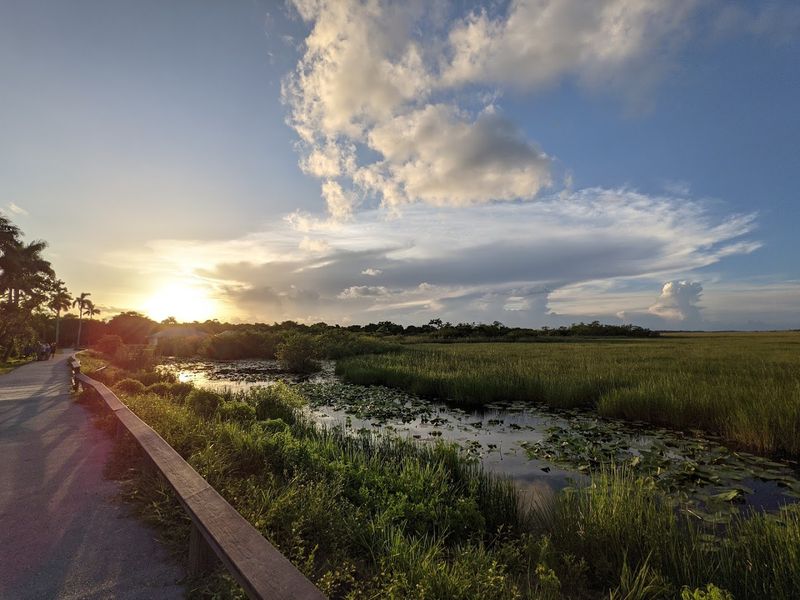
Timing your visit can make a real difference in how much wildlife you see. The dry season, which runs from November through April, is widely considered the best time to visit the Anhinga Trail.
During these months, water levels in the marsh drop, concentrating fish and other animals into smaller pools where they become much easier to spot. Wildlife viewing is at its peak, and temperatures are more comfortable for walking outdoors.
Mornings are almost always the best time of day to visit, regardless of the season. Animals are most active in the cooler early hours, and the light is beautiful for photography.
Arriving right when the park opens helps you beat the crowds, which can grow quite large by midday, especially on weekends and during school holidays. Christmas Day, believe it or not, is one of the busier days on the trail.
The wet season, from May through October, brings intense heat, humidity, and frequent afternoon thunderstorms. Mosquitoes can also be brutal during this period, so strong insect repellent is essential.
That said, even summer visits have their rewards — the lush greenery is stunning, and you might catch baby alligators hatching near the banks. Every season on the Anhinga Trail has something worth seeing.
Tips for Families and First-Time Visitors
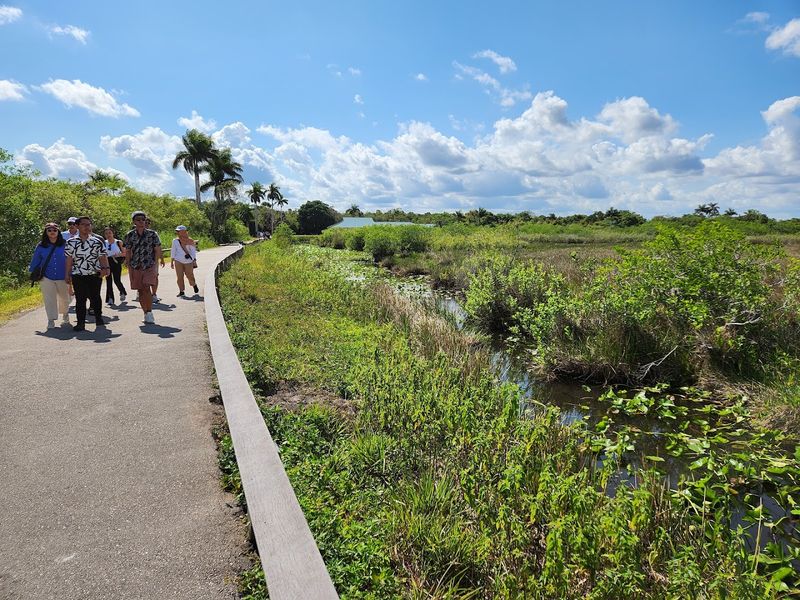
Families with kids consistently rate the Anhinga Trail as one of the most exciting outdoor experiences in Florida, and it’s not hard to see why. The short distance and flat surface mean even young children can complete the loop without getting tired or frustrated.
There are no complicated skills required — just walk, look, and enjoy. The sheer number of animals visible from the boardwalk keeps even the most easily distracted kids fully engaged.
A few practical tips can make the visit smoother. Sunscreen and hats are non-negotiable since the boardwalk offers very little shade.
Bring more water than you think you’ll need, especially if you’re visiting during the warmer months. Closed-toe shoes are a good idea since the paved sections can get hot, and sandals aren’t ideal if you plan to linger for a while.
Cameras and binoculars are wonderful additions to the experience, but a basic smartphone camera works perfectly well for capturing wildlife up close. Remind kids to keep voices calm and avoid sudden movements near animals.
The visitor center nearby has restrooms, water refill stations, and helpful rangers who offer guided walks at scheduled times throughout the day. Joining a ranger-led tour is a fantastic option for families wanting deeper context about what they’re seeing.
Photography on the Anhinga Trail: A Shooter’s Paradise
Wildlife photographers, both amateur and professional, consistently rank the Anhinga Trail among the best spots in the entire United States for close-up nature photography. The reason is simple — the animals here are remarkably tolerant of human presence.
Alligators rest just feet from the boardwalk railing, anhingas spread their wings on posts at eye level, and herons stand completely still in the water for minutes at a time, practically posing for the shot.
You don’t need expensive equipment to come away with incredible images. A smartphone with a decent camera can capture stunning shots of turtles, birds, and gators in natural light.
That said, a zoom lens does help when trying to isolate a bird in flight or catch fine details on a distant alligator. Early morning light creates a warm, golden glow over the marsh that makes every photo look like it belongs in a nature magazine.
The reflections on the still water add an artistic quality to landscape shots, especially when birds are wading near the surface. One visitor famously described photographing a gator that seemed to know it was being watched — posing for 30 minutes before casually wandering off.
Patience is the best camera accessory you can bring to this trail.
Why the Anhinga Trail Belongs on Every Florida Bucket List
Some places just stick with you long after you’ve left, and the Anhinga Trail is absolutely one of them. With nearly 2,400 five-star reviews and a rating of 4.8 out of 5, it has earned its reputation as one of the most beloved short hikes in the entire state of Florida.
People drive from Miami, Fort Lauderdale, and beyond just to spend 30 minutes on this boardwalk — and almost every single one of them says it was worth every mile.
What makes it so special isn’t just the wildlife, though that alone would be enough. It’s the combination of accessibility, variety, and raw natural beauty packed into less than a mile of trail.
You get alligators, birds, turtles, fish, fascinating plants like air plants and lily pads, and sweeping views of one of North America’s most unique ecosystems — all without needing hiking boots, a guide, or even much time.
Whether you’re a seasoned nature lover or someone who has never spent much time outdoors, the Anhinga Trail meets you exactly where you are and delivers something extraordinary. It’s the kind of place that turns casual visitors into lifelong fans of the Everglades.
Put it on your list, then move it straight to the top.