Tucked into the heart of Philadelphia, The Franklin Institute has been sparking curiosity in kids and adults alike for nearly 200 years.
Whether you’re a first-time visitor or a returning family, there’s always something new to discover across its three floors of interactive exhibits.
Science stops feeling like a school subject the moment you walk through those doors — it becomes something you can touch, test, and truly experience.
Families from across Pennsylvania keep making the trip back, and once you see what’s inside, it’s easy to understand why.
A Legendary Hands-On Science Experience

Walking into The Franklin Institute feels less like entering a museum and more like stepping into a place where curiosity runs the show. Every corner of this historic building is designed with one goal in mind: get you involved.
Science here isn’t something you read about on a placard — it’s something you do.
Three floors of interactive exhibits cover everything from physics and engineering to biology and technology. Kids can trigger experiments, build structures, and test ideas in real time.
Parents often find themselves just as absorbed as their children, which says a lot about how well the exhibits are designed for all ages.
What makes this museum stand out from typical science centers is the sheer range of experiences packed under one roof. Families from Pittsburgh, Harrisburg, and everywhere in between make the drive to Philadelphia specifically for this place.
The hands-on format turns abstract concepts into memorable moments that stick with kids long after the drive home.
If you’ve ever wanted your child to fall in love with learning, this is a strong place to start that journey.
The Iconic Giant Heart Walk-Through Exhibit
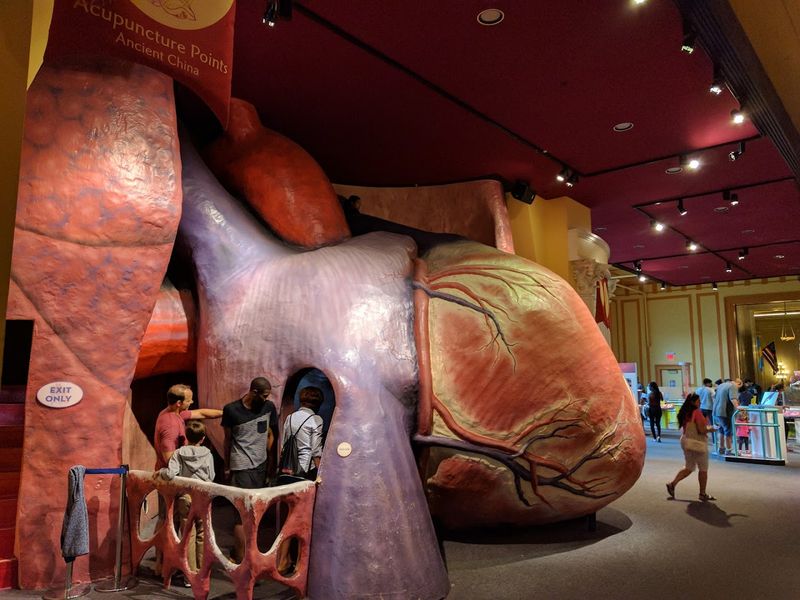
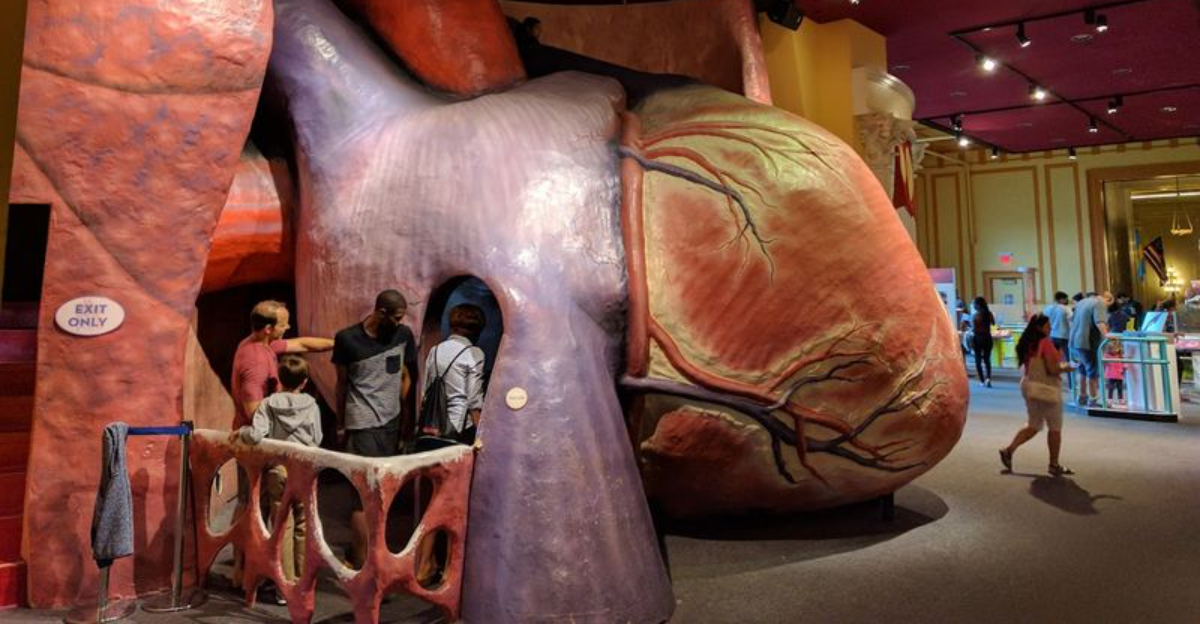
Ask any Pennsylvania adult who visited The Franklin Institute as a kid, and there’s a good chance the Giant Heart is the first thing they mention. This enormous model — about the size of a school bus — has been a centerpiece of the museum since 1954, and it still stops visitors in their tracks the moment they see it.
Crawling through the chambers of the heart gives kids an unforgettable look at how this vital organ actually works. Realistic sound effects mimic the steady thump of a heartbeat, and the visual details inside each chamber make anatomy feel surprisingly accessible.
It’s the kind of exhibit that makes a textbook diagram feel completely flat by comparison.
Generations of families have shared this experience together, which gives the Giant Heart a warm, nostalgic quality on top of its educational value. Parents love pointing out what they remember from their own childhood visits.
For younger kids, it’s exciting and slightly mysterious — like exploring a living tunnel. For older kids and teens, the biological details become genuinely fascinating.
Either way, it’s a must-see moment that earns its legendary status every single day.
Body Odyssey: Exploring Health, Biology, and the Future of Medicine
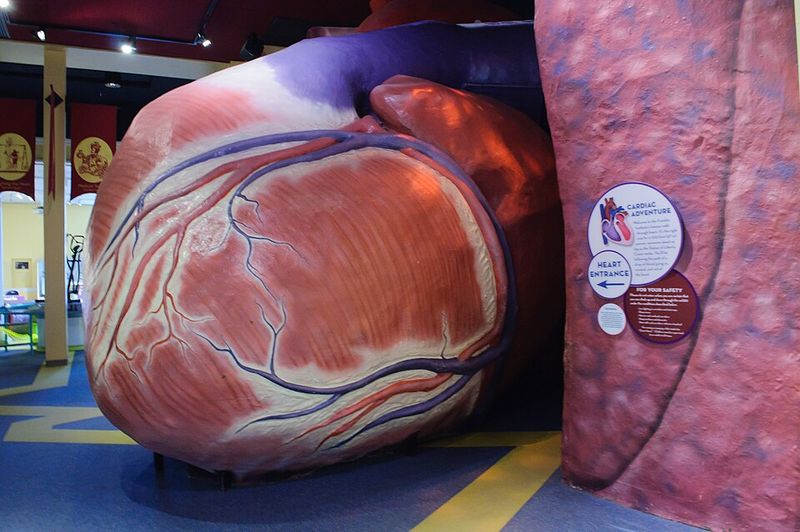
Surrounding the Giant Heart like an extended adventure, Body Odyssey takes the biological journey several steps further. This exhibit wraps health science, human anatomy, and cutting-edge medical technology into one cohesive, immersive experience that feels more like exploration than education.
Visitors can interact with simulations that show how the digestive system processes food, how muscles fire during movement, and how the brain sends signals throughout the body. The installations are designed so that kids can engage at their own pace, making it comfortable for curious six-year-olds and detail-hungry teenagers alike.
Medical innovations on display also give families a glimpse into where healthcare is heading.
What’s especially cool about Body Odyssey is how it bridges the gap between science and everyday life. Kids start connecting what they see on screen to how their own bodies function — and that personal connection makes the information stick.
Parents often find themselves learning things they never knew, which opens up great conversations during the ride home.
If your family has a budding doctor, nurse, or biologist in the mix, this part of the museum is going to be a highlight of the entire visit without question.
SportsZone: Science in Motion
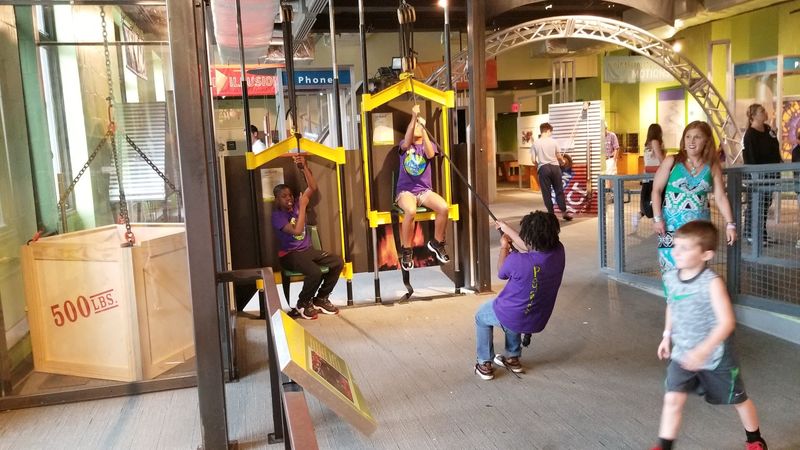
Here’s a fun truth: SportsZone is the exhibit where kids forget they’re learning science. The energy in this space is completely different from the rest of the museum — louder, faster, and packed with activities that feel more like a gym than a gallery.
That’s exactly the point.
Families can test their reaction times, measure their jump height, analyze their pitching speed, and explore the physics behind athletic movement. Every activity is tied to real scientific principles — biomechanics, force, velocity, and balance — but the framing is sports, so kids engage immediately.
Even children who aren’t particularly athletic tend to get hooked once they see the data their bodies produce.
The exhibit does a brilliant job of connecting physical performance to scientific understanding. A child who learns that their throwing speed is connected to rotational force has just absorbed a physics concept without sitting through a lecture.
For families with sports-loving kids, SportsZone is an instant favorite. For families with less athletic kids, it’s often a surprising hit because the focus is on data and discovery rather than competition.
Either way, expect to spend more time here than you originally planned — the activities are genuinely hard to walk away from.
Space Exploration and Planetarium Adventures
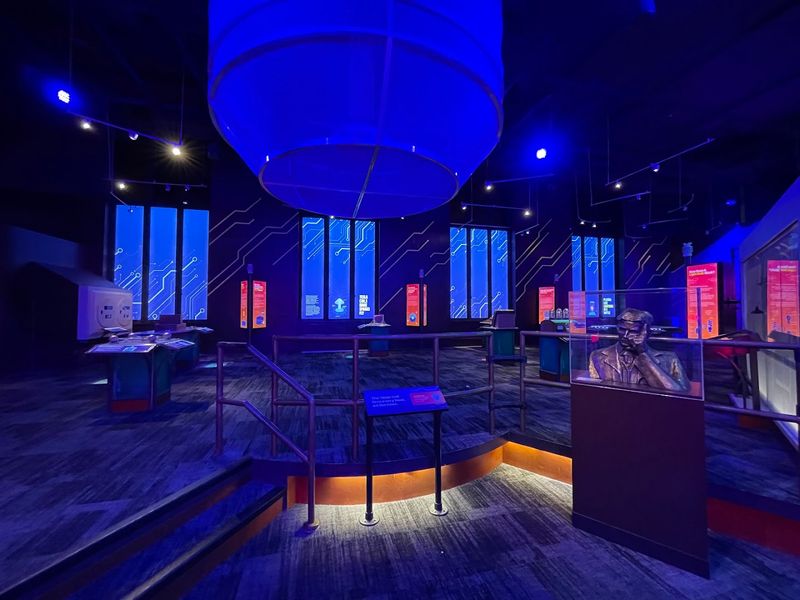
There’s something quietly magical about sitting in a darkened planetarium while stars bloom across the ceiling above you. The Franklin Institute’s space exhibits and planetarium programs have been transporting visitors beyond Earth for decades, and the experience has only gotten more breathtaking as the technology has improved.
The planetarium offers a rotating schedule of shows covering topics like black holes, the solar system, space travel history, and the future of human exploration. Each presentation is visually stunning and narrated in a way that makes complex astronomy feel approachable and exciting.
Even young children who might not understand every concept walk out talking about stars and planets with genuine enthusiasm.
Beyond the planetarium, the space-themed exhibit areas let families explore spacecraft models, learn about astronaut training, and discover what life looks like beyond our atmosphere. Interactive stations let kids calculate distances in space or design their own mission parameters — activities that blend math and science in a way that feels more like a game.
For any family with a child who has ever looked up at the night sky and asked “what’s out there,” this section of The Franklin Institute delivers answers in the most memorable way possible.
Sir Isaac’s Loft: A Playground for Physics
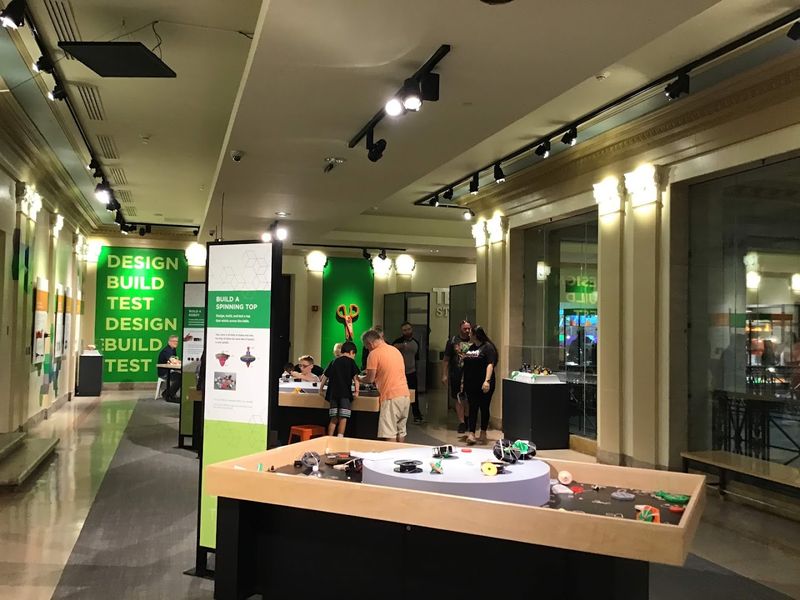
Named after the legendary Sir Isaac Newton, this experimentation zone has a playful, slightly mischievous personality that sets it apart from every other exhibit in the building. The moment you step in, you realize this space is built for tinkering, testing, and the occasional delighted shout when something works exactly as expected — or doesn’t.
Chain reactions, optical illusions, pendulum experiments, and demonstrations of Newton’s laws fill the space with constant activity. Kids can spend a surprising amount of time here just trying different combinations and observing what happens.
The exhibit is deliberately open-ended, which means there’s no single right way to engage with it — a refreshing approach that encourages genuine scientific thinking.
Physics can feel intimidating in a classroom setting, but Sir Isaac’s Loft strips away the intimidation entirely. When a kid watches a ball roll down a curved track and intuitively understands momentum without anyone using that word, something real has happened.
Parents who remember struggling through physics class often find this exhibit unexpectedly moving — watching their children grasp concepts through play that once felt unreachable through textbooks.
It’s one of those rare museum spaces that genuinely earns the word “magical” without overpromising anything.
Rare Scientific Artifacts and the Hamilton Collections Gallery
Not every great moment at The Franklin Institute involves pressing a button or running an experiment. The Hamilton Collections Gallery offers something quieter and equally powerful: a chance to stand face-to-face with the actual tools and machines that shaped scientific history.
The collection includes historic instruments, early computing devices, rare manuscripts, and inventions that span centuries of human ingenuity. Seeing these objects in person gives them a weight and reality that no photograph or textbook can replicate.
Kids who are drawn to history as much as science find this gallery especially rewarding, and it pairs beautifully with the interactive exhibits elsewhere in the museum.
There’s a particular kind of awe that comes from realizing the gadget in front of you helped change how people understood the world. The Hamilton Collections Gallery cultivates that feeling carefully and thoughtfully.
Older children and teens often respond strongly to this space because it connects scientific progress to real human stories — people who were curious, persistent, and creative enough to figure things out before the answers existed.
For families who want their museum visit to include depth alongside excitement, this gallery delivers exactly that kind of meaningful, lasting impression.
The Benjamin Franklin National Memorial

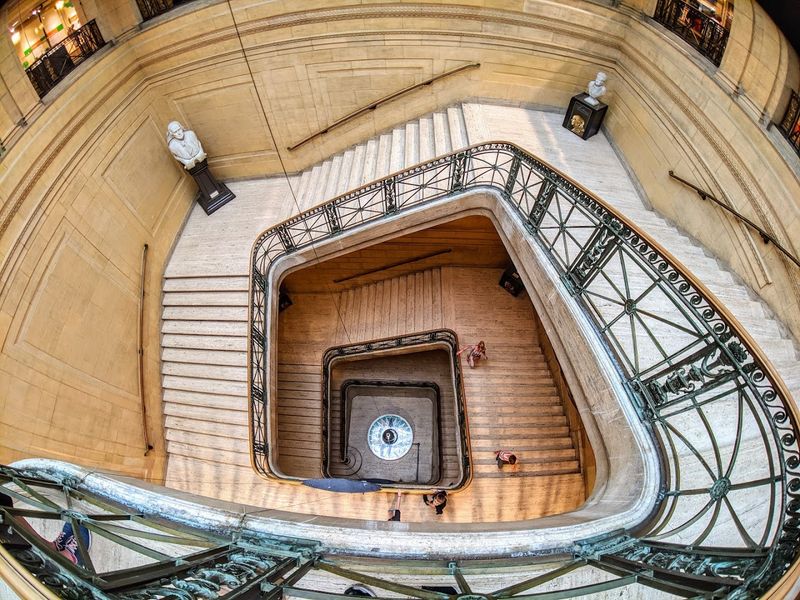
Standing at nearly 20 feet tall and carved from gleaming white marble, the statue of Benjamin Franklin in the museum’s grand rotunda is one of those sights that genuinely stops people mid-step. It’s impressive on its own, but the context makes it even more powerful — this is a monument to one of America’s most inventive and restlessly curious minds.
The Benjamin Franklin National Memorial celebrates Franklin as a scientist, inventor, diplomat, and thinker whose contributions shaped both American history and modern science. Interpretive displays around the rotunda highlight his discoveries in electricity, his inventions, and his lifelong commitment to public education and civic improvement.
Kids who know Franklin only from the hundred-dollar bill tend to leave with a much richer understanding of who he actually was.
Visiting this space also reinforces the museum’s core message in a tangible way: curiosity, experimentation, and persistence lead to discovery. Franklin embodied all three, and the memorial captures that spirit beautifully.
Families often pause here for photos, but the best moments happen when a child asks a question about Franklin’s life and a real conversation unfolds.
That’s exactly the kind of spark this museum — and this memorial — was designed to create.
Live Science Demonstrations and Seasonal Experiences
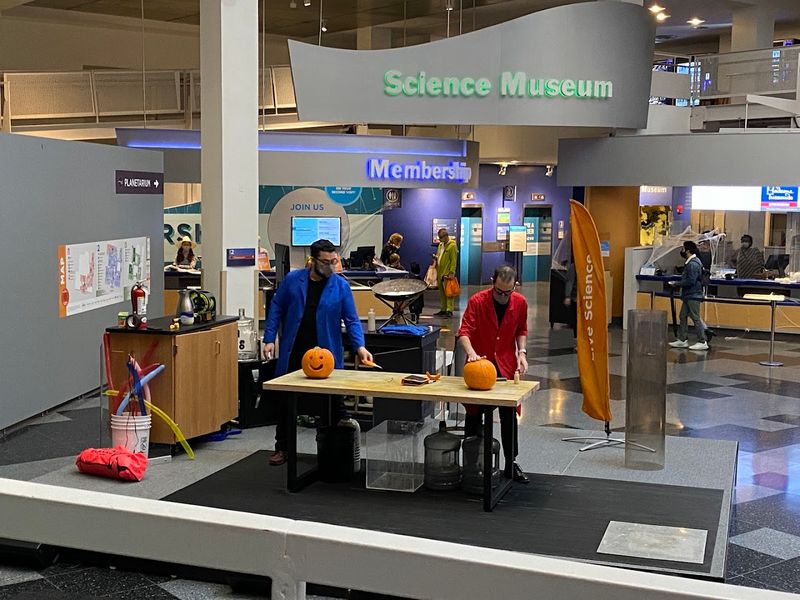
Scheduled demonstrations are one of those features that can easily get overlooked during trip planning — and consistently end up being a family highlight. At The Franklin Institute, science performers bring experiments to life with a contagious energy that makes even complicated concepts click immediately.
Think lightning bolts, chemical reactions, and physics stunts performed live in front of an audience of wide-eyed kids.
The demonstrations rotate throughout the day, covering topics that complement the permanent exhibits. Checking the day’s schedule when you arrive helps families plan their route through the museum so they don’t accidentally miss a show that would have been a perfect fit.
Seasonal programming adds another layer of variety — holiday-themed science events, traveling exhibitions, and special evening experiences give returning visitors fresh reasons to come back.
These live moments also do something the static exhibits can’t fully replicate: they create shared memories. Laughing together at a failed experiment or gasping collectively when a demonstration produces an unexpected result bonds families in a way that’s hard to manufacture.
For kids who learn best by watching and discussing, the demonstrations are often the most effective teaching moments of the entire visit.
Plan for at least one or two — you won’t regret it.
Essential Visitor Information for Planning Your Trip

Located at 222 N 20th Street in Philadelphia, The Franklin Institute is easy to reach by car, public transit, or rideshare. The museum is typically open daily from 9:30 AM to 5:00 PM, with select exhibitions occasionally offering special evening hours.
Checking the official website before your visit is always a smart move to confirm current hours and any temporary closures.
General admission covers access to multiple floors of hands-on exhibits, though the planetarium and special traveling exhibitions may require separate tickets. Weekday afternoons tend to be quieter than weekend mornings, which are popular with school groups and larger family parties.
Arriving around midday on a Tuesday or Wednesday can make a noticeable difference in how much space your family has to explore comfortably.
On-site parking is available nearby, and the museum’s guest services team can answer questions by phone or email before you arrive. The biggest practical tip seasoned visitors share is simple: block out more time than you think you need.
Most families who plan for two hours end up staying four or five.
Bring snacks, wear comfortable shoes, and resist the urge to rush — the best discoveries at The Franklin Institute always happen when you slow down and stay curious.