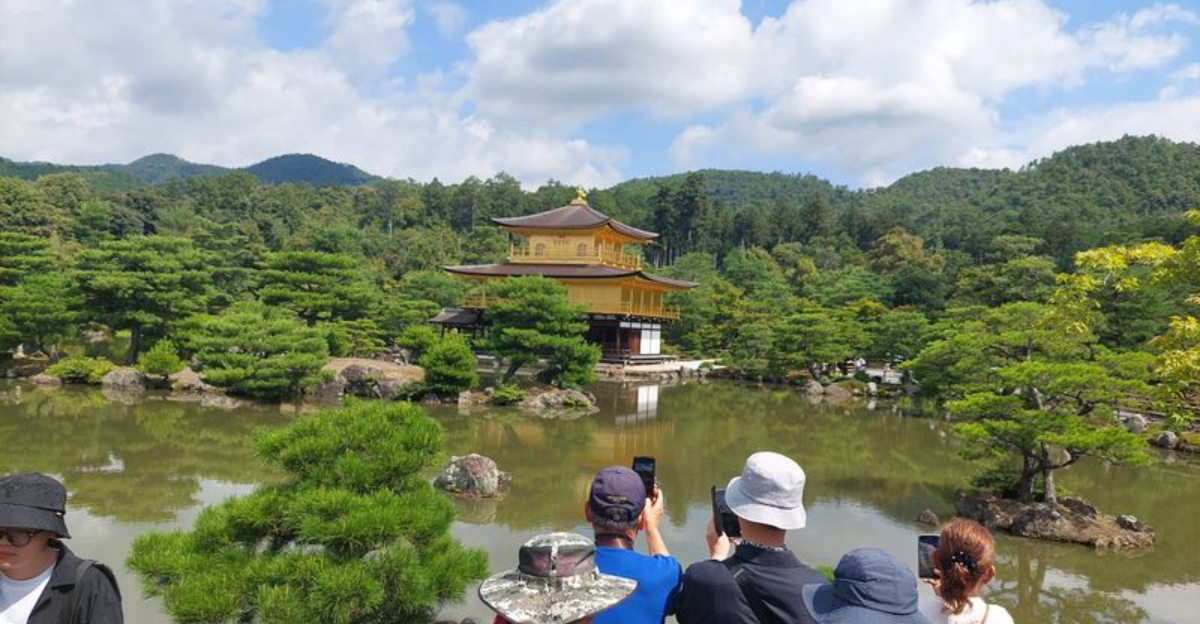
A secret paradise is hiding in plain sight — and it’s breathtaking.
Spread across 16 acres in Florida, Morikami Museum and Japanese Gardens is a serene escape where koi glide through crystal-clear ponds, bridges arch gracefully over trickling streams, and bonsai trees seem almost magical. Most visitors zip past without ever realizing this hidden gem exists.
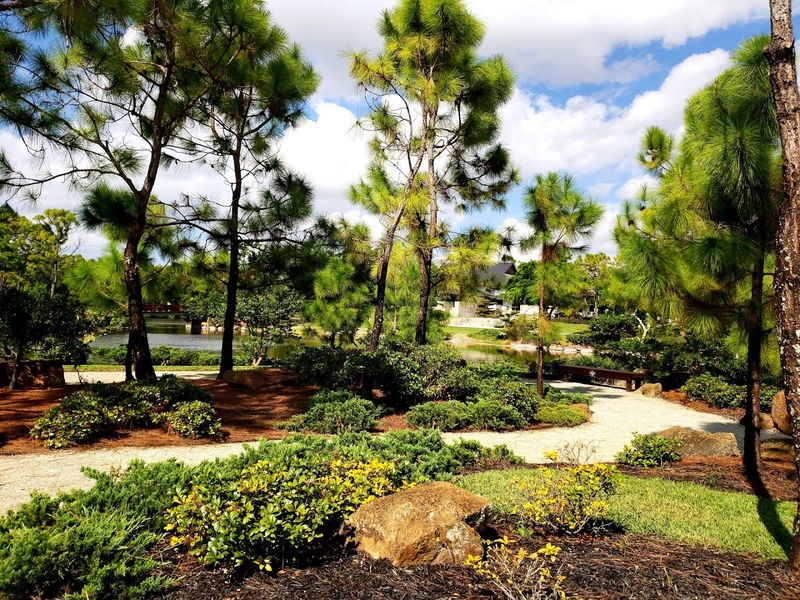
Stroll winding paths lined with cherry blossoms, lanterns, and perfectly pruned shrubs. Every turn feels like stepping into a painting, with colors, textures, and scents that demand you slow down and breathe.
Tea houses invite quiet reflection, and the sound of water paired with the rustle of leaves creates a calm that washes away the Florida heat and chaos.
This isn’t just a garden. It’s a peaceful retreat where time stretches, senses awaken, and the outside world fades — a secret oasis you’ll want to keep to yourself.
The 16-Acre Japanese Garden Landscape
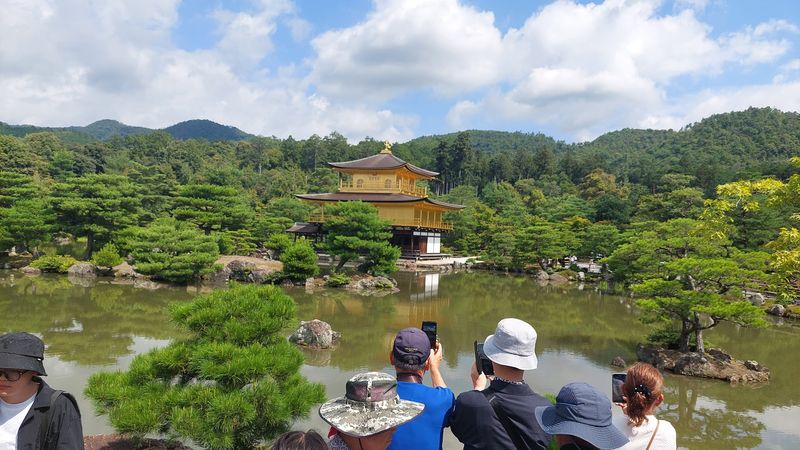
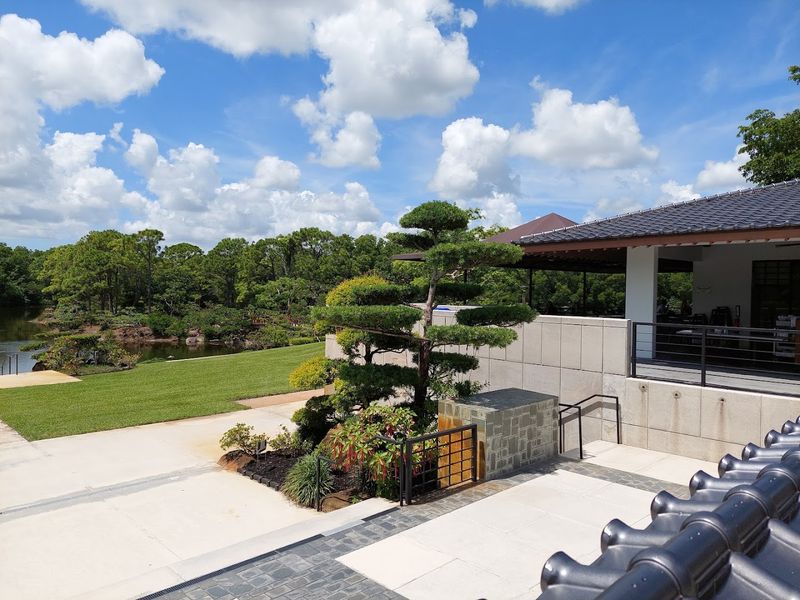
Sixteen acres sounds like a lot on paper, but walking through the Morikami gardens makes every single one of those acres feel like a gift. The landscape unfolds gradually, revealing koi ponds, stone lanterns, wooden bridges, and carefully trimmed trees around every bend.
Nothing here feels accidental — every plant, rock, and water feature has been placed with purpose and care.
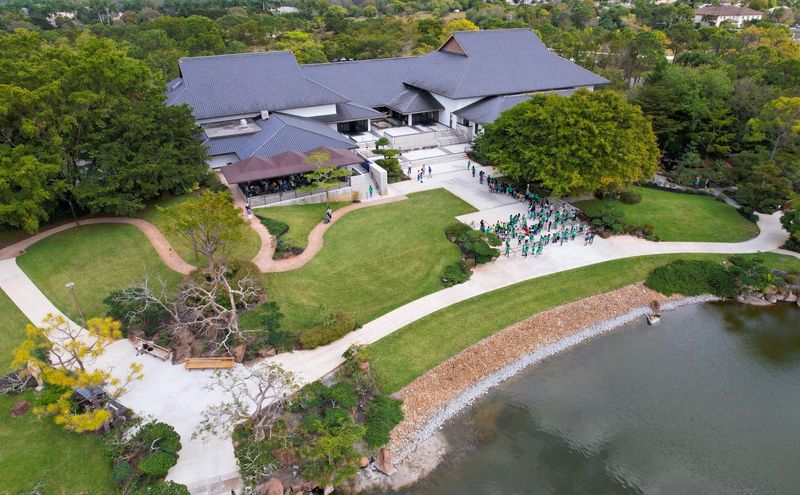
The garden is actually made up of several distinct sections, each inspired by a different era of Japanese garden design. You might pass through a raked gravel Zen garden one moment and find yourself beside a shimmering lake the next.
The transitions feel natural, almost like flipping through chapters of a beautifully illustrated book.
Visitors consistently say the grounds make them slow down in a way that almost nothing else does. Phones get pocketed, conversations get quieter, and people genuinely start noticing small details — a dragonfly landing on a stone, the ripple of fish near the surface.
For anyone who thinks Florida is all theme parks and crowded beaches, this garden is a gentle, stunning correction.
The Fascinating History of George Morikami
The whole story of this garden begins with one remarkably generous man. George Sukeji Morikami was a Japanese farmer who came to South Florida in the early 1900s as part of the Yamato Colony, a group of Japanese agricultural settlers who tried to grow pineapples in the Florida wilderness.
Most of the colonists eventually left, but Morikami stayed.
He worked hard for decades, quietly building a life in his adopted homeland. Then, in a gesture that still moves people today, he donated his land to Palm Beach County so that future generations could learn about Japanese culture and history.
He wanted something lasting — not just for Japanese Americans, but for everyone.
What makes his story so compelling is how deeply he loved both countries. He never forgot Japan, but he also truly belonged to Florida.
The museum and gardens that bear his name are a living tribute to that dual identity. Visiting feels personal, almost like you are walking through someone’s life story.
Learning about Morikami before or during your visit adds an emotional layer that transforms a beautiful walk into something genuinely meaningful.
The Yamato Colony Story and Japanese Immigration to Florida
Most people have never heard of the Yamato Colony, and that is exactly what makes learning about it so surprising. Around 1904, a group of Japanese immigrants settled in what is now Boca Raton, hoping to build a thriving pineapple farming community.
They named their settlement Yamato, an ancient name for Japan, as a way of honoring their roots while building something new.
The colony faced enormous challenges — harsh weather, financial struggles, and the social pressures of being Japanese immigrants in early 20th century America. One by one, most families packed up and moved on.
By the 1920s, the colony had essentially dissolved, leaving behind only a handful of people, including George Morikami himself.
The museum does a wonderful job telling this story through exhibits, photographs, and artifacts. Panels explain the daily lives of the colonists, their farming methods, and the cultural traditions they tried to maintain so far from home.
For students and history lovers, this part of the museum is genuinely eye-opening. Florida history is often told through Spanish explorers and Civil War stories, so discovering this Japanese chapter feels like finding a hidden page in a textbook nobody knew existed.
The Stunning Bonsai Collection
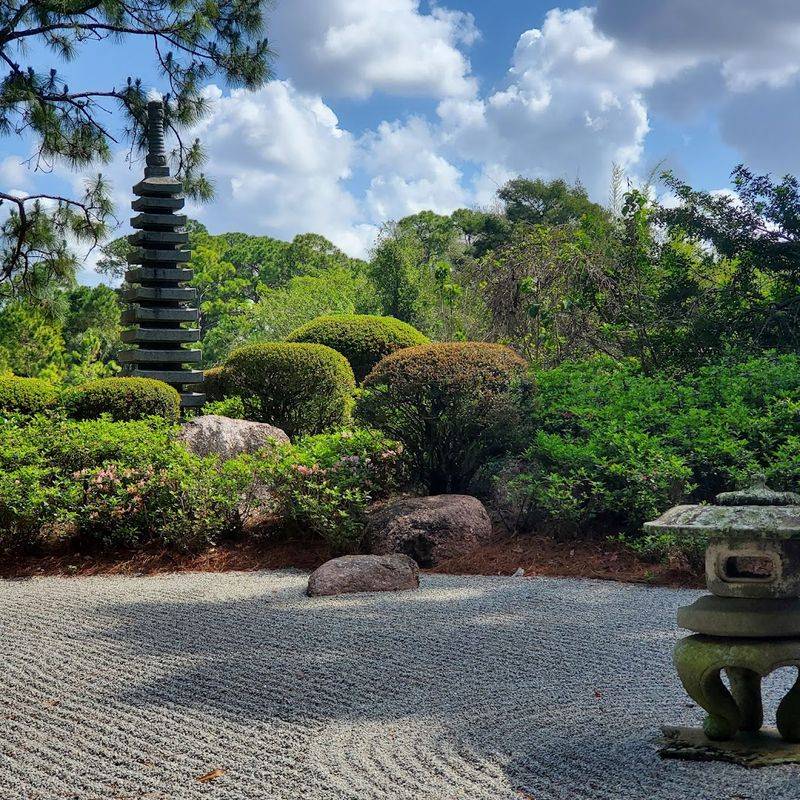
Ask almost any visitor what their favorite part of Morikami was, and a surprisingly large number will say the bonsai. The collection on display is genuinely spectacular — not in a flashy way, but in the quiet, patient way that bonsai demands.
Each tree is a miniature masterpiece, shaped over years or even decades by careful hands and a deep understanding of nature.
Bonsai is often misunderstood as simply keeping a tree small. In reality, it is an art form that requires reading the tree, understanding its natural growth habits, and guiding it toward a vision while respecting what the tree wants to do.
The results at Morikami reflect exactly that philosophy. Some trees look ancient beyond their size, with gnarled trunks and dramatic silhouettes that make you stop and stare.
The bonsai nursery section also lets visitors see trees at different stages of training, which is a wonderful educational touch. You come away with a real appreciation for the time and skill involved.
Even people who had zero interest in bonsai before arriving often leave wanting to start their own. There is something almost meditative about spending time with these living sculptures.
The Cornell Cafe and Japanese-Inspired Dining
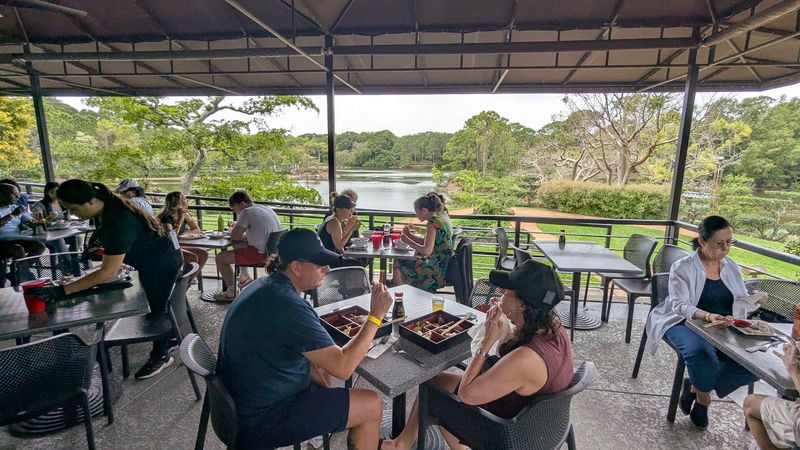
Hunger should never be a reason to cut your Morikami visit short, because the Cornell Cafe has you completely covered. Tucked into the museum grounds with views of the gardens, the cafe serves Japanese-inspired food that visitors consistently rave about.
The classic bento box is a crowd favorite — a satisfying, well-balanced meal that fits the whole aesthetic of the place perfectly.
The menu also features items like sushi rolls, miso soup, and refreshing green tea, giving the dining experience a genuinely authentic feel without being intimidating for first-timers. Prices are reasonable, especially considering the setting.
Eating lunch here while watching koi glide through the nearby pond is exactly the kind of simple pleasure that makes a day truly memorable.
A hot cup of green tea after a long walk through the gardens is practically a ritual for repeat visitors. The unagi roll has also earned a loyal following among regulars.
The cafe is not a huge operation, so arriving early or during off-peak hours is a smart move, especially on weekends. Either way, skipping the cafe entirely would mean missing one of the most enjoyable parts of the whole Morikami experience.
Japanese Tea Ceremonies and Cultural Events
One of the most special things Morikami offers beyond the gardens and exhibits is the chance to experience Japanese culture in an active, participatory way. The museum hosts traditional Japanese tea ceremonies on select dates, giving visitors a rare opportunity to witness one of Japan’s most refined cultural practices up close.
These ceremonies are rooted in centuries of tradition, emphasizing mindfulness, respect, and the beauty of simple moments.
Watching a tea ceremony is quietly mesmerizing. Every movement is deliberate, every gesture carries meaning, and the atmosphere in the room shifts into something almost ceremonial in the truest sense of the word.
First-time observers often describe feeling unexpectedly moved by the experience, even without fully understanding every detail.
Beyond tea ceremonies, Morikami hosts a busy calendar of festivals, cultural classes, archery demonstrations, and seasonal events throughout the year. The Hatsume Fair and Bon Festival are among the most popular, drawing large crowds who come to enjoy traditional music, food, crafts, and performances.
Checking the museum’s website before your visit is always a good idea, because attending one of these events adds a completely different dimension to the experience. Morikami is not just a place to look at — it is a place to participate in.
Koi Ponds, Waterfalls, and Serene Water Features
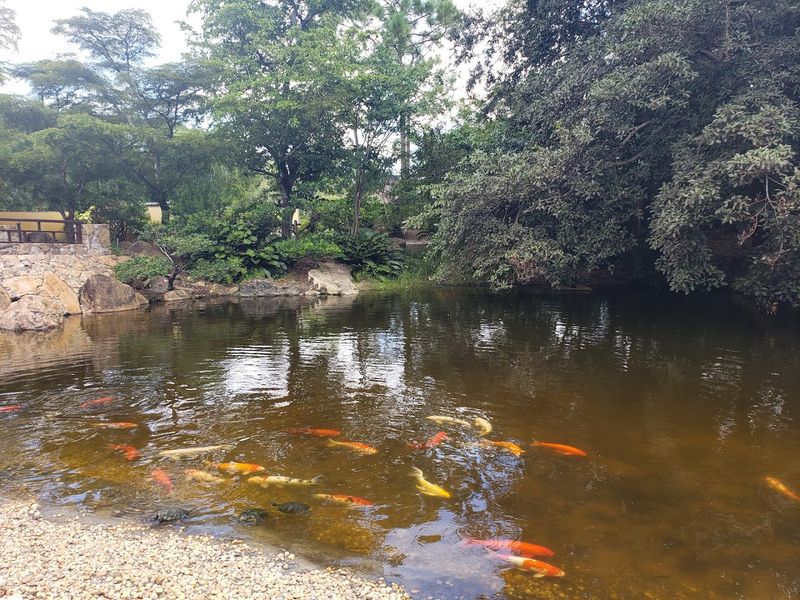
Water is everywhere at Morikami, and that is entirely intentional. In traditional Japanese garden design, water represents life, movement, and the passage of time.
The koi ponds scattered throughout the property bring that philosophy to vivid, colorful life. Watching the fish glide through clear water — their orange, white, and black scales catching the sunlight — is one of those simple pleasures that turns out to be surprisingly captivating.
The waterfalls are another highlight that visitors return to again and again. Some are dramatic cascades that fill the air with the sound of rushing water, while others are gentle trickles that barely disturb the surface below.
Both types create a natural soundtrack that makes the whole garden feel alive. Many visitors find a favorite spot near a waterfall and simply sit for a while, letting the sound wash over them.
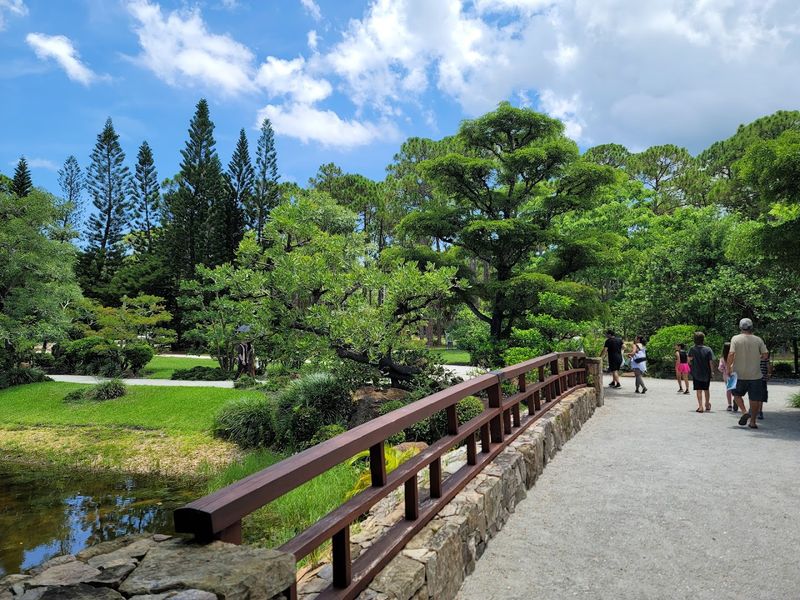
Stone bridges arc over narrow channels, connecting different sections of the garden while adding visual elegance to the landscape. Standing on one of those bridges and looking out over the water in both directions is the kind of moment that makes people reach for their cameras.
The water features at Morikami are not just decorative — they are the pulse of the entire garden experience.
The Gift Shop and Unique Japanese Souvenirs
Before you leave Morikami, the gift shop deserves a proper visit — not a rushed glance on the way out, but a real, unhurried browse. The selection is genuinely impressive, featuring items you would not easily find anywhere else in Florida.
Think hand-painted ceramics, Japanese tea sets, silk accessories, decorative fans, calligraphy supplies, and art books that make beautiful keepsakes or gifts.
During busy holiday periods, the shop gets crowded enough that elbowing for space becomes part of the experience. Visiting on a weekday or arriving early on weekends gives you a much more relaxed shopping atmosphere.
Either way, the quality of the merchandise makes the stop worthwhile. Many items are imported directly from Japan or made by artists connected to the museum, which gives the shop a curated feel rather than a generic tourist trap vibe.
Bonsai-related supplies and starter kits are a particularly popular purchase, especially for visitors who left the garden inspired to try the art form themselves. Children tend to gravitate toward the small decorative items and puzzle toys.
Whether you spend five dollars or fifty, leaving with something from the Morikami gift shop is a lovely way to carry a piece of the experience home with you.
Practical Visitor Tips for Planning Your Trip
Planning ahead makes the Morikami experience noticeably better. The museum is open Tuesday through Sunday from 10 AM to 5 PM and is closed on Mondays.
Admission runs about $17 to $18 for adults, which is genuinely excellent value considering how much there is to see and do. Arriving early on weekdays is the best strategy for avoiding crowds, especially during school breaks and the winter tourist season.
Wear comfortable walking shoes, because the paths cover a lot of ground and some sections feature fine gravel rather than paved surfaces. This gives the garden an authentic Japanese feel, but it can be challenging for standard strollers or basic mobility devices.
Anyone bringing a stroller or using a wheelchair should look for all-terrain options to make the walk more manageable. Bringing a water bottle is also a smart move, particularly on warm Florida days.
The museum’s website at morikami.org is the best place to check current exhibit schedules, upcoming events, and any seasonal closures before your visit. The Bloomberg Connects app adds free audio and visual content that enhances the indoor experience.
For regular visitors, a membership is worth considering — it eliminates admission costs and adds a sense of ownership over this remarkable place that makes every return visit feel like coming home.