New Mexico is the kind of place where the road itself becomes part of the adventure.
From alien legends and ancient carvings to glowing white dunes and sky-high bridges, the Land of Enchantment is packed with stops that are anything but ordinary.
Whether you’re cruising Route 66 or cutting through the high desert, these roadside gems are worth every detour.
Pack some snacks, charge your camera, and get ready to discover what makes New Mexico unforgettable.
International UFO Museum and Research Center — Roswell
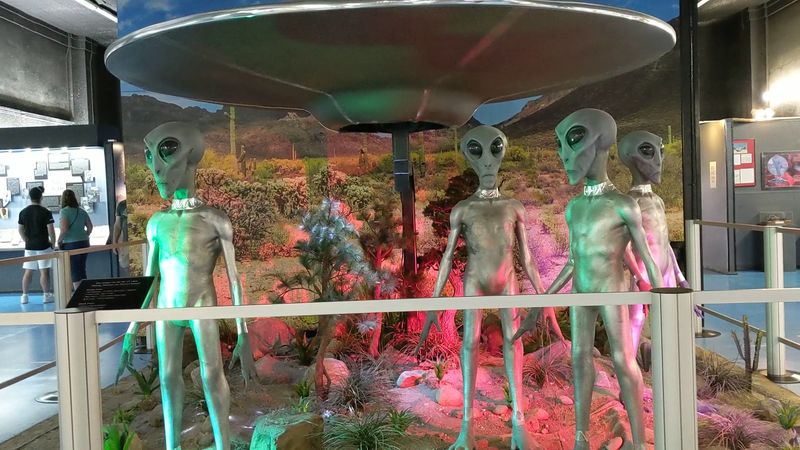
Few towns have leaned into their quirky history quite like Roswell, and this museum is proof. Back in 1947, something crashed in the desert nearby, and the debate over what exactly it was has never really stopped.
The International UFO Museum and Research Center turns that mystery into an experience you won’t forget anytime soon.
Inside, you’ll find newspaper clippings, government documents, alien mannequins, and exhibits that walk you through the timeline of the famous incident. It’s part history lesson, part pop-culture celebration, and completely entertaining whether you believe in extraterrestrials or not.
Even skeptics tend to leave with a grin on their face.
The gift shop alone is worth stopping for, with shelves full of alien-themed souvenirs that make perfect road trip keepsakes. Roswell itself plays up the UFO theme throughout downtown, so budget a little extra time to explore the surrounding shops and murals.
Admission is affordable, making this a smart stop for families, curious travelers, and anyone who has ever looked up at the night sky and wondered.
Blue Hole — Santa Rosa
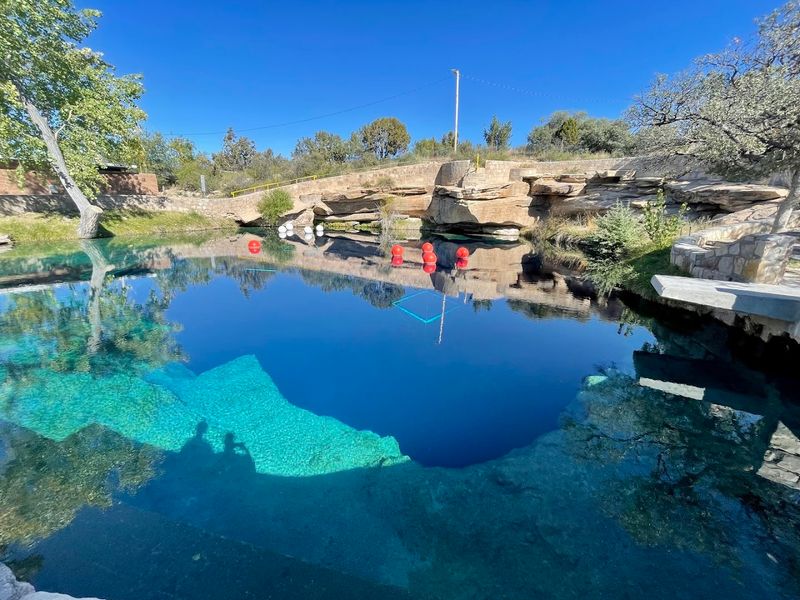
Stumbling upon the Blue Hole for the first time feels almost unreal. Right off historic Route 66, hidden behind an unassuming road in Santa Rosa, a perfectly round pool of brilliant sapphire water sits waiting.
It looks less like New Mexico and more like something you’d find on a tropical island postcard.
This natural artesian spring maintains a steady temperature of around 61 degrees Fahrenheit year-round, making it refreshingly cool during sweltering summer drives. The water is so clear you can see straight to the bottom, which sits about 80 feet down.
Scuba divers actually come from across the country to train here because of the visibility and consistent conditions.
Swimmers are welcome too, and the surrounding park area has picnic spots perfect for stretching your legs. There’s no admission fee to visit, which makes it one of the best free stops along the old highway corridor.
Pro tip: arrive early on weekends since word has spread and the spot gets busy during summer months. Bring a towel, a change of clothes, and maybe a sandwich, because once you see that water, you’re definitely getting in.
Rio Grande Gorge Bridge — Near Taos
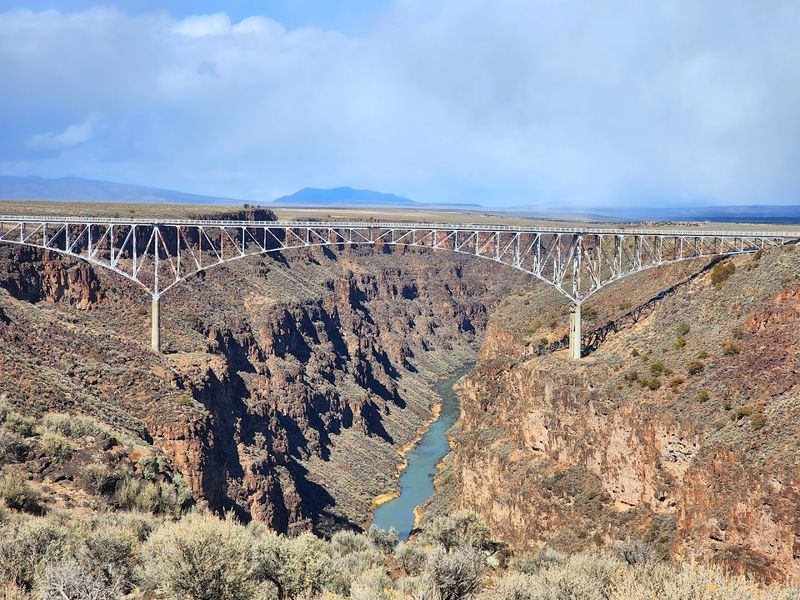
Standing on the Rio Grande Gorge Bridge is the kind of moment that makes your stomach drop in the best possible way. Stretching 1,280 feet across a volcanic canyon carved over millions of years, this steel bridge rises roughly 650 feet above the river below.
It’s one of the highest bridges in the entire United States, and the view from the pedestrian walkway is absolutely breathtaking.
Scenic pullouts on both ends of the bridge let you park safely and soak in the landscape at your own pace. On clear days, you can see the Taos Plateau stretching endlessly in every direction, framed by distant mountains.
The contrast between the flat desert above and the jagged canyon walls below is genuinely dramatic.
Sunrise and sunset visits are especially rewarding, when golden light pours across the gorge and the river shimmers far beneath your feet. Wildlife spotters sometimes catch raptors soaring at eye level from the walkway.
The bridge is free to visit and located just a short drive west of Taos, making it an easy add-on to any northern New Mexico road trip itinerary. Don’t skip it, even if heights make you nervous.
Tinkertown Museum — Sandia Park
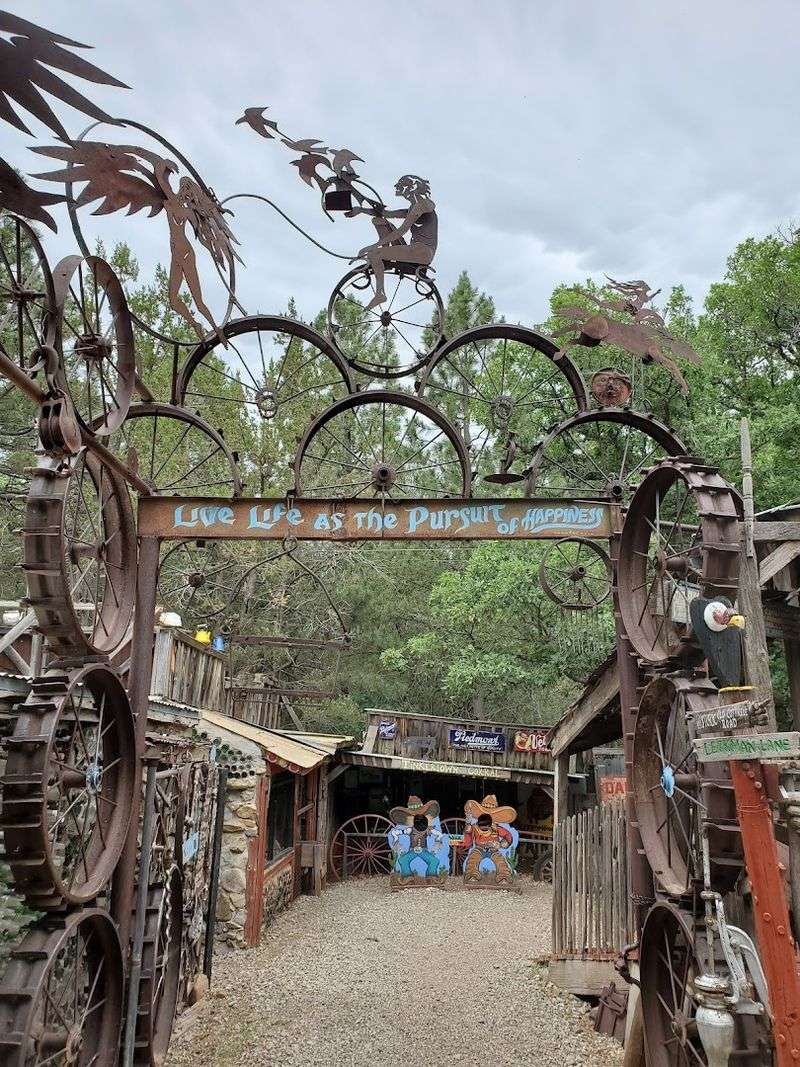
Ross Ward spent more than 40 years carving, collecting, and building, and Tinkertown Museum is what happened as a result. Located along the scenic Turquoise Trail near Sandia Park, this one-of-a-kind roadside attraction is made from over 50,000 glass bottles embedded in its walls.
The structure itself is a work of art before you even step inside.
Once through the door, you’re greeted by an astonishing collection of hand-carved miniature scenes, animated figures, and curiosities collected from a lifetime of wandering. A tiny Western town, a circus, and a sea voyage all come to life in painstaking detail.
Every corner holds something new to discover, and kids and adults alike tend to slow way down as they explore.
Ward’s personal motto, “We did all this while you were watching TV,” is painted on a wall inside and sums up the spirit of the place perfectly. The museum is now run by his family and remains a beloved labor of love.
Admission is modest, and the experience is genuinely unlike anything else you’ll find on any road in the country. Budget at least an hour here, because you’ll want to look at everything twice.
Very Large Array — Near Magdalena
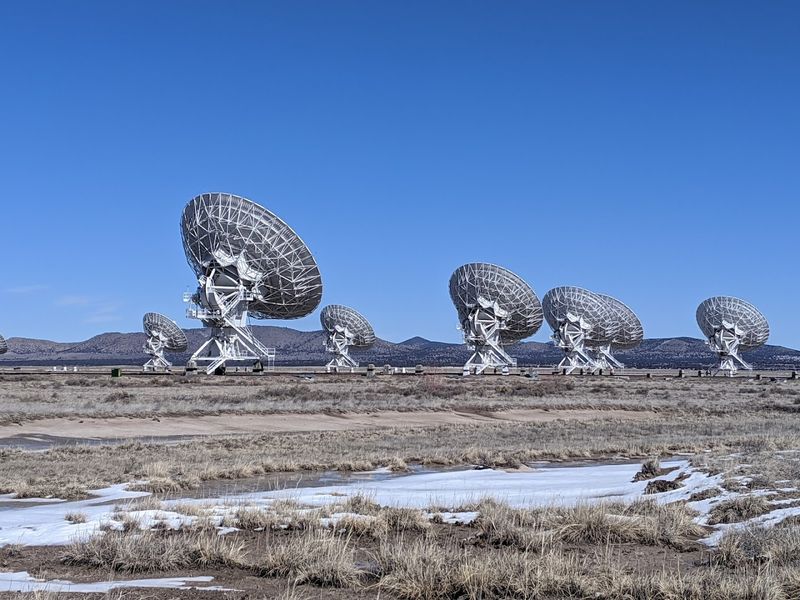
Nothing quite prepares you for the first glimpse of the Very Large Array spread across the Plains of San Agustin. Twenty-seven enormous radio telescope dishes, each 82 feet wide, are arranged in a massive Y-shape across the high desert floor.
The scale is almost incomprehensible until you’re actually standing next to one.
Run by the National Radio Astronomy Observatory, the VLA has been scanning deep space since 1980, helping scientists study black holes, distant galaxies, and cosmic phenomena we’re still working to understand. It has even appeared in films and television, most famously in the movie Contact, which brought it wider public attention.
The site feels genuinely futuristic against the ancient desert backdrop.
A self-guided walking tour is available on weekends and some weekdays, taking visitors right up close to the dishes. The visitor center has exhibits explaining how radio astronomy works in approachable, interesting ways.
The drive out to the VLA winds through remote ranching country, adding to the sense of discovery when those dishes finally appear on the horizon. Admission is free, and the experience is one of those rare stops that manages to be both scientifically impressive and visually spectacular at the same time.
White Sands National Park — Near Alamogordo
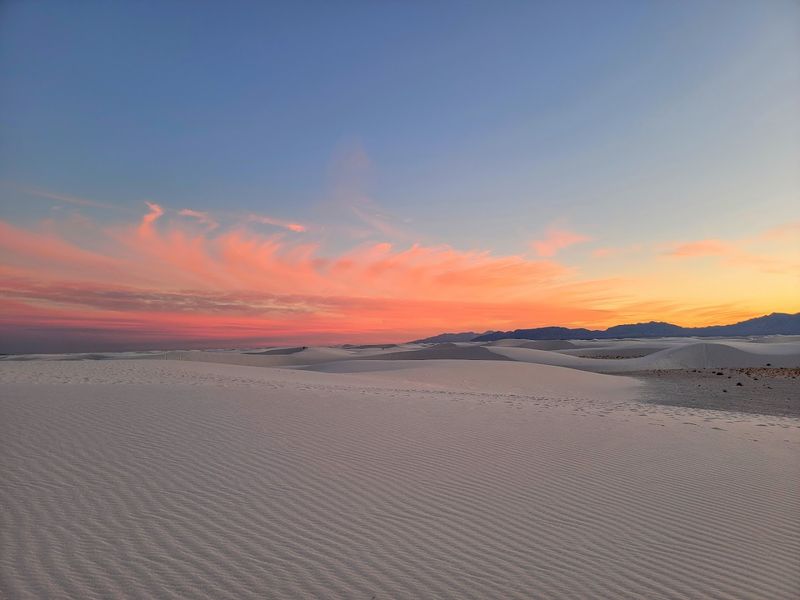
White Sands looks like someone dropped a piece of the Arctic into the middle of the Chihuahuan Desert. The dunes here are made entirely of gypsum, a soft white mineral that stays cool even in blazing summer heat because it doesn’t absorb sunlight the way regular sand does.
Stretching across 275 square miles, this is the largest gypsum dunefield on Earth.
Visitors can drive the eight-mile scenic loop through the heart of the park or hike several well-marked trails that wind through the surreal white landscape. Renting a plastic sled from the visitor center gift shop and sliding down the dunes is one of the most unexpectedly fun things you can do at a national park.
It sounds silly until you try it, and then you’ll want to do it ten more times.
Sunset is a magical time here, when the dunes shift from blinding white to soft pink and gold. Keep in mind that the park occasionally closes temporarily due to missile testing from the adjacent military range, so checking the schedule before your visit is a smart move.
Entry fees are reasonable, and the park is accessible year-round with comfortable temperatures in fall and spring making those seasons especially popular.
Clines Corners Trading Post — Clines Corners
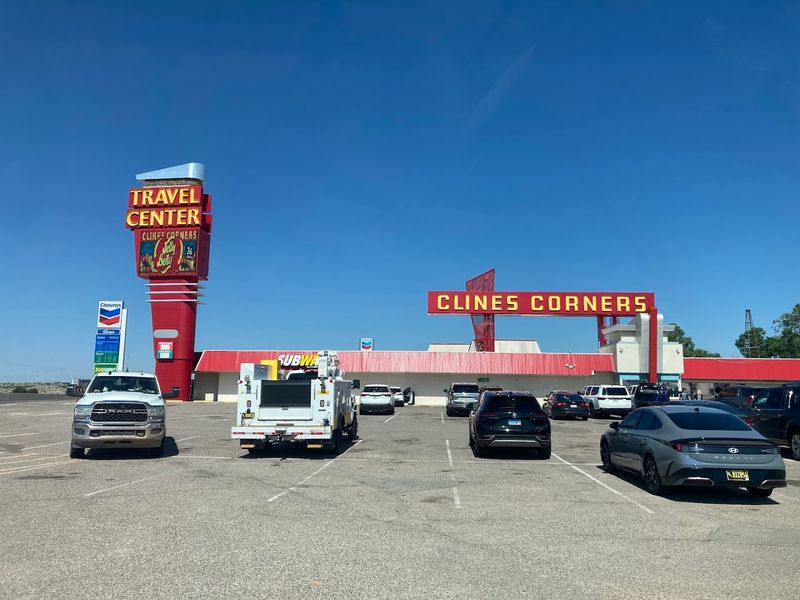
Out in the middle of the high desert, where Interstate 40 meets US Route 285, Clines Corners has been welcoming weary travelers since 1934. It started as a small trading post and has grown into a sprawling roadside institution that feels like a time capsule of American highway culture.
The sign is visible from miles away, which is part of the charm.
Inside, the shelves are stacked with New Mexico souvenirs, turquoise jewelry, chile pepper gifts, snacks, and all the classic road trip provisions you might need. The selection of local food items, from green chile sauces to piñon candies, makes it a genuinely useful stop rather than just a novelty.
Generations of families have paused here on cross-country drives, and there’s something quietly nostalgic about joining that long tradition.
Fuel up, grab a snack, stretch your legs, and pick up a few gifts for people back home. The staff is friendly, the restrooms are clean, and the coffee is always fresh.
Clines Corners isn’t fancy, and it doesn’t try to be. It’s honest, reliable, and wonderfully old-school in the best sense of the phrase.
Sometimes the most memorable stops are the ones that simply do their job really well.
Billy the Kid Museum — Fort Sumner
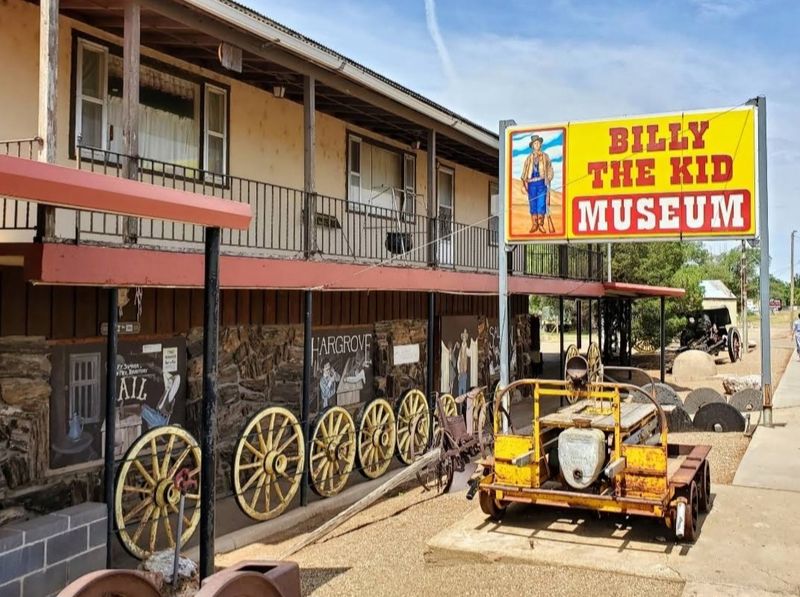
Billy the Kid was barely 21 years old when he was shot and killed in Fort Sumner in 1881, yet his legend has never stopped growing. The Billy the Kid Museum in this small eastern New Mexico town is dedicated to separating the myth from the man, while still celebrating the Wild West story that has captured imaginations for over a century.
It’s a surprisingly rich stop for history lovers.
The collection inside includes authentic frontier artifacts, personal items linked to the outlaw, weapons from the era, and exhibits that trace the violent and turbulent history of Lincoln County during the late 1800s. Old photographs and newspaper clippings help paint a vivid picture of life on the territorial frontier.
The detail and authenticity on display here goes well beyond what you might expect from a small-town roadside museum.
Just a short walk away, the grave of Billy the Kid sits in a fenced enclosure at Fort Sumner State Monument. The tombstone has been stolen and recovered multiple times over the years, adding its own strange chapter to the legend.
Visiting both the museum and the grave site together makes for a genuinely moving afternoon that connects you to one of America’s most enduring frontier stories.
Earthship Biotecture — Near Taos
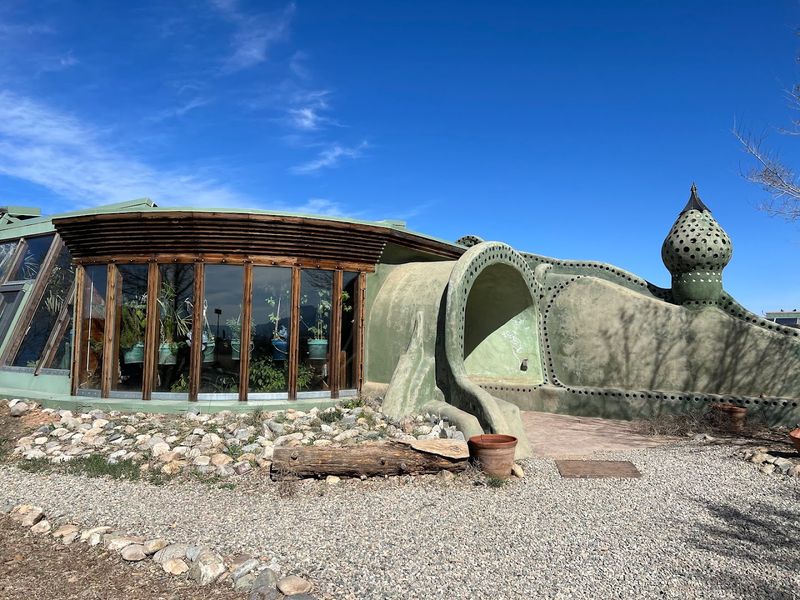
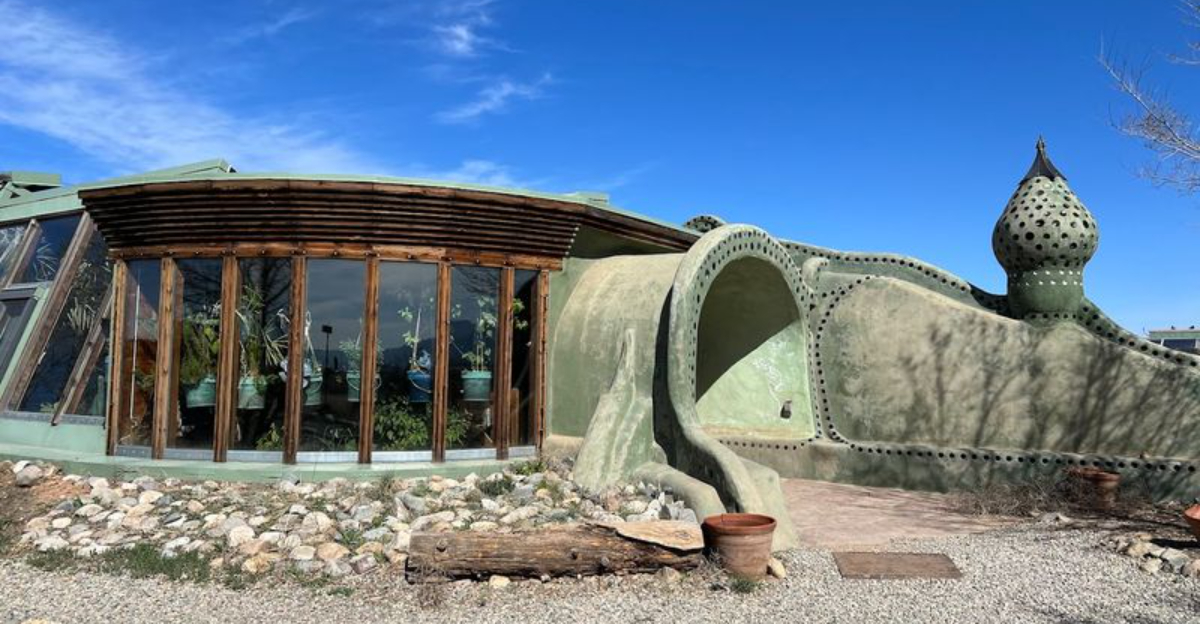
Imagine a neighborhood where the houses are built from old tires, glass bottles, and reclaimed wood, and where every home generates its own electricity, collects its own rainwater, and grows food year-round inside a built-in greenhouse. That’s exactly what you’ll find in the Earthship community just west of Taos, and it’s one of the most genuinely mind-expanding stops in all of New Mexico.
Architect Michael Reynolds began developing the Earthship concept in the 1970s as a response to the environmental and energy challenges of conventional construction. The homes are designed to function completely off the grid, using passive solar design and thermal mass to stay comfortable even in the harsh desert climate.
Guided tours walk visitors through model homes that demonstrate how all the systems work together.
What makes Earthship Biotecture so compelling is that it’s not just theoretical. Real people live in these structures full-time, and the community continues to grow and evolve.
Visitors often leave feeling inspired, whether or not they ever plan to build one themselves. The visitor center offers information about workshops and volunteer programs for those who want a hands-on experience.
It’s a stop that challenges the way you think about housing, sustainability, and what a home can actually be.
El Morro National Monument — Near Ramah
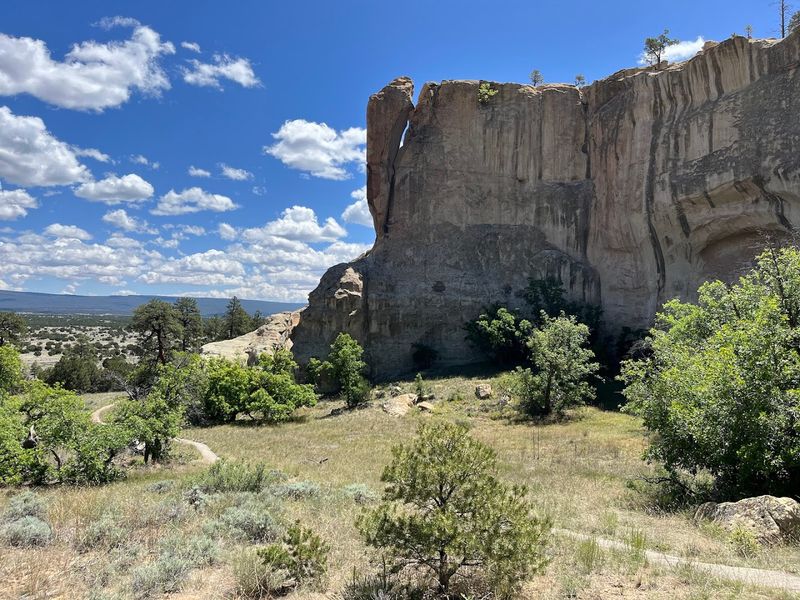
Long before social media existed, travelers passing through the remote high country of western New Mexico left their mark on a massive sandstone bluff called El Morro. The carvings here span hundreds of years, from Indigenous petroglyphs etched centuries ago to Spanish explorer signatures from the 1600s and American pioneer inscriptions from the 1800s.
Every mark tells a story of someone who passed this way and wanted to be remembered.
The reason so many travelers stopped here is simple: El Morro has a reliable pool of water at its base, which was a life-saving resource in this dry landscape. People didn’t just stop to carve their names; they stopped because they had to, and they left their mark to say they had made it this far.
That human impulse to leave evidence of your presence connects visitors across centuries in a surprisingly emotional way.
The two-mile loop trail climbs to the top of the bluff, offering sweeping views of the surrounding mesa country and the ruins of an ancient Pueblo village. Rangers at the small visitor center provide fascinating context for what you’re seeing.
El Morro is one of those places that feels genuinely sacred and historically layered, and it rewards visitors who take time to walk slowly and read every inscription.
Pie Town Pie Co. — Pie Town
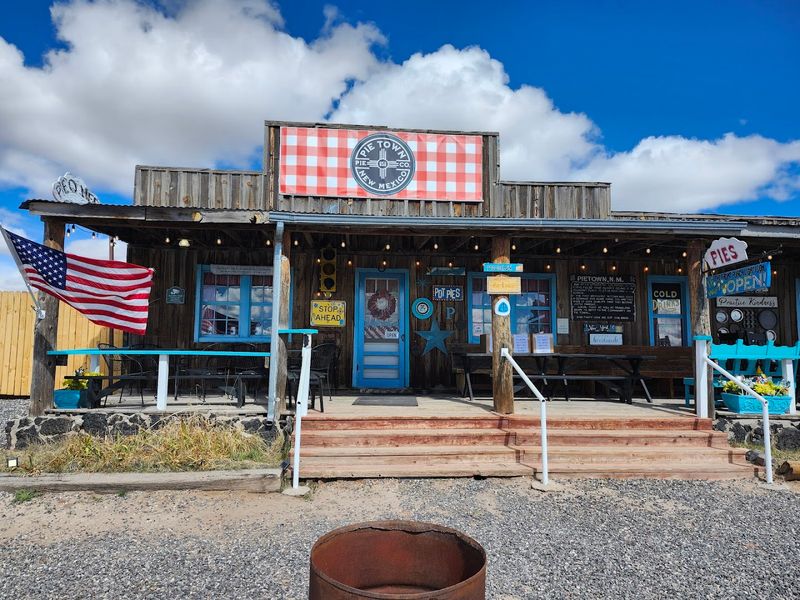
There’s no fancy attraction here, no museum, no scenic overlook, just pie. And somehow, that’s more than enough.
Pie Town sits along US Highway 60 in the remote Catron County highlands, and its reputation for homemade pies has drawn road-trippers off course for decades. The name alone is reason enough to make the turn.
The community got its start in the 1920s when a homesteader named Clyde Norman began selling dried apples and pies to travelers passing through. The name stuck, and the tradition stuck even harder.
Today a handful of small cafes and shops carry on the pie-making legacy with recipes that lean heavily on local flavors like piñon, green apple, and pumpkin depending on the season.
Pie Town is also a well-known resupply point along the Continental Divide Trail, so you’re likely to encounter long-distance hikers alongside road-trippers at the pie counter. The population is tiny, the setting is remote, and the whole experience feels wonderfully out of time.
Arrive hungry, because ordering just one slice is nearly impossible once you see the options. Pie Town is proof that the best roadside stops don’t need a gimmick when the food is genuinely, honestly delicious.
Ship rock
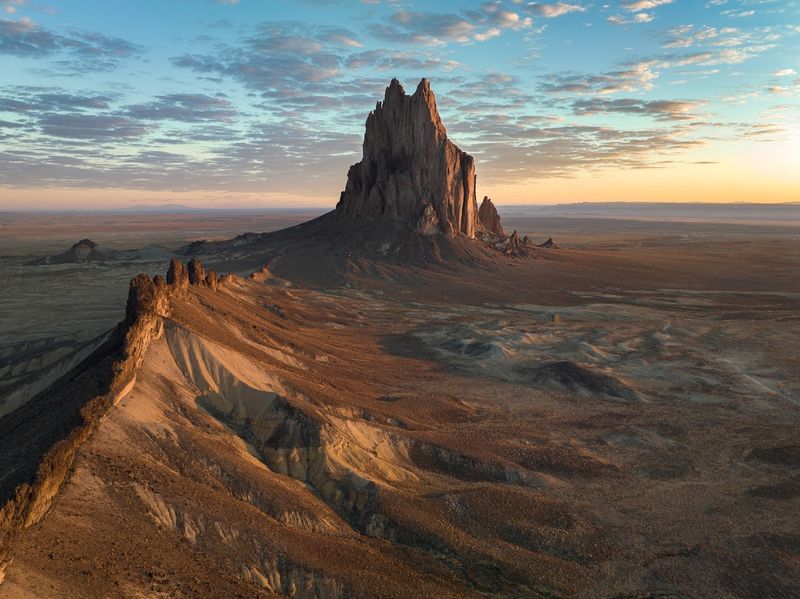
Rising nearly 1,600 feet straight up from the flat San Juan Basin, Shiprock is one of the most dramatic natural landmarks in the entire American Southwest. The Navajo people call it Tse Bit’a’i, meaning “rock with wings,” and it holds deep spiritual significance within Navajo culture and tradition.
Climbing is strictly prohibited out of respect for that sacred meaning, and visitors are asked to observe from a respectful distance.
Geologically, Shiprock is what remains of an ancient volcanic pipe, formed roughly 27 million years ago when magma pushed up through the earth’s crust and solidified. The long ridges of dark rock radiating outward from the base are called dikes, and they stretch for miles across the desert floor.
The whole formation looks like something from another world, which is probably why it keeps appearing in science fiction imagery and alien landscape comparisons.
The best viewing is from the pullouts along Highway 491 or the unpaved roads that approach the formation from the south. Early morning light creates stunning shadows that emphasize the jagged peak against the wide sky.
Shiprock stands as a reminder that some of the most powerful places in New Mexico belong to the people who have called this land home for thousands of years, and deserve to be honored as such.
Bisti/De-Na-Zin Wilderness — Bloomfield
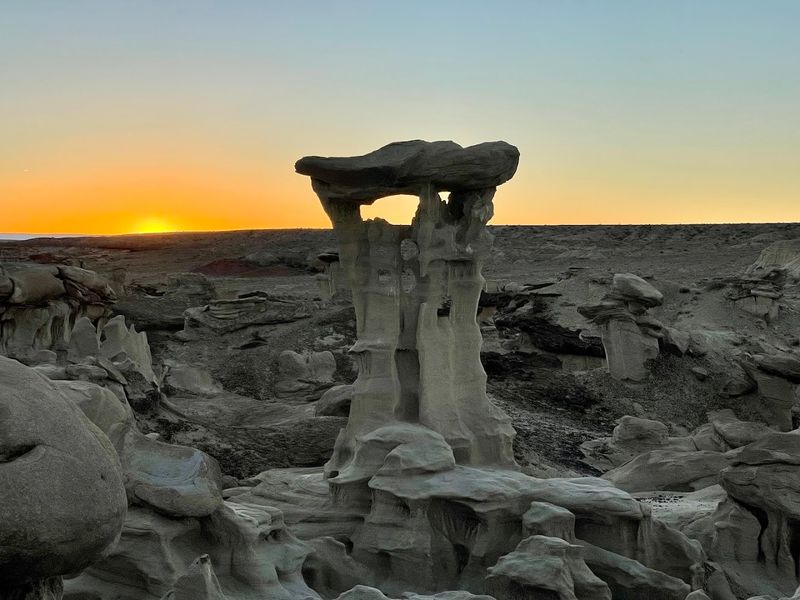
Walking through the Bisti/De-Na-Zin Wilderness feels less like hiking in New Mexico and more like wandering across the surface of a distant planet. The landscape here is shaped by millions of years of erosion working on ancient sedimentary layers left behind by a shallow inland sea.
The result is a terrain of twisted hoodoos, crumbling spires, and petrified wood scattered across a surreal gray and brown badlands.
There are no marked trails, no visitor center, and no facilities, which means you’re navigating by landmarks and instinct. That sense of raw exploration is a big part of the appeal.
Fossil hunters have found dinosaur bones in these sediments, and the Bureau of Land Management manages the area carefully to protect what remains. Removing fossils or artifacts is illegal and genuinely harmful to the scientific record.
The best time to visit is during cooler months, from October through April, since summer temperatures can be dangerously hot and flash floods are a real concern. Bring plenty of water, a compass or reliable GPS, and sturdy boots because the terrain is uneven and crumbly underfoot.
Sunrise and sunset cast the hoodoos in incredible colors that make every photograph look almost too dramatic to be real. Bisti is remote, demanding, and absolutely worth it for adventurous travelers.