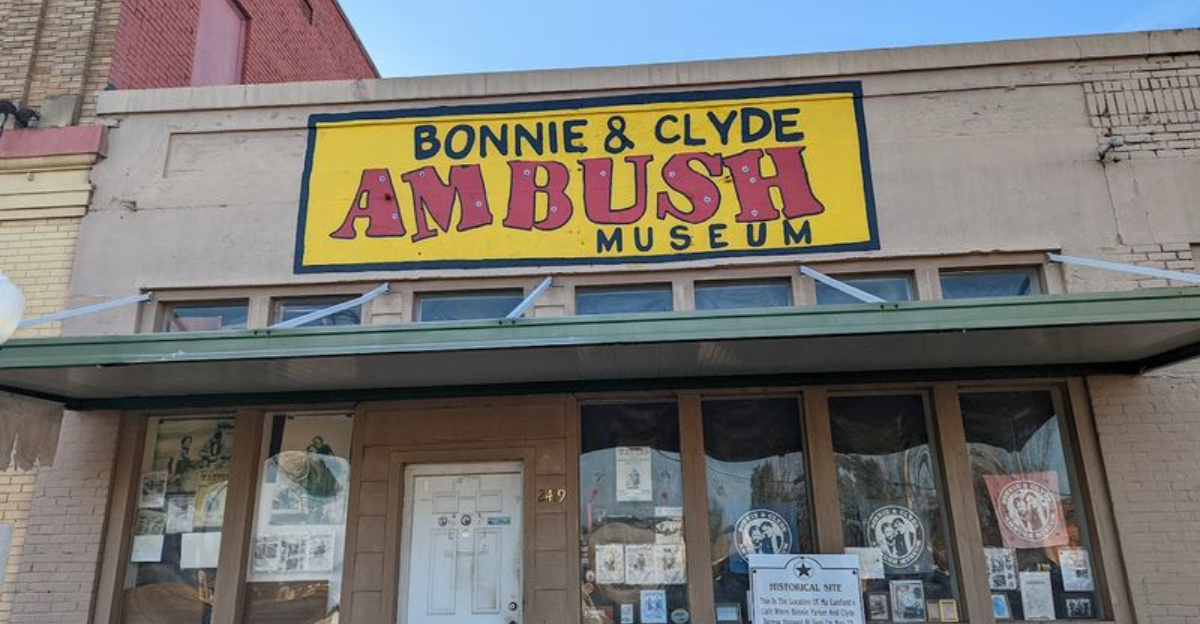
Louisiana is full of surprises, and not just in its food and music.
Hidden along its back roads and highways are some of the most wonderfully weird roadside attractions you will ever stumble upon.
From folk art museums to giant crawfish sculptures, these quirky stops turn an ordinary drive into something you will talk about for years.
Pack your camera, fuel up, and get ready to discover the strange and spectacular side of the Pelican State.
Abita Mystery House – Abita Springs
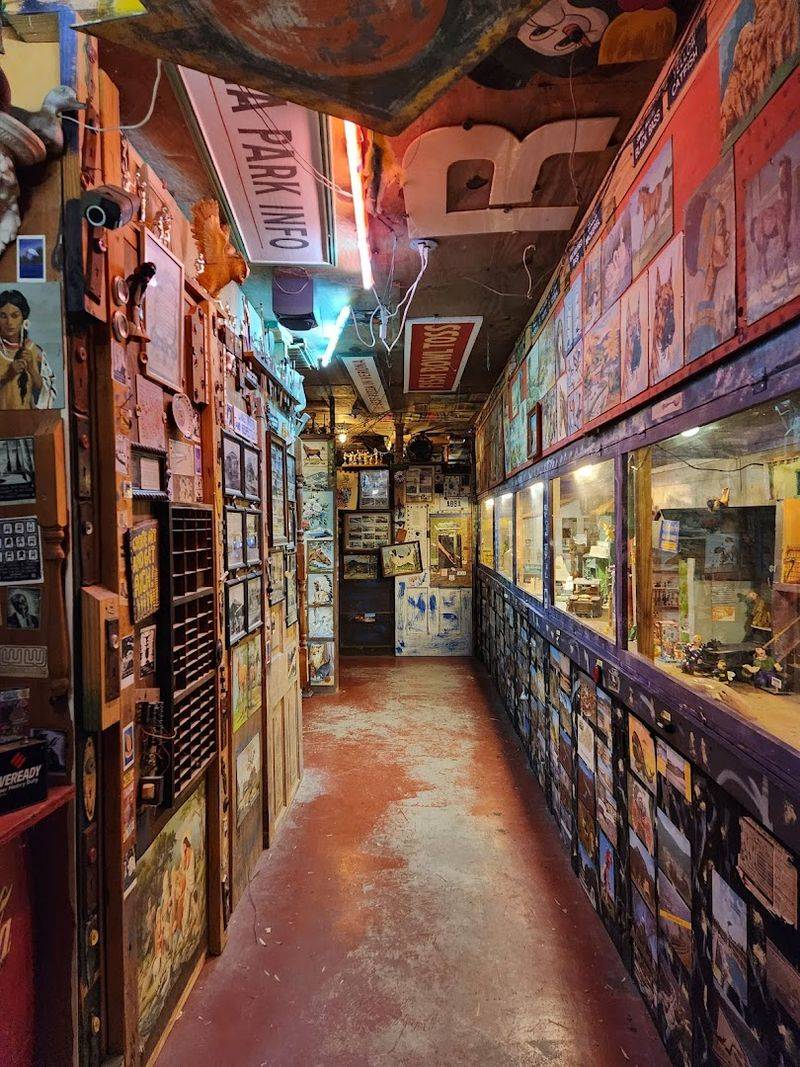
Walking into the Abita Mystery House feels like stepping inside someone’s wildest dream — and never quite finding the exit. Nestled in the small town of Abita Springs, this self-guided folk art museum is the life’s work of local artist John Preble, who has spent decades filling the space with thousands of strange, handmade creations.
You will find mosaic-covered structures, alligator hybrids, fish-human mashups, and tiny dioramas packed with jaw-dropping detail. No two visits are ever quite the same because Preble keeps adding new pieces all the time.
The whole place has a playful, slightly eerie energy that kids and adults both find impossible to resist.
Admission is affordable, and the museum is entirely self-guided, so you can spend as much time as you want exploring each bizarre corner. There is also a gift shop where you can grab a quirky souvenir to remember your visit.
Whether you are an art lover, a curiosity seeker, or just someone who enjoys the unexpected, the Abita Mystery House delivers an experience that is completely one of a kind in Louisiana.
Bonnie & Clyde Ambush Museum – Gibsland
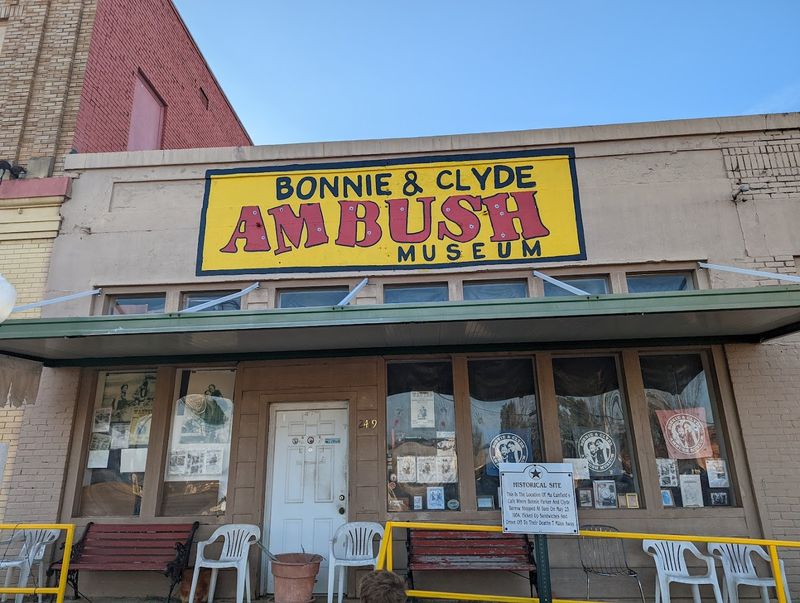
History has a way of sticking to certain places, and in the tiny town of Gibsland, it sticks hard. This is where Bonnie Parker and Clyde Barrow stopped to buy sandwiches on May 23, 1934 — just hours before they were ambushed and killed by law enforcement on a nearby rural road.
The Bonnie and Clyde Ambush Museum sits right at that historic sandwich shop location, preserving the story through original photos, newspaper clippings, personal items, and artifacts connected to the duo’s criminal career and dramatic end. It is small but surprisingly packed with fascinating details that bring the 1930s outlaw era vividly to life.
Every year in May, Gibsland hosts a Bonnie and Clyde Festival that draws thousands of history buffs, true crime fans, and curious travelers from across the country. Even outside festival season, the museum is worth a stop for anyone passing through northern Louisiana.
The story of Bonnie and Clyde has been told in countless movies and books, but standing at the actual site where their story ended gives the history a real, tangible weight that no film can fully capture.
Chauvin Sculpture Garden – Chauvin
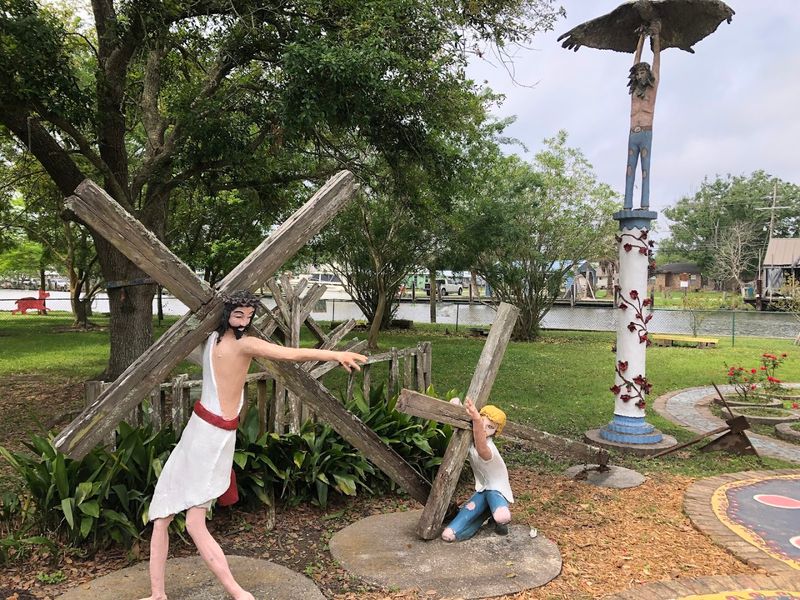
Along the quiet banks of Bayou Petit Caillou in Chauvin, something extraordinary rises from the ground. Over 100 large concrete sculptures, created entirely by self-taught artist Kenny Hill, fill this open-air garden with figures of angels, humans, and spiritual imagery that feel both haunting and deeply personal.
Hill built these works between 1990 and 1996, reportedly constructing them alone and without any formal art training. The centerpiece is a towering brick lighthouse he built by hand, which stands as a powerful symbol at the heart of the garden.
After Hill mysteriously disappeared in 1996, the site was preserved and is now maintained as a public cultural landmark.
Visiting the Chauvin Sculpture Garden is a genuinely moving experience. The sheer scale of what one person created here — without help, without training, and apparently without any plan to stop — makes the garden feel like a window into a very private world.
It blends folk art, spirituality, and personal storytelling in a way that few roadside attractions manage to achieve. Admission is free, and the garden is open to the public, making it an accessible and unforgettable detour for anyone exploring coastal Louisiana.
Fisherman’s Castle – New Orleans (Irish Bayou)
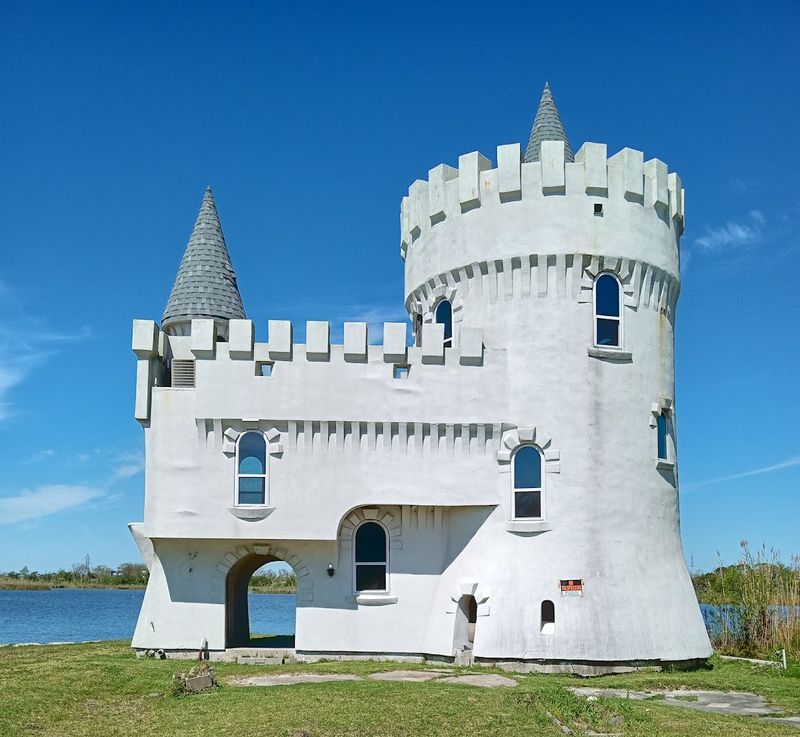
Just east of New Orleans, tucked along the marshy edge of Irish Bayou, sits one of Louisiana’s most charming roadside surprises — a tiny, turreted castle that looks like it was plucked straight out of a storybook. Built in the early 1980s, the Fisherman’s Castle is a handmade structure that somehow feels both out of place and perfectly at home against the dreamy Louisiana bayou backdrop.
Nobody passing by on Interstate 10 can quite believe what they are seeing. The castle’s small towers and stone-like exterior create a genuinely magical silhouette, especially at sunrise or golden hour when the light reflects off the surrounding water.
It has become a beloved photo stop for road trippers heading in and out of New Orleans.
The structure is privately owned, so visitors should admire it respectfully from the road or nearby pulloffs rather than trespassing on the property. Still, even a quick glimpse from the highway is enough to make you smile and wonder about the person who decided to build a castle in the Louisiana wetlands.
Some roadside attractions tell big stories with giant sculptures — this one tells its story quietly, through sheer unexpected charm and one person’s very ambitious backyard project.
The Fruit Stand – Breaux Bridge
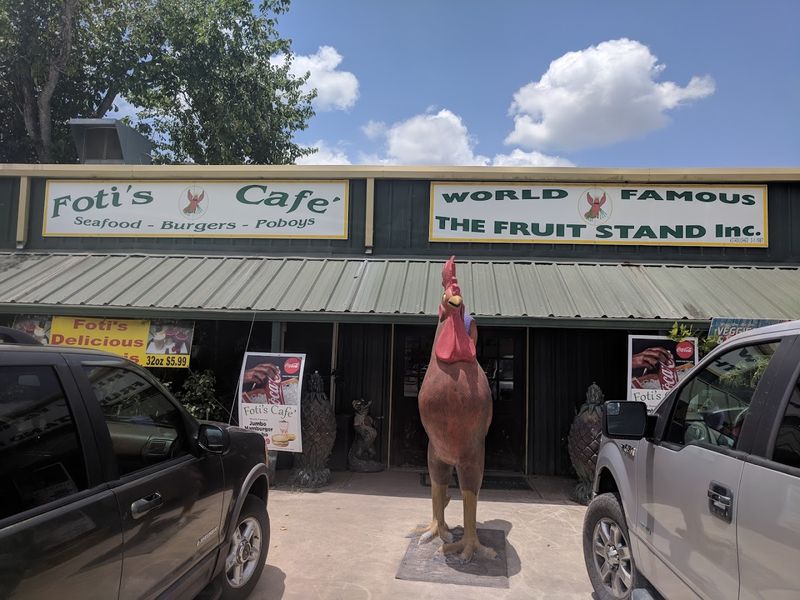
Most fruit stands offer oranges and maybe a jar of honey. The Fruit Stand in Breaux Bridge offers all of that — plus live parrots, oversized animal replicas, and enough roadside personality to make it one of the most talked-about stops in the Cajun Heartland.
It is the kind of place where you pull over just to grab some peaches and end up spending 45 minutes wandering around in delighted confusion.
The eclectic mix of fresh Louisiana produce, local snacks, novelty souvenirs, and wild decorations makes this stop genuinely unpredictable. You never quite know what new display or creature might be waiting for you on any given visit.
That element of surprise is exactly what makes it such a crowd favorite among road trippers exploring the Atchafalaya Basin area.
Beyond the entertainment value, the Fruit Stand is also a great practical stop for stocking up on local goodies like pralines, hot sauce, and seasonal fruits grown right in the region. Supporting a business like this means supporting local Louisiana culture in a very direct and delicious way.
If you are driving through Breaux Bridge and spot the colorful roadside chaos of the Fruit Stand, do yourself a favor and pull over immediately.
Giant Root Beer Mug at Frostop – Baton Rouge
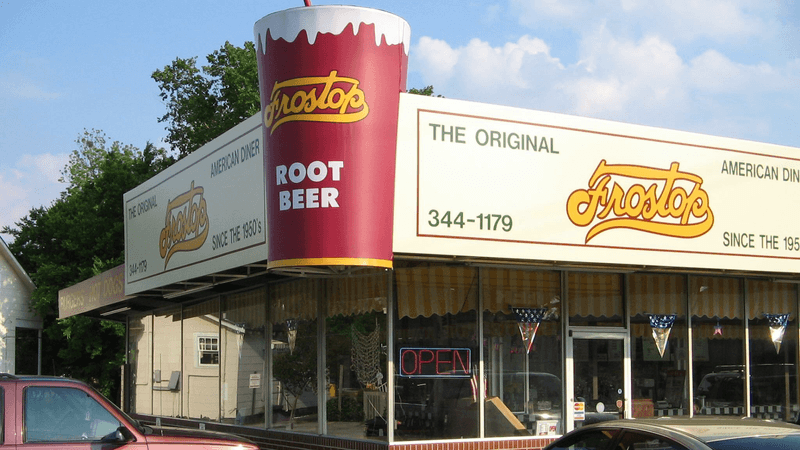
There is something deeply satisfying about a roadside landmark that is exactly what it looks like — a massive root beer mug sitting on top of a burger joint. The giant Frostop mug in Baton Rouge is a throwback to the golden age of American road food culture, when drive-ins ruled the highway and bigger always meant better.
Frostop was a beloved fast food chain that peaked in popularity during the 1950s and 1960s, and very few locations still survive today. The Baton Rouge location is one of the last remaining examples, and its towering root beer mug sign has become a cherished piece of local roadside history.
Nostalgia fans and vintage Americana lovers make a point of stopping here just to snap a photo with the iconic mug.
The food is also worth sticking around for — classic burgers, fries, and of course, frosty mugs of root beer served the old-fashioned way. Stopping at the Frostop is like stepping back in time, even if just for a quick lunch break.
For road trippers who appreciate the history of American highway culture as much as the destinations themselves, this Baton Rouge stop is a genuinely satisfying blend of history, kitsch, and comfort food.
Madonna Chapel – Plaquemine
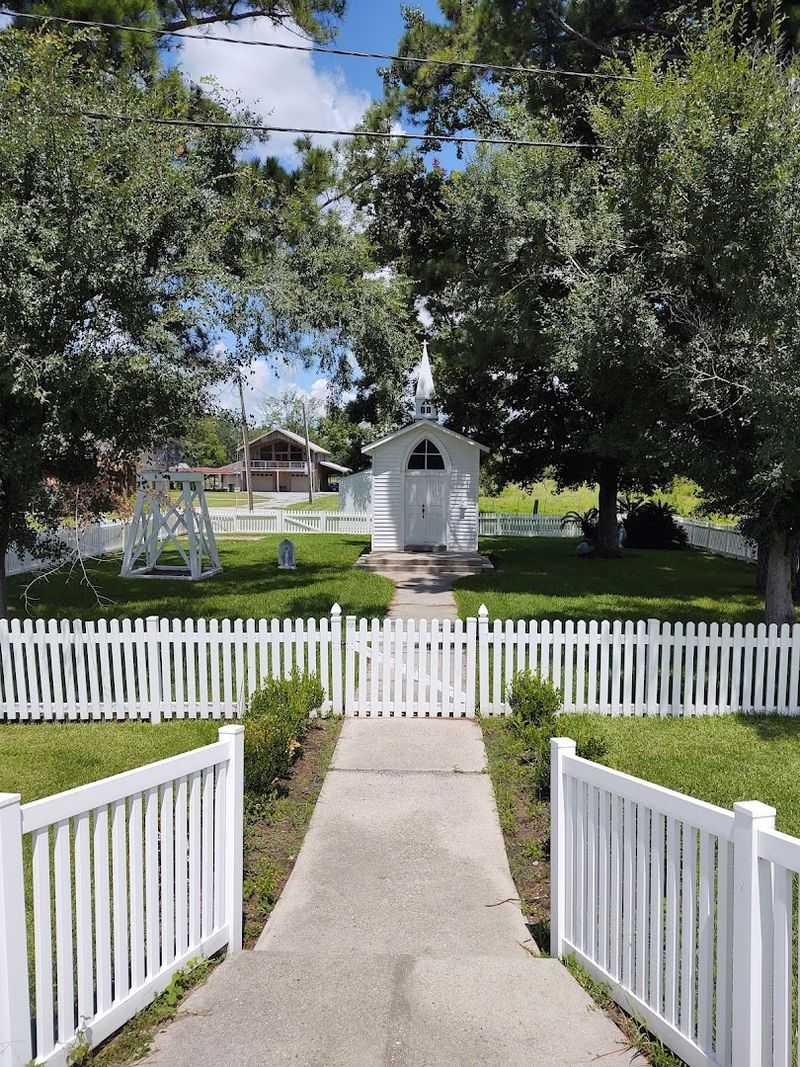
Good things really do come in small packages. The Madonna Chapel in Plaquemine measures just about nine feet by nine feet, making it one of the smallest chapels in the entire United States — and somehow, that miniature scale makes it even more charming than a full-sized church might be.
Built in the mid-1800s, the chapel was originally constructed as a private place of prayer and has been lovingly maintained ever since. Its petite white walls and simple interior hold a quiet dignity that draws visitors from all walks of life — not just the religious, but also history lovers and curious road trippers who stumble across it while exploring Iberville Parish.
Standing next to the Madonna Chapel for the first time tends to produce the same reaction in almost every visitor: a wide smile followed by the urge to peek inside. The peaceful setting, surrounded by mature trees and soft Louisiana light, adds to the chapel’s undeniable appeal.
It is the kind of stop that takes only a few minutes but somehow feels like a meaningful pause in the journey. If you are driving through Plaquemine, the Madonna Chapel is an off-the-beaten-path gem that rewards anyone curious enough to seek it out.
Rayne Frog Murals & Statues – Rayne
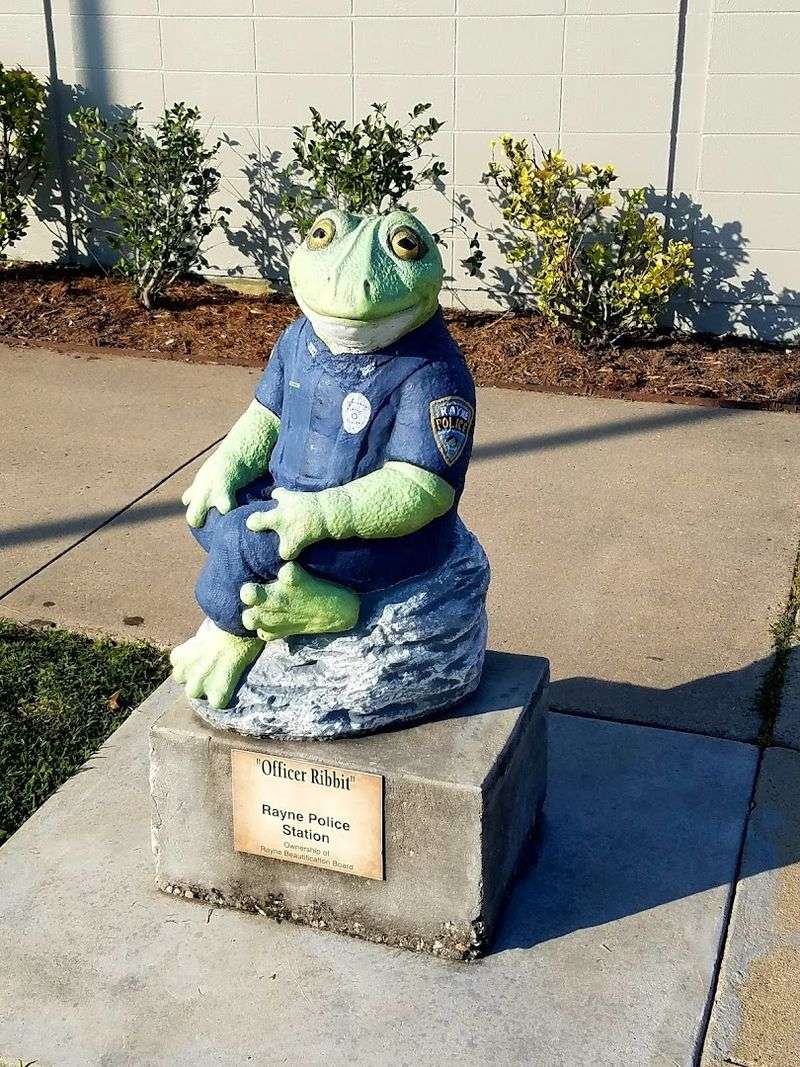
Rayne does not ease you into its identity — it announces it loudly and in full color the moment you cross the town line. Known as the Frog Capital of the World, Rayne has leaned all the way into its amphibian reputation with vibrant murals painted across building facades and cheerful frog statues positioned throughout the downtown area.
The murals range from playful cartoon-style frogs to more elaborate artistic depictions, each one celebrating a different aspect of the town’s quirky claim to fame. Rayne earned its frog-centric reputation in the early 20th century when local entrepreneurs began exporting Louisiana frogs to restaurants in France and the United States, making frog legs a significant part of the local economy.
Today, the murals and statues serve as a fun, free roadside attraction that is perfect for a quick stop and a photo or two. Kids especially love spotting the different frog characters scattered around town.
The whole experience takes about 20 to 30 minutes, which makes it an ideal leg-stretcher during a longer road trip through Acadiana. Rayne also hosts an annual Frog Festival that brings the whole community together in celebration of its beloved mascot, giving visitors even more reason to plan a visit.
Giant Crawfish Sculpture – Breaux Bridge
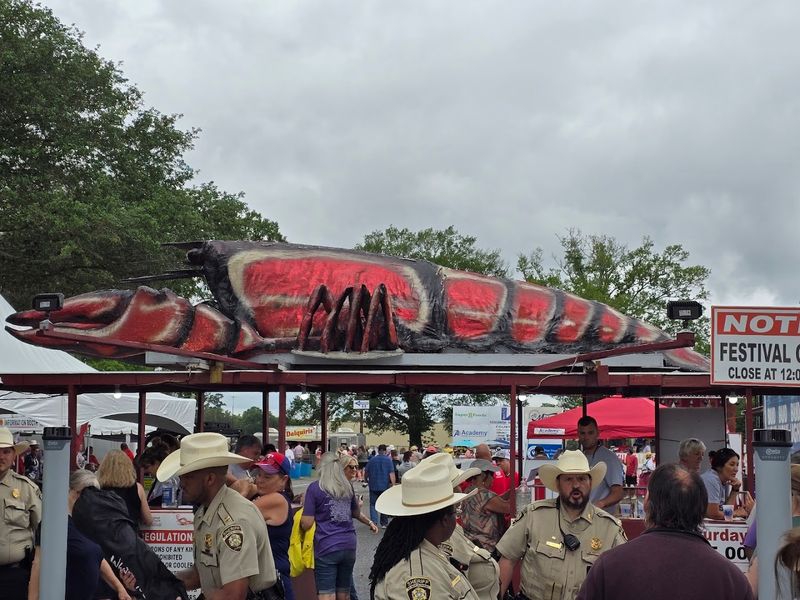
Breaux Bridge calls itself the Crawfish Capital of the World, and it backs up that claim with one of the most photogenic roadside sculptures in Louisiana. Parked outside the Crazy ‘Bout Crawfish restaurant, a massive red crawfish crafted from welded metal pieces stands tall and proud, practically daring every passing driver to pull over and take a selfie.
The sculpture is big, bold, and impossible to miss — which is exactly the point. It captures the spirit of Louisiana’s deep, almost reverential love for crawfish in a way that words alone cannot.
Every spring, Breaux Bridge hosts the famous Crawfish Festival, drawing enormous crowds who come to eat, celebrate, and yes, pose with giant crustacean art.
Even outside festival season, the giant crawfish sculpture is a reliable crowd-pleaser and a fun symbol of what makes Louisiana’s food culture so distinctive. Stopping here also gives you the perfect excuse to grab a plate of freshly boiled crawfish from the restaurant itself, which would be a shame to pass up.
Few roadside photo ops come with the added bonus of a delicious meal waiting inside. The giant crawfish is exactly the kind of joyful, over-the-top landmark that makes Louisiana road trips so memorable and so uniquely Louisiana.
Art the Giant Dalmatian Statue – Shreveport
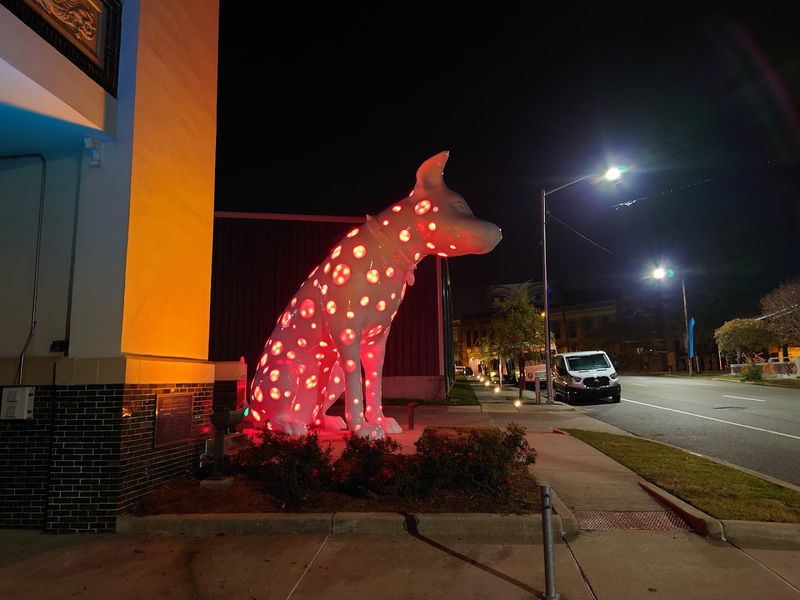
Meet Art — a giant Dalmatian statue in Shreveport who truly comes alive after dark. Unlike most roadside sculptures that are best appreciated in daylight, Art is specifically designed to be experienced at night, when his more than 250 individual spots light up in a dazzling glow that stops traffic and draws out cameras from every direction.
The spots do not just stay one color, either. They blink, shift, and cycle through different hues depending on the season and the mood.
During the Christmas holiday season, Art’s spots switch to festive red and green, making him an especially popular stop for families looking to add a little extra magic to their December drives around Shreveport.
Art has become a genuinely beloved local landmark, the kind of thing Shreveport residents point out proudly to out-of-town guests. He represents the best kind of public art — accessible, joyful, and just weird enough to make you stop and stare.
If you happen to be passing through Shreveport during daylight hours, Art is still worth a look, but make a mental note to come back after sunset for the full experience. A glowing, color-changing giant Dalmatian is the sort of roadside surprise that reminds you why spontaneous detours are always worth taking.
The Singing Oak — New Orleans
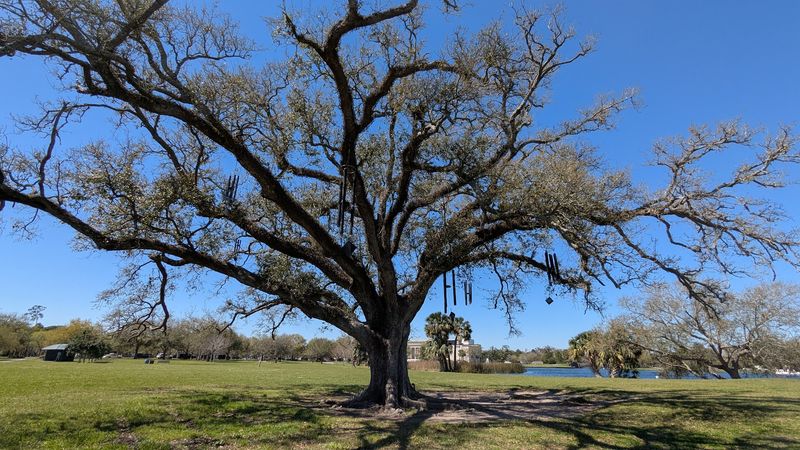
Hidden inside the lush greenery of New Orleans City Park, the Singing Oak transforms a simple stroll into a magical roadside detour worth pulling over for. This massive live oak is draped with hundreds of carefully tuned aluminum wind chimes, creating a constantly shifting symphony powered entirely by the breeze.
Designed by artist Jim Hart, the installation blends art, nature, and sound into an experience that feels both peaceful and slightly surreal — especially when the wind picks up and the tones ripple through the surrounding trees.
For road trippers, it’s a perfect quick stop that feels uniquely Louisiana: creative, unexpected, and deeply connected to the landscape. The sound is never the same twice, making every visit a little different.
Whether you pause for photos, a quiet moment, or simply curiosity, the Singing Oak offers a memorable sensory break from the highway — one that captures the whimsical spirit that makes Louisiana road trips unforgettable.