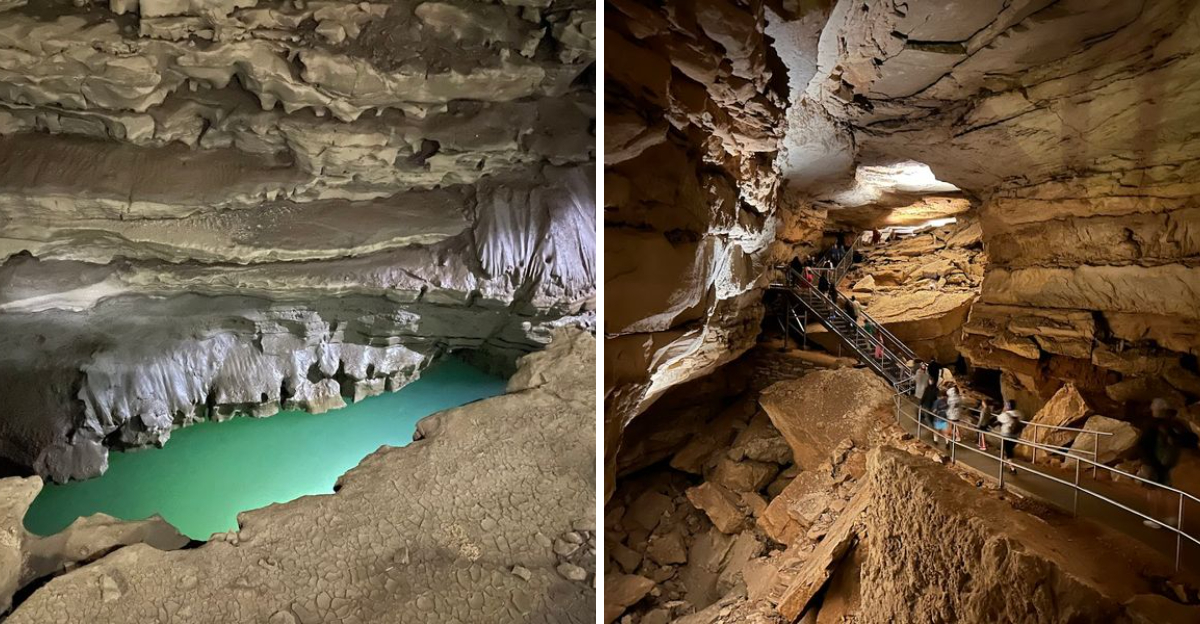
Hidden beneath the rolling hills of central Kentucky lies one of the most extraordinary natural wonders on Earth.
Mammoth Cave holds the record as the world’s longest known cave system, stretching over 400 mapped miles underground.
Whether you love history, geology, or just cool adventures, this place has something that will blow your mind.
Pack your curiosity and get ready to explore a world most people never get to see.
Historic Entrance
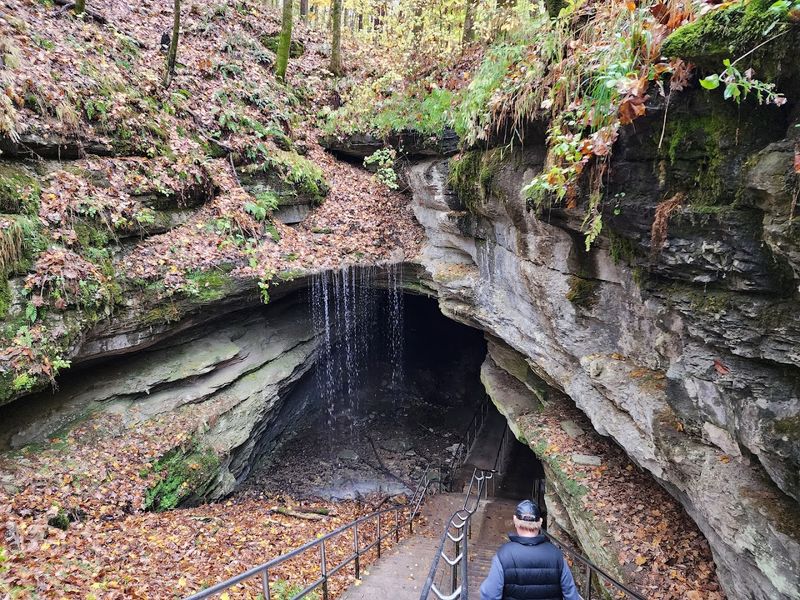
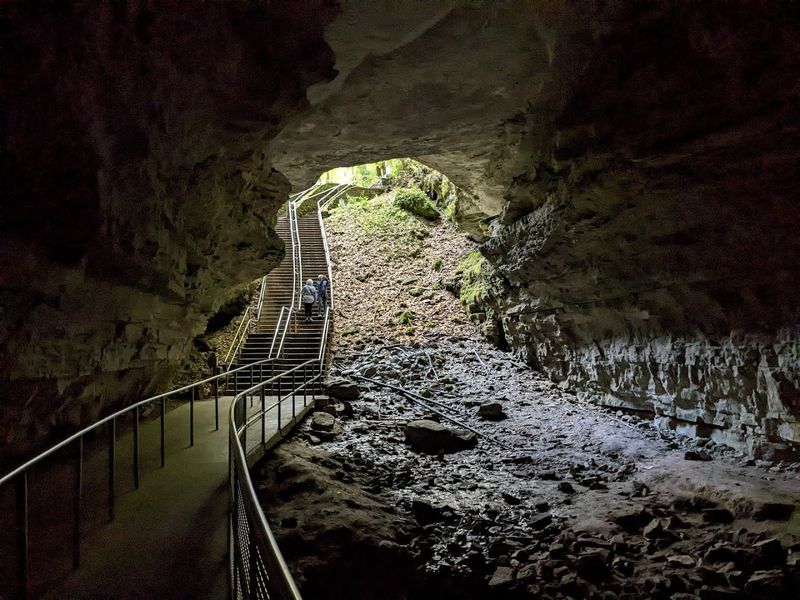
Step up to the Historic Entrance of Mammoth Cave, and you can almost feel the stories rushing out to meet you. This iconic stone archway has welcomed curious explorers since the early 1800s, making it one of the most historically significant cave entrances in North America.
The cool air that drifts outward is your first hint that something remarkable waits inside.
Early settlers discovered the cave around 1797, and it quickly became a source of fascination and economic activity. Native Americans had actually used the cave thousands of years before that, leaving behind artifacts that still amaze archaeologists today.
Standing at this entrance means standing at a crossroads of human history spanning millennia.
Before you even take your first underground step, take a moment to look at the natural stone arch framing the opening. Park rangers often gather groups here to share the cave’s backstory before tours begin.
Bringing a light jacket is smart, since the temperature drops noticeably the moment you cross the threshold. The Historic Entrance sets the tone for everything magical that follows deep inside Mammoth Cave.
Guided Cave Tours
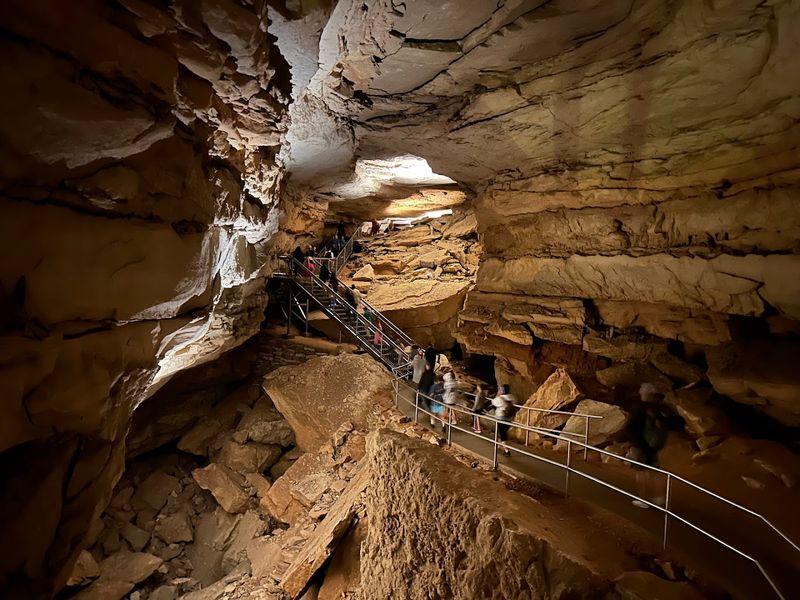
Not all cave tours are created equal, and Mammoth Cave proves that with a lineup that ranges from stroller-friendly strolls to heart-pumping crawl-through adventures. There are tours designed for young families, photography enthusiasts, history buffs, and thrill-seekers who want to squeeze through tight passages with headlamps strapped on.
Whatever your comfort level, there is a guided experience waiting for you.
Park rangers lead every tour, and these guides are genuinely passionate about the cave. They share geological facts, historical anecdotes, and fun trivia that make each passage come alive.
Listening to a ranger explain how a formation grew one cubic inch every hundred years gives you a whole new respect for patience and time.
Booking in advance is strongly recommended, especially during summer months when tours fill up fast. Some specialty tours, like the Wild Cave Tour, require participants to wear knee pads and be comfortable getting muddy.
Others, like the Frozen Niagara Tour, are short and accessible for most visitors. Checking the National Park Service website before your trip helps you match the right tour to your group’s energy and expectations.
Every tour offers something genuinely unforgettable.
Frozen Niagara Formation
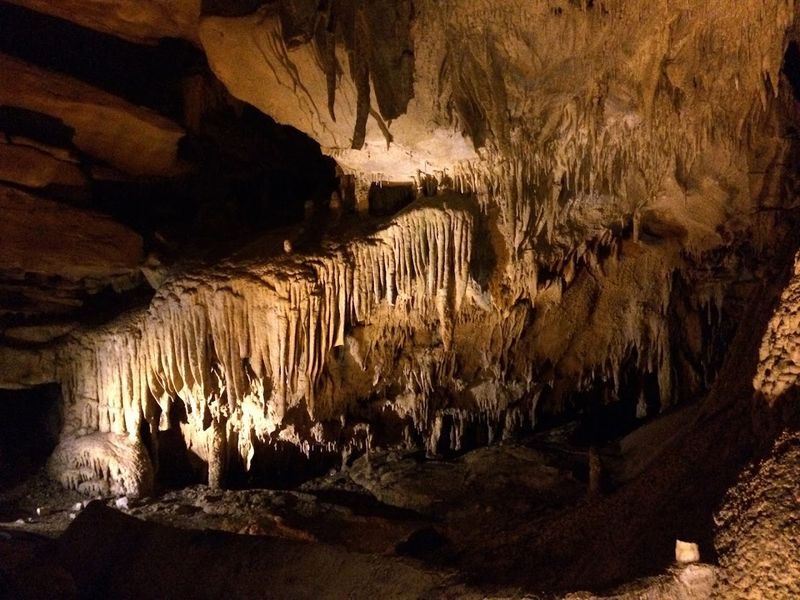
Frozen Niagara is the kind of sight that makes you stop mid-step and forget to breathe. Named for its striking resemblance to a waterfall locked in time, this limestone formation cascades down the cave wall in rippling layers of cream, tan, and rust.
It looks like someone pressed pause on a rushing river thousands of years ago, and the cave simply kept it that way.
What you are actually seeing is flowstone, created when water carrying dissolved calcium carbonate slowly trickles over rock surfaces and deposits thin mineral layers over enormous stretches of time. The stalactites hanging above and stalagmites rising from the floor around it add to the dramatic visual effect.
Scientists estimate that some of these formations took tens of thousands of years to reach their current size.
The Frozen Niagara Tour is one of Mammoth Cave’s most popular offerings and is accessible to visitors with moderate mobility. Lighting installed throughout the area highlights the formation’s natural color gradients beautifully.
Photography enthusiasts will want extra battery life because it is nearly impossible to take just one photo here. Frozen Niagara is genuinely one of the most visually stunning natural sculptures anywhere on the planet.
Historic Saltpeter Mines
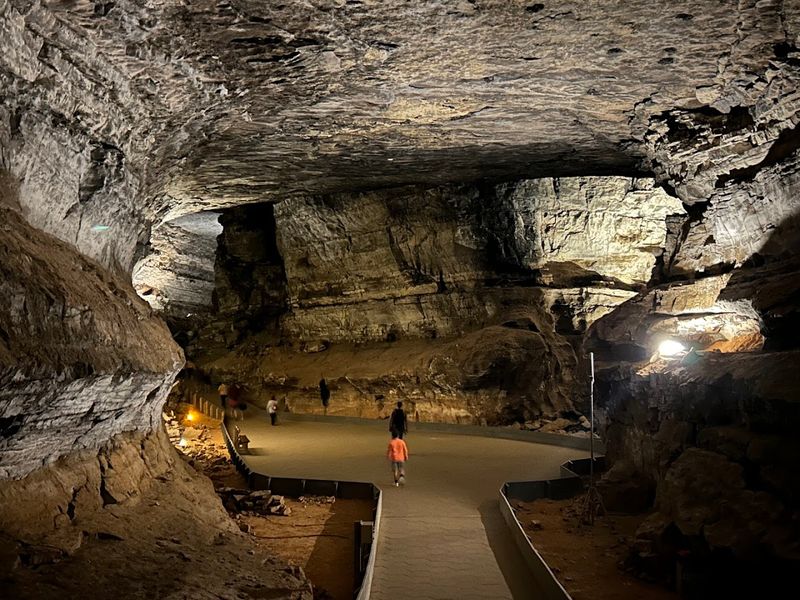
Long before Mammoth Cave became a tourist destination, it was a wartime resource. During the War of 1812, miners harvested saltpeter from the cave’s soil to produce gunpowder for American troops.
The operation was surprisingly large-scale, relying on enslaved workers and a clever system of wooden pipes and oxen-powered vats to extract the mineral from cave dirt.
Remarkably, many of those original wooden pipes and vats are still visible inside the cave today. The dry cave environment preserved them for over two centuries, which is something that would be nearly impossible in an outdoor setting.
Walking past these structures feels like stepping directly into an industrial history lesson, one that also touches on the painful realities of slavery in early American commerce.
Interpretive signs throughout the saltpeter area explain the extraction process in clear, accessible language. Rangers on certain tours stop at these sites to discuss the social and political history behind the mining operation.
Understanding this chapter of the cave’s past adds real depth to the visit. Mammoth Cave is not just a geological wonder; it is a place where American history played out in the dark, beneath the surface of the earth, in ways most people never learned in school.
Underground River
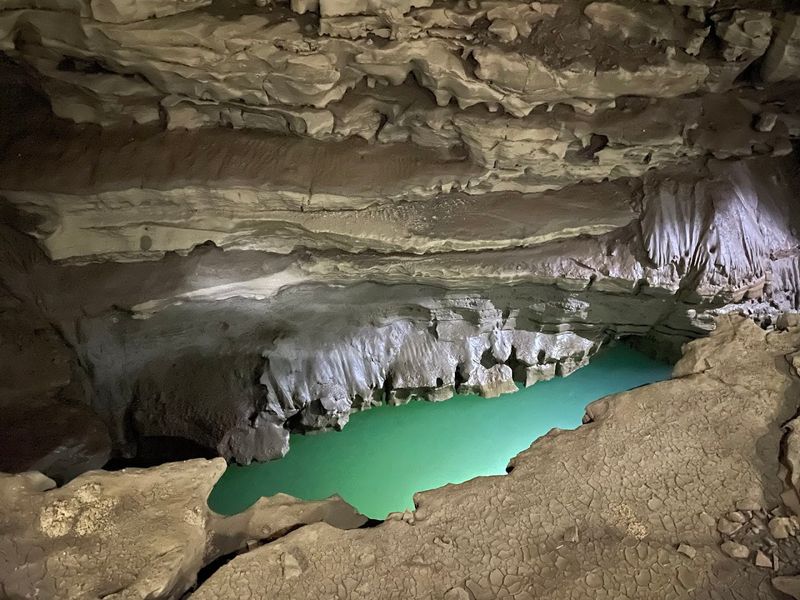
Water built Mammoth Cave, and it is still hard at work shaping it today. Several tours bring visitors face-to-face with the cave’s underground rivers, quiet streams that wind silently through cathedral-like passages carved over millions of years.
Hearing water echo in a space that large is an experience that stays with you long after you leave.
Echo River is one of the most famous of these subterranean waterways. At certain points, it reaches depths of around 30 feet and stretches wide enough to have once supported a boat tour in the early 20th century.
Today, visitors view it from designated pathways, which helps protect the fragile ecosystem living just below the water’s surface.
These rivers are not just scenic features; they are ecological lifelines. Rare species like the Southern cavefish depend entirely on these waterways for survival.
The rivers also connect to surface watersheds, meaning what happens above ground directly affects the health of the cave below. This relationship between surface and underground environments is part of why Mammoth Cave holds UNESCO World Heritage status.
Seeing the river in person makes the science feel real, immediate, and worth protecting for future generations to experience just as vividly.
Historic Mammoth Cave Hotel

Waking up just steps from the entrance of one of the world’s greatest natural wonders is a pretty special way to start a morning. The Mammoth Cave Hotel has been welcoming guests near the park entrance for generations, offering a comfortable base for visitors who want to explore the cave across multiple days without a long drive each way.
The hotel carries a classic, unhurried charm that fits perfectly with the surrounding national park landscape. Rooms are comfortable and functional, and the on-site restaurant serves hearty meals after a long day of underground exploration.
Staying here means you can catch early-morning tours before the crowds arrive, which makes a noticeable difference in how peaceful and personal the experience feels.
Cottages and additional lodging options are also available nearby for families or groups who prefer a bit more space. The hotel grounds are lovely for an evening stroll, especially when the summer heat fades and the forest settles into its nighttime soundtrack of crickets and frogs.
Booking accommodations well in advance is essential during peak season, as availability fills quickly. Spending a night or two at the Mammoth Cave Hotel transforms a quick visit into a genuine, memorable national park adventure worth every penny.
Visitor Center Exhibits
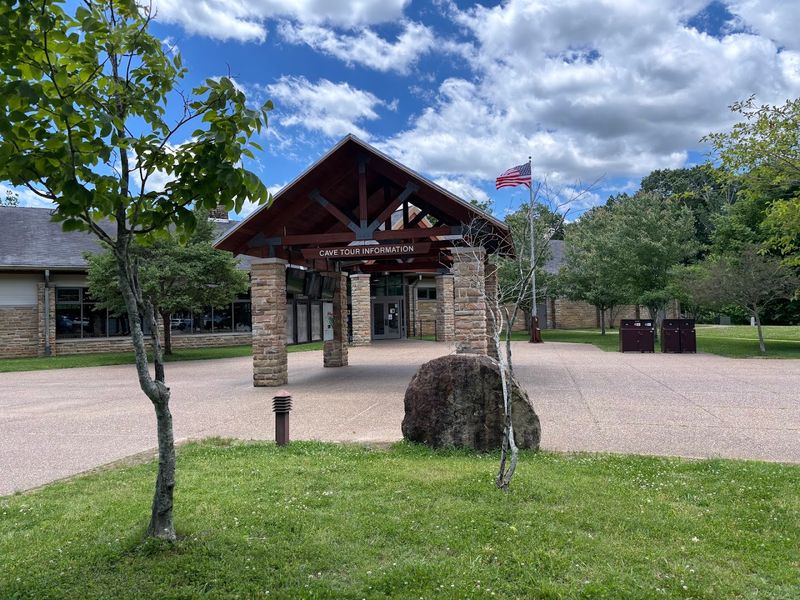
Before heading underground, a stop at the Visitor Center is genuinely worth your time. The exhibits here do a fantastic job of setting the stage, explaining how Mammoth Cave formed, how it was mapped, and why it matters on a global scale.
Even kids who think museums are boring tend to get pulled in by the hands-on displays and scale models of the cave passages.
One of the most compelling sections covers the history of early cave exploration and mapping. Surveyors spent decades crawling through tight passages with lanterns and hand tools to chart the cave’s enormous extent.
Their dedication is the reason we know today that Mammoth Cave is the longest known cave system in the world, a record that continues to grow as new passages are discovered.
The Visitor Center also highlights Mammoth Cave’s designation as a UNESCO World Heritage Site and an International Biosphere Reserve, two honors that reflect its global ecological and cultural significance. Rangers are stationed throughout and are happy to answer questions or help you choose the right tour.
Picking up a park map here is a smart move before exploring the above-ground trails as well. The Visitor Center turns a casual trip into an informed, deeply satisfying adventure.
Hiking Above the Cave
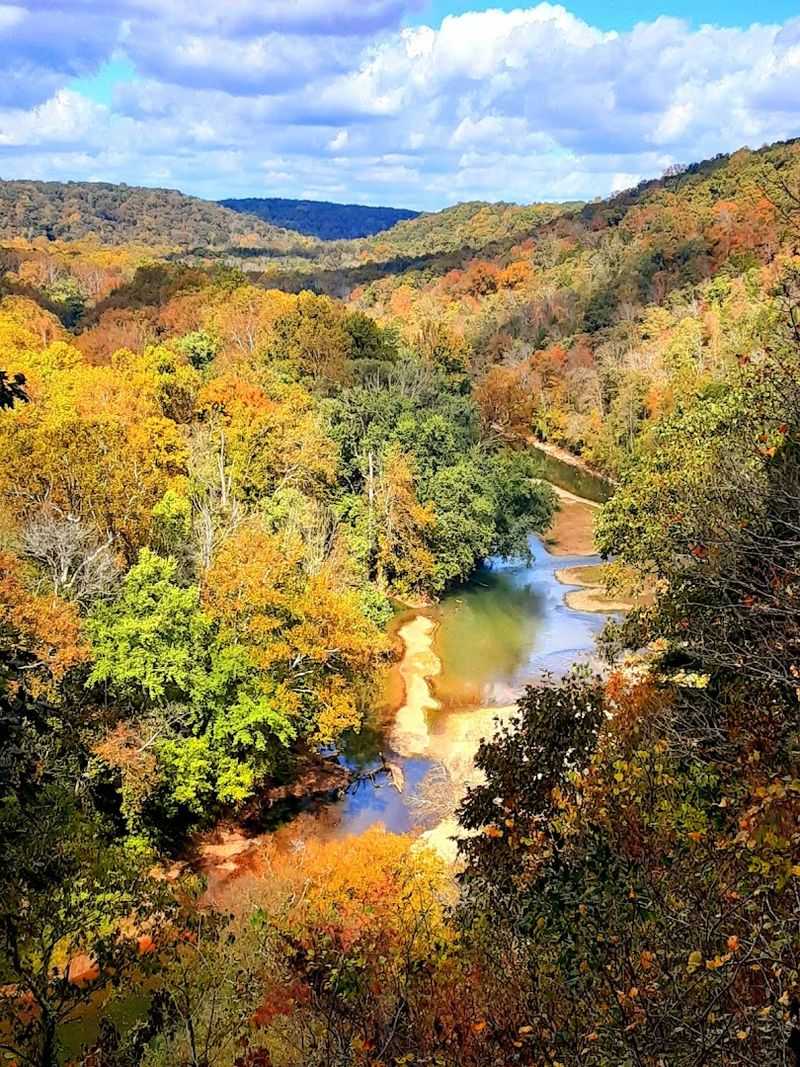
Most people come to Mammoth Cave for what is below the surface, but the landscape above is equally worth exploring. The national park features over 70 miles of hiking trails that wind through hardwood forests, along river bluffs, and across ridges that offer sweeping views of the surrounding countryside.
Getting outside after a cave tour feels like stepping into a completely different world, which technically, you are.
The Green River Bluffs Trail is a favorite among hikers who want rewarding views without an intense workout. The path follows the edge of a ridge above the Green River, offering glimpses of the water below through the trees.
In spring, wildflowers carpet the forest floor, and in fall, the foliage turns into a brilliant patchwork of orange, red, and gold.
Wildlife sightings are common along the trails. White-tailed deer, wild turkeys, and a wide variety of songbirds are regular companions on the path.
The park also offers backcountry camping for visitors who want to spend a night under the stars after a day of exploring both above and below ground. Sturdy hiking shoes, plenty of water, and a trail map from the Visitor Center are all you need to make the most of Mammoth Cave’s spectacular above-ground landscape.
Essential Visitor Info
Planning a trip to Mammoth Cave does not have to be complicated, but a little preparation goes a long way toward making the experience smooth and enjoyable. The park is open year-round, which means you can visit in any season.
Summer brings the biggest crowds, while fall and spring offer milder temperatures and quieter trails both above and below ground.
Tour reservations are strongly recommended and can be made through the National Park Service website. Popular tours, especially on weekends and holidays, sell out days or even weeks in advance.
Showing up without a reservation during peak season often means missing out on the cave experience entirely, so booking early is the single most important thing you can do before your visit.
Dress practically for your underground adventure. Cave temperatures stay around 54 degrees Fahrenheit year-round, so a light jacket or sweatshirt is a must even in the middle of July.
Wear closed-toe shoes with good grip, since cave floors can be uneven and occasionally damp. Standard park entrance fees apply, and annual America the Beautiful passes are accepted.
Children under 15 enter free. Mammoth Cave is genuinely one of the most accessible and awe-inspiring national parks in the country, and with the right preparation, it delivers an unforgettable experience for every type of visitor.