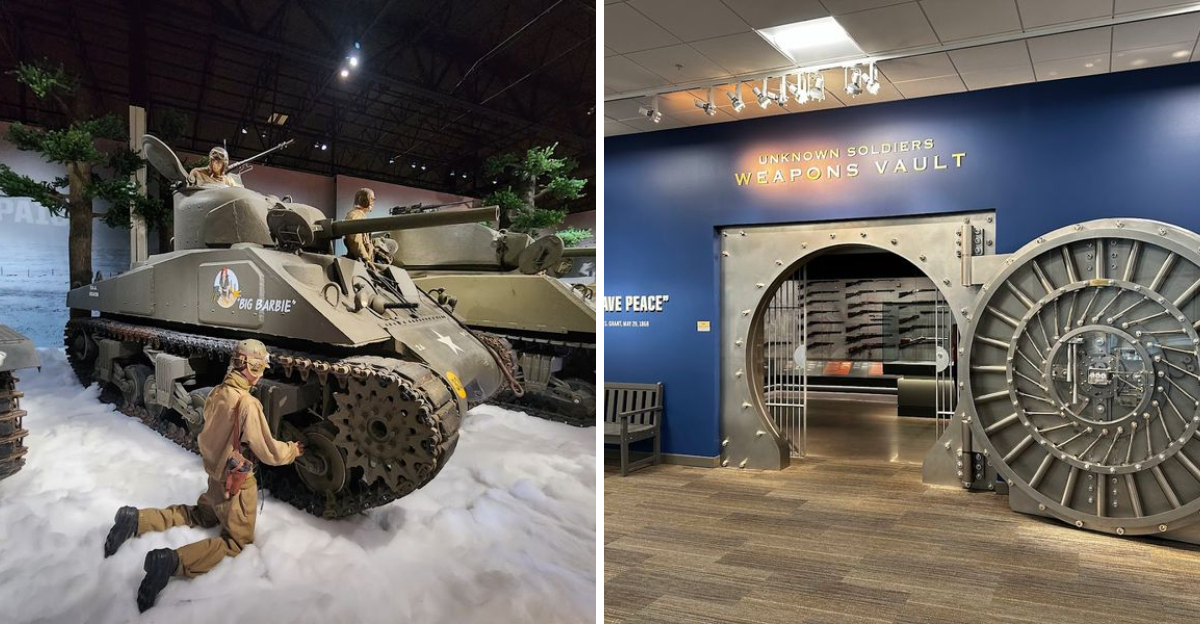
Tucked away in the small town of Dubois, Wyoming, the National Museum of Military Vehicles is one of the most jaw-dropping places you can visit in the entire country.
With over 500 restored military vehicles spread across a massive 160,000-square-foot facility, this museum brings military history to life in ways most people never expect.
You can walk through immersive battlefield galleries, explore rare artifacts, and even climb aboard historic tanks for a ride you will never forget.
Whether you are a history buff, a veteran, or just someone looking for an unforgettable road trip stop, this museum delivers something truly special.
A Massive Collection of Restored Military Vehicles
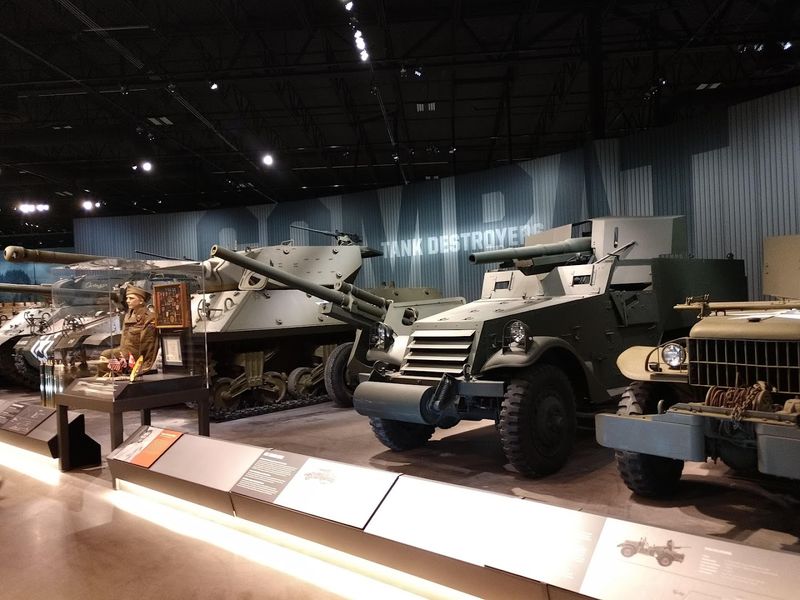
Walking into the National Museum of Military Vehicles feels a little like stepping into a different world. More than 500 military vehicles are displayed across enormous galleries, making this one of the largest private collections of ground combat transport ever assembled anywhere on earth.
Each vehicle has been carefully restored, often to fully operational condition. You will find everything from World War I-era trucks to Cold War tanks and modern desert warfare vehicles used in Iraq and Afghanistan.
The sheer variety is staggering — jeeps, half-tracks, armored personnel carriers, artillery pieces, and heavy tanks all share the same incredible space.
What makes this collection stand out even more is the attention to detail. Restoration teams work hard to make sure every vehicle looks and functions as authentically as possible.
For anyone who loves military history, engineering, or just really cool machines, this collection is genuinely hard to beat. Plan to spend serious time here because there is simply a lot to absorb.
Tanks and Vehicles You Can Actually Ride In
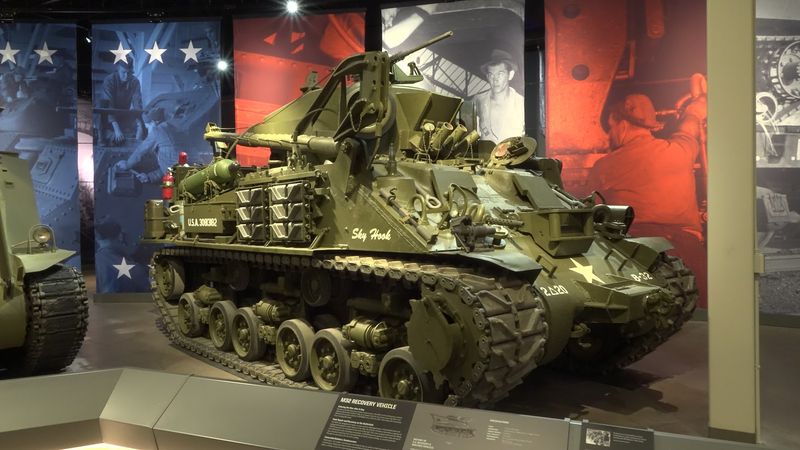
Most museums have a strict look-but-don’t-touch rule, and that is exactly what makes this place so different. At the National Museum of Military Vehicles, select historic armored vehicles are available for actual rides, turning a passive museum visit into a hands-on memory you will talk about for years.
Imagine sitting inside a real tank that rolled across battlefields decades ago. The rumble of the engine, the weight of the steel around you, and the view from inside the hatch all combine to give you a feel for military life that no textbook ever could.
It is the kind of experience that genuinely connects people to history in a personal way.
These ride opportunities are especially popular with kids, but adults are just as enthusiastic once they get the chance. Availability may vary by season or event, so it is smart to check the museum’s website before your visit to see what experiences are scheduled.
Either way, just being near these machines is thrilling enough on its own.
Immersive Galleries Covering Major Wars
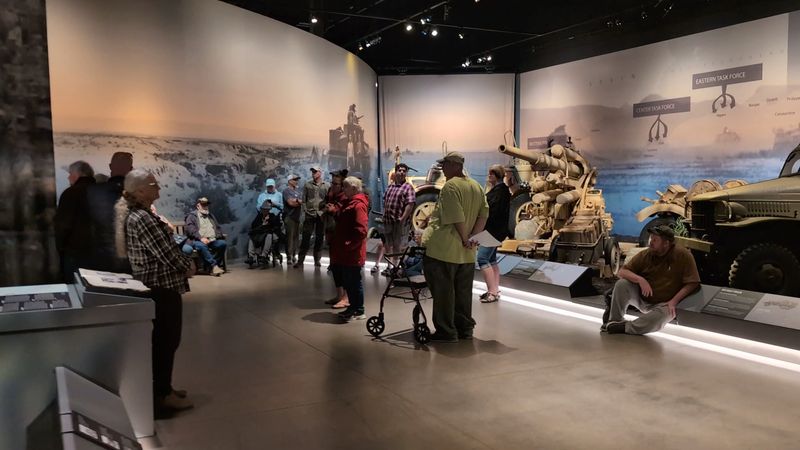
History comes alive in a completely different way when you are surrounded by it from every angle. The museum’s galleries walk visitors through major American conflicts, starting with the Spanish-American War and continuing all the way through the wars in Iraq and Afghanistan.
Each gallery is carefully designed to recreate the atmosphere of its era. Battlefield environments are reconstructed with impressive detail — period lighting, authentic props, uniforms, weapons, and vehicles all work together to pull you into the story.
It feels less like reading a history book and more like being transported directly into the moment.
These exhibits are thoughtfully built to help visitors of all ages understand both the technology and the human experience of war. Kids who might normally zone out in a history class often find themselves completely absorbed here.
Teachers and parents frequently mention how naturally the conversations about sacrifice, courage, and history flow after walking through these galleries. The museum does an exceptional job of balancing education with genuine emotional impact.
A World-Class Museum Hidden in Small-Town Wyoming
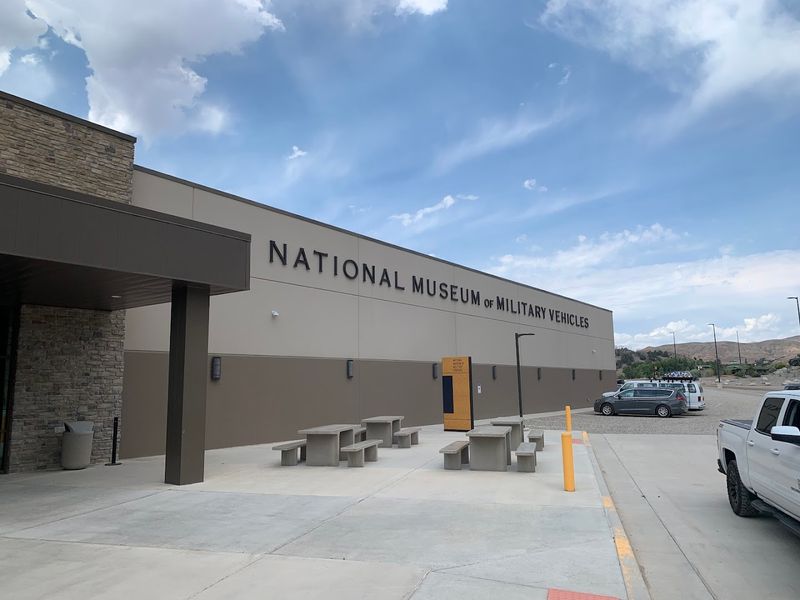
Dubois, Wyoming has a population of only about 1,000 people, which makes stumbling upon a world-class military museum there feel like finding treasure in the middle of nowhere. The town sits along Highway 26, nestled between the Wind River Mountains and Yellowstone country — beautiful, remote, and not exactly where you would expect a landmark museum to appear.
Yet here it is, drawing visitors from across the United States and around the globe. Travel publications and tourism organizations have taken notice too.
The museum has earned significant recognition and awards for its quality, scale, and visitor experience since opening in 2020.
Part of the charm is exactly this contrast — the rugged Wyoming wilderness outside and this enormous, professionally curated museum inside. Visitors who discover it by accident while passing through on a Yellowstone trip often describe it as the unexpected highlight of their entire vacation.
If you are planning a western road trip, rerouting through Dubois to include this museum is absolutely worth the extra miles on the odometer.
Enormous Facility Built Specifically for Scale
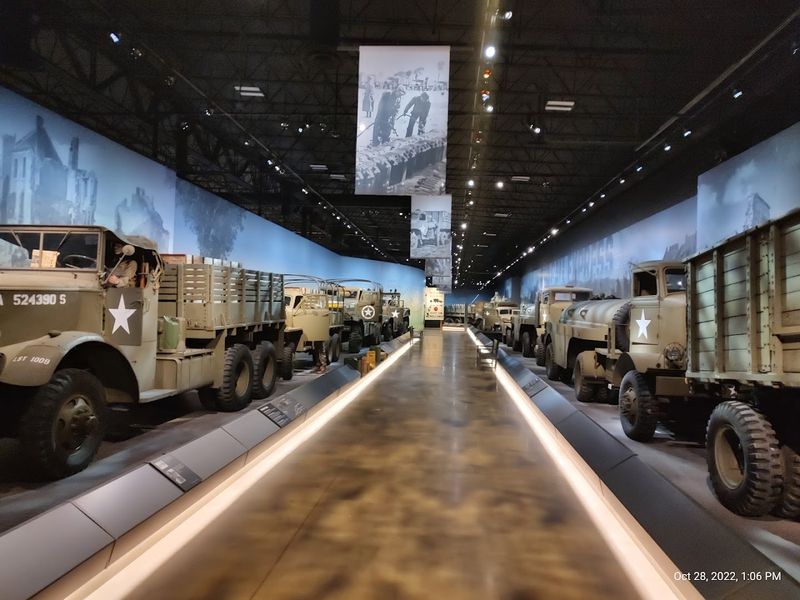
Some museums feel cramped, with exhibits squeezed into spaces that were never really designed for them. This place was built from the ground up with massive vehicles in mind.
Spanning roughly 160,000 square feet, the facility includes multiple themed galleries, screening theaters, vault storage areas, and outdoor display spaces — all purpose-built to handle the sheer size of its collection.
The entire project was privately funded, which is remarkable given the scale involved. The founder, Dan Starks, spent years acquiring vehicles and planning the facility before opening its doors to the public in 2020.
The result is a museum that feels both grand and personal — a passion project executed at an almost unbelievable level.
High ceilings, wide corridors, and open floor plans mean you never feel crowded, even when dozens of massive tanks are parked nearby. The layout also makes it easy to navigate between time periods and conflict zones without losing your sense of where you are in history.
For a facility of this ambition, the attention to visitor flow and comfort is genuinely impressive.
The Largest Private Collection of U.S. Military Ground Vehicles
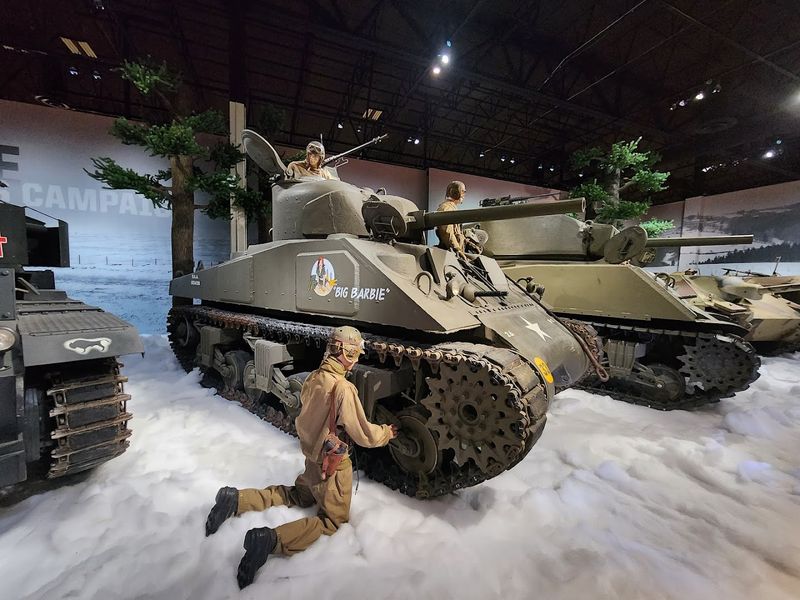
Bold claims deserve bold proof, and this museum delivers. The collection at the National Museum of Military Vehicles is widely recognized as the largest private display of American military ground transportation vehicles open to the public anywhere in the world.
That is not a marketing exaggeration — it is a distinction backed by the sheer number and variety of what is on exhibit.
Hundreds of vehicles are regularly on display at any given time, with additional pieces preserved and maintained behind the scenes. The range spans more than a century of military vehicle design, from early motorized transport used in World War I to heavily armored modern vehicles deployed in recent conflicts.
For enthusiasts, researchers, and historians, the depth of this collection is extraordinary. Many vehicles here exist in numbers you simply cannot find anywhere else — rare variants, prototype designs, and battlefield-recovered machines that would otherwise have been lost to time.
Even casual visitors who are not especially interested in military history tend to come away genuinely impressed by the scope of what has been preserved here.
Rare Artifacts That Go Far Beyond the Vehicles
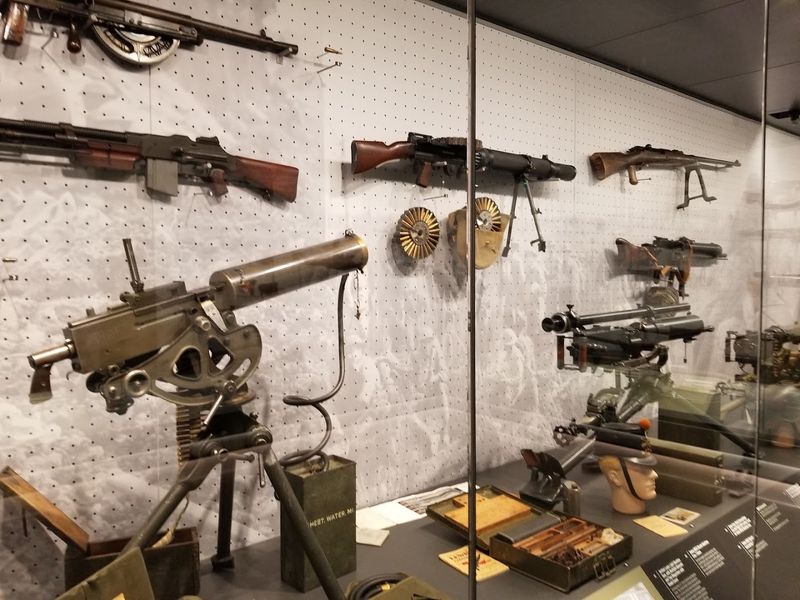
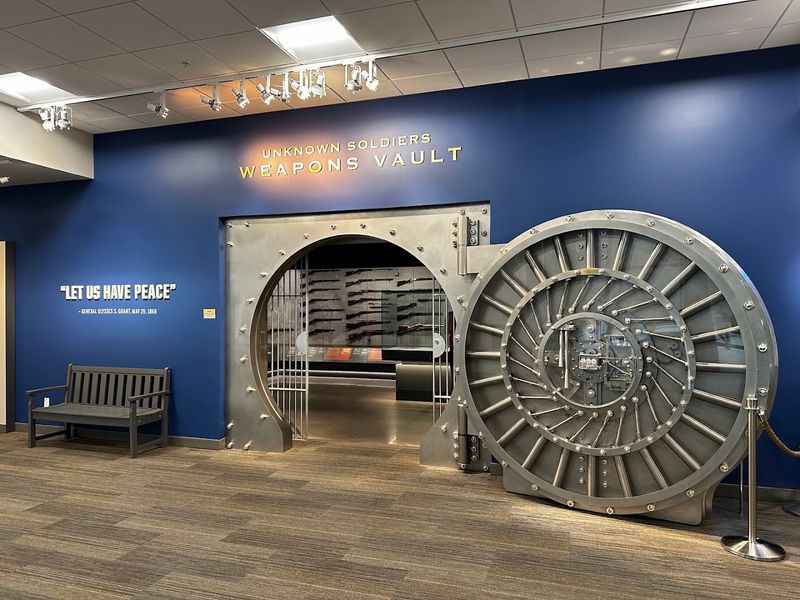
Tanks and trucks grab most of the attention, but the museum’s artifact collection deserves equal recognition. Alongside the vehicles, the galleries feature historically significant weapons, official military documents, personal memorabilia, and battlefield items connected to pivotal moments across American military history.
Some of the firearms on display are extraordinarily rare — pieces that saw action in famous battles or were carried by notable figures. Medals, letters, photographs, and personal effects from service members add a deeply human layer to what could otherwise feel like a purely mechanical exhibit.
These smaller objects often carry the most emotional weight.
Finding rare military artifacts in proper museum-quality preservation is not common. Many pieces that end up in private hands never get the care or context needed to tell their full story.
Here, each artifact is thoughtfully presented with historical information that helps visitors understand not just what the object is, but why it matters. That combination of rarity and context makes the artifact collection a genuine highlight for anyone who takes the time to slow down and look carefully.
Restoration Work That Keeps Military History Running
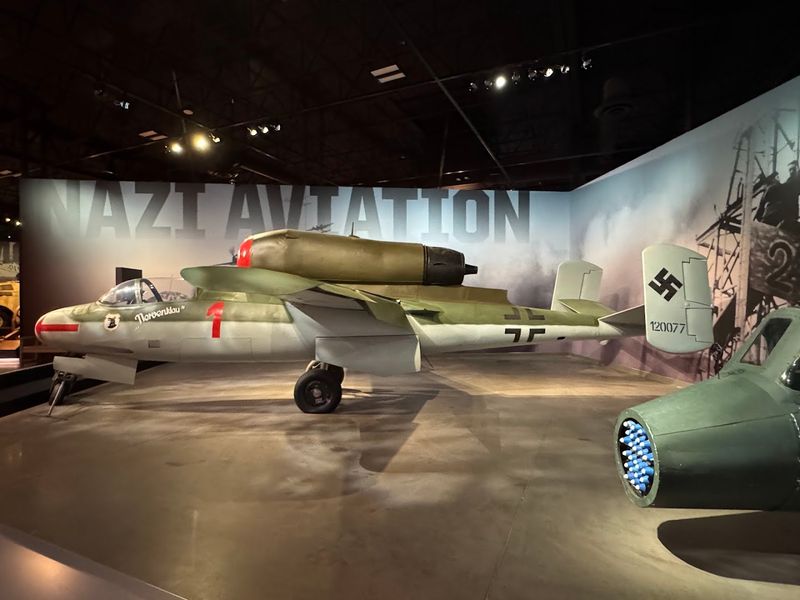
Behind every gleaming, fully operational vehicle on the museum floor is a serious restoration story. The National Museum of Military Vehicles operates a dedicated restoration facility where skilled technicians work to bring vehicles back to running condition — sometimes starting with little more than a rusted hull and a handful of original parts.
This kind of work is painstaking and requires deep knowledge of historical engineering, period-correct materials, and mechanical problem-solving that goes well beyond typical auto restoration. Finding replacement parts for a 1940s-era tank, for example, often means custom fabricating components that simply do not exist anymore.
Beyond preservation, the restoration program serves an educational purpose. It keeps traditional mechanical skills alive and offers real-world training in historical engineering practices.
There is something genuinely inspiring about watching a machine that once sat rusting in a field get rebuilt into something that roars to life again. The restoration team’s work is central to the museum’s mission, ensuring that future generations can not only see these vehicles but actually experience them in motion.
Honoring Veterans and the Stories Behind the Machines
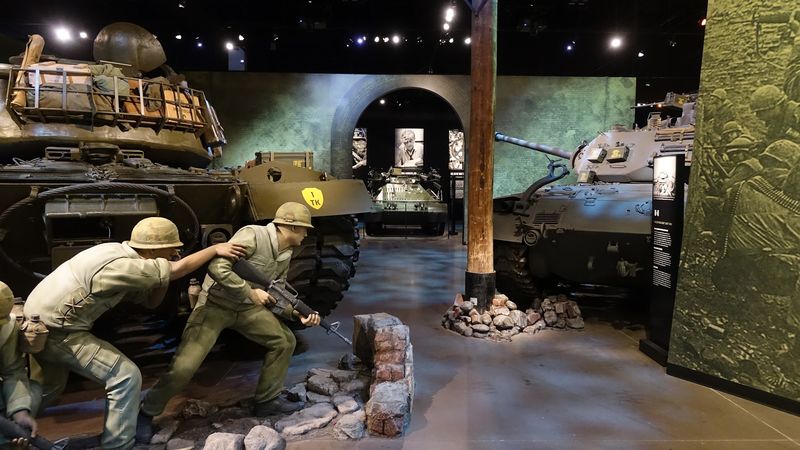
Machines do not fight wars — people do. That truth sits at the heart of how this museum was designed.
While the vehicles are undeniably impressive, the exhibits are equally focused on the men and women who operated them, maintained them, and sometimes gave their lives alongside them.
Personal stories from veterans are woven throughout the galleries. Photographs, letters, recorded testimonies, and personal effects help visitors connect with the human side of military service in a way that raw hardware alone never could.
These stories range from moments of heroism to quiet acts of endurance that rarely make history books but deserve to be remembered.
For veterans and their families, visiting this museum can be a deeply moving experience. Many have reported feeling seen and honored in a way that goes beyond a simple thank-you.
For younger visitors, these personal narratives make history feel real and immediate rather than distant and abstract. The museum strikes a careful balance between celebrating military technology and honoring the sacrifice that gives all of it its true meaning and weight.
Essential Visitor Information Before You Go
Ready to plan your visit? The National Museum of Military Vehicles is located at 6419 US Highway 26 in Dubois, Wyoming.
The museum opened in 2020 and has quickly become one of the region’s top destinations. Typical hours run Wednesday through Sunday, roughly 9:30 AM to 5 PM, with extended summer hours during peak season — always worth confirming on their official website before heading out.
General admission runs around $23, with discounts available for veterans and reduced or free admission for young children and active military members. One of the best perks is that admission often covers two consecutive days, which is genuinely useful because most visitors find they cannot see everything in a single visit.
Dubois sits in remote western Wyoming, making it a natural addition to any Yellowstone or Grand Teton road trip. The drive through the Wind River Canyon alone is worth the route.
Budget at least half a day for the museum, though many visitors end up returning the next morning to finish what they started. Pack snacks, wear comfortable shoes, and prepare to be seriously impressed by what awaits inside.