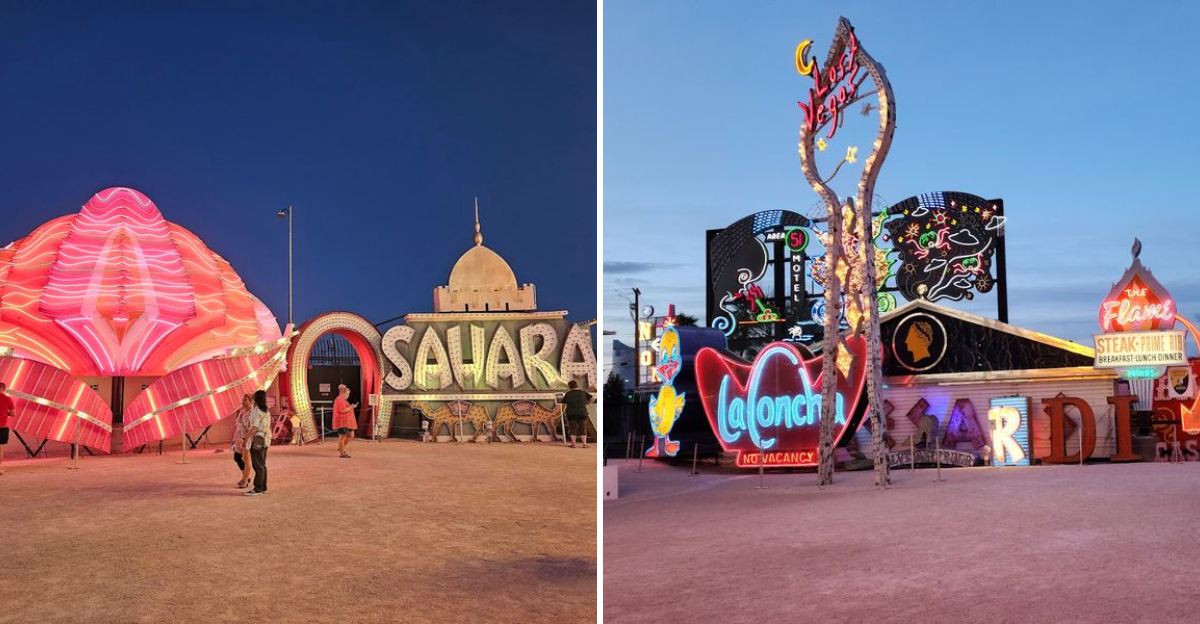
Las Vegas doesn’t let its legends die—it makes them glow again.
At The Neon Museum, more than 300 vintage neon signs rise from the dust of demolished casinos and long-gone hotels. These aren’t tiny relics tucked behind glass.
They’re towering icons, buzzing with stories, color, and old-school Vegas swagger.
Walk through the Neon Boneyard and you’ll feel it instantly. Giant letters lean against the desert sky.
Rusted bulbs flicker back to life. The ghosts of showgirls, high rollers, and midnight jackpots seem to shimmer in the electric glow.
This is where the city’s past refuses to fade. Each sign once shouted for attention on the Strip.
Now they stand together, bold and brilliant, proving that even in a town built on reinvention, history still knows how to steal the spotlight.
The Neon Boneyard: Where Forgotten Signs Come to Life
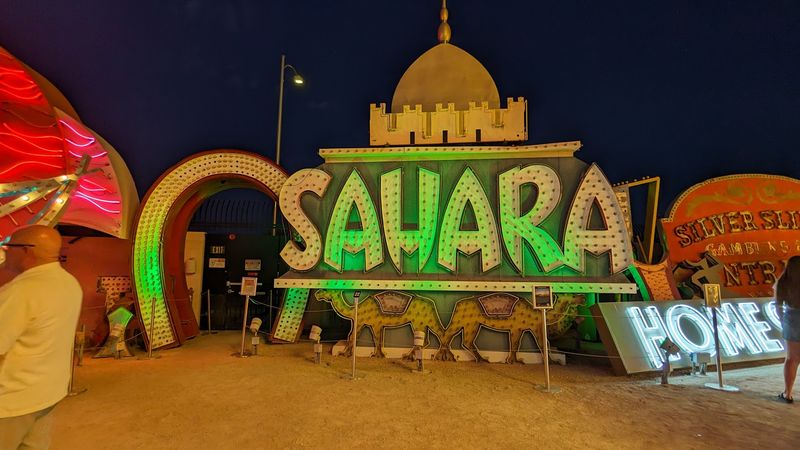
Imagine walking through a junkyard, but instead of rusted cars, you are surrounded by towering neon signs that once lit up the Las Vegas Strip. That is exactly what the Neon Boneyard feels like.
Spanning about two acres, this outdoor collection houses more than 200 unrestored signs, each one a relic from a chapter of Vegas history that has long since closed.
Signs from legendary spots like the Stardust, Caesars Palace, and the Silver Slipper are all here, resting quietly in the desert air. Some are crumbling, some are faded, and a few are surprisingly intact.
That contrast between the worn and the preserved is what makes the Boneyard so visually striking and emotionally powerful.
Visitors often say the experience hits differently than expected. There is something quietly moving about seeing a massive casino sign lying on its side in the dirt.
The Boneyard is open daily from 2 PM to 10 PM, and tickets are available online. Going at dusk is especially rewarding, when the fading sunlight catches the dusty pinks and teals of vintage lettering in a way that no camera can fully capture.
A History of Preservation: How the Museum Got Its Start
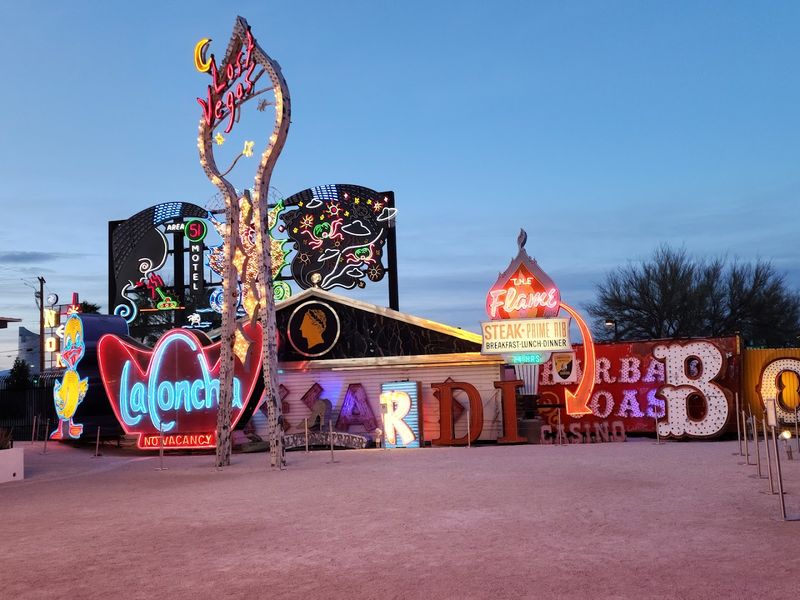
Back in 1996, a small group of Las Vegas locals had a wild but brilliant idea: save the neon signs that were being tossed out as casinos and hotels got demolished or rebranded. That grassroots effort eventually became The Neon Museum, which officially opened its outdoor Boneyard to the public in 2012.
The road from idea to institution took nearly two decades of fundraising, advocacy, and sheer determination.
The museum operates as a nonprofit, which means every ticket sold goes directly toward restoring and preserving these irreplaceable pieces of American pop culture. Without that mission-driven model, many of these signs would have ended up in landfills or been melted down for scrap.
The fact that they still exist today is a small miracle of community effort and cultural passion.
Understanding that backstory changes how you look at every sign in the collection. Each one was saved by someone who believed it mattered.
The museum now works with historians, engineers, and artists to restore select signs and tell their full stories. It is not just a museum of objects; it is a museum of decisions, communities, and the people who refused to let Las Vegas forget where it came from.
Iconic Signs You Will Recognize Instantly
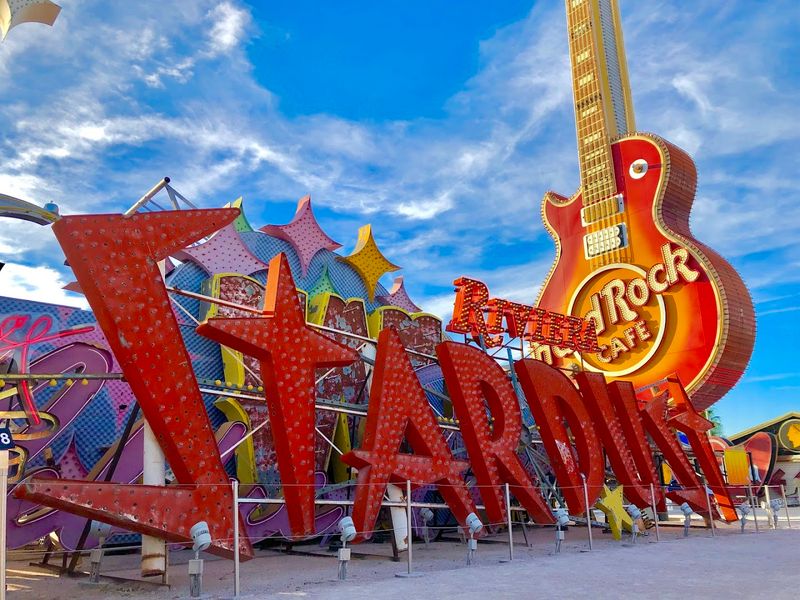
Some signs in the collection will stop you in your tracks the moment you recognize them. The Stardust.
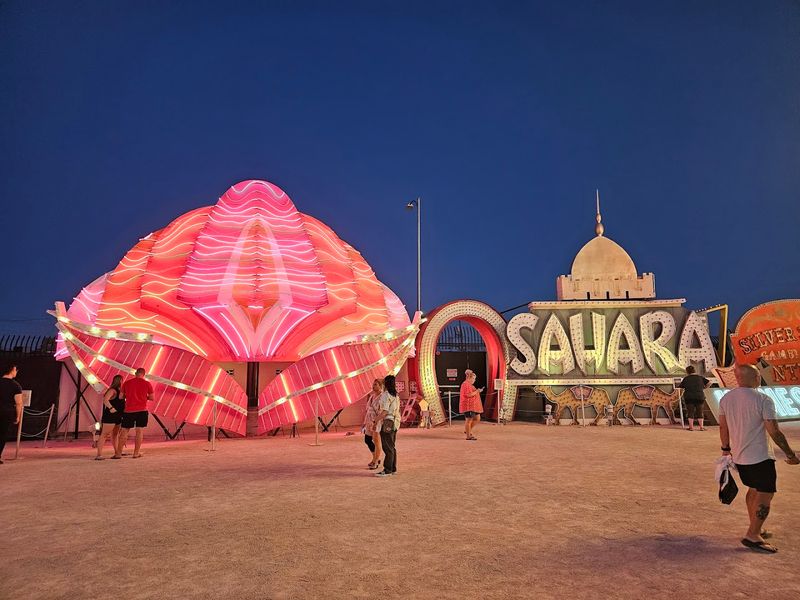
The Sahara. The Moulin Rouge.
These names carry decades of Las Vegas mythology, and seeing their original signs up close is genuinely thrilling. You realize just how massive these pieces of signage art actually were, something photographs never quite communicate.
One visitor review described it perfectly: it is hard to understand from pictures just how massive these signs are. Standing next to the Stardust sign, which stretches high above your head in layers of glowing letters and starburst shapes, makes you feel like you have shrunk.
The craftsmanship that went into these signs, hand-bent glass tubes and hand-painted metalwork, reflects an era when signage was considered a true art form.
The Moulin Rouge sign holds special significance beyond its visual impact. The Moulin Rouge was the first racially integrated casino on the Las Vegas Strip, opening in 1955.
Its neon sign is not just a piece of design history; it is a piece of civil rights history. Seeing it in person, with that full context, is one of those museum moments that genuinely sticks with you long after you leave.
The Best Time to Visit: Sunset vs. Daytime vs. Night
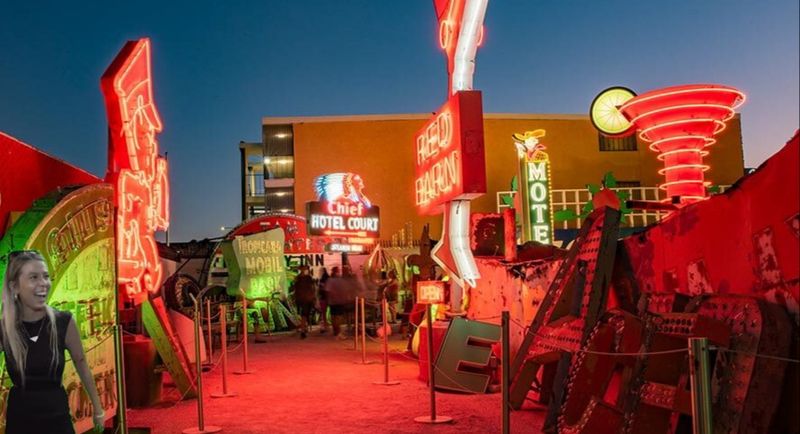
Timing your visit to The Neon Museum is genuinely one of the most important decisions you will make. Each part of the day offers a completely different experience, and seasoned visitors have strong opinions about which is best.
Arriving around sunset, roughly 4:30 to 5:30 PM depending on the season, seems to be the sweet spot that most people rave about.
At sunset, the sky shifts through shades of orange, pink, and purple, creating a dreamy backdrop for the signs. The neon starts to glow while there is still enough natural light to capture fine details in photos.
As darkness falls, you get the full electric experience, with restored signs blazing against the night sky in vivid color. It is a two-for-one visual treat that daytime-only visits simply cannot replicate.
Daytime visits have their own quiet charm, though. The faded teals and dusty pinks of unrestored signs have an almost painterly quality in natural light.
Ticket prices are also lower during daylight hours, which is a nice bonus for budget-conscious travelers. Whatever time you choose, plan to spend at least 60 to 90 minutes exploring so you do not feel rushed through a collection that genuinely rewards slow, curious attention.
The Free Audio Tour: Your Secret Weapon for a Richer Visit
Here is something a lot of first-time visitors do not know until they arrive: The Neon Museum offers a free audio guide that you can access simply by scanning a QR code at the entrance. Available in English and several other languages, the audio tour adds a whole new layer of meaning to what you are looking at.
Without it, a faded sign is just a faded sign. With it, that same sign becomes a window into a specific moment in Las Vegas history.
The audio content covers the stories behind individual signs, including the businesses they represented, the eras they defined, and the people who made them. It is the kind of storytelling that transforms a casual stroll into something genuinely educational and emotionally engaging.
Families with kids especially appreciate having that audio context, since it gives younger visitors something concrete to focus on at each stop.
If you prefer human interaction over headphones, staff members roam the property and are genuinely enthusiastic about answering questions and sharing stories. Multiple reviews highlight specific guides by name, which tells you something about the quality and passion of the people who work here.
Either way, do not skip the storytelling element, it is what elevates this from a photo opportunity to a real cultural experience.
The Gift Shop: Old-School Vegas Souvenirs Worth Bringing Home
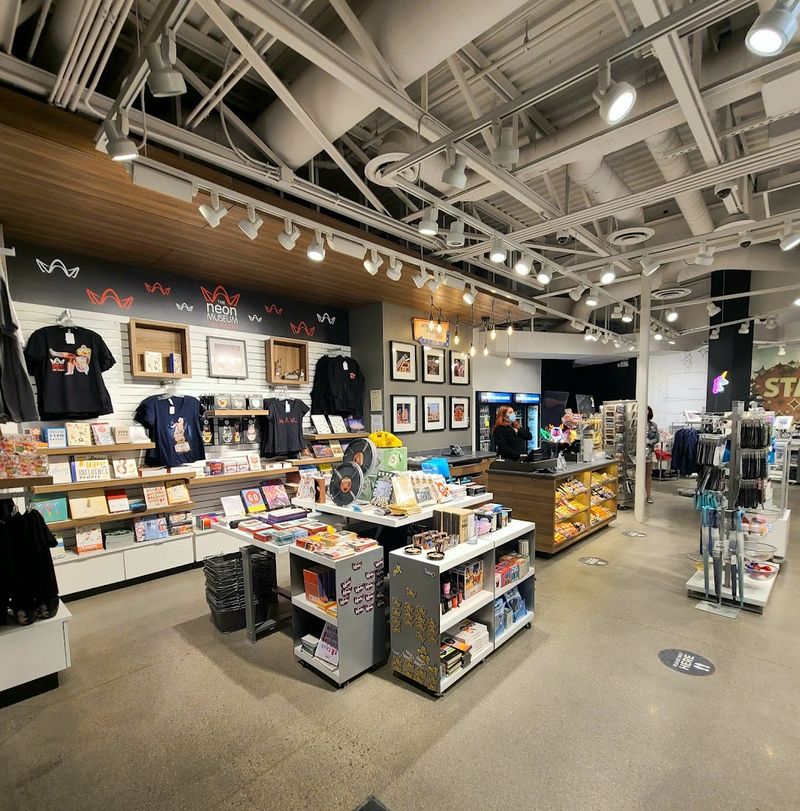
Before you leave, make sure you carve out time for the gift shop. Multiple visitors have called it one of the best souvenir shops in all of Las Vegas, which is saying something in a city absolutely overflowing with places to spend your money.
Unlike the generic keychains and shot glasses you find everywhere on the Strip, the Neon Museum shop carries merchandise that actually feels connected to the history you just experienced.
Think vintage-style prints, neon-inspired apparel, retro postcards, and collectibles featuring the museum’s most iconic signs. There are books about Las Vegas history, locally made goods, and items you genuinely will not find anywhere else.
For anyone who loves old-school Vegas aesthetic, browsing the shelves here feels like a treasure hunt with guaranteed rewards.
Prices in the gift shop are reasonable for a museum retail space, and many items make excellent gifts for people back home who did not make the trip. Buying something from the shop also supports the museum’s nonprofit mission directly, since all proceeds go toward sign restoration and preservation.
So you are not just shopping; you are contributing to keeping Las Vegas history alive for the next generation of curious visitors who will walk through that gate.
The Brilliant Nevada Gallery: A Climate-Controlled Indoor Experience
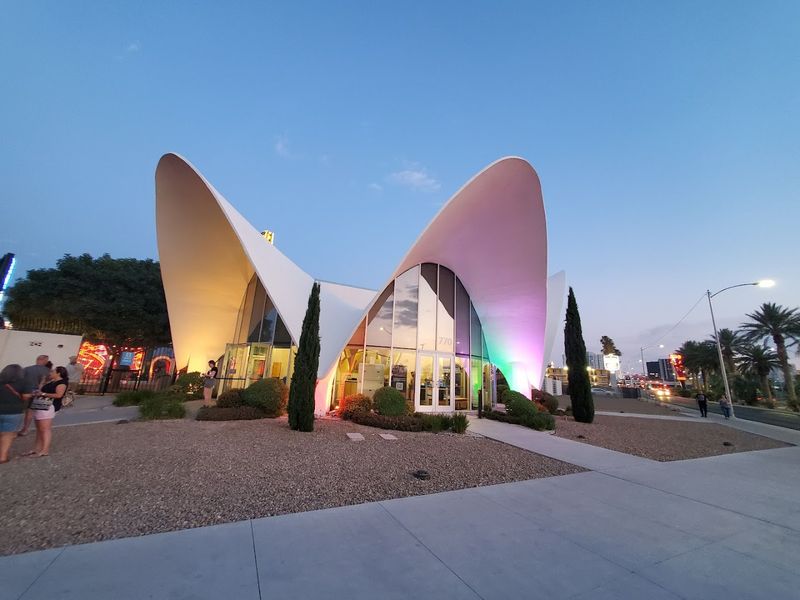
Not everything at The Neon Museum lives outside in the desert heat. The Brilliant Nevada Gallery is an indoor exhibition space housed in the former La Concha Motel lobby, a mid-century modern architectural gem that was itself rescued and relocated to the museum’s property.
The building’s swooping shell-shaped design is a work of art before you even look at what is inside.
Inside the gallery, you will find rotating exhibits that explore the intersection of neon art, Las Vegas history, and broader American culture. The climate-controlled environment makes it a welcome break during hot summer months, and it offers a quieter, more contemplative space compared to the wide-open Boneyard outside.
Exhibits change periodically, so repeat visitors often discover something new each time they come.
The La Concha Motel lobby itself opened in 1961 and was designed by architect Paul Revere Williams, one of the most celebrated Black architects in American history. That backstory gives the building a significance that goes well beyond its striking visual appeal.
Standing inside it, surrounded by neon art and knowing the full story of how it ended up here, is one of those layered museum moments that genuinely rewards visitors who take the time to pay attention to their surroundings.
The Neon Museum as a Wedding and Event Venue
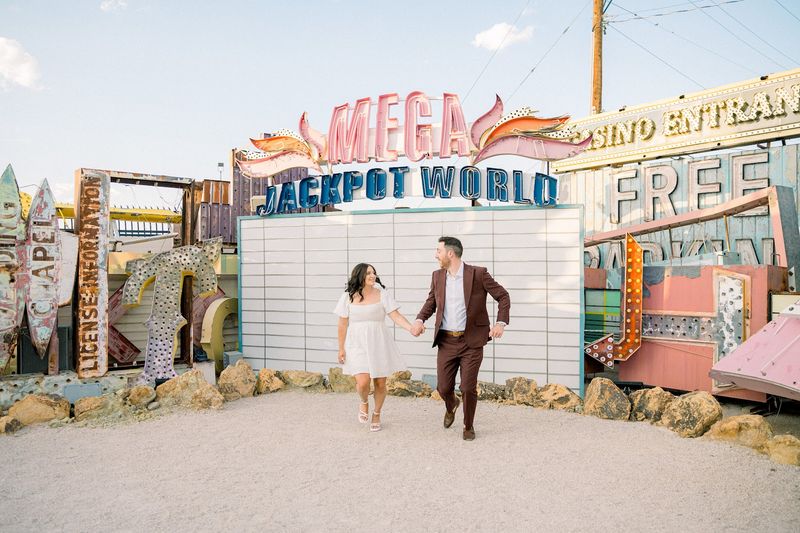
Getting married in Las Vegas is practically a rite of passage, but most couples default to chapels on the Strip. The Neon Museum offers something far more memorable: a ceremony surrounded by glowing vintage signs, with the Lady Luck sign serving as a breathtaking natural backdrop.
One wedding guest described the event as perfectly timed and beautifully staged, moving like clockwork from the garden wait to the walled ceremony space across from the main museum.
The outdoor event area features seating for guests, open-air ambiance, and that unmistakable Vegas glow that no ballroom can replicate. The museum team handles event logistics with the same care they bring to their tours, and the results speak for themselves.
Seeing the museum lit up at night from the perspective of a wedding guest is, by multiple accounts, a magical experience that makes you want to come back and explore properly.
Beyond weddings, the museum hosts corporate events, private tours, and special screenings. The venue’s unique visual character makes it a natural fit for creative industries, photography shoots, and milestone celebrations of all kinds.
If you are planning any kind of event in Las Vegas and want something genuinely different from the usual hotel ballroom setup, reaching out to the museum’s events team is absolutely worth a conversation.
Practical Tips for Getting the Most Out of Your Visit
A little planning goes a long way at The Neon Museum. Tickets are timed, which keeps crowds manageable and means you will not be elbow-to-elbow with strangers trying to take the same photo.
Buying in advance online at neonmuseum.org is the smartest move, especially on weekends. The museum is open every day from 2 PM to 10 PM, and senior discounts plus occasional coupon codes can bring the price down from the standard rate of around $30 per person.
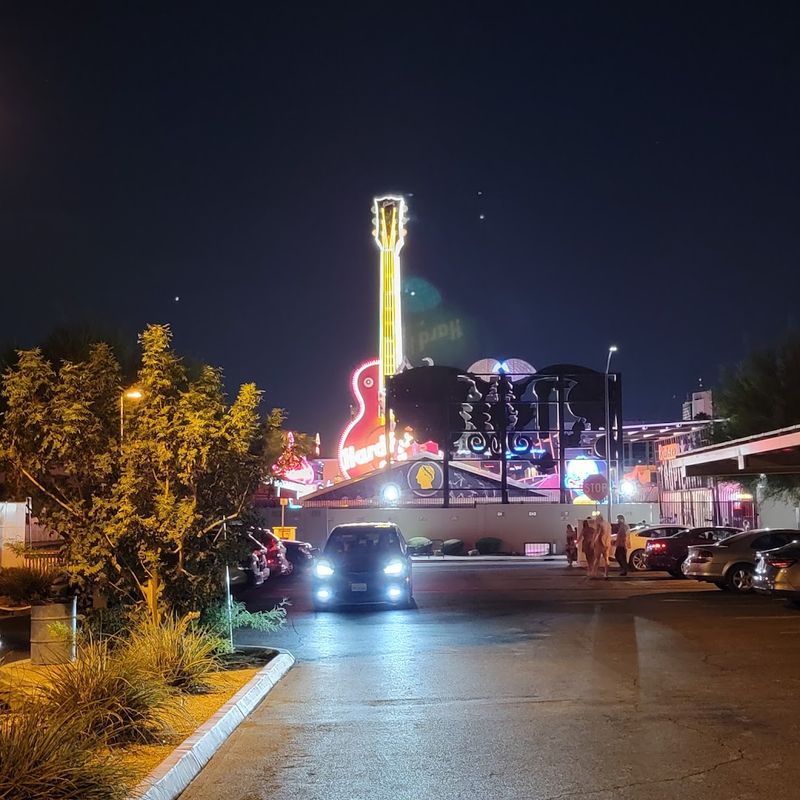
Parking is free in the museum’s own lot, though it is on the smaller side. An overflow lot nearby handles the extra demand without much hassle.
If you are staying near Fremont Street, the museum is about a mile away, an easy rideshare ride that takes just a few minutes. Walking is possible but involves passing under a highway overpass and through some quieter stretches, so use your judgment based on your comfort level.
Wear comfortable shoes since the Boneyard is an outdoor gravel-and-concrete environment. Bring water during summer months because the desert heat is no joke, even in the evening hours.
The museum is family-friendly and genuinely engaging for kids, especially with the audio tour to help younger visitors connect with what they are seeing. Budget 60 to 90 minutes, and do not skip the gift shop on your way out.