Tucked away in O’Hara Township just northeast of Pittsburgh, the Bayernhof Music Museum looks like a Bavarian castle straight out of a fairy tale.
Inside, visitors discover a jaw-dropping collection of self-playing musical instruments, hidden passageways, and rooms full of surprises built by one very creative man.
This place is unlike any museum you have ever visited, blending mechanical music history with architectural wonder.
If you love quirky history, secret doors, and music that plays itself, Bayernhof belongs at the top of your Pittsburgh bucket list.
What Is the Bayernhof Music Museum?
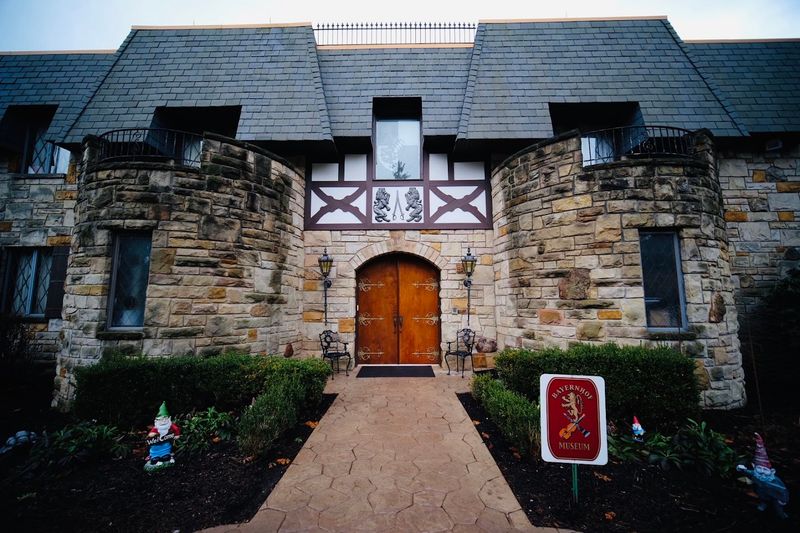
Perched on a hillside overlooking the Allegheny River, the Bayernhof Music Museum is one of the most unusual and underrated attractions in all of Pennsylvania.
The name itself comes from the German word for Bavaria, and the building truly looks like something transplanted from the European countryside straight into suburban Pittsburgh.
The mansion sits in O’Hara Township, just a short drive northeast of downtown Pittsburgh. From the outside, its stone walls, arched windows, and tower-like features give it a storybook quality that immediately sets the mood for something extraordinary.
First-time visitors often do a double take when they pull into the driveway.
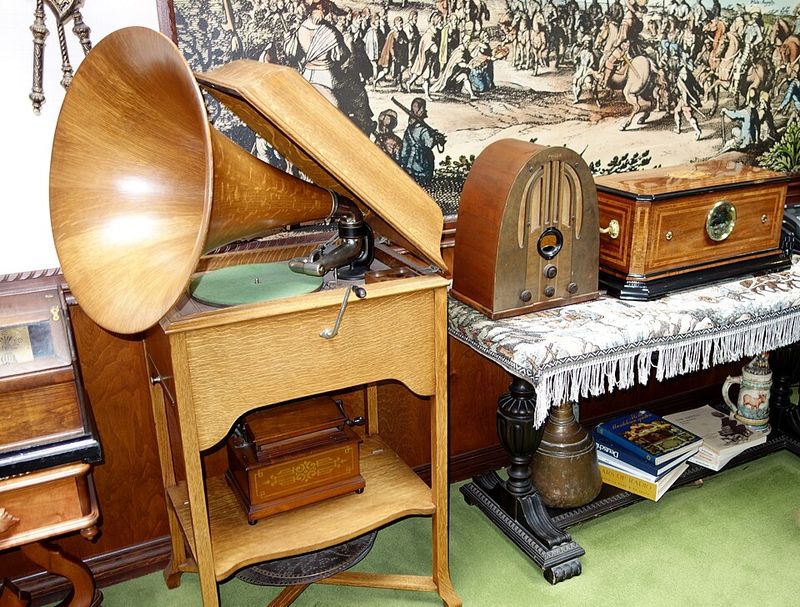
Inside, the museum houses a remarkable collection of automatic and self-playing musical instruments, most of them dating from the 19th and early 20th centuries. These are not dusty relics sitting behind velvet ropes.
Many of them still work perfectly and are demonstrated during guided tours. Whether you are a music lover, a history buff, or just someone who enjoys the unexpected, Bayernhof delivers a genuinely one-of-a-kind experience that is hard to forget.
The Eccentric Vision of Charles B. Brown III
Some people collect stamps. Charles Brown III collected mechanical musical instruments, secret rooms, and an entire Bavarian-style mansion to put them in.
Brown was a wealthy Pittsburgh-area industrialist with a deep love for both mechanics and music, and the home he built reflects every corner of his imaginative personality.
He designed the mansion with his own quirky vision guiding nearly every decision, from the themed rooms and hidden passages to the glass walls overlooking the river below. Brown was not trying to impress anyone in a conventional way.
He was building a world that matched exactly how his mind worked, full of surprises, humor, and mechanical wonder.
What makes his story even more compelling is that he eventually decided his home and collection should be shared with the public after his death. Rather than selling everything off or donating it to a bland institution, Brown left instructions for the estate to become a museum.
His personality is still felt in every room, every hidden door, and every instrument that springs to life during a tour. Visiting Bayernhof feels less like attending a museum and more like being a guest in someone’s wildly creative home.
A One-of-a-Kind Instrument Collection
Forget everything you think you know about music museums. Bayernhof does not just hang instruments on walls and label them with small printed cards.
The collection here is alive, mechanical, and absolutely mind-blowing in its scope and variety.
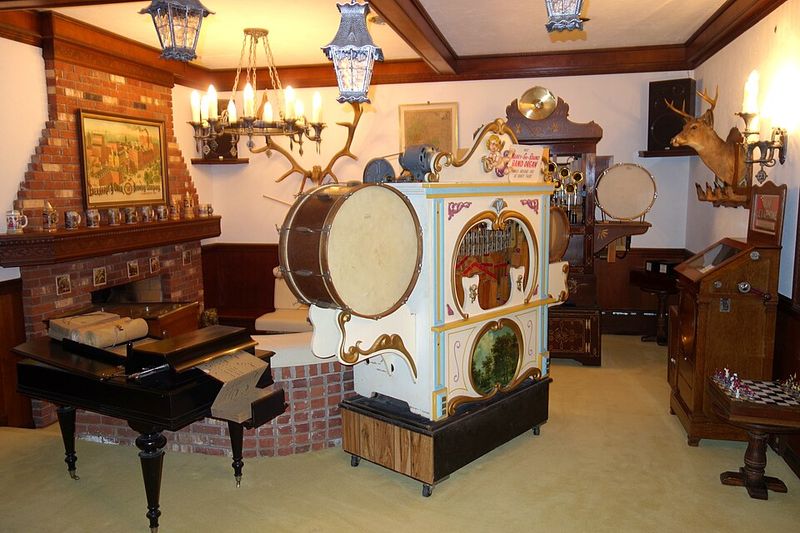
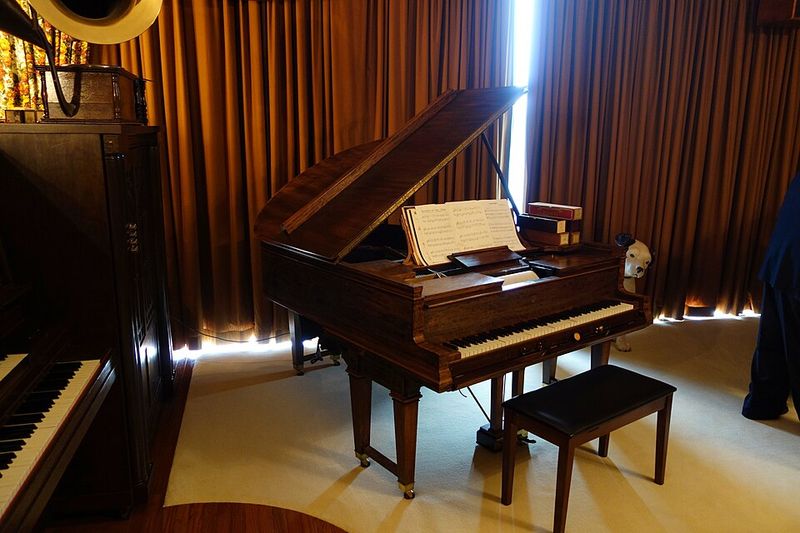
At the heart of the museum sits one of the most impressive assemblages of self-playing instruments anywhere in the world. Orchestrions, which are large cabinet machines that can imitate an entire orchestra, stand alongside player pianos, self-playing banjos, fairground organs, and intricate music boxes.
Many of these pieces were built between the 1870s and 1930s, a golden era for mechanical music before recorded sound took over.
What truly sets this collection apart is that most of the instruments are still in full working order. Decades of careful maintenance have kept these mechanical marvels running the way their inventors intended.
Hearing a 100-year-old machine play a full orchestral arrangement with drums, pipes, and strings all moving at once is genuinely breathtaking. It is the kind of moment that makes you stop scrolling through your phone and just listen with your mouth slightly open.
The craftsmanship packed into each piece is extraordinary by any standard.
Hear the Machines in Action
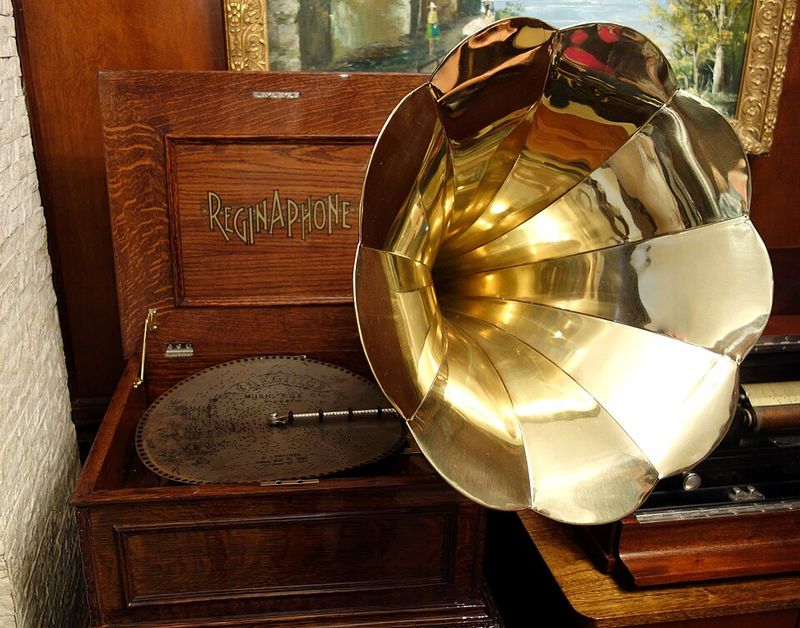
Reading about a self-playing orchestrion is one thing. Standing three feet away while it thunders through a Sousa march with moving drums, spinning discs, and vibrating pipes is something else entirely.
At Bayernhof, hearing is absolutely believing.
The guided tour is built around live demonstrations of the instruments throughout the collection. Your guide will fire up different machines in different rooms, explaining the mechanics behind each one while the music fills the air.
You might hear a delicate Swiss music box tinkling out a waltz one moment, then find yourself surrounded by the full booming sound of a massive orchestrion the next.
This hands-on, ears-open approach separates Bayernhof from typical archives and history museums. Sound brings history to life in ways that placards and photographs simply cannot match.
Hearing the actual music these machines were built to produce connects you to the people who enjoyed them a century ago in ways that feel surprisingly emotional. Families with kids especially love this part of the tour because the mechanical movements are visually fascinating as well as musical.
Plan to spend a few minutes at each instrument, because once the music starts, you will not want to rush away.
The Unique Mansion Tour Experience
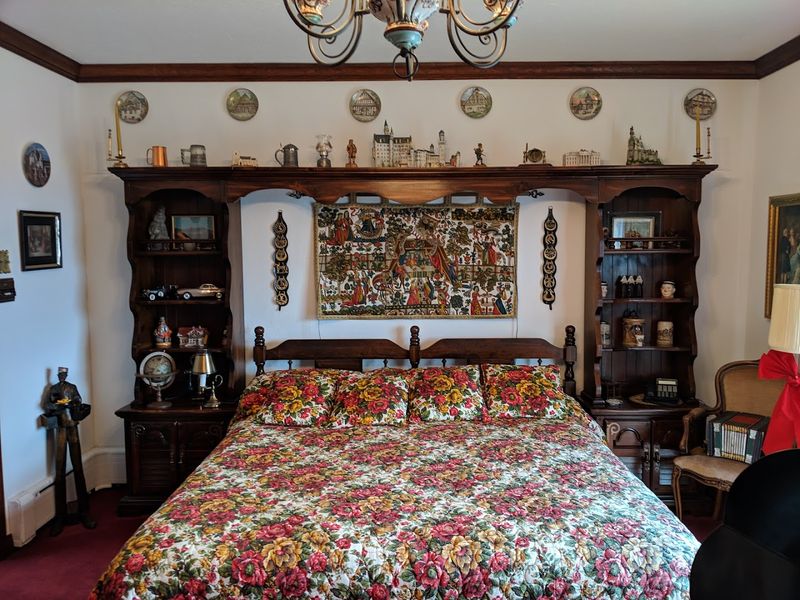
Walking through Bayernhof feels less like a museum visit and more like following a storyteller through the most fascinating house you have ever entered.
The tour is narrative-driven, meaning your guide weaves together the history of each room with stories about Charles Brown, the instruments, and the architectural decisions that make the mansion so unusual.
The mansion is organized into distinct themed spaces, including a Family Room, a formal Dining Room, and even a Gambling Room complete with the kind of decor Brown clearly enjoyed. Each room has its own personality, its own instrument or two, and its own set of surprises waiting to be revealed.
No two rooms feel the same, which keeps the tour feeling fresh from start to finish.
Tours typically last around two and a half hours, which might sound long but rarely feels that way. There is simply too much to see, hear, and wonder at.
Groups are kept small deliberately, which means you get personal attention from your guide and plenty of time to ask questions. First-time visitors consistently report feeling surprised by how quickly the time passes.
If you are visiting Pittsburgh and only have time for one quirky attraction, this tour is the one to prioritize without hesitation.
Secret Passages and Hidden Doors
Somewhere between the Family Room and whatever lies beyond it, a bookcase swings open to reveal something unexpected. Secret passages are not a rumor at Bayernhof.
They are a real, genuinely exciting feature that makes touring the mansion feel like living inside a mystery novel.
Charles Brown had a well-documented love for hidden architectural surprises, and he built that love directly into the bones of his home. Bookcases that open inward, disguised doors that blend seamlessly into walls, and faux panels that conceal entire new spaces are scattered throughout the property.
Discovering them during the tour produces audible gasps from visitors of all ages.
These hidden features were not purely decorative. Brown actually used some of them for practical purposes, creating private routes through the house that guests would never stumble upon by accident.
The playful secrecy woven into the architecture says a lot about the man himself. He enjoyed surprise, he enjoyed wit, and he enjoyed the delight on people’s faces when reality turned out to be different from what they expected.
For kids especially, finding a hidden passage behind a fake wall is the kind of memory that sticks around for years. Few museums anywhere can offer that kind of hands-on wonder.
The Cave and Novelty Spaces
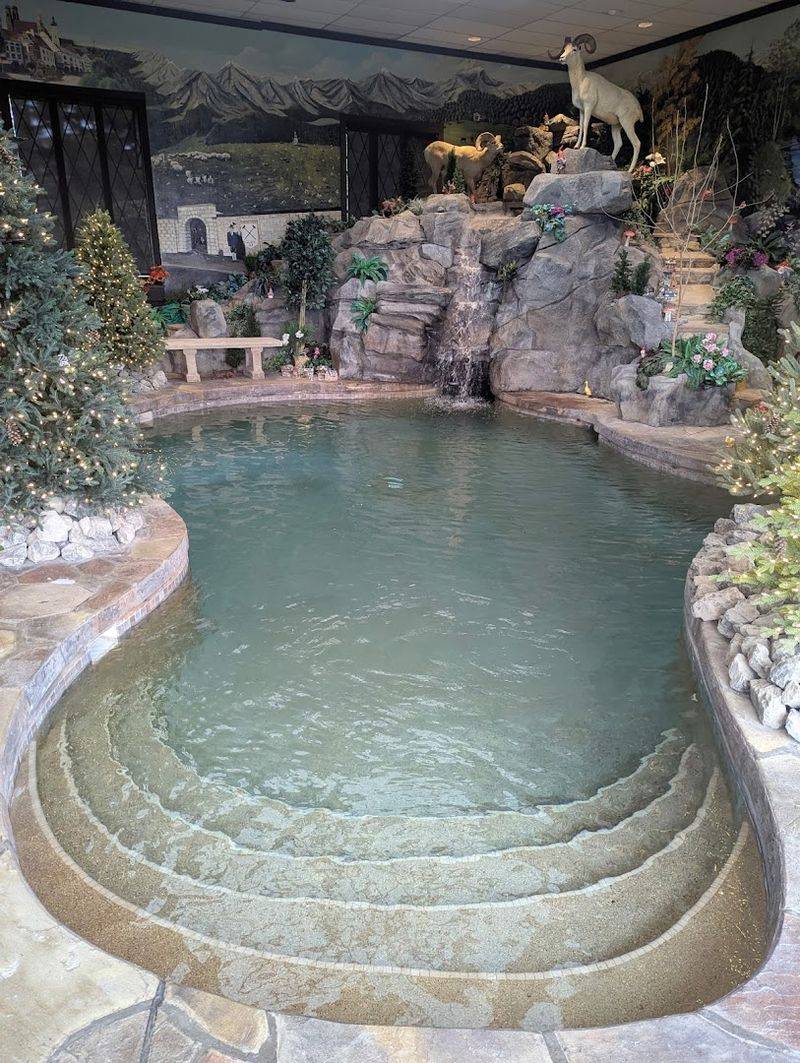
At some point during the Bayernhof tour, your guide will lead you into what appears to be a rocky underground cave, complete with stalactites hanging from the ceiling and rough stone walls surrounding you on all sides. The twist?
You are still inside the house.
Charles Brown commissioned a fully man-made cave built into the interior of the mansion, connecting different areas of the building through a passage that looks and feels genuinely subterranean. The faux rock formations were crafted with enough detail to be convincing, and the atmospheric lighting makes the space feel surprisingly immersive.
It is one of the most memorable and talked-about features of the entire property.
The cave is part of a broader pattern of novelty spaces throughout the mansion that reflect Brown’s commitment to making his home a place of constant surprise. He was not satisfied with ordinary hallways or plain connecting rooms.
Every transition between spaces had to offer something worth noticing. That philosophy resulted in a home where even walking from one room to another becomes an experience.
The cave in particular tends to delight younger visitors, but honestly, the adults in any tour group are usually just as wide-eyed when they step inside it for the first time.
Architectural and Decorative Oddities

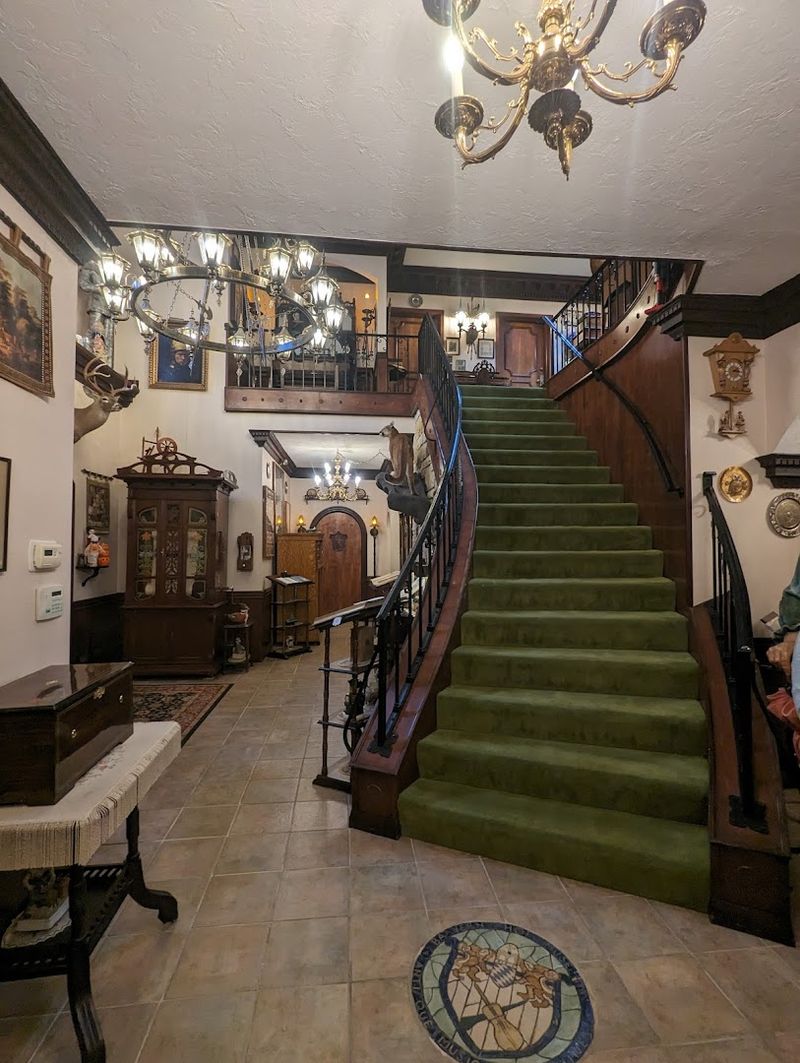
Charles Brown did not hire a conventional architect and ask for a nice house. He built something that reflected his personality at every turn, and the architectural details throughout Bayernhof make that abundantly clear from the moment you step inside.
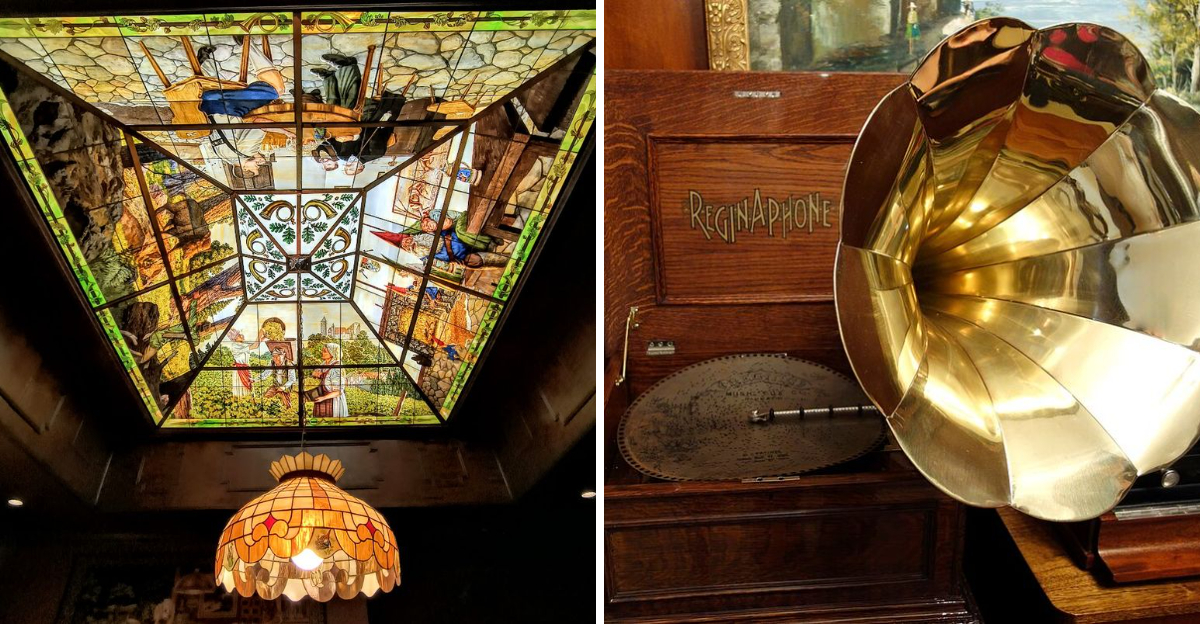
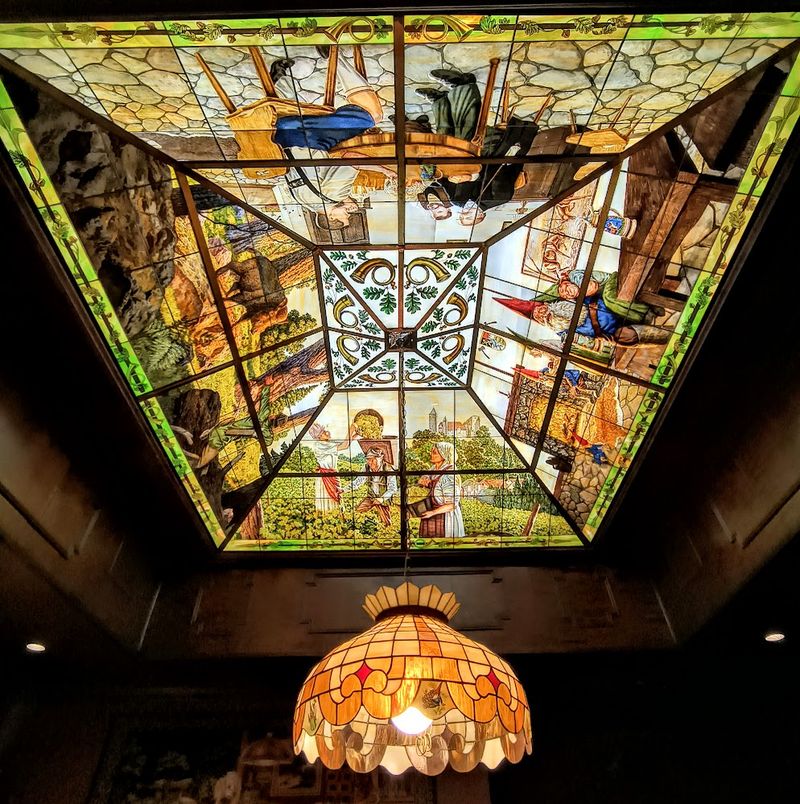
Stained glass skylights cast colorful light across certain rooms at different times of day, creating an almost cathedral-like atmosphere in spaces that also happen to contain mechanical music machines. Indoor waterfalls add a soothing sound layer that contrasts beautifully with the mechanical music nearby.
Handcrafted woodwork, custom tilework, and themed decorative choices in each room show the level of personal investment Brown put into every square foot of the building.
The blend of whimsy and historical craftsmanship is genuinely striking. Nothing feels mass-produced or generic.
Every corner of the house seems to have been considered carefully, then pushed just a little further into the unusual. Visitors who appreciate architecture or interior design will find themselves pausing constantly just to take in the details.
It is the kind of place where looking up at the ceiling is as rewarding as looking at the instruments on the floor. Bayernhof is not just a music museum.
It is an immersive architectural statement made by someone who truly loved living with beauty and surprise.
History and Legacy of Bayernhof
The mansion was completed in 1982 after years of construction driven by Brown’s evolving vision for the space. He lived there for over two decades, filling it with instruments, architectural curiosities, and the kind of personal touches that only come from someone deeply invested in their surroundings.
When Brown passed away, he left specific instructions in his will for the property to become a public museum. That wish was honored, and in 2004 the Bayernhof Music Museum officially opened its doors to visitors.
The transition from private residence to public institution was handled with care to preserve the home’s original character rather than sanitize it into something more conventionally museum-like.
That preservation decision makes all the difference. Bayernhof still feels like someone’s home, just a wildly unusual one.
The personal nature of the collection and the space creates an intimacy that larger institutions rarely achieve. Brown’s legacy is not just the instruments or the architecture.
It is the experience of walking through a place built entirely around one person’s passions and curiosity. Pittsburgh has no shortage of cultural institutions, but Bayernhof occupies a category of its own.
It is a monument to the idea that a private obsession, pursued with enough dedication, can become a public treasure.
Essential Visitor Info for Bayernhof
Planning a visit to Bayernhof requires a little more prep work than showing up and buying a ticket at the door. Tours must be scheduled in advance by calling the museum directly, and they fill up weeks ahead of time, especially on weekends.
If this is on your Pittsburgh itinerary, book as early as possible.
The museum is located at 225 St. Charles Place, Pittsburgh, PA 15215, in O’Hara Township northeast of downtown. Tours run approximately two and a half hours and are kept intentionally small to preserve the personal atmosphere of the experience.
The recommended minimum age is 12, partly because of the tour length and partly because of the many stairs and narrow passages involved. Wear comfortable shoes.
Admission runs around $10 per person, which is remarkably affordable for a two-and-a-half-hour guided experience unlike anything else in the region. Arriving about 15 minutes early is strongly recommended so the tour can start on time and you do not miss a single room.
Photography policies are generally relaxed, but confirm when booking. Whether you are a Pittsburgh local who somehow missed this gem or a traveler passing through, Bayernhof is the kind of place that earns a permanent spot in your favorite-memories list.