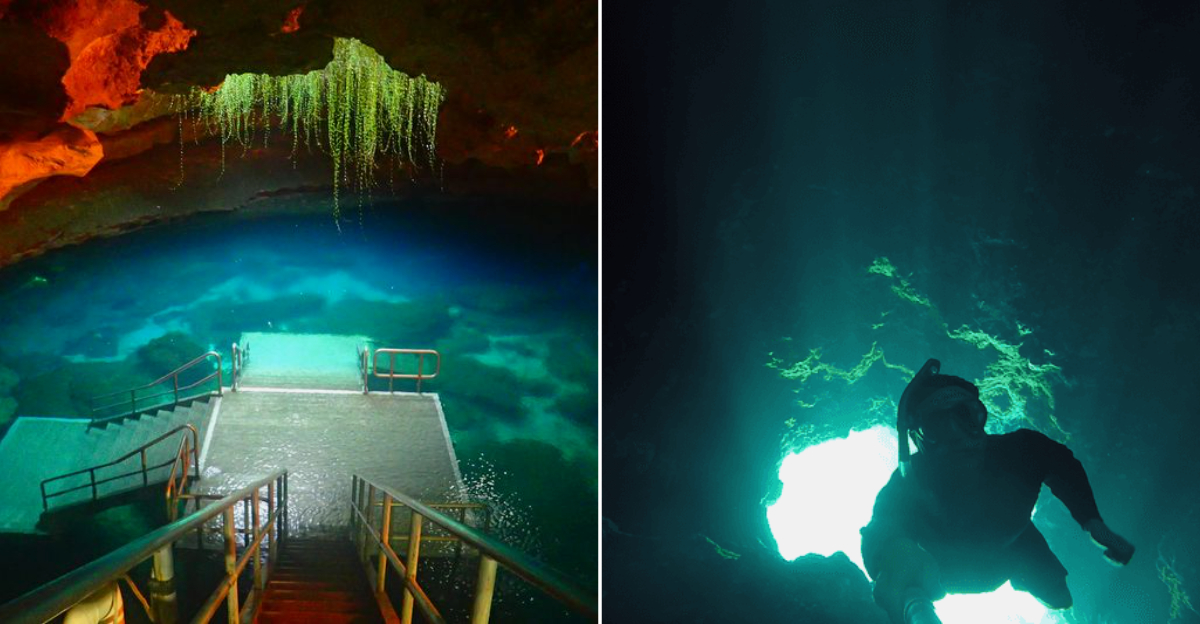
Florida hides some strange secrets beneath its sunshine. One moment you’re standing on solid ground — the next, the earth opens into something that looks like another planet.
Sinkholes here don’t just appear… they reveal surreal worlds of glowing water, towering rock walls, and mysterious depths.
Some look like turquoise lagoons dropped into the forest. Others resemble massive craters that feel more like scenes from a sci-fi movie than natural features on Earth.
Standing at the edge of one can feel a little unreal — like gravity suddenly decided to get creative.
Divers, photographers, and curious travelers flock to these places for a reason. The water is impossibly clear, the formations feel ancient, and every sinkhole seems to carry its own story hidden beneath the surface.
Ready to see Florida’s most jaw-dropping natural wonders? These 12 surreal sinkholes prove the Sunshine State has a wild, mysterious side waiting to be discovered.
Devil’s Millhopper Geological State Park
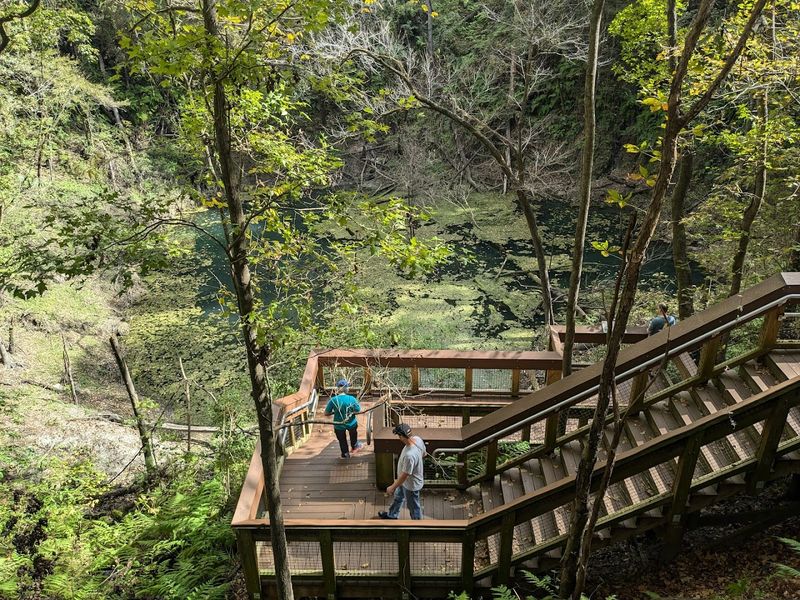
Devil’s Millhopper looks less like North Florida and more like a lost jungle crater hidden in a science fiction world. The giant sinkhole drops about 120 feet, with steep walls draped in vines, moss, and miniature waterfalls after rain.
As you descend the wooden boardwalk, the air cools fast, and the sound of the city fades into dripping water and birdsong.
What makes this site especially compelling is its geology. Rainwater dissolved the limestone below ground over thousands of years, creating a void that eventually collapsed and exposed ancient sediment layers.
Fossils from marine shells and extinct land animals have been found here, giving the sinkhole a museum-like quality without walls or glass.
The park is one of Florida’s most accessible windows into karst terrain, so it works beautifully in an article that balances beauty with science. You can mention the observation deck, the interpretive trail, and the way streams vanish into cracks at the bottom.
That disappearing water adds to the uncanny feeling that the earth is quietly swallowing pieces of the surface.
For readers, Devil’s Millhopper delivers instant drama. It is scenic, educational, and eerie enough to justify its legendary name.
Devil’s Den Prehistoric Spring
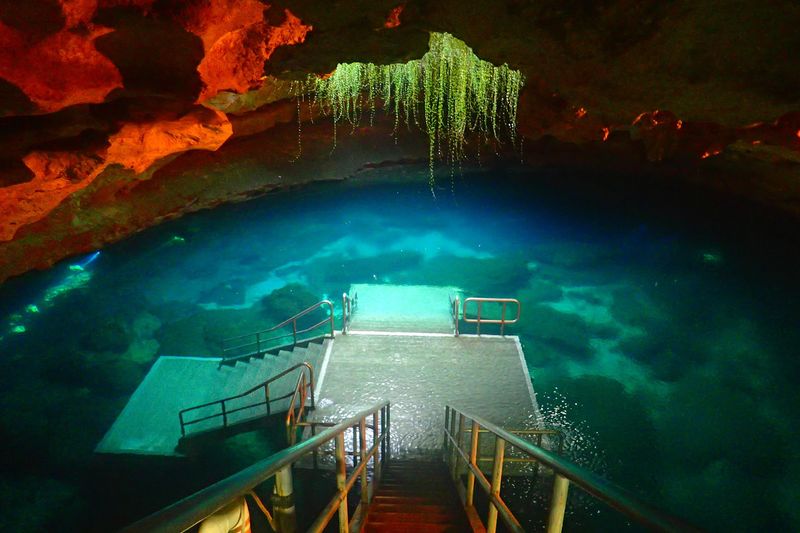
Devil’s Den feels like the entrance to an alien chamber, and that first impression is hard to shake. This underground spring sits inside a collapsed dry cave, where a circular opening in the ceiling sends shafts of sunlight into striking blue water.
On cool mornings, vapor can rise from the constant 72 degree spring, explaining why early settlers imagined smoke from a forbidden chimney.
The site is privately operated today and is famous with divers and snorkelers, but its prehistoric reputation is grounded in real discoveries. Fossil remains of extinct animals have been found here, and the cave-like structure preserves an atmosphere unlike a typical Florida spring.
Instead of broad open water and riverbanks, you get stone walls, echoing acoustics, and a dramatic skylight above.
For your article, Devil’s Den is a perfect blend of natural wonder and cinematic mood. The contrast between darkness and illuminated water creates an almost staged effect, like a portal scene from a movie set underground.
Mentioning its stable temperature, unusual history, and strong visual identity gives readers a memorable stop on the list.
If you want one location that screams sci-fi immediately, this is probably the easiest pick in Florida.
Lake Rose (Winter Park Sinkhole)
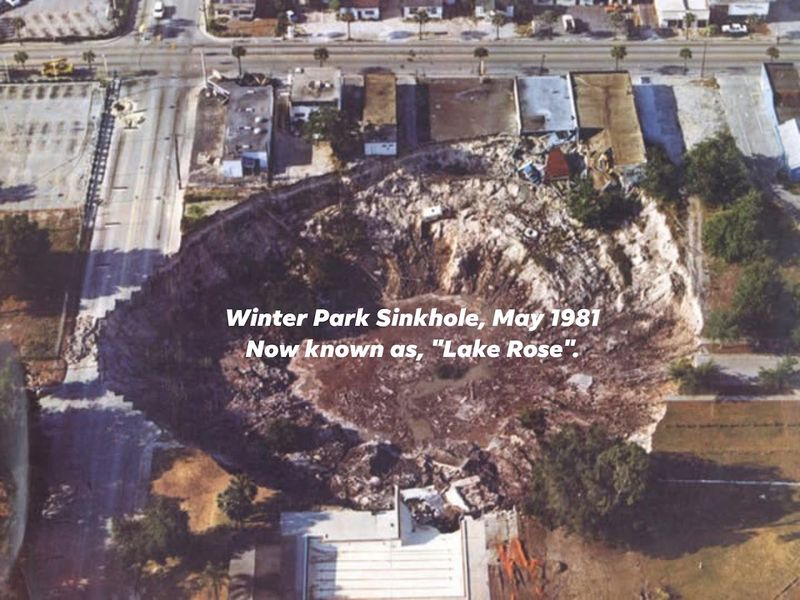
Lake Rose began as one of Florida’s most famous modern sinkhole disasters, and its origin story still feels shocking. In 1981, the ground opened in Winter Park and rapidly swallowed part of a street, a house, several cars, and sections of a local business property.
What remained eventually filled with groundwater, leaving behind a new lake where a neighborhood once stood.
That transformation is what makes this site so compelling in a sci-fi themed roundup. It is not just a hole in the earth; it is a real example of a landscape rewriting itself in public view.
Photos from the collapse show an enormous raw cavity, while the current lake looks almost calm enough to hide what happened.
This contrast gives you strong storytelling material. You can frame it as a place where suburbia briefly lost its grip and geology took over, exposing the fragile relationship between development and Florida’s karst foundation.
Readers usually connect with sinkholes most when the threat feels immediate, and Winter Park’s event remains one of the clearest examples.
Including Lake Rose also keeps the list grounded in human drama, not just wilderness scenery. It proves Florida’s strangest sinkholes are not always remote – sometimes they open exactly where people least expect.
Blue Grotto Dive Resort
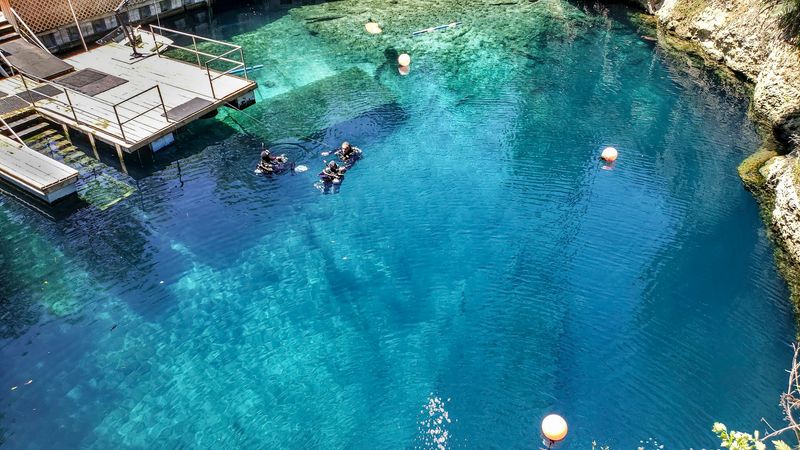
Blue Grotto is one of those places that barely looks real in photographs. The sinkhole opens into remarkably clear turquoise water, with steep limestone walls dropping into a deep basin that glows when sunlight pours through the circular opening above.
For divers, it feels like entering a vertical chamber designed by nature but lit like a futuristic set.
The site is famous as a training and recreational dive destination, and its clear visibility makes its structure easy to appreciate. You can often see platforms, rock contours, and the descending shaft with unusual clarity, which adds to the strange sense of depth.
Even from the surface, the water has that polished, electric color people usually associate with edited images.
For the article, Blue Grotto works well because it combines accessibility with strong visual appeal. Readers who may never attempt a cave dive can still imagine the thrill of peering into a submerged limestone cathedral.
Mentioning its popularity, depth, and dramatic lighting helps communicate why it stands apart from more conventional springs.
This is also a useful contrast to Devil’s Den. Both are sinkhole springs near Williston, but Blue Grotto feels more open, more aquatic, and somehow even more like a portal into another world below.
Peacock Springs State Park
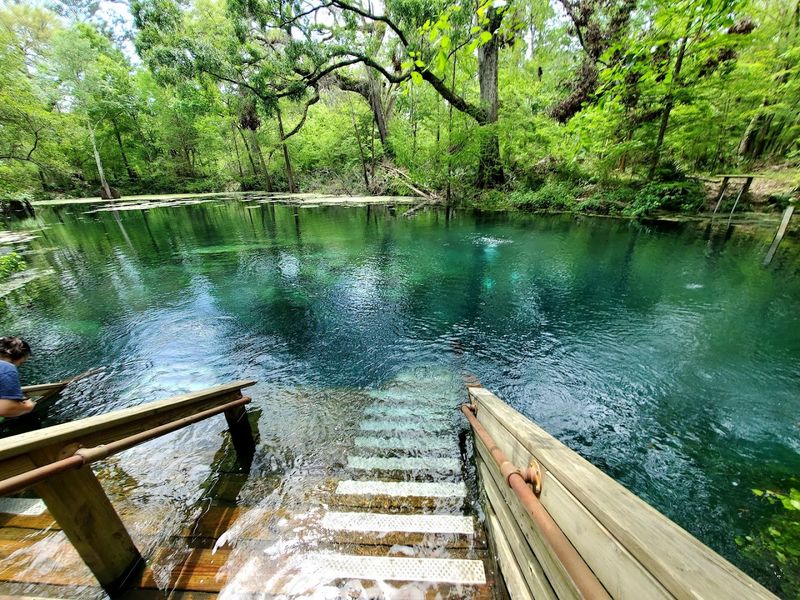
Peacock Springs State Park is less about one dramatic hole and more about an entire hidden system beneath the ground. The park contains springs, sinkholes, and underwater cave passages that form one of the longest explored submerged cave networks in the United States.
That scale gives the place a quiet intensity, because the real spectacle extends far beyond what you can see from shore.
At the surface, the setting can look deceptively peaceful. Forest, clear water, and modest spring openings do not immediately reveal the miles of mapped passages below.
For experienced cave divers, though, Peacock is legendary, and that reputation alone gives it a slightly forbidden aura that fits your theme beautifully.
In your outline, this stop expands the article from scenic sinkholes into complex subterranean geography. You can emphasize how Florida’s limestone dissolves into vast underground plumbing systems, creating spaces that feel more like secret infrastructure than natural landscape.
The idea that an entire maze exists beneath a quiet state park is inherently cinematic.
Peacock Springs also adds credibility because it is well known within the diving and geological communities. Readers who like mystery will appreciate the thought that under an ordinary patch of North Florida forest lies a sprawling water-filled labyrinth shaped over immense spans of time.
Ichetucknee Blue Hole Spring
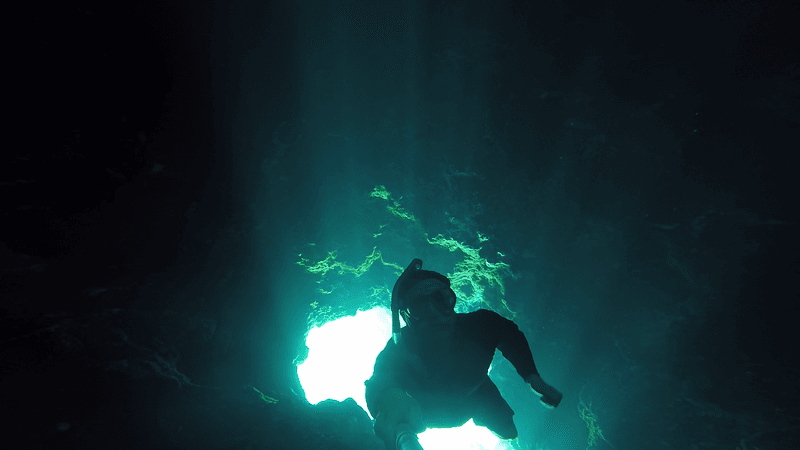
Ichetucknee Blue Hole Spring, often called the Jug Hole, feels like a glowing eye in the forest floor. Surrounded by dense vegetation, this deep spring basin feeds the famous Ichetucknee River and reveals a darker, more vertical side of a waterway better known for tubing and gentle current.
The contrast between recreational river culture and this intense spring opening makes it especially memorable.
Blue Hole is important hydrologically because it is one of the river system’s major sources, but visually it is the depth that captures attention. The water shifts from bright blue to shadowy indigo, hinting at the cavernous spaces below.
Even when the surroundings are calm, the spring has an unmistakable sense of hidden power.
This item strengthens your list because it shows how a sinkhole spring can be both beautiful and slightly unnerving. You can talk about the boardwalk access, the old-growth surroundings, and the way the spring’s vertical drop stands apart from the broader river landscape nearby.
Readers will picture a portal tucked under a green canopy, quietly feeding an entire ecosystem.
It is also a good reminder that surreal geology does not always announce itself with destruction. Sometimes it appears as perfect blue water so clear and deep that it seems to open into another layer of the planet.
Falling Waters Sinkhole
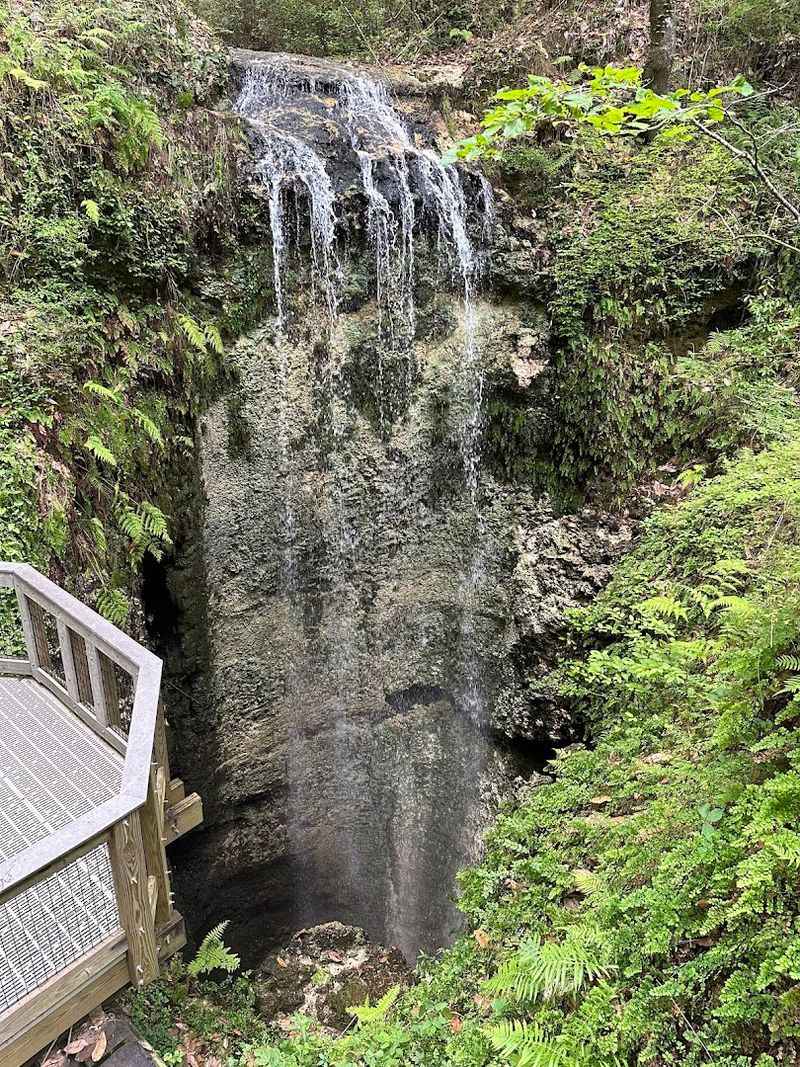
Falling Waters Sinkhole might be the most theatrical feature on this list because it combines a waterfall with a disappearing cave. At Falling Waters State Park near Chipley, water drops roughly 70 feet into a cylindrical sinkhole and then vanishes into the darkness below.
You can hear the plunge, see the mist, and still not fully understand where the water goes once it enters the earth.
That vanishing act is exactly what gives the site its sci-fi energy. Florida is not widely known for waterfalls, so seeing the state’s tallest one pour directly into a hole in the ground already feels unusual.
Add the shadowy limestone cavity and the uncertainty of the hidden passage, and the whole scene starts to resemble a special effect built into the forest.
In an article outline, this stop provides one of the cleanest examples of visible surface drama meeting invisible underground geology. You can discuss the park’s trail, observation area, and the role of soluble limestone in creating both the sinkhole and its concealed drainage route.
Readers will instantly understand why this location belongs in a list built around surreal visuals.
Few places make Florida’s karst landscape feel this active and mysterious. It is brief, dramatic, and unforgettable, which is exactly what a strong middle entry needs.
Lake Jackson Sinkholes
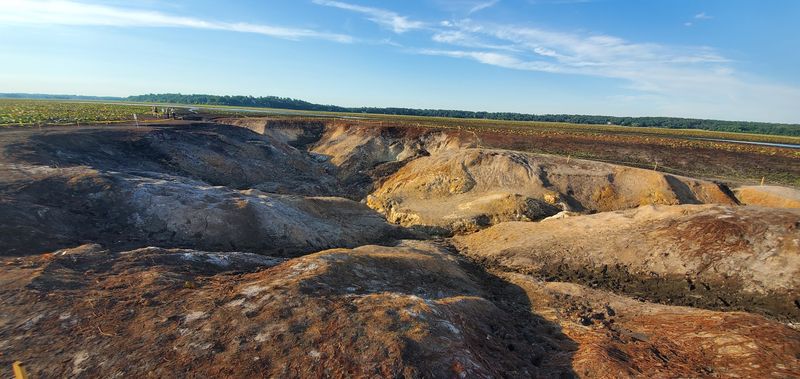
Lake Jackson is one of Florida’s most surreal sinkhole stories because the landscape can change on a massive scale. When underground passages reopen, major sinkholes such as Porter Hole and Lime Sink can drain large portions of the lake, exposing broad mudflats, stranded fish habitat, and an almost apocalyptic-looking basin.
It is the kind of event that makes a familiar lake seem suddenly temporary.
This periodic draining happens because Lake Jackson sits in a karst region where subsurface conduits can capture surface water. When the plug gives way, the lake can rapidly funnel downward into the aquifer system.
For locals, the phenomenon is famous, but for new readers it sounds like science fiction: an entire lake partially disappearing through holes in the ground.
That makes Lake Jackson a powerful inclusion for your post. It shifts the focus from static sinkholes to dynamic ones, where conditions change dramatically over time and reshape ecosystems in plain sight.
You can describe the exposed lake floor, the public fascination, and the eerie sight of water retreating into subterranean openings.
It also highlights an essential truth about Florida geology: what looks stable can be surprisingly temporary. Few places illustrate that better than a lake that occasionally drains itself into the earth and then slowly returns.
Leon Sinks Geological Area
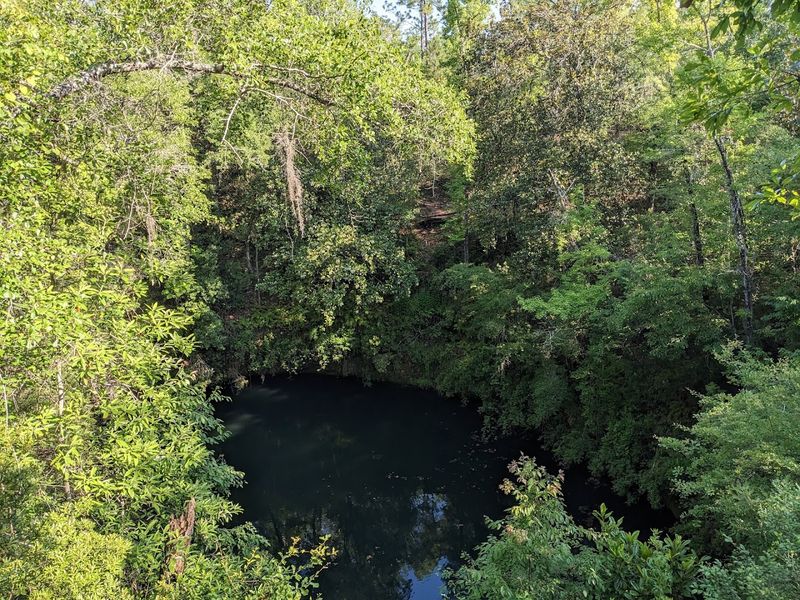
Leon Sinks Geological Area feels like a portal field where pine flatwoods suddenly collapse into shadowy bowls, hidden ponds, and flooded caverns. Walking the trails, you move from bright sun to eerie sink basins so fast it almost feels staged by a movie set.
During wetter months, some depressions fill with still, dark water that reflects the trees like black glass.
What makes this place so surreal is the constant sense that the landscape is quietly rearranging itself beneath your feet. Boardwalks and overlooks let you peer into ancient limestone openings without losing that thrilling edge.
If you love strange terrain, this stop delivers pure otherworldly Florida.
Cherokee Sink
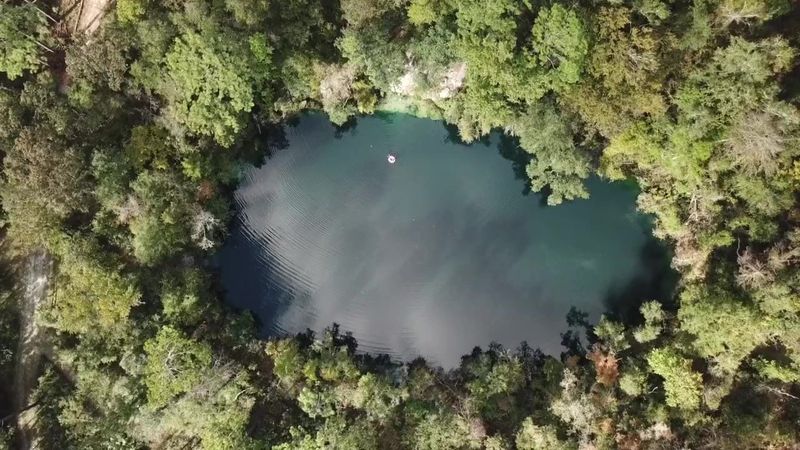
Cherokee Sink looks like the kind of place a spaceship would choose for a secret landing site, hidden beneath live oaks and palms. This large collapse basin near Tallahassee opens unexpectedly in the woods, with steep sides and seasonal water that can turn the bottom into a reflective green pool.
The contrast between quiet forest and sudden void makes it unforgettable.
From the rim, you get the unreal feeling of standing at the edge of a missing piece of earth. Light shifts dramatically here, and after storms the walls seem darker and even more prehistoric.
For Florida landscapes that barely look earthly, Cherokee Sink belongs.
Madison Blue Spring State Park
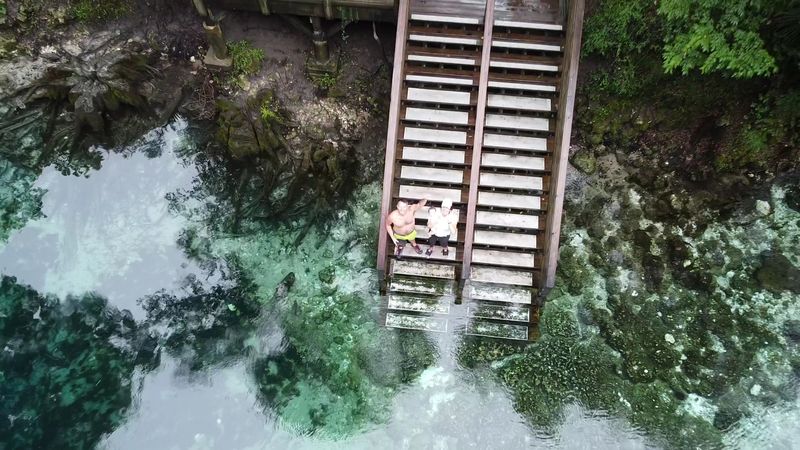
Madison Blue Spring feels like a glowing rupture in the earth, where clear blue water spills from a limestone opening with almost unreal intensity. The basin is small compared with some of Florida’s giant sinkholes, but that tighter space makes it feel even more dramatic.
When sunlight hits the water, the whole scene takes on that strange, neon brightness you would expect from a science fiction landscape.
I love how quickly the setting shifts from quiet woodland to something that feels subterranean and otherworldly. Divers know it for its deep cavern system, but even from shore, you can sense the hidden world below.
It is beautiful, eerie, and unforgettable.
Warm Mineral Springs Park
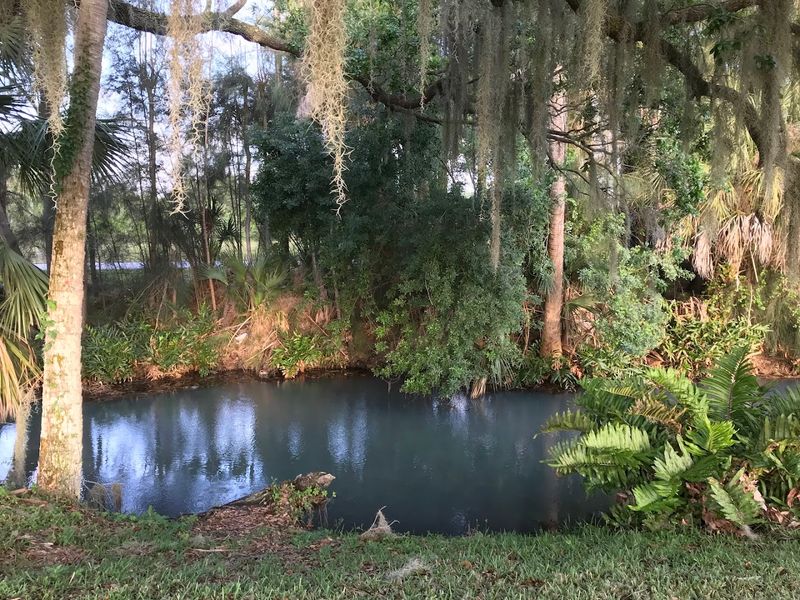
Warm Mineral Springs feels like a portal dropped into Sarasota, with a round basin of turquoise water and a depth that seems to pull light downward. The sinkhole is famous for its warm, mineral-rich water, but the eerie stillness above the surface is what makes it feel cinematic.
When you stand at the rim, it looks less like a spa and more like an alien well.
Archaeologists have found prehistoric human remains here, which adds to the strange time-capsule energy. The clear water and steep circular walls make the whole scene feel engineered by another world.
It is beautiful, calming, and a little uncanny.