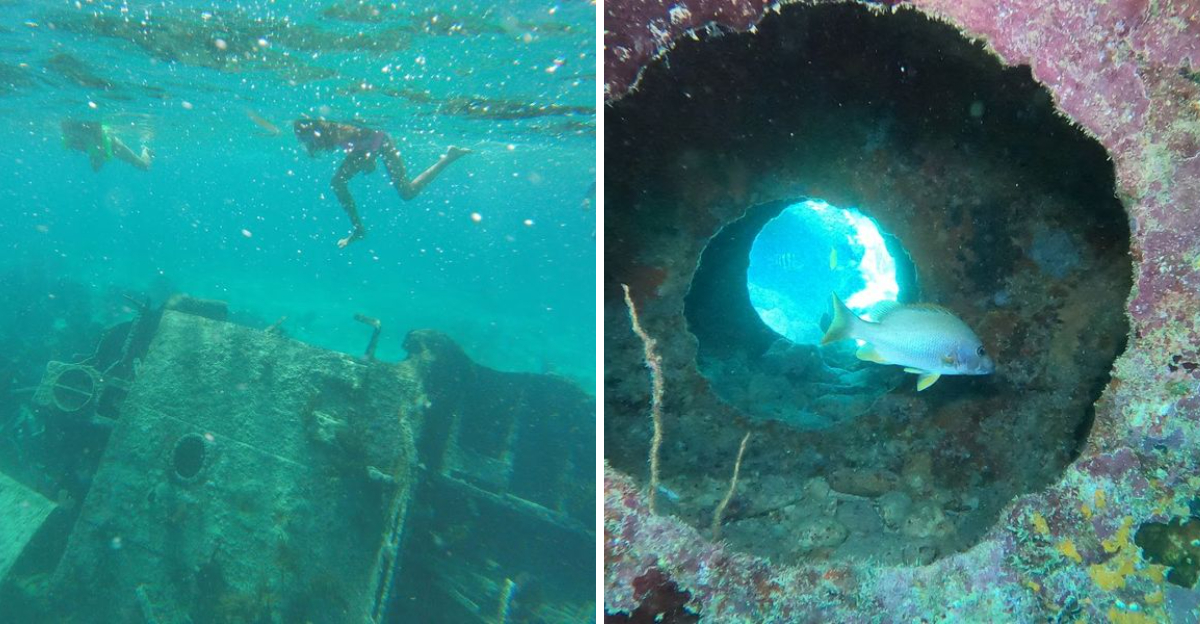
Hidden beneath the warm, shallow waters of Biscayne National Park lies the ghostly skeleton of the Mandalay — a once-glamorous schooner that met its end on New Year’s Day, 1966.
What was once a floating palace for the wealthy now rests quietly on Long Reef, draped in coral and surrounded by colorful fish.
Snorkelers and history lovers alike are drawn to this underwater relic, where rusted steel and sea life tell a story that words alone can hardly capture.
If you have ever wondered what it feels like to swim through history, the Mandalay wreck is about as close as it gets.
A Ghostly Schooner Beneath Florida Waters
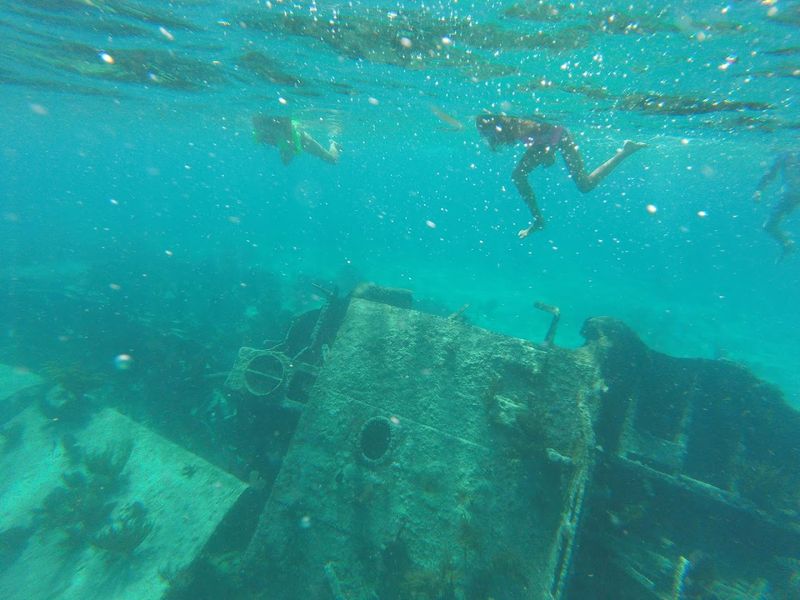
Picture this: you slip beneath the surface of Biscayne Bay, and within seconds, the noise of the modern world fades away. Below you, a massive steel skeleton stretches across the seafloor, its ribs reaching upward like the bones of some ancient sea creature.
That is the Mandalay — and it has been waiting there since 1966.
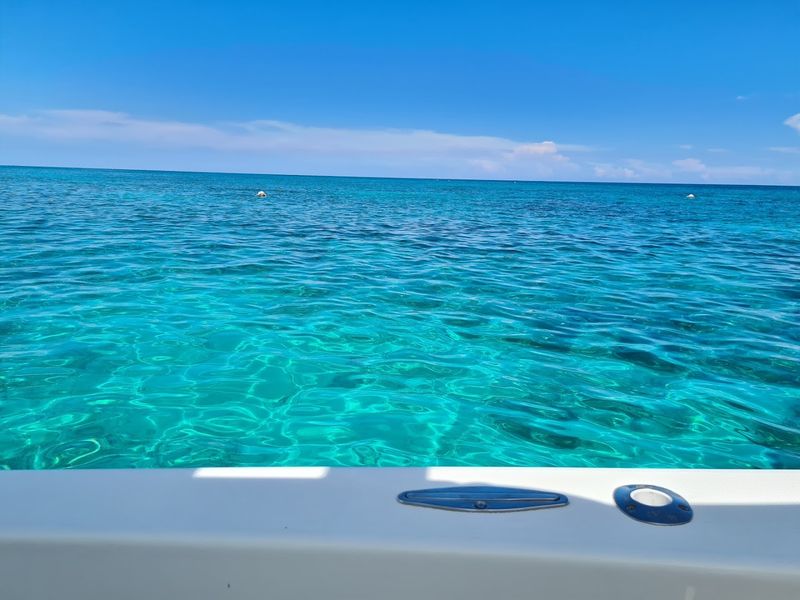
The wreck sits in only about 10 to 15 feet of water, making it one of the most accessible shipwrecks in all of Florida. You do not need scuba gear or advanced training to visit.
A simple snorkel mask and a little courage are all it takes to come face-to-face with this haunting relic.
What makes the Mandalay so special is the feeling it gives you. Gliding over its corroded hull, weaving through coral-encrusted beams, you get the unmistakable sense that time has stopped here.
Schools of reef fish dart through the wreckage, and sea fans sway gently in the current. It feels less like a dive site and more like a portal — a window into a world that disappeared long ago, yet somehow never fully left.
Birth of a Beauty: Mandalay’s Early Life
Every great story has a beginning, and the Mandalay’s starts in 1928 — a time when craftsmanship meant something truly special. Built as a 110-foot steel-hulled schooner, she was originally christened Hardi Biou, a name as bold and unusual as the vessel herself.
From the very start, she was designed for people who expected nothing less than the finest things in life.
Her construction was no rushed job. Skilled shipbuilders fitted her with rich mahogany woodwork, gleaming brass fixtures, and ivory accents that gave her interiors the warmth of a grand hotel rather than the roughness of a working vessel.
She was, in every sense of the word, a floating work of art.
Over the years, the ship changed hands and names, eventually becoming the Mandalay — a name borrowed from the romantic, faraway place in Rudyard Kipling’s famous poem. Each new owner added their own touches, refining her already impressive character.
By the time she entered service as a luxury cruise vessel, the Mandalay had become something truly rare: a ship that combined old-world elegance with the adventure of open water. She was built to impress, and for decades, she did exactly that.
Life and Luxury on the High Seas
Sailing aboard the Mandalay was not your average vacation. Guests who booked a cruise on her enjoyed a lifestyle that most people only read about in novels.
Teak-planked decks gleamed in the tropical sun, and the smell of salt air mixed with polished wood greeted passengers the moment they stepped aboard.
Below decks, the experience was even more impressive. Multiple private staterooms each came with their own bathrooms — an almost unheard-of luxury for a sailing vessel of that era.
Passengers dined on fine food, lounged in beautifully appointed common areas, and watched sunsets from a deck that felt more like a yacht club than a working schooner.
The Mandalay served as a cruise vessel in the years leading up to her final voyage, carrying well-heeled travelers through the turquoise waters of the Caribbean and the Bahamas. Life aboard her was slow, elegant, and unhurried — the kind of travel that made people forget about clocks and calendars.
She was a world unto herself, floating between islands and harbors, carrying laughter and the clinking of glasses across warm tropical seas. For those lucky enough to sail on her, the Mandalay was nothing short of magical.
The Fateful Voyage of New Year’s Day 1966
New Year’s Day is supposed to be a celebration — a fresh start, a hopeful beginning. For the 35 people aboard the Mandalay on January 1, 1966, it turned into a nightmare none of them would ever forget.
The ship had departed the Bahamas bound for Miami, a route the crew had sailed before. But something went terribly wrong.
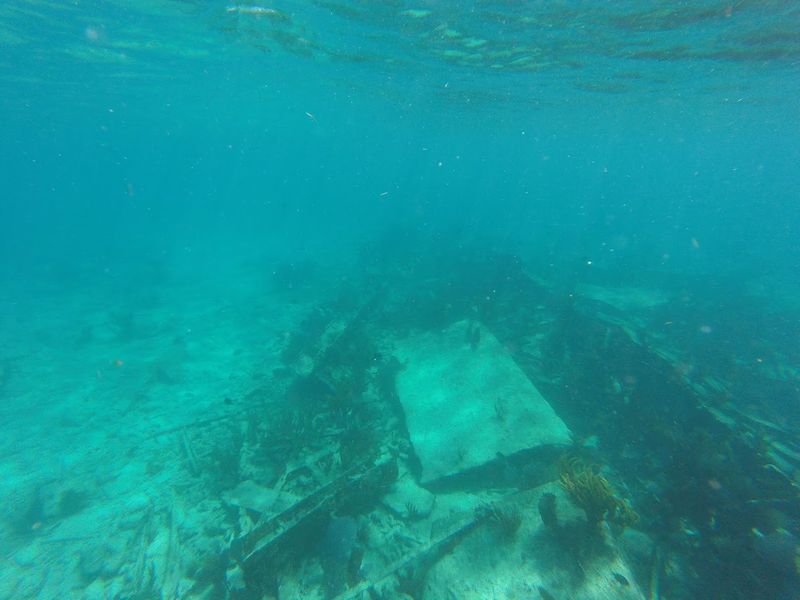
A navigational miscalculation — the kind of quiet, invisible mistake that can have enormous consequences at sea — put the Mandalay roughly 20 miles off course. In the darkness of early morning, before anyone could correct the error, the schooner drove hard aground on Long Reef in what is now Biscayne National Park.
The grinding impact of steel against coral reef shattered the calm of the holiday morning.
The ship was stuck fast, her hull breached by the reef below. Waves battered her sides, making any chance of refloating the vessel nearly impossible.
In an instant, one of the most elegant ships sailing the Caribbean had become a wreck. The Mandalay’s days as a luxury vessel were over, ended not by age or war, but by a single wrong turn in the dark.
She never sailed again.
Castaways and Rescue Efforts
When the Mandalay struck Long Reef, panic was not far behind. The ship was taking on water, the seas were rough, and dawn had not yet broken.
With 23 passengers and 12 crew members aboard, the situation was dangerous and deteriorating fast. Someone sent out a distress call, and the United States Coast Guard answered.
Coast Guard helicopters arrived in the early morning hours, hovering above the stricken vessel as rescue swimmers descended to the deck below. One by one, passengers and crew were airlifted to safety in what became a remarkably efficient emergency operation.
All 35 people were rescued — not a single life was lost, which, given the conditions, was nothing short of remarkable.
The rescue was dramatic, chaotic, and exhausting — but it worked. Helicopters made multiple passes, hoisting terrified passengers from a ship that groaned and shifted beneath the waves.
Coast Guard crews worked through rough, choppy conditions to ensure everyone got out safely. Once the last person was lifted away, the Mandalay was left alone on the reef, battered and broken, the sound of rotors fading into the morning sky.
The people were saved. The ship was not.
Her fate had already been sealed the moment she touched that reef.
Stripping of the Wreck: Looters and Salvage
Before the Coast Guard helicopters had even disappeared over the horizon, the vultures arrived. Local boaters, hearing word of the grounded schooner, swarmed the Mandalay like bargain hunters at a yard sale.
The ship that had once carried wealthy vacationers was now fair game for anyone with a boat and a pair of hands.
Navigational instruments, personal belongings left by fleeing passengers, fixtures, and fittings — virtually anything that could be pried loose, unscrewed, or carried off was taken. By the time official salvage tugs arrived to assess the situation, much of what had made the Mandalay beautiful and functional was already gone.
The elegant interior that had taken years to build was stripped in a matter of hours.
It was a sad and somewhat lawless chapter in the ship’s story. Salvage operations later attempted to refloat the vessel, but the hull damage from the reef and the chaos of the looting made any recovery effort futile.
The Mandalay could not be saved. What remained was a gutted, battered shell — a shadow of the grand ship she had been just days before.
The sea had claimed her, and so, in a different way, had the opportunists who came to pick her bones.
Resting Place: The Wreck Today
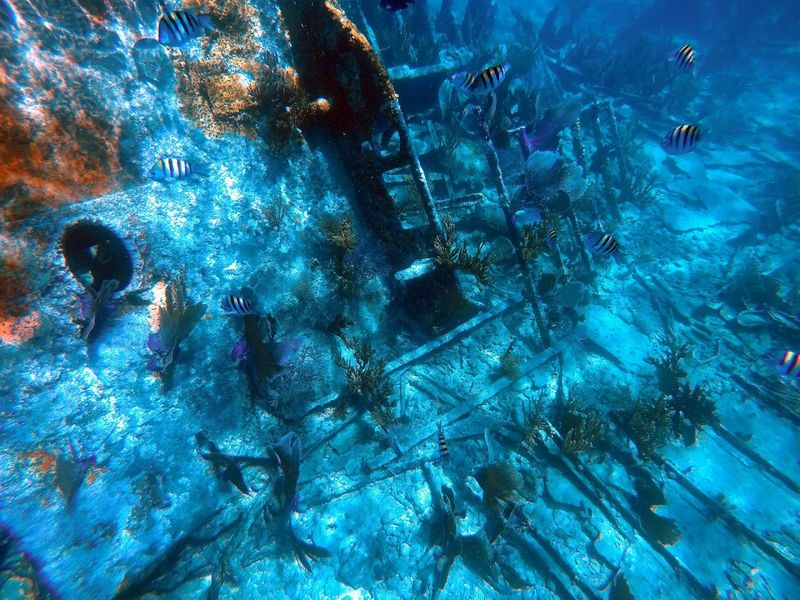
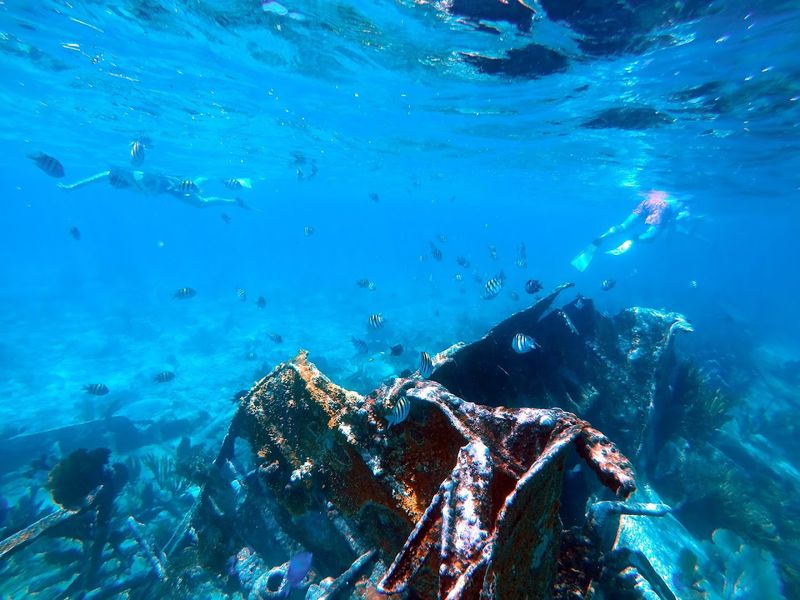
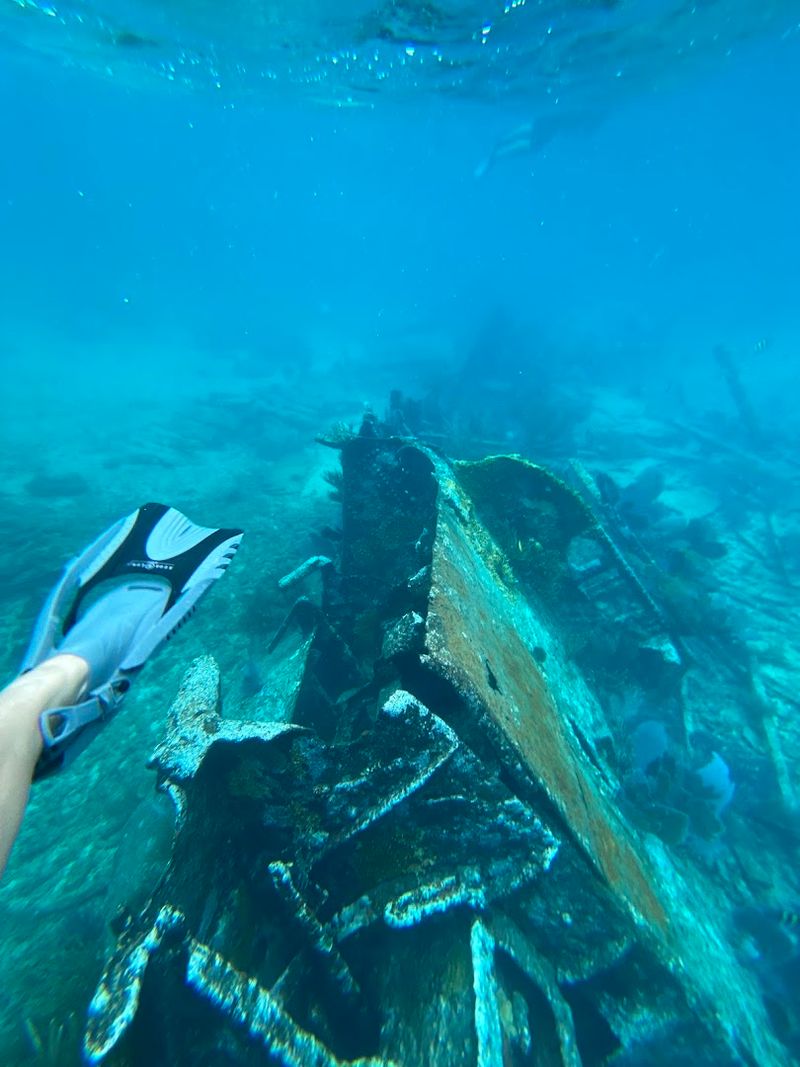
More than five decades after she ran aground, the Mandalay has found a kind of peace on Long Reef. Her skeletal steel hull lies embedded in the reef in just 10 to 15 feet of water — shallow enough that even beginner snorkelers can explore her without any special equipment.
The wreck stretches across a significant portion of the reef, giving visitors plenty to discover.
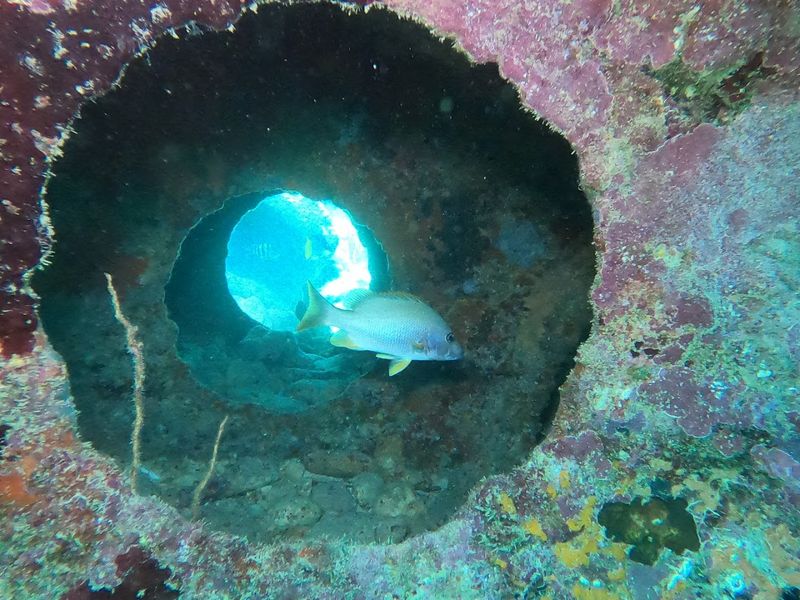
Coral has slowly colonized every surface, painting the once-gray steel in shades of orange, purple, and gold. Brain corals, sea fans, and sponges cling to the ribs of the hull, while parrotfish, sergeant majors, and angelfish weave in and out of the structure as if they own the place — which, at this point, they basically do.
The reef and the wreck have become one.
Visiting the Mandalay today feels genuinely surreal. You float above a structure that was once a living, breathing vessel — a ship with a crew, a captain, passengers with luggage and plans and dreams.
Now her ribs reach upward through the water column like outstretched arms. She is haunting and beautiful at the same time, a reminder that the sea always has the final word when it comes to the things we build.
Portal to the Past: Underwater Time Capsule
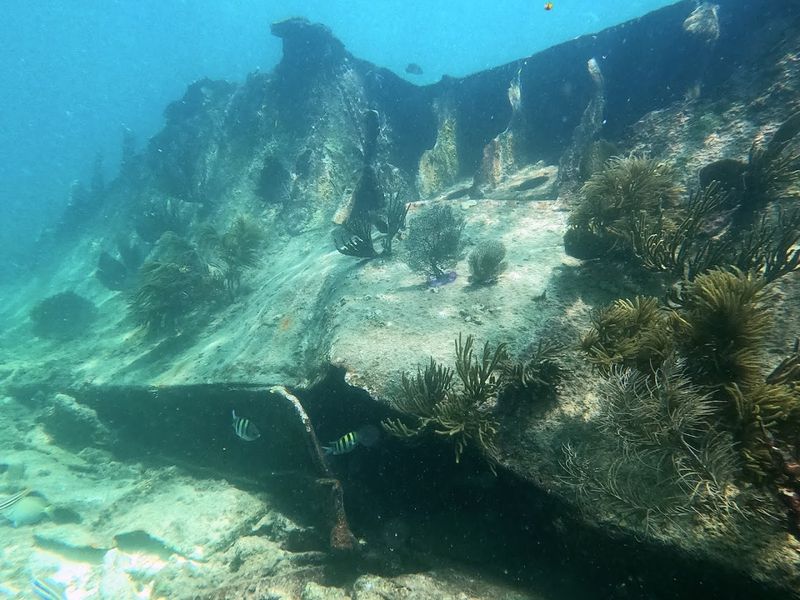
There is a moment, when you are hovering directly above the Mandalay’s hull, when the present world simply drops away. The bent steel beams below you were once the bones of a luxury ship.
The corroded fittings were once polished brass. The coral-draped surfaces were once varnished mahogany.
Floating there, it is almost impossible not to feel the weight of all that history pressing up through the water.
That is what makes the Mandalay more than just a dive site — it is a genuine time capsule. Unlike museum exhibits behind glass, this one surrounds you completely.
You are not reading about the past; you are swimming through it. The ship froze in time the moment she hit that reef, and in a strange way, she has preserved a slice of 1966 ever since.
Visitors often describe the experience as deeply emotional. Some say they half expect to hear the echo of music from the staterooms below, or see a crew member rounding a corner.
Of course, only fish appear. But that feeling — that electric sense of standing between two worlds — is exactly what keeps people coming back.
The Mandalay does not just tell you history. She makes you feel it in your chest.