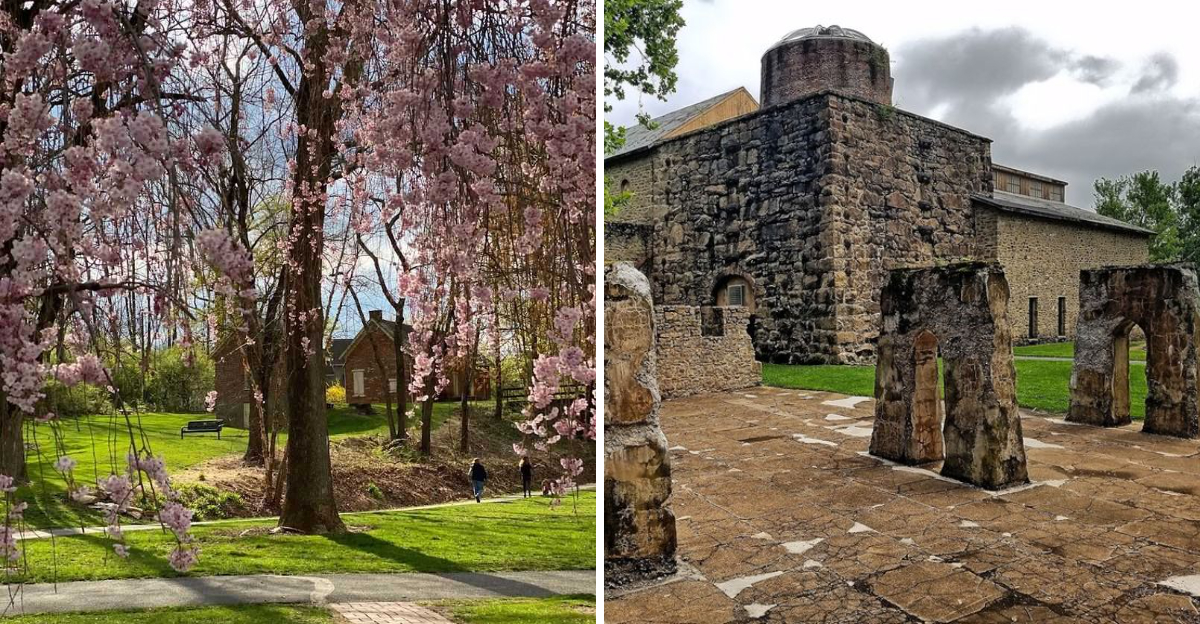
Tucked away in the quiet borough of Alburtis, Pennsylvania, the Lock Ridge Furnace Museum is one of those rare places where nature and history collide in the most dramatic way possible.
Hidden inside a 59-acre park, massive stone ruins rise from the landscape like something out of a fantasy novel, yet they tell the very real story of America’s industrial past.
Built in 1868, these furnace remains once helped power a growing nation, and today they stand as a stunning reminder of how far we’ve come.
Whether you’re a history buff, a nature lover, or just someone looking for a jaw-dropping spot to explore, Lock Ridge Park is absolutely worth the trip.
A Hidden Industrial Landmark in a Quiet Pennsylvania Park
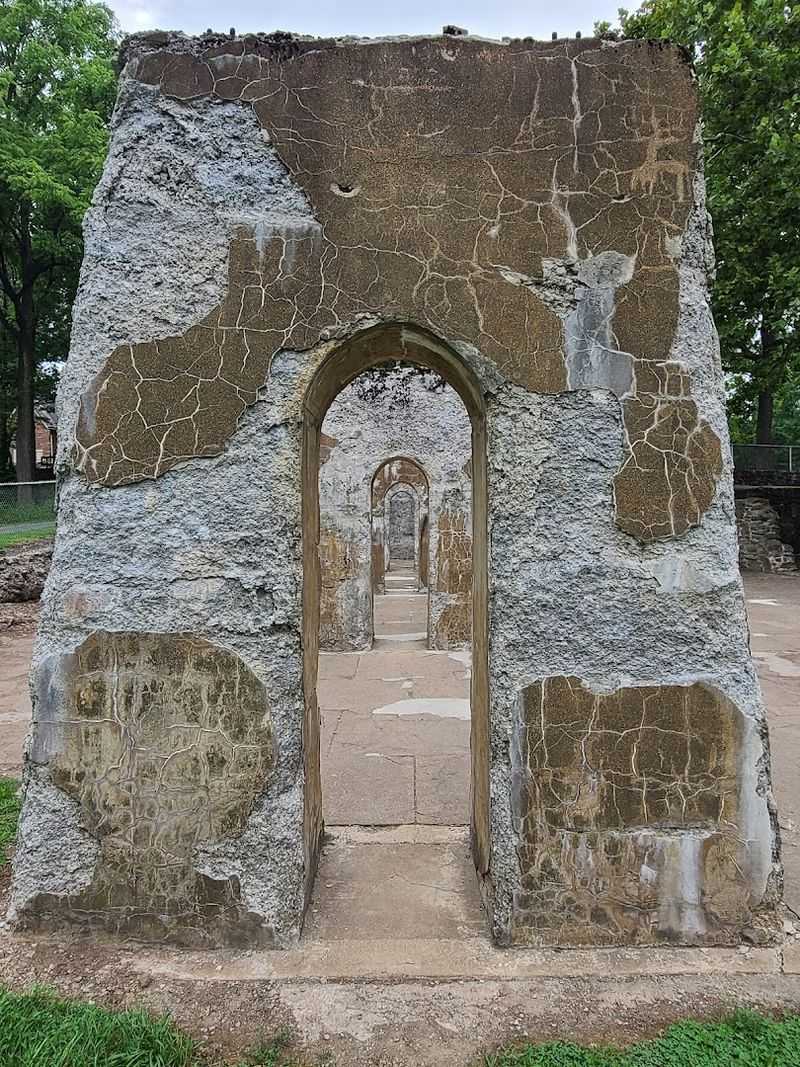
Most people drive past Alburtis, Pennsylvania without a second glance, never suspecting that one of the state’s most dramatic historic sites is tucked just off the main road. Lock Ridge Furnace Park spreads across 59 peaceful acres, and the moment you catch your first glimpse of those towering stone walls, your jaw drops a little.
The ruins look almost medieval, like the remains of a forgotten castle rather than a working iron furnace. Moss clings to the stonework, trees lean in from all sides, and the whole scene feels like something lifted straight from a history book.
Yet this place is completely real and completely free to explore.
What makes Lock Ridge so special is how seamlessly the industrial past blends with the natural landscape surrounding it. Hikers, photographers, and curious families all find something to love here.
The park manages to feel both wild and historical at the same time, which is a combination you almost never come across in a single location. If you enjoy discovering places that feel like genuine hidden gems, this quiet corner of Lehigh County will not disappoint you one bit.
The 1868 Blast Furnace That Helped Build an Industrial Nation
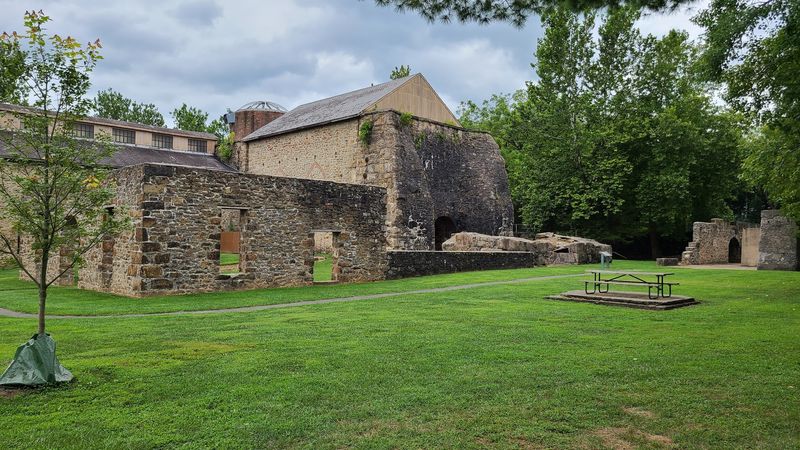
When Lock Ridge Iron Works first fired up its furnace in 1868, America was in the middle of an enormous growth spurt. Railroads were expanding, cities were rising, and factories needed raw materials at a pace the country had never seen before.
The Lehigh Valley was perfectly positioned to answer that call.
The furnace complex was built to produce pig iron, which is the basic form of iron that gets refined and shaped into everything from machine parts to structural beams. Demand was high, the anthracite coal needed to fuel the furnace was plentiful nearby, and the timing could not have been better for investors and workers alike.
It is genuinely fascinating to stand beside those old stone walls and think about what was happening here over 150 years ago. Hundreds of workers showed up every day to a site that roared with heat, noise, and industrial energy.
The Lehigh Valley’s iron industry helped shape the physical infrastructure of a modernizing nation, and Lock Ridge was a proud part of that story. Visiting today gives you a quiet but powerful sense of just how much effort went into building the America we know.
The Anthracite Technology That Made the Furnace Unique
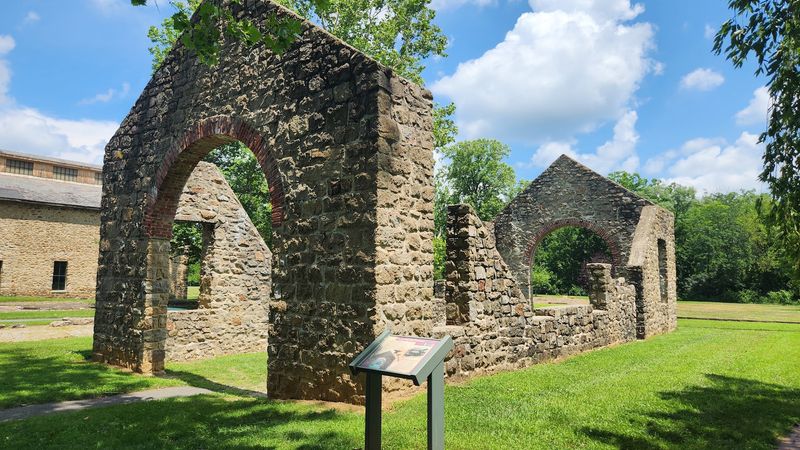
Here is something most visitors do not realize right away: the technology used at Lock Ridge was actually cutting-edge for its time. While earlier iron furnaces burned charcoal to generate the extreme heat needed for smelting, Lock Ridge relied on anthracite coal combined with a hot-blast system that preheated the air blown into the furnace.
That might sound like a small detail, but it was genuinely revolutionary. Hot-blast technology dramatically increased the efficiency of iron production, reduced fuel costs, and allowed furnaces to run longer and hotter than ever before.
The Lehigh Valley became one of the leading anthracite iron regions in the entire country largely because of innovations like this one.
Anthracite coal was mined extensively throughout northeastern Pennsylvania, and the canal and rail networks of the region made transporting it to furnaces like Lock Ridge relatively straightforward. The combination of local fuel, smart technology, and strong industrial demand created a perfect storm of productivity.
Seeing the physical remains of that technological achievement today is a reminder that innovation is not always flashy or digital. Sometimes it is a carefully designed stone chamber that changed an entire industry and helped a nation build itself from the ground up.
The Massive Stone Furnace That Looks Like a Castle
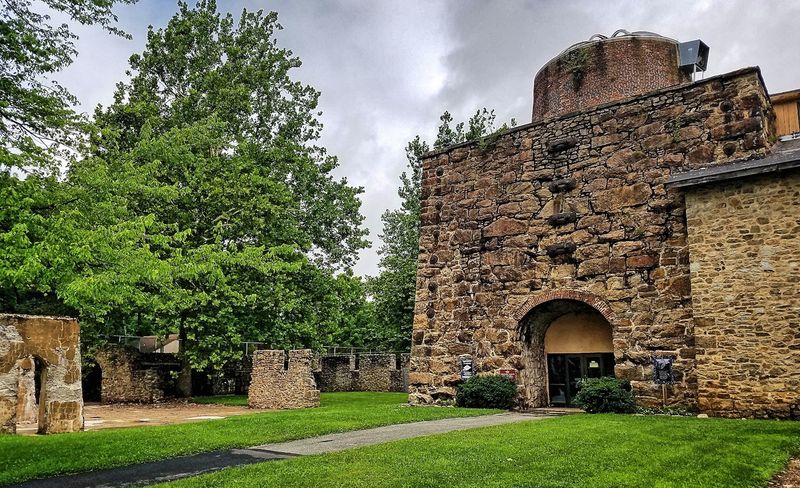
Honestly, the first thing most people say when they see the furnace stack is some version of “that looks like a castle.” And they are not wrong. The towering stone structure rises dramatically above the surrounding landscape, its thick masonry walls and rounded arches giving it an almost gothic appearance that feels completely out of place in a small Pennsylvania borough.
The original builders used locally quarried stone to construct the furnace, and the sheer scale of the structure is impressive even by today’s standards. The walls are thick enough to withstand the intense heat of iron smelting, and the craftsmanship that went into laying each stone is still visible in the ruins today.
Time and weather have added a beautiful layer of texture and character that no modern construction could replicate.
Photographers absolutely love this spot, and it is easy to see why. Depending on the light and the season, the ruins can look mysterious, romantic, dramatic, or quietly haunting.
Sunrise and golden hour shots are particularly stunning here. Whether you visit with a professional camera or just a smartphone, you will leave with photos that make people stop scrolling and ask where on earth you found this place.
The answer is a little town most people have never heard of.
Walking Through the Ruins of a Once-Bustling Iron Works
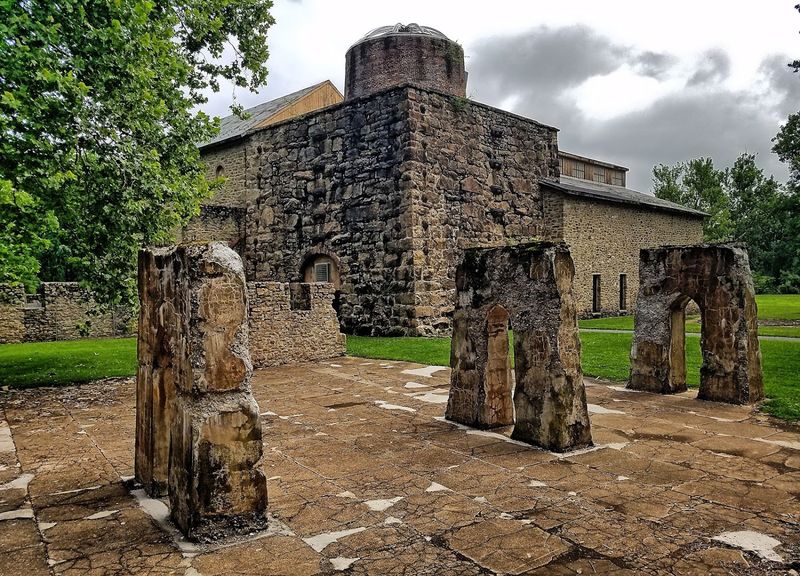
Wandering through Lock Ridge Park is like stepping into a living history exhibit, except without the ropes, the ticket booth, or the crowds. The self-guided tour winds past the remnants of the furnace room, cast house, engine house, and several other structures that once made up a fully operational iron works complex.
Interpretive signs are placed throughout the site to help visitors understand what each structure was used for and how the ironmaking process actually worked. Reading them while standing right next to the actual ruins creates a connection to the past that is hard to get from a textbook.
You can almost picture the workers moving between buildings, the glow of molten iron, and the constant hum of industrial machinery.
Kids especially seem to love exploring the ruins because they genuinely look like something from an adventure story. Parents appreciate that the site is safe enough to walk through while still feeling raw and authentic.
There are no velvet ropes keeping you at a distance, which means you can get up close and really take in the details of the stonework and construction. It is one of those rare historic sites where the experience feels genuinely immersive rather than staged or overly managed.
The Last Days of the Furnace Industry in the Lehigh Valley
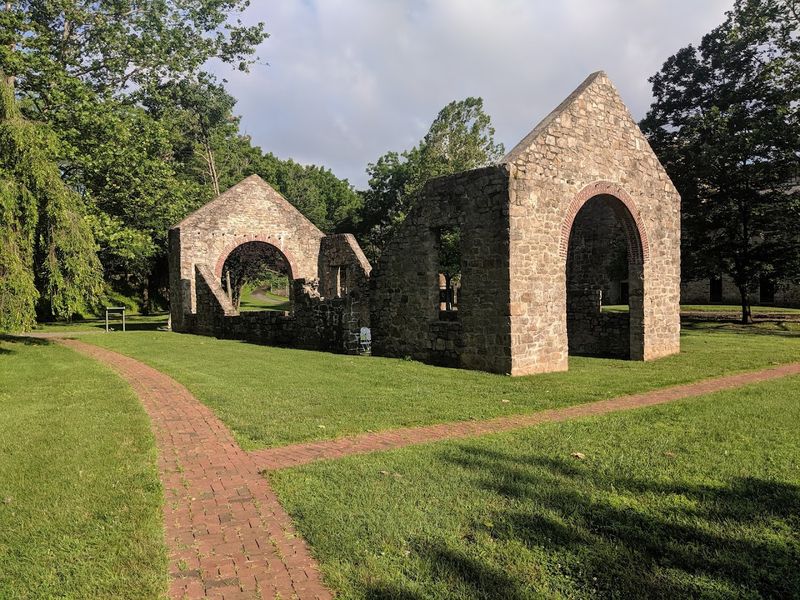
By the early 1900s, the iron industry in the Lehigh Valley was facing serious challenges. Steel had largely replaced iron as the material of choice for construction and manufacturing, and the newer steel mills were bigger, faster, and far more efficient than the old anthracite iron furnaces that had once dominated the region.
Lock Ridge underwent upgrades in an attempt to stay competitive, but the writing was on the wall. The furnaces at Lock Ridge finally went cold in 1921, closing the book on over five decades of continuous iron production at the site.
Workers who had spent their careers there had to find new livelihoods, and the once-busy complex quickly fell into silence.
The closure of Lock Ridge was part of a much larger story playing out across industrial Pennsylvania during that era. Towns that had been built around furnaces, mines, and mills had to reimagine themselves as those industries faded.
Some succeeded and some struggled, but the physical remains of those industries often stayed behind long after the work stopped. Standing at Lock Ridge today, knowing the furnace ran its last batch of iron over a century ago, adds a genuinely poignant layer to the experience of visiting this remarkable place.
How Abandoned Iron Works Became a Public Park
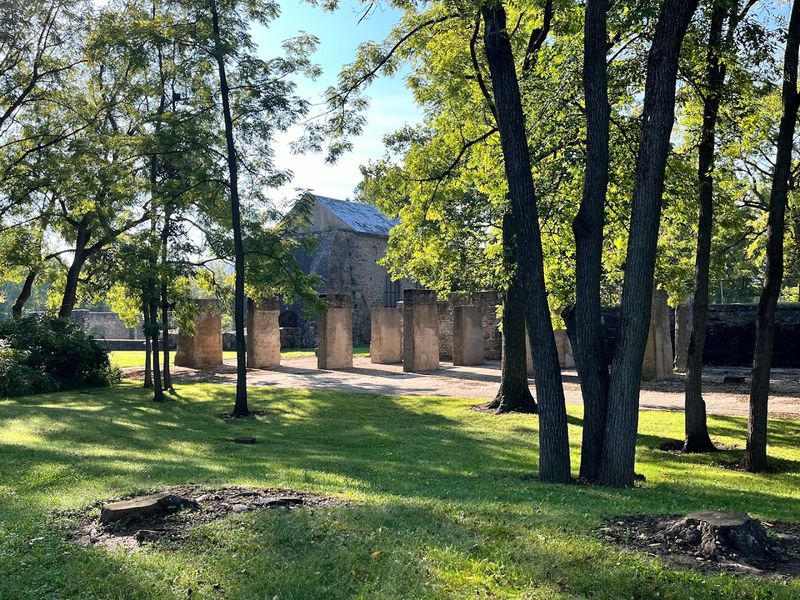
After the iron works shut down in 1921, the property sat largely idle for decades. Most of the wooden and metal structures were eventually dismantled and sold for scrap, which was common practice for industrial sites during that period.
But the massive stone furnace structures were simply too solid and too expensive to tear down, so they stayed.
In 1972, the land was donated to Lehigh County, which was a genuinely significant moment for regional preservation. The county recognized that the ruins had historical and cultural value worth protecting, and work began to transform the overgrown industrial site into something the public could safely enjoy and learn from.
By 1976, Lock Ridge Park officially opened to visitors, with the furnace ruins preserved as the centerpiece of the experience. The Lehigh County Historical Society got involved in interpreting the site, and over the years the park has grown to include walking trails, picnic areas, and educational programming.
The story of how this place went from a shuttered factory to a beloved community park is itself a lesson in the value of historic preservation. Sometimes the most important thing a community can do is simply decide that something old and crumbling is still worth saving for the people who come after.
A Scenic Landscape Filled With Trails and Wildlife

Lock Ridge Park is not just about the ruins, though the ruins are obviously the star of the show. The surrounding 59 acres include a genuinely lovely mix of open lawns, shaded woodland trails, and the meandering path of Swabia Creek, which winds through the lower section of the property.
Fishing along Swabia Creek is a popular activity, especially in the warmer months when families come out to spend a relaxed afternoon near the water. The creek is calm and accessible, making it a nice option for younger kids who want to splash around or try their hand at fishing for the first time.
Birdwatchers also find the park rewarding, since the mix of open meadow and wooded edge habitat attracts a solid variety of species throughout the year.
What is particularly striking is the contrast between the peaceful natural setting and the dramatic stone ruins that appear unexpectedly as you walk the trails. One moment you are strolling through a quiet forest, and the next you are standing in front of a towering 19th-century furnace stack.
That element of surprise is part of what makes Lock Ridge such a memorable place to spend an afternoon. Nature and history rarely coexist this beautifully in a single location.
Spring Bluebells and One of the Region’s Most Photogenic Spots
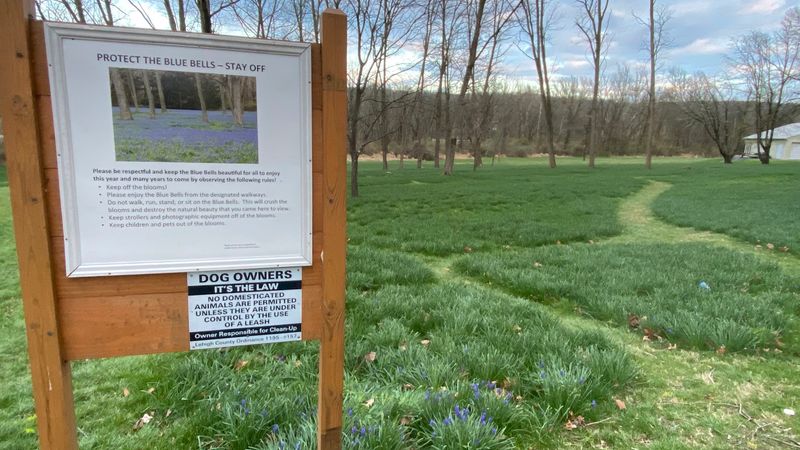
If you can only visit Lock Ridge once, try to make it happen in early spring. That is when Virginia bluebells carpet the ground around the furnace ruins in waves of soft blue and purple, creating one of the most unexpectedly beautiful scenes you will find anywhere in the Lehigh Valley.
The combination of delicate wildflowers against the rough, weathered stone of the ruins is the kind of visual contrast that photographers dream about. The images practically compose themselves.
It is no surprise that Lock Ridge has become a popular destination for engagement photos, wedding portraits, and nature photography during the bluebell season, which typically peaks sometime in April.
Even visitors who are not particularly into photography find the bluebell bloom genuinely moving. There is something about the way nature reclaims and softens an industrial site that feels deeply satisfying.
The flowers do not care that the furnace once roared with heat and noise. They just bloom where the conditions are right, and in doing so they transform a place of industrial memory into something quietly magical.
If you follow local nature groups or photography communities in the Lehigh Valley area, you will see Lock Ridge pop up repeatedly every spring as people rush to capture the bloom before it fades.
Essential Visitor Information for Your Trip to Lock Ridge
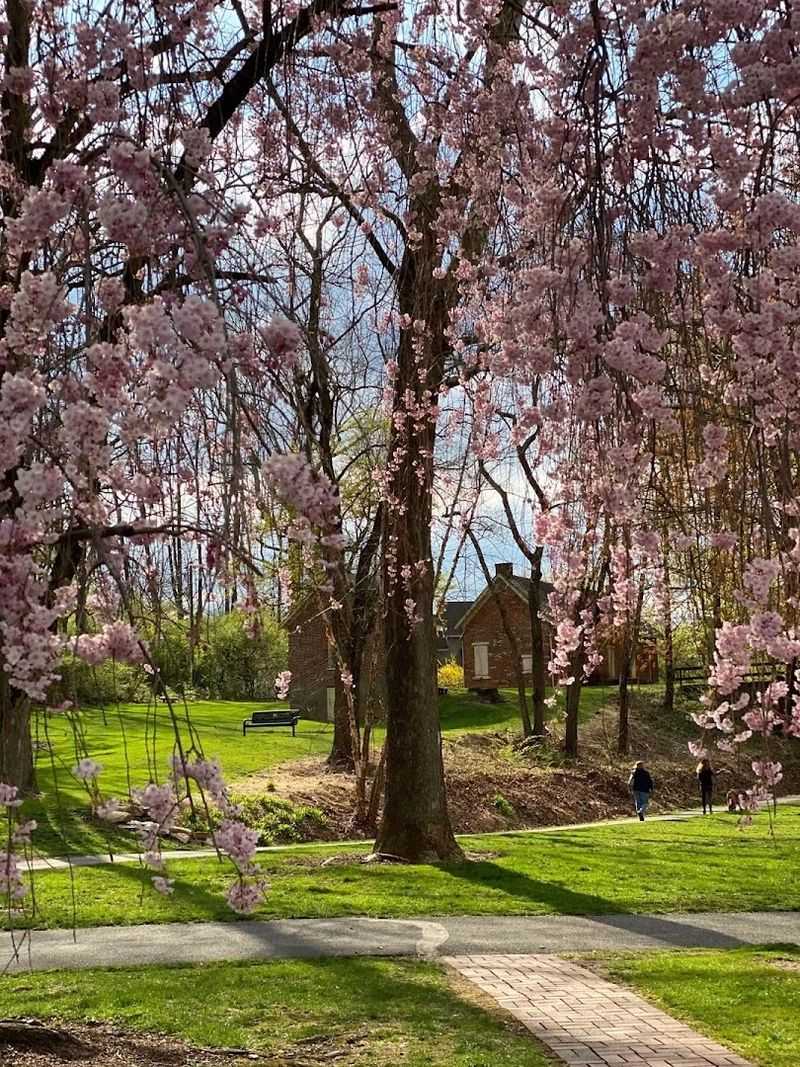
Planning a visit to Lock Ridge is refreshingly simple. The park is located at 525 Franklin Street in Alburtis, Pennsylvania, and the grounds are open year-round for walking and self-guided exploration at no charge.
Parking is available in designated lots near the entrance, and the trails are generally easy to navigate for most fitness levels.
Free guided outdoor tours are offered on weekends from May through September, organized through the Lehigh County Historical Society. These tours are a fantastic way to get the full story behind the ruins from knowledgeable local historians who genuinely love the site.
If you prefer to explore at your own pace, the interpretive signs throughout the park do a solid job of filling in the details.
The park also includes picnic areas and a pavilion with restroom facilities, so you can easily spend several hours here without needing to run back to town for anything. Comfortable walking shoes are recommended since some of the paths near the ruins are uneven.
Dogs on leashes are welcome, making it a popular spot for pet owners too. Whether you pop in for a quick hour or settle in for a full afternoon of exploration, Lock Ridge Furnace Museum delivers a genuinely rewarding experience that is hard to find anywhere else in Pennsylvania.