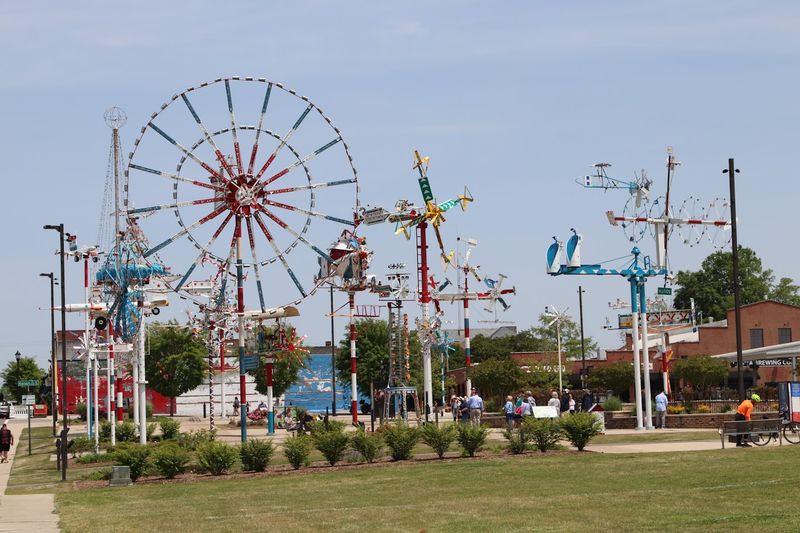
Tucked into the heart of downtown Wilson, North Carolina, a two-acre park does something truly remarkable — it transforms salvaged junk into towering, spinning works of art.
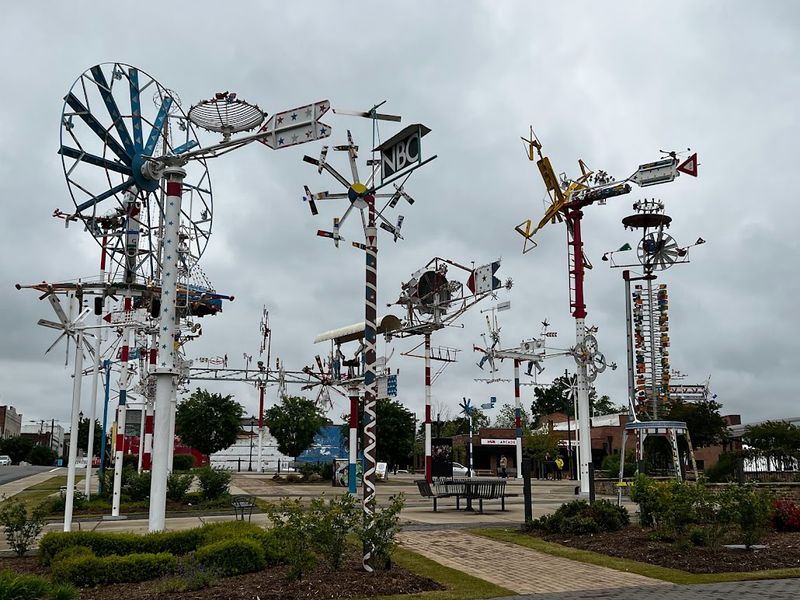
Vollis Simpson Whirligig Park is home to about 30 massive wind-powered sculptures built by a self-taught farmer who turned scrap metal into folk art magic.
Each piece spins, shimmers, and clatters in the breeze, creating a one-of-a-kind experience you won’t find anywhere else in the world.
Whether you’re an art lover, a road tripper, or just someone looking for something genuinely surprising, this park is worth every mile.
The Visionary Behind the Whirligigs
Not every artist starts with a paintbrush. Vollis Simpson was a self-taught machinist and farmer from Wilson County, North Carolina, who discovered his creative calling later in life — and the results were nothing short of extraordinary.
After retiring, he began welding together salvaged farm equipment, old road signs, and scrap metal into enormous wind-powered sculptures that moved, spun, and caught the light in breathtaking ways.
Simpson never had formal art training, but his mechanical mind and boundless imagination made up for it. His background repairing heavy equipment gave him the skills to construct massive structures that were both durable and surprisingly graceful.
Over time, his farm near Lucama, NC, became crowded with dozens of these towering creations.
What makes Simpson’s story so inspiring is how ordinary his beginnings were. He wasn’t chasing fame — he was simply making things that delighted him.
Eventually, the art world caught up, and his whirligigs earned international recognition as significant examples of American folk art. Simpson passed away in 2013, but his legacy spins on every time the wind blows through his park.
From Scrap Metal to Kinetic Masterpieces
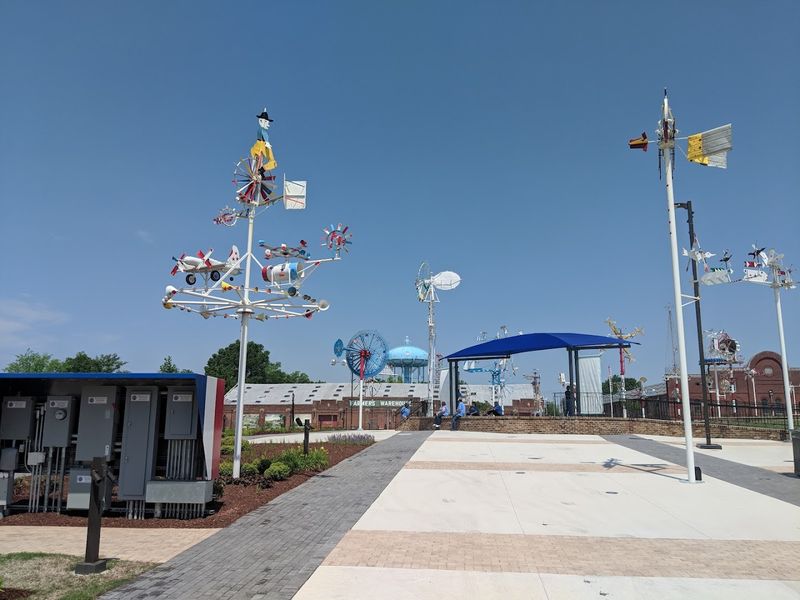
Imagine standing beneath a 50-foot-tall spinning sculpture built entirely from old bicycle rims, highway reflectors, and salvaged sheet metal. That’s exactly what you get at Vollis Simpson Whirligig Park, where engineering and imagination collide in the most unexpected ways.
Simpson’s sculptures — called whirligigs — are kinetic artworks, meaning they move constantly as long as there’s a breeze.
Most of Simpson’s pieces stand between 40 and 55 feet tall, making them some of the largest folk art sculptures in the United States. Each one is a carefully balanced system of spinning blades, rotating arms, and reflective accents that respond to even the gentlest wind.
The motion is hypnotic — once you start watching, it’s hard to look away.
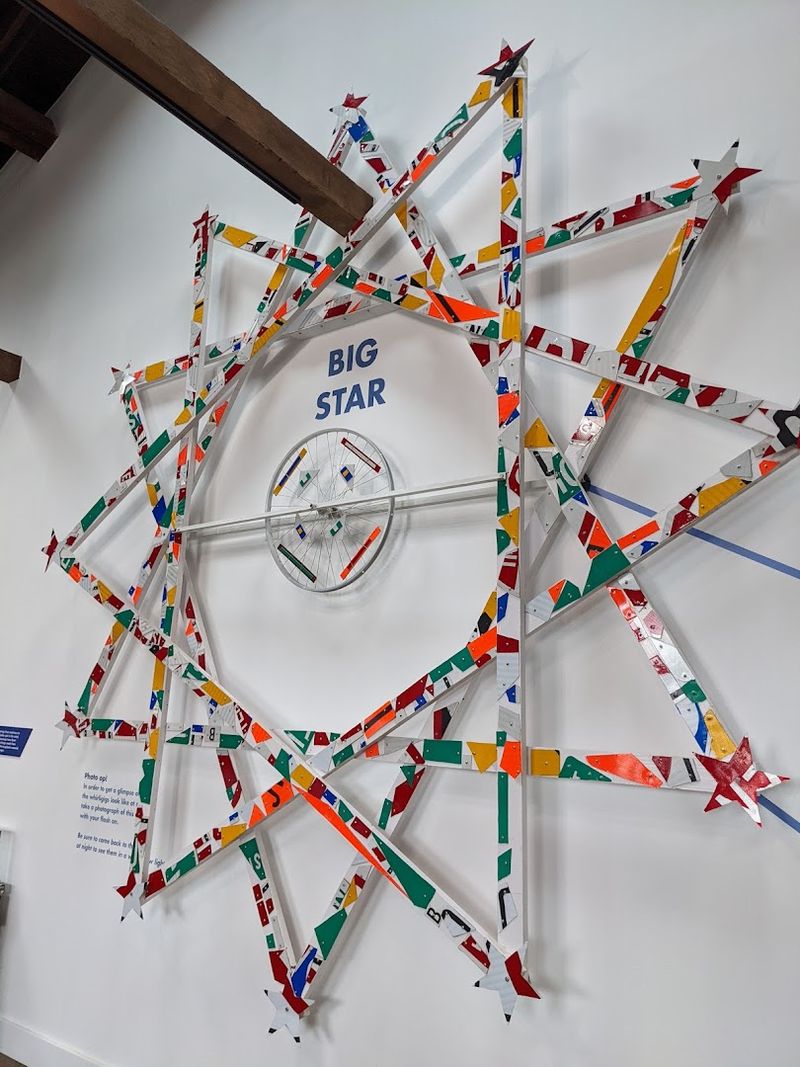
What’s fascinating is how purposeful the “junk” really is. Every bicycle wheel, every strip of reflective tape, every bent piece of farm equipment was chosen with intention.
Simpson understood weight, balance, and aerodynamics in a way that most formally trained engineers would admire. These aren’t random assemblages — they’re precision-crafted machines disguised as playful art, and they prove that creativity has no required materials list.
The Original “Acid Park” of Rural North Carolina
Before there was a polished downtown art park, there was a muddy farm field in Lucama, North Carolina, packed with glittering, spinning metal giants. Vollis Simpson started placing his whirligigs around his property decades before anyone called them art, and neighbors quickly noticed something wild happening after dark.
When car headlights swept across the reflective pieces, the sculptures lit up like a roadside fireworks show.
Word spread fast. People started driving out specifically at night to see the effect, and locals nicknamed the property “Acid Park” — a nod to the almost surreal, psychedelic glow the sculptures produced.
There were no signs, no admission fees, no gift shop. Just a farmer’s field full of spinning, sparkling metal dreams.
The farm site became one of North Carolina’s most beloved quirky roadside attractions long before Instagram or viral travel content existed. Visitors came purely by word of mouth, winding down rural back roads just to witness something they couldn’t quite explain.
That grassroots magic is a huge part of what makes Simpson’s legacy so powerful — his art found its audience without any help from the art establishment, one curious driver at a time.
Saving the Whirligigs From Time and Weather
Decades of sun, rain, and wind had taken a serious toll on Simpson’s outdoor sculptures by the early 2000s. Metal rusted, joints weakened, and some pieces had stopped spinning altogether.
Without intervention, these irreplaceable works of American folk art were at risk of being lost forever — and that was simply not acceptable to the people of Wilson County.
A major preservation effort launched with support from local organizations and the Kohler Foundation, a Wisconsin-based nonprofit known for funding folk art conservation projects. Teams used museum-quality techniques to stabilize, restore, and protect dozens of whirligigs.
The project was meticulous — each piece had to be carefully disassembled, treated for corrosion, repainted with weather-resistant finishes, and reassembled with precision.
One of the most meaningful parts of the restoration was its community focus. Local workers were trained in conservation techniques as part of the project, giving Wilson residents hands-on skills while also giving them ownership over preserving their cultural heritage.
The effort took years and required significant funding, but the result was stunning: Simpson’s sculptures were brought back to full spinning glory, ready to dazzle a whole new generation of visitors for decades to come.
A Downtown Park Built Around Folk Art
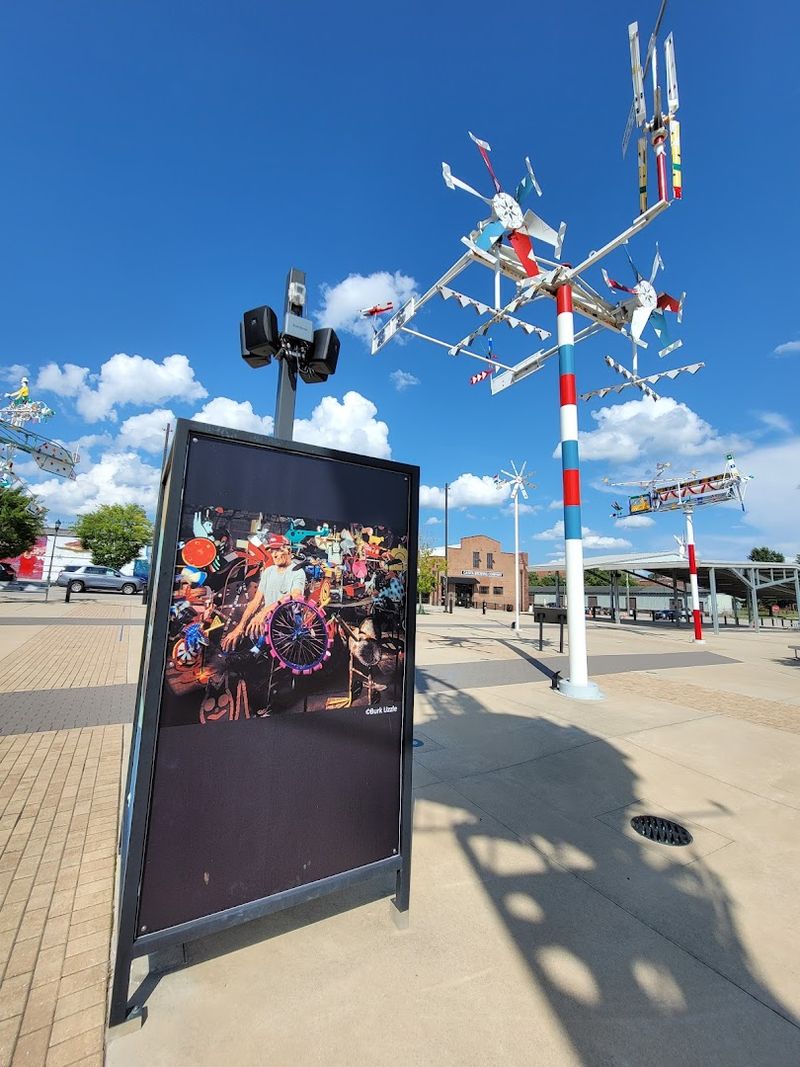
When the restored whirligigs needed a permanent home, Wilson didn’t just build a museum — they built an entire park around them. Opened in 2017, Vollis Simpson Whirligig Park sits on two acres in the heart of downtown Wilson and displays approximately 30 of Simpson’s largest and most impressive creations.
It’s the biggest single collection of his work anywhere in the world.
The park was designed to feel open and walkable, encouraging visitors to move among the sculptures rather than view them from a distance. Wide pathways wind between the towering pieces, and benches are positioned throughout so people can sit, watch the whirligigs spin, and simply soak in the experience.
There’s no velvet rope or glass barrier — the art is right there, at eye level and above.
Placing the park downtown was a deliberate choice. City planners wanted the whirligigs to anchor a broader revitalization of Wilson’s historic center, transforming underused urban space into a vibrant cultural destination.
The strategy worked. What was once a quiet stretch of downtown is now one of the most visited spots in eastern North Carolina, drawing curious travelers who might never have stopped in Wilson otherwise.
A Park Designed for Motion, Music, and Community
There’s a lot more going on at Whirligig Park than just standing and staring at art — though, honestly, that alone is worth the trip. The park was thoughtfully designed as a multi-use community space that stays busy year-round with concerts, film screenings, farmers markets, craft fairs, and seasonal festivals.
A central lawn amphitheater serves as the main stage for live events.
The layout of the park echoes the spirit of Simpson’s original farm display, where sculptures surrounded a central open area and people were free to wander, gather, and linger. That same informal, welcoming energy carries through to the downtown park.
Nothing about the space feels stuffy or overly curated — it’s built for real people to actually use and enjoy.
An open pavilion near the park’s edge provides covered space for vendors and events, making the location functional in all kinds of weather. Whether you’re catching a summer concert under the stars, browsing handmade goods at a weekend market, or just spreading a blanket on the lawn while the whirligigs spin overhead, the park delivers a genuinely lively experience.
It’s folk art meeting community life in the most joyful way possible.
Revitalizing Downtown Wilson
Art parks don’t usually make headlines in economic development reports — but Whirligig Park is an exception. Since the project launched, millions of dollars in public and private investment have poured into the blocks surrounding the park, fueling a remarkable transformation of downtown Wilson.
New restaurants, boutique shops, renovated historic buildings, and residential developments have all followed in the park’s wake.
Before the whirligigs arrived, much of downtown Wilson had struggled with the same vacancy and disinvestment that affects many mid-sized American cities. The park changed the story.
It gave people a reason to come downtown, stay longer, and come back again. Tourism dollars started flowing into local businesses, and developers took notice of the renewed foot traffic.
Wilson’s experience has become something of a case study in how strategic investment in public art can drive broader economic recovery. City leaders from other towns have visited to learn from what Wilson did right.
The lesson is clear: when a community leans into what makes it genuinely unique — in Wilson’s case, a self-taught farmer’s extraordinary creative vision — the results can ripple outward in ways that transform an entire downtown. Folk art, it turns out, is excellent urban planning.
Essential Visitor Information for Whirligig Park
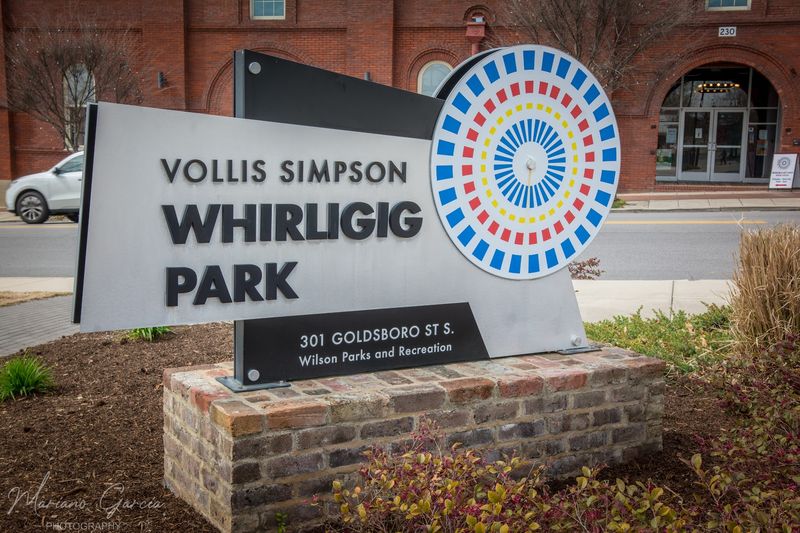
Planning a visit is easy — and free. Vollis Simpson Whirligig Park is located at 301 Goldsboro St S, Wilson, NC 27893, right in the heart of historic downtown.
The park is open daily from 5:00 a.m. to midnight, including holidays, and there is no admission charge. Wilson sits about 40 minutes east of Raleigh and roughly 12 minutes from Interstate 95, making it a natural pit stop on any eastern North Carolina road trip.
For the most spectacular experience, visit on a breezy day. That’s when the whirligigs truly come alive — blades spinning at full speed, reflectors flashing, and the whole park humming with motion and sound.
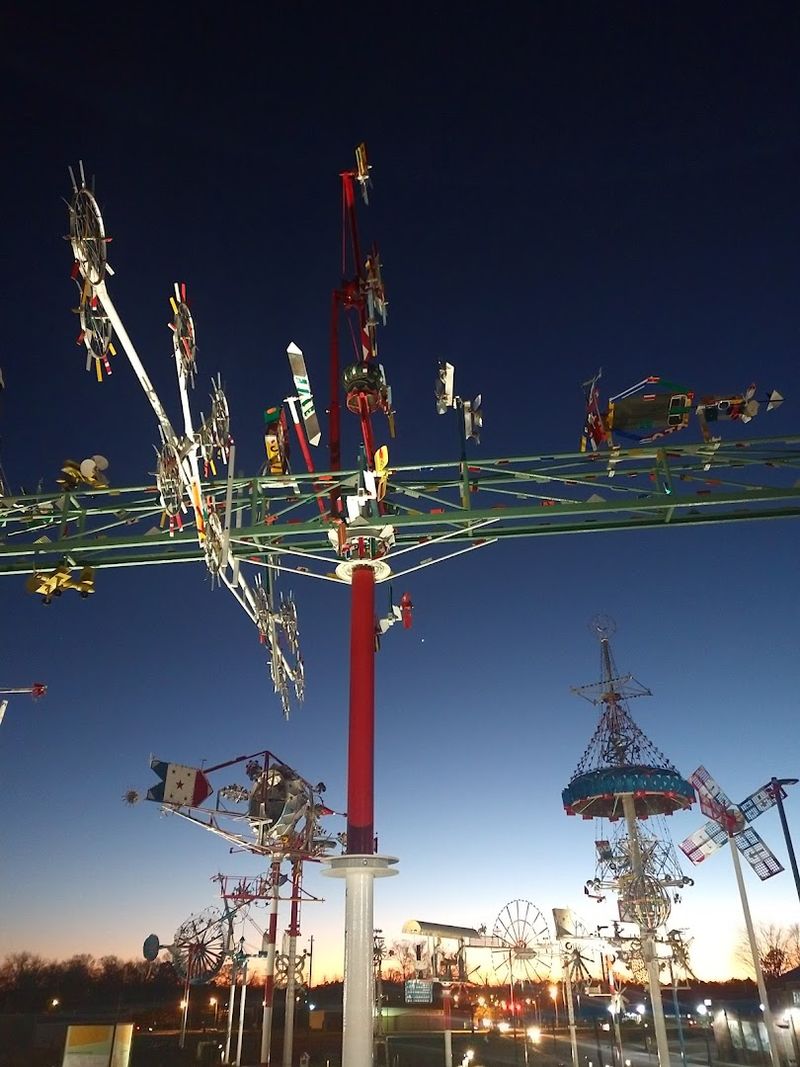
Windy afternoons are genuinely thrilling, especially if you’ve never seen kinetic sculpture on this scale before. Evening visits are equally rewarding, when the park’s lighting system turns the sculptures into glittering, glowing landmarks against the night sky.
Parking is available in nearby public lots and street spaces throughout downtown Wilson. The park is stroller and wheelchair accessible, making it a great outing for families with young children or visitors with mobility needs.
Wear comfortable shoes, bring a camera, and plan to spend at least an hour wandering among these one-of-a-kind creations — you’ll want more time than you think.