You read that right, a 19th century London landmark was taken apart block by block and rebuilt in the Arizona desert. Step onto its arches in Lake Havasu City and you are literally walking across history that changed continents.
The story blends smart marketing, wild logistics, and a waterfront that feels surprisingly cinematic at sunset. Give it an hour and it will win you over with details you did not expect.
From Thames To Colorado: The Big Move
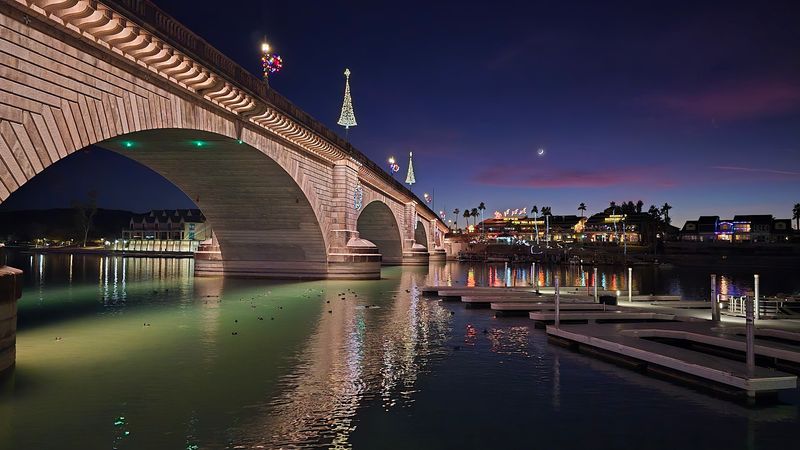
Picture masonry blocks tagged with numbers, cranes in the drizzle, and a Victorian bridge slowly taken apart along the Thames. That scene in 1968 marked the beginning of an improbable desert chapter.
London sold the aging structure, and an American entrepreneur saw opportunity where most people only saw rubble firsthand.
Robert McCulloch, who founded Lake Havasu City, bid for the bridge and won. He did not buy a landmark just for bragging rights.
The plan was marketing smart and financially shrewd, drawing homebuyers and visitors to a remote site. A historic centerpiece would spark a thriving waterfront community for decades.
Meticulous documentation kept every granite piece traceable. Workers labeled stones, drafted assembly drawings, and mapped their future positions.
Barges, trucks, and ships moved the cargo westward to California, then overland to Arizona. It reads like logistics theater, yet the goal was simple enough: rebuild the bridge stronger over desert water.
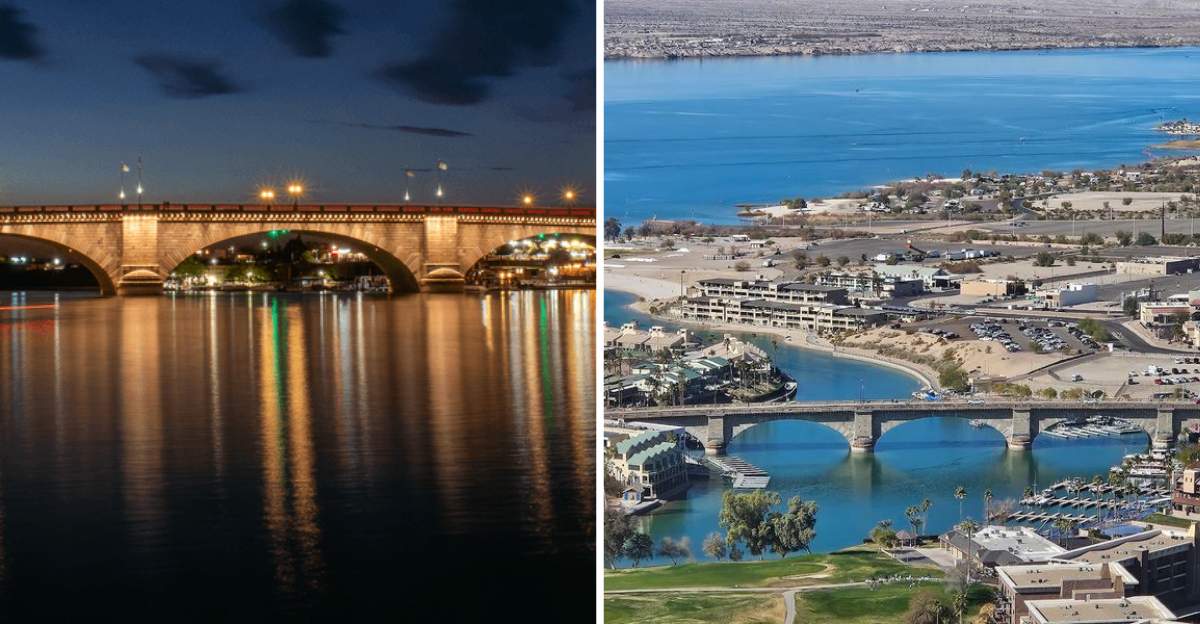
Stand on the walkway today and you sense that journey underfoot. The crest marks, lamp posts, and arches feel familiar yet delightfully out of place.
Hear boats echo beneath the span while palms rustle overhead. History did not stop here, it changed addresses, and you can walk it daily too.
How It Was Dismantled And Shipped
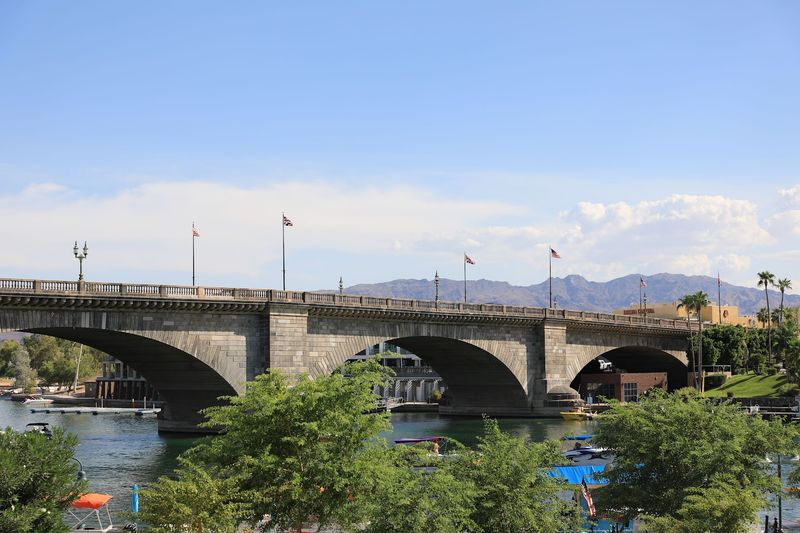
Numbers painted on limestone blocks were the secret language of the project. Each code matched a diagram sheet, ensuring no arch voussoir went missing.
Crews erected scaffolding, removed paving, and eased stones free with cranes. London fog and river traffic kept time while the bridge receded like a tide slowly.
Documentation mattered more than speed. Photographers recorded elevations, engineers measured tolerances, and surveyors pinned reference points on the abutments.
What looked like demolition was really choreography, preserving geometry so it could be reassembled precisely in Arizona. Your respect grows when you see the photos at the Lake Havasu Visitor Center.
The logistics chain stretched across oceans. Stones traveled by truck to port, by ship through the Panama Canal, and by rail and highway to the Mojave.
Modern reinforcement and a concrete core would later carry the structural load. The historic skin returned as ornament, faithful in profile and proportion outside.
Stand upstream at sunset and imagine those crates opening on the sand. The town was young, the canal not yet cut, and optimism felt bigger than the skyline.
You can still trace stone numbers near the arches. Little clues remind you the bridge is both traveler and host here today.
Cutting The Canal And Shaping Havasu Island
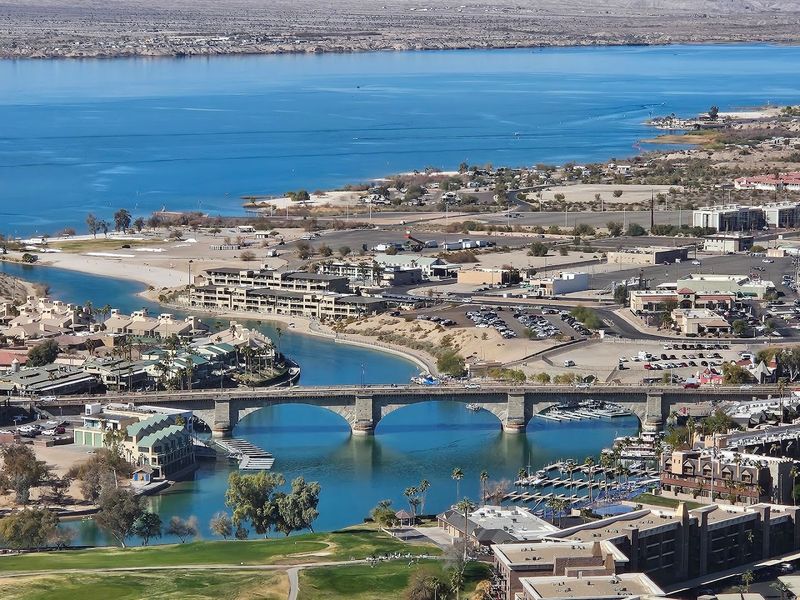
Counterintuitive as it sounds, engineers carved an island to make the bridge useful. A channel was dredged between Thompson Bay and the lake, turning a peninsula into tiny Havasu Island.
That move created beaches, marinas, and waterfront addresses. It also gave the span water again, matching its original purpose beautifully.
Urban planning came baked into the vision. Roads met plazas, pedestrian paths hugged the canal, and sightlines pointed straight through arches toward blue water.
When you stroll the riverwalk today, the geometry feels intentional. Corners open for cafes, stairs drop to boat moorings, and every bench seems to frame photos.
Function did not outweigh charm. Gaslight styled lamps, crest details, and the textured stone bring character without kitsch.
You can pause under an arch and hear footsteps echo like a soft metronome. It is tranquil in morning, energetic by afternoon, and golden hour turns the canal into polished glass beautifully.
If you are timing photos, start at the downstream balustrade, then cross for symmetry. The angles change fast as boats idle past, and reflections build when the wind relaxes.
Mornings feel peaceful for portraits. Sunset rewards patience as the bridge warms from gray to honey and shadows sharpen each day.
Robert McCulloch’s Vision And Marketing Genius
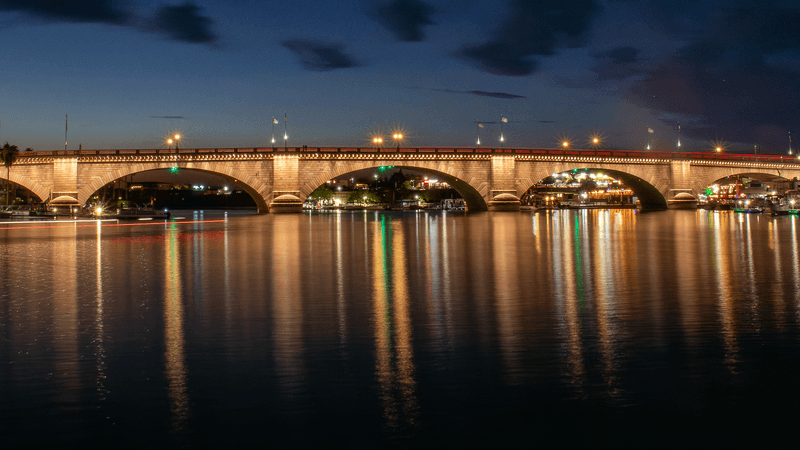
Sales needed a story, and this one traveled better than brochures. McCulloch invested in a headline attraction to anchor homebuilding, tourism, and business recruitment.
Prospective buyers flew in on company planes, toured model homes, and finished the day by walking a 19th century bridge in the Arizona sun every afternoon.
You can still feel that pitch working. Visitor numbers feed restaurants, boat rentals, and events, which feed more trips, which sell more second homes.
It is a flywheel made of stone, water, and smart positioning. The bridge gives the city an identity that postcards cannot fake or replace at all.
For trip planning, pair a walk with a stop at the Visitor Center museum. The exhibits show original engineering drawings, relocation photos, and fragments that bring the saga close.
Short videos clarify what is old, what is new, and why it works. You leave understanding both romance and practicality here.
If friends ask why the bridge moved, answer simply. A cash strapped city needed modernization, an ambitious developer needed gravity, and a community gained a gathering place.
The value is measurable in foot traffic and smiles. Stand on the stones and you will see the business case firsthand every day.
Walking The Bridge: Best Routes And Views
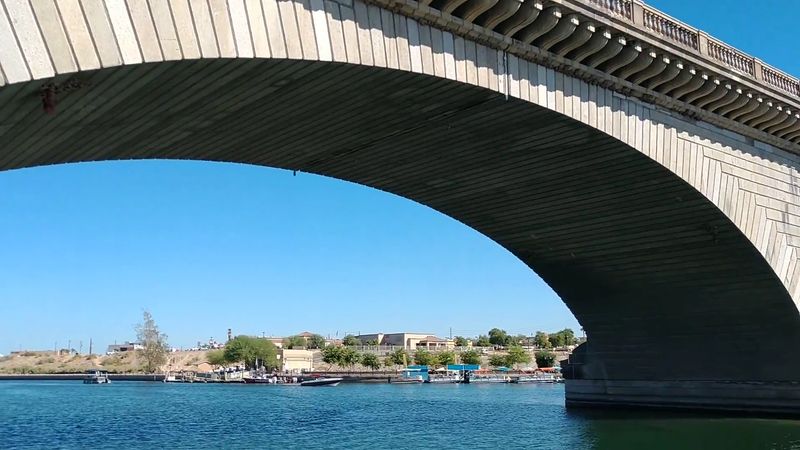
Start at 422 English Village, where parking is easy and signs point you right onto the span. Early birds enjoy soft light and fewer crowds.
Midday brings bright water and boat action for video. Late afternoon is prime for warm tones, with long shadows carving texture across the balustrade beautifully.
Do not rush the arches. Pause at midspan and look down the canal to watch kayaks slip past stone piers.
Then head to the island side for layered shots of arches, palm trees, and Flagstaff Mountain backdrops on very clear days. Railings are wide enough for safe phone bracing too.
If you like symmetry, shoot from the English Village lawn with a low angle. Reflections read stronger when you crouch.
For motion, capture the ferry threading the arches on half power, or pan a rental boat cruising by. Golden hour adds glow to the stone and sparkle to the wake.
Comfort helps. Bring water, sun protection, and a simple microfiber cloth for drought dust on lenses.
Shoes with grippy soles make the balustrade steps friendlier. You will stop often because every ten feet the framing changes, and your favorite picture might be the one you almost walked past this time.
Food, Drinks, And Relaxed Hangouts
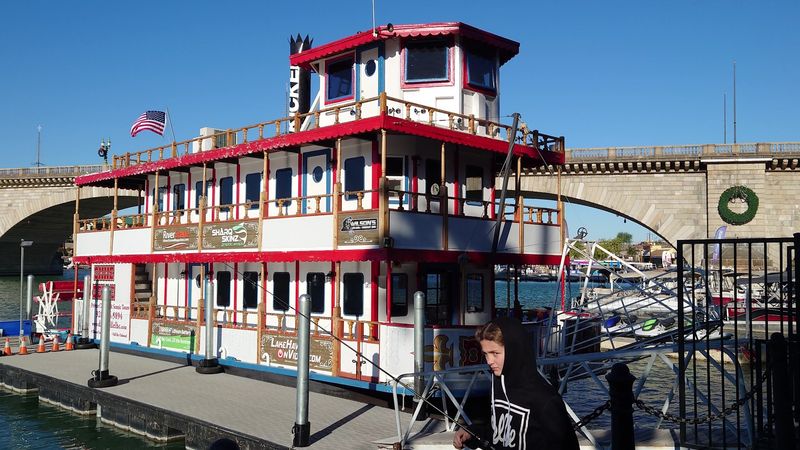
Energy from the walkway spills into nearby patios. Burgers by the Bridge, coffee windows, and waterfront grills make refueling painless.
You can grab a counter seat, watch boats idle, and decide how ambitious the afternoon should be. Sometimes the best schedule is a shaded table and zero agenda for you.
Service stays friendly, even at rush. If lines stack up, take a quick canal walk and return when they thin.
Staff know photo angles and will happily point across the water for your shot. Ask about happy hour times, because sunsets pair nicely with small plates and a view too.
For picnic lovers, the grass near English Village is perfect. Pack simple snacks, bring napkins for breezes, and pick spots with partial shade.
Keep wildlife wild by avoiding handouts. Trash cans sit conveniently along paths, so it is easy to leave the area cleaner than you found it each time.
On hot days, hydration wins. Desert sun reflects off water, and the breeze can trick you into under drinking.
Rotate between shade and movement to manage heat. Plan your return route with gelato in mind, then watch the canal while the bridge shifts colors in the early evening each day.
Practical Tips: Parking, Hours, And Comfort
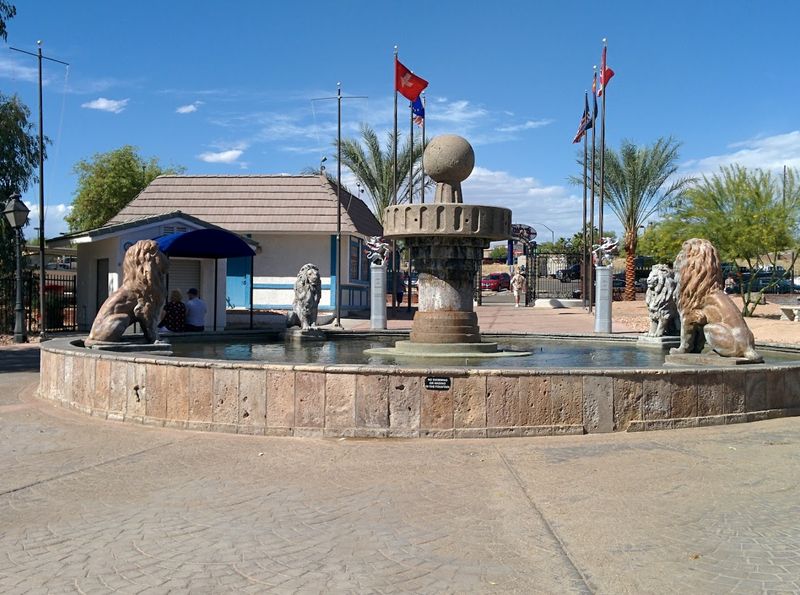
Good news for planners: the bridge is open 24 hours daily. That flexibility lets you choose light, temperature, and crowd levels.
Parking around English Village is free and straightforward most weekdays. Busy weekends fill fast, so arrive early or after dinner to orbit less and keep patience intact out there.
Summer heat deserves respect. Sunscreen, hats, and water bottles are not optional, and breaks in shade keep energy steady.
Winters bring mild days and crisp nights, perfect for a second visit after dark. Check event calendars for festivals that add music and crowds, then time your walk accordingly each season.
Comfort gear makes a difference. Sunglasses cut glare off the canal, breathable fabrics help with breeze, and a compact daypack keeps hands free.
If you are flying a drone, review local rules and avoid congested times. Respect the vibe by keeping audio low around families and quiet corners at night.
Map apps pin the address cleanly at 422 English Village. If you are new to Lake Havasu City, the drive in from Highway 95 is simple.
Signage points clearly to the bridge and canal. Once parked, follow footpaths by the water, and you will reach the arches in minutes easily.
Common Myths And Funny Misconceptions
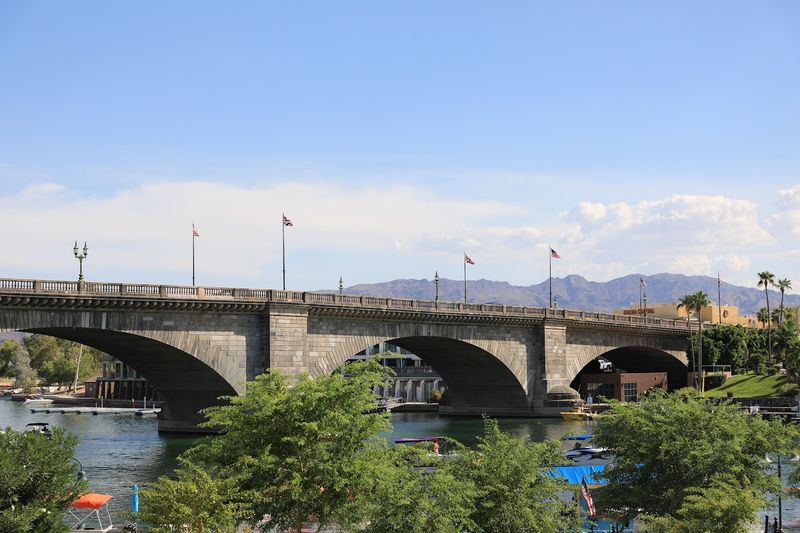
The most popular rumor says buyers thought they were getting Tower Bridge. That is a great punchline, but not accurate.
McCulloch knew the difference and valued the Victorian design for its approachable scale. You can stand near a pier and see how human the proportions feel compared with larger spans.
Another misconception claims the stones carry the full load like before. In reality, a modern concrete core and steel reinforcement do the heavy lifting.
The historic granite acts as a handsome shell. That hybrid keeps the look authentic while meeting standards, seismic needs, and the traffic of a resort town.
You might also hear that the bridge looks smaller than expected. Perspective plays tricks because the canal is narrower than the Thames and nearby buildings sit low.
Stand further back on the lawn for scale. Framing people against the arches helps your camera read the size more accurately out there.
If debate erupts at dinner, turn it into a scavenger hunt. Find a numbered stone, spot a crest, and compare lamp styles to photos posted inside the Visitor Center.
Facts beat myths when you can touch them. The bridge rewards curiosity with proof hiding in plain sight all around you.
Day Trip Or Route 66 Detour: Plan Your Stop
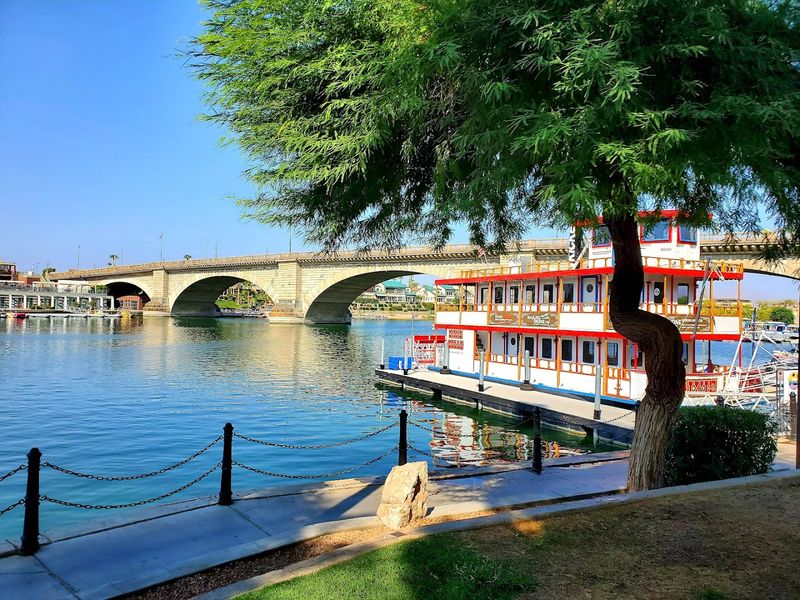
Travelers racing across Arizona sometimes skip the detour. Slow down a notch and give London Bridge a proper hour or two.
The payoff is variety in a compact loop. You will get water views, history, food, and photos without clock anxiety, then slide back to your itinerary satisfied and smiling.
If you are pacing a Route 66 road trip, the side trip fits between Kingman and Needles. Add time for the scenic drive along the lake.
Parking is straightforward, and restrooms near the Visitor Center simplify logistics. A short ferry ride across the channel can add novelty without slowing everything.
Traveling with pets is easy here. Sidewalks offer room, outdoor patios welcome well behaved dogs, and water bowls appear near storefronts.
Keep leashes short around stairs and railings. Bring waste bags so the canal stays pleasant for everyone, then reward the good pup with a shady bench break right here.
Before leaving, take one last lap under the arches. The change in angle tightens your memory.
Grab a final snapshot of crest details, then step back and watch boats pass. That postcard moment sticks because the story is outrageous and true, a London landmark thriving in Arizona sunshine each day.