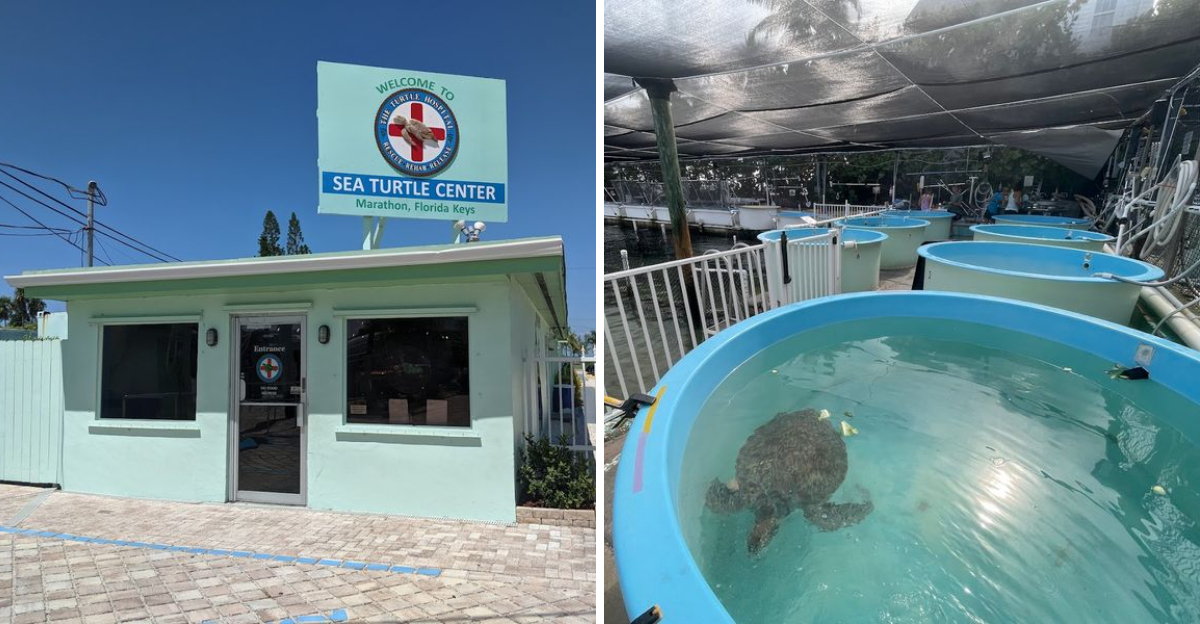
Tucked along the Overseas Highway in Marathon, Florida, the Turtle Hospital is unlike anything else in the Florida Keys.
Since 1986, this fully licensed veterinary facility has been saving injured sea turtles and giving them a second chance at life in the wild.
Every single day, dedicated staff and volunteers treat real patients — and visitors get to watch it all happen up close.
Whether you’re a nature lover, a curious traveler, or a family looking for something truly meaningful, this place will stay with you long after you leave.
A Working Hospital, Not Just an Attraction
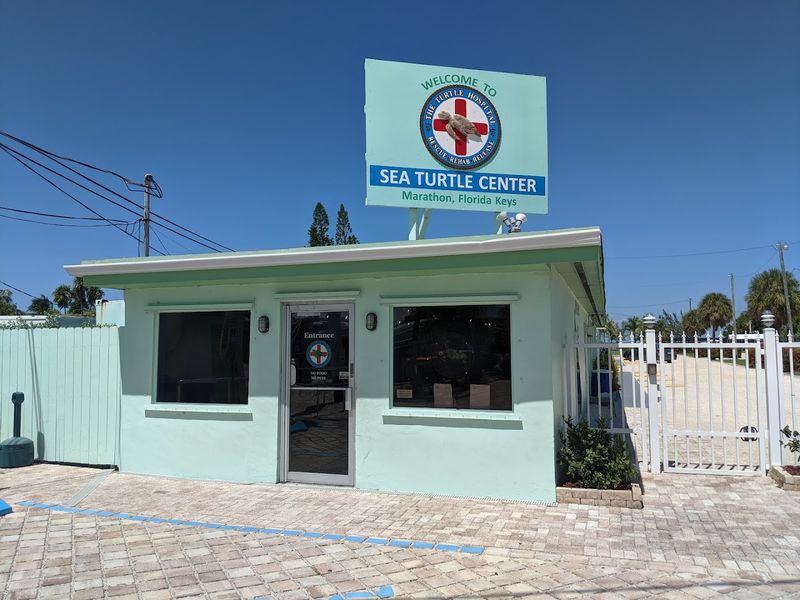
Most places that call themselves “animal attractions” are really just glorified zoos. The Turtle Hospital in Marathon, FL is something completely different — it’s a real, state-licensed veterinary facility where injured sea turtles receive actual medical care every single day.
When you walk through the gates, you’re not stepping into a staged exhibit. You’re entering a working hospital where doctors, veterinarians, and trained staff are actively treating patients.
X-rays get taken. Surgeries get scheduled.
Medication gets administered. It’s the real deal.
Guided tours give visitors a behind-the-scenes look at intake rooms, surgical suites, and recovery tanks. You might even catch a procedure in progress, viewed safely through observation screens.
What makes this experience so powerful is the authenticity of it all. Nothing is performed for show.
The urgency you feel walking through the facility is genuine because lives — endangered sea turtle lives — are truly on the line. For many visitors, it’s the most unexpectedly moving stop in the entire Florida Keys.
You come in curious and leave feeling genuinely connected to marine conservation in a way no documentary ever quite manages to achieve.
“Rescue, Rehab, Release” — The Mission That Drives Everything
Three words define everything that happens at the Turtle Hospital: Rescue. Rehabilitate.
Release. That simple mission statement has guided the organization since it opened its doors in 1986, and it remains the heartbeat of every decision made on the property.
When a turtle comes in, the goal from day one is to get it healthy enough to return to the ocean. Staff assess injuries, create treatment plans, and monitor progress over weeks, months, or sometimes years.
The process is patient, methodical, and deeply compassionate.
Since opening, the hospital has successfully treated and released thousands of sea turtles back into the wild. Each release is a victory — not just for the individual animal, but for the broader effort to protect endangered species like the loggerhead, green, and Kemp’s ridley sea turtles that frequent Florida waters.
Tours walk visitors through this entire cycle in a way that’s easy to understand and genuinely inspiring. Hearing the staff talk about individual turtles by name — and knowing those turtles eventually swam free — turns a simple sightseeing stop into something that feels much bigger than a vacation activity.
Conservation becomes personal here in the best possible way.
The Turtle Ambulance and Rescue Network
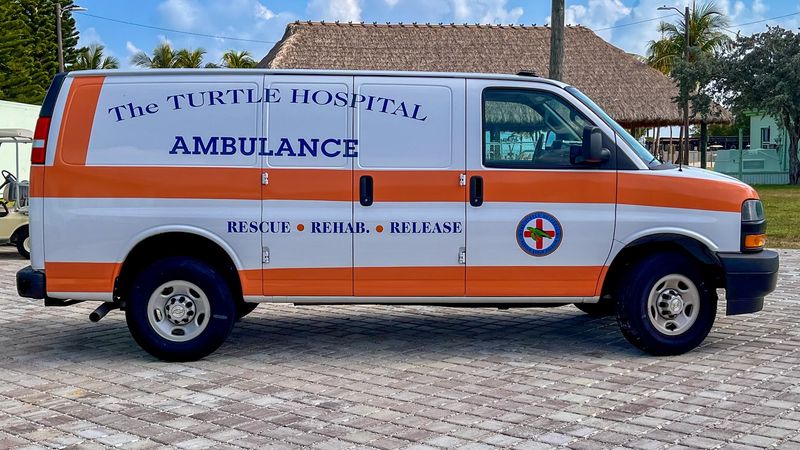
Picture getting a call that a 300-pound loggerhead sea turtle is stranded on a sandbar, tangled in fishing line and barely moving. That’s a Tuesday at the Turtle Hospital.
When distressed turtles are reported, trained rescue teams jump into action — and yes, they have an actual turtle ambulance to get there fast.
The rescue network spans a wide area of the Florida Keys and beyond. Boaters, beachgoers, fishermen, and local residents all play a role by calling in sightings of injured or struggling turtles.
The hospital relies heavily on this community-driven alert system to catch animals before their conditions worsen.
Here’s something really cool: many of the people who end up making those rescue calls are former visitors of the hospital. After taking a tour, they know exactly what a distressed turtle looks like and what number to call.
The educational experience essentially creates a grassroots network of volunteer spotters across the Keys.
During tours, guides explain how the rescue process works from first call to hospital arrival. It’s one of those details that makes you realize how interconnected conservation efforts truly are — and how even a single informed tourist can make a real difference for an endangered animal.
Common Injuries You Will Learn About on the Tour
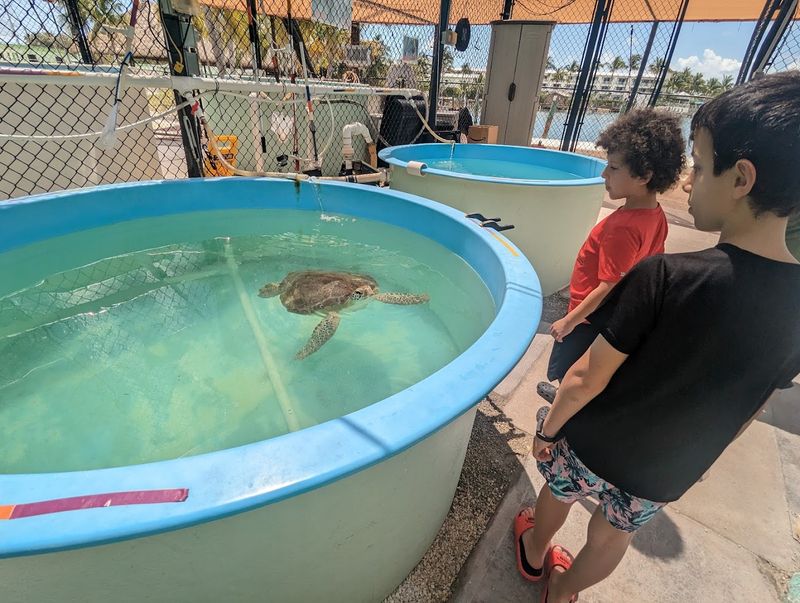
One of the most eye-opening parts of any Turtle Hospital tour is learning about the threats these animals face every single day. It’s not abstract environmental talk — guides show you actual patients and explain exactly what happened to them.
The honesty of it is both sobering and unforgettable.
Boat strikes are among the most common injuries, leaving deep propeller scars on turtle shells and bodies. Fishing line entanglement can cut off circulation to flippers, sometimes requiring amputation.
Plastic ingestion blocks digestive tracts, slowly starving turtles that feel full but can’t absorb nutrition.
Then there’s fibropapillomatosis — a tumor-causing disease linked to poor water quality that affects green sea turtles in alarming numbers. Tumors can grow on the eyes, flippers, and internal organs, severely impacting a turtle’s ability to swim, eat, and survive.
It sounds awful because it is.
Guides don’t sugarcoat any of this, and that’s precisely what makes the tour so impactful. Visitors — especially kids — walk away with a crystal-clear understanding of how human activity affects marine life.
It shifts the conversation from “turtles are cool” to “turtles need our help,” and that shift matters enormously for long-term conservation awareness and action.
Inside the Treatment and Surgery Rooms
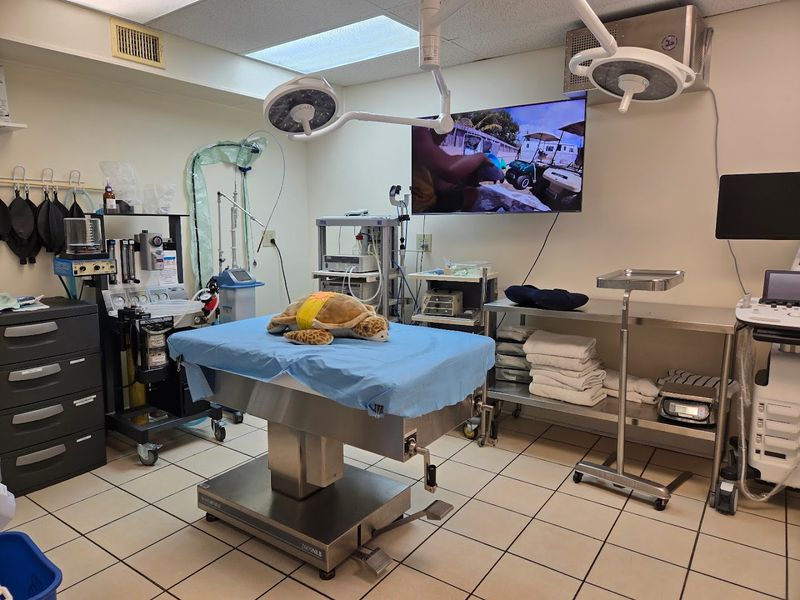
Getting a peek inside an actual operating room is not something most tourists expect from a Florida Keys attraction — but that’s exactly what the Turtle Hospital delivers. Guided tours include access to areas that most wildlife facilities keep completely off-limits, including the intake room, X-ray lab, and surgical suite.
The intake room is where newly arrived turtles are assessed for the first time. Staff weigh them, examine wounds, draw blood, and document every detail.
It looks and feels exactly like an emergency room, just scaled for animals that can weigh several hundred pounds.
The X-ray lab allows vets to identify internal injuries, swallowed objects, and bone damage without surgery. Guides often show visitors actual X-ray images of turtles that have ingested plastic bags, hooks, or even entire fishing rigs.
Seeing those images firsthand hits differently than reading about it online.
When surgical procedures are scheduled during tour hours, visitors can sometimes observe through designated viewing screens — a genuinely rare opportunity. Watching a trained vet work to save an endangered animal is the kind of moment that reframes the entire trip.
You stop being a tourist and start feeling like a witness to something that truly matters.
Meet the Permanent Residents — Including the Famous Bubble Butt
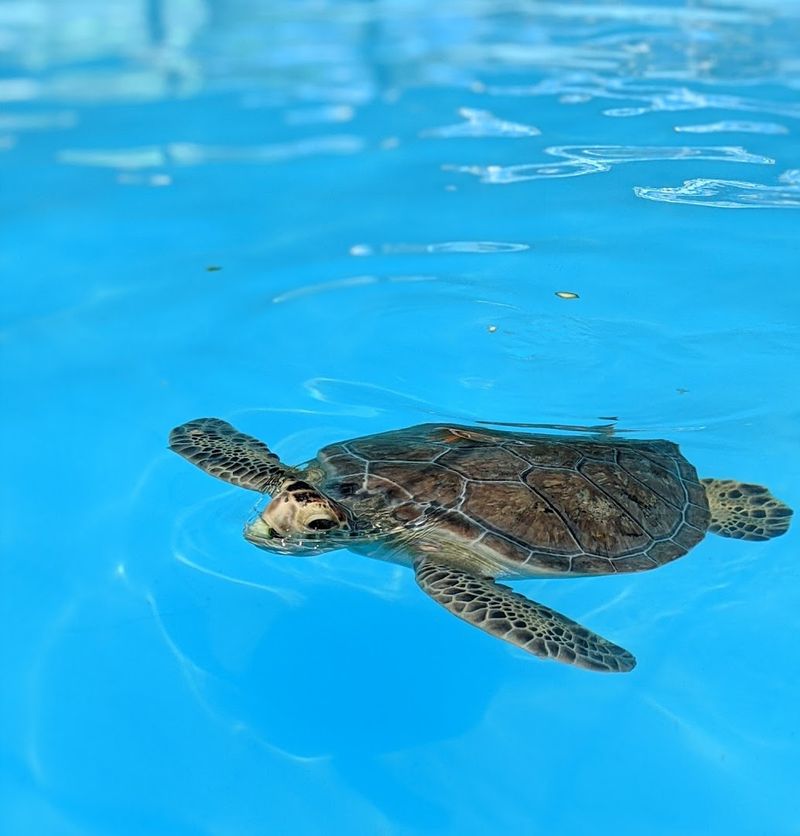
Not every turtle that arrives at the Turtle Hospital gets to swim back into the open ocean. Some injuries are simply too severe.
Turtles that have lost flippers, suffered spinal damage, or developed chronic conditions that prevent them from surviving in the wild become permanent residents — and they each have a name and a story.
The most famous of these is Bubble Butt, a green sea turtle whose rear end floats uncontrollably due to trapped gas from a boat strike injury. Because she can’t dive properly, she can’t feed or escape predators in the wild.
The hospital is her forever home, and she’s become something of a celebrity among visitors.
Meeting the permanent residents is one of the most emotionally resonant parts of the tour. Guides share each animal’s background — how they were found, what they went through, and why they stayed.
These aren’t just animals in a tank; they’re survivors with personalities, quirks, and histories.
For younger visitors especially, connecting with an individual turtle by name creates a lasting bond with conservation. Kids who meet Bubble Butt tend to remember her for years.
That kind of personal connection is exactly what turns a one-time visitor into a lifelong advocate for sea turtle protection.
The Massive Saltwater Rehabilitation Pool
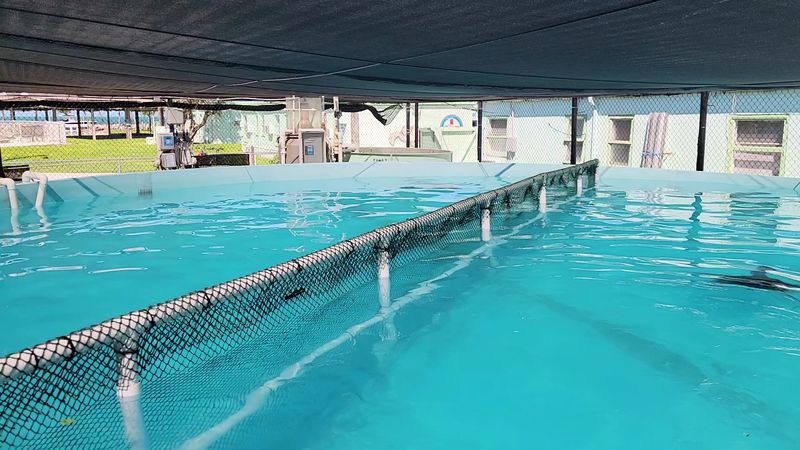
Originally, the property that houses the Turtle Hospital was a modest motel. The big kidney-shaped swimming pool out back?
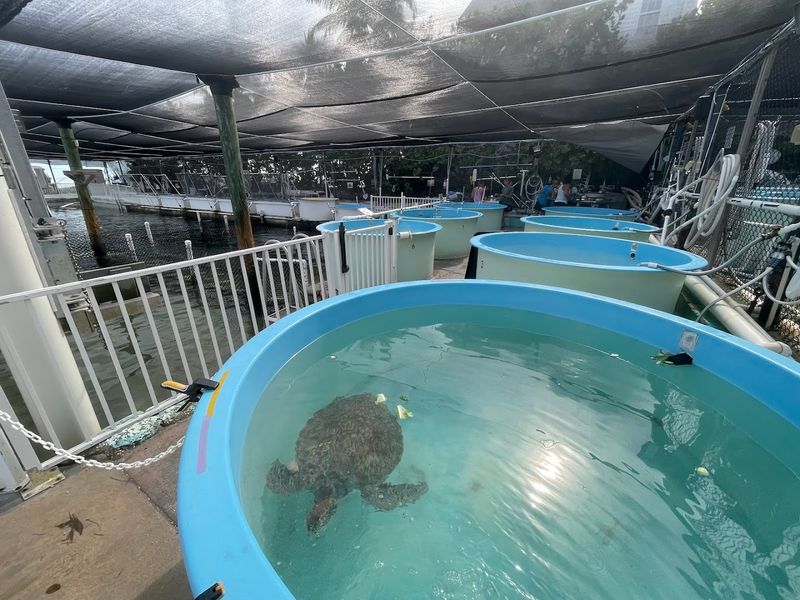
It got repurposed into something far more extraordinary — a massive saltwater rehabilitation tank where recovering sea turtles swim, rest, and rebuild their strength before heading back to the ocean.
The pool is one of the first things visitors see on the tour, and the reaction is almost always the same: pure delight. Watching several large sea turtles glide gracefully through crystal-clear saltwater, some still healing from injuries, is a sight that’s genuinely hard to describe.
It feels like stumbling into a world you weren’t supposed to find.
Both recovering turtles and permanent residents share the space, which means the pool is active and lively throughout the day. Staff monitor the animals closely, tracking feeding habits, mobility improvements, and social behaviors.
Every detail matters when preparing a turtle for eventual release.
The absolute highlight for most visitors comes at the end of the tour: feeding time. Guests get the opportunity to toss fish to the turtles in the pool, bringing them close to the surface and creating an up-close encounter that no zoo tank could replicate.
It’s joyful, interactive, and surprisingly emotional — one of those travel moments you genuinely do not forget.
An Interactive, Education-First Experience for All Ages
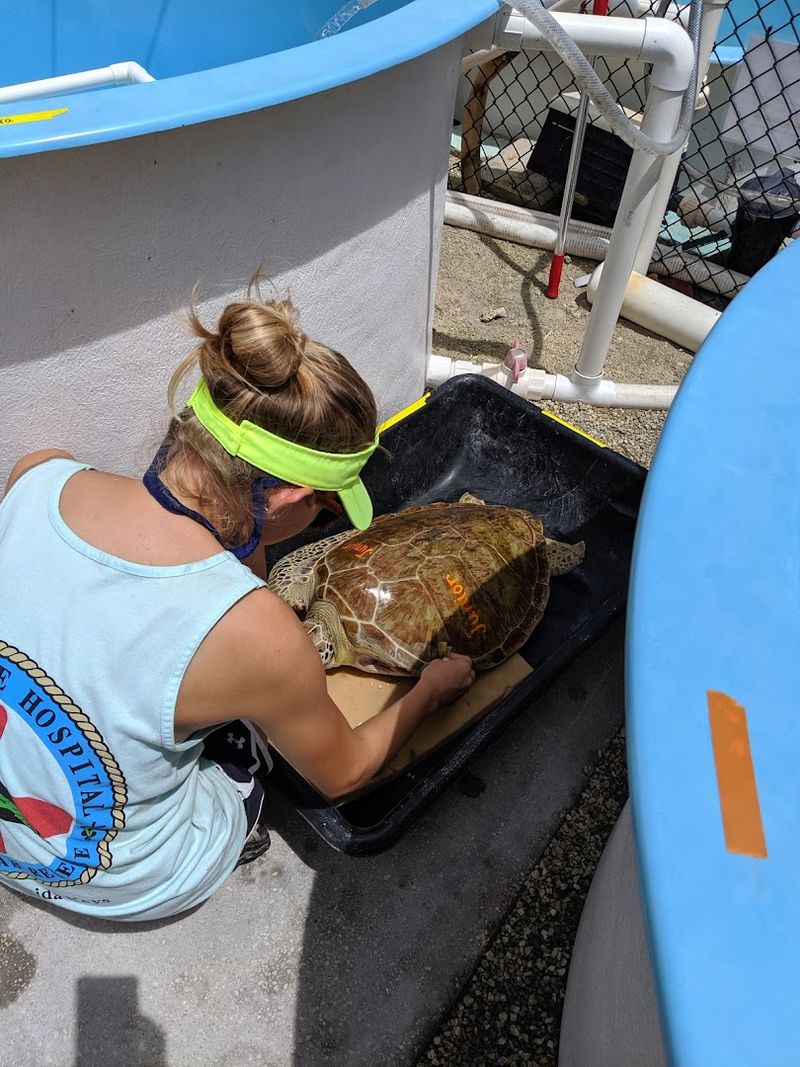
Some educational experiences feel like homework. The Turtle Hospital tour feels like the opposite — it’s engaging, fast-moving, and packed with information that actually sticks.
From the moment you arrive, the focus is on making conservation feel relevant, urgent, and accessible to everyone in the group.
Guides cover sea turtle anatomy, life cycles, feeding habits, and migration patterns in ways that are easy for kids and adults alike to follow. They use real props, live animals, and hands-on demonstrations to keep energy levels high throughout the 60 to 90-minute experience.
One of the most powerful elements is how the tour frames human responsibility. Rather than lecturing visitors, guides show them concrete examples of how everyday choices — using reusable bags, cutting plastic rings, reporting injured wildlife — directly impact sea turtle survival rates.
The tone is hopeful, not guilt-inducing.
By the end, most visitors leave with a list of things they want to change about their own habits. Kids ask their parents to switch to reusable straws.
Adults start researching volunteer programs. That kind of behavioral shift is the real measure of an effective educational experience, and the Turtle Hospital achieves it with remarkable consistency.
It turns curious tourists into genuinely motivated conservation advocates, one tour at a time.
A Meaningful Detour Along the Overseas Highway
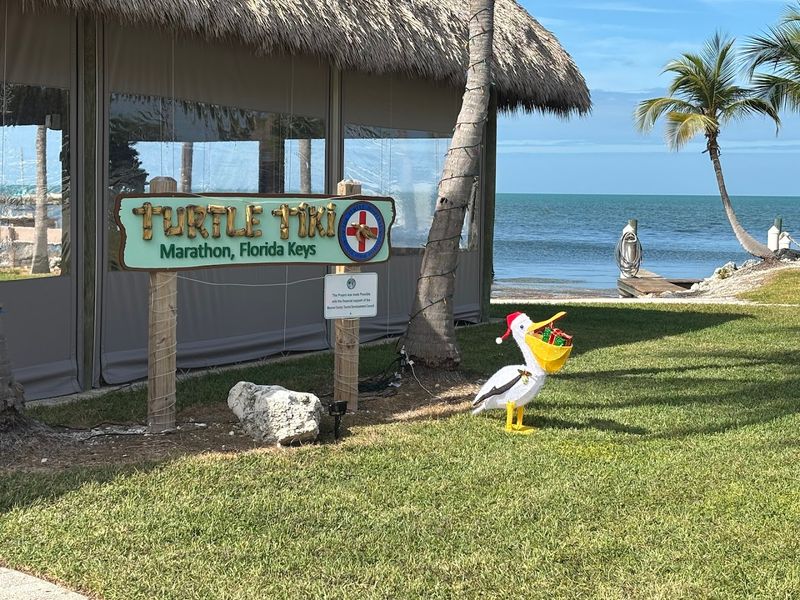
Mile Marker 48.5 on the Overseas Highway might not sound like a landmark, but anyone who has stopped there knows it marks one of the most worthwhile detours in all of the Florida Keys. The Turtle Hospital sits just off the road in Marathon, easy to spot and even easier to fall in love with.
The Keys are full of incredible beaches, snorkeling spots, and seafood shacks — and all of those things are worth your time. But the Turtle Hospital offers something those experiences can’t: a sense of purpose.
You’re not just passing through; you’re contributing to something meaningful simply by showing up and paying the admission fee, which directly funds the hospital’s operations.
For families on a road trip down to Key West, it makes a perfect mid-drive stop. For couples looking for something more thoughtful than another sunset cruise, it delivers.
Even solo travelers who wander in on a whim tend to stay longer than planned, drawn in by the stories and the turtles themselves.
The Florida Keys have a laid-back, anything-goes energy that makes every stop feel like an adventure. The Turtle Hospital fits perfectly into that spirit while adding a layer of depth that turns a vacation into a genuinely enriching experience worth talking about long after you get home.
Essential Visitor Information Before You Go
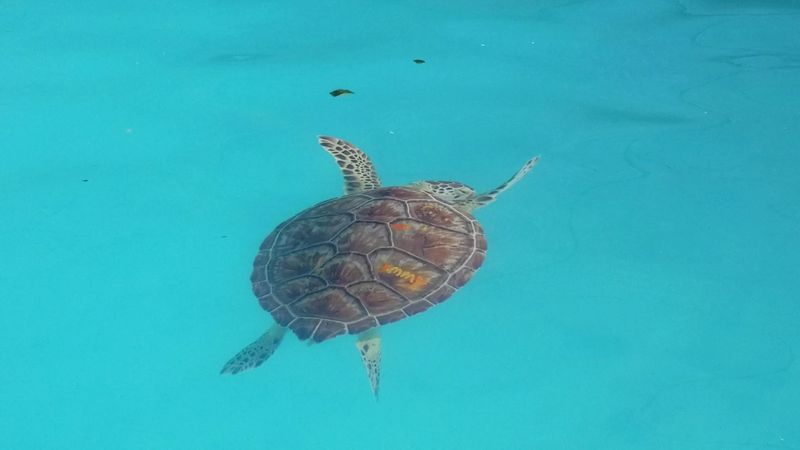
Planning ahead makes the difference between a smooth visit and a frustrating one — especially at a spot as popular as the Turtle Hospital. Here is everything you need to know before you make the drive down the Keys.
The hospital is located at 2396 Overseas Hwy, Marathon, FL, right at Mile Marker 48.5. It’s open daily from 9:00 AM to 6:00 PM, with guided tours departing hourly from 9:00 AM through 4:00 PM.
Tours last approximately 60 to 90 minutes, so plan your day accordingly.
Admission runs about $27 for adults and $13 for children. Kids under four years old get in free.
Every dollar goes directly toward the care of the turtles, which makes the price feel less like an entry fee and more like a donation with serious perks attached.
Here is the most important tip of all: book your spot in advance. Tours fill up quickly, especially during peak season and holiday weekends.
Walk-ins are sometimes available, but counting on one is a gamble not worth taking. Visit the official Turtle Hospital website to reserve your spot, and try to arrive a few minutes early.
Showing up flustered is no way to start one of the most genuinely special experiences the Florida Keys has to offer.