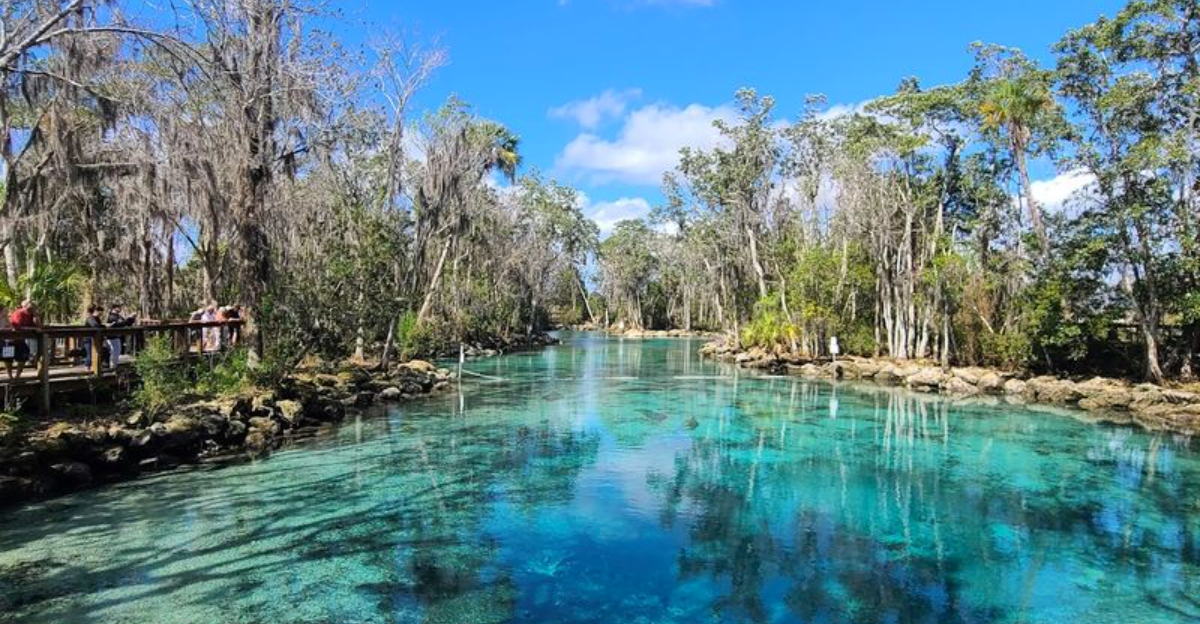
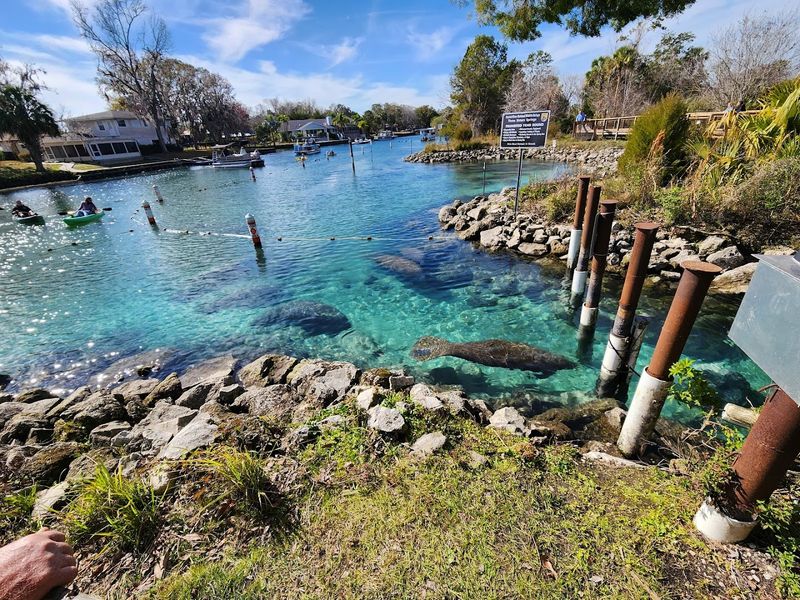
Tucked along the Nature Coast of Florida, Three Sisters Springs in Crystal River is one of those rare places that feels almost too magical to be real. The water is so clear you can see every pebble on the bottom, and during winter months, hundreds of West Indian manatees gather here to soak in the warm spring water.
Whether you are watching from the boardwalk or paddling alongside these gentle giants in a kayak, the experience stays with you long after you leave. If you have ever dreamed of getting up close with Florida’s most beloved wildlife in a stunning natural setting, this is the place to be.
Crystal-Clear Spring Water That Looks Like Glass
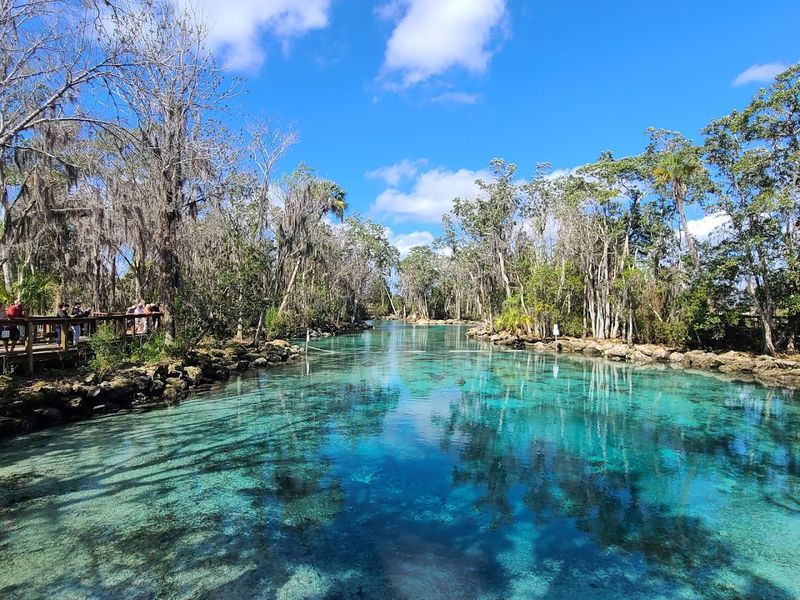
There is a moment when you first look down into Three Sisters Springs and wonder if someone replaced the water with glass. The springs pump out roughly 60 million gallons of fresh water every single day, maintaining a steady temperature of 72 degrees Fahrenheit year-round.
That constant flow keeps the water so clean and clear that visibility can stretch more than 30 feet down.
The springs get their name from the three main vents that bubble up from underground aquifers deep beneath the limestone bedrock. Each vent creates a swirling, shimmering pool that connects to the others before flowing outward into Kings Bay.
The clarity is not just beautiful to look at — it also makes wildlife watching incredibly easy, because you can spot fish, turtles, and manatees from the surface without any effort.
Visitors who have snorkeled here often describe it as feeling like floating inside an aquarium. The lush aquatic grasses swaying below and the sunlight dancing through the water create a scene that cameras struggle to fully capture.
Arriving early in the morning gives you the best light conditions and the calmest water for the most breathtaking views of this natural wonder.
West Indian Manatees Gathering in Winter
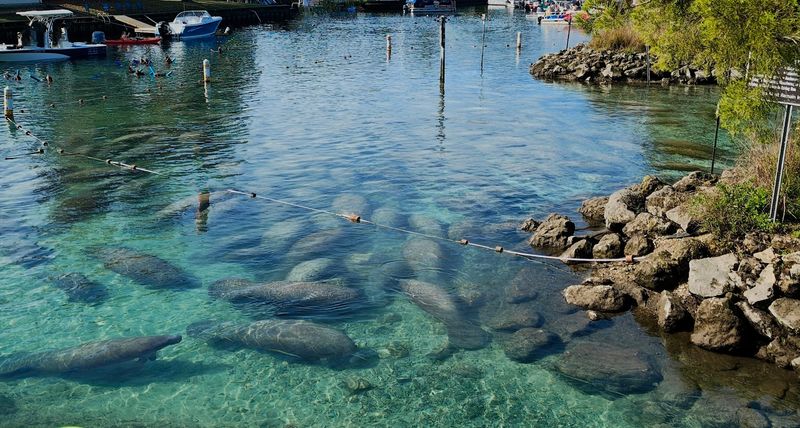
Picture standing on a boardwalk and looking down to see what appears to be a field of smooth grey boulders — then one of them slowly rolls over and blinks at you. That is the magic of manatee season at Three Sisters Springs.
From November through April, West Indian manatees flood into the warm spring water to escape the chilly Gulf of Mexico, and some days you can count well over a hundred of them packed into the springs.
Manatees are warm-water animals and cannot survive if water temperatures drop below 68 degrees Fahrenheit. Because the springs hold steady at 72 degrees no matter how cold the air gets outside, they serve as a critical warm-water refuge for the local and migrating manatee population.
Citrus County is actually home to one of the largest concentrations of manatees in the entire world during winter months.
Rangers and volunteers on the boardwalk love sharing fun facts about these animals, like how manatees can eat up to 10 percent of their body weight in aquatic plants every day. Watching them lazily munch on seagrass while completely ignoring the crowd above is one of the most entertaining and heartwarming sights in all of Florida.
The Scenic Boardwalk and Nature Trail Experience
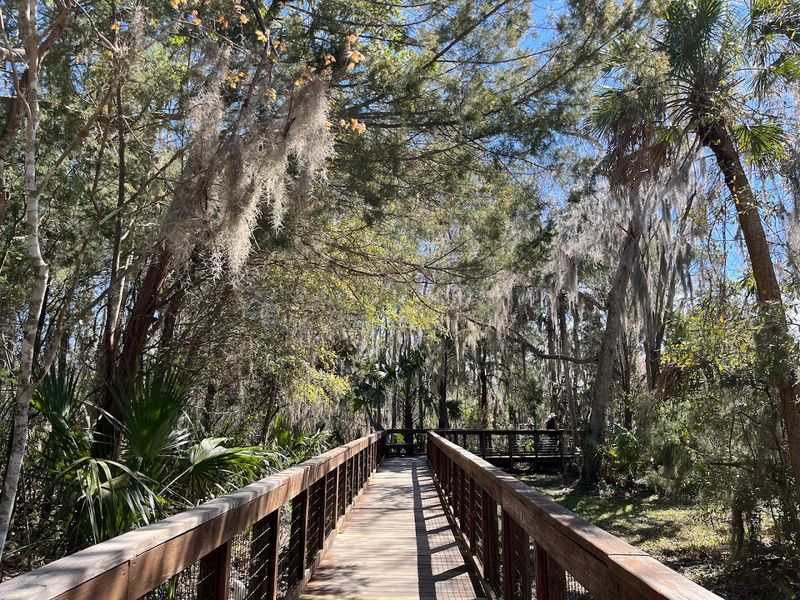
Walking the boardwalk at Three Sisters Springs feels like stepping into a nature documentary. The trail winds through a mix of wetland habitats, ancient cypress trees draped in Spanish moss, and open views of the spring run.
Multiple viewing platforms jut out over the water, giving you front-row seats to whatever wildlife happens to be passing through that day.
The main paved path from the visitor center to the springs is about a half mile long and relatively flat, making it manageable for most visitors. From there, additional boardwalks loop around the spring pools and along the canal edge, where you can spend as much time as you like watching manatees drift below.
Benches are placed at regular intervals so you can sit, soak it all in, and rest your feet without feeling rushed.
Beyond the manatees, the trail offers surprising variety. Great blue herons stalk fish along the canal banks, ospreys circle overhead, and roseate spoonbills occasionally show up in the wetland areas.
One reviewer compared the quieter back section of the trail to hearing “old Florida” — full of bird calls, rustling grasses, and a peacefulness that is hard to find anywhere else. Comfortable walking shoes and bug spray are smart choices for the trail.
Swimming and Snorkeling Alongside Manatees
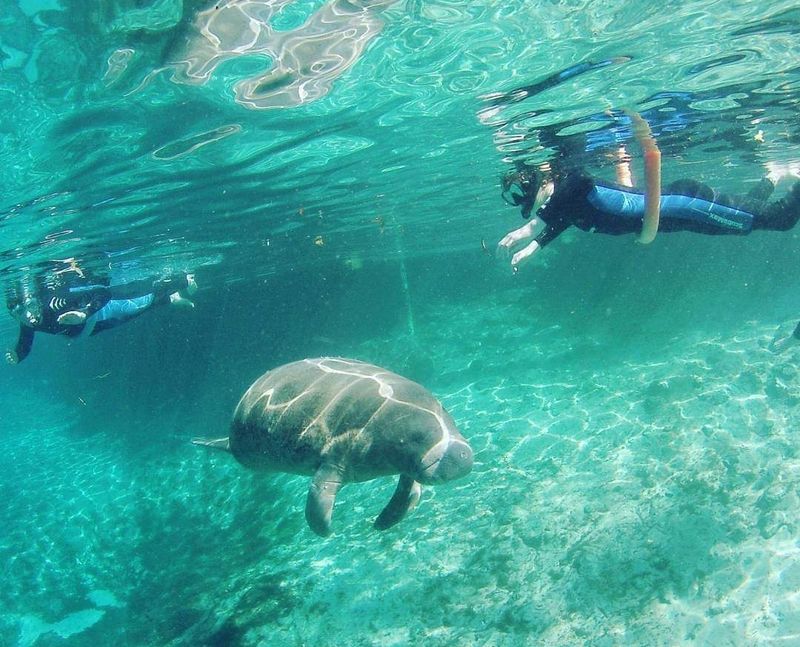
Getting into the water with a 1,000-pound manatee sounds intimidating, but most people who do it describe it as one of the most peaceful experiences of their lives. Manatees are famously calm and curious animals, and they often approach swimmers on their own without any encouragement.
However, it is important to know the rules before you splash in.
Swimming is not permitted directly inside Three Sisters Springs from the park side. During manatee season — roughly November through April — the springs themselves are closed to all water activities to protect the animals from disturbance.
If you want to swim or snorkel with manatees, you need to book a tour through one of the many licensed outfitters in Crystal River, who will take you out by boat to approved areas.
Outside of manatee season, the springs and surrounding waterways open up for paddlers and snorkelers who want to explore the crystal-clear environment on their own. Either way, federal law requires passive observation — you cannot chase, ride, or touch a manatee, even if they swim right up to you.
Keeping a respectful distance and letting the animals approach you on their own terms leads to the most magical encounters and keeps these incredible creatures safe.
Kayaking and Paddleboarding Through the Spring System
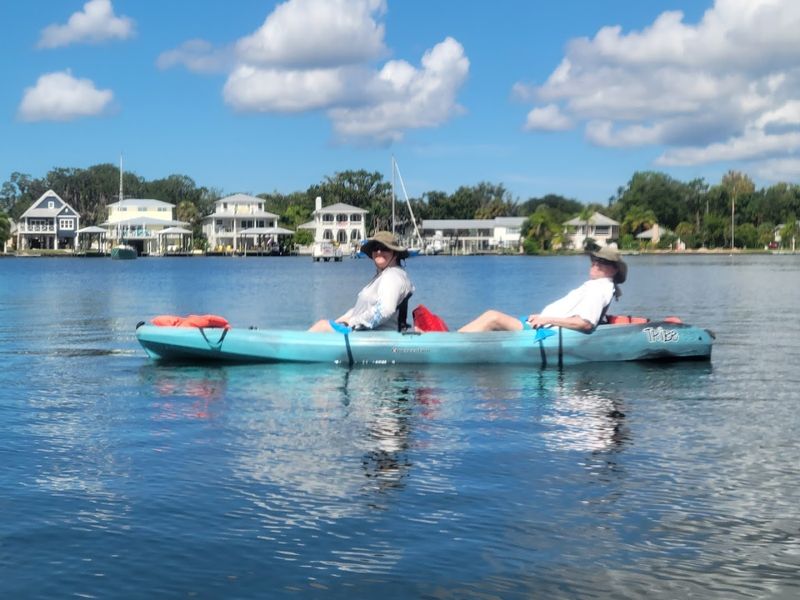
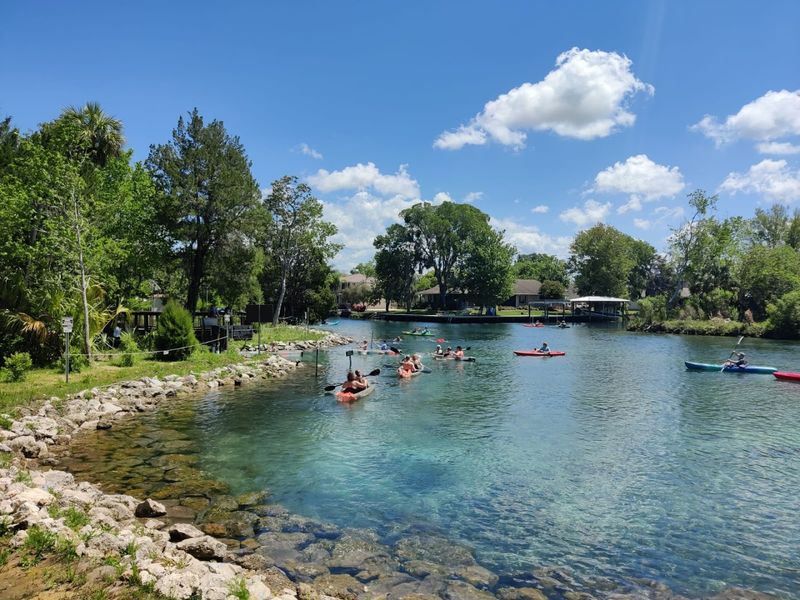
Paddling through the waterways around Three Sisters Springs is one of those experiences where you forget to check your phone because the real world around you is simply too interesting. Kayaks and clear-bottom paddleboards are especially popular here, because they let you peer straight down into the water and watch manatees, fish, and turtles going about their day just a few feet below you.
Several outfitters in Crystal River rent kayaks, paddleboards, and even small motorized boats that you can take out on Kings Bay and the connecting spring runs. Clear kayak eco-tours are a huge hit with families, since kids get a fish-tank-style view without having to get wet.
Launching spots are available at Hunter Spring Park, which is a short shuttle ride from the Three Sisters Springs visitor center.
When manatees are present in the springs, paddling inside the spring pool itself is restricted to protect the animals. However, the canal leading to the springs and the broader Kings Bay area remain open for paddling year-round.
Early morning paddles offer the calmest conditions and the best wildlife sightings. Booking a guided eco-tour is a great idea for first-timers, since local guides know exactly where the manatees tend to hang out on any given day.
Shuttle Service and Park Accessibility
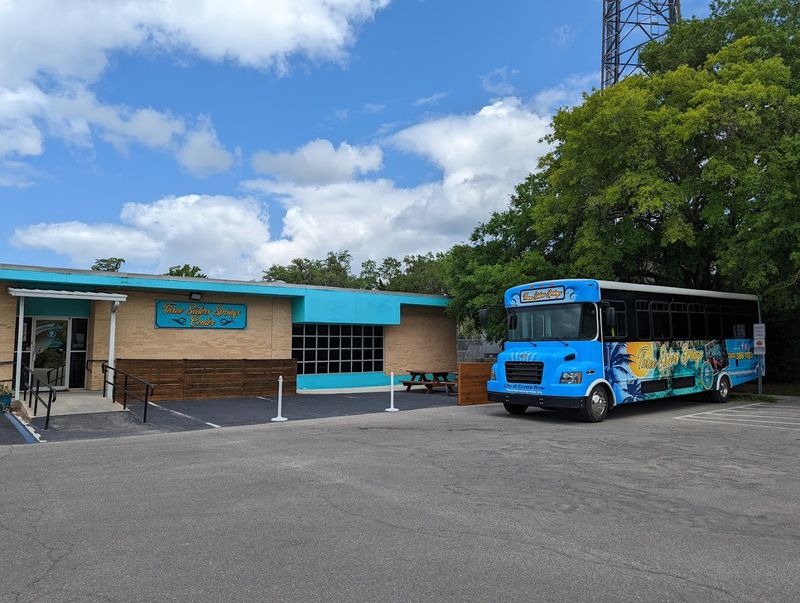
One of the most visitor-friendly upgrades at Three Sisters Springs in recent years has been the introduction of a shuttle service between the main parking area and the boardwalk entrance. Since private vehicles can no longer drive all the way into the park, the shuttle removes most of the hassle and lets everyone focus on enjoying the scenery instead of worrying about logistics.
The shuttle runs regularly throughout the day, and several visitors have raved about how friendly and knowledgeable the drivers are. One reviewer mentioned that the shuttle driver was so entertaining and informative that they could have ridden with her all day.
The service is especially helpful for older visitors or anyone who finds long walks challenging, since the round trip on foot can add up to nearly a mile of walking.
The boardwalk itself is handicapped accessible, with wide planks and smooth surfaces that accommodate wheelchairs. However, some sections of the natural trail are less forgiving, so visitors with mobility concerns should stick to the paved and boardwalk areas.
Disabled parking with a valid permit is available closer to the entrance. Arriving early on weekdays helps you avoid the biggest crowds and gives you better access to the shuttle without a long wait.
Admission, Pricing, and Visitor Tips
Before you pack your sunscreen and head out the door, knowing what to expect at the gate will save you a lot of surprises. Three Sisters Springs charges an admission fee to enter the park, which is typically around $20 per adult, with a small senior discount available.
The fee helps fund park maintenance, the shuttle service, and the volunteer programs that make the visitor experience so excellent.
The park is open daily from 8:30 AM to 4:30 PM, so arriving right at opening time is a smart move if you want the best manatee viewing and the most elbow room on the boardwalk. Parking near the visitor center can get tight on busy winter weekends, and a few reviewers have noted that signage for overflow parking is not always clear.
Checking the park website ahead of time for current parking guidance is a good habit.
Bringing cash or a card for admission, wearing comfortable shoes, and packing a reusable water bottle will set you up for a comfortable visit. The visitor center has restroom facilities and knowledgeable staff on hand to answer questions.
If you plan to kayak or snorkel with manatees, budget extra time and money for a separate tour booking with one of the local outfitters in Crystal River.
Wildlife Beyond Manatees: Birds, Fish, and More
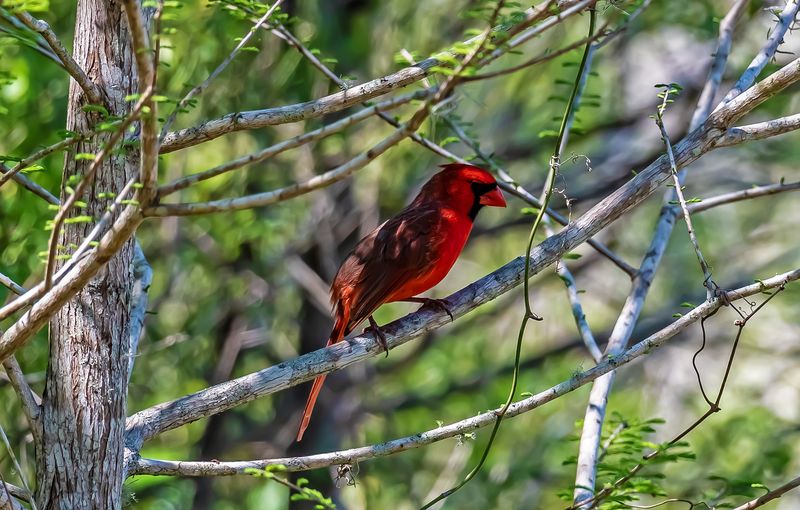
Manatees get all the headlines, but Three Sisters Springs is quietly one of the best all-around wildlife watching spots in Florida. The mix of freshwater springs, brackish canals, and wetland vegetation creates the perfect habitat for an impressive range of animals that most visitors do not even expect to see.
Birdwatchers will have a field day here. Great blue herons, little blue herons, roseate spoonbills, anhingas, ospreys, and a rotating cast of migratory shorebirds pass through throughout the year.
Mullet and bass jump in the canals, while schools of smaller fish hover near the spring vents in mesmerizing formations. Soft-shell turtles and cooters bask on logs along the trail, and river otters occasionally make a surprise appearance.
The back section of the trail, away from the main spring pool, tends to be quieter and less crowded, which makes it ideal for spotting shyer species. One visitor described this area as sounding like “old Florida” — a chorus of bird calls layered over the hum of insects and wind through the cypress trees.
Bringing binoculars and a small field guide to Florida birds will make the non-manatee portions of your visit just as rewarding as the main event.
Best Time of Year to Visit Three Sisters Springs
Timing your visit to Three Sisters Springs can make the difference between seeing a handful of manatees and witnessing hundreds of them packed into the springs like a living grey carpet. The manatee season officially runs from November through April, when water temperatures in the Gulf drop low enough to send manatees searching for warmer refuges inland.
January and February tend to be peak months, especially after a cold front pushes through the region. On particularly cold days, the springs can fill up with manatees so quickly that they barely have room to move, which sounds crowded but is actually one of the most awe-inspiring sights in all of Florida nature.
Visiting after a cold snap is one of the best-kept local secrets for guaranteed manatee encounters.
If you visit in summer, the manatees will be gone, but the springs are still stunningly beautiful and open for swimming and paddling. The water stays at that same refreshing 72 degrees even when the air temperature climbs into the 90s, making it a popular cool-off spot for locals.
Spring and fall are shoulder seasons with moderate crowds and occasional early or late manatee sightings. Whatever season you choose, the springs always deliver something worth seeing.
Exploring Crystal River Town After Your Visit
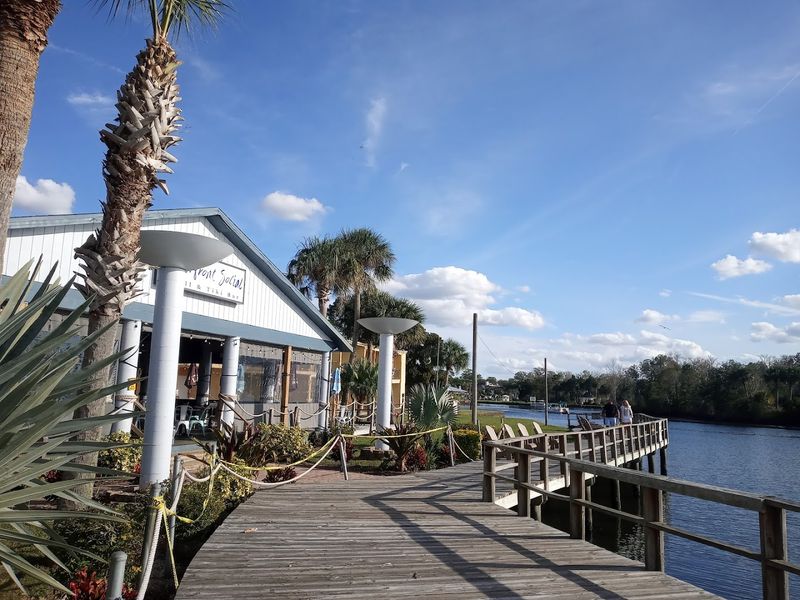
After a morning watching manatees and walking the boardwalk, Crystal River itself is worth exploring before you head home. The town has a laid-back, old-Florida charm that feels refreshingly unhurried compared to the resort-heavy parts of the state.
Waterfront restaurants, locally owned shops, and a genuinely welcoming community make it easy to extend your visit well into the afternoon.
Seafood is a natural highlight of any meal in Crystal River. Fresh grouper, scallops, and shrimp show up on nearly every menu, and many restaurants have outdoor seating right on the water where you can watch boats come and go.
If you still have energy after your park visit, Kings Bay is accessible from several public boat ramps, and local outfitters offer everything from sunset cruises to fishing charters.
Crystal River is also the gateway to the broader Nature Coast region, which includes Homosassa Springs Wildlife State Park just a few miles south. That park is home to rescued manatees, Florida panthers, and a famous hippopotamus named Lu who has lived there since 1964.
Combining both parks into a two-day trip gives you a fuller picture of what makes this corner of Florida so special and so different from anywhere else in the state.