Tucked along Florida’s Nature Coast, a compact trail at Crystal River Archaeological State Park leads you across centuries in just a few quiet steps. Ceremonial mounds rise beside the water, and every signboard fills in a story you can almost feel beneath your feet.
You get panoramic views, museum artifacts, and wildlife moments on a route that is short, smooth, and surprisingly profound. If you want history without a marathon hike, this place delivers.
The Short Ceremonial Mound Trail
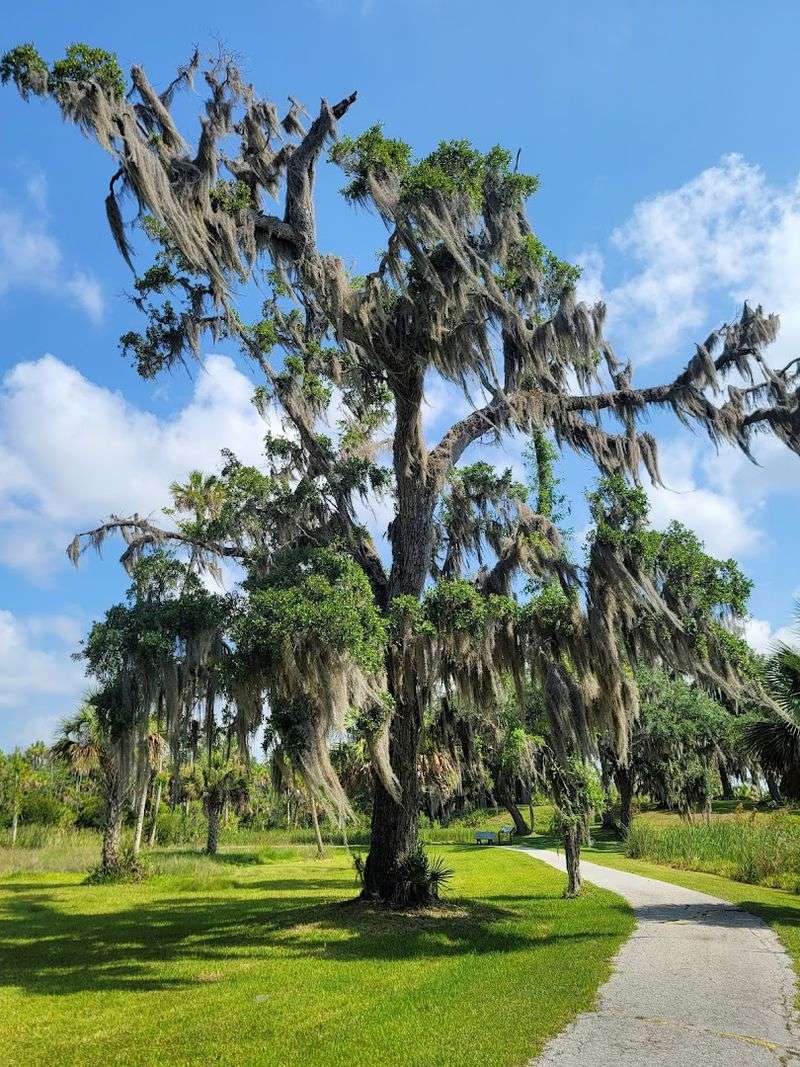
Footsteps begin on a smooth paved path where shells crunch faintly under the soil and ospreys circle the river. Interpretive signs connect what you see to a 1,600 year old coastal village, so each stop adds context without slowing your stride.
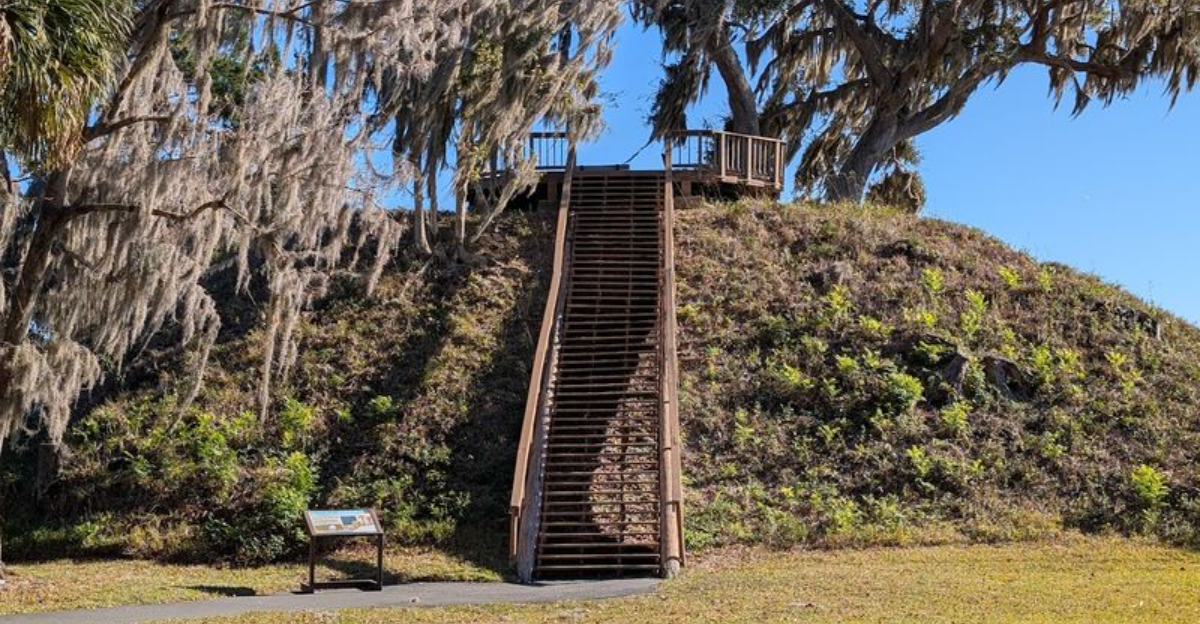
In minutes, the trail bends toward a staircase that climbs the ceremonial mound for a sweeping view.
The climb is brief but meaningful. From the top, the plaza, waterways, and neighboring mounds line up in a way that helps you imagine gatherings and trade across the Gulf corridor.
You feel breeze, hear marsh sounds, and realize how location shaped ceremony, travel, and daily life here.
Good shoes are enough, and the grade stays friendly for families. Bring water, because the Florida sun turns gentle segments into hot ones by midday.
Pausing at each wayside panel keeps the walk under 45 minutes, even with photos. You leave with more than pictures, because the trail turns dates and diagrams into something you can sense.
Arrive early for solitude, or late afternoon for softer light and long shadows.
Temple Mound Overlook Experience
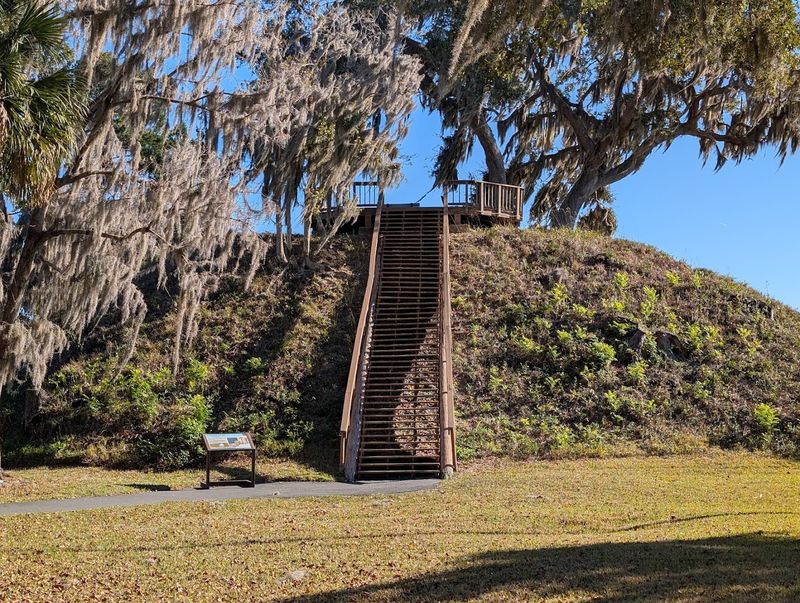
From the overlook, the landscape clicks into focus like a well drawn map. Water, plaza, and mound align, showing why this promontory worked for ceremony and signal.
You can trace canoe routes in your head as pelicans skim the channel and mullet flick the surface.
Safety rails help on the stairs, so take them slowly and keep a hand on the left side. The view becomes a living timeline when you pair it with the museum’s film and then return for a second look.
Clouds roll in, shadows shift, and every change hints at how seasonality mattered for gatherings.
Photos come out best with the sun at your back, so mornings favor river shots while afternoons flatter the plaza. Pack a soft cloth for sunglasses, because salt air and sweat build quickly.
If you are sensitive to heights, step a few paces from the edge and frame the marsh grasses as your foreground. A few mindful breaths up top make the history feel close and respectful.
You will likely linger longer than planned.
Shell Mounds and Plaza Alignment
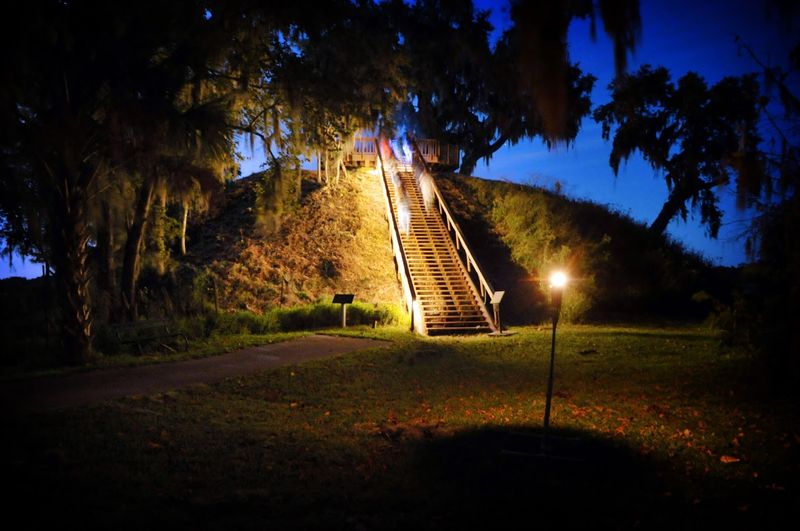
Look past the greenery and you will notice subtle rises where shells and soil hold centuries of gatherings. The plaza stretches like a quiet stage between mounds, making movement patterns easier to imagine than from a single viewpoint.
Reading each sign clockwise around the plaza helps the sequence click.
Shell glints at the surface reveal what lies beneath, but stay on the trail to protect the site. Archaeologists interpret the space as ceremonial and social, not just domestic, and that shift adds weight to your steps.
Suddenly a calm lawn feels like a blueprint for processions and public life.
Plan a slow lap, stopping every 50 feet to scan edges where elevation changes are easiest to see in raking light. Late afternoon enhances relief, while morning light is gentle on photos.
If kids are along, turn it into a scavenger hunt for landforms, not artifacts, and remind them why no collecting is allowed. The circle you make becomes its own lesson in spatial design.
By the time you complete the loop, the plaza narrative feels coherent and surprisingly modern in its flow.
Museum and Interpretive Center Highlights
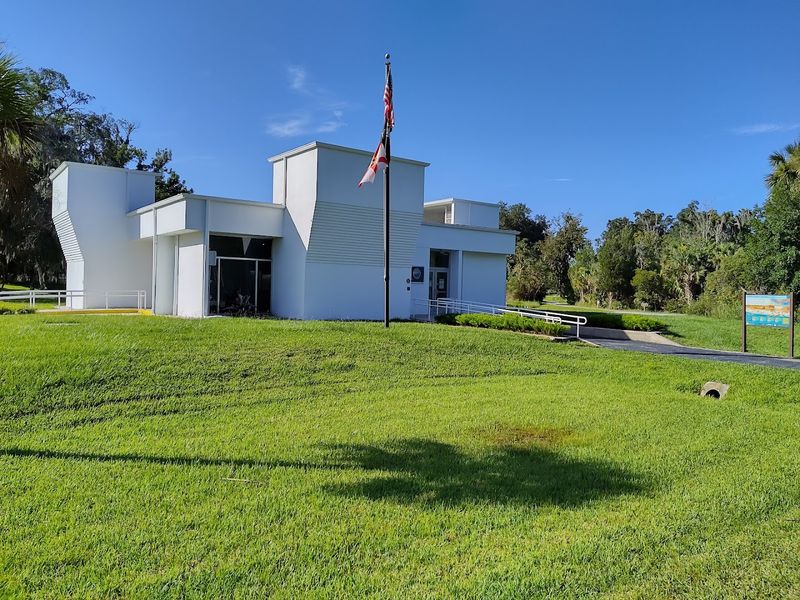
Inside the museum, cool air and careful labels distill the outdoor story into artifacts you can study up close. Pottery sherds, shell tools, and trade items reveal long distance connections across the Gulf.
A short film orients you, then the exhibits layer in detail without overwhelming.
Parents love the touch table because it turns curiosity into safe hands on learning. Staff and volunteers answer questions clearly, often connecting pieces in the case to features outside on the plaza.
That bridge makes a second walk feel richer, because you now recognize form, function, and symbolism.
Budget 20 to 30 minutes, longer if you read every panel. Snap photos of key timelines to reference on the trail, and note terms like midden, plaza, and mortuary for context.
If it is hot or raining, the museum becomes a welcome pause that keeps your visit comfortable. Ask about current research and any evening programs.
You leave ready to read the landscape with better eyes.
Wildlife Watching Along the River
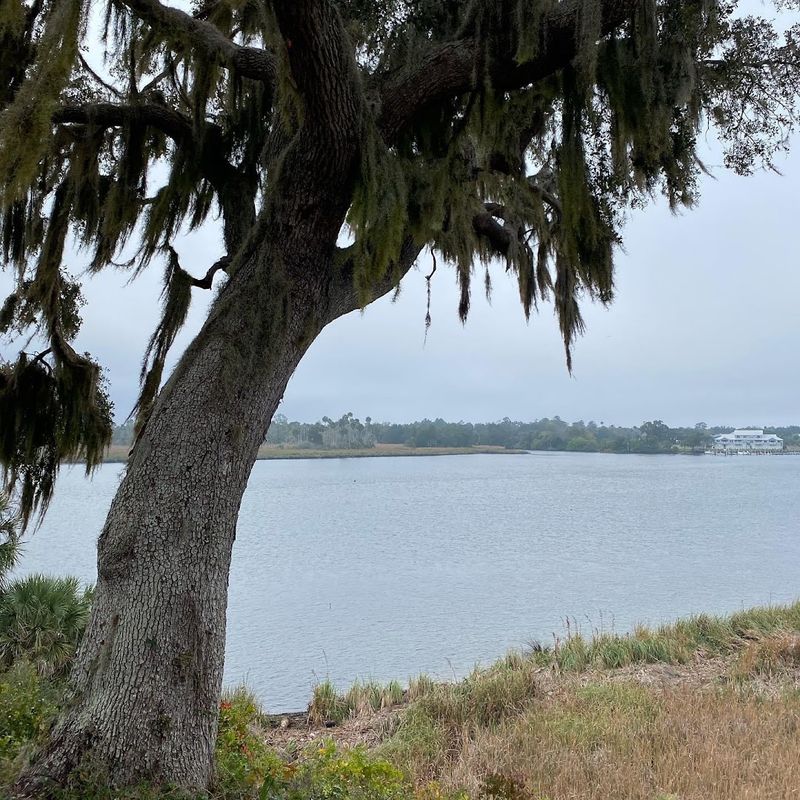
The shoreline often steals the show with pelicans drafting low and dolphins carving brief arcs offshore. On cooler days, manatees loaf near the edges where spring fed water stays inviting.
Bring polarized sunglasses so the surface glare does not hide subtle movements.
Quiet helps, so keep voices low and give wildlife generous space. A compact binocular pairs well with this short trail, letting you scan channels without heavy gear.
Look for osprey platforms, listen for fish splashes, and note tide levels because activity changes with current and light.
Mornings are best for calm water and soft color. If you plan to fish elsewhere afterward, this stop becomes a perfect scouting point for bait and tide cues.
Respect posted boundaries and stay off sensitive banks to protect both habitat and history. A few patient minutes pay off with sightings that feel like gifts, not guarantees.
Even on slower days, the river view alone is worth the pause.
Accessibility and Family Friendly Tips
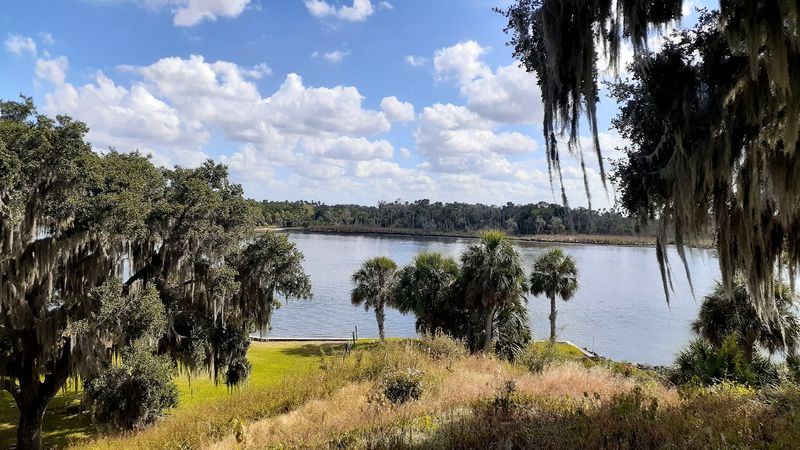
Smooth asphalt paths make most of the core area friendly for strollers and wheelchairs. Grades are modest, and benches offer rest stops with shade from live oaks.
The mound staircase is the steepest section, so consider sending one person ahead for photos if stairs are a challenge.
For families, a simple checklist keeps energy high. Pack water, sun protection, and a lightweight snack to enjoy on a bench with a river view.
Turn signs into quick prompts by asking kids to spot landforms or animals before you read the panels together.
Morning visits cut heat, bugs, and glare. If no see ums are active, a light repellent and long sleeves help without overpacking.
Bathrooms are close to the museum, which is handy for short attention spans and cooling off. Keep the pace unhurried and the route short, then reward curiosity with the overlook’s big view.
The site feels manageable and meaningful in a single hour.
Essential Planning: Hours, Fees, and Etiquette
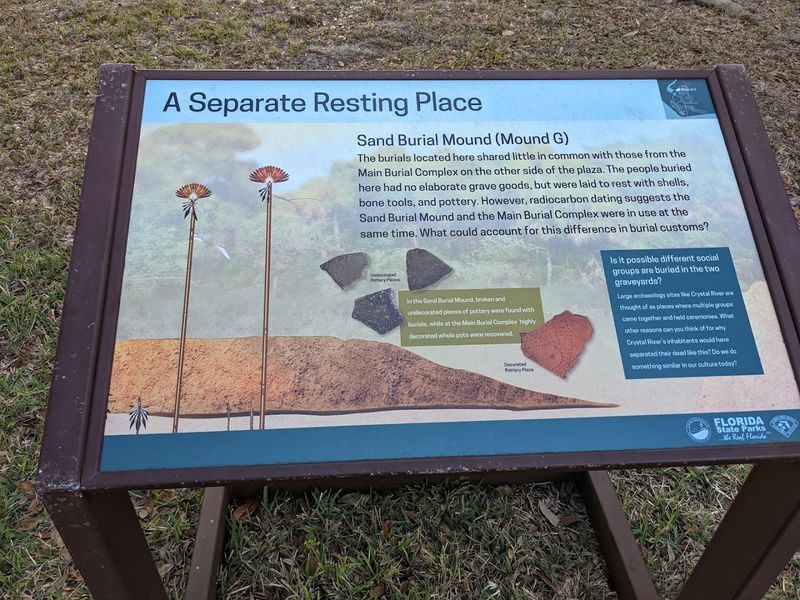
Planning is simple, and a little prep smooths the visit. The park typically opens 8 AM to 6 PM, with a $3 per vehicle fee paid by envelope or QR code at the entrance.
Keep a few singles in the glove box as backup and screenshot the hours in case cell service dips.
Etiquette matters because this is a sacred landscape as well as a research site. Stay on designated paths, do not climb non stair mounds, and never collect artifacts or shells.
Speak quietly near interpretive areas to honor the place and those connected to it.
Pack water, hat, sunscreen, and bug spray, then leave no trace. Dogs should remain leashed and off the mound stairs if they are nervous around heights.
If the museum is closed when you arrive, you can still walk the grounds and read panels for context. A respectful hour here pays back with clarity and calm.
That mindset also helps kids understand why rules protect meaning.
Nature Trails Beyond the Core Site
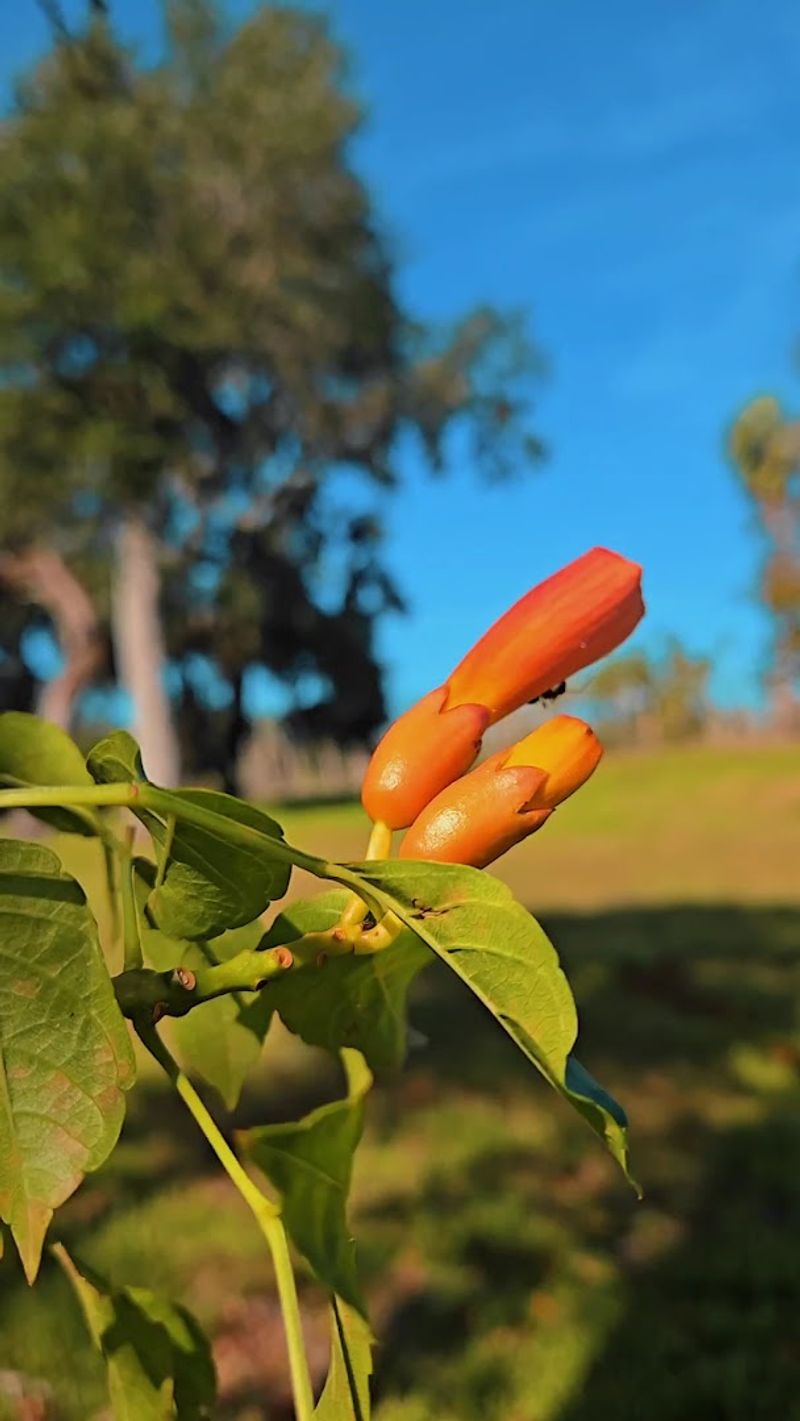
Beyond the plaza, quieter paths thread through coastal hammock where shade gathers and bird calls echo. Surfaces shift from pavement to natural tread, so closed toed shoes earn their keep.
You trade interpretive signs for subtle cues like tracks, scat, and wind patterns in the leaves.
Carry a small field guide or app to log sightings. Egrets, herons, and songbirds punctuate the canopy, while crabs scuttle near damp edges after rains.
If you stop to listen every hundred steps, the habitat explains itself without much talking.
These trails feel wilder, so bring water and keep your route in mind. Mosquitoes can flare after wet spells, making a light repellent essential for comfort.
Set a turnaround time to avoid overcommitting, then enjoy the contrast when you return to the open plaza. Mixing both zones keeps the visit balanced and energizing.
You end with history in your head and a bit of Florida wilderness under your shoes.