
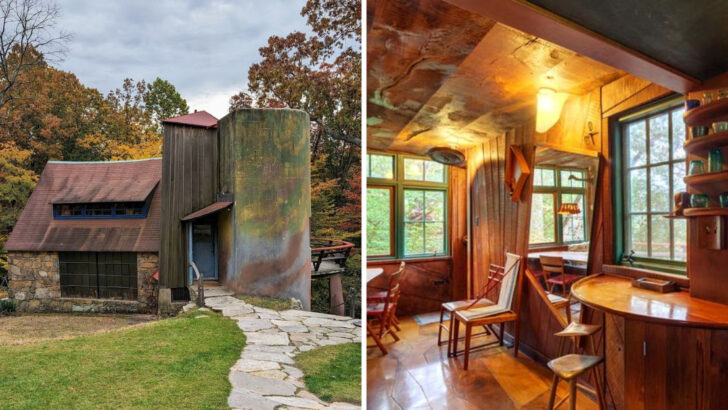
Tucked along a wooded lane in Malvern, this studio-turned-museum feels like stepping into an artist’s sketch come to life. Every surface whispers with tool marks, curves, and ideas carved straight into the home itself.
Book a timed tour and you will find stories tucked behind doors, under stair treads, and across sculpted furniture. It is small, intimate, and unforgettable if you love design, craft, or the spark of a mind at work.
The Iconic Spiral Staircase
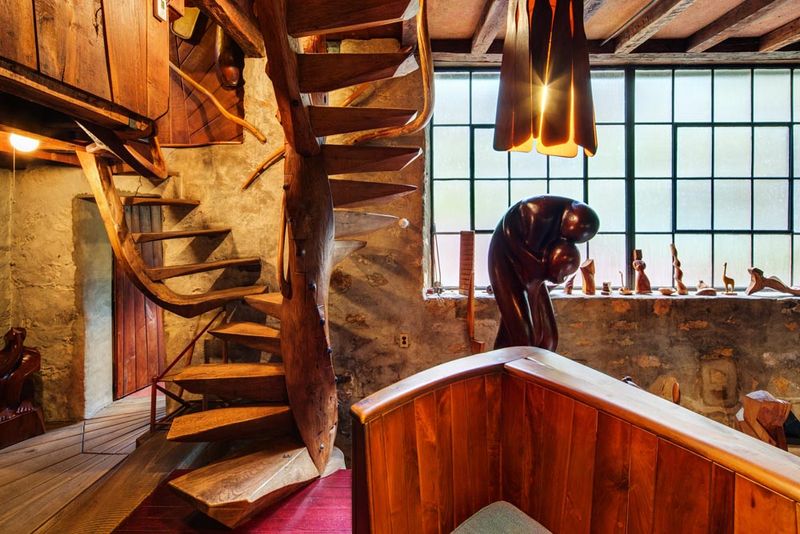
Footfalls become measured on those tapering, muscular steps. Each tread flares at the edge like a leaf, encouraging careful placement without scolding.
The central post feels grown rather than built, spiraling with quiet confidence. You reach for the rail and feel the tool work, not sanded anonymity.
It is not grand in size, but it commands attention by being honest. Function leads, poetry follows, then they trade places when you are halfway up.
Light from skinny windows lands on the grain and turns the staircase into a sundial. Time is kept in wood here, not numbers.
Some visitors pause at the landing just to breathe. The perspective shift frames the studio like a camera shot, revealing arcs and diagonals that were hiding at eye level.
Safety matters too, and guides encourage deliberate pacing. Take it slowly, and the staircase returns the favor by revealing its logic step by step.
Doors, Latches, and Hardware
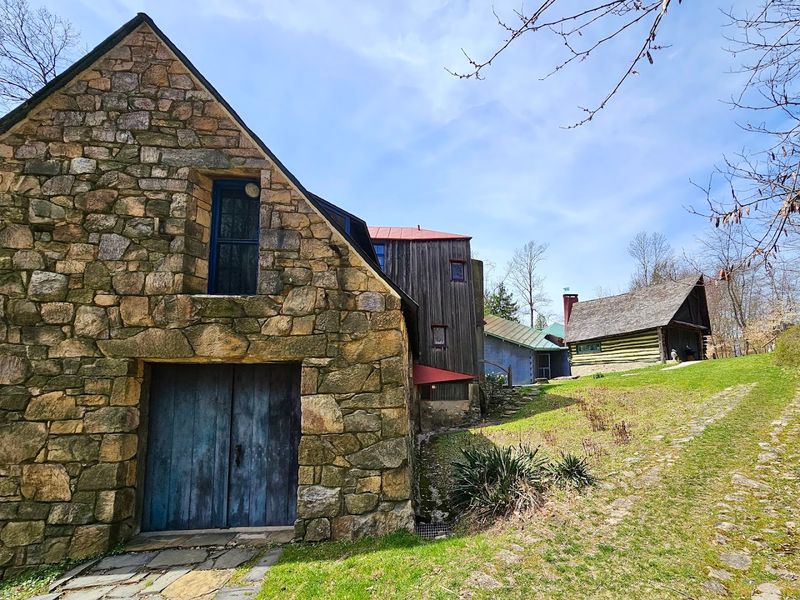
Hands understand this place before your brain does. Latches turn with a steady arc that feels inevitable, as if your wrist rehearsed it years ago.
Hinges sink into the frame like knuckles. Even the smallest screws were chosen thoughtfully or overridden by joinery when metal felt too loud.
Guides love to demonstrate a latch that closes with a whisper. You can watch visitors smile after the first click, a tiny performance repeated all day.
Hardware becomes choreography. Movement is designed, not merely allowed, and suddenly you notice how most doors elsewhere simply tolerate you passing through.
There is no ornament for ornament’s sake. Shapes are reduced until only the gesture remains, then softened until a thumb finds rest.
You will leave thinking about your own cabinets, plotting a better handle or a kinder edge. Good design is persistent that way.
It follows you home and asks for small, humane changes.
The Hand-Carved Studio Home
Walk through the front door and the walls feel alive with grain and intention. You notice rounded corners that catch the light like sculpture, and cabinets with pulls shaped to a fingertip’s memory.
Nothing is purely decorative here. Every curve solves a problem, then winks at you for paying attention.
Guides point out how Esherick stitched ideas together over four decades, adding rooms like sentences. Floors tilt, ceilings swoop, and yet it all reads clearly once your eyes adjust.
Take a moment at the threshold, then follow the flow. Your body will tell you where to step next better than any sign could.
Practical details land hardest. Hinges are placed where movement wants to happen, not where blueprints insist.
Joinery nests into shadows, so surfaces remain uninterrupted and calm. You leave noticing how your own home could invite hands, not just eyes, to understand space.
That lesson keeps echoing long after the tour ends.
The Shingled Exterior and Studio Additions
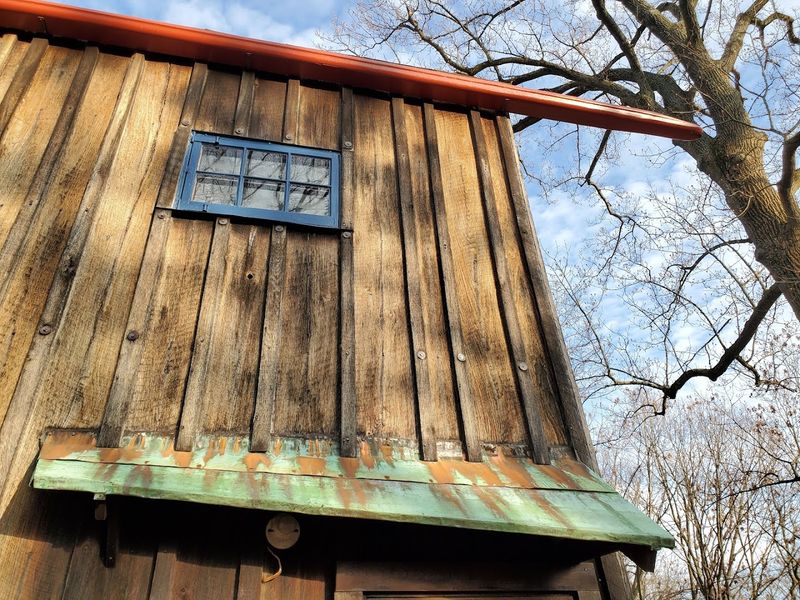
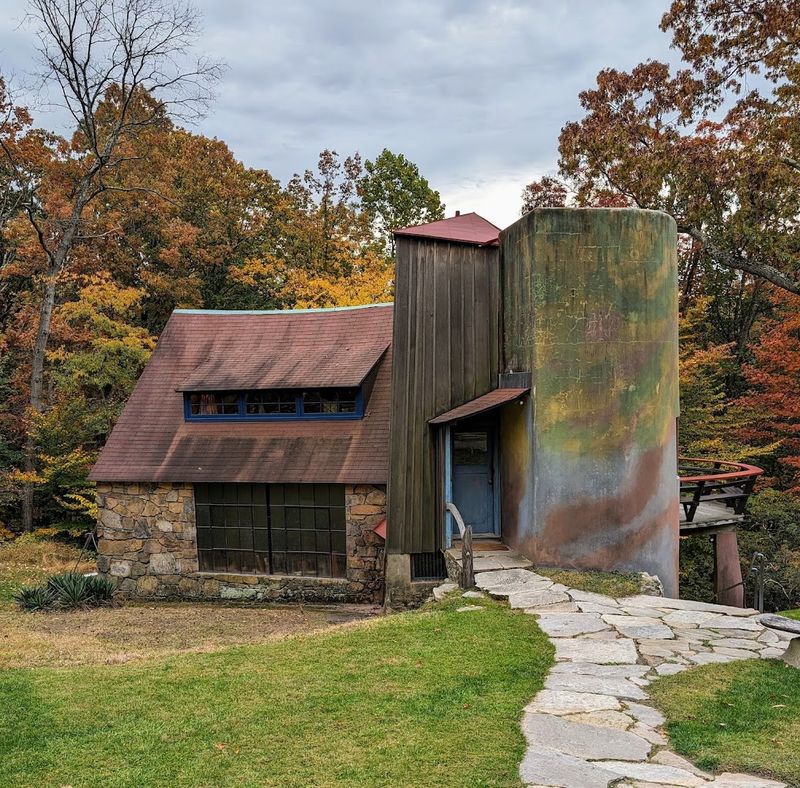
From the path, the building looks like it settled there on purpose. Shingles wrap curves without fuss, and the stone base anchors it to the hillside.
You can read time in the layers of additions. Rooms accreted like shells, each solving a new need, each admitting a new idea.
Nothing aims for symmetry just to soothe nerves. Rooflines tilt to catch light or to shrug off snow, not to please a ruler.
Even the garage roof has a story, which guides point out with pride. These choices feel playful until you notice how practical they are across seasons.
Stand outside a moment after the tour and listen. Wood creaks, birds comment, and the studio breathes with the trees.
Architecture becomes a conversation partner instead of a monument. The effect is humble, almost domestic, and that makes the artistry land harder.
It is a working life, crystallized in cedar and stone.
The Kitchen and Everyday Objects
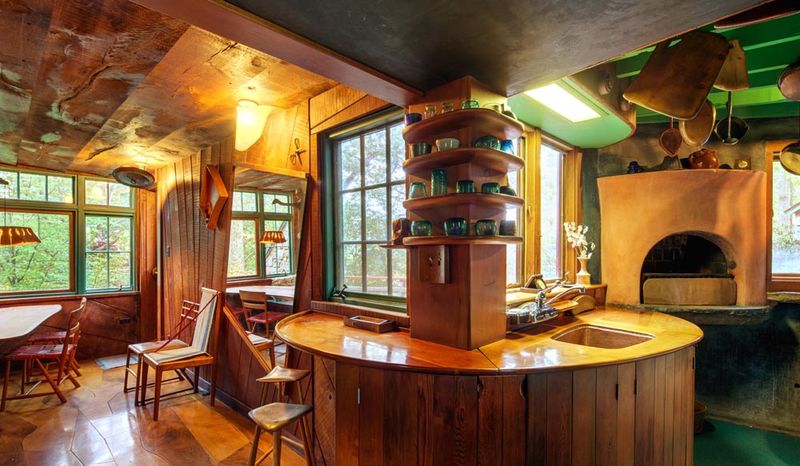
Daily life turns into a studio exercise in here. Drawer pulls nest into fingers, and shelves curve around bowls like friendly parentheses.
You can picture breakfasts at the tiny table, steam rising while sun sneaks through narrow windows. It feels lived in, not staged, and that makes every detail easier to trust.
Utensils show the same discipline as the furniture. Handles thicken where stress happens, then taper where balance matters.
Nothing fights your grip. You start to sense the designer’s empathy, tested hundreds of times by repetition, then refined to a quiet, repeatable comfort.
Visitors often ask for photos, but the best snapshots are tactile. Lightly skim a surface when invited, and you will feel the rhythm of chisels frozen mid phrase.
That texture breeds patience. Suddenly the pace of a 90 minute tour feels reasonable, because the room persuades you to slow down and notice.
Prints and the Block Printing Legacy
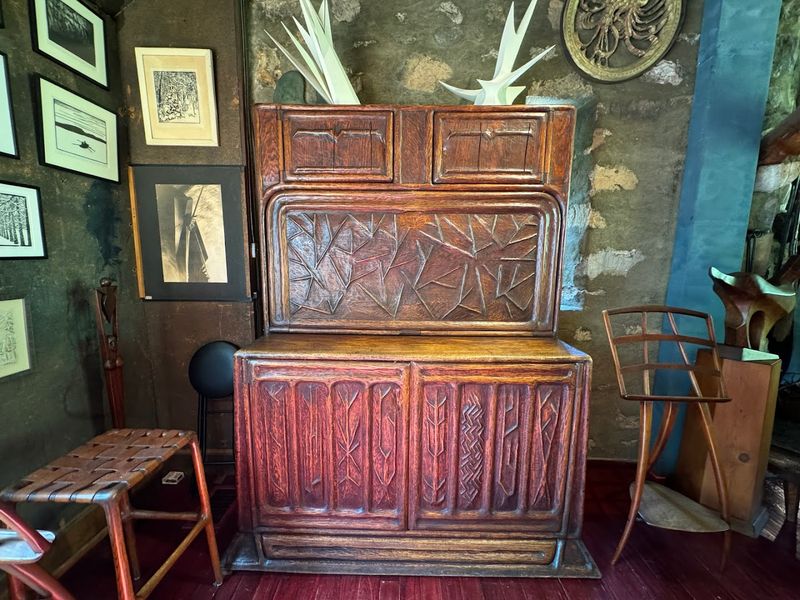
Before furniture took center stage, prints carried the spark. Carved blocks reveal a love of line that never left the work, even when pieces grew three dimensional.
You can trace motifs from paper to chair leg, from ink to stair tread. The vocabulary stays consistent, only the grammar changes.
Guides unpack the process with satisfying clarity. Blocks, brayers, paper selection, registration marks, and the decisive pull of a first impression.
It is small scale drama, and you are front row. Seeing the blocks beside finished prints makes the leap tangible, not theoretical.
Designers in the group often nod quietly. Flat patterns become curved volumes in your head, and suddenly furniture reads like a printed page that learned to breathe.
If you sketch, bring a notebook for insights. The museum’s intimacy helps ideas land quickly, then stick.
You walk out wanting to carve marks into your next project, literal or not.
The Writing Desk and Built-In Workspaces
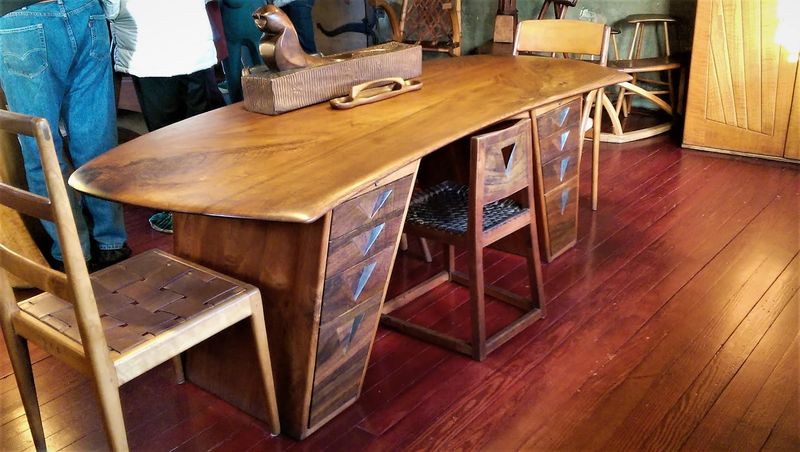
There is a corner where concentration seems to gather. A writing surface swells gently at the edge, keeping papers honest without scolding sliding elbows.
Drawers ride smoothly, and the chair asks your spine to participate instead of slouch. Work becomes a physical dialogue, not just a mental sprint.
Esherick treated desks like tools, tuned to a user and a task. Heights are negotiated with the body, not inherited from a standard.
Even the way light falls across the grain reduces glare. You end up noticing fewer distractions and more intention, which is the whole point of a dedicated workspace.
People whisper here without being asked. The room holds concentration the way a good library does, yet it remains warm and personal.
Built-ins corral clutter before it ever starts. You leave thinking productivity might be a design problem, solvable with a kinder chair and a forgiving edge under your wrists.
Windows, Light, and Sightlines
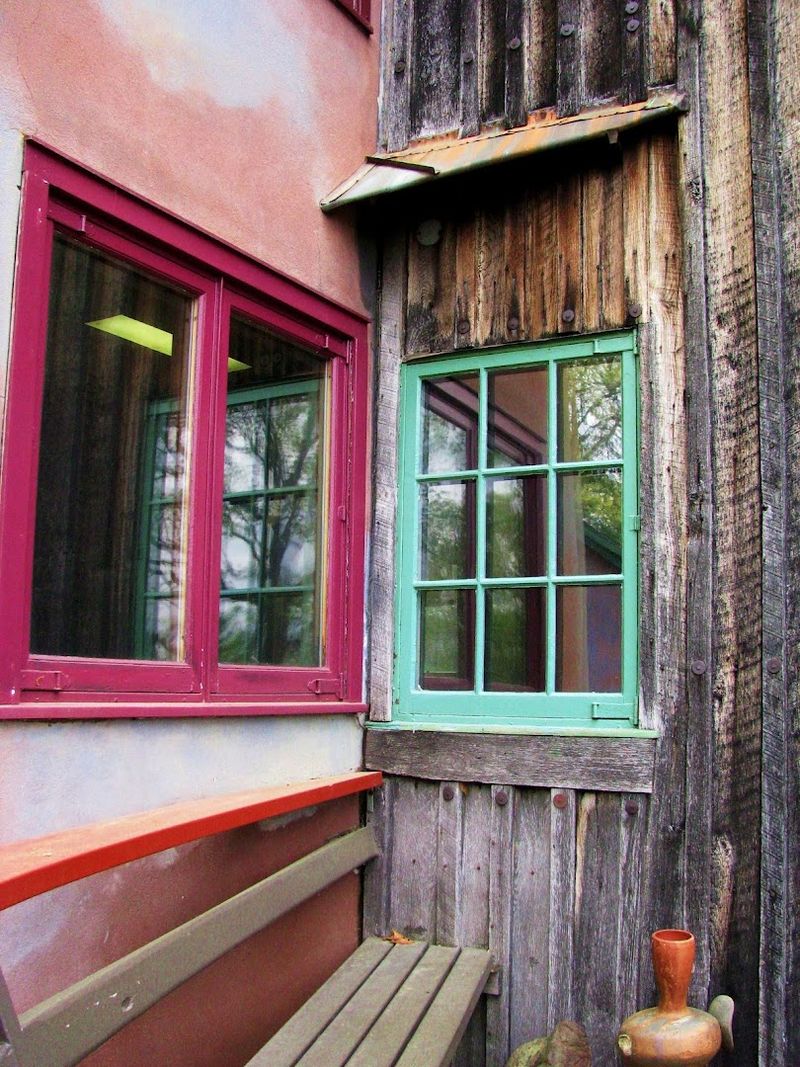
Light arrives like a polite guest, never barging in all at once. Narrow windows slice the woods into vertical tapestries, then toss patterns across floors and rails.
Your eyes follow those stripes into the next room, where frames become invitations rather than boundaries. Sightlines are edited with care.
This is not about brightness. It is about placement that keeps you aware of time.
Morning light warms work surfaces. Afternoon light softens the staircase.
Evening turns everything amber. You feel orientation in your bones, which is grounding in a small, busy space.
Guides sometimes ask visitors to stand still and turn slowly. Angles reveal themselves like pages flipped by a breeze.
The payoff is a series of small reveals instead of a single panorama. That restraint suits the studio’s scale, and it makes the whole visit feel like a conversation unfolding at a friendly pace.
Tours, Tickets, and Timing Tips
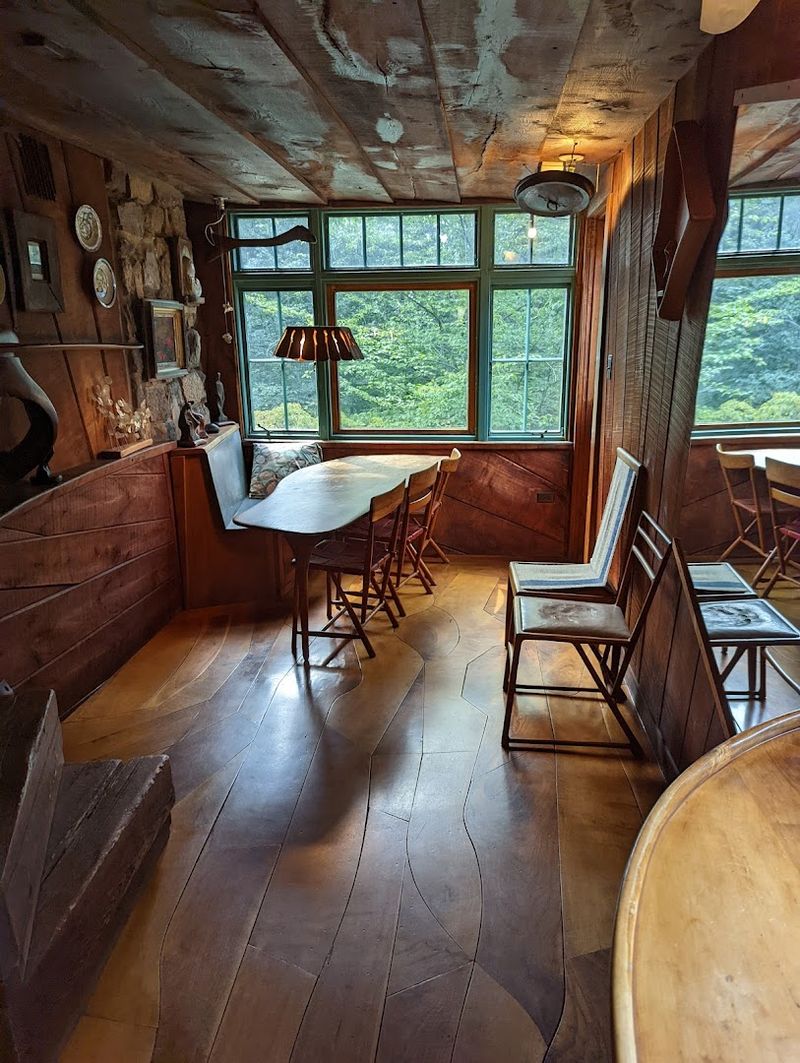
Small groups keep the experience personal. Advance tickets are essential, and waitlists sometimes come through if you are flexible.
Tours run about 75 to 90 minutes, with portions outside on uneven paths and inside on narrow stairs. Mobility needs should be discussed ahead, and main floor options still deliver rich stories.
Guides shine here. Many bring backgrounds in architecture or woodworking, linking tiny details to bigger ideas without jargon.
Questions are welcomed, and patience is the norm. Arrive a few minutes early to settle parking, silence your phone, and reset your pace to match the house’s rhythm.
A practical note helps the day go smoothly. Comfortable shoes matter, and light layers suit the hillside weather.
Photography rules can vary by area, so ask before snapping. Most important is attention.
The more you notice, the more the place gives back, echoing in your projects and conversations for weeks.
Location, Context, and Planning Your Visit
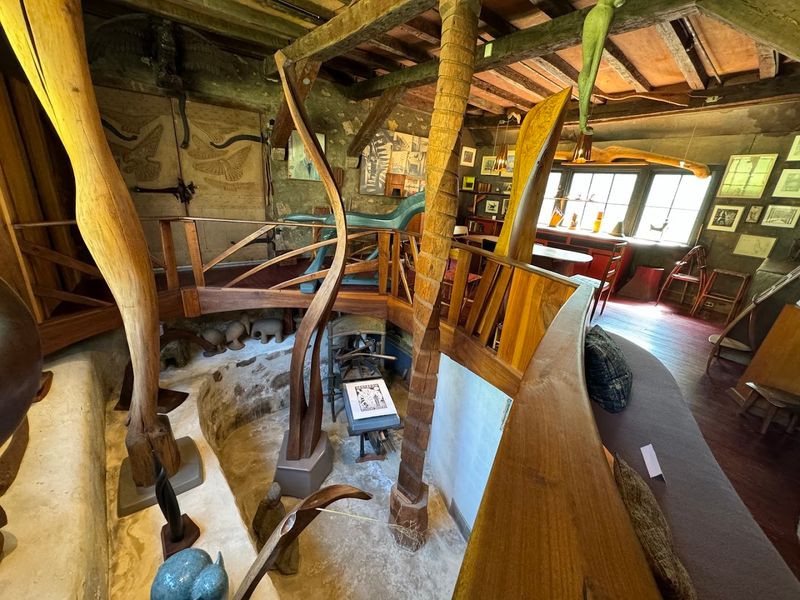
A quiet road in Malvern opens to a hillside where the studio sits tucked among trees. It is a short drive from Philadelphia, yet it feels worlds away once you step onto the path.
The address is 1520 Horse Shoe Trail, with parking signed and straightforward. Phone and website details make planning painless.
Context matters for understanding the work. Landscapes filter the light, informing materials and temperature swings that a builder must respect.
You can feel those choices outside before you ever touch a stair rail. Nearby, the region’s crafts tradition still hums, and the museum connects visitors to that living network.
Plan with weather in mind, since a slice of the tour happens outdoors. Spring brings deer sightings and fresh greens, while autumn sharpens shadows.
Winter gives the shingles a quiet voice. Bring curiosity and time.
You will want both, because the studio’s lessons arrive steadily and reward anyone who lingers.