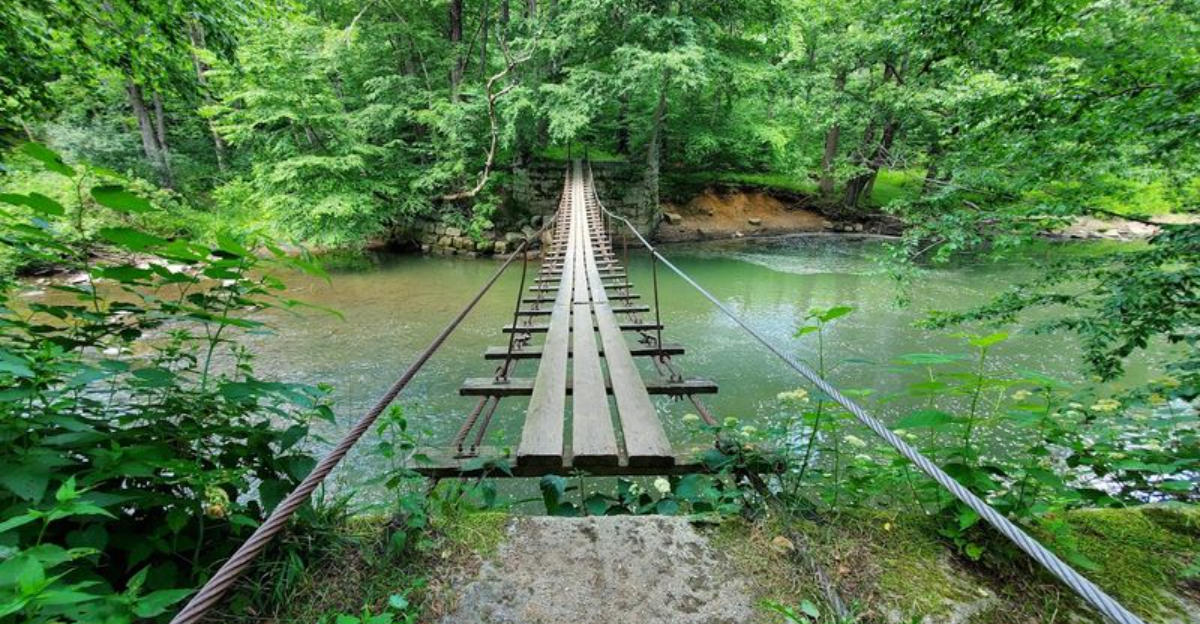
Pennsylvania is full of beautiful trails, but some hikes have a little extra magic built right into them.
Swinging bridges — those bouncy, swaying footbridges suspended over creeks and rivers — have a way of turning an ordinary walk into something you talk about for weeks.
Whether you are crossing a roaring river or a quiet woodland stream, stepping onto a bridge that moves beneath your feet is a feeling like no other.
From old-growth forests to river gorges, these nine bridges are scattered across the state and each one brings its own brand of unforgettable adventure.
Cook Forest State Park Swinging Bridge (Leeper)
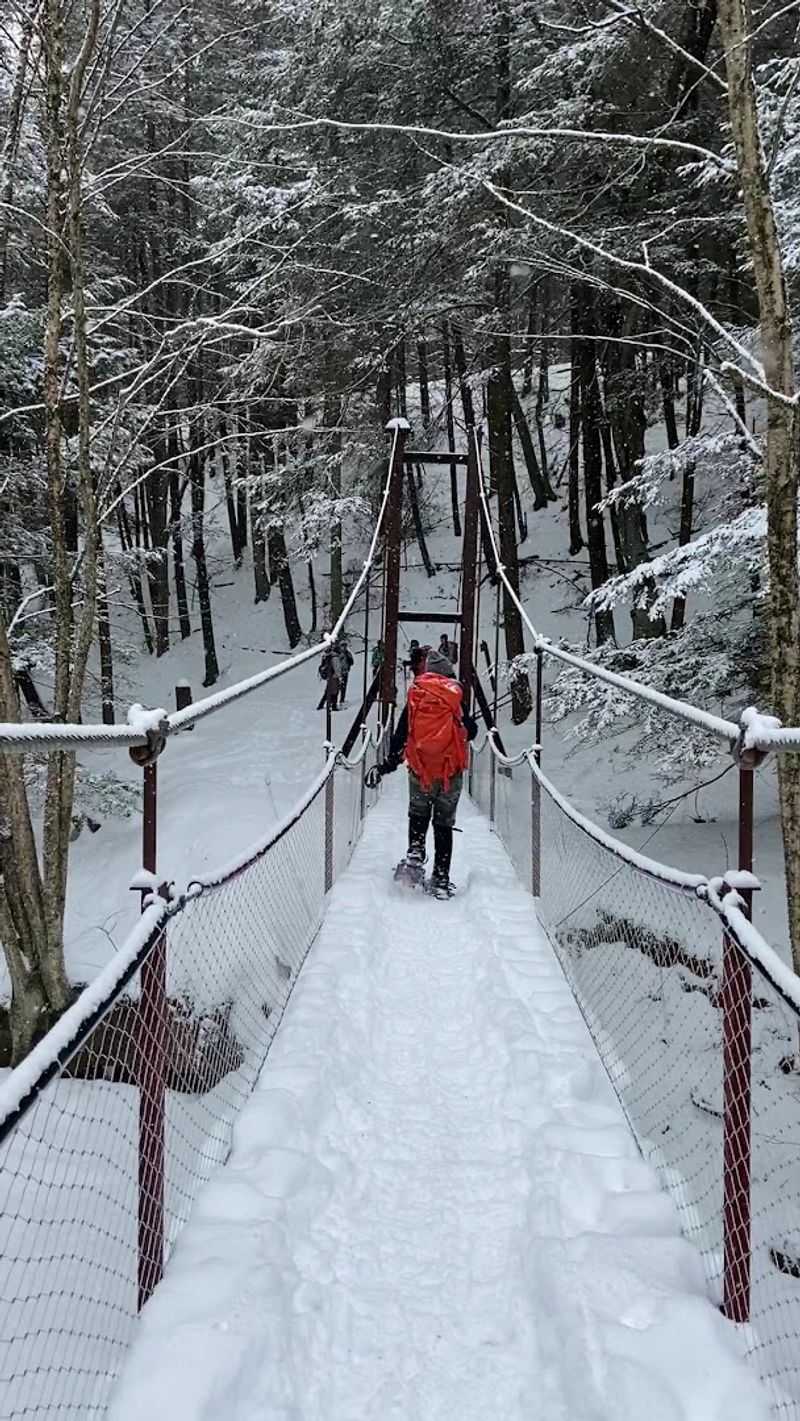
Walking through Cook Forest State Park already feels like stepping back in time, thanks to its ancient towering pines and hemlocks. Then you round a bend on the trail and find a gently swaying wooden bridge stretched across a quiet forest creek — and everything gets a little more exciting.
The bridge is easy enough for kids and older adults, making it one of the most welcoming suspension bridge experiences in the state.
Multiple trails lead to the bridge, so you can approach it from different directions depending on how long you want to hike. The sway is noticeable but not overwhelming — just enough to put a grin on your face without making your knees go weak.
Families with young children especially love this spot because it delivers a real thrill without any serious risk.
Cook Forest is already a top destination for nature lovers across Pennsylvania, and this bridge is one of the reasons why. Pair the crossing with a walk through the Forest Cathedral area nearby, and you have a half-day outing that feels genuinely special.
Pack a snack, wear comfortable shoes, and let the forest do the rest of the work.
Little Toby Creek Swinging Bridge (Brockway)
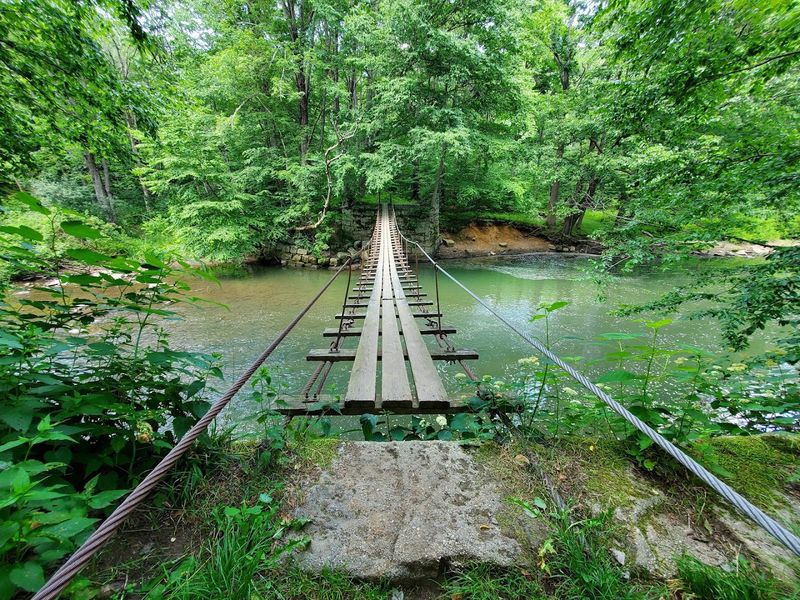
Not every bridge is designed to comfort you — and the Little Toby Creek Swinging Bridge makes that crystal clear the moment you step onto it. Minimal side support, visible movement, and a raw, no-frills construction make this one feel genuinely adventurous.
If you have ever wanted a bridge that actually challenges your nerve, this is the one worth seeking out.
Located just off the Allegheny Valley Rail Trail near Brockway, it is technically a short detour from a casual bike or walking path. But that short detour changes the entire energy of the outing.
Suddenly you are gripping the cables, watching the planks shift under your weight, and laughing at the rush of it all.
The surrounding scenery along Little Toby Creek adds to the experience — the water moves fast over smooth rocks, and the forested banks give the whole area a wild, untamed feel. This bridge is not polished or picture-perfect, and that is exactly what makes it memorable.
First-time visitors often describe it as unexpectedly intense for something so small. Come with a sense of humor, bring a friend, and enjoy one of Pennsylvania’s most surprisingly exhilarating short detours.
Hyde Park Walking Bridge (Leechburg)
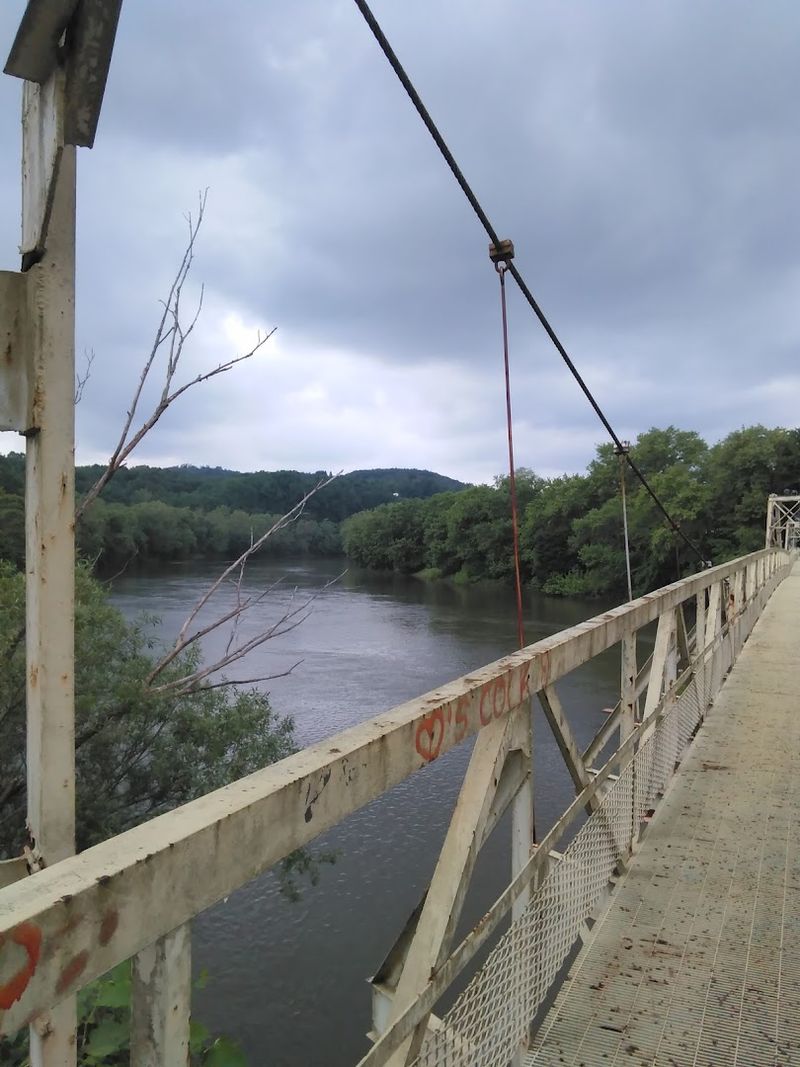
Six hundred feet long, suspended high above the Kiski River, and built with metal grating you can see right through — the Hyde Park Walking Bridge does not ease you into the experience. Every single step is an event.
Looking down through the grating at the river far below is the kind of moment that makes your stomach do a little flip, whether you are ten years old or forty.
Pennsylvania has plenty of swinging bridges, but none of them match the sheer drama of this one. The length alone sets it apart — by the time you reach the middle, you are genuinely far from both shores, with nothing but open air and river below you.
The bridge sways with each gust of wind and each footstep, adding a layer of sensory intensity that shorter bridges simply cannot replicate.
Leechburg is a small town, and this bridge has become one of its most talked-about landmarks. Locals cross it regularly, but visitors who discover it for the first time often stop mid-span just to take it all in.
Bring a camera, hold on to the cables, and give yourself permission to stand in the middle and feel genuinely amazed. Few experiences in western Pennsylvania compare.
Trough Creek State Park Suspension Bridge (James Creek)
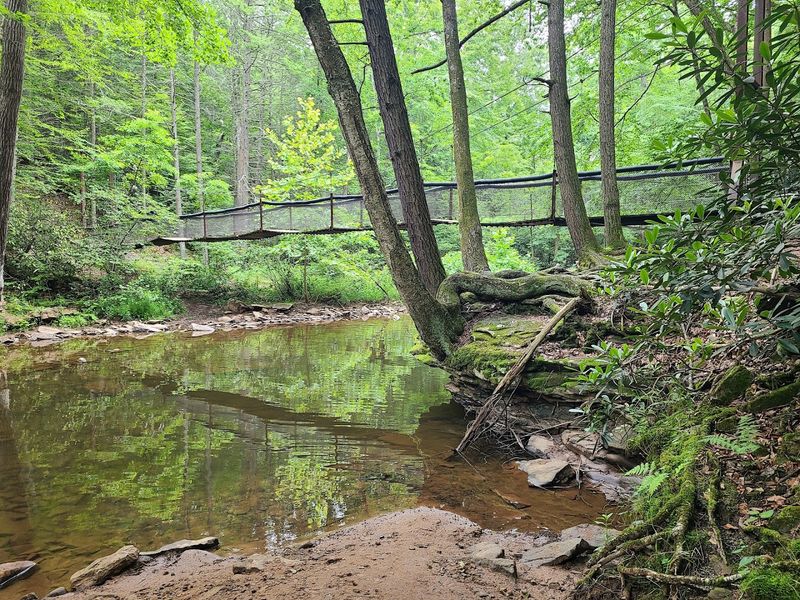
Trough Creek State Park packs a remarkable amount of scenery into a relatively short stretch of trail. Waterfalls, dramatic rock formations, cliffside views, and the iconic Balanced Rock are all within reach — and the suspension bridge ties it all together.
Crossing it mid-hike feels like a reward rather than just a transition from one side to the other.
The bridge has a steady, rhythmic sway that most hikers find more fun than frightening. It is accessible enough for families and older visitors, making it one of the more inclusive suspension bridge experiences in the state.
Still, do not let that accessibility fool you — the setting is genuinely stunning, especially during fall when the surrounding hillsides explode with color.
Trough Creek is located in Huntingdon County, a part of Pennsylvania that does not always get the attention it deserves from hikers. This trail changes that conversation quickly.
The combination of geological curiosities, cascading water, and a swinging bridge creates a hike that hits all the right notes. Plan to spend at least two hours exploring the full loop.
Bring water, watch your footing on the rocky sections, and save the bridge crossing for a moment when you can truly enjoy it.
Cedar Creek Gorge Trail Bridges (West Newton)
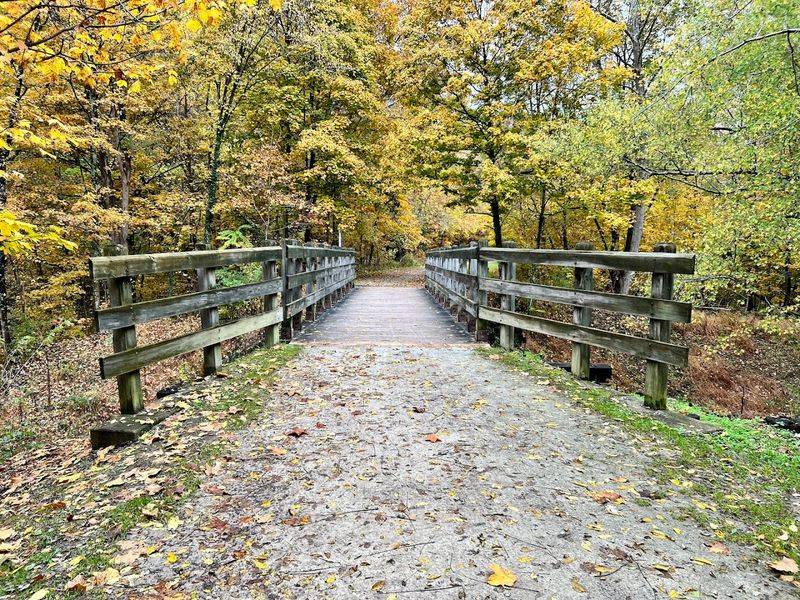
Most trails give you one swinging bridge if you are lucky. The Cedar Creek Gorge Trail near West Newton gives you two.
Each bridge crosses Cedar Creek at a different point along the gorge, and together they create a loop hike that feels dynamic from start to finish. The pair of crossings acts like natural punctuation marks — exciting moments that break up the rhythm of the walk in the best possible way.
Cedar Creek Gorge itself is worth the trip on its own merits. The narrow gorge walls rise steeply on either side of the creek, and the trail winds along the water through a mix of hemlocks, ferns, and exposed rock.
The bridges drop you right into that scenery rather than pulling you away from it.
West Newton is located in Westmoreland County, and this trail is one of the region’s best-kept secrets among serious hikers. The full loop is manageable for most fitness levels and takes roughly an hour and a half to complete at a relaxed pace.
Visiting in spring means you will catch the creek running high and fast, which makes the bridge crossings feel even more dramatic. Bring a friend and take turns leading — the view from the bridge is worth a photo every time.
Butler Swinging Bridge (Butler)
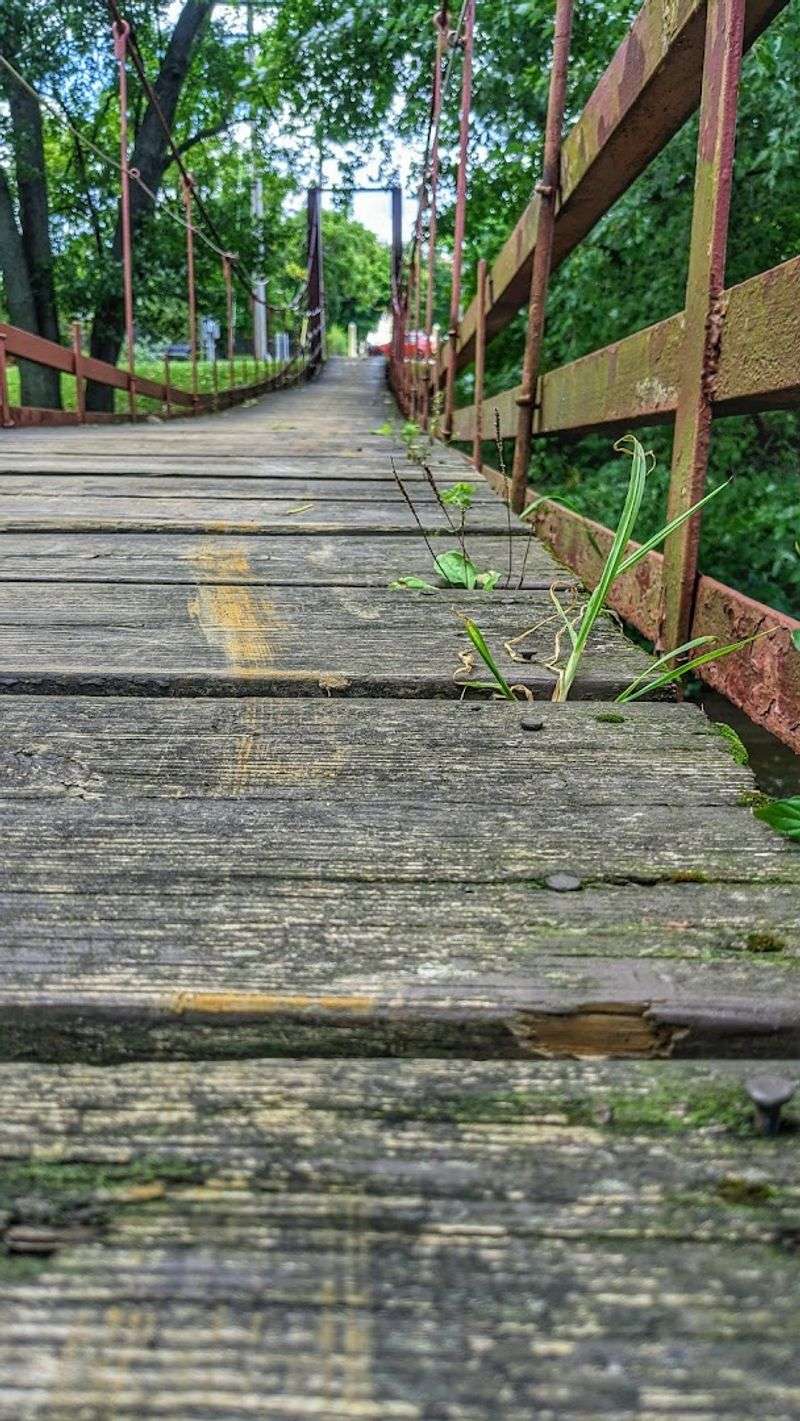
Do not let the modest size fool you — the Butler Swinging Bridge has more personality than its short span suggests. Located in Butler Borough and connecting two local green spaces, this bridge has a lively, bouncy quality that catches first-time visitors completely off guard.
Step onto it expecting a calm crossing and you will quickly realize it has other plans.
What makes this bridge charming is its everyday accessibility. You do not need a trail map, a packed lunch, or a full Saturday to enjoy it.
A quick walk through town, a stop at the bridge, and a bit of bouncing is all it takes. Kids absolutely love it, but adults tend to linger longer than they expected, too.
Butler is a small city with a lot of local pride, and this bridge is one of those quirky, beloved landmarks that residents mention when outsiders ask what makes their town worth visiting. It is unpretentious, a little wobbly, and completely joyful.
Sometimes the simplest experiences leave the biggest impressions, and this bridge is proof of that. If you happen to be passing through Butler on your way to somewhere else, take ten minutes and make the detour.
The bounce is absolutely worth it.
Millersburg Swinging Bridge (Millersburg)
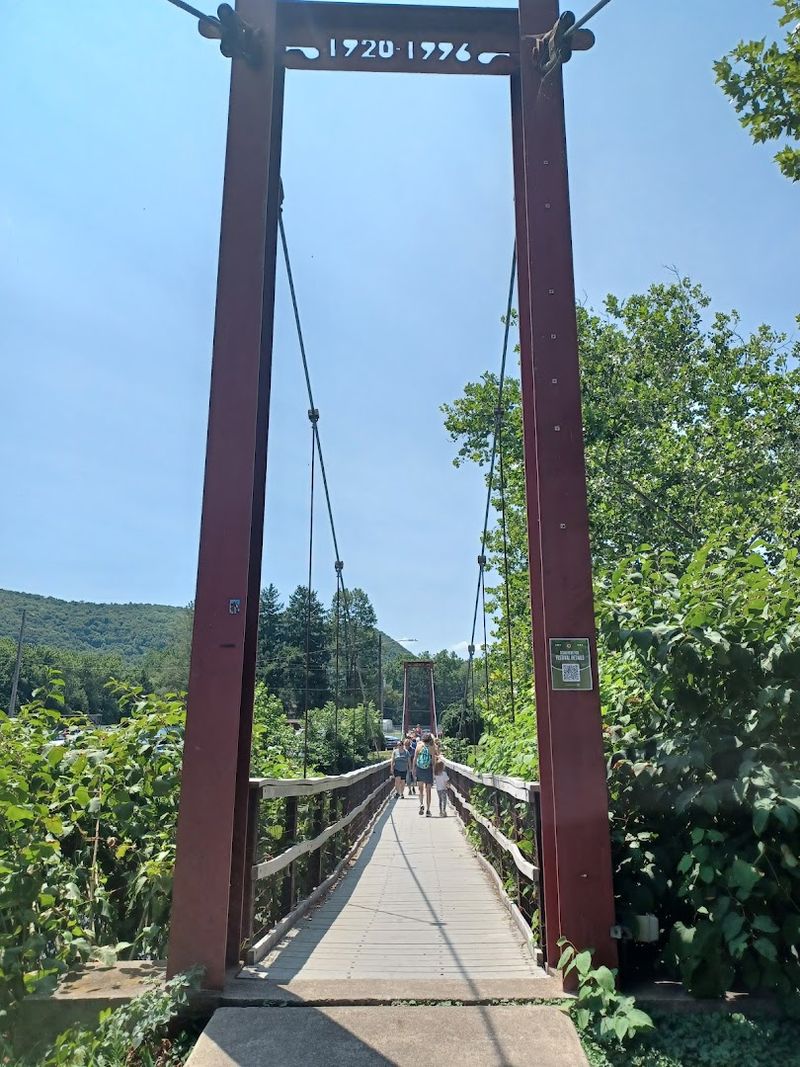
Not every great swinging bridge requires a rugged hike to reach it. The Millersburg Swinging Bridge is a genuine pedestrian suspension bridge that crosses Wiconisco Creek and connects Riverfront Park to MYO Park — making it a natural part of a relaxed, walkable afternoon rather than a backcountry adventure.
That accessibility is one of its greatest strengths.
The bridge sways noticeably as you cross, earning its nickname among locals who have been bouncing on it for years. The surrounding parks give the whole area a comfortable, community-centered feel.
Families, dog walkers, and casual strollers all share the space, and the bridge becomes a social hub where strangers exchange smiles mid-crossing.
Millersburg itself sits along the Susquehanna River in Dauphin County, and the broader riverfront area offers plenty of reasons to extend your visit. Pack a picnic, let the kids run around the park, and make the bridge crossing the highlight of a low-key outdoor day.
The Millersburg Swinging Bridge may not sit inside a dramatic gorge or tower above a rushing river, but it delivers genuine charm and that unmistakable swaying sensation that makes these bridges so beloved across Pennsylvania. Sometimes the most memorable moments happen in the most unexpected, ordinary places.
Monocacy Park Suspension Bridge (Bethlehem)
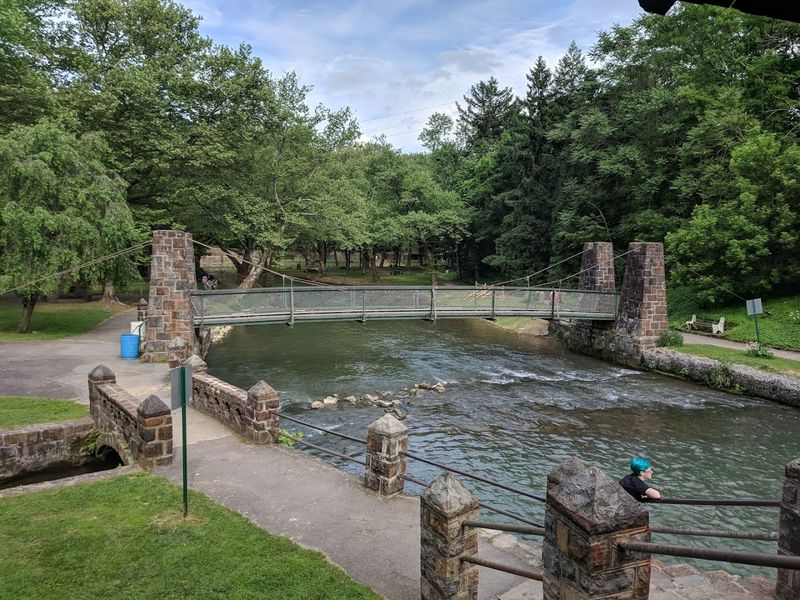
Built in the 1930s by the Works Progress Administration, the Monocacy Park Suspension Bridge carries more than just foot traffic — it carries history. The hand-cut stone towers and original steel cables give it an architectural gravitas that most modern footbridges simply cannot match.
Walking across it feels like stepping into a photograph from another era.
Monocacy Creek runs clear and calm beneath the bridge, and the surrounding parkland in Bethlehem provides a genuinely lovely backdrop. The bridge fits naturally into the broader park trail system, making it easy to incorporate into a longer walk along the creek corridor.
Mature trees line the banks on both sides, creating a canopy effect that is especially beautiful in late spring and early fall.
What sets this bridge apart from others on this list is the combination of historical craftsmanship and everyday usability. It was built to last, and nearly a century later it is still doing exactly that.
History buffs, architecture enthusiasts, and casual walkers all find something to appreciate here. Bethlehem is a city with deep industrial roots and a rich cultural scene, and this WPA-era bridge is a quiet but powerful reminder of the craftsmanship that shaped mid-century Pennsylvania.
Cross it slowly, look at the stonework, and appreciate what it took to build something this enduring.