Some places are so breathtaking that no camera can truly capture what it feels like to stand there.
From towering canyon walls to glowing volcanic fields, America holds landscapes that hit you differently in person — with smells, sounds, and a sense of scale that flat images just can’t deliver.
Whether you’re an outdoor adventurer or simply a curious traveler, these 20 wild American landscapes deserve to be experienced firsthand, not just scrolled past on a screen.
Grand Canyon, Arizona
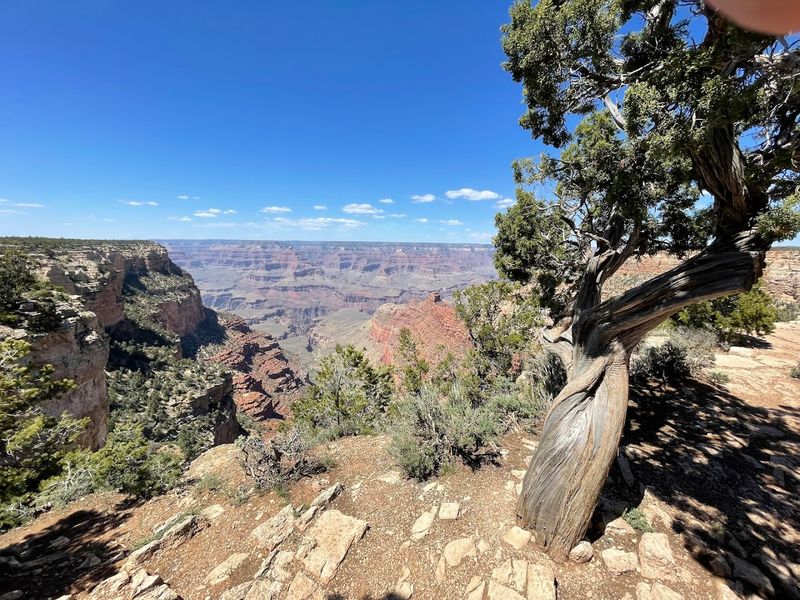
Standing at the rim of the Grand Canyon for the first time, most people go completely silent. No photo prepares you for the sheer drop that stretches over a mile straight down, or the way your brain struggles to process just how wide it really is.
Carved over millions of years by the Colorado River, the canyon’s walls tell a geological story written in colorful horizontal stripes. Each layer represents a different era of Earth’s history, and the colors shift dramatically as the sun moves across the sky.
Early morning light paints the rocks in soft pinks and purples, while midday turns everything a blazing orange.
The wind carries a dry, earthy smell that’s oddly calming. Hikers who descend into the canyon report that the experience feels like stepping into a completely different world — temperatures rise, sounds change, and the walls close in around you in a way that feels both thrilling and humbling.
Cameras flatten all of that into a single frame, losing the depth and the emotional weight that makes this one of Earth’s most unforgettable places.
Yellowstone National Park, Wyoming/Montana/Idaho
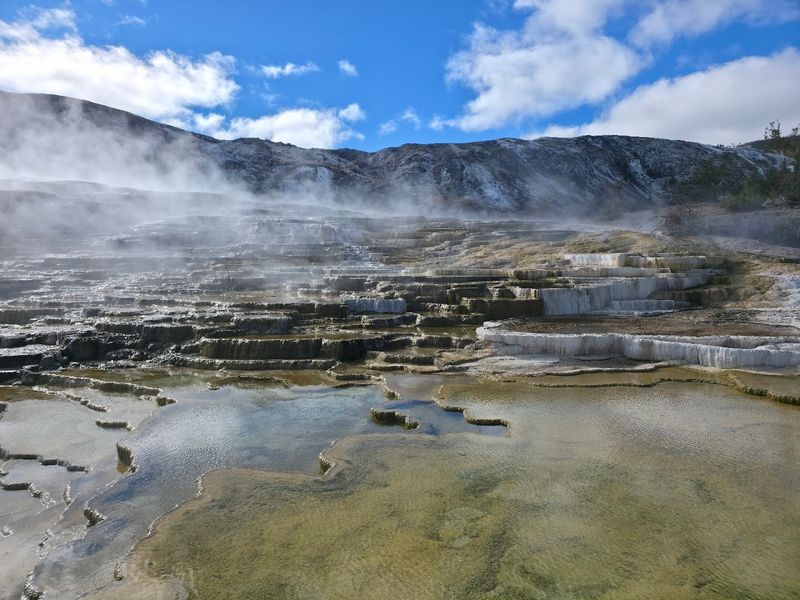
Yellowstone is basically Earth showing off. Nowhere else in the world can you watch a geyser blast boiling water 100 feet into the air, then turn around and spot a grizzly bear grazing in a meadow — all within the same afternoon.
America’s first national park sits on top of one of the world’s most active supervolcanoes, and the geothermal energy beneath the surface bubbles up in spectacular ways. The Grand Prismatic Spring shimmers with electric rings of blue, green, yellow, and orange — colors caused by heat-loving bacteria that thrive in scalding water.
Photos catch the colors, but they miss the sulfurous steam that drifts across your face and the low rumbling you feel through your boots.
Old Faithful erupts on a predictable schedule, drawing crowds who still gasp every single time. The surrounding forests stretch for miles, home to wolves, elk, bison, and black bears.
Visiting Yellowstone feels less like a nature trip and more like a reminder that the planet is still very much alive and doing its own thing, completely indifferent to human schedules or camera settings.
Denali National Park, Alaska
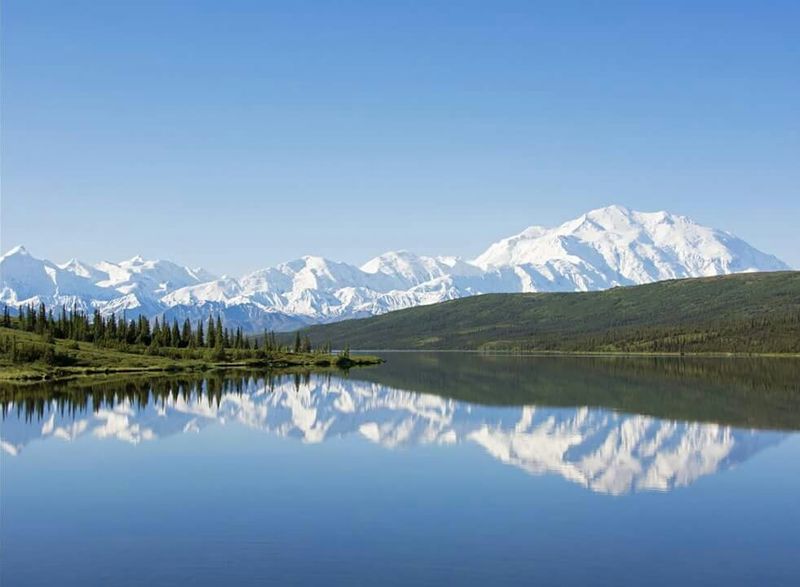
At 20,310 feet above sea level, Denali is the tallest mountain in North America — and standing anywhere near its base makes you feel like an ant next to a skyscraper. The scale here is simply beyond what human eyes are wired to process comfortably.
Most visitors never actually see the summit because the peak spends about 70% of the time hidden inside its own cloud system. When it does reveal itself, the sight is staggering — a white mass so enormous it seems to belong to a different planet.
The surrounding tundra glows gold and rust in autumn, and caribou move across it in slow, unhurried herds that seem completely unbothered by the cold.
Silence is one of Denali’s most powerful features. Away from the single park road, the stillness is so complete that you can hear your own heartbeat.
No traffic, no crowds, no cell service — just wind, snow, and the occasional distant howl. Photographers have spent entire careers trying to capture Denali’s majesty, and while their images are stunning, nothing substitutes for the raw, physical feeling of standing small beneath something so impossibly grand.
Antelope Canyon, Arizona
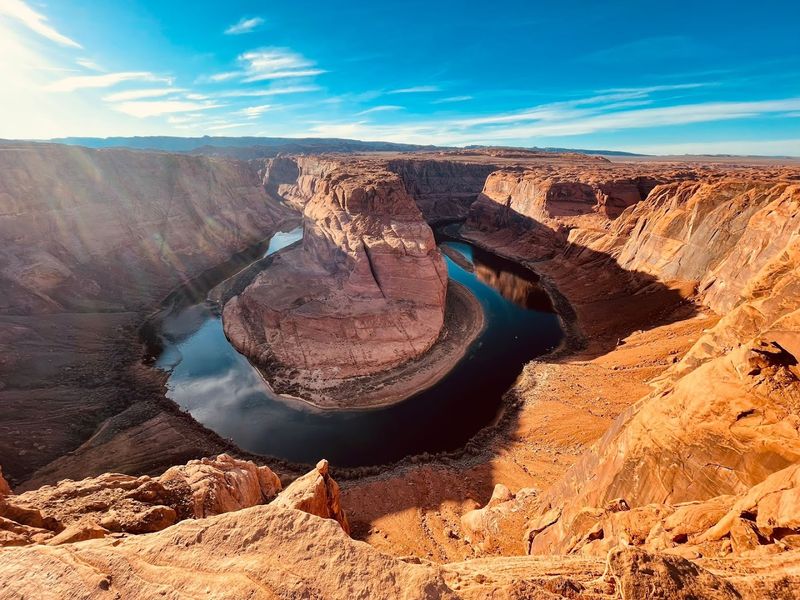
Antelope Canyon looks like something an artist dreamed up rather than something water and wind actually carved. The walls curve and swirl in fluid shapes that seem almost liquid, glowing warm orange and deep red as light filters down from narrow openings above.
Located on Navajo land near Page, Arizona, the canyon is split into two sections — Upper and Lower Antelope Canyon. Upper Canyon is wider and more accessible, while Lower Canyon requires climbing ladders through tighter passages.
Both feel like walking through a living sculpture. The light beams that shoot through the openings around midday are absolutely iconic, though they last only minutes and shift constantly.
Here’s what photos genuinely miss: the fine dust that hangs in the air and catches the light, the way the walls narrow so tightly you can touch both sides at once, and the muffled quiet that makes every whisper echo softly. Flash floods carved these passages over thousands of years, and standing inside them, you can almost feel that ancient force.
Every step deeper into the canyon reveals a new angle, a new color, a new reason to put your phone away and just look.
Big Bend National Park, Texas
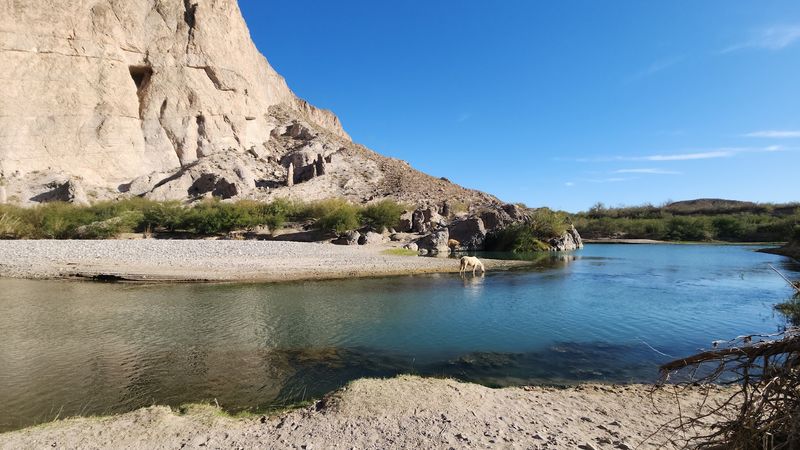
Big Bend sits in the most remote corner of Texas, pressed against the Rio Grande where it carves deep canyons through the Chihuahuan Desert. Getting there takes hours of driving through empty land, and that isolation is actually part of the experience.
The park covers over 800,000 acres and packs in a wild variety of terrain — desert flats, mountain forests, river canyons, and hot springs — all within a single visit. The Chisos Mountains rise dramatically from the desert floor, offering cooler temperatures and forested trails that feel completely separate from the scorching lowlands just miles away.
At night, Big Bend is one of the darkest places in the lower 48 states, making its night sky one of the most jaw-dropping natural light shows imaginable.
What no photo can translate is the heat. On a summer afternoon, stepping out of a shaded canyon into the open desert feels like opening an oven door.
The silence is equally intense — broken only by the rush of the river and the occasional hawk overhead. Big Bend rewards the effort it takes to reach it with a sense of untouched wildness that most of America’s more popular parks simply can’t match anymore.
Redwood National and State Parks, California
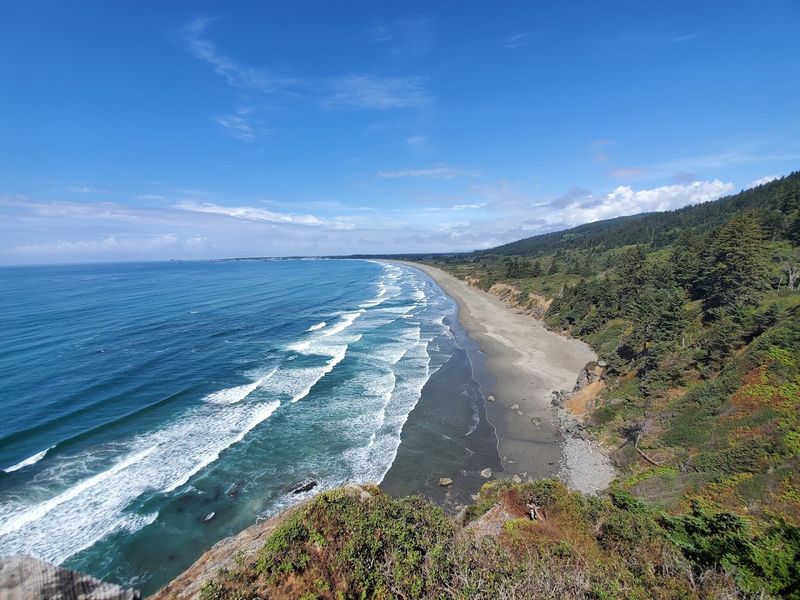
Walking into a redwood forest for the first time feels like entering a cathedral — except the columns are alive, hundreds of feet tall, and have been standing since before most of the world’s famous buildings were built. Coast redwoods are the tallest trees on Earth, and some of the ones in this park are over 2,000 years old.
The forest floor is a lush carpet of ferns, mosses, and fallen giants slowly returning to the soil. Everything smells of damp bark and cool earth, a scent so clean and rich it’s almost medicinal.
The canopy blocks most direct sunlight, creating a green, filtered glow that photographers struggle to replicate without making it look artificial or overly dramatic.
One of the most disorienting things about standing among these trees is trying to find the top. You tilt your head all the way back, and the trunks just keep going until they disappear into mist.
The scale breaks your sense of proportion in a way that feels genuinely humbling. Families often come expecting a pleasant forest hike and leave talking about the experience for years — proof that some places simply have to be lived to be understood.
Glacier National Park, Montana
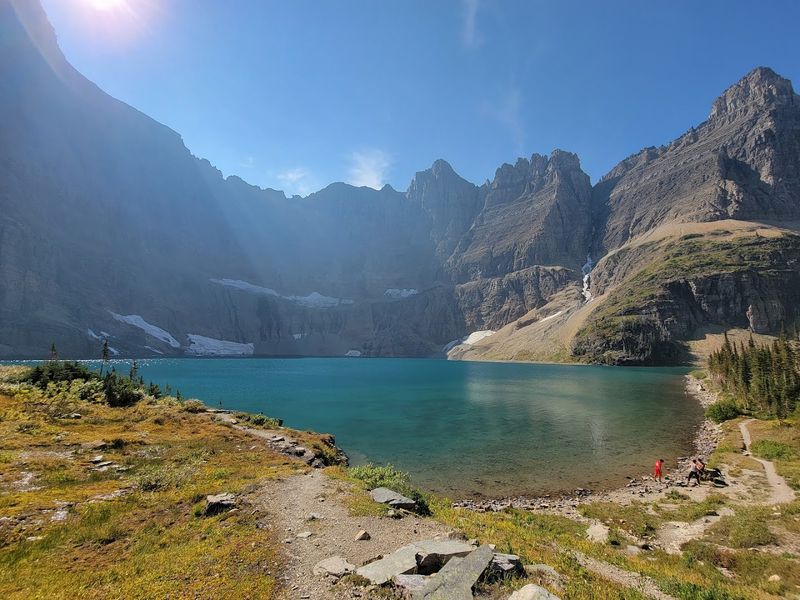
Glacier National Park is the kind of place that makes you feel like you’ve stumbled into a painting. The mountains here are jagged and fierce-looking, with knife-edge ridgelines that catch clouds and throw long shadows across valleys filled with wildflowers in summer.
The park’s glaciers are retreating rapidly due to climate change — there were 150 when the park was established in 1910, and fewer than 30 remain today. That makes every visit feel both awe-inspiring and a little urgent, like you’re seeing something precious before it disappears.
The glacial lakes they feed are an almost unreal shade of turquoise, colored by fine rock particles called glacial flour suspended in the water.
Going-to-the-Sun Road, one of America’s most scenic drives, cuts across the park through terrain that feels genuinely wild. Mountain goats walk along cliffs without a care, and grizzly bears are a real possibility on any backcountry trail.
The air at higher elevations carries a cold, sharp freshness that wakes you up in a way that no photo of snowy peaks ever could. Glacier rewards slow travel — the longer you linger, the more it reveals.
Monument Valley, Arizona/Utah
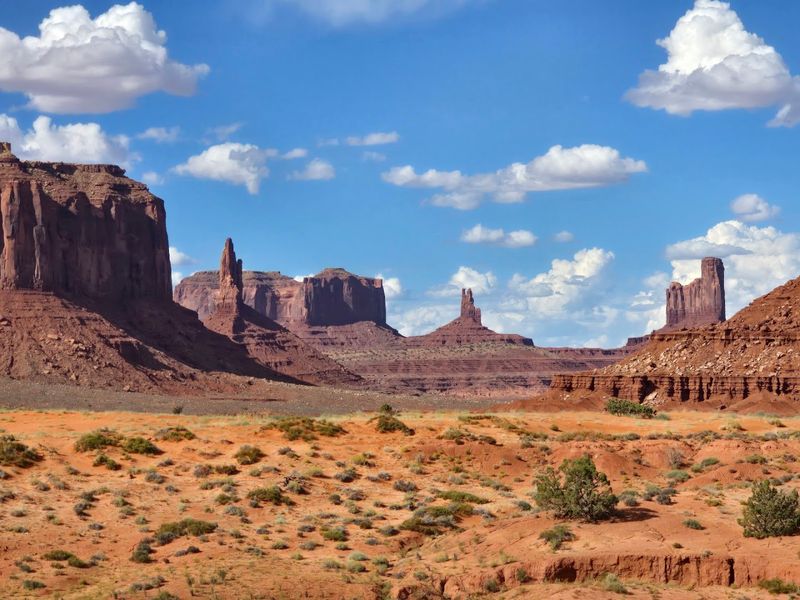
Monument Valley has appeared in so many films and photographs that you might think you already know it — but nothing about standing there in person feels familiar. The buttes rise from the desert floor like ancient monuments left by a civilization too large to imagine, and the silence around them is almost sacred.
Located within the Navajo Nation, Monument Valley carries deep cultural significance for the Navajo people who have lived here for generations. Guided tours led by Navajo guides offer perspectives on the land that go far beyond geology, connecting visitors to stories and traditions tied to these formations for centuries.
That human history adds a layer of meaning that a roadside photo simply can’t include.
At sunrise or sunset, the buttes turn from rust to deep crimson to violet, and the shadows stretch for miles across the sand. The scale is difficult to process — what looks like a short walk to the base of a butte can take over an hour.
Wind carries fine red dust that settles on everything, and the desert quiet is broken only by the occasional distant bird call. Monument Valley doesn’t just look impressive — it feels ancient, and that feeling changes you a little.
Zion National Park, Utah
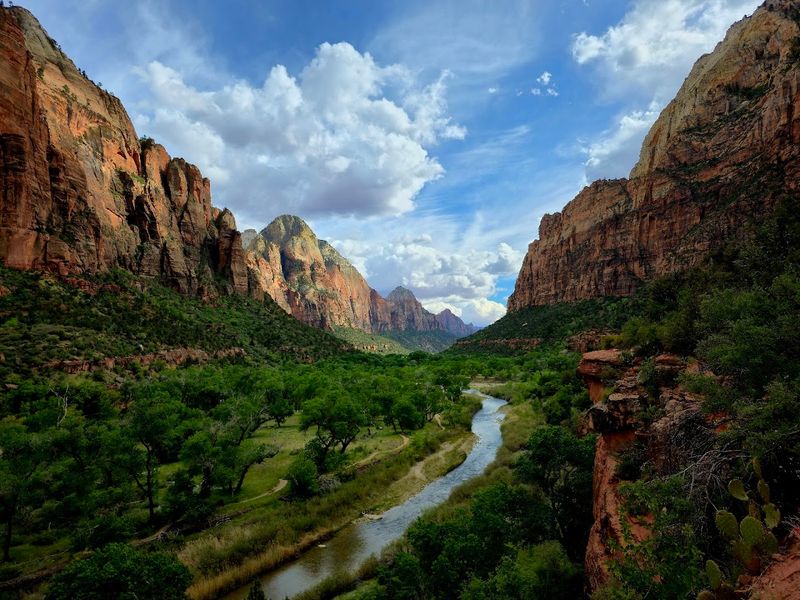
Zion Canyon surprises almost everyone who visits for the first time. From the park entrance, you might expect something similar to other desert parks — wide open and flat.
Instead, you’re quickly enclosed by walls of sandstone that rise over 2,000 feet on both sides, making the sky above look like a thin blue ribbon.
The Narrows is one of Zion’s most famous hikes, taking you directly into the Virgin River as it winds through a slot canyon so tight that sunlight only reaches the floor for a brief window each day. Wading through cold, knee-deep water while looking up at walls that block out most of the sky is an experience that activates all your senses at once.
No photo captures the cold water on your legs, the echo of rushing water, or the earthy smell of wet canyon rock.
Angels Landing, another iconic hike, ends on a narrow fin of rock with sheer drop-offs on both sides and chains bolted into the cliff to help you climb. The view from the top is extraordinary, but the feeling in your chest — equal parts terror and triumph — is something no image can bottle.
Zion is a park best measured in heartbeats, not megapixels.
Everglades National Park, Florida
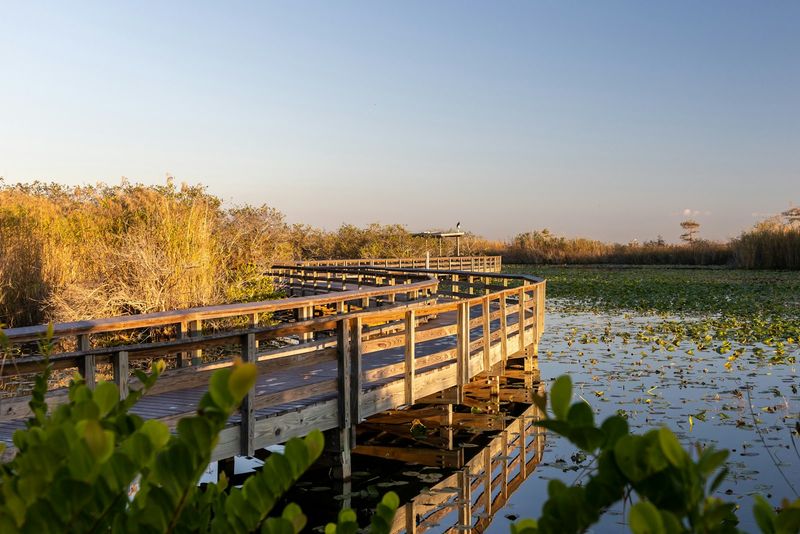
The Everglades doesn’t announce itself with dramatic cliffs or towering peaks. Instead, it spreads out low and wide — a slow-moving river of grass that covers nearly 1.5 million acres of South Florida.
At first glance, it might look flat and unremarkable. Give it five minutes, and it starts to reveal itself.
Sound is the Everglades’ most powerful feature. Cicadas, frogs, birds, and the occasional alligator splashing into the water create a layered symphony that changes by the hour.
At dusk, the noise builds into something almost overwhelming — a living wall of sound that no recording fully captures. The humidity is equally present, wrapping around you like a warm, wet blanket from the moment you step outside.
American alligators are everywhere here, often lying just feet from walking trails with a calm indifference that takes some getting used to. Roseate spoonbills, manatees, and Florida panthers also call this ecosystem home.
The Everglades is one of the most biodiverse places in North America and one of the most threatened — nearly half of its original size has been lost to development. Visiting feels both like a privilege and a reminder of what’s worth protecting before it’s gone.
The Wave, Arizona/Utah Border
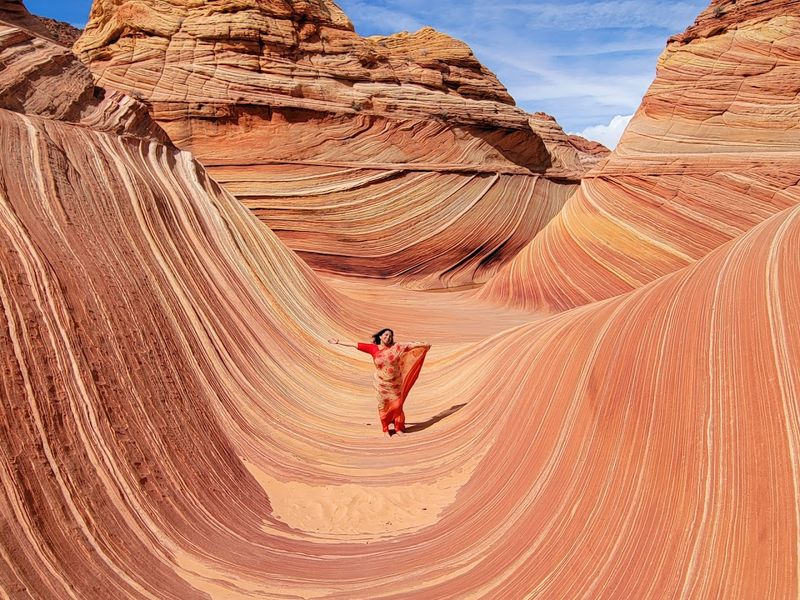
Only 64 people are allowed to visit The Wave each day — 48 through an online lottery and 16 through an in-person drawing — which tells you something about how special and fragile this place is. Getting a permit can take months of trying, and most applicants never succeed on their first attempt.
Located in the Vermilion Cliffs National Monument, The Wave is a sandstone formation that looks like the surface of another planet. The rock swirls in smooth, layered curves of orange, red, cream, and pink — colors and patterns created over 190 million years by wind, water, and shifting dunes slowly turning to stone.
Photographs of it look almost digitally enhanced, but the real thing is even more saturated and surreal.
What makes the in-person experience impossible to replicate is movement. As you walk through the formation, the patterns shift and change with every step, revealing new angles and color combinations.
The texture under your fingertips — smooth in some places, rippled in others — adds a tactile dimension that flat images erase entirely. There’s also the profound quiet of being in such a remote, restricted location, surrounded by rock that has been forming since dinosaurs roamed the earth.
It’s humbling in the best possible way.
Grand Teton National Park, Wyoming
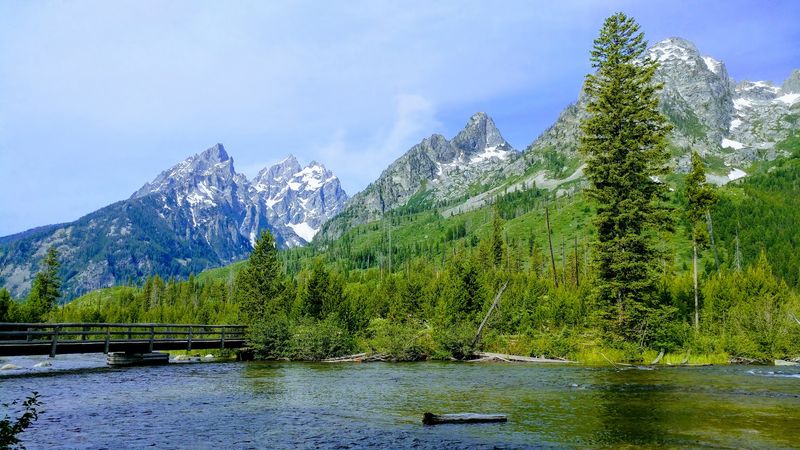
Few mountain ranges in America rise as dramatically as the Tetons. Unlike most ranges that build gradually from foothills, the Tetons shoot almost straight up from the flat valley floor of Jackson Hole, giving them a sharpness and visual impact that stops people mid-sentence when they first see them.
At dawn, when the peaks catch the first light of the day and reflect perfectly in the mirror-still surface of the Snake River or one of the park’s ponds, the scene feels almost too beautiful to be real. Photographers line up for these moments before sunrise, but even the best shots can’t carry the cold air on your face, the smell of pine, or the absolute stillness of that hour.
The park is also home to abundant wildlife — moose wade through shallow lakes, black bears forage in meadows, and pronghorn antelope sprint across open flats with effortless speed. Hiking trails range from easy lakeshore strolls to serious alpine climbs, and every elevation offers a different perspective on these extraordinary peaks.
Grand Teton is one of those rare places where the landscape feels both accessible and wild at the same time, welcoming visitors without ever losing its edge.
Havasu Falls, Arizona
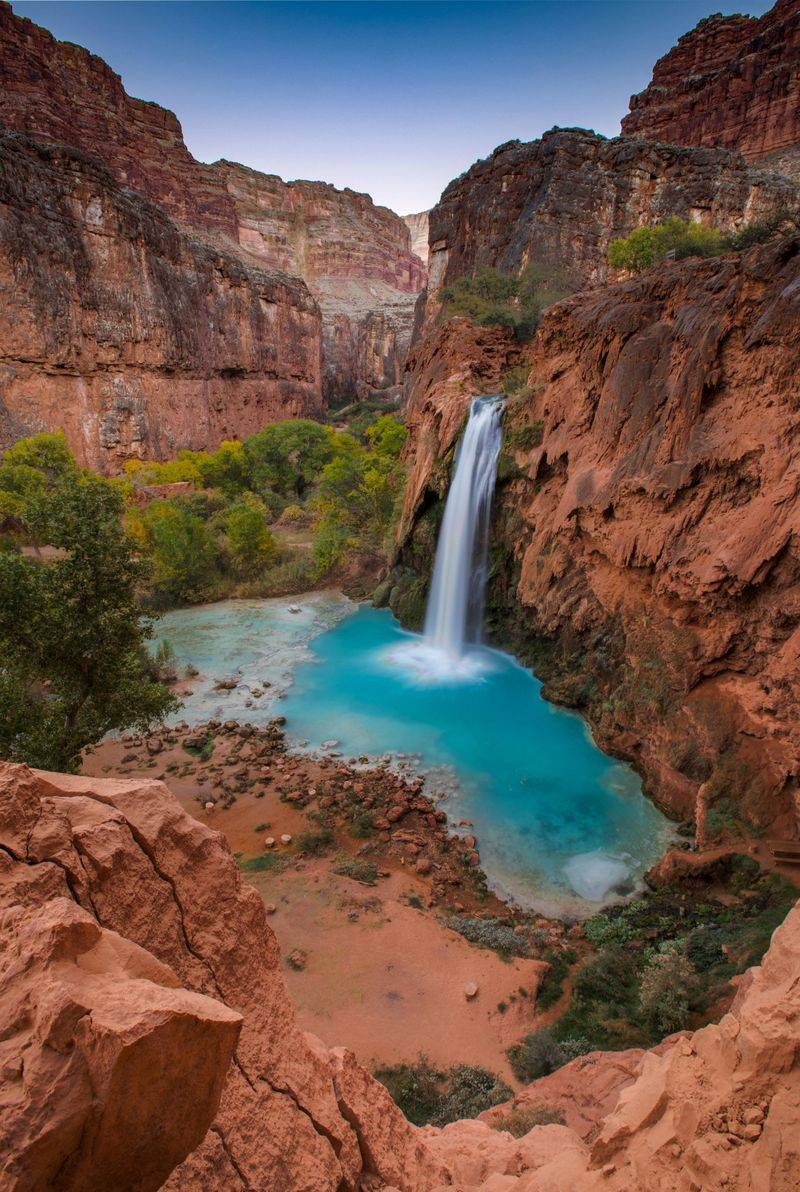
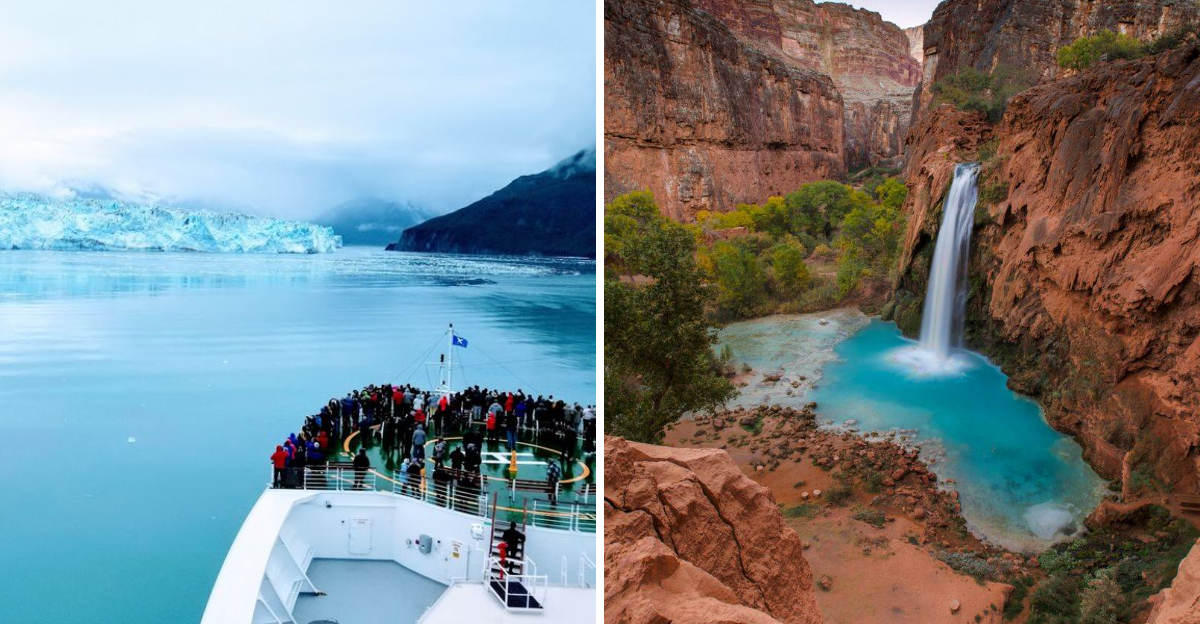
Havasu Falls might be the most photogenic waterfall in America, yet somehow the real thing still outshines every image of it. The water runs a vivid turquoise blue — caused by high concentrations of calcium carbonate in the water — and it crashes over red travertine ledges into pools so clear you can see the bottom from the rim.
Getting there is part of the adventure. Havasu Falls sits within the Havasupai Tribe’s reservation and requires a 10-mile hike into a side canyon of the Grand Canyon.
The trail descends through increasingly red and rust-colored walls until the first glimpse of turquoise water appears below, creating a color contrast so extreme it seems impossible. The reservation requires a permit, and spots sell out months in advance.
The roar of the falls echoes off the canyon walls and fills the surrounding air with a cool mist that provides welcome relief from the desert heat. Swimming in the pools beneath the falls — surrounded by canyon walls, lush ferns, and the sound of rushing water — is a sensory experience that ranks among the most memorable in American outdoor travel.
No phone screen can replicate the feeling of that cold turquoise water after a long, hot hike through the desert.
Crater Lake National Park, Oregon
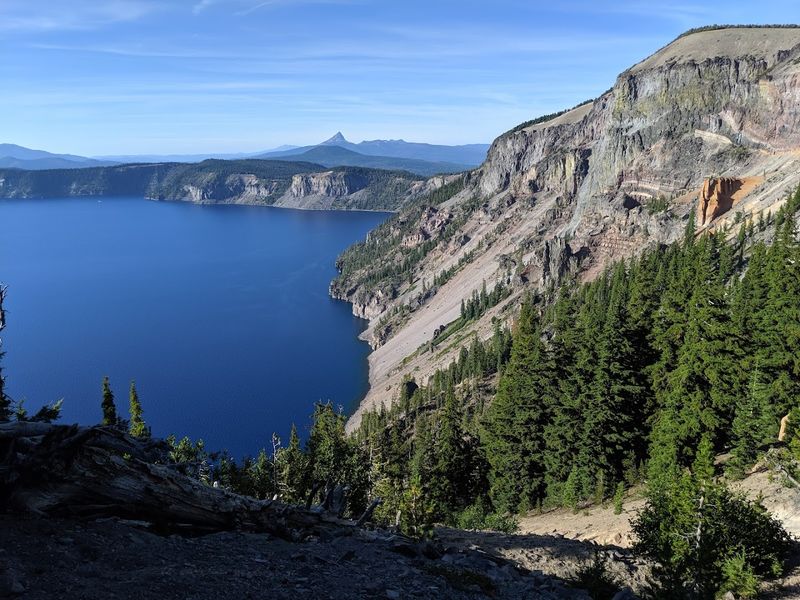
Crater Lake holds a color that doesn’t look natural. The blue is so deep, so saturated, and so impossibly pure that first-time visitors often wonder if they’re seeing things correctly.
This is one of the clearest, deepest lakes in the world — reaching nearly 2,000 feet at its deepest point — and its color comes entirely from the depth and purity of the water, which has no rivers flowing in or out.
The lake sits inside the caldera of Mount Mazama, a volcano that erupted catastrophically about 7,700 years ago and then collapsed inward. What remained filled slowly with rain and snowmelt over thousands of years, creating this extraordinary body of water.
Wizard Island, a small cinder cone volcano, pokes above the surface near the western shore like a perfect miniature mountain.
Standing at the rim and looking down at the lake — with sheer cliffs dropping 500 to 2,000 feet straight into the water — creates a vertigo that photos can’t replicate. The scale of the cliffs dwarfs hikers into tiny dots.
In winter, the rim is buried under 40 or more feet of snow, and the lake remains unfrozen, its blue even more shocking against white surroundings. Crater Lake is quietly one of America’s most jaw-dropping natural wonders.
Great Smoky Mountains, Tennessee/North Carolina
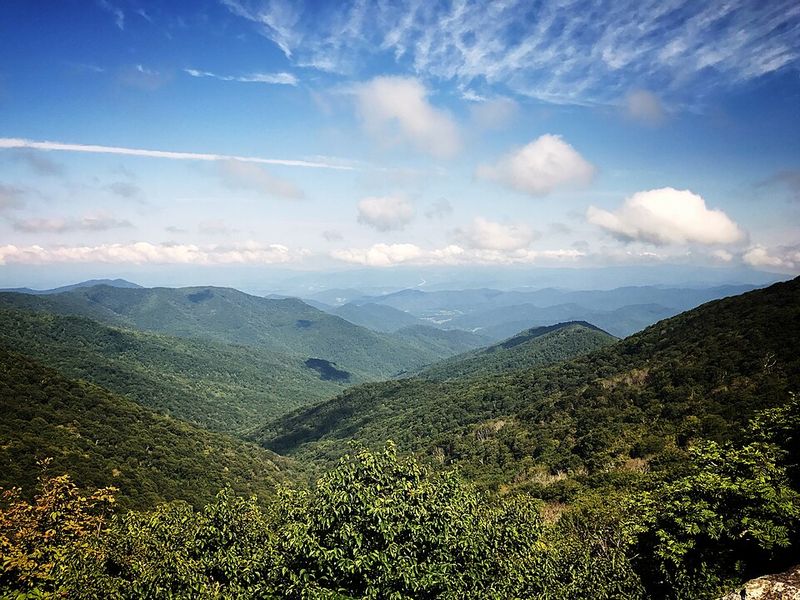
There’s something almost dreamlike about the Great Smoky Mountains on a misty morning. The ridges stack up one behind another in shades of blue and gray, each one slightly faded from the last, creating a sense of infinite depth that landscape painters have tried to capture for centuries.
The “smoke” is actually water vapor and organic compounds released by the trees — a natural phenomenon that gives these mountains their name and their mood.
As the oldest mountains in North America, the Smokies have had millions of years to develop one of the most biologically diverse ecosystems on the continent. Over 19,000 documented species live here, including more tree species than all of northern Europe combined.
The forests change with the seasons in ways that feel almost theatrical — spring wildflower blooms, summer green so deep it looks painted, autumn fire of red and gold, and winter ice coating every branch.
The park is also the most visited in the entire National Park System, yet its 800 square miles of backcountry can still feel genuinely remote. Waterfalls appear around quiet trail bends, black bears cross roads with casual confidence, and the sound of wind through old-growth trees carries a low, constant hum that feels like the mountain breathing.
You need more than a photo to understand it.
Hawaii Volcanoes National Park, Hawaii
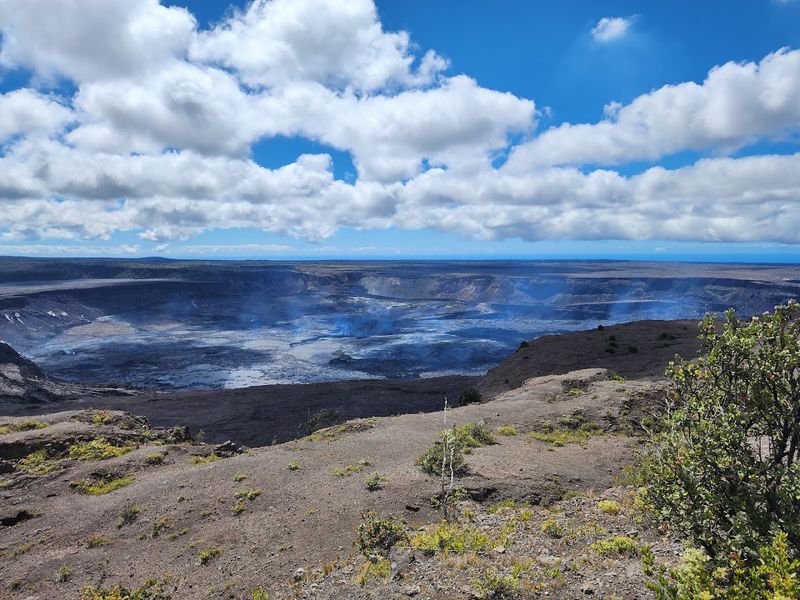
There are very few places on Earth where you can watch new land being created in real time, and Hawaii Volcanoes National Park is one of them. Kilauea, one of the world’s most active volcanoes, has been erupting almost continuously since 1983, and the landscape it creates and destroys is unlike anything else in the United States.
Walking across hardened lava fields feels like stepping onto another planet — the surface is black, jagged, and surreal, with occasional cracks that glow faintly orange from heat below. Sulfur dioxide gas drifts across the park in visible plumes called vog (volcanic smog), carrying a sharp, acrid smell that stings your nose and reminds you this environment is not entirely hospitable.
When active lava flows reach the ocean, the resulting steam explosions create towers of white cloud visible for miles.
The park also contains the Thurston Lava Tube — a massive underground tunnel formed when the outer shell of a lava flow hardened while the molten interior drained away. Walking through it, in near darkness with only a headlamp, gives a visceral sense of the geological forces at work beneath your feet.
Hawaii Volcanoes is a place of constant change, where the ground itself is alive, and that aliveness is something no photograph can fully transmit.
Joshua Tree National Park, California
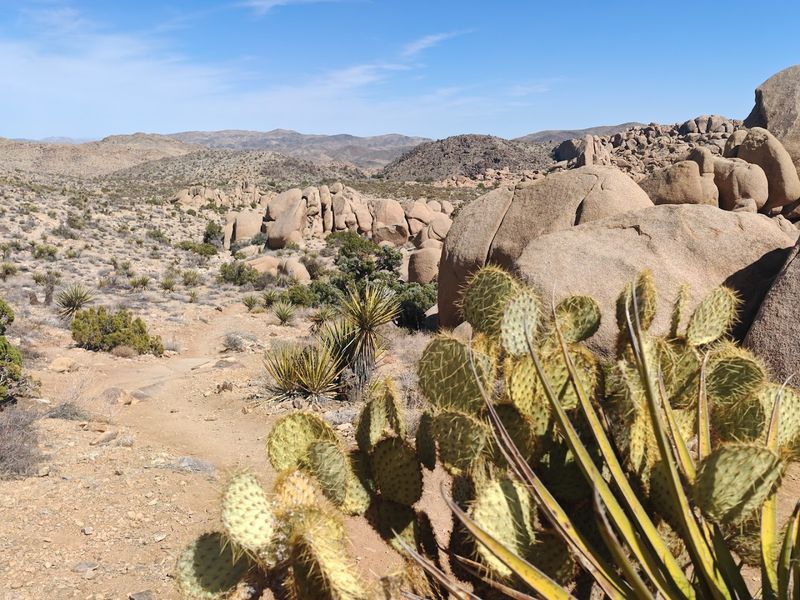
Joshua Tree sits at the crossroads of two desert ecosystems — the Mojave and the Colorado — and the result is one of the most visually strange landscapes in America. The Joshua trees themselves look like something from a Dr. Seuss book, with shaggy, twisted arms reaching in every direction as if frozen mid-dance.
The granite boulders scattered throughout the park are equally otherworldly. Some are the size of houses, stacked in improbable towers that attract rock climbers from around the world.
At sunset, the boulders turn warm shades of amber and gold, and the Joshua trees cast long, spiky shadows across the desert floor. The scene looks surreal even in person, which makes it one of the few landscapes where photos actually undersell how strange it is.
Nights at Joshua Tree are extraordinary. The park is an International Dark Sky Park, meaning light pollution is minimal, and the Milky Way blazes overhead with a clarity that makes city dwellers stop breathing for a moment.
Camping here means falling asleep to total silence and waking up to a desert sunrise that paints the rocks in colors that shift faster than you can photograph them. Joshua Tree rewards patience and presence in ways that a quick scroll through images simply cannot match.
Badlands National Park, South Dakota
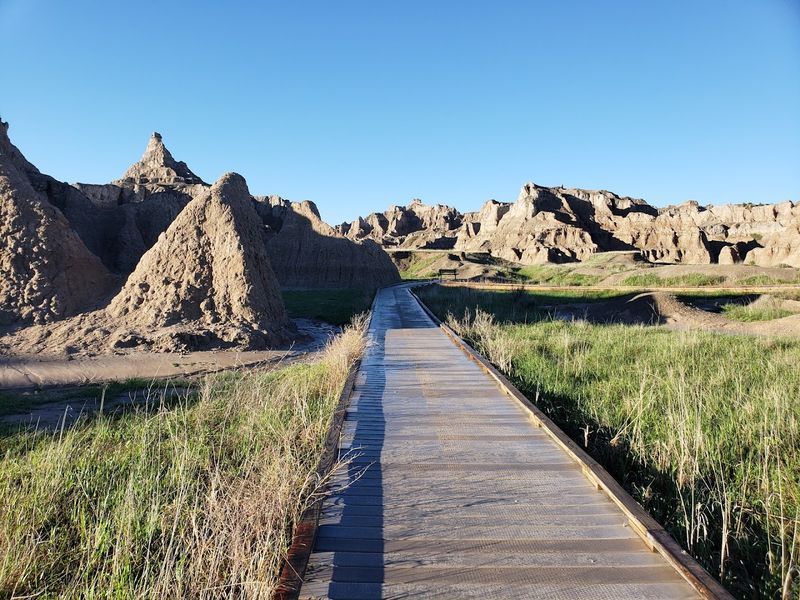
The Badlands earned their name honestly. The Lakota people called this region “mako sica” — land bad — because its sharply eroded terrain made travel so difficult.
Early French fur traders called it “les mauvaises terres,” meaning the same thing. And yet, for all its hostility to movement, the Badlands are one of the most visually dramatic landscapes in the American Midwest.
Wind and water have sculpted the soft sedimentary rock into a maze of spires, buttes, and ridges that change color dramatically as the light shifts throughout the day. At sunrise and sunset, the formations glow in shades of pink, orange, lavender, and gold that cycle through faster than any camera can track.
The colors you see at 7:00 a.m. are completely different from those at 7:30 a.m., and both are different from what you see at noon.
Bison herds still roam the park’s mixed-grass prairie, sometimes blocking the road for long stretches. Bighorn sheep pick their way along the eroded ridges with casual ease.
Fossil beds here have yielded some of the richest prehistoric mammal discoveries in the world, and the exposed rock layers represent 75 million years of Earth history. The Badlands are both beautiful and ancient in a way that takes your breath away and makes you feel very, very small.
Wrangell-St. Elias National Park, Alaska
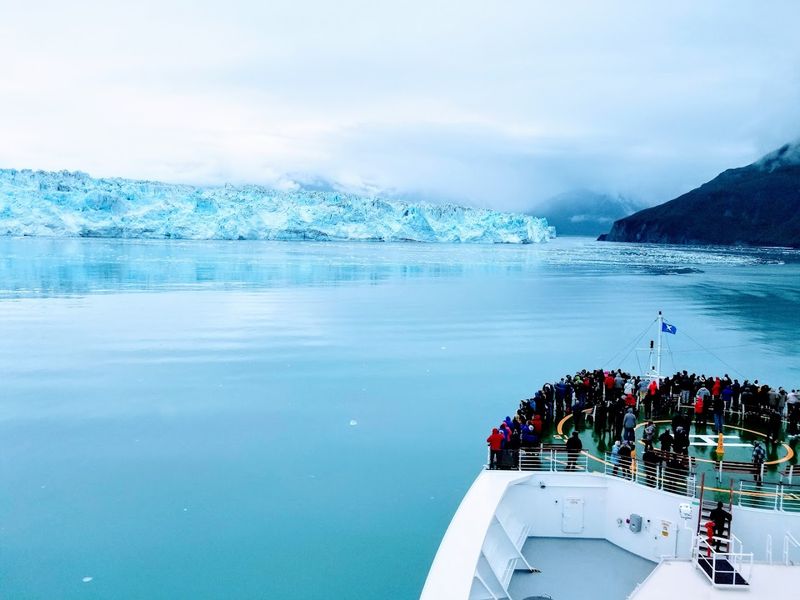
Wrangell-St. Elias is the largest national park in the United States — larger than the entire country of Switzerland — and it contains more peaks above 14,500 feet than any other place in North America. Numbers like these are hard to visualize, but standing inside the park makes them feel real in a way that’s almost uncomfortable.
The glaciers here are enormous. The Malaspina Glacier alone is larger than the state of Rhode Island, and Hubbard Glacier is one of the most active tidewater glaciers on the continent, regularly calving massive chunks of ice into the sea with thunderous crashes that echo for miles.
The park also contains active volcanoes, river valleys so wide they take hours to cross, and wilderness so remote that most of it has never been explored on foot.
Wildlife in Wrangell-St. Elias operates on a similarly massive scale. Dall sheep navigate vertical cliff faces, wolves travel in packs across open tundra, and brown bears fish salmon-rich rivers in summer.
The weather is unpredictable and often extreme — sunshine can turn to blizzard in minutes at higher elevations. Visiting requires planning, preparation, and a genuine respect for wild places.
In return, the park offers a sense of true wilderness that is increasingly rare on this planet.
Apostle Islands Sea Caves, Wisconsin
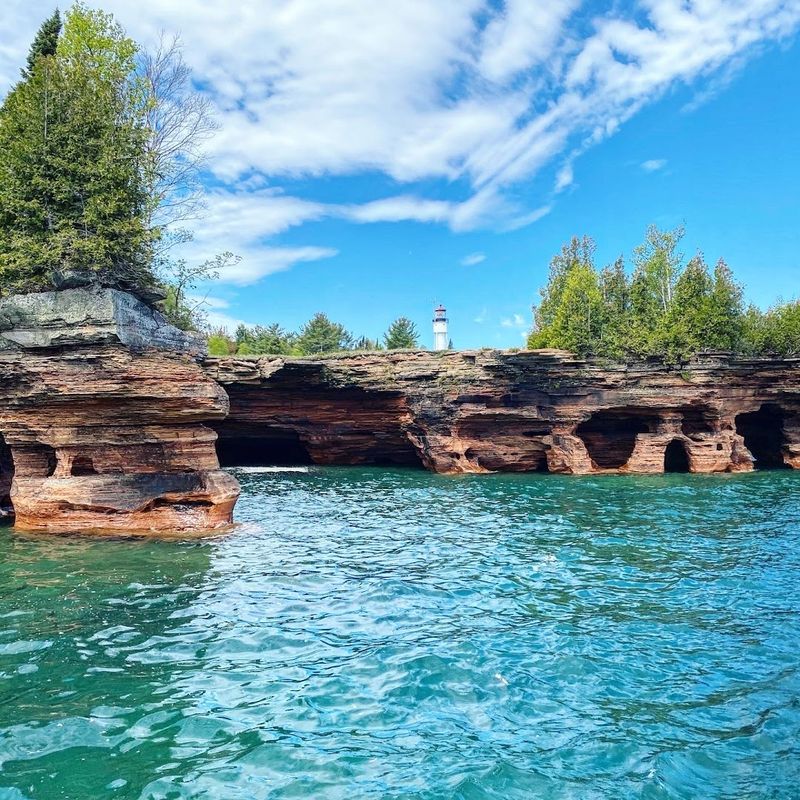
Tucked along the southern shore of Lake Superior in northern Wisconsin, the Apostle Islands Sea Caves are one of the Midwest’s most underrated natural wonders. Waves have carved sandstone bluffs into a series of arching caves, tunnels, and chambers that stretch along the shoreline for miles, each one slightly different in shape and color.
In summer, kayakers paddle directly into the caves, listening to the water echo off the walls and watching the light play across the rippled sandstone in shades of copper, rust, and cream. The lake’s water is surprisingly clear — visibility can reach 25 feet or more — and the contrast between the dark cave interiors and the luminous blue-green water outside creates a color combination that photographs struggle to balance correctly.
Winter transforms the caves entirely. When temperatures drop far enough, the spray and seeping groundwater freeze into elaborate ice formations — curtains of icicles, blue ice columns, and frozen waterfalls that coat the cave walls in a glittering layer.
In especially cold winters, when Lake Superior’s nearshore ice is thick enough to walk on safely, thousands of visitors make the trek across the frozen lake to explore the ice caves on foot. It’s an experience that feels genuinely magical — and deeply, specifically tied to a place that most Americans have never heard of.