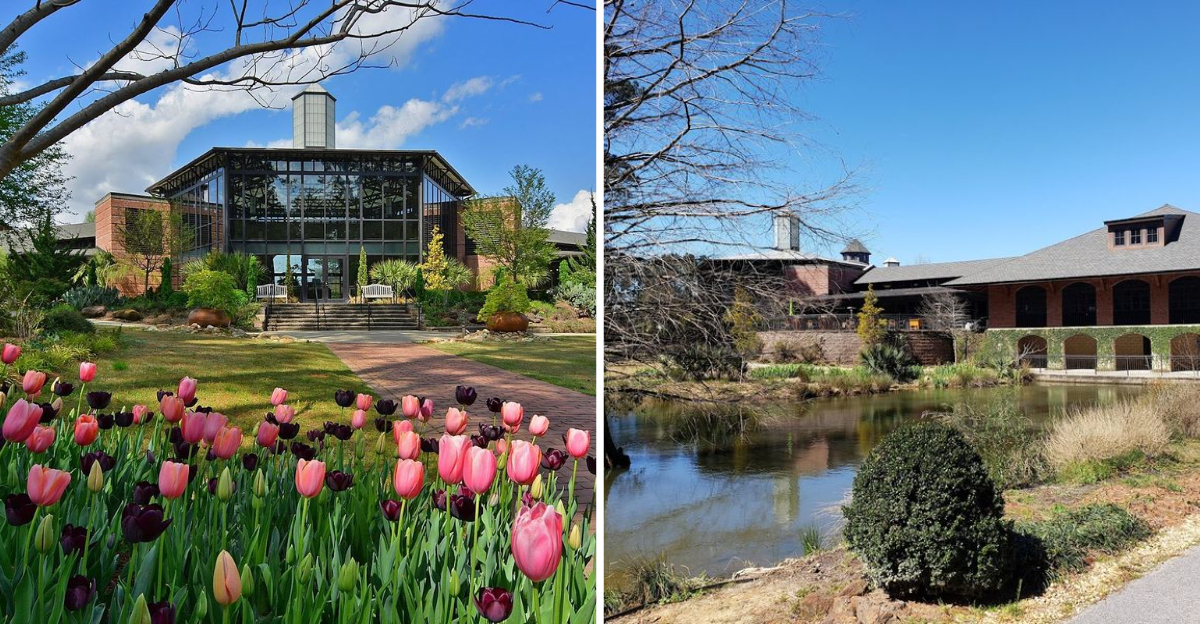
Cape Fear Botanical Garden packs river views, winding trails, and vibrant plant collections into one stunning Fayetteville escape. You get 80 acres of breathing room plus seasonal events that make evenings sparkle and mornings feel tranquil.
It is the kind of place where a simple walk turns into a day of photos, kid smiles, and fresh ideas for your own yard. Here is how to make the most of every corner, from the River Trail to the gift shop.
Children’s Garden And Nature Play

Energy picks up the moment you reach the Children’s Garden, and that is by design. Interactive features invite hands-on play, from water pumps to musical elements that chime when small fingers experiment.
Caregivers appreciate the sightlines, fencing, and shaded seating that make supervision feel calm instead of stressful. Everything is sized for discovery without feeling gimmicky.
Staff rotate props so repeat visits still surprise kids.
Pack a change of clothes if your crew gravitates to splash features during warmer months. Simple rules posted at entrances keep things running smoothly, so take a second to read them together.
I like bringing a pocket magnifier to help kids inspect leaf veining, seed pods, and friendly insects without picking or poking.
Short attention spans find relief with nearby loops that rejoin the main path without long detours. Seasonal programs add structure through crafts and story times, and they often fill quickly, so booking ahead is smart.
If a meltdown brews, the adjacent lawns offer a reset space for quiet breathing and snacks. Keep shoes with grippy soles and avoid slick sandals after rain.
You leave with happy photos, tired legs, and new curiosity showing up in the questions asked on the ride home.
River Trail Along The Cape Fear

You hear water before you see it, a low hush that pulls you toward the River Trail skirting the Cape Fear. Boardwalks and packed-earth paths wind between sycamore roots, switchgrass, and sandy overlooks where turtles surface like little periscopes.
On a clear day, the reflections turn glassy, so bring a polarizing filter if photography is your thing.
Wayfinding is simple thanks to frequent markers, yet it still feels wild enough to slow your pace. Plan 30 to 45 minutes for the full loop, longer if you stop at the benches tucked into shade.
After rain, sections can be soft, so closed-toe shoes with decent tread keep you steady and comfortable.
Wildlife activity spikes morning and late afternoon, which is prime time for egrets, dragonflies, and the occasional osprey flyby. Pack water, but skip loud snacks that crinkle since sound carries over the river.
If you visit during special events with night lighting, keep a small flashlight for spotting roots and read the posted guidance at the trailhead. Families appreciate the stroller-friendly stretches near the boardwalks, while more uneven segments satisfy hikers craving texture.
You leave with river air in your lungs and a calmer heart rate.
Heritage Garden And 1886 Farmhouse
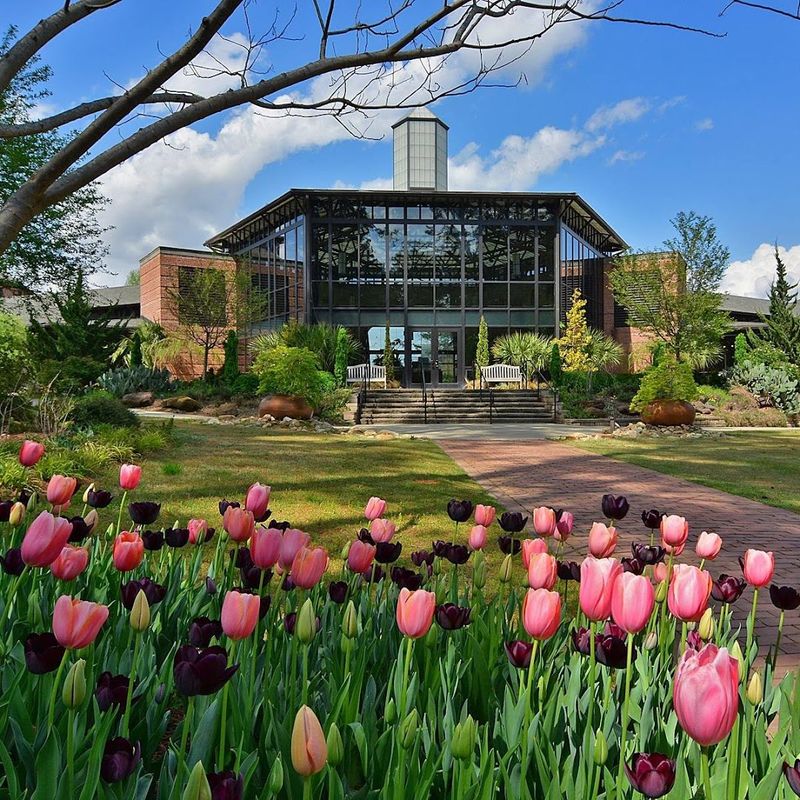
History feels close here, especially around the Heritage Garden and its weathered farmhouse that anchors the landscape. You move from tidy beds of heirloom vegetables to split rail fences and antique tools that hint at Cumberland County’s agrarian past.
Kids love seeing cotton, corn, and beans side by side, while adults appreciate the labeling and tidy pathways.
Timing your visit in late spring pays off with kitchen herbs at their fragrant best. Bring a small notebook to jot pairing ideas for basil, mint, and chives because the signage sparks recipe thoughts fast.
Benches near the farmhouse catch a breeze off the river, making it a restful pause between the outer trails and the core garden.
Photographers should look for golden hour light raking across clapboard siding and picket shadows. Docent-led programs pop up seasonally, so check the website calendar before you go.
When paths are damp, step on the mulch rather than the bed edges to protect soils that volunteers work hard to maintain. You come away with practical planting ideas and a deeper sense of place.
It is a quiet corner, but it lingers, reminding you that today’s beauty grew from yesterday’s grit.
Pollinator Garden And Butterfly Stroll

Movement is constant in the pollinator beds, where coneflower, milkweed, and mountain mint host a daily parade. Stand still for sixty seconds and you will spot bees of several sizes, skippers, and sometimes a monarch caught sipping.
It is the rare place where waiting pays off more than walking. Give your camera a second to focus between breezes.
Bring a small field guide or an app to compare wing patterns and antenna shapes. Kids enjoy counting species with a simple tally, then racing to the next patch to improve their score.
Keep hands off the blooms, since loose petals reduce nectar access and shorten the show for everyone.
Peak action stretches from late spring through early fall, but sunny winter days still surprise with hoverflies. Photographers should shoot at higher shutter speeds, and a hat helps you see the rear screen in bright light.
If a butterfly house is open during special events, lines move quickly, so stay close when your time window is called. Volunteers love questions and can point out host plants for you to grow at home.
You leave with new respect for small creatures doing big work, and maybe a plan to plant milkweed near your mailbox.
Arboretum Tree Walk
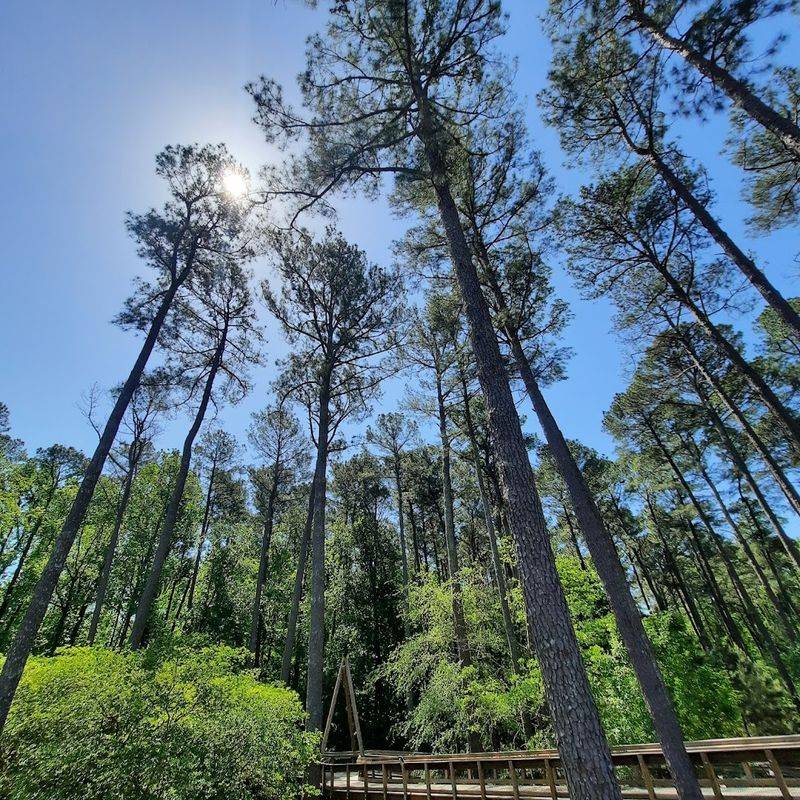
Tall canopy defines the arboretum experience, and your neck will tip back more than once. Labels make it easy to compare bark textures on oak, hickory, and river birch without guessing.
After rain, the cinnamon peel of paperbark maple glows, begging for close-ups. Look for understory dogwood blooming beneath taller crowns in spring.
Footing alternates between firm gravel and natural duff, so stride naturally and avoid tiny steps that tire your calves. On warm days, the shade knocks temperatures down several degrees, making this area a welcome mid-route cool-off.
Birders should bring compact binoculars to scan for nuthatches spiraling trunks and woodpeckers drumming in bursts.
If you are tracking steps, this loop adds gentle mileage without feeling repetitive. Families can turn the walk into a texture hunt by comparing leaf silhouettes at the next bench.
For mindfulness, count breaths for four paces in and four paces out until the rhythm settles your thoughts. You finish with a new vocabulary for trees and a phone full of satisfying bark studies.
Back in the parking lot, the scent of crushed needles sometimes follows, a last little souvenir. If rain threatens, a lightweight jacket keeps wind off your neck without overheating.
Holiday Lights At The Garden
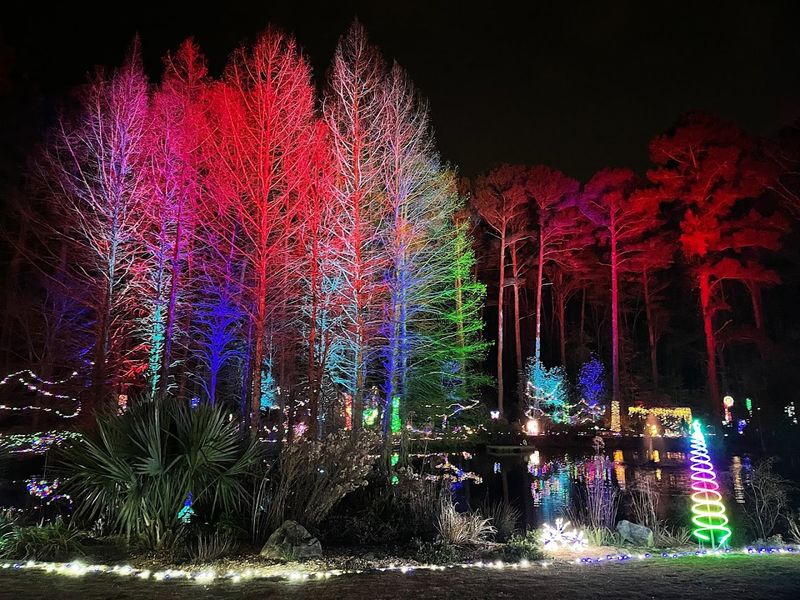
Evenings change the garden’s personality, and holiday lights bring out a playful side that daytime only hints at. Paths glow in color, themed vignettes sparkle for selfies, and music floats just loud enough to set the mood.
It feels festive without the pressure to rush, because spaced-out installations keep crowds moving. Arrive right at opening to enjoy the first half hour of softer crowds.
Dress warmer than you think, since still air near the river can undercut the forecast by a few degrees. Closed-toe shoes matter at night to protect against roots you might otherwise miss.
I like tucking a soft scarf and hand warmers into a small bag alongside tickets, water, and a phone battery pack.
Families can set a rendezvous point by the main fountain in case someone wanders during a photo stop. Strollers roll fine on primary loops, though a compact flashlight helps spot uneven patches between pools of light.
Lines for cocoa ebb and flow, so scan two stations and pick the shorter one. Staff and volunteers keep things cheerful and can answer questions about schedule details.
You leave with a camera full of twinkle and a sense that winter can feel bright without needing snowfall.
Weddings And Private Events

Special occasions find an easy backdrop here, from intimate elopements to full receptions with dance floors under market lights. Site choices range from a storybook gazebo to airy terraces with river hints in the distance.
You get character in every direction, so décor can stay simple while the setting does the heavy lifting.
Walk the grounds at the same hour as your ceremony to study light angles and shadows. Ask staff about power access, noise policies, and rain plans so your vendors arrive prepared.
I recommend comfortable block heels or flats for anyone moving between ceremony and reception spaces on natural paths. Schedule a brief venue walk-through for out-of-town vendors the day prior.
For photos, build a timeline that sneaks couples’ portraits into golden hour along the River Trail boardwalks. Provide guests with a clear map plus two parking notes on your invitations to reduce congestion at arrival.
If catering parameters require approved partners, secure date holds early because the calendar fills during peak seasons. Communicate with your planner about insect repellent for evening events.
You will leave impressed by the team’s responsiveness and grateful that your milestone felt grounded in real North Carolina scenery.
Photography Spots And Tips
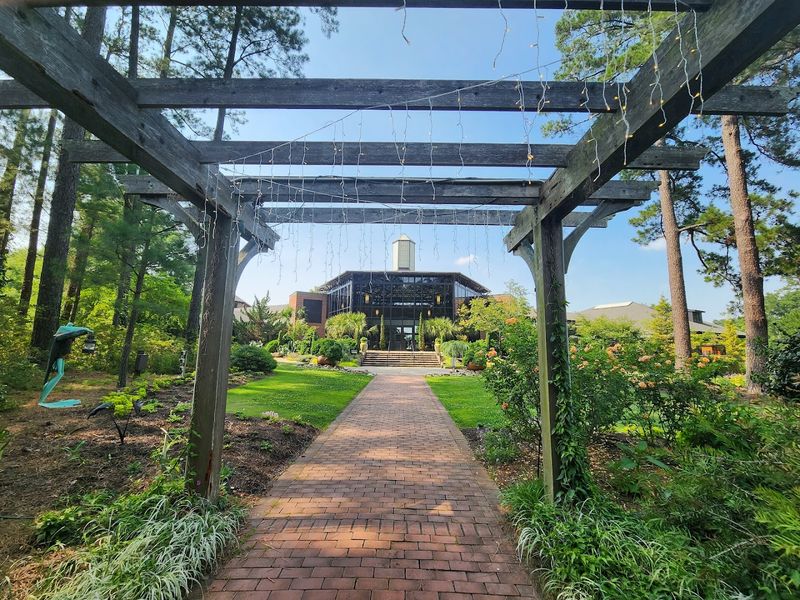
Good images start with simple choices, and this garden rewards attention to light more than gear. Walk with the sun at your shoulder for depth, then pivot to backlight translucent leaves along the creek.
Polarizers tame glare on water features and deepen skies over open lawns. A collapsible reflector bounces just enough fill without blinding anyone.
Tripods are polite when used off the center of paths, so step to the side and keep legs tight. Early entry after opening grants soft light and quiet backgrounds before families arrive.
I keep a microfiber cloth pocketed for humidity and a spare battery since long days drain faster than expected. Switch to manual focus for macro details on textured bark.
Signature spots include the storybook gazebo, boardwalk reflections on the River Trail, and stonework near fountains for leading lines. Portraits shine under bright overcast, but you can still win midday by seeking open shade under tall pines.
If you are filming, capture 10 seconds of ambient audio at each stop to smooth edits later. Respect signage and planted beds when framing low angles.
You head home with a card full of keepers and a better feel for composing scenes that actually feel like Fayetteville.