History has a funny way of washing up on the beach.
All along America’s coastlines and lakeshores, the rusting and rotting remains of ships that met their fate decades or even centuries ago still poke through the sand and surf for anyone to see.
You don’t need scuba gear or a boat — just a good pair of eyes and a sense of adventure.
From the Pacific Northwest to the Gulf Coast, these 16 shipwrecks are waiting to be discovered right from dry land.
Peter Iredale — Warrenton, Oregon (Fort Stevens State Park)
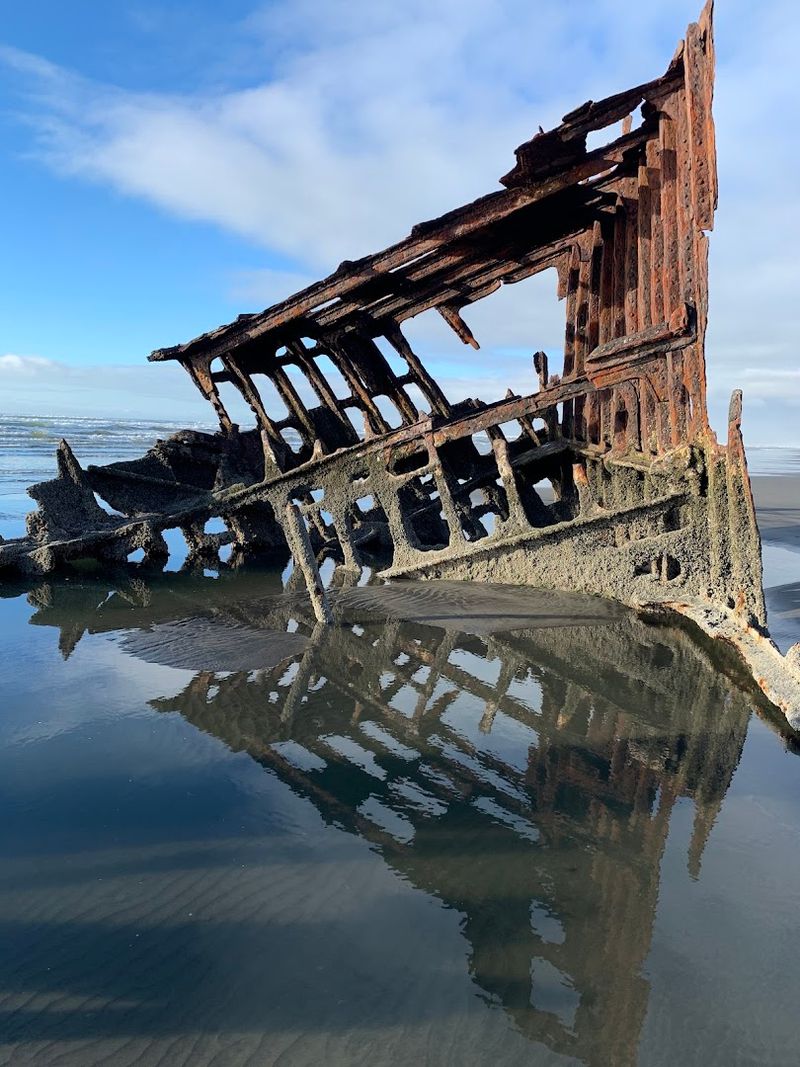
Few shipwrecks in America are as hauntingly beautiful as the Peter Iredale. This four-masted steel sailing ship ran aground on October 25, 1906, during a fierce storm near the mouth of the Columbia River.
More than a century later, its rusted ribs still rise dramatically from the sand at Fort Stevens State Park in Warrenton, Oregon.
What makes this wreck so special is how accessible it is. You can literally walk right up and touch the hull at low tide.
The skeleton of the ship has become a beloved landmark, and it’s one of the most photographed spots on the entire Oregon coast.
The ship was carrying ballast from Mexico to Portland when it wrecked — and miraculously, all crew members survived. The captain reportedly toasted the ship’s remains, saying “May God bless you, and may your bones bleach in the sands.” That toast has aged remarkably well.
Fort Stevens State Park is open year-round, and the wreck is always visible. Bring a camera, wear waterproof shoes, and plan to stay a while — the changing light at sunrise and sunset makes this place feel almost magical.
SS Palo Alto — Aptos, California (Seacliff State Beach)
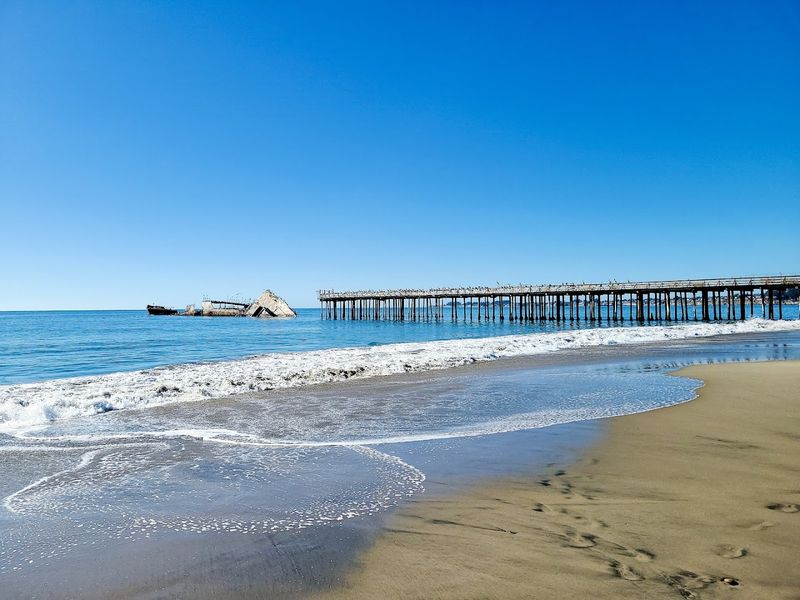
Building ships out of concrete sounds like a terrible idea — and for the SS Palo Alto, it kind of was. Constructed during World War I as part of an experimental program to save steel, this unusual vessel never actually made it into wartime service.
Instead, it was intentionally sunk off Seacliff State Beach in Aptos, California, in 1930 to serve as a floating entertainment pier complete with a dance hall and swimming pool.
Storms eventually did what war never could, cracking the hull and sending the fun times to a watery end. Today, the broken concrete remains sit just offshore, clearly visible from the beach and the adjacent pier.
The wreck has become a beloved part of local identity, drawing curious visitors who can barely believe a ship made of concrete is actually a real thing.
The pier at Seacliff State Beach extends right out toward the wreck, giving you a fantastic close-up view without getting your feet wet. Seabirds love to roost on the exposed sections, making it a great spot for birdwatching too.
The park is open year-round, and the wreck is visible at almost any tide level. Parking fills up fast on summer weekends, so arriving early is a smart move.
SS Atlantus — Cape May Point, New Jersey
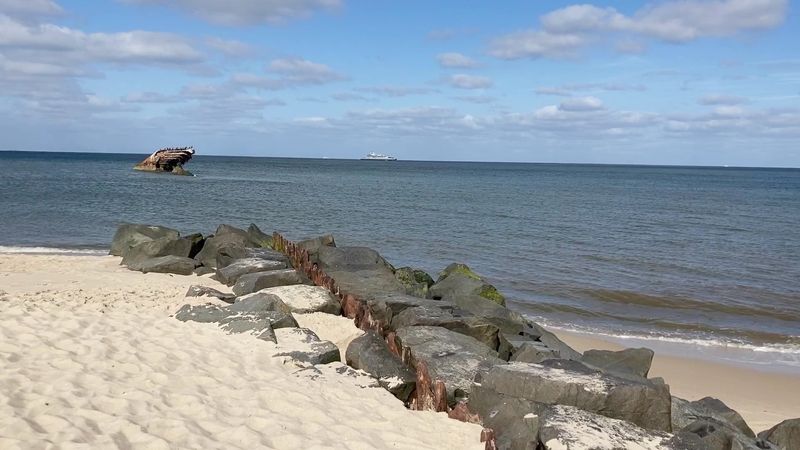
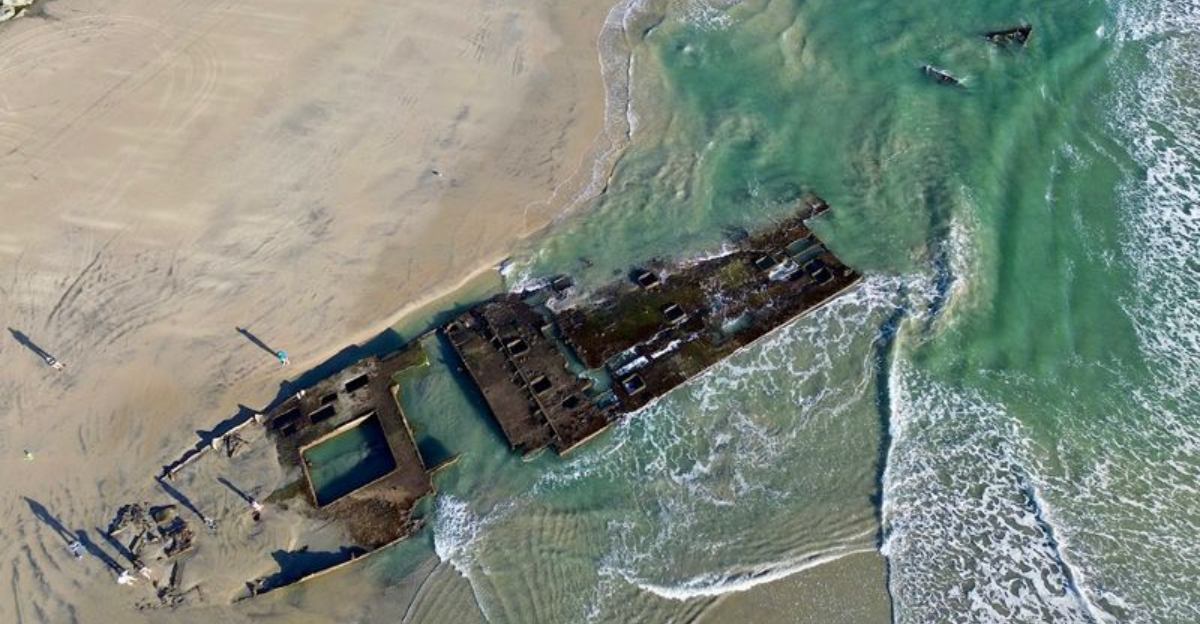
There is something almost stubborn about the SS Atlantus. This experimental concrete ship broke loose from its moorings back in 1926 while being used as a ferry slip, drifted a short distance, and then refused to budge any further.
Nearly 100 years later, it is still sitting in the same spot — partially submerged just a few hundred feet off the beach at Cape May Point, New Jersey.
The wreck is a fascinating piece of World War I history. Concrete ships were built because steel was in short supply during the war, and the U.S. government commissioned a fleet of them.
The Atlantus was one of the first, launched in 1918. It actually served briefly as a coal transport before being retired and towed to New Jersey.
From the beach at Sunset Beach near Cape May Point, you can clearly see the dark mass of the hull rising above the waterline. It has been slowly sinking and deteriorating over the decades, so the visible portion is smaller than it once was — but it is still unmistakably there.
Sunset Beach is also famous for its “diamond” quartz pebbles and nightly flag-lowering ceremonies, making a visit here feel like a full afternoon well spent.
Francisco Morazán — South Manitou Island, Michigan
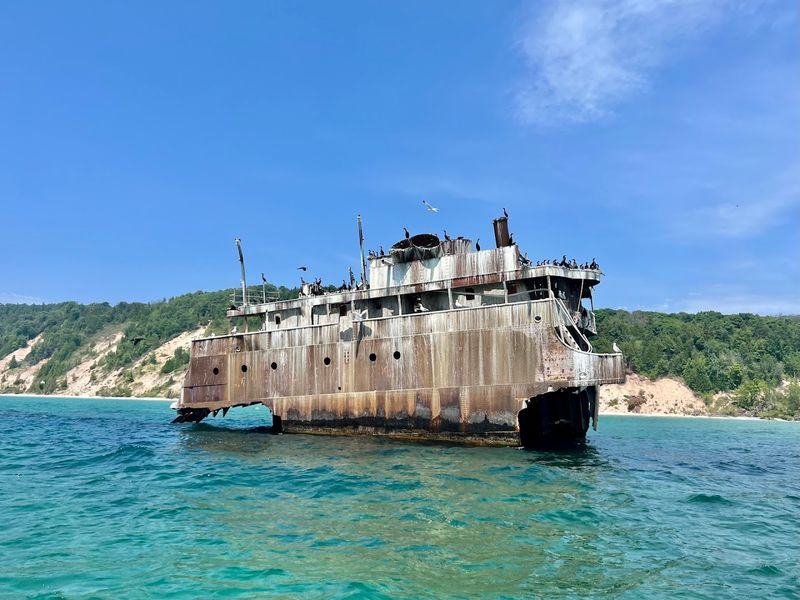
Standing on the shore of South Manitou Island and looking out at the Francisco Morazán feels like staring at a ghost. This massive Honduran freighter ran aground in November 1960 during a brutal Lake Michigan snowstorm, and it has been sitting roughly 300 feet offshore ever since.
The wreck is enormous — you can see it clearly from the island’s trails without any special equipment.
South Manitou Island is part of Sleeping Bear Dunes National Lakeshore, accessible only by ferry from Leland, Michigan. The ferry ride itself is part of the adventure, and the island has no permanent residents, giving the whole place a wonderfully remote, time-capsule feeling.
Rangers occasionally lead tours that bring visitors closer to the wreck.
The ship was carrying a cargo of chemical pesticides and chicken bones when it wrecked — a detail that always gets a laugh. All 13 crew members were rescued.
Over the decades, the hull has rusted into dramatic shapes that make it a favorite subject for photographers. The best viewing spots are along the southern shore trails.
Pack a lunch, wear sturdy shoes, and give yourself a full day to explore the island. The ferry schedule is limited, so planning ahead is absolutely necessary.
The Oriental (Boiler Wreck) — Pea Island, North Carolina
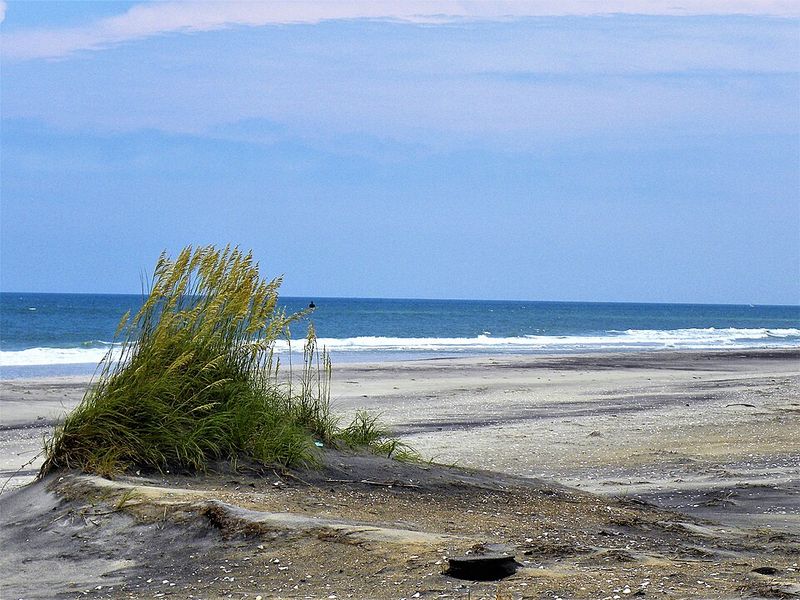
On the Outer Banks of North Carolina, locals have a nickname for almost every wreck — and this one earned its nickname honestly. The Oriental was a Union Army transport ship that sank in 1862 during the Civil War, and its massive steam boiler still sticks stubbornly above the waterline about 100 yards from shore near Pea Island.
You can spot it on a clear day without binoculars.
The Outer Banks has long been called the “Graveyard of the Atlantic” because of the staggering number of ships that have wrecked along its shifting sandbars. The Oriental is one of the most visible reminders of that grim history.
Standing on the beach and seeing that boiler poking out of the surf is a genuinely spine-tingling experience.
Pea Island is part of the Cape Hatteras National Seashore and is also home to a National Wildlife Refuge, making the surrounding area rich with birds and natural beauty. The wreck is most visible during calm surf and low tide.
Swimming out to the boiler is strongly discouraged due to unpredictable currents in the area. Bring a pair of binoculars to get a better look from the safety of the shoreline, and enjoy one of the Outer Banks’ most atmospheric historical landmarks.
Pocahontas — Salvo, North Carolina
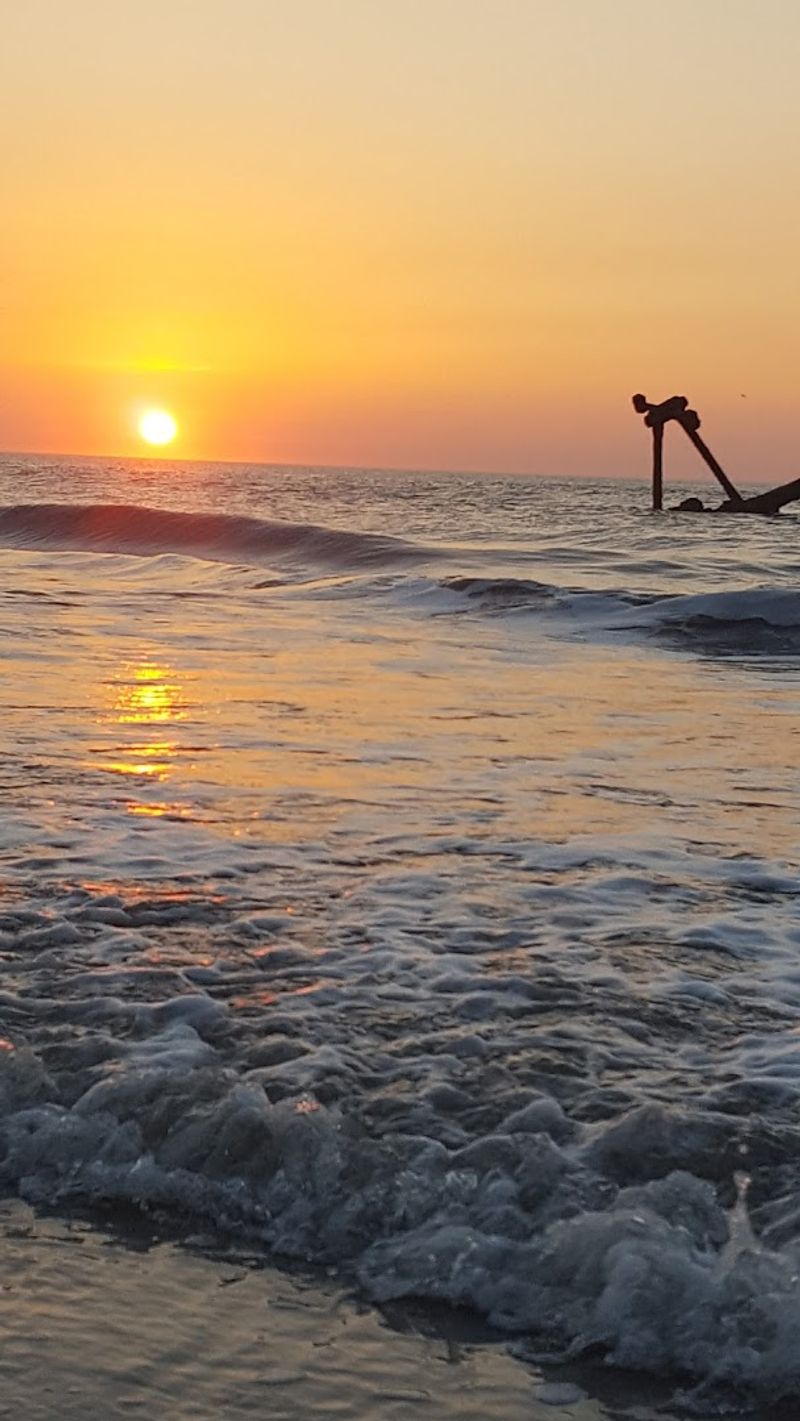
The Outer Banks keeps giving, and the Pocahontas is another quiet treasure hiding in plain sight. This paddle-wheel steamer met its end just offshore near Salvo, North Carolina, and on calm days — especially during low tide — parts of its structure break the surface and become visible from the beach.
The protruding shaft is one of the most recognizable features, jutting out of the water like a metal finger pointing skyward.
Paddle-wheel steamers were workhorses of the 19th century, hauling cargo and passengers up and down the Atlantic coast. The Pocahontas was no exception, and its wreck adds another layer to the already rich maritime history of this stretch of shoreline.
Salvo is a small, laid-back village on Hatteras Island, popular with surfers, kiteboaders, and history lovers alike.
The best time to try spotting the wreck is during early morning low tides when the water is calm and the light is clear. Stormy weather and rough surf can completely hide the remains beneath churning waves.
The Cape Hatteras National Seashore surrounds the area, so beach access is free and parking is available nearby. Visiting in the off-season, particularly spring or fall, means fewer crowds and often better visibility conditions for wreck spotting.
USS Huron — Nags Head, North Carolina
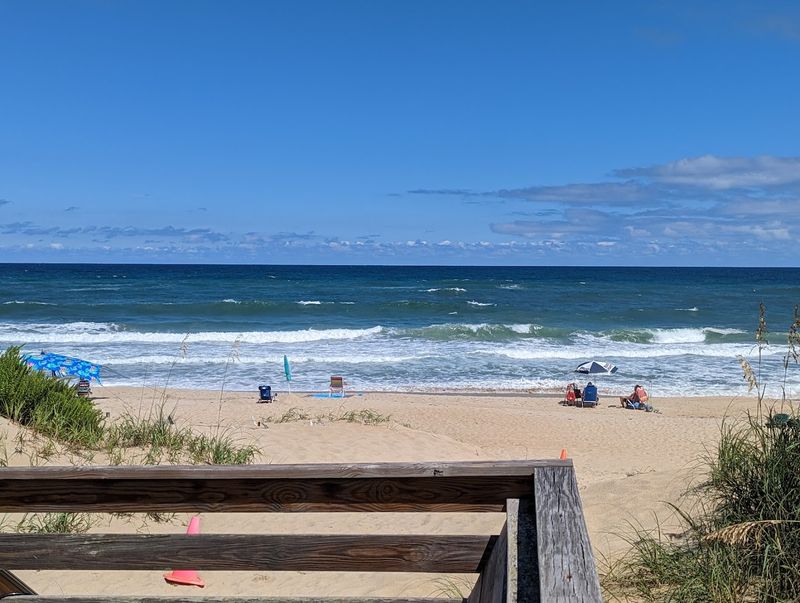
The USS Huron disaster was one of the most tragic naval losses in peacetime American history. On November 24, 1877, this U.S.
Navy gunship ran aground just 200 yards from shore near Nags Head, North Carolina, during a violent storm. Of the 132 men on board, 98 perished — a devastating loss made worse by the fact that help was so close.
The wreck sits in shallow water and can often be spotted from shore during low tide or when the surf is particularly clear.
The disaster actually led to major reforms in the U.S. Life-Saving Service, which eventually became the Coast Guard.
In a very real way, the tragedy of the Huron helped save countless future lives. The wreck site is now listed on the National Register of Historic Places.
Nags Head is one of the most popular beach towns on the Outer Banks, so amenities like restaurants, shops, and parking are easy to find nearby. The wreck is located about a mile south of the Nags Head Fishing Pier.
Snorkelers sometimes explore the shallow site on calm days, though swimming conditions vary significantly with weather. A historical marker on the beach tells the story of the disaster, giving visitors important context before they look out at the water.
Laura A. Barnes — Nags Head (Coquina Beach), North Carolina
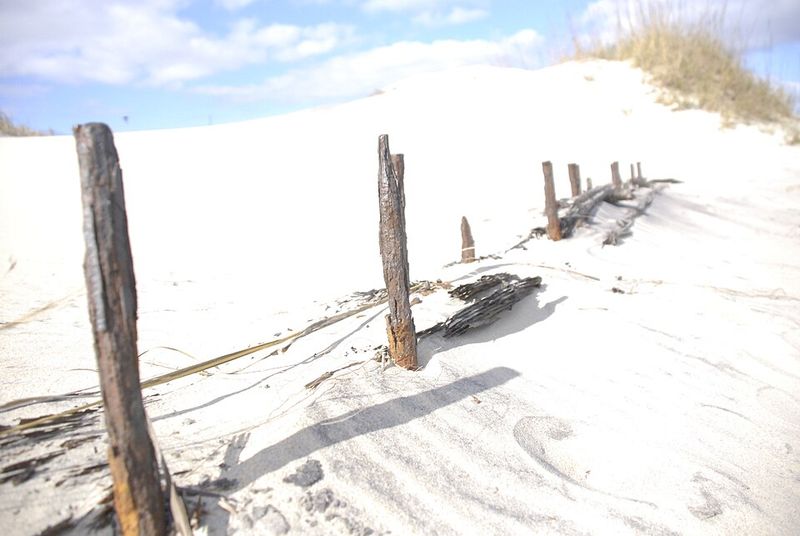
Just steps from the boardwalk at Coquina Beach, the remains of the Laura A. Barnes offer one of the most intriguing “from-the-shore” shipwreck sightings in the Outer Banks.
This four-masted schooner ran aground in 1921, becoming one of many vessels lost along North Carolina’s treacherous coastline, often called the “Graveyard of the Atlantic.”
Today, portions of the wreck can sometimes be seen emerging directly from the sand, just a short walk from the beach access. What makes the site especially compelling is its ever-changing visibility.
Shifting sands, tides, and powerful coastal storms frequently uncover and rebury the wreck, meaning no two visits look exactly the same. After major storms, larger sections of timber may appear, creating striking, photo-worthy scenes right along the shoreline.
Set near the iconic Bodie Island Lighthouse, the Laura A. Barnes captures the raw, unpredictable nature of Outer Banks shipwrecks—where history isn’t confined to museums but revealed naturally, right at your feet.
La Jenelle — Oxnard, California (Silver Strand Beach)
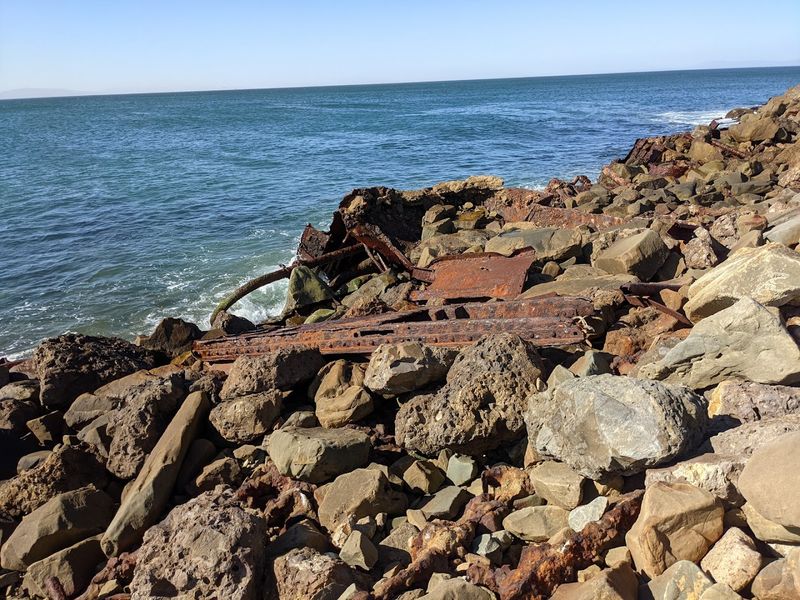
Not every shipwreck happens in a storm. The La Jenelle, a former luxury passenger liner, ran aground at Silver Strand Beach in Oxnard, California, in January 1971 under circumstances that raised plenty of eyebrows at the time.
The ship had been sold for scrapping and was being towed when it broke free and drifted ashore. Decades of wave action and weathering have broken the hull apart, but debris still occasionally washes up on the beach, and portions of the wreck can sometimes be spotted offshore.
There is something bittersweet about the La Jenelle’s fate. This was once a vessel designed to carry people in style, and it ended up abandoned on a California beach.
Local historians have worked to document its remains, and the wreck has become an informal landmark for beachcombers who know the story.
Silver Strand Beach is a quieter, less crowded alternative to the busier Ventura and Malibu beaches nearby, which gives it a pleasant, unhurried atmosphere perfect for wreck hunting. The beach is dog-friendly in certain areas, making it a popular spot for locals walking their pets.
Visiting after a period of strong winter swells tends to expose more wreck material, as wave energy shifts sand around and uncovers buried sections. The Channel Islands are visible on clear days, adding to the already scenic backdrop.
Point Reyes Shipwreck — Inverness, California (Tomales Bay)
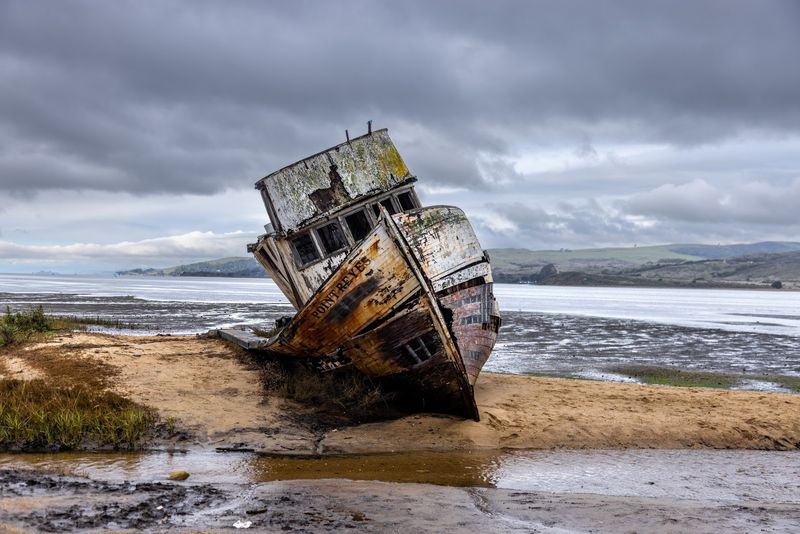
If you have ever scrolled through travel photography of Northern California, there is a good chance you have already seen the Point Reyes Shipwreck without knowing it. This picturesque fishing boat rests in the calm, shallow waters of Tomales Bay near Inverness, right beside the shoreline — no wading, no binoculars, no special timing required.
It is visible at all times, in all weather, and it photographs beautifully in almost any light.
The wreck has become something of a social media star, drawing photographers and hikers who make the short walk from the road to the shoreline specifically to capture its image. Fog rolling in off the bay in the early morning gives the scene an almost dreamlike quality, while golden hour light turns the old wood into shades of amber and rust that feel almost painterly.
The boat is believed to be a former oyster fishing vessel, though its exact history is not fully documented. Point Reyes National Seashore surrounds the area, offering miles of hiking trails, wildlife viewing, and dramatic coastal scenery.
The wreck site is easily accessible from a small pullout on Sir Francis Drake Boulevard. There is no fee to visit the shoreline, and the walk from the road takes only a few minutes.
It is a genuinely magical spot that rewards visitors at any time of year.
Monte Carlo — Coronado, California
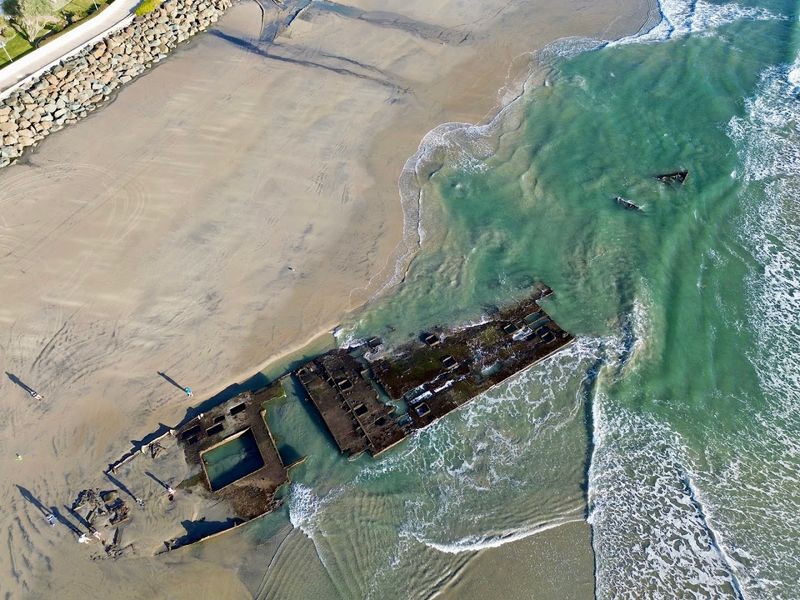
The Monte Carlo has one of the most colorful backstories of any shipwreck on this list. During the Prohibition era of the 1930s, this vessel operated as a floating casino and gambling ship anchored just outside U.S. territorial waters off the coast of Coronado, California.
It was a clever — if legally murky — way to offer gambling to Southern Californians who had no legal casinos nearby. On New Year’s Eve 1936, a fierce storm broke the ship loose from its moorings, and it wrecked on the beach.
Legend has it that the gambling chips, slot machines, and cash on board were never fully recovered, and rumors of buried treasure have surrounded the site ever since. Whether or not that is true, the story alone makes a visit feel like stepping into a noir film.
During very low tides — especially the dramatic minus tides that occur a few times each year — sections of the hull emerge from the sand and draw curious crowds to the beach.
The wreck site is near the north end of the Silver Strand between Coronado and Imperial Beach. Tide prediction apps and websites make it easy to plan a visit around the lowest tides of the month.
The Silver Strand State Beach has ample parking and restroom facilities. When the wreck appears, locals share photos quickly on social media, so following Coronado community groups online is a good way to catch it at its best.
Great Lakes Shoreline Wreck Fragments — Sleeping Bear Dunes, Michigan
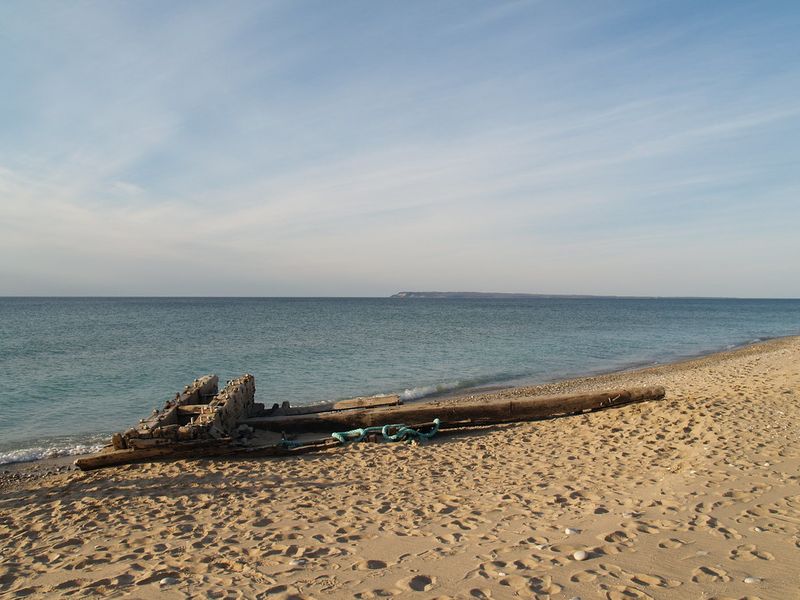
Sleeping Bear Dunes National Lakeshore is already one of the most stunning places in the Midwest, with towering sand dunes, crystal-clear Lake Michigan water, and miles of undeveloped shoreline. But there is an extra layer of wonder hiding in plain sight along its beaches: actual shipwreck fragments exposed directly on the sand, no water required.
Changing lake levels, erosion, and shifting sands regularly uncover pieces of old vessels that once sailed these waters.
The Great Lakes have claimed more than 6,000 ships over the centuries, making them one of the richest shipwreck environments on Earth. Many of those wrecks are deep and accessible only to experienced divers — but at Sleeping Bear Dunes, some of that history literally washes up at your feet.
Wooden hull planks, iron spikes, and unidentified structural fragments appear on the beach after periods of low water or strong wave action.
The national lakeshore encompasses a large stretch of coastline, so exploring different sections on different visits increases your chances of finding exposed wreck material. The visitor center in Empire, Michigan, has helpful staff who can point you toward areas with recent sightings.
Picking up or removing any artifacts is prohibited by federal law. Bring a camera, pack a picnic, and spend the day wandering the shoreline — the combination of natural beauty and hidden history makes Sleeping Bear Dunes an unforgettable destination for the whole family.
Metropolis Wreck — Corolla, North Carolina
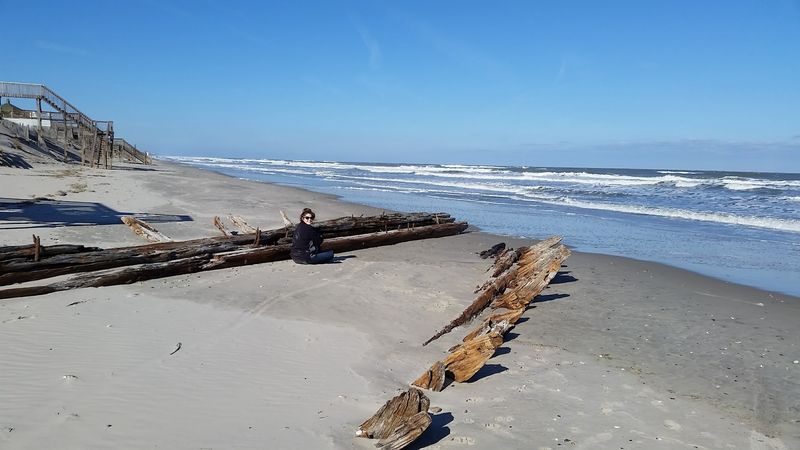
The Metropolis is one of the most intriguing shipwrecks along the Outer Banks, resting just offshore near Corolla, North Carolina. This 19th-century schooner ran aground decades ago in the shifting sands of the Outer Banks, an area long nicknamed the “Graveyard of the Atlantic” for its dangerous shoals and unpredictable storms.
Over the years, storms and tides have shifted the wreck, partially burying it in sand, then exposing its remains again, creating an ever-changing spectacle for visitors.
Unlike deep-water wrecks that require boats or diving gear, the Metropolis sits close enough to shore that curious beachgoers can sometimes see its skeletal hull and rusted timbers from the sand. Photographers frequently capture striking images of the wreck framed by the Atlantic surf and wide-open beaches, making it a popular subject for those seeking tangible history without leaving the shoreline.
The Metropolis perfectly illustrates the unpredictable beauty of Outer Banks shipwrecks: a historic vessel, slowly claimed by nature, revealing fragments of its story only at the whims of tides and storms. For anyone walking Corolla’s beaches, glimpses of the wreck offer a vivid connection to the region’s maritime past.
Mary D. Hume — Gold Beach, Oregon
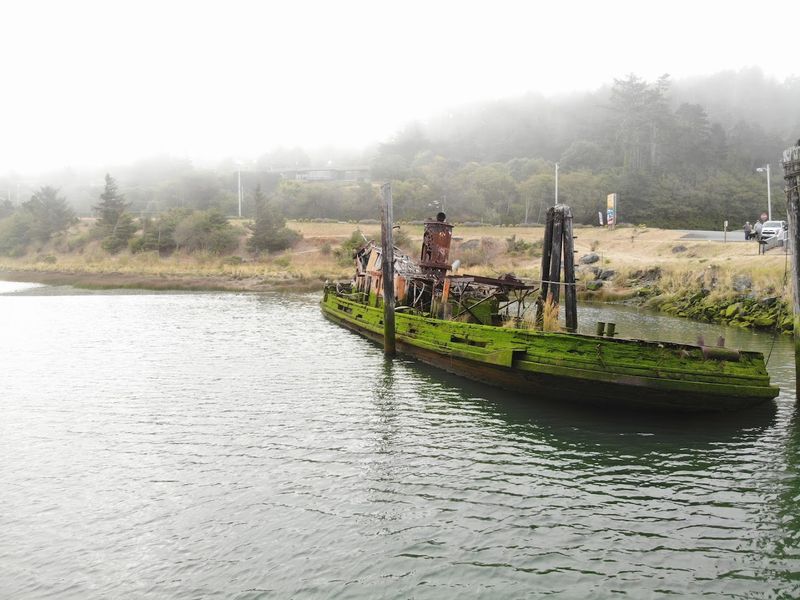
The Mary D. Hume is a historic wooden steamship that rests on the shoreline of Gold Beach, Oregon, offering visitors a rare chance to see a shipwreck directly from land.
Built in 1881, this vessel served as a supply and transport ship along the rugged Oregon coast before being decommissioned and intentionally beached in 1935. Today, its weathered hull and timbers remain partially exposed, creating a striking visual contrast against the sandy beach and the waves of the Pacific Ocean.
What makes the Mary D. Hume unique is its accessibility.
Unlike many coastal wrecks that are either submerged or difficult to reach, this ship lies directly on the beach, allowing visitors to walk up and explore its skeletal frame at close range. Photographers and history enthusiasts often flock to the site to capture images of the hull’s peeling wood and rusted hardware, which reflect the passage of more than a century.
The wreck also serves as a tangible reminder of the Oregon coast’s maritime history, illustrating the challenges of shipping along this rocky, storm-prone coastline. For those visiting Gold Beach, the Mary D.
Hume is an enduring landmark—a shipwreck that is literally steps away from the shore and a vivid connection to the region’s seafaring past.
Mary Jarecki & Wreck Remains — Au Sable Point, Michigan
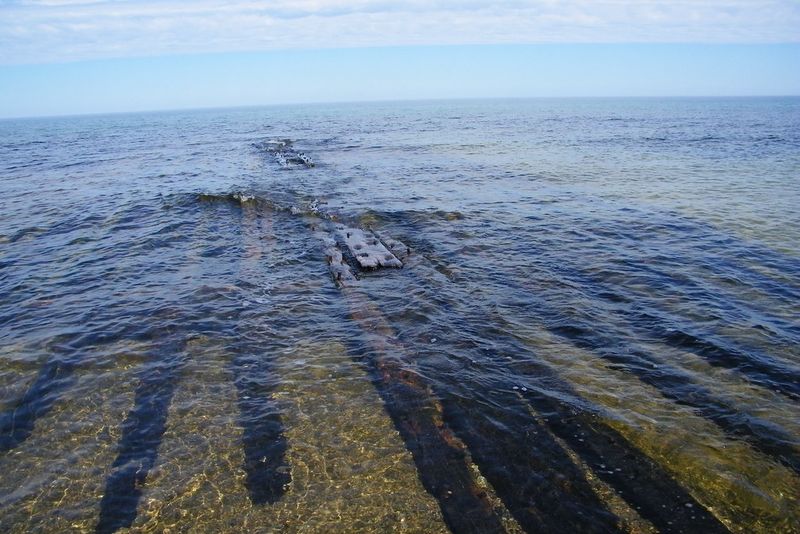
Along the rugged shoreline of Lake Superior at Au Sable Point in Pictured Rocks National Lakeshore, visitors can still see remnants of several historic shipwrecks from the late 19th and early 20th centuries right from shore. The most prominent of these is the Mary Jarecki, a wooden bulk‑freight steamship that ran aground on July 4, 1883, when dense fog and rough seas caused it to stray off course near the mouth of the Hurricane River.
Loaded with iron ore, the vessel became stranded on the reef and, despite salvage efforts, was abandoned.
Today, pieces of the long oak keelsons and other structural timbers of the Mary Jarecki rest on the sandstone bottom just offshore, often visible above the waterline during periods of lower lake levels. As you walk the shore toward the historic Au Sable Light Station, you may also see intermingled wreckage from two additional wooden freighters — the Sitka (grounded in 1904) and the Gale Staples (grounded in 1918).
Because these vessels were similar in design, their scattered remains blend together along the reef and beach, creating a fascinating, visible snapshot of the “Shipwreck Coast.”
These remnants offer a unique opportunity to witness Great Lakes maritime history directly from shore, without needing to dive or boat out to deeper water.
SS Dominator (Palos Verdes, California)
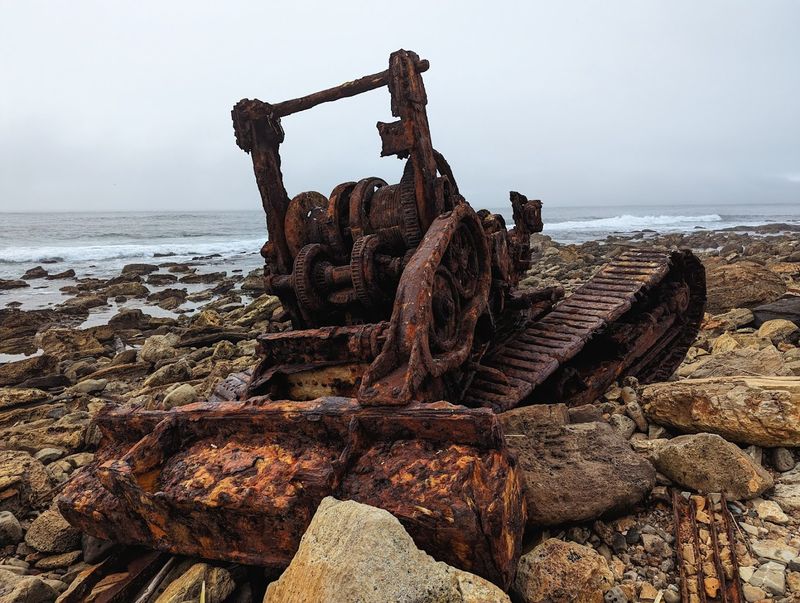
The SS Dominator wreck is one of Southern California’s most remarkable shore‑accessible shipwreck sites, resting along the rocky coastline of Palos Verdes Peninsula in Los Angeles County, California. In March 1961, this 512‑foot Greek freighter lost power in dense fog, drifted off course, and slammed into the reefs near what’s now Lunada Bay.
Attempts to refloat her failed, and over time the hull was broken apart by waves and storms, scattering massive steel plates, ribs, and machinery along a narrow stretch of rugged shoreline.
Unlike classic wrecks that lie far offshore, the remains of the Dominator are visible from land, and many of its rusted fragments can be reached on foot at low tide. Hikers and photographers frequent the rocky coves below the cliffs to document the jagged steel fragments poking up among the rocks and tide pools.
While the ship no longer sits intact, key structural pieces — including twisted hull panels, bulkhead remnants, and large engine parts — remain in place and are unmistakable against the natural backdrop.