Tucked away on Baltimore Street in Gettysburg, Pennsylvania, Civil War Tails at the Homestead Diorama Museum is one of the most unexpected and delightful museums you will ever visit. Created by two sisters over the course of 30 years, this one-of-a-kind museum features thousands of hand-sculpted clay cats acting as soldiers, civilians, and historical figures from the Civil War era.
With over 10,000 tiny feline figures and historically accurate dioramas, the museum makes history feel alive in a way that textbooks simply cannot. Whether you are a history buff, a cat lover, or just someone looking for something truly memorable, this place delivers an experience unlike anything else.
The Hand-Sculpted Clay Cat Soldiers
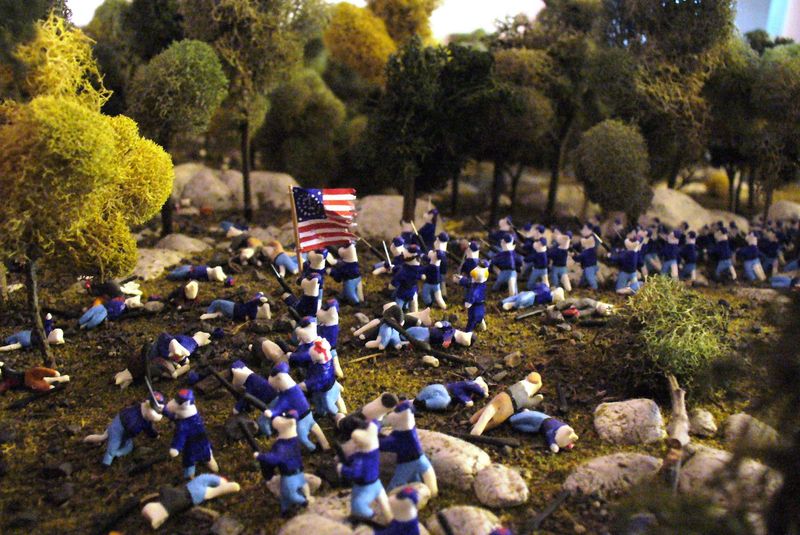
Every single figure inside Civil War Tails at the Homestead Diorama Museum started as a lump of clay. The two sisters behind this museum, Rebecca and Ruth, have spent over 30 years carefully sculpting each cat by hand, giving them uniforms, weapons, facial hair, and even battle wounds that match historical records.
That level of dedication is honestly jaw-dropping.
Each cat represents a real soldier or historical figure from the Civil War period. Visitors who look closely will notice that no two figures are exactly alike.
Some cats wear Union blue, others wear Confederate gray, and details like buttons, boots, and rank insignia are all thoughtfully included. The craftsmanship rivals professional museum exhibits found in much larger institutions.
The sisters reached a milestone of 10,000 sculpted cats in recent years, which is an incredible achievement for a family-run operation. Reviewers consistently mention being amazed by the workmanship, calling it awe-inspiring and unlike anything they have ever seen.
If you appreciate handmade art combined with serious historical research, these tiny clay soldiers will absolutely steal your heart.
The Battle of Gettysburg Diorama
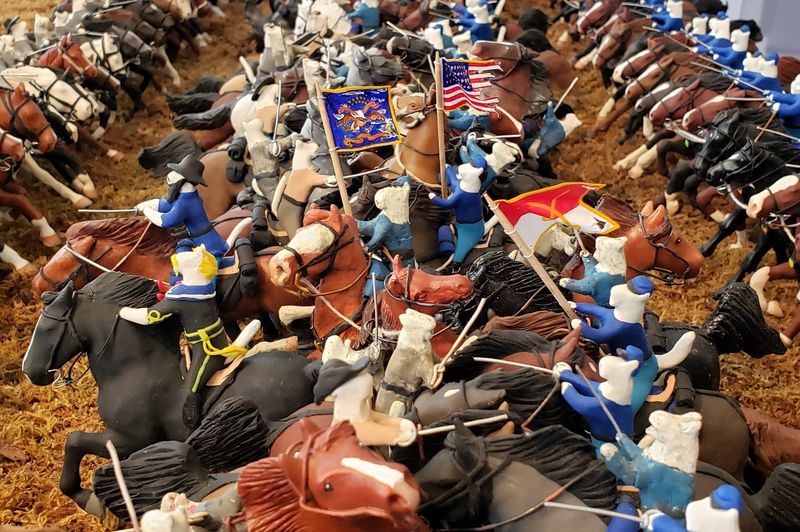
Pickett’s Charge is one of the most dramatic moments in American military history, and Civil War Tails at the Homestead Diorama Museum brings it to life in a way that feels almost magical. Reviewers have said that looking at the Gettysburg battle diorama feels like staring at an actual photograph of the event.
The sheer number of figures and the precision of their placement make it deeply moving.
Rebecca and Ruth researched troop positions, terrain features, and individual unit histories before placing a single cat on the battlefield. Even the rocks and landscape details were carefully considered to accurately reflect the real geography of Gettysburg.
Visitors who know their Civil War history will immediately recognize familiar landmarks within the display.
One of the most touching aspects of this diorama is how it removes the raw violence of war while still honoring its gravity. Seeing cats instead of human soldiers allows visitors to process the scale and tragedy of the battle without feeling overwhelmed.
Several reviewers noted that this approach actually helped them understand and connect with the history more deeply than traditional exhibits ever had.
Little Round Top and the 20th Maine Exhibit
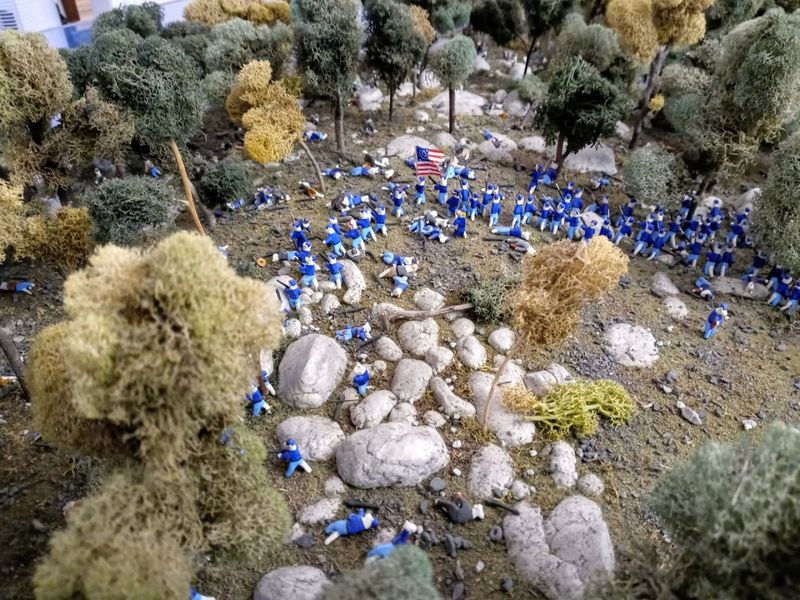
Few moments in Civil War history are as celebrated as the defense of Little Round Top by the 20th Maine regiment under Colonel Joshua Chamberlain. Civil War Tails at the Homestead Diorama Museum honors this legendary stand with a dedicated exhibit that places cat soldiers in the exact positions where real soldiers fought on that rocky hillside in July 1863.
What makes this display especially personal is how Rebecca uses a notebook to track individual figures. One visitor mentioned that after sharing their ancestor was an officer in the 20th Maine, Rebecca was able to point out exactly where that specific cat was positioned in the diorama.
That kind of personal connection transforms a museum visit into something truly unforgettable.
The terrain of Little Round Top is recreated with careful attention to the actual landscape, including boulders and tree lines that echo the real location just a short distance away. Knowing that you are standing on the very ground where this history happened, while looking at a miniature version of it crafted with such love and precision, gives the exhibit an emotional weight that is genuinely hard to describe.
The Historic Homestead Building
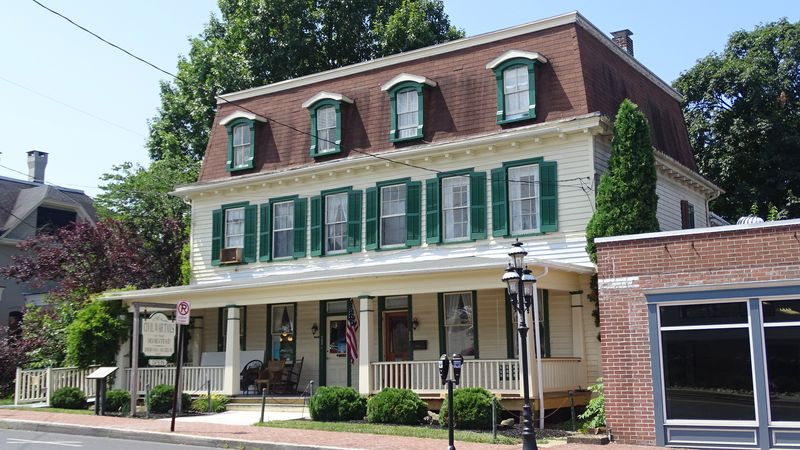
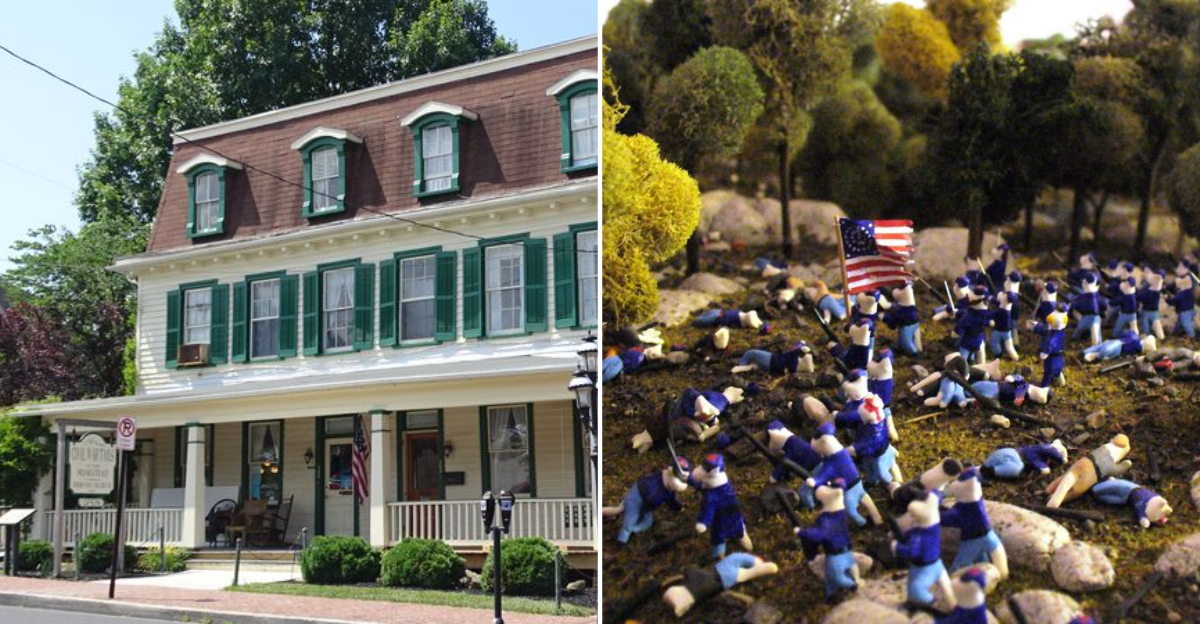
The building that houses Civil War Tails at the Homestead Diorama Museum is itself a piece of living history. Located at 785 Baltimore Street in Gettysburg, the structure was once part of the Homestead, an orphanage established after the Civil War to care for children who lost their fathers in the conflict.
Walking through its doors means stepping into layers of American history before you even see the first diorama.
Visitors frequently comment on the beauty and charm of the building itself. The historic architecture adds an atmosphere that a modern museum space simply could not replicate.
There is something quietly powerful about viewing exhibits about war and loss inside walls that once sheltered the children left behind by that same war.
The location on Baltimore Street also puts the museum within easy walking distance of the Gettysburg National Cemetery, making it a natural addition to any battlefield tour. Street parking is available nearby, and the whole neighborhood carries the weight of history in a way that sets the mood perfectly for what you will find inside.
The building is as much a part of the experience as the dioramas themselves.
The Samurai Cat Battle of Sekigahara Exhibit
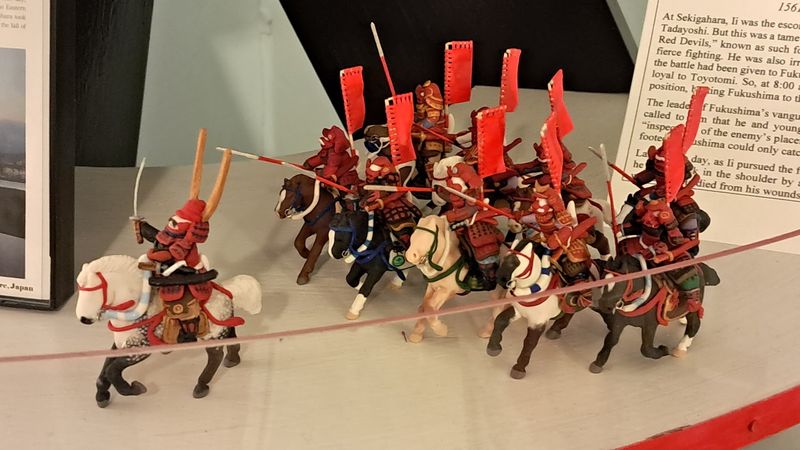
Not everything inside Civil War Tails at the Homestead Diorama Museum is about the American Civil War. One of the most surprising and delightful discoveries for first-time visitors is the Samurai cat exhibit, which recreates the Battle of Sekigahara from 17th-century Japan.
This unexpected addition exists because Sekigahara is a sister city of Gettysburg, making the connection both meaningful and creative.
Just like the Civil War exhibits, the Samurai cats are hand-sculpted with remarkable historical accuracy. Tiny armor pieces, weapons, and clan banners are all represented in careful detail, showing that Rebecca and Ruth applied the same level of research and dedication to Japanese history as they did to American history.
The result is a display that surprises and charms visitors in equal measure.
For many guests, stumbling upon the Samurai exhibit mid-tour feels like a wonderful bonus they never expected. It also signals something important about the spirit of this museum: curiosity, creativity, and a genuine love of history drive everything here.
The Sekigahara display proves that Civil War Tails is not just a one-trick pony but a living, growing collection shaped by passion and imagination.
The Andersonville Prison Camp Depiction
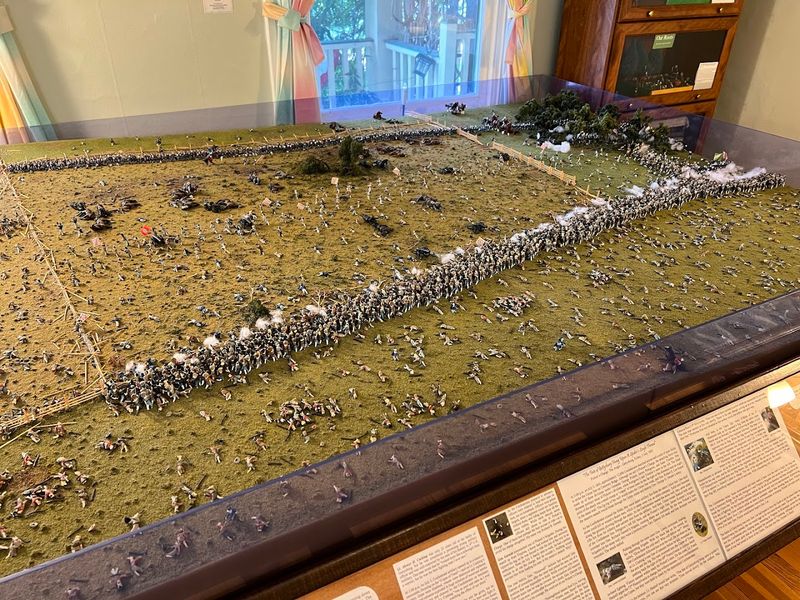
Some parts of Civil War history are painful to confront, and the Andersonville prison camp is among the darkest chapters of that era. Civil War Tails at the Homestead Diorama Museum does not shy away from this difficult history.
Rebecca has spoken personally to visitors about the stories behind the Andersonville figures, bringing a human element to a subject that is often reduced to statistics in history books.
Andersonville, officially known as Camp Sumter, was a Confederate prisoner-of-war camp in Georgia where tens of thousands of Union soldiers suffered under brutal conditions. By depicting this through cat figures, the museum manages to communicate the tragedy without being gratuitously graphic.
Visitors have mentioned that Rebecca’s personal storytelling during tours of this exhibit was especially moving and memorable.
The choice to include Andersonville alongside battlefield scenes shows the breadth of historical coverage at Civil War Tails. War is not only fought on open fields, and this museum understands that fully.
Showing the suffering behind prison walls alongside the glory of military charges gives visitors a more complete and honest picture of what the Civil War truly meant for the people who lived through it.
The 1st Michigan Cavalry Tribute
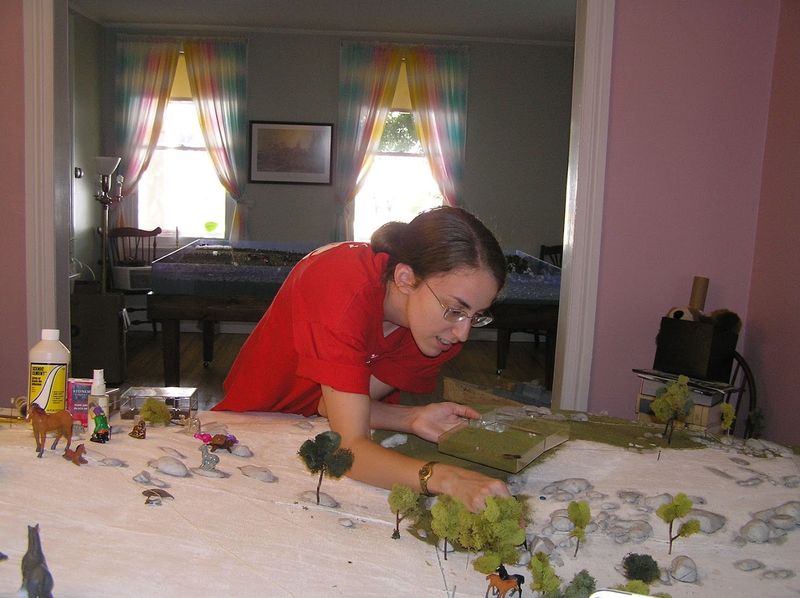
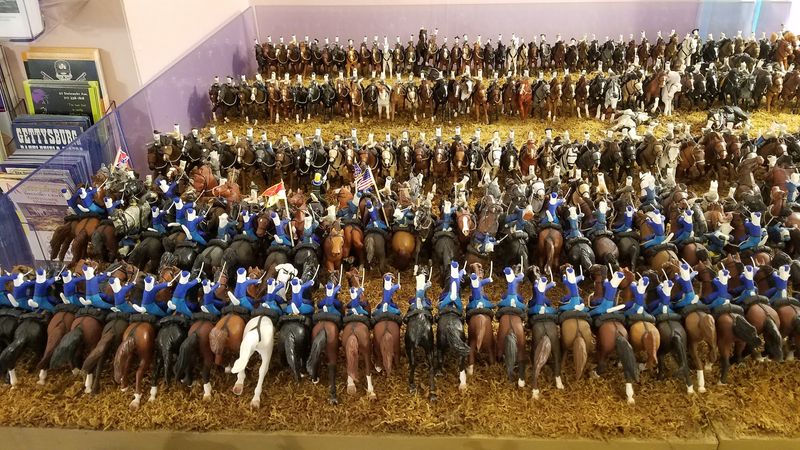
Rebecca’s personal storytelling style during museum tours often uncovers stories that a standard guidebook would never mention. The 1st Michigan Cavalry is one such example, a unit whose story Rebecca shares with visitors in a way that feels intimate and real.
Reviewers who received this kind of personal account describe it as one of the highlights of their entire Gettysburg trip.
The 1st Michigan Cavalry played a significant role in the Battle of Gettysburg, particularly in the cavalry engagement on East Cavalry Field on July 3, 1863. Facing off against Confederate General J.E.B.
Stuart’s forces, the Michigan troopers helped prevent a potentially devastating flanking attack. Having their story told through carefully positioned cat figures gives the unit a spotlight they do not always receive in broader Civil War narratives.
What stands out most about exhibits like this one is how Civil War Tails manages to honor lesser-known units and stories that often get overshadowed by famous moments like Pickett’s Charge. The museum functions almost like a living encyclopedia of Civil War history, with each cat figure representing not just a soldier but a real person whose story deserves to be remembered and shared.
The Gift Shop and Souvenir Collection
Leaving Civil War Tails at the Homestead Diorama Museum without stopping at the gift shop would be a serious mistake. The selection of souvenirs is genuinely impressive, ranging from hand-crafted cat figurines and plush toys to postcards, books, and prints.
Visitors consistently rave about both the quality and the affordability of the items available for purchase.
One reviewer spent less than $50 on a personalized book signed by Rebecca, several postcards, a Union soldier cat model, and a plush toy. Another mentioned bringing home a couple of cat figures that everyone in their family immediately fell in love with.
Rebecca has also been known to personalize books for visitors, adding a warm and memorable touch to the shopping experience.
The gift shop reflects the same thoughtfulness and creativity that went into building the museum itself. Every item feels like a genuine keepsake rather than a generic tourist trinket.
For cat lovers especially, finding high-quality cat-themed Civil War merchandise is a rare treat. Whether you are buying for yourself, your kids, or a history-loving friend back home, the gift shop at Civil War Tails is worth every penny and then some.
The Sisters Behind the Museum: Rebecca and Ruth
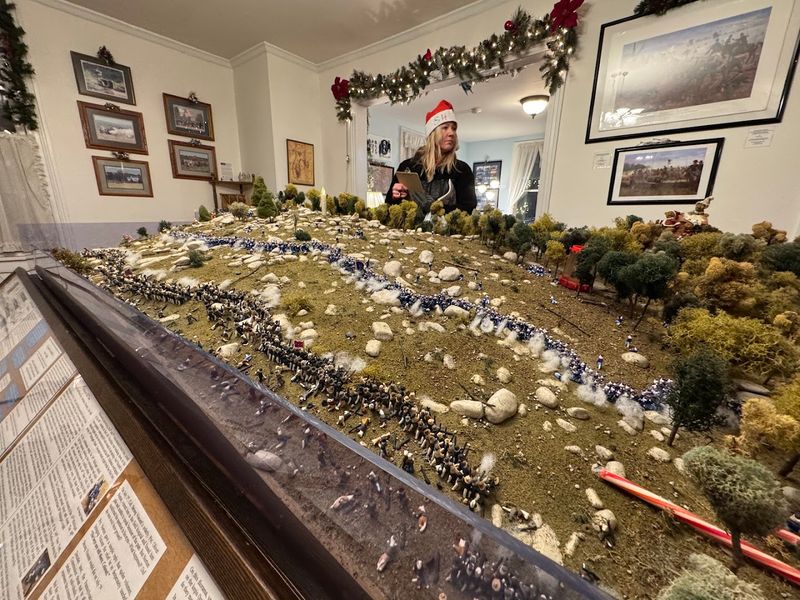
Every great museum has a great story behind it, and Civil War Tails at the Homestead Diorama Museum is no exception. Sisters Rebecca and Ruth have dedicated over 30 years of their lives to building, researching, and expanding this extraordinary collection.
Their passion for both history and their craft is immediately obvious the moment you walk through the door and start talking with them.
Visitors repeatedly describe interactions with Rebecca and Ruth as the highlight of their visit. Rebecca in particular is known for her warmth, her encyclopedic knowledge of Civil War history, and her willingness to spend as much time as a visitor needs exploring the exhibits together.
She remembers details about individual figures, knows unit histories by heart, and has a gift for making complex history feel personal and accessible.
Ruth and Rebecca represent something increasingly rare in the museum world: curators who are also the artists, historians, and storytellers all rolled into one. Their dedication has earned Civil War Tails a near-perfect 4.9-star rating on Google with nearly 200 reviews.
Meeting them in person is not just a bonus of visiting this museum. For many guests, it is the experience that turns a good trip into an unforgettable one.
Admission, Hours, and Planning Your Visit
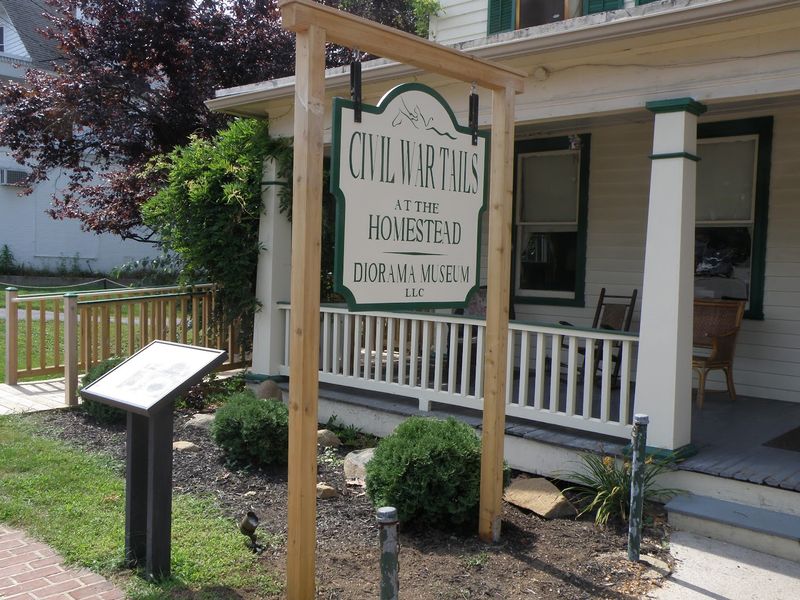
Planning a visit to Civil War Tails at the Homestead Diorama Museum is straightforward, and the affordable admission makes it accessible for almost everyone. Tickets are just $6.50 per adult, which is an incredible value considering the depth and quality of what you will experience inside.
Multiple reviewers have called it one of the best deals in all of Gettysburg.
The museum is open Friday, Monday, and Tuesday from 1 to 7 PM, and on Saturdays from 10 AM to 7 PM. It is closed on Sundays, Wednesdays, and Thursdays, so checking the schedule before you go is a smart move.
The museum is located at 785 Baltimore Street, just a couple of buildings away from the Gettysburg National Cemetery, making it easy to include in a full day of sightseeing.
Street parking is available along Baltimore Street, and there is additional parking across the street near the bus tour building. Visitors are encouraged to take their time and soak in every detail, since the exhibits reward slow and careful observation.
You can reach the museum by phone at 717-420-5273 or visit civilwartails.com for more information before your trip. Come ready to be genuinely surprised.