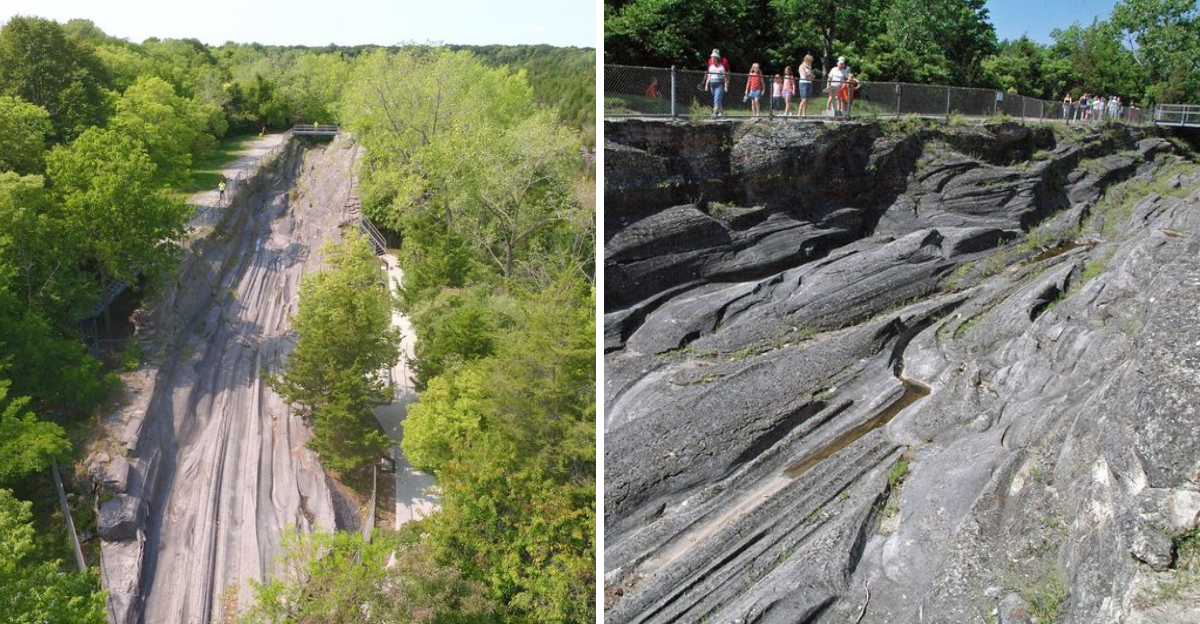
Tucked away on a small island in Lake Erie, the Glacial Grooves Geological Preserve on Kelleys Island holds one of the most jaw-dropping natural wonders you’ve probably never heard of.
Massive trenches carved by ancient glaciers stretch across limestone bedrock, telling a story that began over 18,000 years ago.
Best of all, this incredible site is completely free to visit and easy to reach by ferry from mainland Ohio.
If you’re looking for a one-of-a-kind adventure that blends history, science, and stunning scenery, Kelleys Island deserves a spot on your travel list.
A Hidden Natural Wonder in Lake Erie
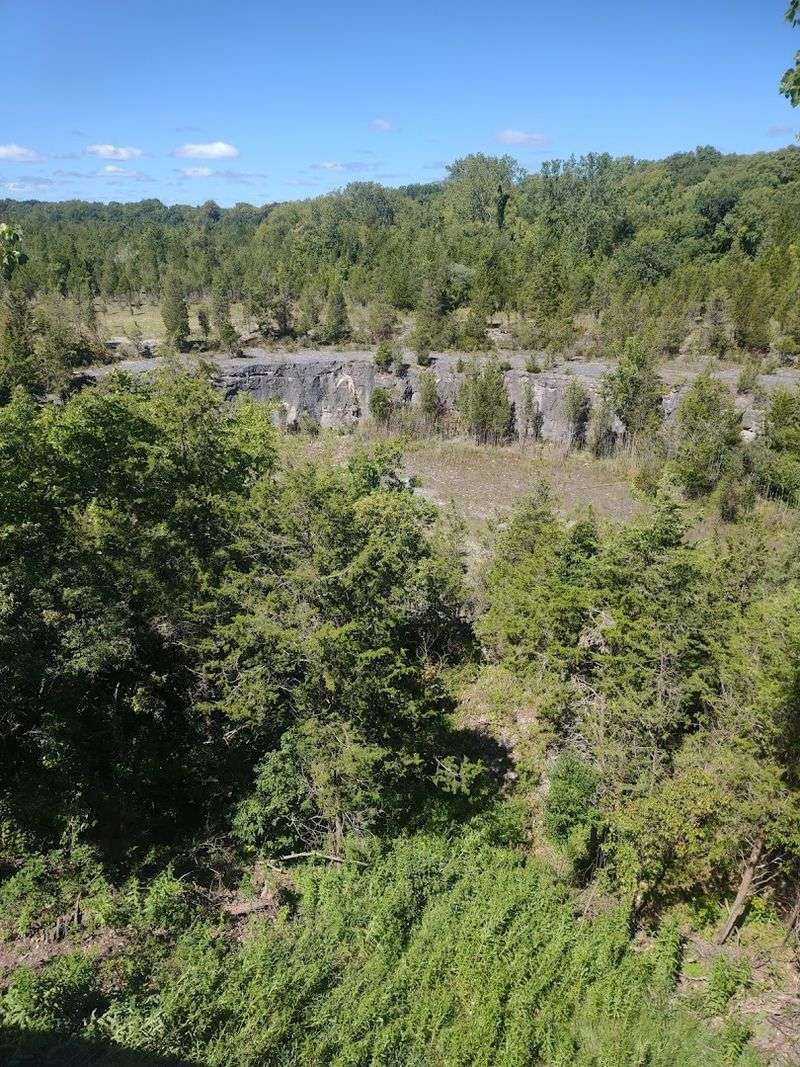
Most people have never heard of Kelleys Island, and that’s exactly what makes it feel like a well-kept secret. Sitting quietly in the western basin of Lake Erie, this small Ohio island is home to one of the most remarkable geological sites in all of North America.
You won’t find it on most tourist maps, but those who stumble upon it rarely forget what they see.
The island itself is charming — think peaceful roads, vintage cottages, and fresh lake breezes. But hidden within a state-managed preserve near the north shore lies something that stops visitors in their tracks.
A series of enormous grooves, carved directly into solid limestone bedrock, stretches across the ground like giant claw marks left behind by nature itself.
Getting here takes a short ferry ride from Marblehead or Sandusky, Ohio, which adds a fun travel element before you even set foot on the island. The ferry runs seasonally, so checking schedules ahead of time is a smart move.
Once you arrive, the preserve is easy to find and completely free to enter. For a place this extraordinary, the lack of admission fee feels almost unbelievable.
The Largest Accessible Glacial Grooves on Earth
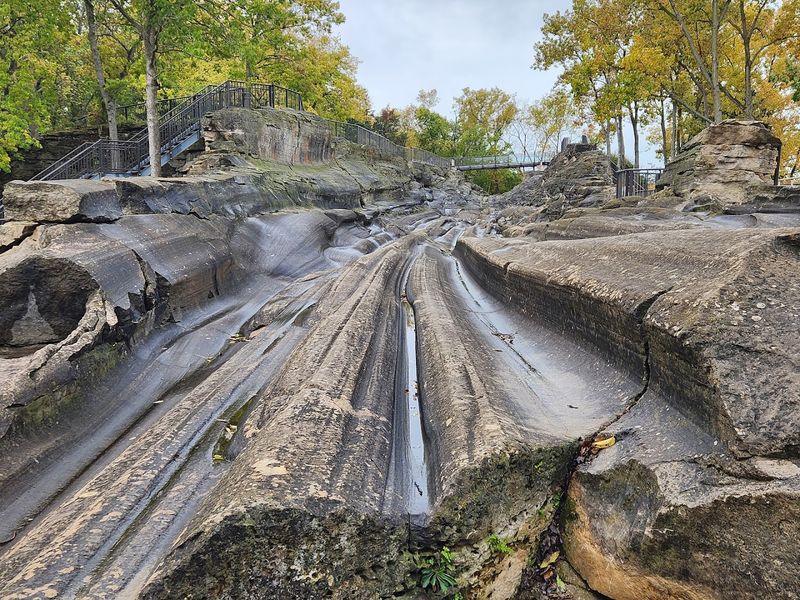
Officially recognized as the largest and most accessible glacial grooves in the world, this site earns its title without any exaggeration. Geology textbooks reference it.
Scientists study it. And regular visitors stand at the edge of the viewing platform with their mouths wide open.
There’s simply nothing else like it on the planet that you can walk right up to and see with your own eyes.
What sets this location apart isn’t just size — it’s accessibility. Many geological wonders require long hikes, special permits, or expensive gear.
Here, you can step off a ferry, walk a short distance, and find yourself face-to-face with one of Earth’s most extraordinary natural records. That kind of access is genuinely rare.
Geology enthusiasts often rank this site alongside famous landmarks like the Grand Canyon or Niagara Falls in terms of sheer scientific significance. The grooves are so well-preserved and so clearly defined that even a first-time visitor can immediately understand what they’re looking at.
Whether you’re a science lover, a curious traveler, or just someone who appreciates wild and beautiful places, this preserve delivers something truly unforgettable.
Carved by Ice Thousands of Years Ago
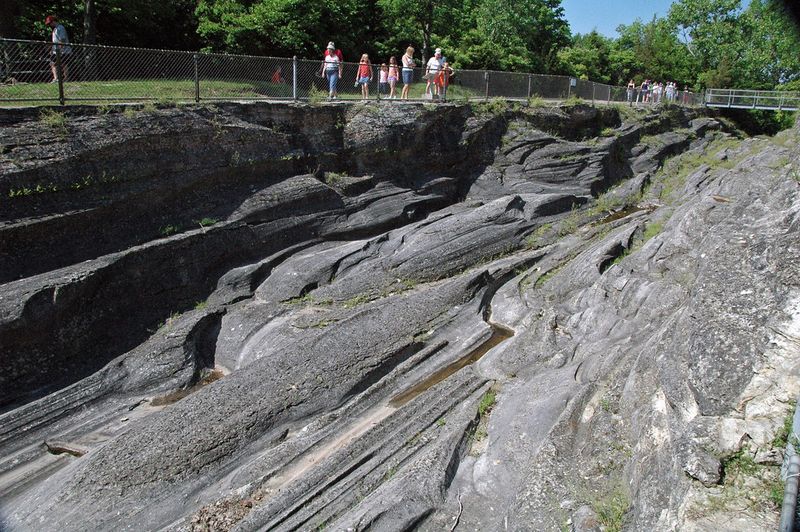
Picture a wall of ice, miles thick, slowly grinding its way across the landscape. That’s exactly what happened here between 18,000 and 30,000 years ago, during the last major Ice Age.
As glaciers crept southward across North America, they carried enormous amounts of rock, gravel, and debris embedded in their frozen undersides. That rocky material acted like sandpaper against the limestone bedrock below.
Over thousands of years, the constant pressure and movement of the glacier literally scraped trenches into the solid rock. The result?
A series of deep, dramatic grooves that run in nearly parallel lines across the surface of Kelleys Island. Scientists call this process glacial abrasion, and the marks left behind are called striations or glacial grooves depending on their size.
What makes this site so special is how perfectly preserved the grooves remain after all this time. Limestone is a relatively soft rock, which helped the glacier carve so deeply — but it also meant the grooves could have easily eroded away over millennia.
Fortunately, a layer of soil protected them for thousands of years before they were uncovered and recognized for what they truly are: a frozen snapshot of the Ice Age.
Massive in Scale and Depth
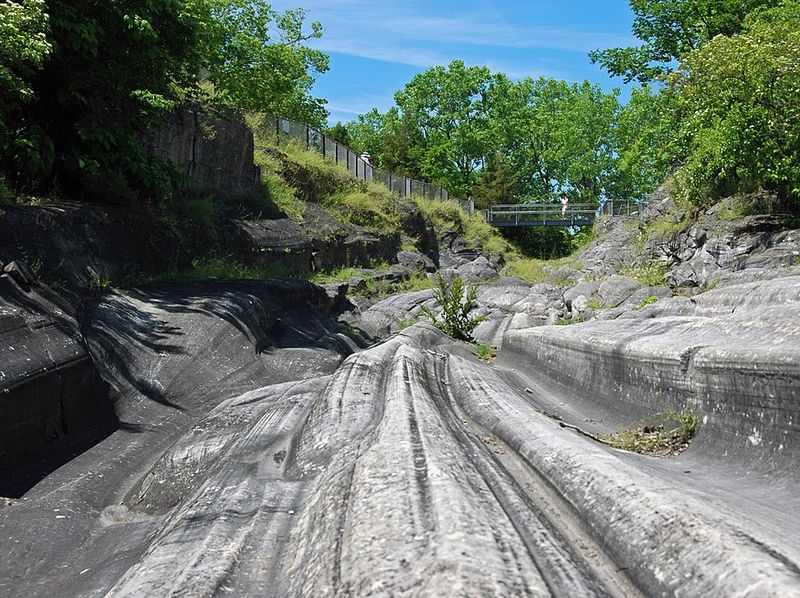
Numbers alone don’t do this place justice, but they’re a good starting point. The main groove at Kelleys Island stretches roughly 400 feet long, 35 feet wide, and reaches depths of up to 10 to 15 feet in certain sections.
To put that in perspective, imagine a groove deep enough to swallow a small house sideways. Standing at the edge of the viewing platform, the sheer scale hits you all at once.
Most people expect something cool when they visit, but the actual size of the grooves surprises almost everyone. Photos don’t fully capture the experience — the depth and length of the channels create a dramatic visual that feels almost cinematic.
It’s one of those rare places where reality exceeds expectations.
The width of the groove is particularly striking. At 35 feet across, it’s wide enough to fit a large school bus with room to spare on either side.
Geologists believe the glacier that carved these marks was moving in a roughly northeast-to-southwest direction, and the sheer force required to create trenches of this magnitude is almost incomprehensible. Standing there, you realize just how small we are compared to the natural forces that shaped this planet.
A Rare Look Into Ice Age Movement
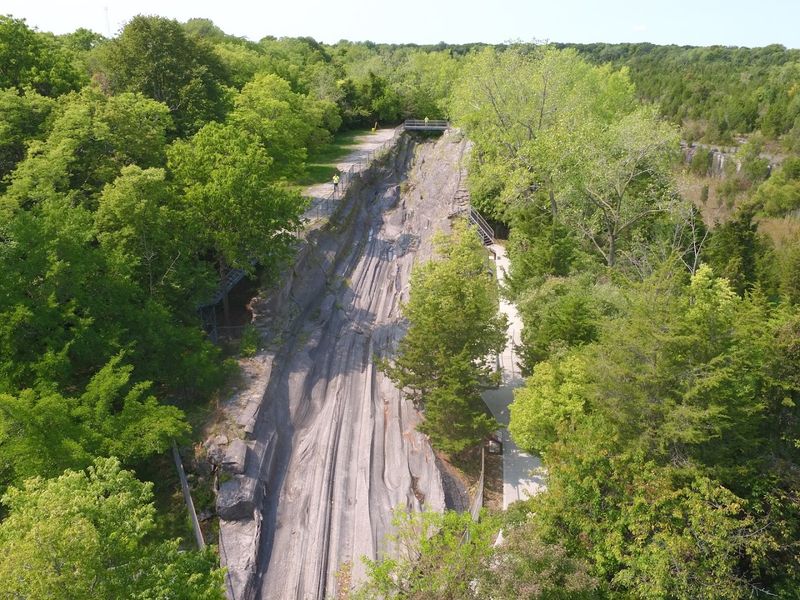
Every scratch, groove, and ridge in this limestone tells a story. Scientists who study glaciers — called glaciologists — use sites like this one to reconstruct how ancient ice sheets moved across the continent.
The direction of the grooves, the depth of the cuts, and the pattern of the striations all act like clues in a geological puzzle that spans thousands of years.
At Kelleys Island, the grooves run in a clear northeast-to-southwest direction, confirming that the Laurentide Ice Sheet pushed through this region with enormous, sustained force. Researchers have used this data alongside other regional sites to map the flow patterns of Ice Age glaciers across the Great Lakes region.
It’s real-world evidence that no lab experiment can fully replicate.
For students and curious visitors, this site offers something textbooks simply can’t — a tangible, touchable (though please don’t touch!) record of Earth’s climate history. Seeing the striations up close makes abstract concepts like ice ages and glacial movement suddenly feel very real.
There’s something deeply moving about standing on ground that was buried under miles of ice just a geological blink ago. It changes how you think about time and the planet we live on.
Layers of Detail Within the Rock
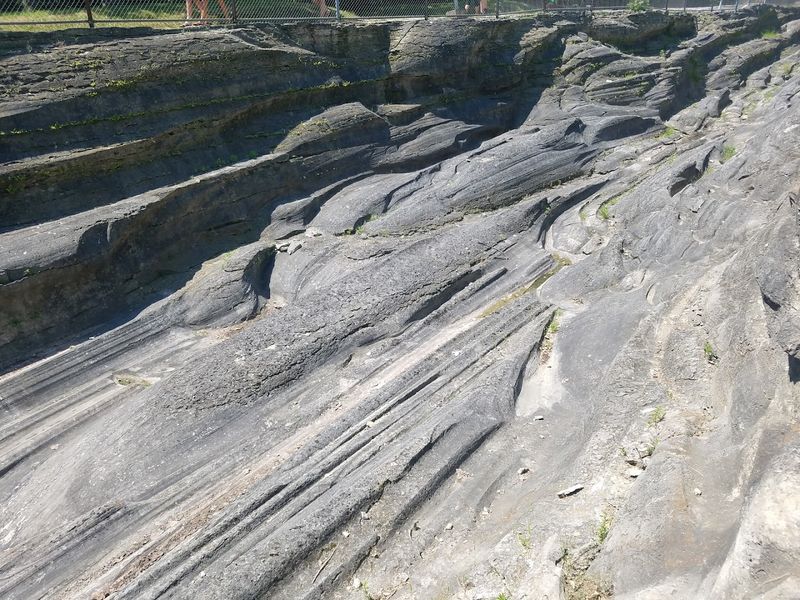
Once you look past the main grooves, a whole new world of detail opens up across the rock surface. Smaller striations crisscross the limestone in patterns that reveal multiple phases of glacial activity.
Some of these lines run in slightly different directions than the main grooves, suggesting that the glacier shifted its course at different points in time. It’s like reading a paragraph written over itself in multiple layers of ink.
These finer details are easy to miss if you’re only focused on the dramatic main channel. But take a moment to crouch down and really look at the rock surface, and you’ll start noticing ridges, gouges, and scratch marks of all different sizes.
Geologists call these features roche moutonnee, chattermarks, and crescentic gouges, each one formed by a different interaction between the glacier and the bedrock below.
What’s fascinating is that even trained geologists continue to find new details worth studying at this site. The complexity of the rock surface reflects just how dynamic and powerful the ice flows once were.
For casual visitors, the smaller details add an extra layer of wonder — turning what could be a quick five-minute stop into a genuinely absorbing experience that rewards those who slow down and look carefully.
Fossils Embedded in the Limestone
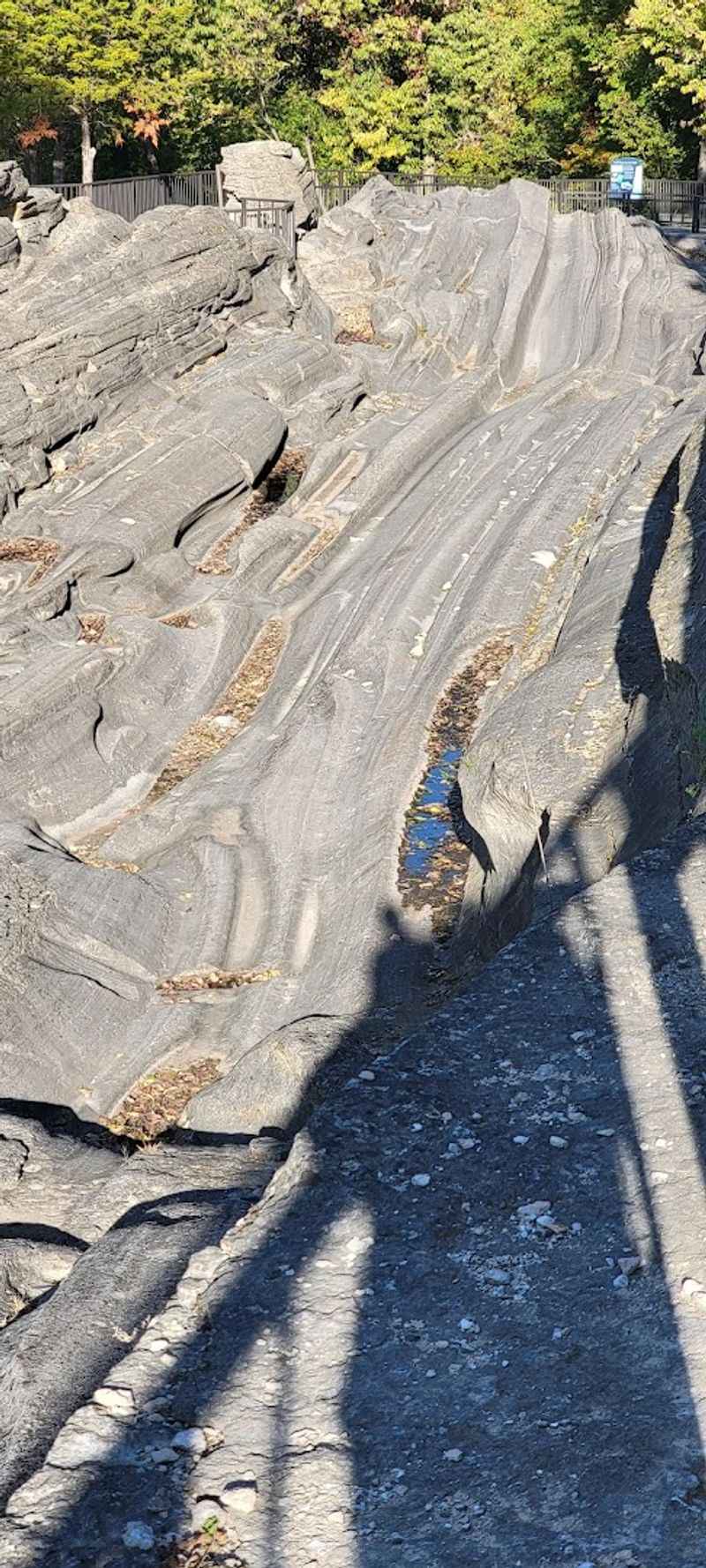
Here’s a mind-bending fact: the limestone that the glaciers carved into is itself over 350 million years old. Long before dinosaurs roamed the Earth, this region was covered by a warm, shallow tropical sea.
The creatures that lived in that ancient ocean — corals, brachiopods, crinoids, and other marine invertebrates — died and settled to the seafloor, eventually becoming the limestone bedrock we see today.
If you look carefully at the rock surface around the grooves, you can actually spot these fossils with the naked eye. Small circular impressions, ribbed shells, and branching coral-like patterns are scattered throughout the limestone.
It’s an incredible bonus discovery on top of an already remarkable site. You’re not just looking at Ice Age history — you’re looking at ocean history from hundreds of millions of years earlier.
Resist the urge to chip anything out or take souvenirs, though. The preserve is protected, and removing fossils or rock samples is illegal.
Instead, bring a camera and zoom in close for some truly stunning macro shots. The combination of ancient sea fossils and glacial grooves in one location makes Kelleys Island one of the most geologically layered places you can visit anywhere in the Midwest — and probably beyond.
A National Natural Landmark
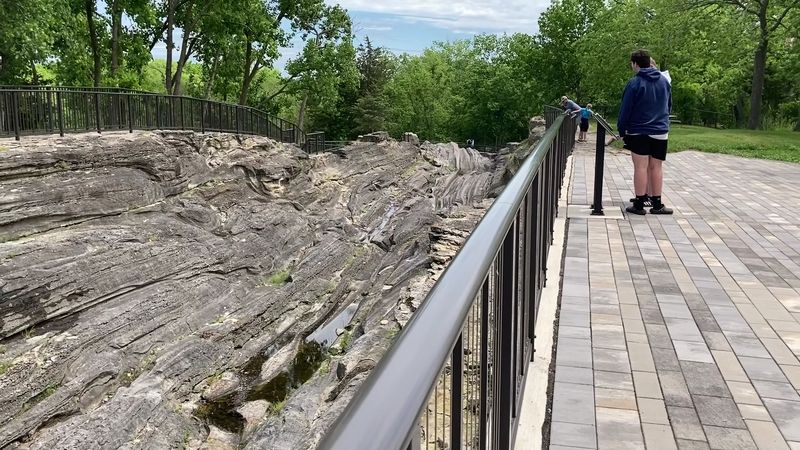
Back in 1967, the federal government officially designated the Glacial Grooves Geological Preserve as a National Natural Landmark. That’s a title given to sites that represent the best examples of geological and ecological features across the United States.
Fewer than 600 locations in the entire country hold this designation, putting Kelleys Island in truly elite company.
The National Natural Landmark program is managed by the National Park Service, and earning the designation means the site has been evaluated by scientists and recognized as having outstanding significance. For Kelleys Island, it was an easy call.
No other location on Earth offers grooves of this size, this depth, and this level of preservation in such an accessible format.
The designation also helps ensure the site is protected for future generations. State and federal guidelines limit what can be built or altered near the preserve, keeping the geological features intact.
Ohio State Parks manages the site, and they’ve done a commendable job of creating visitor infrastructure — walkways, railings, and informational signs — without compromising the integrity of the grooves themselves. Knowing that future kids and grandkids will get to experience the same wonder you do today makes the visit feel even more meaningful.
Easy Walkways and Up-Close Views
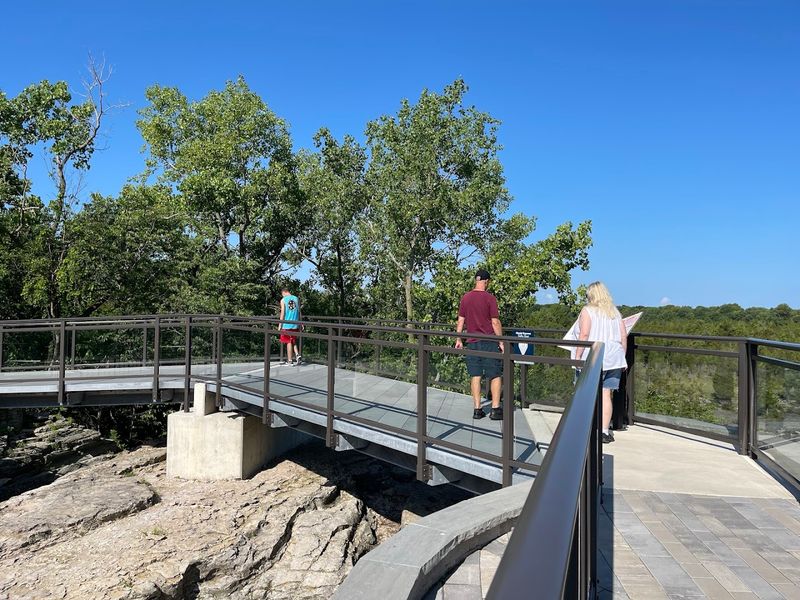
One of the best things about this preserve is how thoughtfully it’s been set up for visitors. Rather than roping everything off from a distance, the park provides stairs, bridges, and viewing platforms that let you get genuinely close to the grooves.
You can look straight down into the deepest sections and feel the full impact of their scale in a way that a distant overlook simply wouldn’t allow.
The walkway system is well-maintained and easy to navigate for most visitors. That said, the terrain does include stairs and sections of uneven rock, so sturdy shoes are a must.
Sandals or flip-flops might work in a pinch, but comfortable sneakers or hiking shoes will make the experience much more enjoyable and safe. Families with young children will find it manageable, though keeping a close eye on little ones near the edges is important.
Informational signs are posted throughout the preserve, explaining the science behind the grooves in clear, easy-to-understand language. Even if you’re not a geology buff, you’ll leave feeling like you learned something genuinely interesting.
The whole experience — from arrival to departure — takes anywhere from 15 to 45 minutes depending on how much time you spend reading, photographing, and simply standing in awe of what surrounds you.
Visitor Info and Tips for Your Trip
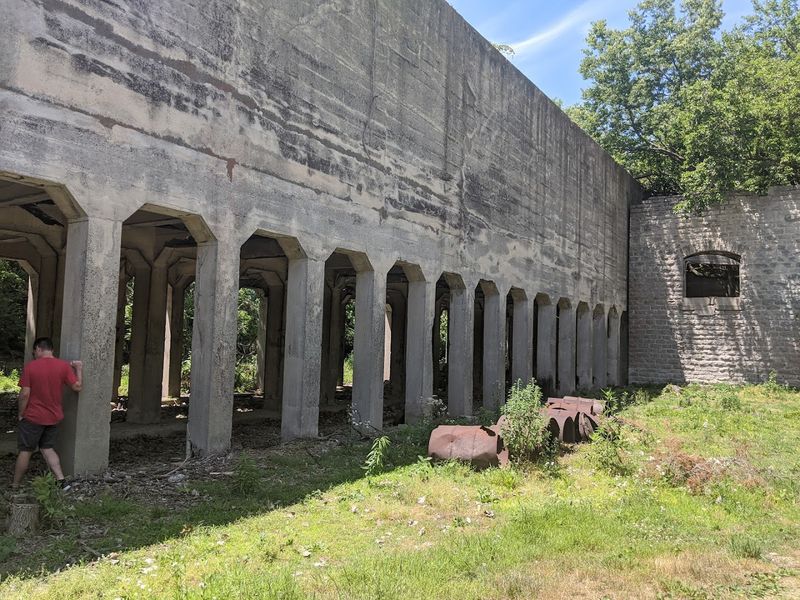
Planning a visit to the Glacial Grooves Geological Preserve is pretty straightforward, and the best part is that admission is completely free. The preserve is located at 739 Division Street on Kelleys Island, Ohio 43438.
To get there, you’ll need to take a ferry from the mainland — ferries run from both Marblehead and Sandusky, Ohio, and the ride takes roughly 20 minutes. Check seasonal schedules online before you go, since ferry times vary by month.
For the best experience, aim to visit on a weekday morning or during the cooler months of spring and fall. Summer weekends can get crowded, and the open limestone surface can feel surprisingly hot under direct afternoon sun.
Bringing a water bottle, sunscreen, and a light jacket for the ferry ride will keep you comfortable throughout the trip.
Once on the island, consider turning your visit into a full-day adventure. Rent a bike and cruise the quiet island roads, explore Kelleys Island State Park’s beach and campgrounds, or check out the North Shore Alvar — another unique natural area worth seeing.
Combining the glacial grooves with a broader island exploration makes for a rich, memorable day trip that blends natural history, outdoor fun, and genuine relaxation. It’s a hidden gem worth every minute of the journey.