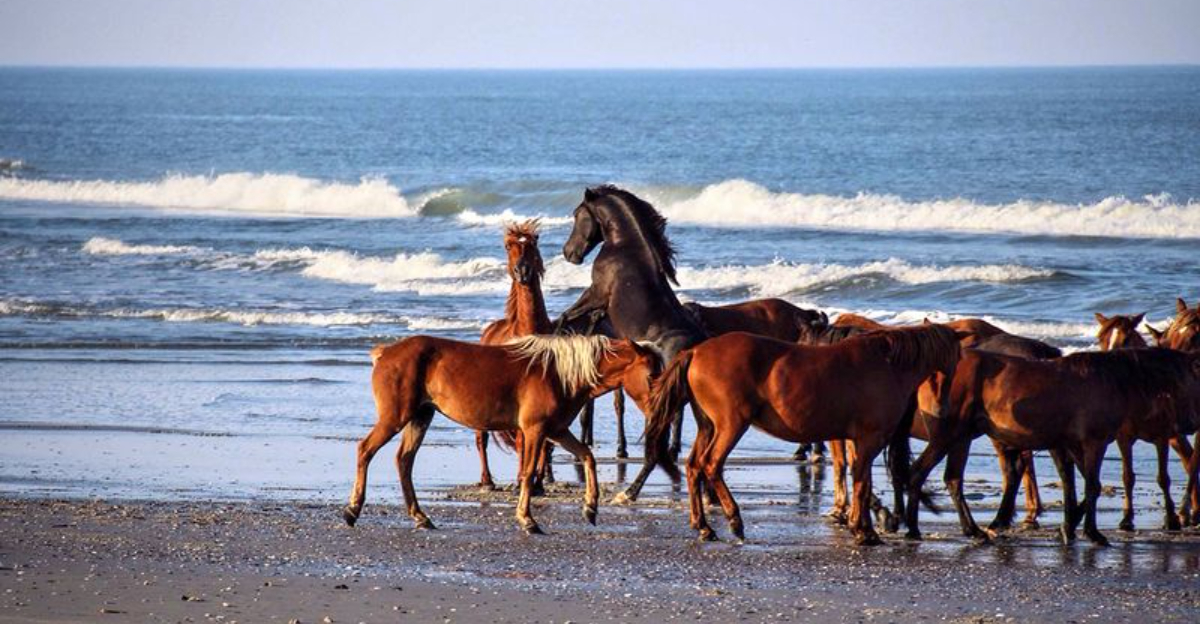
Imagine driving along a windswept beach and suddenly spotting a group of wild horses galloping through the surf — no fences, no handlers, just pure freedom.
That is exactly what you can experience on the remote northern beaches of North Carolina’s Outer Banks.
A small but remarkable herd of about 100 wild Spanish mustangs has called this coastline home for hundreds of years, and Wild Horse Adventure Tours gives you the chance to see them up close in their natural habitat.
A Rare Herd on the Edge of the Outer Banks
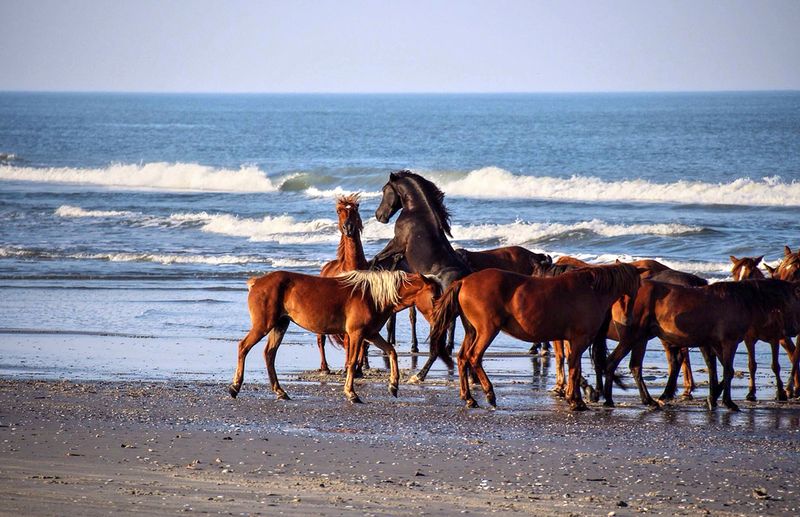
Picture standing on a stretch of beach so remote that the nearest traffic light is miles away, watching a band of wild horses graze along the shoreline without a care in the world. That is the reality waiting for you on the northern Outer Banks of North Carolina.
Roughly 100 to 120 wild horses roam the beaches of Corolla and Carova, making this one of the last places in the entire United States where you can witness free-roaming coastal mustangs in their natural setting. No paddocks, no trainers, no staged encounters — just wild animals living exactly as they have for centuries.
Most visitors never even know this herd exists until they stumble across a photo or hear a friend talk about it. The area north of Corolla is only accessible by 4WD vehicles, which keeps the crowds thin and the experience genuinely wild.
If you are looking for a travel moment that feels completely unlike anything else, watching these horses move freely along the ocean’s edge is something that stays with you long after you head home.
Descendants of 16th-Century Spanish Horses
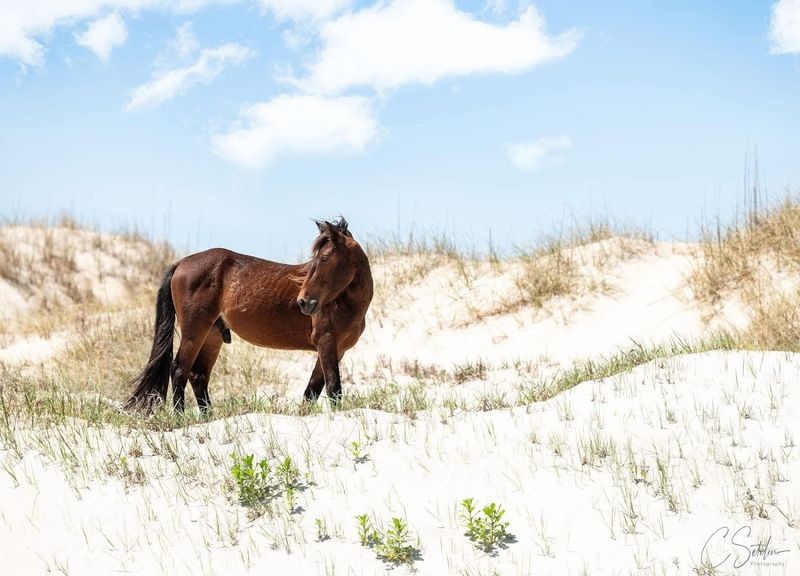
Four to five hundred years ago, Spanish explorers sailed along the Atlantic coast with horses on board — and some of those horses never made it back to Europe. Whether they swam ashore from shipwrecks or were left behind by early colonial expeditions, their descendants are still here today, roaming the same coastline their ancestors first touched centuries ago.
The genetic trail is not just legend. DNA testing has confirmed that the Corolla herd carries markers linked directly to Colonial Spanish mustangs, connecting them to breeds brought over during the 1500s.
That kind of living history is almost impossible to find anywhere else in the world.
Thinking about what these horses have survived — hurricanes, harsh winters, centuries of coastal change — makes watching them even more meaningful. They did not need human intervention to thrive; they adapted on their own terms.
Every horse you spot on that beach is a breathing piece of American history, carrying bloodlines that predate the United States itself. That is not something you can say about many animals you will ever encounter on a vacation.
A Harsh but Beautiful Coastal Habitat
Most horses spend their lives in grassy pastures with plenty of fresh water and regular meals. The Corolla wild horses have never had that luxury — and honestly, they seem perfectly fine with it.
Over hundreds of years, these mustangs have adapted to one of the toughest coastal environments imaginable. They graze on coarse marsh grasses, sea oats, and shrubby vegetation that most horses would refuse.
They drink from shallow freshwater pools tucked behind dunes, and they shelter in maritime forests when storms roll in off the Atlantic. Their bodies have even changed over generations, developing slightly smaller, stockier frames that help them conserve energy and navigate soft, shifting sand.
The landscape itself is stunning in a raw, untamed way. Wide open beaches give way to rolling dunes, which melt into dense thickets of live oak and wax myrtle.
Spotting a horse standing at the edge of that forest, half-hidden by branches, feels almost dreamlike. The habitat is not easy, but it shaped these animals into something extraordinary — resilient, self-sufficient, and deeply connected to a coastline that has been both their home and their challenge for centuries.
Why They No Longer Roam Freely Everywhere
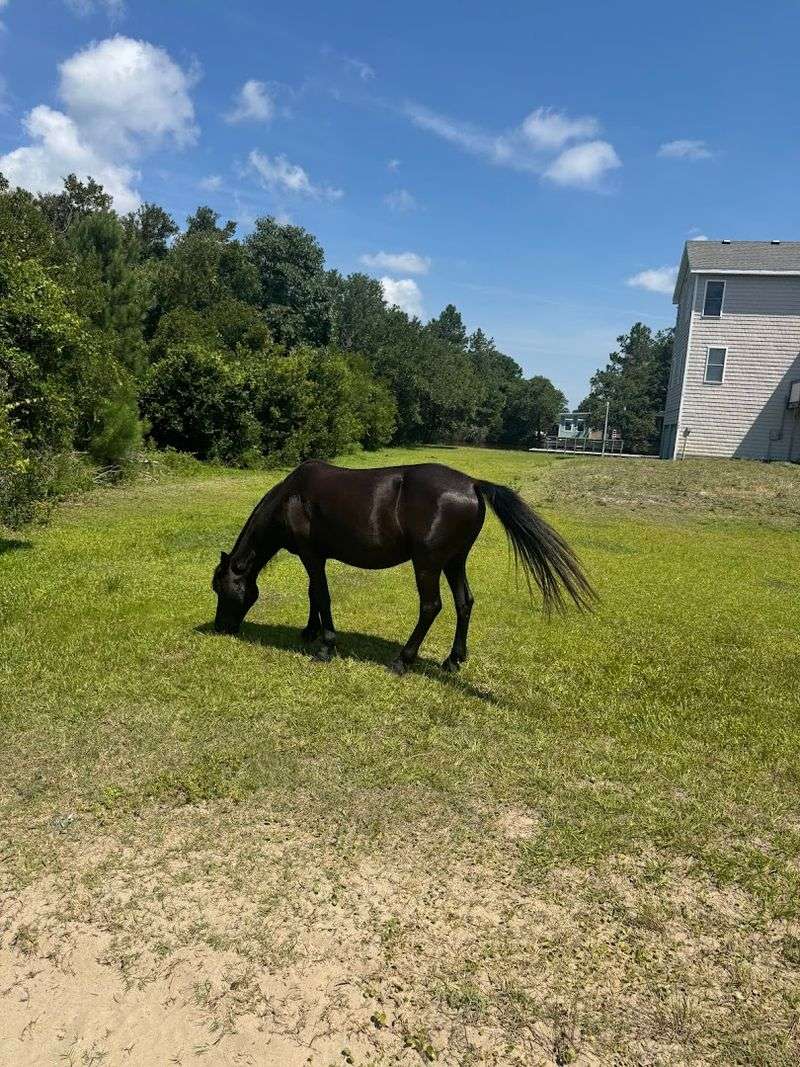
Back in the early 20th century, wild horses wandered all the way through the Outer Banks — through towns, across roads, and along beaches that are now lined with vacation rentals. As development crept northward and car traffic increased, that freedom became a serious danger.
Horses were being struck by vehicles, getting tangled in fences, and venturing into residential areas where they could eat plants toxic to them. Something had to change.
By the 1980s, the herd was gradually pushed into the remote, undeveloped stretch of beach north of Corolla, an area with no paved roads and limited public access. A fence was eventually built near the southern end of Corolla to keep the horses safely in that protected corridor.
Some people see the fence as a sad limitation on the horses’ freedom. But wildlife managers argue it saved the herd from a far worse fate — steady decline due to vehicle collisions and human encroachment.
The trade-off has largely worked. The horses that remain are healthier and safer than they were during the chaotic decades when they mixed freely with growing beach tourism.
Sometimes protection requires boundaries, even for animals that were born to roam.
Protected by Conservation Efforts
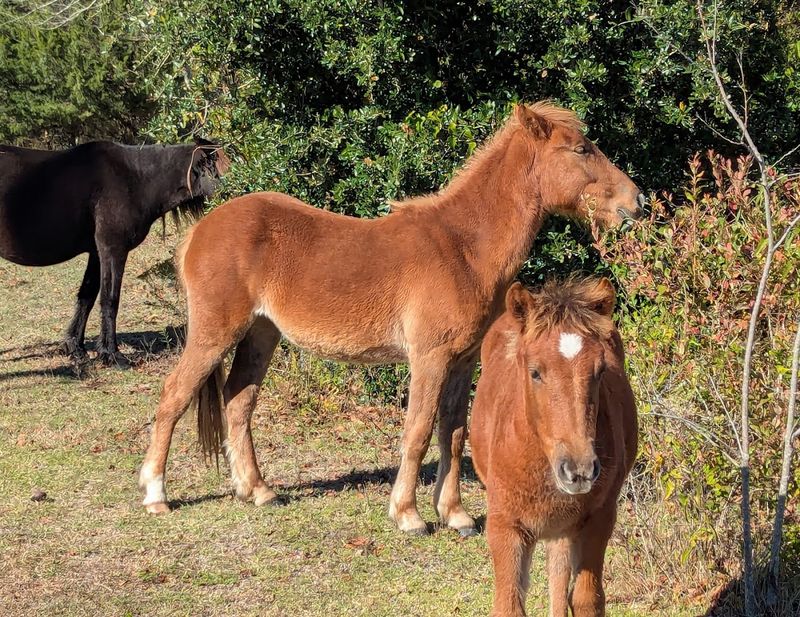
Wild animals living near humans rarely thrive without someone paying close attention. For the Corolla herd, that watchful eye belongs largely to the Corolla Wild Horse Fund, a nonprofit organization dedicated entirely to protecting these horses and the ecosystem they call home.
The fund monitors individual horses by name, tracks herd dynamics, provides emergency veterinary care when needed, and works to educate the public about keeping a respectful distance. They also manage the herd’s size carefully, since an overpopulated herd would quickly strip the land of vegetation and face starvation.
Fertility control measures are used humanely to keep numbers stable without removing horses from the wild.
Public education is just as important as veterinary care. Every year, tourists unknowingly get too close, try to feed the horses, or let children run toward them — all behaviors that can stress the animals and create dangerous situations.
The fund puts enormous effort into spreading the message that these are not tame horses, no matter how calm they appear. Supporting organizations like this one, whether through donations or simply following their guidelines, is one of the most direct ways visitors can help ensure this herd survives for future generations.
A Unique Breed Found Nowhere Else
Not all wild horses are created equal. The Corolla herd belongs to a strain called Banker horses — a name that comes from the Old English word for sandbar, reflecting the barrier island environment where they live.
Genetically, they are classified as Colonial Spanish mustangs, and their DNA sets them apart from virtually every other horse population in North America.
Researchers have found that Banker horses carry genetic markers not seen in modern domestic breeds, linking them directly to Iberian horses brought over during the early colonial period. That makes them one of the oldest continuously wild horse populations on the continent — a living genetic archive from an era most people only read about in history books.
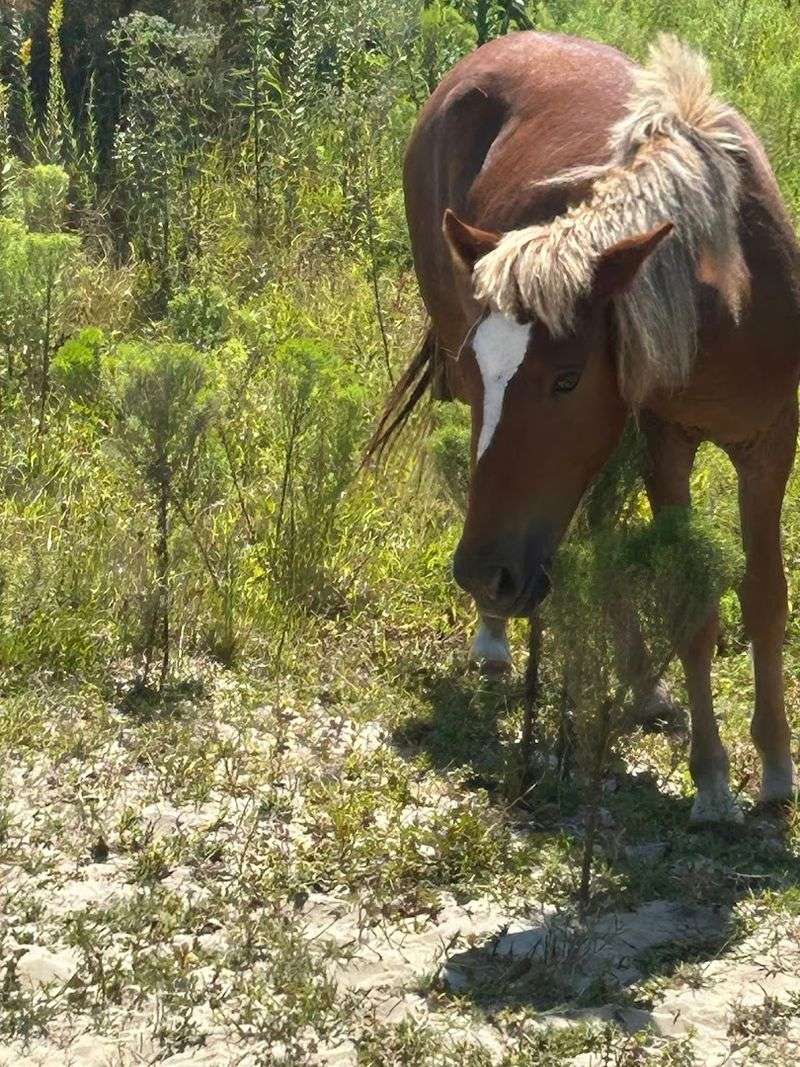
Physically, they tend to be smaller than typical horses, with a slightly convex facial profile, a low-set tail, and an extra vertebra that some individuals carry — a trait found in ancient Spanish breeds. Every physical detail tells part of a very old story.
Seeing one up close and knowing what their body represents — centuries of survival, adaptation, and genetic preservation — gives the encounter a weight that goes far beyond simply spotting a pretty animal on the beach.
Where You Are Most Likely to See Them
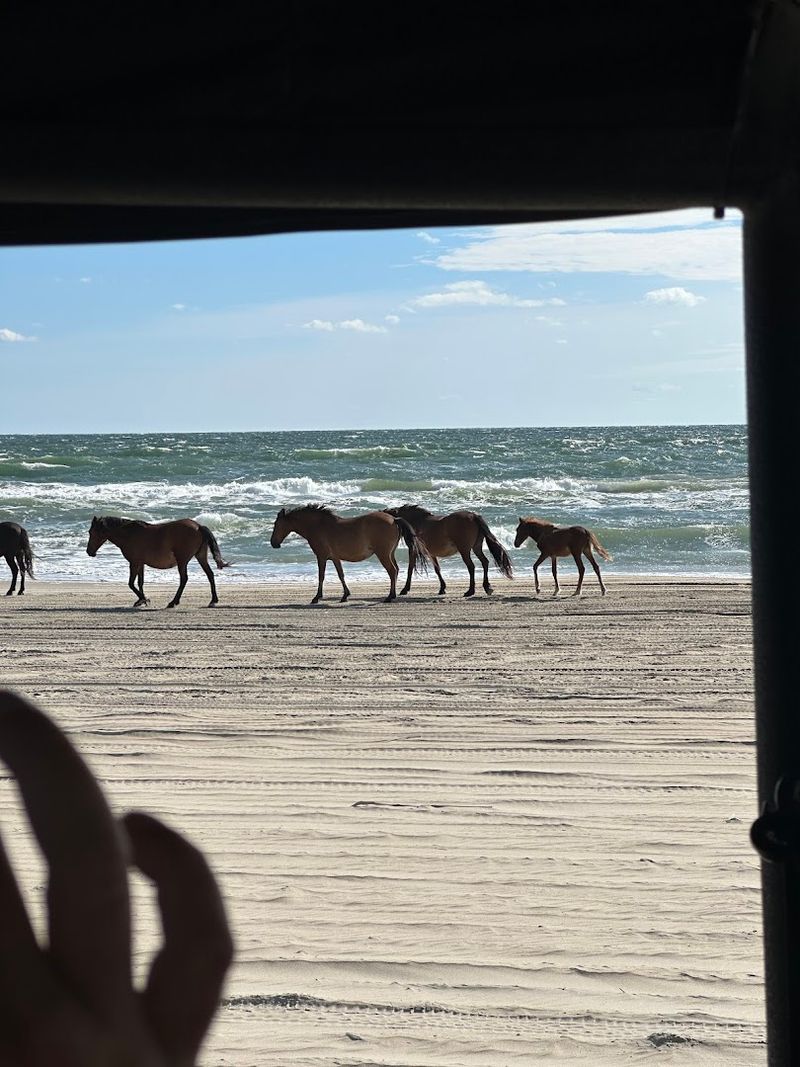
Spotting wild horses is never guaranteed — that is part of what makes it exciting. But knowing where to look dramatically improves your chances of a memorable encounter rather than a long, empty drive.
The horses spend most of their time in the 4WD-only corridor stretching from the northern end of Corolla through the community of Carova, right up to the Virginia border. They tend to move between the beach, the dunes, and the maritime shrub zone depending on the time of day and the season.
Early mornings often find them grazing near the dunes or crossing the sandy roads that wind through Carova’s scattered beach houses. On hot afternoons, they retreat into the shade of the maritime forest.
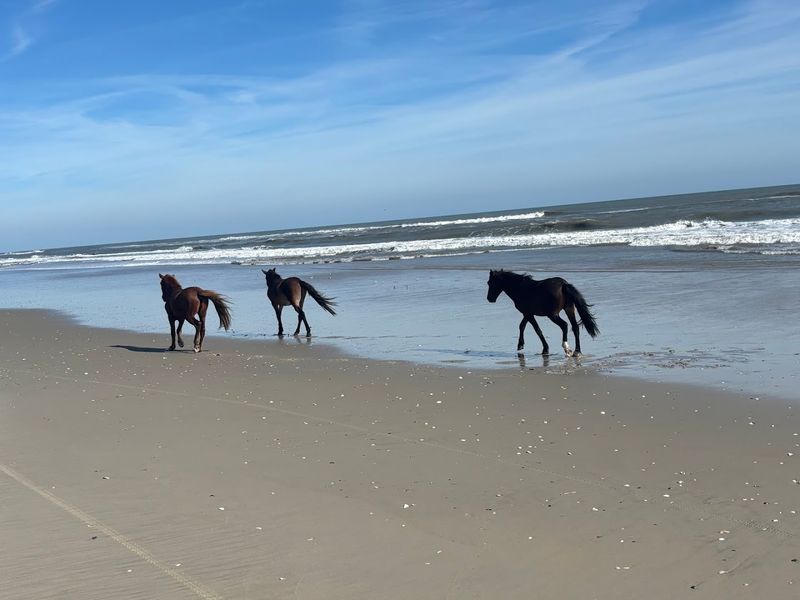
One of the most magical sightings happens when horses walk directly along the waterline, hooves splashing in the surf as if they own the place — which, in many ways, they do. Keep your eyes open near freshwater ponds tucked behind the dunes, as horses visit these regularly for drinking.
Driving slowly and scanning both sides of the road gives you the best chance of spotting them before they spot you and drift casually away into the brush.
What Makes Wild Horse Adventure Tours Special
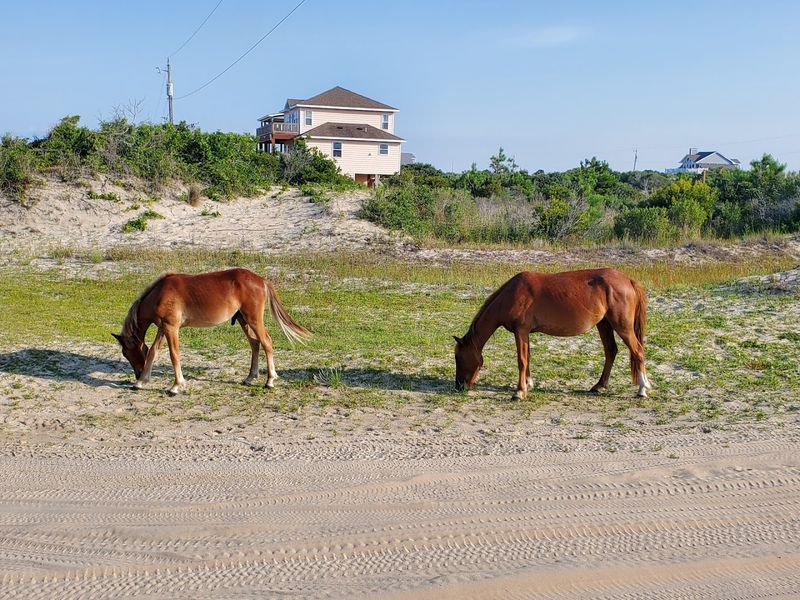
Plenty of people attempt to find the wild horses on their own, and some succeed. But a lot of them spend hours driving in circles, getting stuck in soft sand, or missing the horses entirely because they did not know where to look.
Wild Horse Adventure Tours solves all of that.
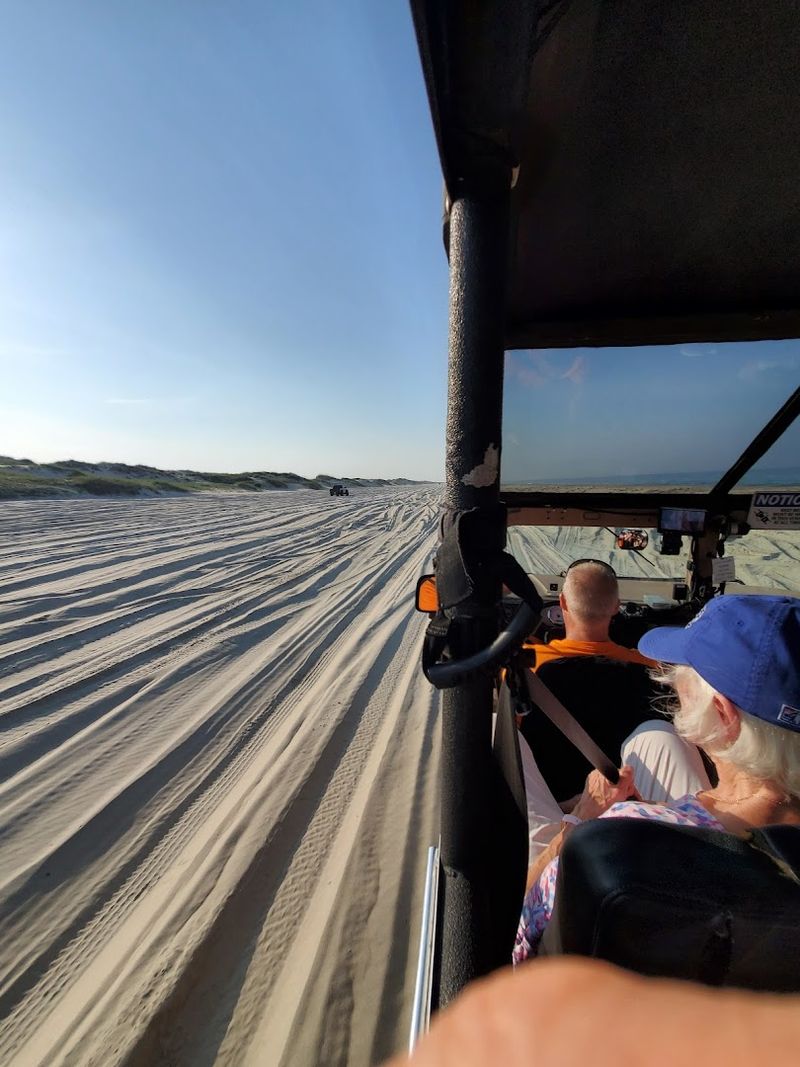
The company takes guests into the restricted off-road areas in open-air Hummer vehicles driven by experienced local guides who know the horses’ patterns, favorite spots, and seasonal behaviors. The open-air design means no windows between you and the experience — you feel the ocean breeze, hear the surf, and have an unobstructed view in every direction.
That makes for far better photos and a much more immersive atmosphere than peering through glass.
Beyond just finding horses, the guides bring the whole ecosystem to life. They point out bird species, explain the geology of the barrier islands, and share stories about specific horses in the herd by name.
The tour covers ground that most visitors simply cannot access without proper equipment and local knowledge. For families, solo travelers, and anyone who wants to make the most of their time on the Outer Banks, booking with Wild Horse Adventure Tours is genuinely one of the smartest decisions you can make.
Visitor Tips and How to Plan Your Trip
Planning ahead makes a real difference when visiting the Corolla wild horses, especially during the busy summer season when tours book up fast. Wild Horse Adventure Tours is located at 610 Currituck Clubhouse Drive in Corolla, NC 27927, and can be reached at +1 252-489-2020.
Book your tour in advance rather than hoping for a walk-in spot — weekends especially fill up quickly. Early morning and late afternoon tours tend to offer the best wildlife activity, cooler temperatures, and softer light for photography.
Wear comfortable clothes you do not mind getting sandy, and bring sunscreen, sunglasses, water, and a fully charged camera or phone. The open-air ride is breezy and wonderful, but the sun is relentless on that open beach.
One rule matters above all others: stay at least 50 feet away from the horses at all times, and never attempt to feed them. Approaching or feeding the wild horses is actually illegal in Currituck County and carries real fines.
These animals look calm, but they are genuinely wild and unpredictable up close. Respecting that boundary protects both you and the horses.
Follow the guide’s instructions, soak in the scenery, and leave nothing behind — the horses and their habitat deserve every bit of care visitors can give them.