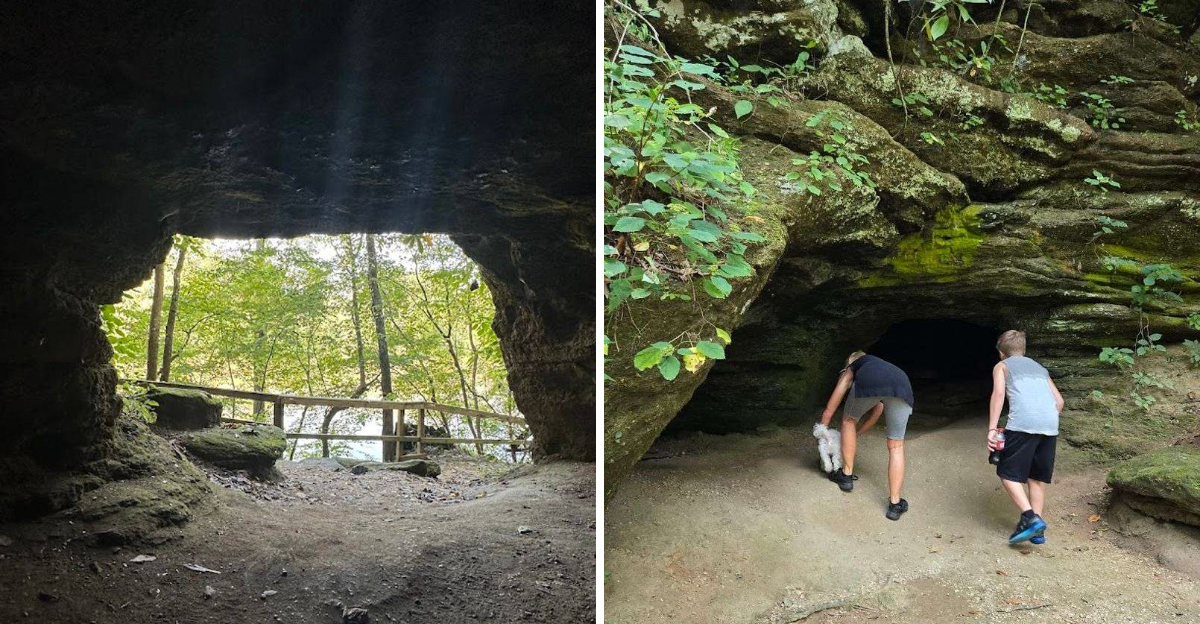
Tucked away along the banks of the Yadkin River in Lexington, North Carolina, Boone’s Cave Park holds one of the state’s most surprising secrets — a real cave you can walk into completely free of charge.
Stretching about 140 feet underground, this natural wonder is open to the public and surrounded by over 100 acres of forests, trails, and river scenery.
Whether you’re a history buff, an outdoor adventurer, or just someone looking for a cool day trip, this park delivers something for everyone.
Best of all, you don’t need to spend a dime to experience it.
A Hidden Cave You Can Explore for Free
Most caves in the United States charge an entry fee, require a guided tour, or sit behind a locked gate. Boone’s Cave Park breaks all of those rules.
Located in Lexington, North Carolina, this publicly accessible cave welcomes visitors at absolutely no cost — no tickets, no reservations, no tour guide needed.
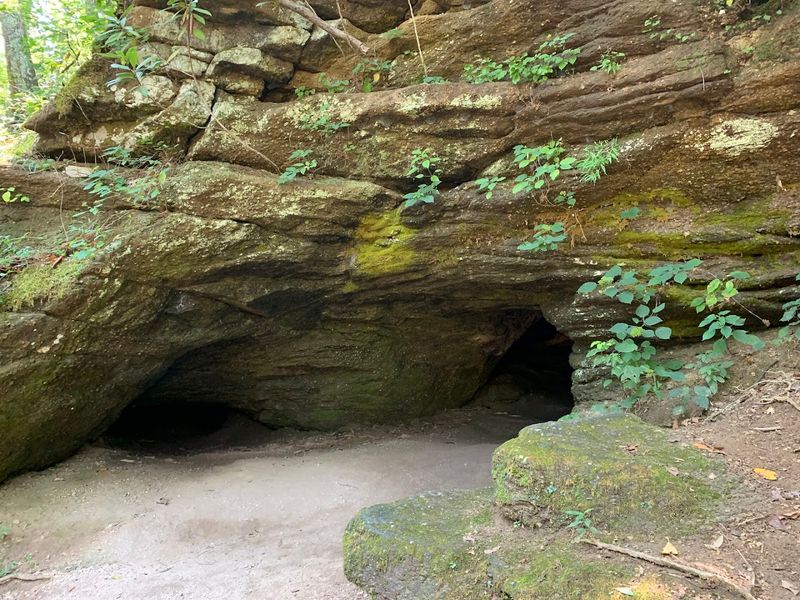
Walking up to the cave entrance feels like stumbling onto something secret. The rocky opening sits naturally within the hillside, framed by tree roots and mossy stone.
You can step right inside and feel the cool air that pours out from the earth below.
For families, solo hikers, and curious explorers, this kind of access is genuinely rare. Many state and county parks protect cave systems by limiting or eliminating public entry entirely.
Here, the experience is wide open. It’s the kind of place that reminds you that not every great adventure costs money — sometimes the best ones are completely free and waiting just off a winding country road in the heart of the Piedmont.
The Cave Extends About 140 Feet Underground
One hundred and forty feet. That’s roughly the length of a 14-story building laid on its side — and that’s exactly how far Boone’s Cave stretches from its entrance to its deepest accessible point.
For a naturally formed cave open to the public, that’s a pretty impressive reach.
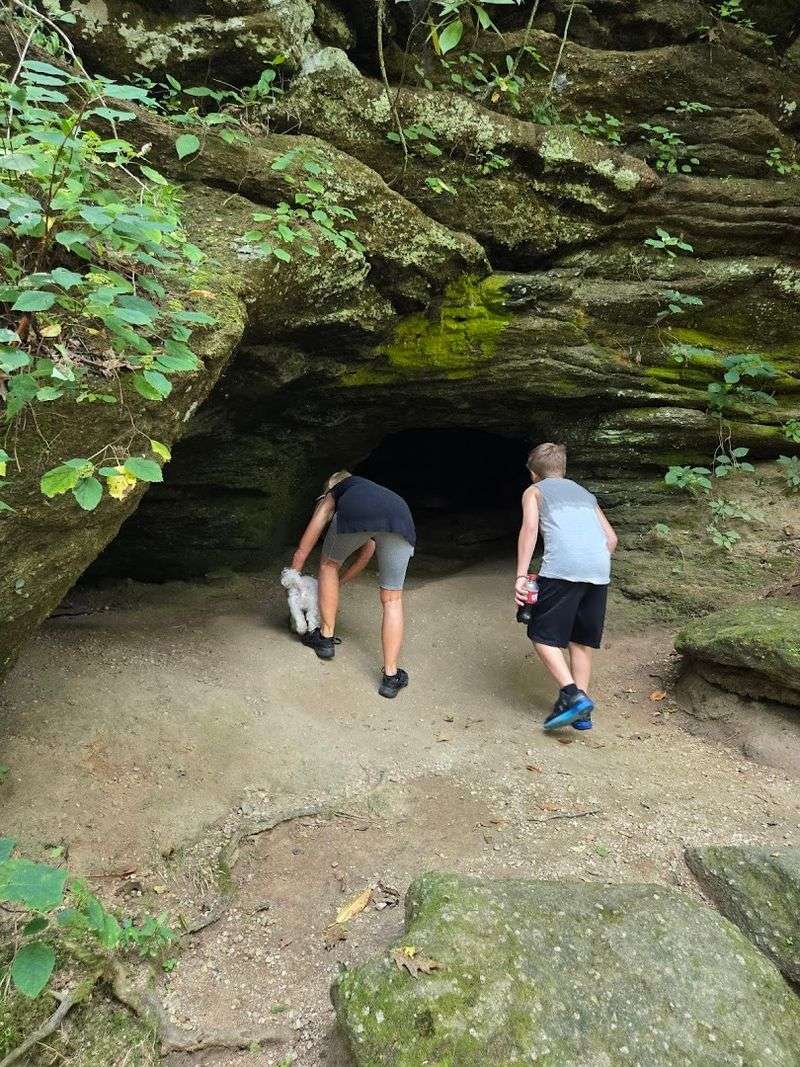
The first portion of the cave is wide enough to stand and walk comfortably, giving visitors an immediate sense of wonder. But as you move deeper, the passage starts to narrow.
The ceiling drops, the walls close in, and before long, you’re crouching, then crawling, to push further into the earth.
That shift from walking to crawling is part of what makes this cave feel like a genuine adventure rather than a polished tourist attraction. You earn the deeper sections.
Younger kids and brave adults tend to love the challenge, while others are perfectly happy exploring the accessible opening and soaking in the cool, earthy atmosphere. Either way, 140 feet of natural cave sitting right beneath the surface of a free public park is something worth making the drive for.
Not Your Typical Walk-Through Cave
Forget the dramatic lighting, paved walkways, and audio tour headsets. Boone’s Cave is nothing like the polished cavern attractions you might have visited on a school field trip.
This is a raw, unimproved rock shelter — the kind of place that feels genuinely wild and untouched.
The entrance is wide and inviting, but the cave quickly reveals its true character. The ceiling drops low, the passage twists, and the floor becomes uneven and rocky.
There’s no handrail to grab, no lighting installed, and no guide telling you where to step. That’s precisely the appeal for adventurous visitors who want something real.
Rock shelter-style caves like this one formed over thousands of years as water and erosion carved space beneath a rocky overhang or cliff face. They’re different from true karst caverns, which form deep underground through dissolving limestone.
This style of cave is more exposed and accessible, but no less fascinating. If you’ve only ever seen caves through a gift shop window, Boone’s Cave will completely change your expectations — in the best possible way.
Tied to the Legend of Daniel Boone
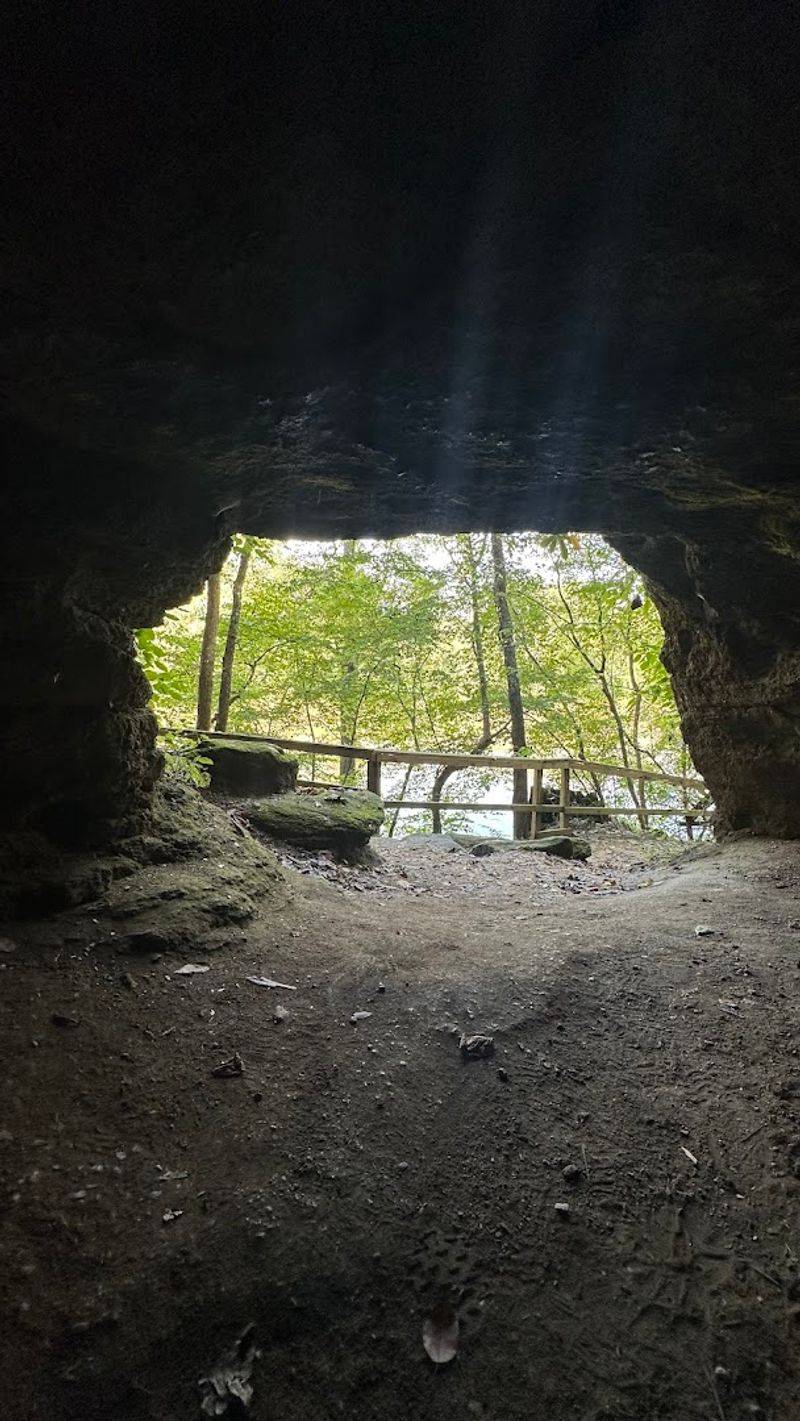
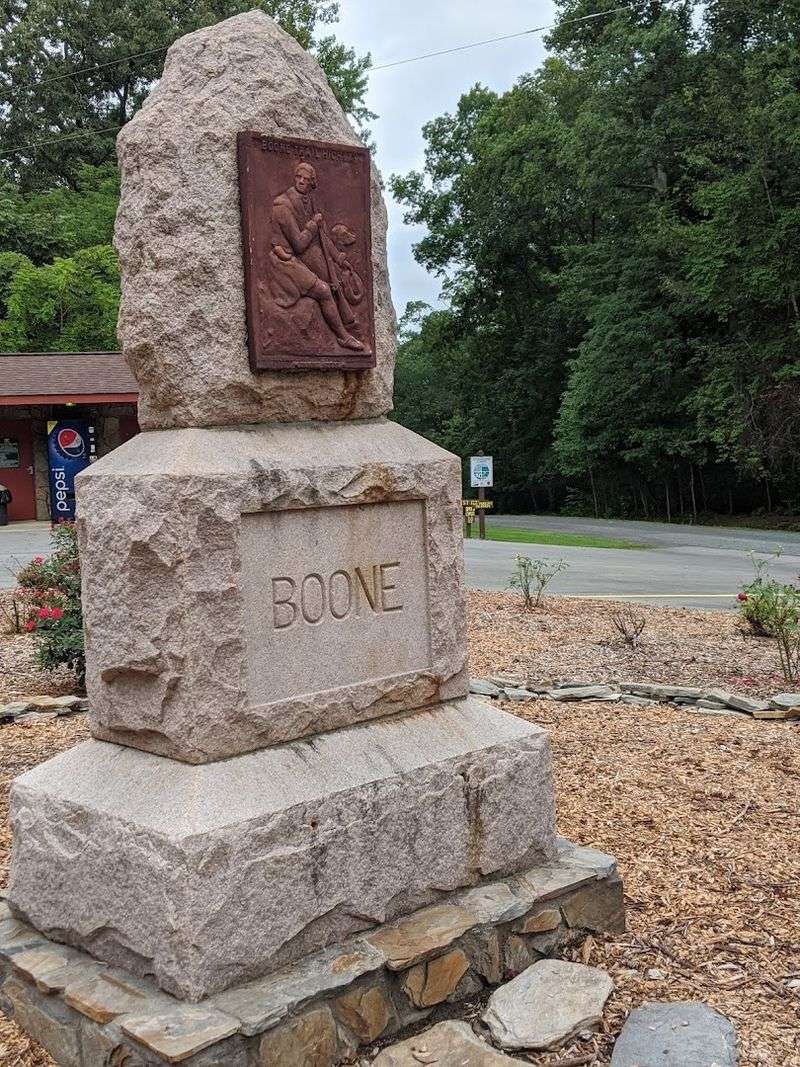
Every great place has a story, and Boone’s Cave has one of the most legendary in North Carolina. According to local tradition, the famous frontiersman Daniel Boone used this very cave as a shelter during the 1750s, when he and his family were among the early European settlers exploring and hunting throughout the Yadkin River Valley region.
Boone was a teenager when his family settled in the area, and he spent years roaming the surrounding forests, hunting, and learning the land. The idea that he may have rested, hidden, or sheltered here connects the cave to one of American history’s most celebrated figures.
It’s the kind of story that makes a place feel bigger than it looks.
Historians are careful to note that the connection is based largely on local legend rather than confirmed historical records. Still, the Boone family’s presence in Davidson County is well-documented, and the cave’s name has honored that tradition for generations.
Whether or not Daniel himself actually slept here, the legend adds a rich layer of history to an already fascinating natural site. Sometimes the story is half the adventure.
Set Along the Scenic Yadkin River
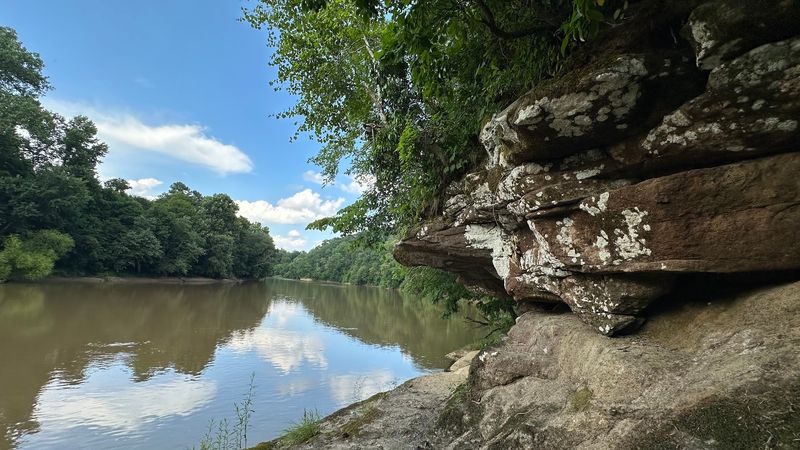
The cave alone would be worth a visit, but the setting around it makes Boone’s Cave Park feel like a full-on outdoor escape. The park sits right along the Yadkin River, one of North Carolina’s most scenic waterways, and the cave entrance is just a short climb above the riverbank.
Standing near the cave and looking out over the river is genuinely beautiful. The water moves steadily through a wooded valley, and depending on the season, you might catch the golden light of fall foliage reflecting off the surface.
Fishermen, kayakers, and canoeists frequently use this stretch of the river, and the park provides easy access to the water’s edge.
The Yadkin River has played a central role in the history and ecology of the Piedmont region for centuries. Native peoples, early settlers, and frontier explorers all relied on it for travel, food, and survival.
Having a cave tied to Daniel Boone sitting right above it feels historically fitting. For modern visitors, the combination of river scenery and cave exploration creates a layered experience that’s hard to replicate anywhere else in the region.
A 100+ Acre Natural Park Surrounds It
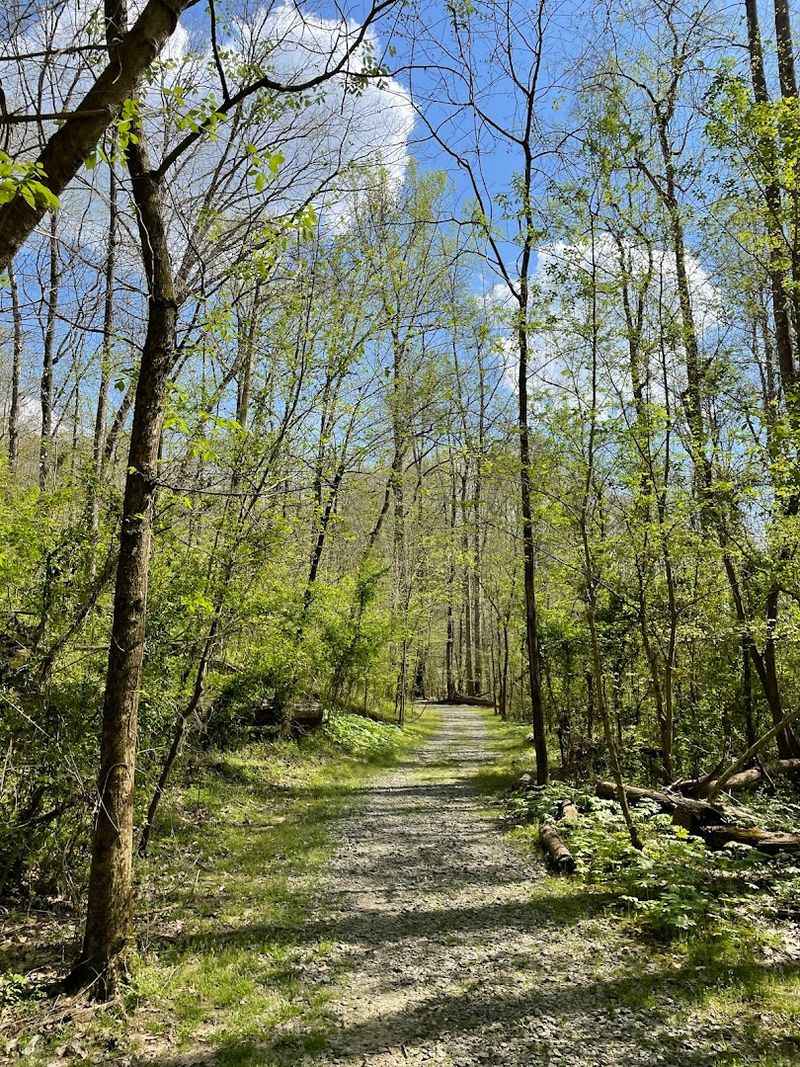
Some parks feel like a parking lot with a trail attached. Boone’s Cave Park is the opposite — sprawling across roughly 100 to 120 acres of hardwood forest, rolling hills, and designated natural heritage areas, it gives visitors plenty of room to breathe, wander, and genuinely get away from it all.
The forest here is dominated by native hardwoods like oak, hickory, and poplar. The terrain rolls and dips in a way that feels natural and unmanicured, which is exactly the point.
Several sections of the park have been recognized for their ecological value, protecting rare plant communities and native species that thrive in undisturbed woodland environments.
For those who care about conservation and natural spaces, this park represents something meaningful. It’s not just a backdrop for cave visits — it’s a functioning natural ecosystem maintained for both public enjoyment and environmental preservation.
Spending time here, you start to notice how different a truly natural park feels compared to a heavily developed recreation area. The quiet is different.
The air smells different. And the sense of connection to the landscape feels earned rather than packaged.
Miles of Trails Lead You to the Cave
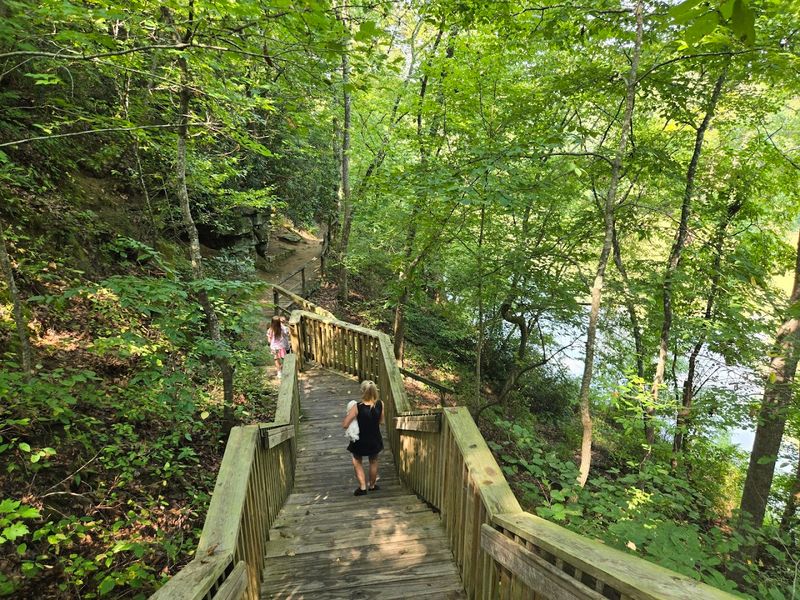
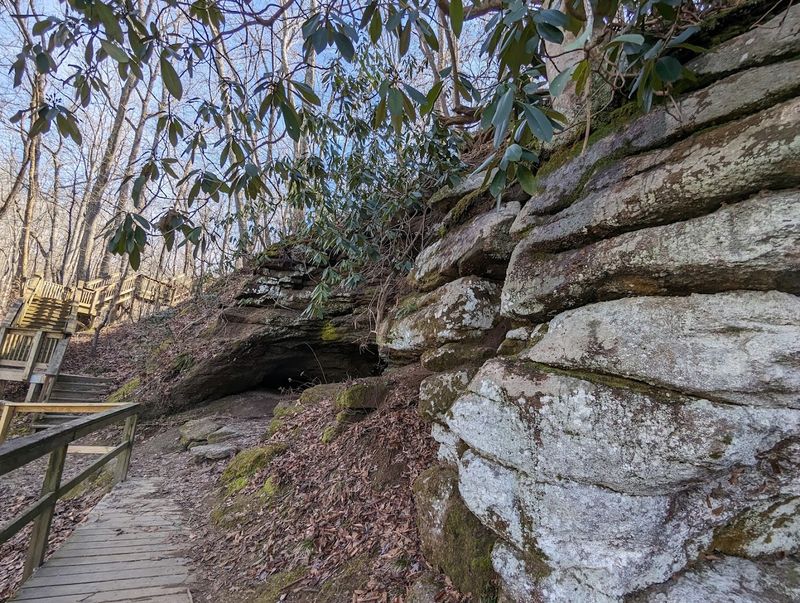
Getting to the cave is half the fun. Boone’s Cave Park offers around six miles of hiking trails that weave through the forest, down toward the river, and up to the cave entrance via a series of wooden steps and natural pathways.
The trails range from easy riverside walks to steeper climbs that reward you with elevated views.
The stairway leading down to the cave is one of the most memorable parts of the hike. Wooden steps descend through the trees, and as you get closer, the sound of the river grows louder and the air gets noticeably cooler.
It creates a sense of anticipation that builds with every step downward.
Trail conditions vary by season, so it’s smart to check in with the park before planning a visit after heavy rain. Some sections can get muddy or slippery, especially near the river and along the steeper inclines.
Sturdy hiking shoes are strongly recommended — sandals and flip-flops won’t cut it here. With six miles of trail to cover, you could easily spend three to four hours exploring the full network and still feel like there’s more to discover around every bend.
Rare Wildflowers and Wildlife Add to the Experience
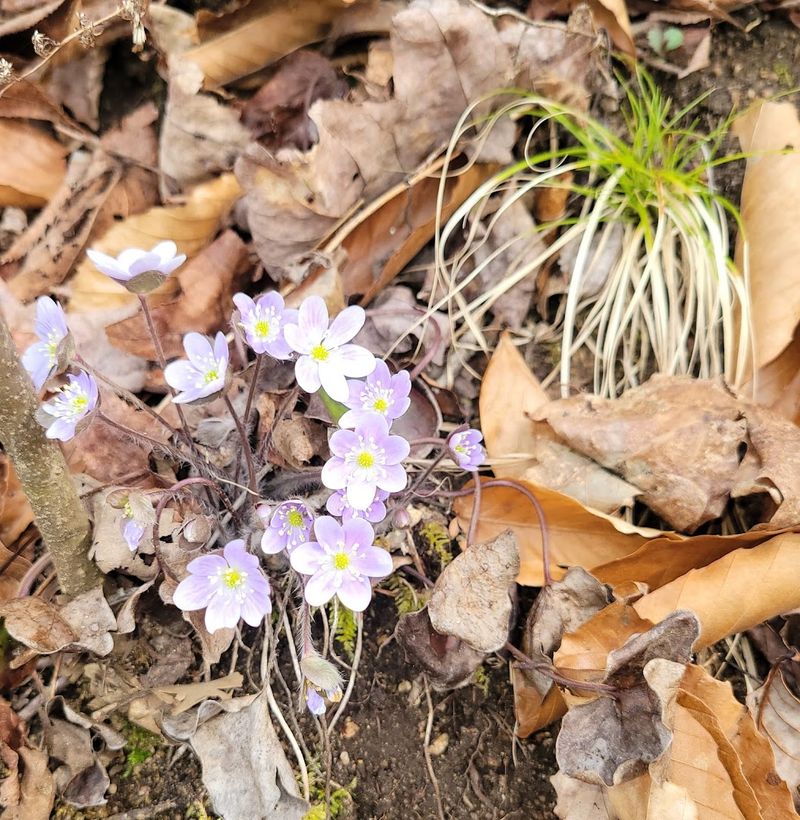
Boone’s Cave Park quietly doubles as one of the better wildlife and wildflower destinations in the Piedmont region — though most first-time visitors come for the cave and leave surprised by everything else they encountered along the way.
Spring is the showstopper season here. The forest floor comes alive with native Appalachian wildflowers, including trillium, bloodroot, wild ginger, and mayapple.
These species thrive in the rich, undisturbed soil beneath the hardwood canopy, and Boone’s Cave Park protects enough natural habitat to support impressive blooms year after year.
Wildlife sightings are common throughout the year. White-tailed deer move through the forest at dawn and dusk.
Various reptile species, including skinks and box turtles, are often spotted along sunny stretches of trail. Migratory songbirds pass through in spring and fall, making the park a quiet favorite among birders.
If you’re the type who walks slowly and pays attention, you’ll find that the cave is just one piece of a much larger, living landscape. Bringing a field guide or a nature identification app can turn a simple hike into a full-blown nature lesson without any extra effort.
More Than Just a Cave Visit
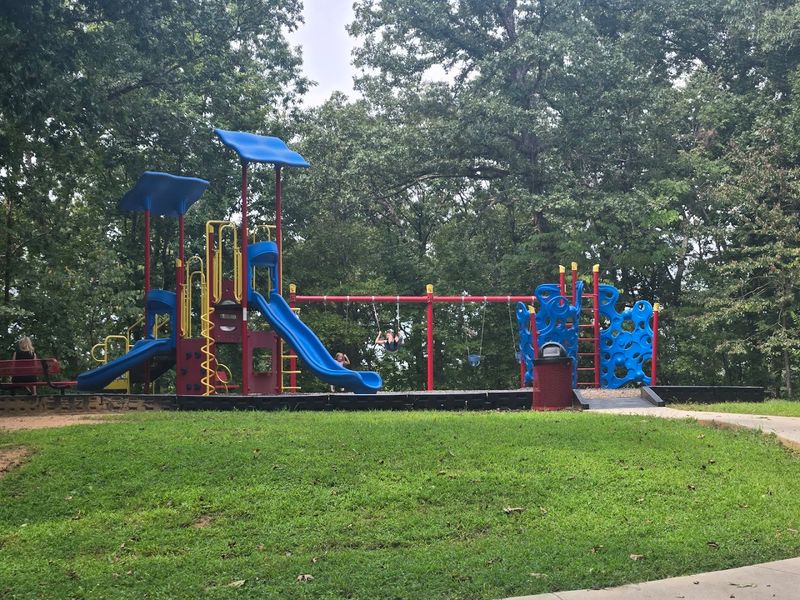
A lot of people show up at Boone’s Cave Park expecting a quick look at a hole in the ground and leave having spent most of the day there. The park packs in a surprising number of activities beyond cave exploration, making it a legitimate all-day outdoor destination for families and groups.
Picnic shelters are available throughout the park, giving families a comfortable home base for lunch between hikes. A disc golf course winds through the trees, adding a fun competitive element to the visit.
Primitive camping is permitted for those who want to extend their stay into the evening, and river access makes the park appealing to kayakers and anglers who want to spend time on the water.
What’s especially refreshing is that most of this is free or very low cost. The only fees associated with the park are for camping or renting a picnic shelter — everything else, including the cave, the trails, the disc golf, and the river access, comes at no charge.
That combination of variety and affordability is increasingly rare in outdoor recreation. Boone’s Cave Park manages to punch well above its weight for a county-operated natural area.
Visitor Info and Tips Before You Go
Planning ahead makes a big difference at Boone’s Cave Park. The park address is 3552 Boones Cave Road, Lexington, NC 27295.
Hours generally run from 8 AM to 8 PM during warmer months, with shorter hours in winter — so arriving in the morning gives you the most time to explore comfortably.
Admission is completely free. Small fees apply only for camping overnight or reserving a picnic shelter for group use.
For most visitors, the entire trip costs nothing beyond the gas to get there. Bring a flashlight or a headlamp if you plan to explore the deeper sections of the cave — the passage gets dark quickly once you move past the entrance, and your phone light won’t cut it in the tightest sections.
Wear closed-toe shoes with solid grip. The wooden stairs and rocky trail near the cave can be slippery, especially after rain or morning dew.
Bug spray is a must from late spring through early fall — mosquitoes near the river can be relentless. Pack water, snacks, and a small backpack if you plan to cover all six miles of trail.
Cell service can be spotty in the park, so downloading an offline map beforehand is a smart move.